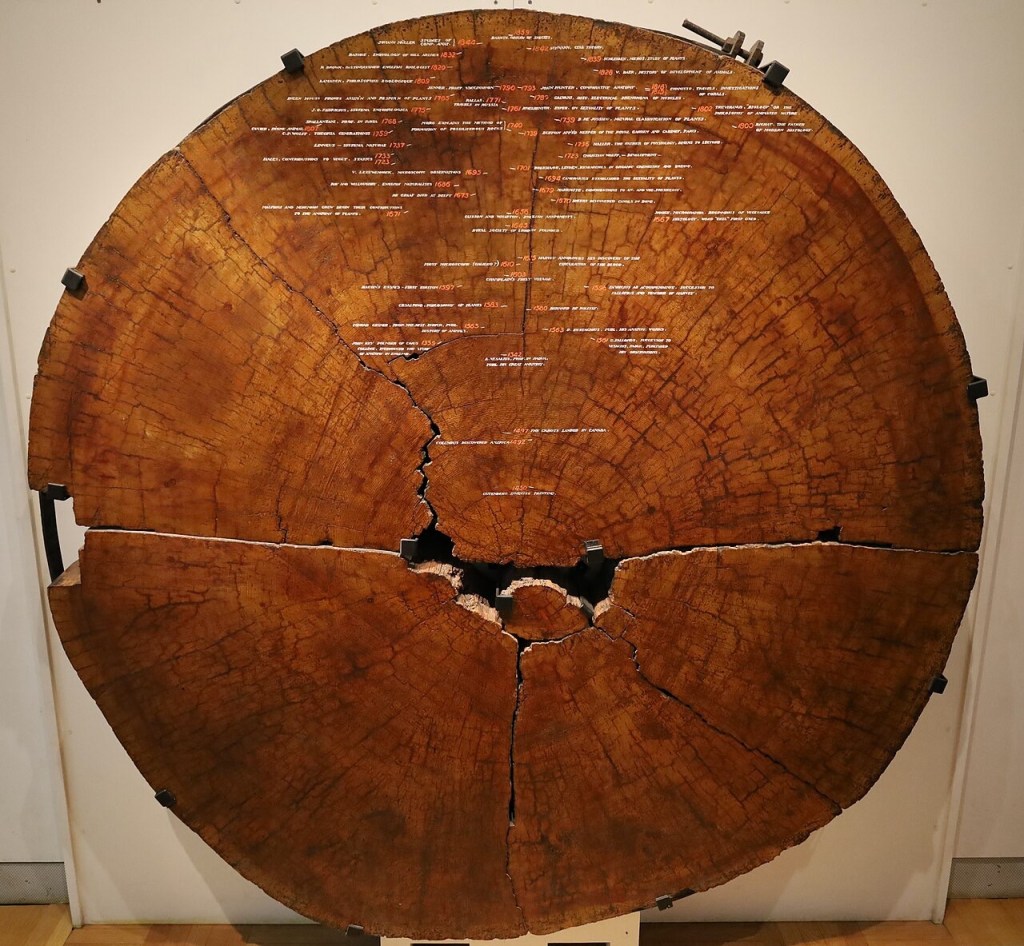
Tree Cookie. A cross-section of a Coast Douglas-fir tree. Royal Ontario Museum, Canada. Image Wikimedia Commons
Today’s questions are further study of Ologies.
One
What is defined as ‘the study of the mechanics of body movements’ (Oxford English Dictionary)?
Two
What does an ichthyologist study?
Three
Nosology is the scientific study of which of these?
Diseases
Nasal biology
Negativity
Four
What is defined by the Oxford English Dictionary as the ‘science or technique of dating events, environmental change, and archaeological artefacts by using the characteristic patterns of annual growth rings in timber and tree trunks’?
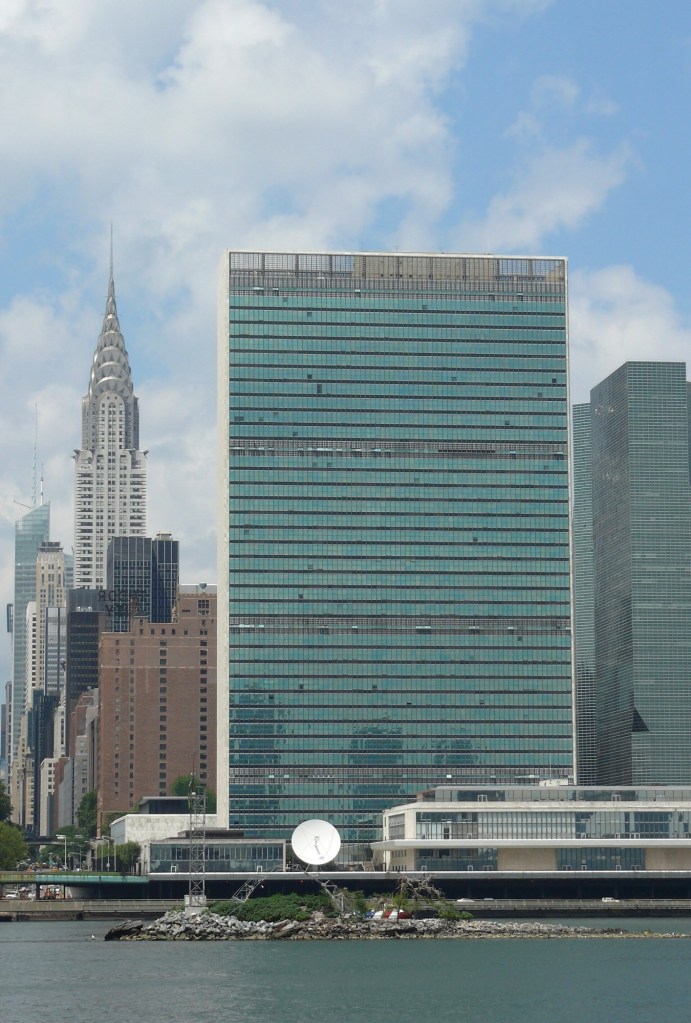
United Nations Building, New York City. See question five. Image Wikimedia Commons
Five unassociated questions.
One
Travelling west along the Trans-Canada Highway (TCH) from its western terminus, how many provincial and territorial capitals do you pass through, and what, in geographical order, are their names along with their respective province or territory?
Answers: Six; Victoria, British Columbia; Regina, Saskatchewan; Winnipeg, Manitoba; Québec City, Quebec; Fredericton, New Brunswick; St. John’s, Newfoundland and Labrador.
The Trans-Canada Highway is a transcontinental highway system spanning all ten Canadian provinces, with its main route covering 7,821 kilometres from Victoria, British Columbia, to St. John’s, Newfoundland and Labrador. Construction began in 1950, the highway officially opened in 1962, and the final section was completed in 1971. The entire system, including routes such as the Yellowhead Highway, totals about 12,800 kilometres. Design standards vary along its length, although most sections remain two-lane, undivided highways. The longest continuous divided section extends for about 1,500 kilometres from the Rocky Mountains to the Manitoba–Ontario border. Although the network does not extend into Canada’s three territories or to the U.S. border, it forms part of the National Highway System. In addition to passing through six provincial capitals, the Trans-Canada Highway also serves Canada’s national capital, Ottawa.
Two
A fictitious error deliberately placed in a reference work is a what?
Ballicatter
Frauendienst
Mountweazel
Answer: Mountweazel.
A fictitious entry is a deliberate error in reference works used as a copyright trap. Types include Mountweazel, trap street, and paper town. Henry Alford coined “Mountweazel” after a fake entry in the 1975 New Columbia Encyclopaedia. These entries are also known as nihilartikel.
Three
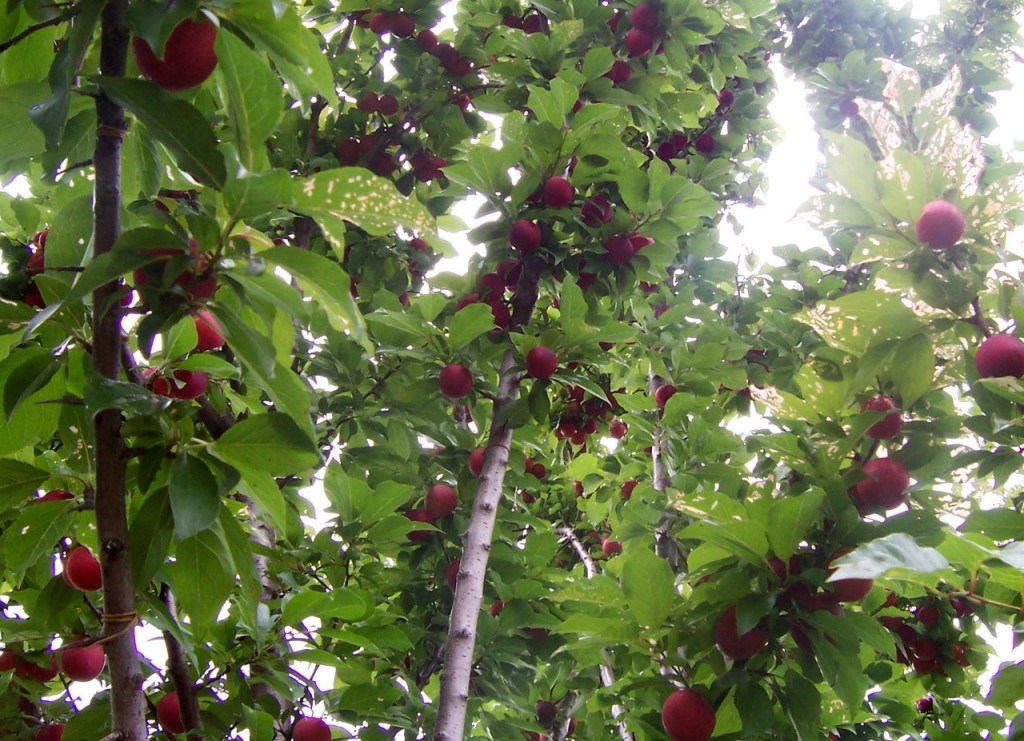
The title of a 2017, single by Drake shares its name with a fruit, the flower of which is shown above. What was the title of the single?
Answer: Passionfruit.
Passionfruit by Drake, featuring Zoë Kravitz, is a tropical house, R&B, pop, and dancehall song from his 2017 mixtape More Life. It peaked at number 8 on the US Billboard Hot 100 and number 2 on the Canadian Hot 100.
Four
Three questions based the standard UK and US editions of monopoly.
What on the UK edition is the equivalent of the American Marvin Gardens?
The British Leicester Square is the equivalent of what on the American edition?
What colour are these properties on both the British and American versions?
Answers
Piccadilly
Atlantic Avenue
Yellow
Monopoly, derived from Lizzie Magie’s 1903 game, involves moving tokens to buy properties and bankrupt opponents. Parker Brothers published it in 1935; Hasbro acquired it in 1991. It has sold 275 million copies across 113 countries.
Five
In this post, No. 3 was appointed on 30 November 1962. The first, Gladwyn Jebb, serving in an ‘acting’ capacity and therefore unnumbered, held the post for 101 days in 1945/46. Nos. 1 and 2 were Scandinavian, while No. 3 was the first non-European. What is this post, who was No. 3, and what was his nationality?
Answers: Secretary-General of the United Nations; U Thant and Burmese.
The secretary-general of the United Nations oversees the Secretariat under Chapter XV of the Charter, appointed by the General Assembly after a Security Council recommendation, with any permanent member able to veto. Precedent excludes permanent members’ citizens, favours regional rotation and gender equality, and all appointees are career diplomats. Since 1971, five-year terms are standard, with reselection common. The secretary-general’s duties include advocacy, diplomacy, and civil service, with informal powers for dispute prevention.
United Nations Building, New York City. See question five. Image Wikimedia Commons
Five unassociated questions.
One
Travelling west along the Trans-Canada Highway (TCH) from its western terminus, how many provincial and territorial capitals do you pass through, and what, in geographical order, are their names along with their respective province or territory?
Two
A fictitious error deliberately placed in a reference work is a what?
Ballicatter
Frauendienst
Mountweazel
Three
The title of a 2017, single by Drake shares its name with a fruit, the flower of which is shown above. What was the title of the single?
Four
Three questions based the standard UK and US editions of monopoly.
What on the UK edition is the equivalent of the American Marvin Gardens?
The British Leicester Square is the equivalent of what on the American edition?
What colour are these properties on both the British and American versions?
Five
In this post, No. 3 was appointed on 30 November 1962. The first, Gladwyn Jebb, serving in an ‘acting’ capacity and therefore unnumbered, held the post for 101 days in 1945/46. Nos. 1 and 2 were Scandinavian, while No. 3 was the first non-European. What is this post, who was No. 3, and what was his nationality?
Flag of Côte d’Ivoire/Ivory Coast. See question three. Image Wikimedia Commons
All of these questions relate to today’s date, 7 August.
One
In what sport could a ‘Salchow’ be performed?
Answer: Ice skating.
Swedish skater Ulrich Salchow, born 7 August 1877. The salchow, named the Salchow, an edge jump, after him. It is the easiest figure skating jump. It involves taking off from the back inside edge of one skate, completing one or more full turns, and landing on the back outside edge of the opposite skate. American skater Theresa Weld was reprimanded at the 1920 Olympics for performing a single Salchow jump because her skirt would fly up to her knees, creating an image deemed too risqué.
Two
The six-month-long Battle of Guadalcanal, which began on 7 August 1942, unfolded in which country?
Answer: Solomon Islands.
Guadalcanal Island, the largest island in the Solomon Islands, is situated in the southwestern Pacific Ocean. The Battle of Guadalcanal, occurring from August 1942 to February 1943, involved a series of World War II land and sea engagements between Allied and Japanese forces on and around Guadalcanal, one of the southern Solomon Islands in the South Pacific. Alongside the naval Battle of Midway, the combat on Guadalcanal signified a turning point in favour of the Allies in the Pacific War.
Three
In 1960, the country represented by the flag shown above gained independence from France. What country is it?
Answer: Côte d’Ivoire/Ivory Coast.
Côte d’Ivoire, located on the western coast of Africa, was previously a French colony. Abidjan functions as the de facto capital, while Yamoussoukro has been the administrative capital since 1983. Known as Ivory Coast, this West African nation is the leading cocoa exporter globally and has seen substantial economic growth since 2011. Nonetheless, 46.1% of its population remains in poverty. The economy is predominantly dependent on agriculture, especially smallholder cash-crop production.
Four
How many persons were onboard Thor Heyerdahl’s balsa wood raft, Kon-Tiki when it reached Raroia in the Tuamotu Islands after sailing 4,300 mile (7,000 km) in 101-days?
Answer: Six.
The Kon-Tiki expedition in 1947, led by Thor Heyerdahl, was a raft journey from South America to Polynesia. Named after the Inca god Viracocha, it inspired Heyerdahl’s book and a 1950 Oscar-winning documentary. A 2012 dramatised film was nominated for Best Foreign Language Film.
Five
In 1926, in motor racing the first British Grand Prix was held. Where was the race held?
Answer: Brooklands.
Built in 1907 near Weybridge, Surrey, Brooklands was the first purpose-built motor racing venue and one of the UK’s first airfields. The British Grand Prix debuted there on 7 August 1926, won by Robert Sénéchal and Louis Wagner. The second race, on 1 October 1927, was also held there.
Bonus Question
The post title is two lines taken from a popular song, what song?
In olden days a glimpse of stocking Was looked on as something shocking
It is part of the lyrics from Anything Goes from the Cole Porter musical of the same name. It is used here only as an oblique remark about Ms Weld’s risqué performance; see answer one.
Anything Goes
By Cole Porter
[RENO] Times have changed, And we’ve often rewound the clock, Since the Puritans got a shock, When they landed on Plymouth Rock. If today, Any shock they should try to stem, ‘Stead of landing on Plymouth Rock, Plymouth Rock would land on them.
In olden days a glimpse of stocking Was looked on as something shocking, But now, God knows, Anything Goes.
Good authors too who once knew better words, Now only use four letter words Writing prose, Anything Goes.
The world has gone mad today And good’s bad today, And black’s white today, And day’s night today, When most guys today That women prize today Are just silly gigolos And though I’m not a great romancer I know that you’re bound to answer When I propose, Anything goes
When grandmama whose age is eighty In night clubs is getting matey with gigolo’s, Anything Goes.
When mothers pack and leave poor father Because they decide they’d rather be tennis pros, Anything Goes.
If driving fast cars you like, If low bars you like, If old hymns you like, If bare limbs you like, If Mae West you like Or me undressed you like, Why, nobody will oppose! When every night, The set that’s smart Is intruding in nudist parties in studios, Anything Goes.
[RENO, PASSENGERS & CREW] The world has gone mad today And good’s bad today, And black’s white today, And day’s night today, When most guys today That women prize today Are just silly gigolos And though I’m not a great romancer I know that you’re bound to answer When I propose, Anything goes
[RENO] If saying your prayers you like, If green pears you like If old chairs you like, If back stairs you like, If love affairs you like With young bears you like, Why nobody will oppose!
[ALL] And though I’m not a great romancer And though I’m not a great romancer I know that you’re bound to answer When I propose, Anything goes… Anything goes! — All Musicals
All of these questions relate to today’s date, 7 August.
One
In what sport could a ‘Salchow’ be performed?
Two
The six-month-long Battle of Guadalcanal, which began on 7 August 1942, unfolded in which country?
Three
In 1960, the country represented by the flag shown above gained independence from France. What country is it?
Four
How many persons were onboard Thor Heyerdahl’s balsa wood raft, Kon-Tiki when it reached Raroia in the Tuamotu Islands after sailing 4,300 mile (7,000 km) in 101-days?
Five
In 1926, in motor racing the first British Grand Prix was held. Where was the race held?
Bonus Question
The post title is two lines taken from a popular song, what song?
pomology /pə(ʊ)ˈmɒlədʒi/ ▶ noun [mass noun] the science of fruit-growing. → pomological /pə(ʊ)məˈlɒdʒɪk(ə)l/ adjective → pomologist /pə(ʊ)ˈmɒlədʒɪst/ noun early 19th century: from Latin pomum ‘fruit’ + -logy. — Oxford English Dictionary
Two
What word is a noun which means a person who collects postcards?
Answer: Deltiologist.
deltiologist /ˌdɛltiˈɒlədʒɪst/ ♫ ▶ noun a person who collects postcards as a hobby. → deltiology noun 1940s: from Greek deltion (diminutive of deltos ‘writing tablet’) + -logist. — Oxford English Dictionary
Three
Potamology is the scientific study of which geographical features?
Answer: Rivers.
Potamology, a branch of hydrology, studies rivers, including their hydrological processes, morphometry, channel processes, and sediment regime.
Four
What is the scientific study of trees?
Answer: Dendrology.
Dendrology, or xylology, is the study of woody plants, focusing on their taxonomic classifications. It encompasses both economically useful and all woody plants in a region, distinguishing it from the study of sylvics, which focusses on autecology.
Five
In etymology, which botanical term is used to mean the earliest form of a word?
Answer: Root.
A root is the basic part of a word that can’t be broken down into smaller, meaningful pieces. It’s like the core of a word, and you can add prefixes or suffixes to it to change its meaning. Roots are important because they carry the main meaning of a word and are part of a word family. Sometimes, ‘root’ also refers to a word without its endings that show tense or number, but with its main meaning intact. In some languages, roots can stand alone as words, but in others, they need to be combined with other parts to form words. Roots are often marked with a special symbol to distinguish them from other parts of a word.
Ologies
Ology (plural ologies) a subject of study; a branch of knowledge: the word originates in the early 19th century: from –ology, a combining form that typically forms part of the name of sciences and subjects of study (see -logy). — Oxford English Dictionary
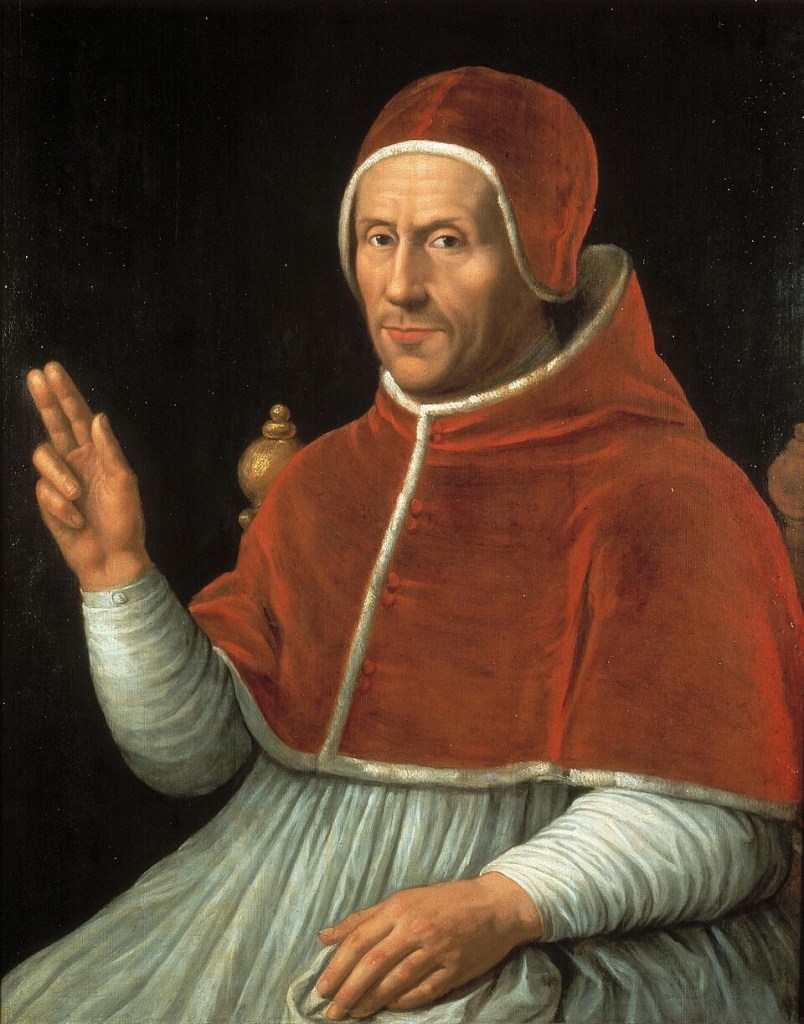
Pope Adrian VI. Image Wikimedia Commons/Image copyright Centraal Museum, Utrecht
Five questions today which are not date-related and follow a religious theme.
One
Adrian VI was the last non-Italian to be elected pope until John Paul II in 1978. In what year had Adrian been elected?
Answer: 1522
Adrian VI, born Adriaan Florensz Boeyens, served as pope from 1522 to 1523. The only Dutchman elected, he attempted reform and admitted Curia fault but faced resistance. He was succeeded by Clement VII.
Two
The word “antidisestablishmentarianism” refers to opposition to what?
Answer: The disestablishment of the Church of England.
antidisestablishmentarianism
▸ noun [mass noun] rare opposition to the disestablishment of the Church of England: I never realized that you leaned towards antidisestablishmentarianism.
Antidisestablishmentarianism is very occasionally found in genuine use, but it is most often cited as an example of a very long word.
In the book title The Red and the Black what do the colours symbolise?
Answer: The army (red) and the church (black).
The title of Stendhal’s 1830 novel The Red and the Black is ambiguous, but the colours are widely seen as symbolising the two careers available to Julien Sorel in post-Napoleonic France. Red refers to the red uniform of the army, especially the glory and advancement associated with Napoleon’s military career. Black refers to the black cassock of the clergy, representing the Church as an alternative route to power, status, and influence after Napoleon’s fall.
Four
Which Unification Church leader founded The Washington Times in 1982?
Answer: Sun Myung Moon.
Sun Myung Moon founded the Unification Church, authored Divine Principle and promoted mass weddings. An anti-communist advocate for Korean reunification, he led News World Communications and Tongil Group. Imprisoned in Korea and convicted in United States v. Sun Myung Moon, he engaged with political figures.
Five
Since 9/11 a Manhattan church exhibits police and firefighter memorabilia, what church?
Answer: St Paul’s.
St Paul’s Chapel provided refuge for recovery workers after 11 September 2001, with volunteers working round the clock for nine months. A sycamore tree protected the building; its root is preserved in a bronze memorial. The organ was refurbished.
Mars Reconnaissance Orbiter caught this image of Phoenix hanging from its parachute as it descended to the Martian surface in 2008. Image NASA/JPL-Caltech/University of Arizona
Question one is date-related, but the rest are not. There is a space theme in all of the questions.
One
A U.S. space probe was launched on this day in 2007 and a year later it landed on Mars. What mythical creature was the probe named after?
Answer: Phoenix.
Launched on 4 August 2007, the Mars Phoenix lander touched down on 25 May 2008 in Vastitas Borealis to examine Martian water history and organic molecules. It confirmed subsurface water ice, detected perchlorate, and identified alkaline soil containing salts. With a robotic arm, ovens, and a laboratory, it analysed soil volatiles, mapped geology, and monitored atmospheric conditions. The mission, extended by late August, concluded on 2 November 2008, having announced water on Mars on 31 July.
Two
What two words are missing from this 1969 quote: “Houston, … here. The Eagle has landed.”
Answer: Tranquility Base.
Apollo 11 landed humans on the Moon from 16–24 July 1969 using Saturn V. Neil Armstrong and Buzz Aldrin walked on the surface while Michael Collins orbited; 21.5 kg of material was collected. The mission fulfilled Kennedy’s goal and broadcast Armstrong’s statement to 600 million viewers.
Three
In 2012, travelling a whopping 480 million kilometres to reach our ears, … was the first tune to be broadcast from another planet. — BBC Sky at Night magazine
The above quote is missing the name of the song which was broadcast. What was that song and who had especially written it for this purpose?
Answer: Reach for the Stars by will.i.am.
American recording artist will.i.am wrote, produced, and recorded the song “Reach for the Stars” (and their instrumental-driven version subtitled “Mars Edition” and “NASA Edition”) in commemoration of the landing of the Curiosity rover on Mars. The song was first released on August 28, 2012, and it became the first song that was successfully broadcast from another planet Wikipedia
Four
If Voyager 2’s flyby of Uranus occurred in January 1986, when was its next encounter, the Neptune Flyby? (Month and Year)
Answer: August 1989.
Voyager 2 was launched on 20 August 1977, and these key dates on its journey are from NASA:
July 9, 1979: Jupiter Flyby Aug 25, 1981: Saturn Flyby Jan 24, 1986: Uranus Flyby Aug 25, 1989: Neptune Flyby Aug 30, 2007: Crossed Termination Shock Nov 25, 2018: Entered Interstellar Space — NASA
Five
For what planet in the Solar System is the following true?
The Sun rises twice each year.
The Sun rises in the west, and
A day is longer than a year.
Answer: Venus.
Venus is the second planet from the Sun and Earth’s closest planetary neighbor. Similar in size to Earth, it is covered by thick clouds of carbon dioxide and sulfuric acid. Its atmosphere creates an intense greenhouse effect, making Venus the hottest planet in the Solar System, with surface temperatures around 465°C. The planet rotates very slowly and in the opposite direction to most planets. Volcanoes, vast plains, and rugged highlands dominate its hidden surface today.
Mars Reconnaissance Orbiter caught this image of … hanging from its parachute as it descended to the Martian surface in 2008. Image NASA/JPL-Caltech/University of Arizona
Question one is date-related, but the rest are not. There is a space theme in all of the questions.
One
A U.S. space probe was launched on this day in 2007 and a year later it landed on Mars. What mythical creature was the probe named after?
Two
What two words are missing from this 1969 quote: “Houston, … here. The Eagle has landed.”
Three
In 2012, travelling a whopping 480 million kilometres to reach our ears, … was the first tune to be broadcast from another planet. — BBC Sky at Night magazine
The above quote is missing the name of the song which was broadcast. What was that song and who had especially written it for this purpose?
Four
If Voyager 2’s flyby of Uranus occurred in January 1986, when was its next encounter, the Neptune Flyby? (Month and Year)
Five
For what planet in the Solar System is the following true?