This twelve-letter noun means ‘a political candidate who seeks election in an area where they have no local connections’. What is this word?
Answer: Carpetbagger.
carpetbagger ▸ noun informal, derogatory a political candidate who seeks election in an area where they have no local connections. — ORIGIN mid 19th century: originally applied to people from the northern states of the US who went to the South after the Civil War to profit from the Reconstruction. Oxford English Dictionary
Two
This six-letter noun means ‘the period of a person’s or thing’s greatest success, popularity, activity, or vigour’. What is this noun?
Answer: Heyday.
heyday /ˈheɪdeɪ / ▸ (one’s heyday) noun the period of a person’s or thing’s greatest success, popularity, activity, or vigour: the paper has lost millions of readers since its heyday in 1964.
– ORIGIN late 16th century (denoting good spirits or passion): from archaic heyday!, an exclamation of joy, surprise, etc. Oxford English Dictionary
Three
This four-letter verb means ‘move along slowly and carefully’. What is it?
Answer: Inch.
inch verb [no object, with adverbial of direction] move along slowly and carefully. — ORIGIN late Old English ynce, from Latin uncia ‘twelfth part’, from unus ‘one’ (probably denoting a unit). Compare with ounce. Oxford English Dictionary
Four
This seven-letter verb means ‘criticise (someone or something) harshly’. What is this verb?
Answer: Lambast.
lambast /lamˈbast / (lambaste /lamˈbeɪst /) ▸ verb [with object] criticize (someone or something) harshly: they lambasted the report as a gross distortion of the truth.
– ORIGIN mid 17th century (in the sense ‘beat, thrash’): from lam1 + baste3. The current sense dates from the late 19th century. Oxford English Dictionary
Five
This five-letter verb means ‘inspire or permeate with (a feeling or quality)‘. What is the word?
Answer: Imbue.
imbue /ɪmˈbjuː / ▸ (be imbued with) verb ( imbues, imbuing, imbued) [with object] inspire or permeate with (a feeling or quality): his works are invariably imbued with a sense of calm and serenity.
– ORIGIN late Middle English (in the sense ‘saturate’): from French imbu ‘moistened’, from Latin imbutus, past participle of imbuere ‘moisten’. Oxford English Dictionary
Word Spice
The post title was a bit of a clue But not as straightforward as yesterday. The first letter of each answer spells ‘chili’ when taken in order — chili being a spice.
This nine-letter noun means ‘a tiny trace or spark of a specified quality or feeling’. What is the word?
Answer: Scintilla.
scintilla | sɪnˈtɪlə | noun [in singular] a tiny trace or spark of a specified quality or feeling: a scintilla of doubt. — ORIGIN late 17th century: from Latin. Oxford English Dictionary
Two
A twelve-letter noun used in law, mainly in Scotland, meaning ‘the preliminary examination of witnesses, especially to decide whether there is ground for a trial’. What is the word?
Answer: Precognition.
See usage 2 below.
precognition | ˌpriːkɒɡˈnɪʃn | noun 1 [mass noun] foreknowledge of an event, especially as a form of extrasensory perception. 2 Law, mainly Scottish English the preliminary examination of witnesses, especially to decide whether there is ground for a trial. — ORIGIN late Middle English: from late Latin praecognitio(n-), based on Latin cognoscere ‘know’. Oxford English Dictionary
Three
This four-letter noun, the ninth letter of the Greek alphabet, means ‘an extremely small amount’. Can you guess what it is?
Answer: Iota.
iota | ʌɪˈəʊtə | noun 1 the ninth letter of the Greek alphabet (Ι, ι), transliterated as ‘i’. •[followed by Latin genitive] Astronomy (Iota) the ninth star in a constellation: Iota Piscium. 2 [in singular, usually with negative] an extremely small amount: nothing she said seemed to make an iota of difference. — ORIGIN from Greek iōta. iota (sense 2 of the noun) arose because iota is the smallest letter of the Greek alphabet: compare with jot. Oxford English Dictionary
Four
This is a fourteen-letter noun meaning ‘a person who enjoys or is skilled at solving crosswords’. Can you identify the word?
Answer: Cruciverbalist.
cruciverbalist | ˌkruːsɪˈvəːbəlɪst | noun a person who enjoys or is skilled at solving crosswords. — ORIGIN 1970s: from Latin crux, cruci– ‘cross’ and verbalist. Oxford English Dictionary
Five
This ten-letter noun means ‘the formal art and practice of horsemanship and horse riding’. What is the word?
Answer: Equitation.
equitation | ˌɛkwɪˈteɪʃn | noun [mass noun] formal the art and practice of horsemanship and horse riding. — ORIGIN mid 16th century: from French équitation or Latin equitatio(n-), from equitare ‘ride a horse’, from eques, equit– ‘horseman’ (from equus ‘horse’). Oxford English Dictionary
Word Spice
The post title was a bit of a clue. The first letter of each answer spells ‘spice’ when taken in order.
This nine-letter noun means ‘a tiny trace or spark of a specified quality or feeling’. What is the word?
Two
A twelve-letter noun used in law, mainly in Scotland, meaning ‘the preliminary examination of witnesses, especially to decide whether there is ground for a trial’. What is this noun?
Three
This four-letter noun, the ninth letter of the Greek alphabet, means ‘an extremely small amount’. Can you guess what it is?
Four
This is a fourteen-letter noun meaning ‘a person who enjoys or is skilled at solving crosswords’. Can you identify the word?
Five
This ten-letter noun means ‘the formal art and practice of horsemanship and horse riding’. What is the word?
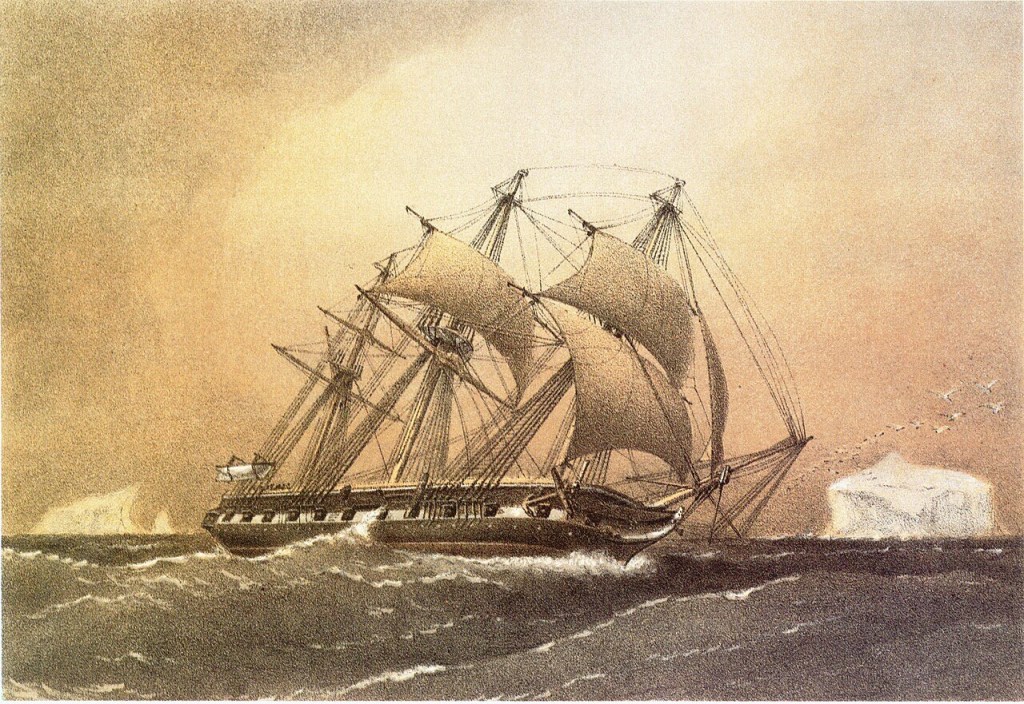
HMS Challenger, 1858 by William Frederick Mitchell. Orginaly published in the Royal Navy in a series of illustrations. Image Wikimedia Commons
Today’s first question concerns the date May 26th. The subsequent questions share a theme established in the first one.
One
On 26 May 1876, HMS Challenger returned to Great Britain from a three-and-a-half-year, groundbreaking oceanographic expedition which circumnavigated the Earth. How many miles or kilometres, to the nearest 1,000, did the ship sail on its voyage?
Answer: 79,000 miles or 128,000 kilometres.
The Challenger expedition (1872–1876), led by Captain George Nares and supervised by Sir Charles Wyville Thomson, was a groundbreaking scientific programme that established oceanography. HMS Challenger, a joint effort by the British Admiralty and the Royal Society, travelled 68,890 nautical miles (79,278 miles or 127,584 kilometres), cataloguing over 4,000 unknown species, collecting ocean floor samples, measuring depths, and recording currents. It was the first to photograph icebergs and approached Antarctica, significantly advancing planetary knowledge.
Two
These three points all relate to the same person, there are three answers.
What is the name of the explorer and navigator after whom the Americas are named?
In what modern country is his birthplace?
What two countries sponsored his voyages?
Answers.
Amerigo Vespucci
Italy
Spain and Portugal
America is named after Amerigo Vespucci (1454–1512), an Italian explorer from the Republic of Florence. He participated in voyages for Spain (1499–1500) and Portugal (1501–1502) during the Age of Discovery. Two booklets published under his name in 1503 and 1505 described these explorations, although their authorship is disputed. Vespucci argued that Brazil was part of a previously unknown continent—the ‘New World’—which inspired the German cartographer Martin Waldseemüller to use the name ‘America’, the Latinised feminine form of Amerigo, on his 1507 world map.
Three
These three points all relate to the same person, there is only one answer.
Edgar Allan Poe dedicated his final major work Eureka: A Prose Poem to this scientist and explorer
The same explorer authored the five-volume treatise Kosmos (1845-62)
Charles Darwin read and referenced Helen Maria Williams’s English translation of this explorer’s Relation historique du voyage aux régions équinoxiales du nouveau continent during his voyage on the HMS Beagle.
Which explorer do the above all refer to?
Answer: Alexander von Humboldt.
Alexander von Humboldt (1769–1859) was a German naturalist and explorer renowned for advancing geography, biogeography, and Earth sciences. Initially a restless student, he became passionate about botany, mineralogy, and geology, later joining the Prussian Mining Department. Driven by scientific ambition, he financed and undertook a five-year expedition (1799–1804) across Central and South America with Aimé Bonpland, studying flora, fauna, rivers, mountains, and the Humboldt Current. His discoveries, measurements, and writings, notably Kosmos, profoundly popularised science worldwide.
Four
How many years did Marco Polo spend travelling across Asia?
Answer: 24 years.
Marco Polo was a Venetian merchant and adventurer who travelled across Asia from 1271 to 1295, spending 17 years in China under the rule of Kublai Khan. Accompanying his father and uncle along the Silk Road, he journeyed through Persia, Central Asia, and the Gobi Desert before reaching the Mongol court. His experiences were recorded in Il milione(The Travels of Marco Polo), one of history’s most influential travel books, introducing Europeans to the cultures, cities, and wealth of Asia.
Five
In what century did a Greek explorer first visit the British Isles?
Answer: 4th century BCE.
Pytheas was a Greek navigator, geographer, and astronomer from Massalia (Marseille) who explored northern Europe around 325 BC. Sailing beyond the Mediterranean into the Atlantic, he visited Spain, Brittany, Cornwall, and much of Britain, accurately estimating distances and Britain’s circumference. Although his book On the Ocean is lost, later writers preserved his observations on tides, polar ice, the midnight sun, and northern peoples. His voyages greatly expanded Greek knowledge of Europe and the far north.
HMS Challenger, 1858 by William Frederick Mitchell. Orginaly published in the Royal Navy in a series of illustrations. Image Wikimedia Commons
Today’s first question concerns the date May 26th. The subsequent questions share a theme established in the first one.
One
On 26 May 1876, HMS Challenger returned to Great Britain from a three-and-a-half-year, groundbreaking oceanographic expedition which circumnavigated the Earth. How many miles or kilometres, to the nearest 1,000, did the ship sail on its voyage?
Two
These three points all relate to the same person, and there are three answers.
What is the name of the explorer and navigator after whom the Americas are named?
In what modern country is his birthplace?
What two countries sponsored his voyages?
Three
These three points all relate to the same person, there is only one answer..
Edgar Allan Poe dedicated his final major work Eureka: A Prose Poem to this scientist and explorer
The same explorer authored the five-volume treatise Kosmos (1845-62)
Charles Darwin read and referenced Helen Maria Williams’s English translation of this explorer’s Relation historique du voyage aux régions équinoxiales du nouveau continent during his voyage on the HMS Beagle.
Which explorer do the above all refer to?
Four
How many years did Marco Polo spend travelling across Asia?
Five
In what century did a Greek explorer first visit the British Isles?
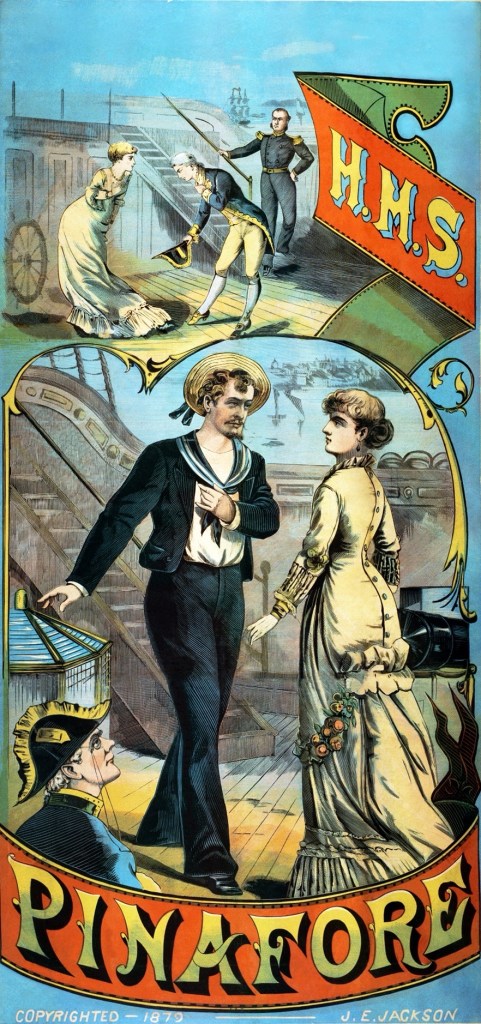
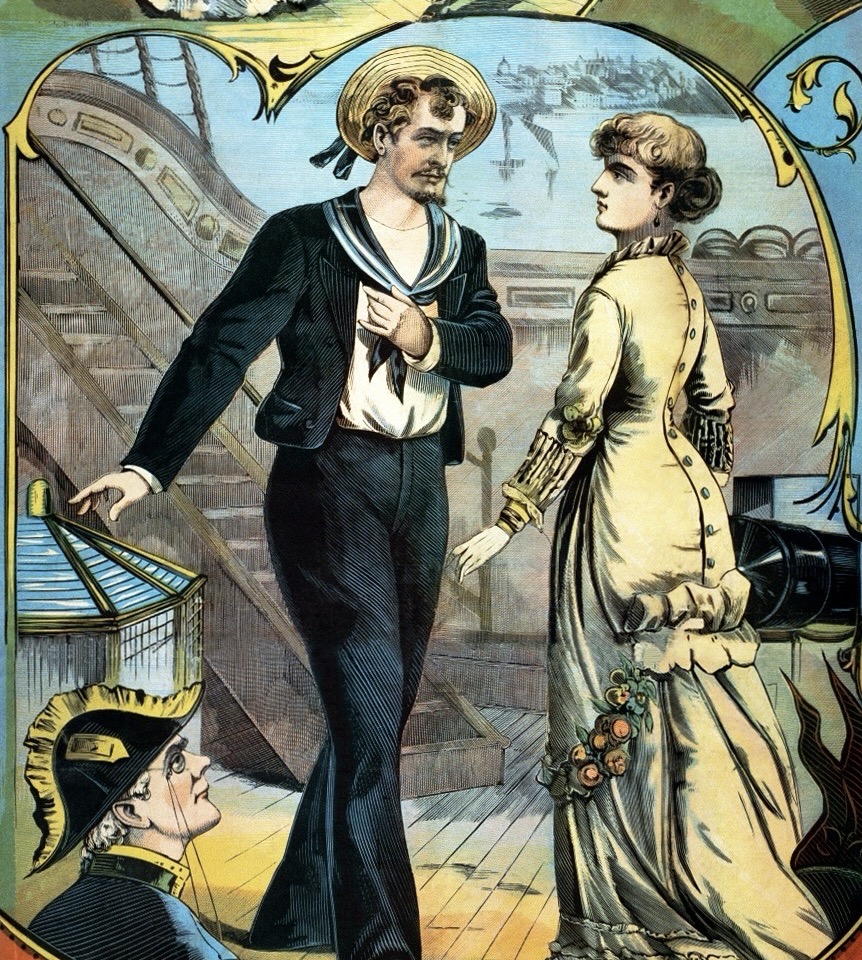
H.M.S. Pinafore; or, The Lass That Loved a Sailor, theatrical poster. Image Wikimedia Commons
All of these questions are related to today’s date, May 25th.
One
What was the first X-rated film to win the Academy Award for best picture?
Midnight Cowboy.
Released on this day in 1969, Midnight Cowboy, directed by John Schlesinger, stars Dustin Hoffman and Jon Voight as New York hustlers. It won three Academy Awards, including Best Picture, and is the only X-rated film to do so. Ranked 36th and 43rd on AFI’s lists, it was preserved in the U.S. National Film Registry in 1994. X-certification has been renamed in some domains; for example, in the U.K., it is now an 18 certificate, which is suitable only for persons aged 18 years and over, and in the U.S., NC-17, No one 17 and under admitted.
Two
He did not wear his scarlet coat, For blood and wine are red, And blood and wine were on his hands When they found him with the dead, The poor dead woman whom he loved, And murdered in her bed.
The above lines are the opening verse of an 1897 poem which was published under the pseudonym C.3.3. What is the poem, and who wrote it?
Answer: The Ballad of Reading Gaol by Oscar Wilde.
On 25 May 1895, Wilde had been convicted of ‘committing acts of gross indecency with certain male persons’, sentenced to two years’ hard labour; he served the majority of his sentence in Reading Gaol. His poem, The Ballad of Reading Gaol, which was written after his release from prison, narrates the execution of Charles Thomas Wooldridge. It highlights the brutalisation of punishment and Wilde’s identification with prisoners. Published in 1898, under the pseudonym C.3.3. — his prison identification by which he was addressed — it remained anonymous until Wilde’s identity as author was revealed in 1899. The poem, which sold well, provided Wilde with an income for life.
Three
The author who created the character Jason Bourne in a 1980 novel was born in 1927. Who was this author?
Answer: Robert Ludlum.
Robert Ludlum, an American author known for his spy thrillers, wrote best-sellers like The Bourne Identity and The Scarlatti Inheritance. Despite criticism of his plots and prose, his fast-paced espionage novels were immensely popular. He authored 27 thriller novels, including the Jason Bourne series, which have been published in 33 languages and sold an estimated 300-500 million copies.
Four
An actor, born in 1939, links the roles of John Profumo in 1989, Mithrandir (2001), and Leigh Teabing (2006). What actor?
Answer: Ian McKellen.
Ian McKellen, who was born in England on this day in 1939, played John Profumo in Scandal (1989). In 2001, he took on the role of Gandalf the Grey in The Lord of the Rings: The Fellowship of the Ring — Mithrandir is how Gandalf is known by the Elves in their Sindarin language. He portrayed Sir Leigh Teabing in The Da Vinci Code (2006).
Five
…; or, The Lass That Loved a Sailor, a comic opera, debuted in London in 1878. What has been omitted from the beginning of the opera’s title?
Answer: H.M.S. Pinafore.
H.M.S. Pinafore; or, The Lass That Loved a Sailor, a comic opera by Gilbert and Sullivan, premiered in 1878, running for 571 performances. Set on a Royal Navy ship, it humorously critiques the British class system and authority. Its success led to other popular works, influencing modern musical theatre.
…; or, The Lass That Loved a Sailor, theatrical poster (cropped). See question five. Image Wikimedia Commons
All of these questions are related to today’s date, May 25th.
One
What was the first X-rated film to win the Academy Award for best picture?
Two
He did not wear his scarlet coat, For blood and wine are red, And blood and wine were on his hands When they found him with the dead, The poor dead woman whom he loved, And murdered in her bed.
The above lines are the opening verse of an 1897 poem which was published under the pseudonym C.3.3. What is the poem, and who wrote it?
Three
The author who created the character Jason Bourne in a 1980 novel was born in 1927. Who was this author?
Four
An actor, born in 1939, links the roles of John Profumo in 1989, Mithrandir (2001), and Leigh Teabing (2006). What actor?
Five
…; or, The Lass That Loved a Sailor, a comic opera, debuted in London in 1878. What has been omitted from the beginning of the opera’s title?
Today the first question relates to today’s date, May 24th. The following questions follow a theme which is explained here but is basically the same as yesterday.
Theme
The gist of today’s quiz is that the first question results in you having three five-letter words in the answer.
One of those words supplies the initial letters for the remaining questions.
After discounting the initial letter which has already been used the remaining four letters supply the initial letters to the answers to the remaining questions but they will not necessarily be in the correct order.
Once you have answered all the questions you should be able to take the initial letters of the five questions, rearrange and have one of the words from the answer to question one.
One
Mike … was …; while Cameron was …; and Eddie was a bit of an ass. Three five-letter names are missing from the above statement. What are they?
Answers: Myers; Shrek and Fiona.
Shrek (2001), an animated fantasy comedy film, follows an ogre’s quest to reclaim his swamp from banished fairy tale creatures. Mike Myers voices Shrek and Cameron Diaz is Princess Fiona. Eddie Murphy was the voice of Donkey.
Two
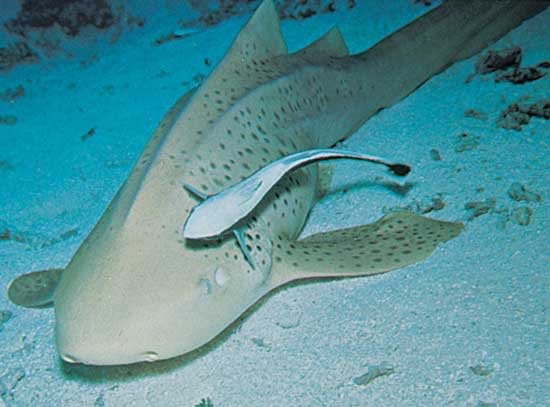
The nurse shark pictured above is accompanied by a fish of the family Echeneidae. What is the common six-letter name of the smaller fish?
Answer: Remora.
Remoras, or suckerfish, are eight species of marine fish known for attaching to larger marine animals and ships using a specialised sucking disk. They typically range from 30 to 90 cm in length and feed on leftovers or parasites.
Three
This UNESCO World Heritage Site, which is 15 miles (25 km) long by 7 miles (12 km) wide, is one of the world’s remotest places. It is 1,200 miles (1,900 km) from the nearest inhabited island and almost 2,200 miles (3,500 km) from the nearest continent. Where is it?
Answer: Easter Island.
Easter Island, a special territory of Chile in the eastern Pacific Ocean, is renowned for its nearly 1,000 moai statues created by the early Rapa Nui people. Originally called Rapa Nui, the island has a mixed population predominantly of Polynesian descent. In 1995, UNESCO named Easter Island a World Heritage Site, with much of the island protected within Rapa Nui National Park.
Four
What is the most abundant element in the known universe?
Answer: Hydrogen.
Hydrogen is the simplest chemical element, a colourless, odourless, flammable gas. It is the most abundant element in the universe and is used industrially to make ammonia and hydrogenate compounds.
Five
The name of which unicameral national legislature means ‘gathering’ or ‘assembly’ in Hebrew?
Answer: Knesset.
The Knesset, Israel’s unicarmel parliament, is responsible for passing laws, electing the president and prime minister, approving the cabinet, supervising the government, and electing the state comptroller. It has the authority to waive member immunity, remove officials, dissolve the government or itself, and call elections. Members are elected through proportional representation in Jerusalem. The term Knesset originates from the ancient Knesset HaGdola, or Great Assembly, a group of 120 scribes, sages, and prophets from the end of Biblical prophets to Rabbinic Judaism’s development, around 200 BCE. Despite the name, there is no organisational continuity; the ancient Knesset was unelected and religious.
Explanation
Answers
In full, the first part of question one read ‘Mike Myers was Shrek; while Cameron was Fiona; and Eddie was a bit of an ass.’