Today’s questions are related to the date, April 29th..
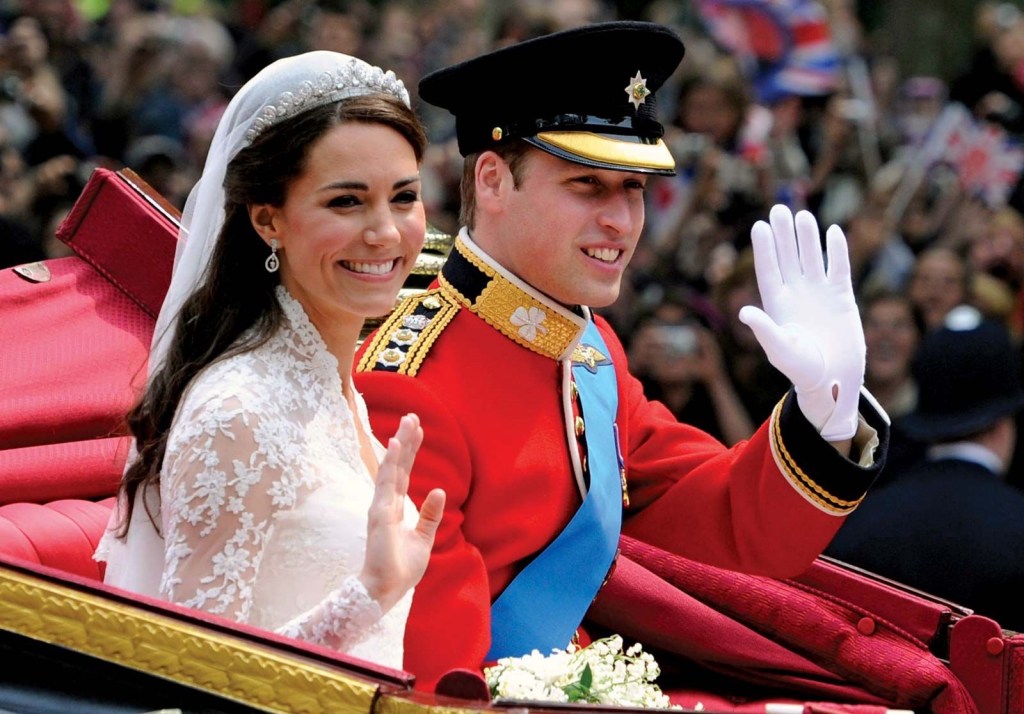
See question two. Prince William and his bride after their wedding, April 29, 2011. Image Encyclopædia Britannica
One
In a 1943 British deception plan, a corpse was given the identity of ‘Major William Martin’. The idea for the above operation, which was partly inspired by a plot device in a 1939 novel by Basil Thomson, The …’s Hat Mystery, had first been suggested in a memo.
What was the codename of this operation?
What word for a hat maker is missing from the book’s title?
A future spy novelist—later the creator of a fictional spy which spawned a massive media franchise—worked in British Naval Intelligence during the war where he circulated the memo outlining the above deception tactics. Who was he?
Two
In 2011, Prince William married his longtime girlfriend, Catherine, whom he had met at university.
What is Catherine’s maiden name?
At what university did they meet?
In what church did they marry?
Three
In 2004, after 107 years of vehicle production, the final … was built in Lansing, Michigan. What make of vehicle is missing from the previous sentence?
Four
On this day in 2018, a U.S. TV series became the longest-running scripted prime-time show, overtaking a Western that had aired from 1955 to 1975. Name both these shows.
Answer: The Simpsons; Gunsmoke.
The record-breaking episode was the show’s 636th, surpassing Gunsmoke’s long-standing total.
Five
Also on this day, in 1770, which British explorer made his first recorded landing on the east coast of Australia, at Botany Bay?
Here’s the answers to my earlier questions. All of today’s questions are related to the date, April 28th.
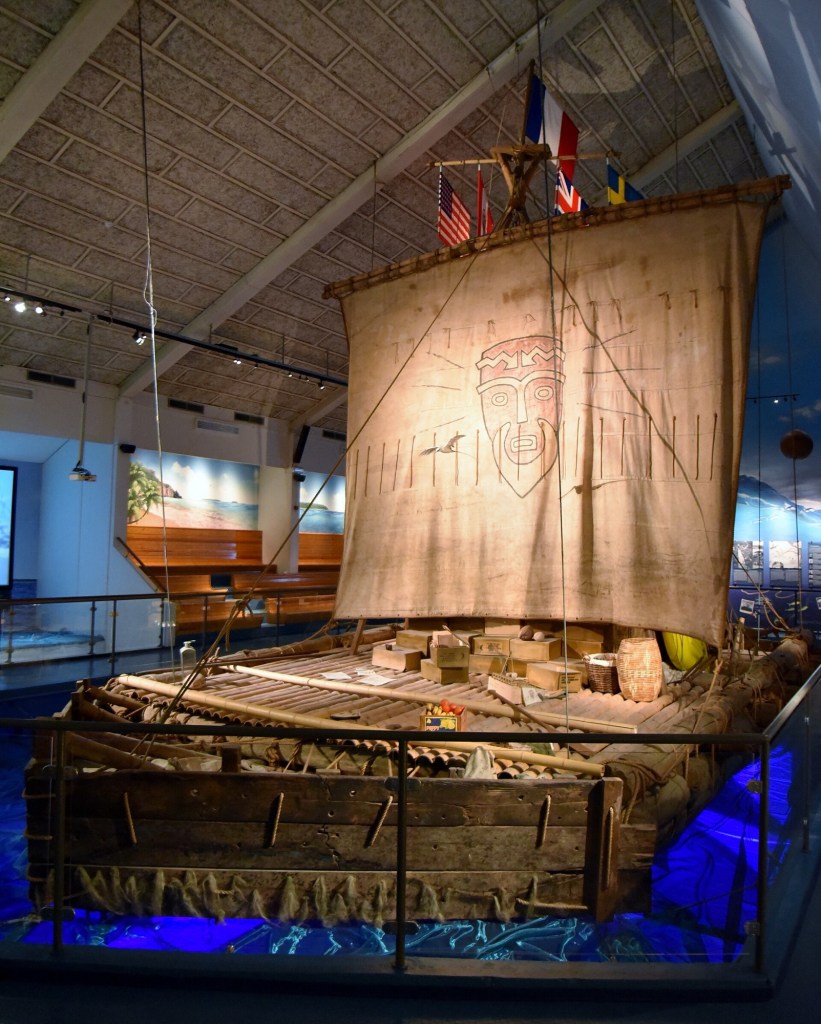
Kon-Tiki, on display inside the Kon-Tiki Museum, Oslo. Image Wikimedia Commons
One
In 1947, Thor Heyerdahl set sail in Kon-tiki, a handmade balsa wood raft, in an attempt to reach the islands of Polynesia. From what country did he set out?
Answer: Peru.
Thor Heyerdahl and five companions sailed the Kon-Tiki raft from South America to Polynesia in 1947, demonstrating the possibility of ancient American colonisation. The Kon-Tiki expedition, led by Heyerdahl, aimed to prove that pre-Columbian South Americans could have reached Polynesia by raft. Funded by private loans and equipment donations, the expedition successfully sailed 6,900 km across the Pacific Ocean in 101 days. Although Heyerdahl’s hypothesis of a Caucasian people reaching Polynesia has been rejected, the journey’s feasibility was demonstrated. The Kon-Tiki is now preserved in a museum in Oslo.
Two
In 1923, Wembley Stadium opened in London. What was it initially named?
Answer: Empire Stadium.
The original Wembley Stadium, or Empire Stadium, in London, was a renowned football venue that hosted the FA Cup final, the 1966 World Cup final, and Euro 1996. Demolished in 2003, it also hosted five European Cup finals, two European Cup Winners’ Cup finals and the 1948 Summer Olympics. Wembley was a key rugby league venue, hosting the Challenge Cup Final from 1929, and it also welcomed various sports, including speedway, stock car racing and American football. It hosted events such as the Horse of the Year Show, Live Aid, and concerts by Michael Jackson, Queen and U2, and is linked to an urban legend about a buried locomotive.
Three
Born in 1758, the fifth president of the United States is commemorated by a city at these coordinates: 6°18′48″N 10°48′5″W. Which city is it and in which country is it situated?
Answer: Monrovia, Liberia.
Monrovia, Liberia’s capital, sits on the Atlantic coast and serves as a political, administrative, economic and cultural centre. Established in 1822 by the American Colonisation Society as a settlement for formerly enslaved and freeborn African Americans, it was named after James Monroe and became the capital in 1847. The city’s population reached 1.76 million in 2022 with the metropolitan area exceeding 2.2 million.
Four
Born in 1948, Terry Pratchett is best known for a series of novels which began in 1983 with The Colour of Magic, and introduced Great A’Tuin, Berilia, Tubul, Great T’Phon and Jerakeen. In the prologue of The Colour of Magic…
What one word describes Great A’Tuin?
What are Berilia, Tubul, Great T’Phon and Jerakeen?
Answers
Turtle
Elephants
Wikipedia describes Discworld as follows
The Discworld is the fictional world where English writer Sir Terry Pratchett’s Discworld fantasy novels take place. It consists of an interstellar planet-sized disc, which sits on the backs of four huge elephants, themselves standing on the back of a world turtle, named Great A’Tuin, as it slowly swims through space.
Five
A piece of paper found in China in 1986 has been dated to which century: Second century BCE; First century CE or Third century CE?
Answer: Second century BCE.
In 1986, archaeologists discovered over 400 artefacts in nearly 2,000-year-old Chinese tombs, including the world’s oldest surviving paper map fragment. Found in Fangmatan, Gansu Province, this second-century BCE map forced a rewrite of paper-making history.
All of today’s questions are related to the date, April 28th.
Kon-Tiki, on display inside the Kon-Tiki Museum, Oslo. Image Wikimedia Commons
One
In 1947, Thor Heyerdahl set sail in Kon-tiki, a handmade balsa wood raft, in an attempt to reach the islands of Polynesia. From what country did he set out?
Two
In 1923, Wembley Stadium opened in London. What was it initially named?
Three
Born in 1758, the fifth president of the United States is commemorated by a city at these coordinates: 6°18′48″N 10°48′5″W. Which city is it and in which country is it situated?
Four
Born in 1948, Terry Pratchett is best known for a series of novels which began in 1983 with The Colour of Magic, and introduced Great A’Tuin, Berilia, Tubul, Great T’Phon and Jerakeen. In the prologue of The Colour of Magic…
What one word describes Great A’Tuin?
What are Berilia, Tubul, Great T’Phon and Jerakeen?
Five
A piece of paper found in China in 1986 has been dated to which century: Second century BCE; First century CE or Third century CE?
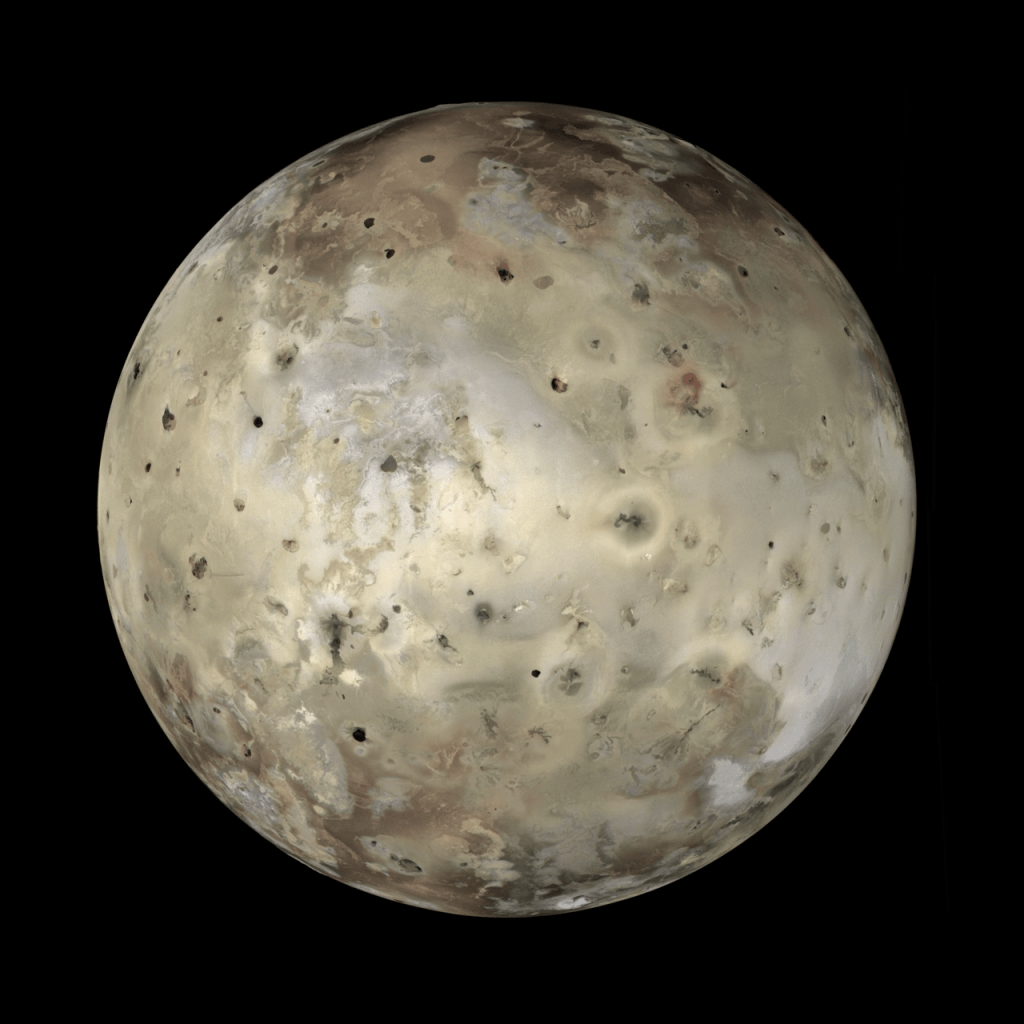
1 Greek mythology a priestess of Hera who was loved by Zeus. Trying to protect her from the jealousy of Hera, Zeus turned [her] into a heifer. Hera sent a gadfly to torture the heifer, which then fled across the world and finally reached Egypt, where Zeus turned her back into human form. 2 Astronomy one of the Galilean moons of Jupiter, the fifth-closest satellite to the planet, being actively volcanic and coloured red and yellow with sulphur compounds (diameter 3,630 km. — Oxford English Dictionary
The above entry in the Oxford English Dictionary defines what word?
Answer: Io.
Io, a mortal lover of Zeus, was a princess whose descendants included Perseus and Heracles. Named after this princess, Io, the innermost Galilean moon of Jupiter, is the most geologically active object in the Solar System, with over 400 active volcanoes.
Two
Cato Fong is the manservant of which fictional inspector?
Answer: Inspector Clouseau.
Cato, Clouseau’s manservant and martial arts expert, is known for unexpectedly attacking Clouseau to keep his skills sharp. Despite Clouseau’s frequent humiliation, he always gets revenge. In later films, Cato helps Clouseau on cases and even runs a covert brothel in Clouseau’s apartment.
Three
Which Swedish actress played Ilsa Lund in the classic film Casablanca?
Answer: Ingrid Bergman.
Ingrid Bergman was a Swedish actress with a career spanning five decades. She is regarded as one of the most influential actresses in cinema history, winning numerous accolades including three Academy Awards, two Primetime Emmy Awards, and a Tony Award. Bergman, who spoke five languages, starred in notable films like Casablanca, Gaslight, and Murder on the Orient Express.
Four
Which 2013 Dan Brown novel begins with Robert Langdon waking in a Florence hospital?
Answer: Inferno.
Harvard professor Robert Langdon, suffering from amnesia, escapes an assassin with the help of Dr. Sienna Brooks. He discovers he mumbled ‘Very sorry’ but later learns it was ‘Vasari’ and refers to the artist Giorgio Vasari.
Five
What was the title of Carrie Underwood’s debut single?
Answer: Inside Your Heaven.
Inside Your Heaven, written by Andreas Carlsson, Pelle Nylén, and Savan Kotecha, was released as a single by both Carrie Underwood and Bo Bice in June 2005. Underwood’s version debuted at number one on the US Billboard Hot 100 and Canadian Singles Chart, while Bice’s peaked at number two.
The Eyes Have It
The title is a pun on the word ’eyes’, with each of the answers beginning with the letter ‘I’.
1 Greek mythology a priestess of Hera who was loved by Zeus. Trying to protect her from the jealousy of Hera, Zeus turned [her] into a heifer. Hera sent a gadfly to torture the heifer, which then fled across the world and finally reached Egypt, where Zeus turned her back into human form. 2 Astronomy one of the Galilean moons of Jupiter, the fifth-closest satellite to the planet, being actively volcanic and coloured red and yellow with sulphur compounds (diameter 3,630 km. — Oxford English Dictionary
The above entry in the Oxford English Dictionary defines what word?
Two
Cato Fong is the manservant of which fictional inspector?
Three
Which Swedish actress played Ilsa Lund in the classic film Casablanca?
Four
Which 2013 Dan Brown novel begins with Robert Langdon waking in a Florence hospital?
Five
What was the title of Carrie Underwood’s debut single?
All of today’s questions are date-specific, relating in one way or another to April 26th.
One
Akira Kurosawa‘s 1954 film is set in a village plagued by bandits, and a 1960 American western is a remake of this story.
What was the title of Kurosawa’s 1954 film?
What was the 1960 American film?
What actors played the title characters in the American film?
Answers
Seven Samurai
The Magnificent Seven
Yul Brynner, Steve McQueen, Horst Buchholz, Charles Bronson, Robert Vaughn, Brad Dexter and James Coburn.
Seven Samurai, a 1954 Japanese action film by Akira Kurosawa, is hailed as one of the greatest films ever. Set in the 16th century, it depicts a village hiring samurai to fend off bandits, overcoming cultural tensions. Despite being Japan’s longest and costliest film at the time, it achieved global success, elevating Japanese cinema and influencing cinematography. Starring Mifune Toshirō, it inspired The Magnificent Seven.
The country represented by the above flag was founded in 1964.
What is the full, official name of the new country founded?
This new country was formed by the union of a sovereign state with a semi-autonomous region, what were this state and region?
Answers
United Republic of Tanzania
Tanganyika and Zanzibar.
Tanzania, officially the United Republic of Tanzania, is an East African nation with a 2024 population of 67.5 million. Formed in 1964 from the Republic of Tanganyika and Zanzibar, it features Mount Kilimanjaro, three Great Lakes, and is a popular safari destination. Swahili is the national language, with Dodoma as its capital.
Three
In 1933, Hermann Göring established the Geheime Staatspolizei. What was it commonly known as?
Answer: Gestapo.
The Gestapo, Nazi Germany’s secret police, was established in 1933 by Hermann Göring and later controlled by Heinrich Himmler. It targeted political opponents, dissenters, and minorities, committing numerous atrocities. Despite its small size, it was effective due to citizen reporting and played a crucial role in the Holocaust. Post-WWII, it was declared a criminal organisation.
Four
American artist and ornithologist James Audubon was born in 1785. In what present day country was he born?
Answer: Haiti.
Born in Les Cayes, Saint-Domingue, West Indies, now Haiti, John James Audubon, a French-American artist and ornithologist, is known for his paintings and illustrations of North American bird species. However, he has been accused of fraud and misconduct, such as plagiarising data and trafficking Native American remains.
Five
On 26 April 1986, a nuclear disaster occurred in which Soviet Socialist Republic?
Answer: Ukrainian Soviet Socialist Republic.
On 26 April 1986, reactor no. 4 at the Chernobyl Nuclear Power Plant, Pripyat, exploded, causing one of the worst nuclear disasters in history. The explosion, due to a design flaw during a test, led to a power surge, steam explosions, and a reactor core fire, spreading radioactive contamination across Europe. Immediate evacuations affected 117,000 people. The disaster resulted in radiation-related fatalities and thousands of cancer cases, with varying death toll predictions. The city of Pripyat was abandoned and replaced by the purpose-built Slavutych. The Chernobyl Nuclear Power Plant sarcophagus, completed in December 1986, limited radioactive contamination and protected undamaged reactors’ crews. Between 2016 and 2018, the Chernobyl New Safe Confinement was built around the old sarcophagus to facilitate reactor debris removal. The clean-up is expected to be completed by 2065. It has been described as the most expensive disaster in history costing an estimated US$700 billion.
I’d Hate to Die on That Dung Heap
The post title is a quote from the Seven Samurai said by Kikuchiyo, as he and the six Samurai arrive at the village.
All of these questions are related to today’s date, April 25th.
One
In 1959, the St. Lawrence Seaway was officially opened. What canal, part of the Seaway, extends from Port Weller to Port Colborne, and in what country is this canal located?
Answer: Welland Canal; Canada.
Part of the St. Lawrence Seaway, the Welland Canal in Ontario, Canada, connects Lake Ontario and Lake Erie, bypassing Niagara Falls. It facilitates 3,000 ships annually, transporting 40 million tonnes of cargo. First opened in 1829, the Welland Canal has undergone four reconstructions, with the current version featuring eight locks, allowing ships to pass in opposite directions.
Two
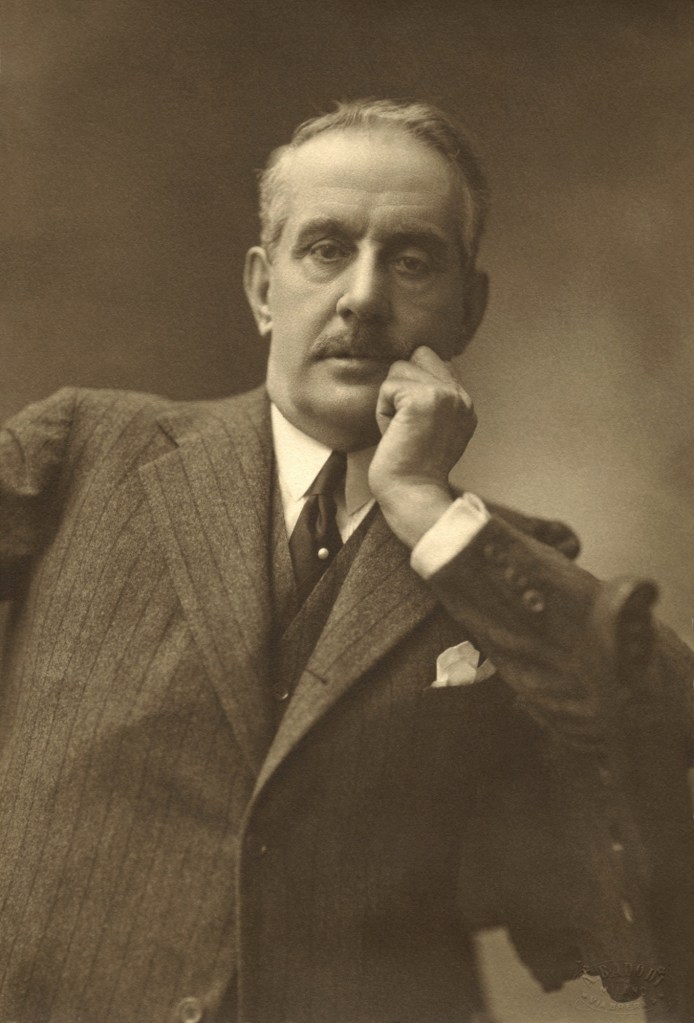
In 1926, Turandot premiered some sixteen months after the death of the opera’s composer. Who, pictured above, was the composer?
Answer: Giacomo Puccini.
Giacomo Puccini (1858–1924) was an Italian composer renowned for his operas, including La bohème, Tosca, Madama Butterfly, and Turandot. Puccini’s final opera, Turandot, was left unfinished at the composer’s death, and Franco Alfano completed the last two scenes using sketches from the composer. Turandot boasts several memorable arias, including the iconic Nessun dorma.
Three
In 1792, the louisette was first used in France. Originally named after its inventor, Antoine Louis, a surgeon and physiologist, it became more commonly known by the name used today. What is it now known as?
Answer: Guillotine.
The guillotine, introduced in France in 1792, was a device for capital punishment by decapitation, consisting of two upright posts and a weighted angled blade. Legislation promoted by Joseph-Ignace Guillotin to ensure equality and minimise suffering, it was first used on 25 April 1792. Originally called the louisette, it became infamous during the French Revolution and Reign of Terror, executing thousands including Louis XVI and Marie-Antoinette. Use declined after the 1960s, with it last being used in 1977, and France abolishing both capital punishment and the guillotine in 1981.
Four
As a precursor to licence or registration plates, what did New York State require that motor vehicle owners must display on the back of their vehicle from 1901?
Answer: Owners initials.
France introduced vehicle registration plates in 1893, followed by Germany in 1896. The Netherlands issued national plates in 1898. In the U.S., New York required that the owner’s initials be clearly visible on the back of the vehicle from 1901, and licence plates displayed from 1903.
Five
British and French engineers broke ground in 1859 at the site of a canal which has a terminus at Port Tewfik. What canal is it, and what rugged, arid peninsula is situated to the east of this canal?
Answer: Suez Canal; Sinai Peninsula.
The Suez Canal, a 193.30-kilometre-long waterway in Egypt, connects the Mediterranean Sea at Port Said with the Red Sea at Port Tewfik, Suez, separating Africa and Asia. Built in 1869 by Ferdinand de Lesseps’ Compagnie de Suez, it was nationalised in 1956. A new side channel opened in 2016, enhancing its role in global trade and military strategy.
There is Only One Cure for Grey Hair
Today’s title There is Only One Cure for Grey Hair, a reference to the answer to question three, is from a P.G. Wodehouse quote —
There is only one cure for grey hair. It was invented by a Frenchman. It is called the guillotine. — P.G. Wodehouse
All of these questions are related to today’s date, April 25th.
One
In 1959, the St. Lawrence Seaway was officially opened. What canal, part of the Seaway, extends from Port Weller to Port Colborne, and in what country is this canal located?
Two
In 1926, Turandot premiered some sixteen months after the death of the opera’s composer. Who, pictured above, was the composer?
Three
In 1792, the louisette was first used in France. Originally named after its inventor, Antoine Louis, a surgeon and physiologist, it became more commonly known by the name used today. What is it now known as?
Four
As a precursor to licence or registration plates, what did New York State require that motor vehicle owners must display on the back of their vehicle from 1901?
Five
British and French engineers broke ground in 1859 at the site of a canal which has a terminus at Port Tewfik. What canal is it, and what rugged, arid peninsula is situated to the east of this canal?
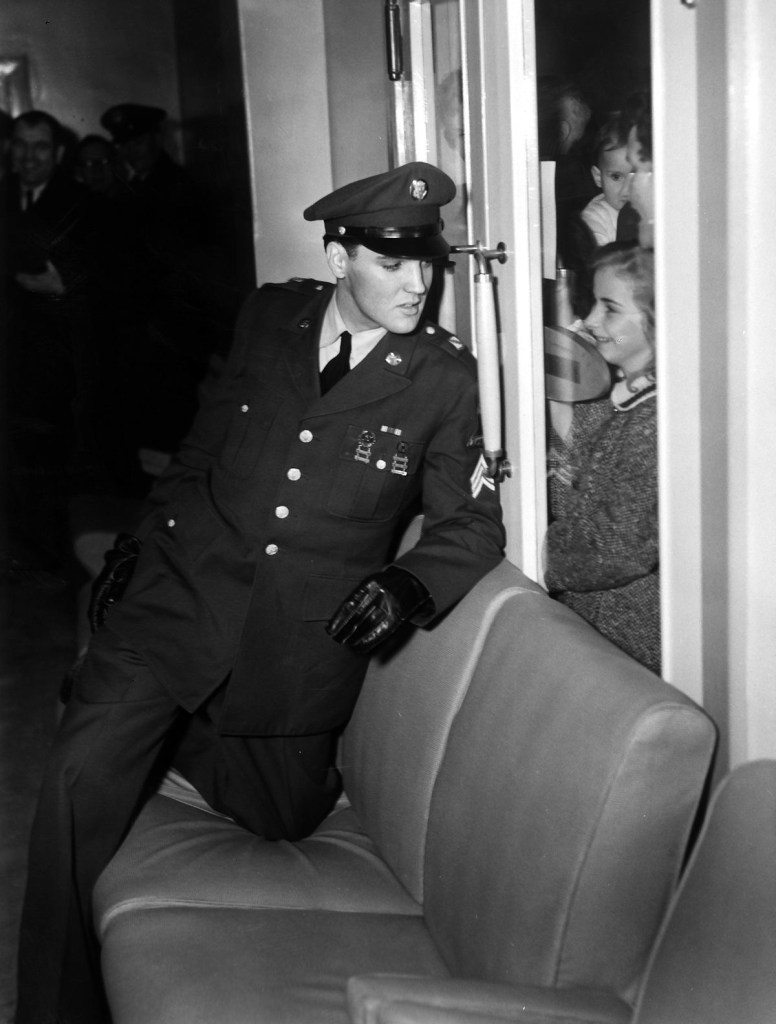
Elvis at Prestwick Airport, 3 March 1960. See question four. Image Daily Record.
No date-related theme today, just five very random questions for you to ponder.
One
Johann Ludwig Burckhardt is best known for rediscovering two of the world’s best-known examples of rock-cut architecture in Jordan in 1812 and Egypt the following year. What are these examples of rock-cut architecture?
Answers: Petra and Abu Simbel.
Johann Ludwig Burckhardt (1784 – 1817) was a Swiss traveller, geographer and Orientalist. During his travels in Arabia, he adopted the alias Sheikh Ibrahim Ibn Abdallah and wrote his letters in French, signing them Louis. He is best known for rediscovering two of the world’s most famous examples of rock-cut architecture: the ruins of Petra, an ancient Nabataean city in Jordan, and the temples of Abu Simbel in Egypt. Petra remained unknown to the Western world until 1812, when Burckhardt rediscovered it. The Great Temple at Abu Simbel remained unknown to Europeans until March 1813, when Burckhardt found the small temple and top frieze of the main temple.
Two
‘I can resist everything except temptation’ is a line from what play and who wrote it?
Answer: Lady Windermere’s Fan, A Play About a Good Woman by Oscar Wilde.
Lady Windermere’s Fan, A Play About a Good Woman is a four-act comedy by Oscar Wilde, debuting on 20 February 1892 at London’s St James’s Theatre. Lady Windermere suspects her husband of infidelity and plans to leave him for Lord Darlington. Mrs. Erlynne, the other woman, intervenes, revealing herself as Lady Windermere’s mother. She sacrifices her reputation to save the marriage, allowing Lady Windermere to return to her husband unnoticed.
Three
What religious organisation was founded by Josemaría Escrivá de Balaguer y Alba?
Answer: Opus Dei.
Opus Dei, founded in 1928 by Josemaría Escrivá, is a Catholic Church personal prelature promoting holiness through daily life. Approved by the Holy See in 1950 and affirmed in 1982, it faces controversy over abuse allegations. Members, mostly laypeople, engage in secular careers and spiritual training globally.
Four
Elvis Presley and the beginnings of Open Golf are both linked to what town?
Answer: Prestwick.
Prestwick, a town in South Ayrshire on Scotland’s west coast, is approximately 30 miles (50 kilometres) southwest of Glasgow. The Prestwick Old Course hosted the inaugural Open Golf Championship in 1860 and was the venue for the first twelve Open Championships from 1860 to 1872, although the event did not take place in 1871. During World War II, the US Army Air Corps set up and maintained a base at the airport. Elvis Presley made his only visit to the UK on 3 March 1960 when his US Army transport aircraft stopped at the airport for refuelling en route from Germany.
Five
Who in 1762 succeeded Peter III, Emperor of Russia, and what relationship was the successor to Peter?
Answers: Catherine II (the Great); his wife.
Peter III, Emperor of Russia for six months in 1762, was overthrown by his wife, Catherine the Great. Despite implementing notable reforms, he is criticised for his alliance with Prussia. On 28 June 1762, Catherine was proclaimed heir to the Russian throne. Peter attempted to flee to Kronstadt but was repelled by the fleet’s cannons. The people of St. Petersburg armed themselves against him. After losing support from the Senate, army, and fleet, Peter was arrested and abdicated on 9 July. He was transported to Ropsha, where he died under mysterious circumstances. Officially, he died from haemorrhoidal colic and a stroke, but assassination is suspected. Some accounts suggest suffocation attempts followed by strangulation. He was buried on 3 August 1762 in the Alexander Nevsky Monastery, Saint Petersburg.