The answers to my earlier post are shown highlighted below.
Dark Shadows (2012)
One
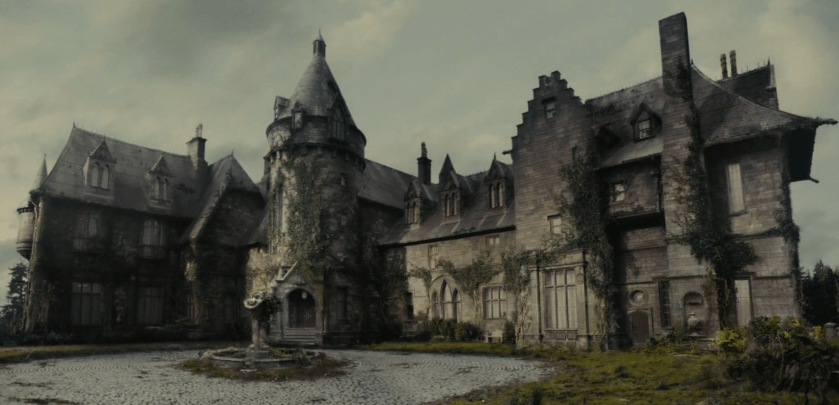
In 2012, Johnny Depp and Michelle Pfeiffer starred in the American Gothic fantasy film, Dark …
Answer: (Dark) Shadows
Tim Burton’s 2012 film Dark Shadows is a Gothic dark fantasy based on the earlier television soap opera. The film stars Johnny Depp and Michelle Pfeiffer, with a cameo from Jonathan Frid, the original television series star. Christopher Lee also has a small role, marking his 200th film appearance.
Gandalf and Shadowfax. The Lord of the Rings: The Two Towers Image Pinterest
Two
In The Lord of the Rings, when King Théoden instructed Gandalf to take any horse and depart, which one did he choose?
Answer: Shadowfax
Shadowfax, a Meara horse, was Gandalf’s steed from his escape from Orthanc. He was instrumental in battles, transporting Gandalf and others, and was present at the final battle before the Black Gate. Shadowfax accompanied Gandalf on his return journey to the North.
Released in 1997, this film follows Marty, a young boy, and an abused Beagle pup. Veteran actor Rod Steiger plays Doc Wallace. What is the name of the eponymous dog?
Answer: Shiloh
Shiloh is a 1996 American film based on the book of the same name by Phyllis Reynolds Naylor. The film’s general release was in 1997; it has two sequels. Marty rescues an abused Beagle puppy named Shiloh from his cruel owner after witnessing its mistreatment. Marty hides Shiloh but is forced to return him. When the owner refuses to sell Shiloh, Marty and his father fight to keep him, ultimately leading to the release of Shiloh back to Marty.
Katherine ‘Kitty’ Pryde from the X-Men universe chose what name when she matured from a girl into a young woman?
Answer: Shadowcat
Kitty Pryde, a Jewish mutant from Illinois, joined the X-Men as Sprite and later became Shadowcat. After Krakoa’s fall, she returned to Illinois, where she met Trista Marshall and embraced her original name, Kitty.
The alphabet theme continues with some questions where all the answers begin with ‘S’.
Dark… See question one.
One
In 2012, Johnny Depp and Michelle Pfeiffer starred in the American Gothic fantasy film, Dark …
Two
In The Lord of the Rings, when King Théoden instructed Gandalf to take any horse and depart, which one did he choose?
Three
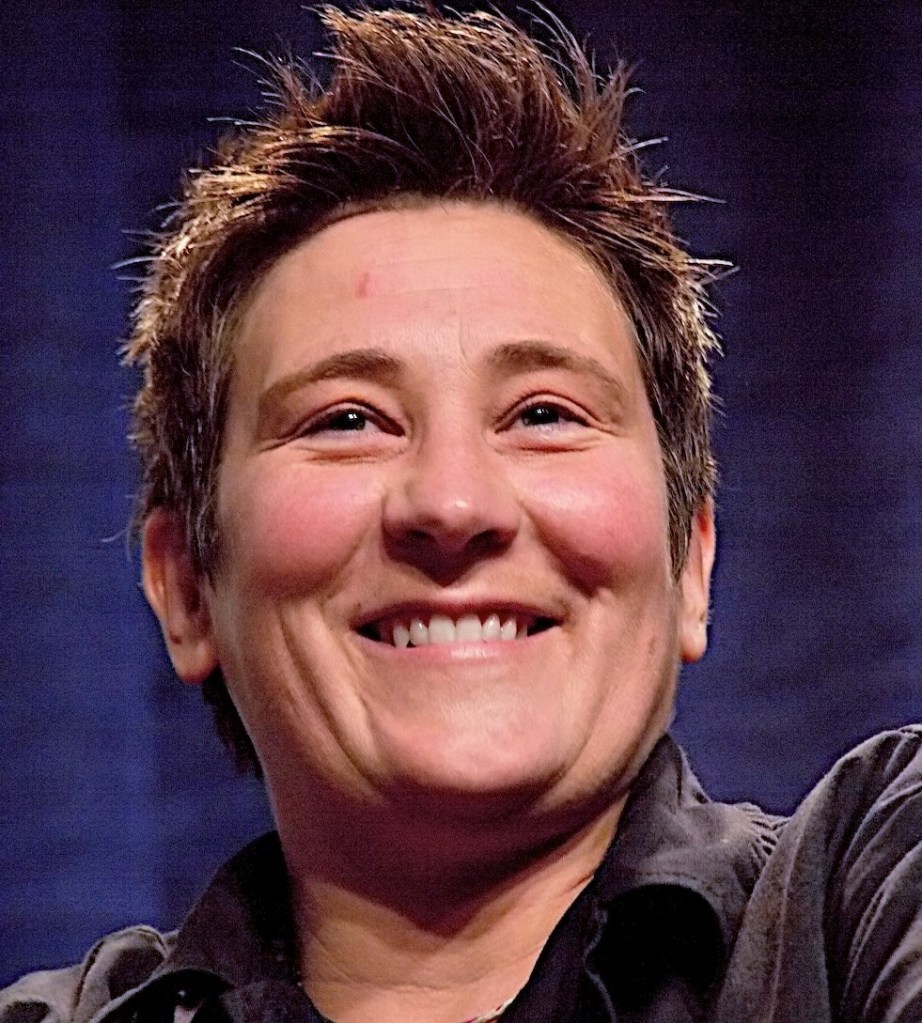
What is the title of k.d. lang’s debut solo album, released in 1988?
Four
Released in 1997, this film follows Marty, a young boy, and an abused Beagle pup. Veteran actor Rod Steiger plays Doc Wallace. What is the name of the eponymous dog?
Five
Katherine ‘Kitty’ Pryde from the X-Men universe chose what name when she matured from a girl into a young woman?
The answers to my earlier post are shown highlighted below.
One
Fair fa’ your honest, sonsie face, Great chieftain o’ the pudding-race! Aboon them a’ yet tak your place, Painch, tripe, or thairm: Weel are ye wordy o’a grace As lang’s my arm.
Identify the poet who wrote the above, and who, or what is the ‘Great chieftain o’ the pudding-race!’ that is referred to?
Answer: Robert Burns and Haggis
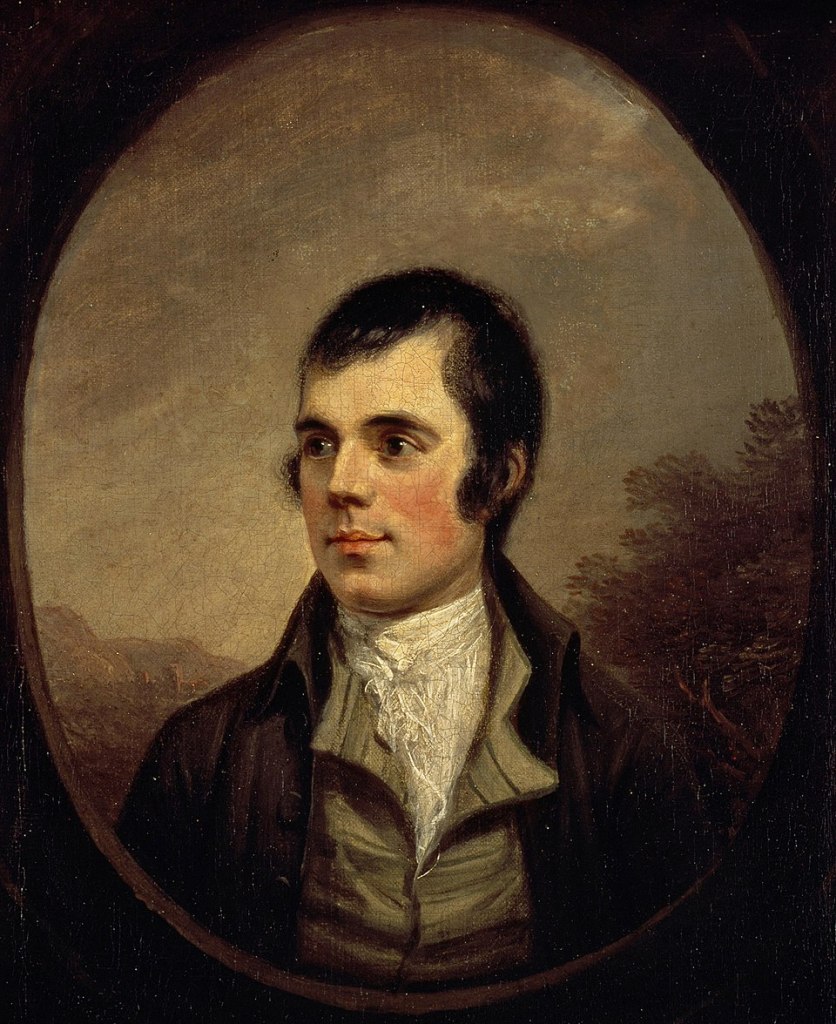
Address to a Haggis is a Scots language poem by Scottish poet, Robert Burns. One of the more well known Scottish poems, the title refers to the national dish of Scotland, haggis, which is a savoury pudding. The poem is most often recited at Burns suppers, a Scottish cultural event celebrating the life of Robert Burns where everybody stands as the haggis is brought in on a silver salver whilst a bagpiper will lead the way towards the host’s table. The host or a guest will then recite the poem while slicing open the haggis at the right moment with a ceremonial knife. The full poem is available, with translations to English and other languages, on Burns Country.
Robert Burns, Scottish poet and lyricist. Portrait by Alexander Nasmyth. Image Wikipedia
Two
In what urban location do the games in the Resident Evil series take place?
Answer: Raccoon City
Raccoon City, the setting of the Resident Evil series, was chosen to evoke a sense of American horror. Inspired by George A. Romero’s zombie films, the name was intended to connect with the Western audience.
Three
Hydrophobia is defined as
extreme or irrational fear of water, especially as a symptom of _ in humans.
What word is missing from the above definition?
Answer: Rabies
Rabies is a viral disease causing encephalitis in humans and mammals, characterised by fever, abnormal sensations, and later, fear of water, confusion and loss of consciousness. The incubation period is usually one to three months but can vary.
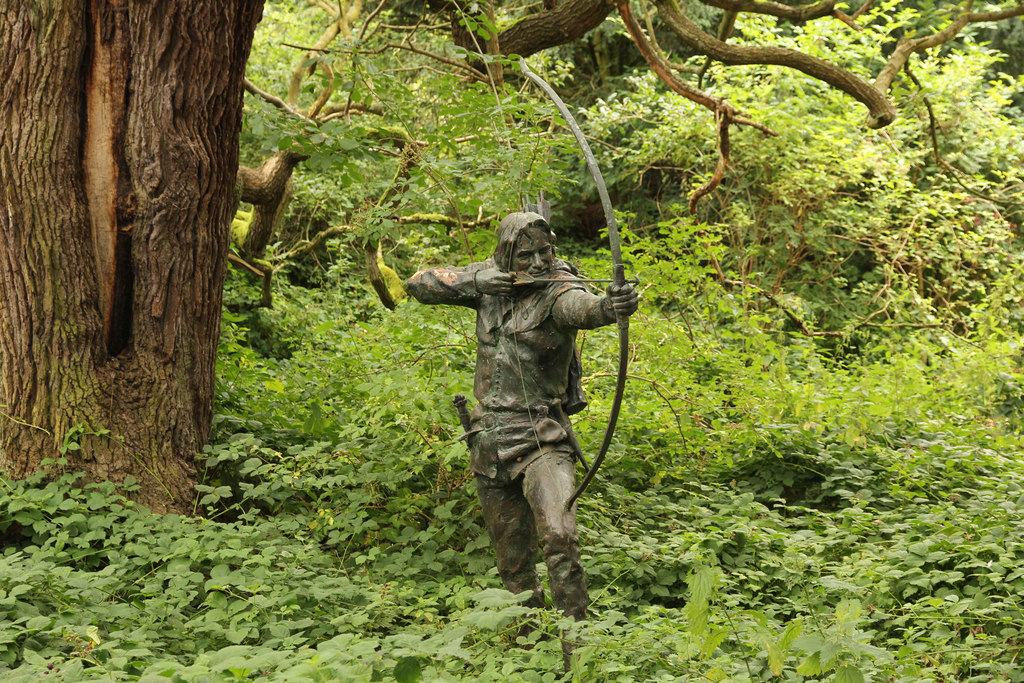
Statue of Robin Hood in Sherwood Forest. Image Wikipedia
Four
Sir Guy of Gisbourne is featured in the legends of which English folk hero?
Answer: Robin Hood
Originally, Sir Guy of Gisbourne, a hired assassin, attempted to kill Robin Hood but was defeated in a fight. Later depictions portray him as a romantic rival for Maid Marian’s love.
Five
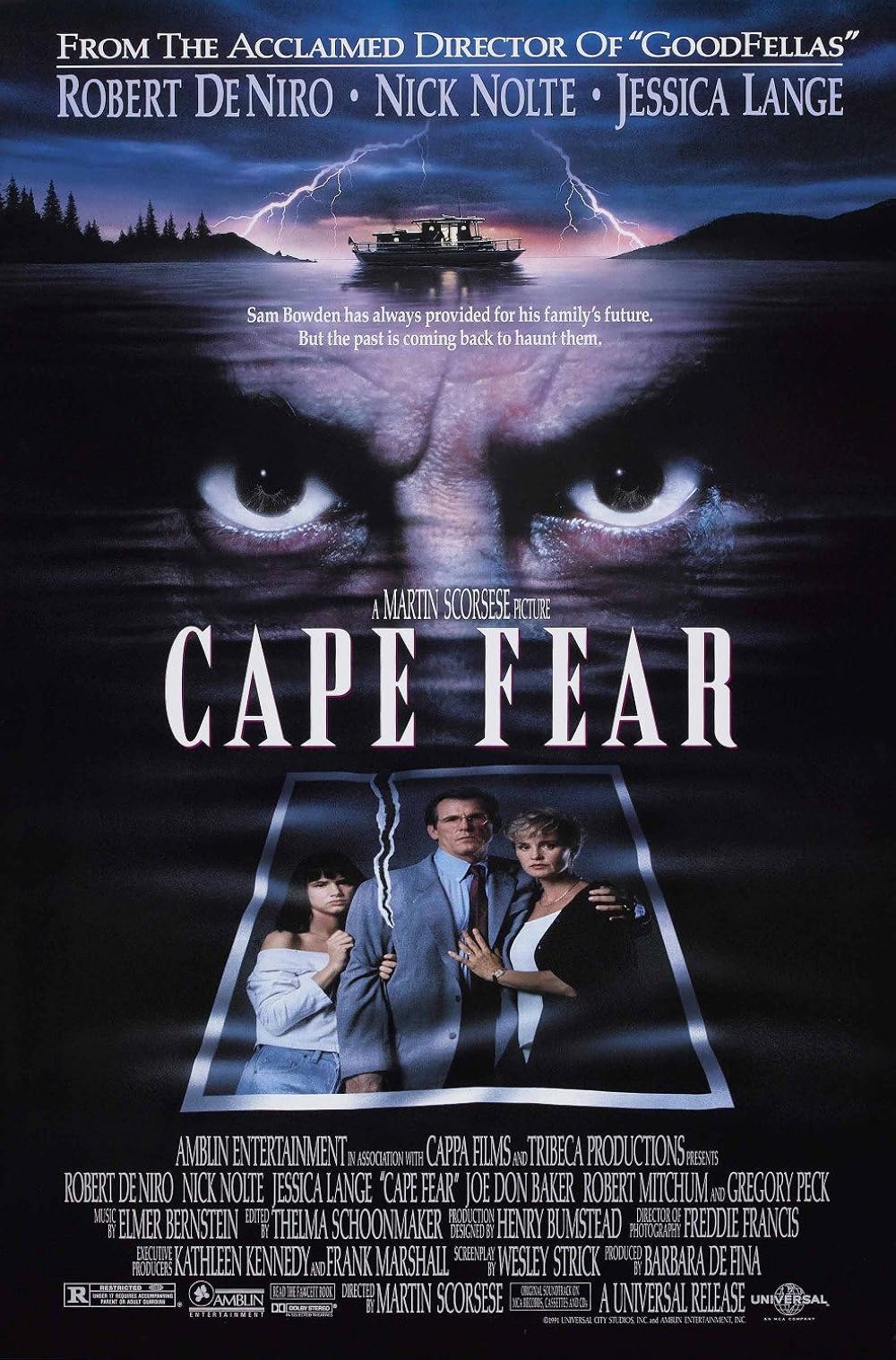
Max Cady, a character in the 1991 film Cape Fear, was played by…
Answer: Robert De Niro
Max Cady, the antagonist in John D. MacDonald’s novel The Executioners, is a criminal with a grudge against attorney Sam Bowden, who sent him to prison for rape. After his release, Cady terrorises Bowden and his family, seeking revenge for his imprisonment and the loss of his wife and child. The character was played by Robert Mitchum in the 1962 film of the same name.
The alphabet theme continues with some questions where all the answers begin with ‘R’.
One
Fair fa’ your honest, sonsie face, Great chieftain o’ the pudding-race! Aboon them a’ yet tak your place, Painch, tripe, or thairm: Weel are ye wordy o’a grace As lang’s my arm.
Identify the poet who wrote the above, and who, or what is the ‘Great chieftain o’ the pudding-race!’ that is referred to?
Two
In what urban location do the games in the Resident Evil series take place?
Three
Hydrophobia is defined as
extreme or irrational fear of water, especially as a symptom of _ in humans.
What word is missing from the above definition?
Four
Sir Guy of Gisbourne is featured in the legends of which English folk hero?
Five
Max Cady, a character in the 1991 film Cape Fear, was played by…
The answers to my earlier post are shown highlighted below.
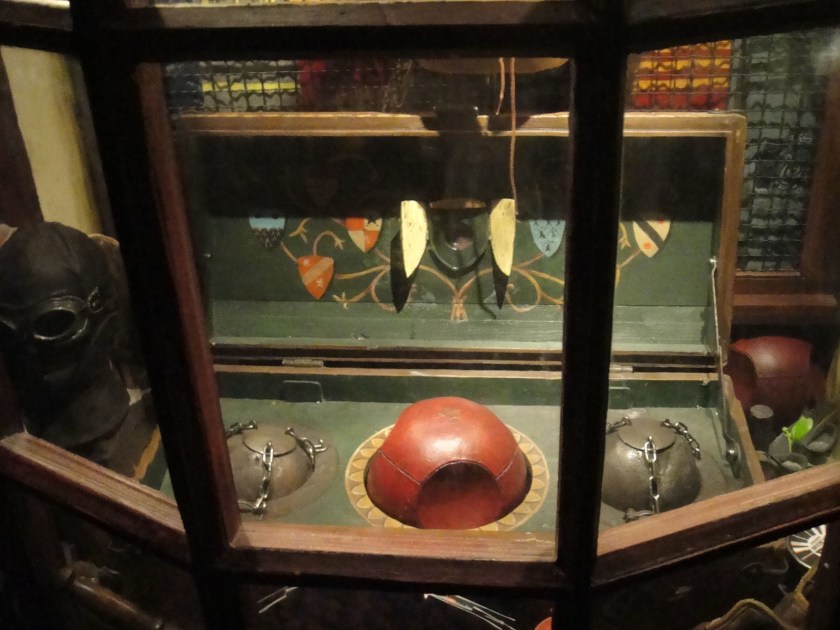
Quidditch accessories. Wizarding World of Harry Potter. Image Wikipedia
One
The equipment pictured above is for use in…
Answer: Quidditch
Quidditch, a fictional sport from the Harry Potter series, is played on flying broomsticks with the objective of scoring points by throwing a ball through hoops and catching a golden ball. A real-life version of the game exists, where players run with brooms.
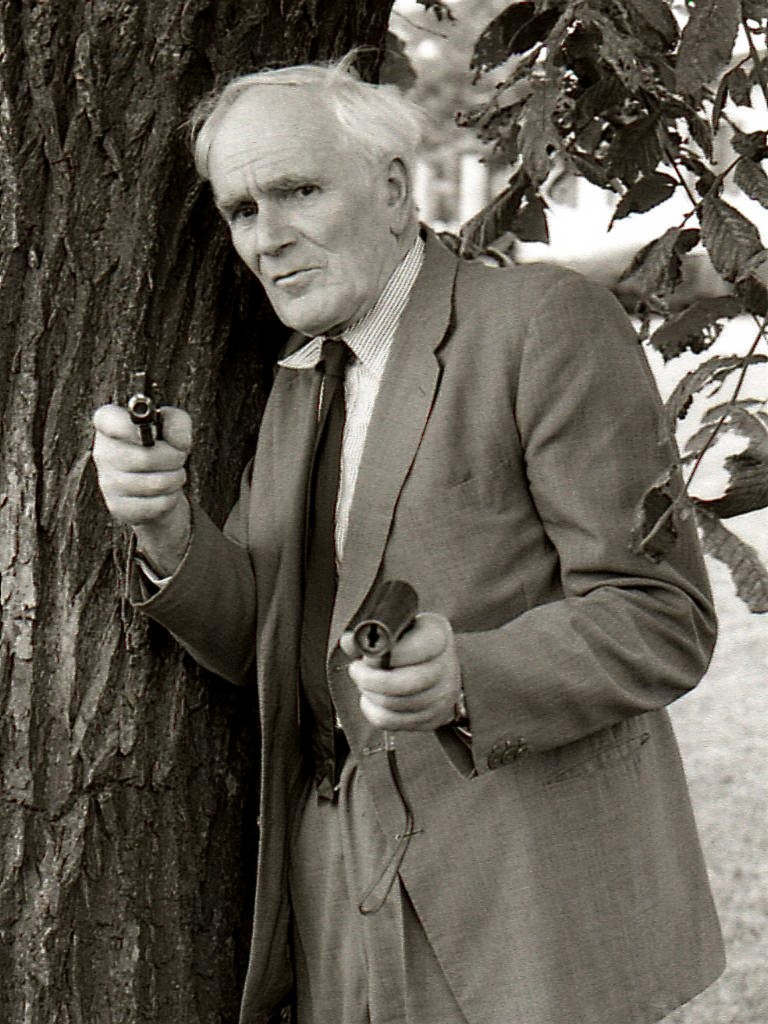
Desmond Llewelyn was ‘Q’ in 17 of the James Bond films between 1963 and 1999. Image Wikipedia
Two
The James Bond novels and films feature a recurring character named ‘Q’. However, what word does the ‘Q’ stand for?
Answer: Quartermaster
Q, head of Q Branch in the James Bond series, oversees top-secret field technologies. The character, originally named Major Boothroyd, has been portrayed by Desmond Llewelyn, John Cleese and Ben Whishaw. Q, inspired by Charles Fraser-Smith, has appeared, or been referred to, in most Bond films and novels, with variations in the character’s role and name.
Illustration of Queequeg and his harpoon. (Moby Dick – 1902 edition: Charles Scribner’s Sons, New York.) Image Wikipedia
Three
The name of a character in the novel Moby-Dick links it to Special Agent Dana Scully. What is that name?
Answer:Queequeg
Queequeg, a Polynesian harpooner with facial tattoos, befriends Ishmael in Herman Melville’s Moby-Dick. He serves as Starbuck’s harpooner aboard the Pequod. Dana Scully named her dog Queequeg after the Moby-Dick character. She also used the name as an email handle and password.
Queen Latifah as Matron ‘Mama’ Morton in Chicago (2002). Image Pinterest
Four
In the film Chicago (2002) who portrayed Matron ‘Mama’ Morton?
Answer: Queen Latifah
Queen Latifah, born Dana Elaine Owens, is an American rapper, singer, and actress. She has received numerous accolades, including a Grammy Award, a Primetime Emmy and a Golden Globe. Latifah is known for her music, acting and television work, including her role in the sitcom Living Single and her portrayal of Bessie Smith in the HBO film Bessie. In the film Chicago the corrupt Matron ‘Mama’ Morton supervises Murderess’ Row in Cook County jail.
1. Manhattan (New York County) 2. Brooklyn (Kings County) 3. Queens (Queens County) 4. The Bronx (Bronx County) 5. Staten Island (Richmond County). Note: JFK and LGA airports are both located in Queens (marked by brown). Image Wikipedia
Five
What is the largest by area of the five boroughs of New York City?
Answer: Queens
The five boroughs are the Bronx, Brooklyn, Manhattan, Queens and Staten Island. At 108.7 square miles Queens is the largest borough in New York City by area, with Brooklyn being the second largest (69.4) and Manhattan the smallest (22.7). Queens is highly diverse with a population of 2.4 million. It is home to both of New York City’s airports and several notable landmarks, including Flushing Meadows–Corona Park and Citi Field.
Could you please identify the English singer-songwriter and actress?
Answer: Pixie Lott
Pixie Lott is an English singer, songwriter, and actress. Her debut album, Turn It Up, reached number six on the UK Albums Chart and spawned six consecutive top twenty singles.
Which of the following was a 16th-century Scottish battle: Perkie, Pinkie, or Porkie?
Answer: Pinkie
The Battle of Pinkie (aka Battle of Pinkie Cleugh), fought on 10 September 1547 near Musselburgh, Scotland, was the last pitched battle between Scotland and England before the Union of the Crowns. The battle, part of the Rough Wooing conflict, resulted in a catastrophic defeat for Scotland, known as “Black Saturday”.
Heather Moyse, multi-sport athlete and Olympic Gold Medalist, serves as Brand Ambassador for Prince Edward Island Potatoes. Image Wikipedia
Three
Which crop is Prince Edward Island the largest producer of in Canada?
Answer: Potato
Prince Edward Island is the largest potato-producing province in Canada, with the industry contributing over a billion dollars annually. The potatoes are grown for three markets: table, processing, and seed, with 60% destined for processing. Varieties include russets, whites, reds, and yellows, each with unique characteristics and uses.
The 1964 films Dr Strangelove and A Shot in the Dark starred the same actor. Who was it?
Answer: Peter Sellers
Peter Sellers, born Richard Henry Sellers, was an English actor and comedian known for his roles in The Goon Show and films like The Pink Panther series, including A Shot in the Dark. He showcased his versatility in films like Lolita, Dr. Strangelove, and Being There, often portraying multiple characters. Despite his success, Sellers struggled with depression and erratic behaviour, dying from a heart attack at 54.
Was The Bells by Edgar Allan Poe a poem or a play?
Answer: Poem
The Bells by Edgar Allan Poe is a heavily onomatopoeic poem that uses the word “bells” to evoke different emotions. The poem, divided into four parts, progresses from light-hearted to dark, reflecting the changing sounds and meanings of bells.
The Bells
Edgar Allan Poe
I.
Hear the sledges with the bells— Silver bells! What a world of merriment their melody foretells! How they tinkle, tinkle, tinkle, In the icy air of night! While the stars, that oversprinkle All the heavens, seem to twinkle With a crystalline delight; Keeping time, time, time, In a sort if Runic rhyme, To the tintinabulation that so musically wells From the bells, bells, bells, bells, Bells, bells, bells,— From the jingling and the tinkling of the bells.
II.
Hear the mellow wedding bells, Golden bells! What a world of happiness their harmony foretells! Through the balmy air of night How they ring out their delight! From the molten golden-notes, And all in tune, What a liquid ditty floats To the turtle-dove that listens, while she gloats On the moon! Oh, from out the sounding cells, What a gush of euphony voluminously wells! How it swells! How it dwells On the Future! how it tells Of the rapture that impels To the swinging and the ringing Of the bells, bells, bells, Of the bells, bells, bells, bells, Bells, bells, bells— To the rhyming and the chiming of the bells!
The Bells
III.
Hear the loud alarum bells— Brazen bells! What a tale of terror, now, their turbulency tells! In the startled ear of night How they scream out their affright! Too much horrified to speak They can only shriek, shriek, Out of tune, In a clamorous appealing to the mercy of the fire, In a mad expostulation with the deaf and frantic fire, Leaping higher, higher, higher, With a desperate desire, And a resolute endeavour. Now—now to sit or never, By the side of the pale-faced moon. Oh, the bells, bells, bells! What a tale their terror tells Of Despair! How they clang, and clash, and roar! What a horror they outpour On the bosom of the palpitating air! Yet the ear it fully knows, By the twanging, And the clanging, How the danger ebbs and flows: Yet the ear distinctly tells, In the jangling, And the wrangling, How the danger sinks and swells, By the sinking or the swelling in the anger of the bells— Of the bells— Of the bells, bells, bells, bells, Bells, bells, bells— In the clamour and the clangour of the bells!
IV.
Hear the tolling of the bells— Iron bells! What a world of solemn thought their monody compels! In the silence of the night, How we shiver with affright At the melancholy menace of their tone! For every sound that floats From the rust within their throats Is a groan. And the people—ah, the people— They that dwell up in the steeple, All alone, And who, tolling, tolling, tolling, In that muffled monotone, Feel a glory in so rolling On the human heart a stone— They are neither man nor woman— They are neither brute nor human— They are Ghouls: And their king it is who tolls; And he rolls, rolls, rolls, Rolls A paean from the bells! And his merry bosom swells With the paean of the bells! And he dances, and he yells; Keeping time, time, time, In a sort of Runic rhyme, To the paean of the bells— Of the bells: Keeping time, time, time, In a sort of Runic rhyme, To the throbbing of the bells Of the bells, bells, bells— To the sobbing of the bells; Keeping time, time, time, As he knells, knells, knells, In a happy Runic rhyme, To the rolling of the bells— Of the bells, bells, bells: To the tolling of the bells, Of the bells, bells, bells, bells— Bells, bells, bells— To the moaning and the groaning of the bells.
The answers to my earlier post are shown highlighted below.
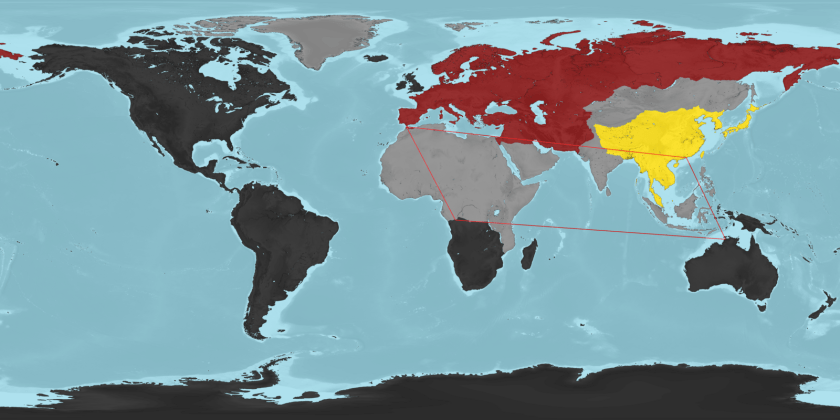
The three fictional superstates of the dystopian novel Nineteen Eighty-Four are Oceania (black), Eurasia (red) and Eastasia (yellow). Areas shown in grey are ‘disputed’. Image Wikipedia
One
The map above depicts the three fictional superstates from George Orwell’s Nineteen Eighty-Four, along with disputed territories (in grey). The black-coloured state encompassing the Americas, Australia and the United Kingdom, among others, is known by what name?
Answer: Oceania
In George Orwell’s Nineteen Eighty-Four, the world is divided into three superstates—Oceania (black on map), Eurasia (red) and Eastasia (yellow)—engaged in a perpetual war. The origins of these states, which may not even exist, are unclear, emerging from nuclear warfare and civil unrest between 1945 and 1965. In this post-war world, totalitarian ideologies such as English Socialism, Neo-Bolshevism and Obliteration of the Self dominate.
Ogden Nash and Dagmar from the television game show Masquerade Party, 1955 Image Wikipedia
Two
Some tortures are physical and some are mental, but the one that is both is dental.
The above quote was originally made by which American humorist and poet?
Answer: Ogden Nash
Frederic Ogden Nash, an American humorist, wrote over 500 pieces of light verse, including 20 volumes of poetry and lyrics for musicals and children’s books.
A competitive sport in which runners have to find their way across rough country with the aid of a map and compass. – Oxford English Dictionary
What sport is being defined above?
Answer: Orienteering
Orienteering is a sport involving map and compass navigation through unfamiliar terrain. Participants use specially prepared maps to locate control points, with foot orienteering being the oldest and most popular variation. Orienteering features in the programs of global sporting events, such as the World Games and the World Police and Fire Games.
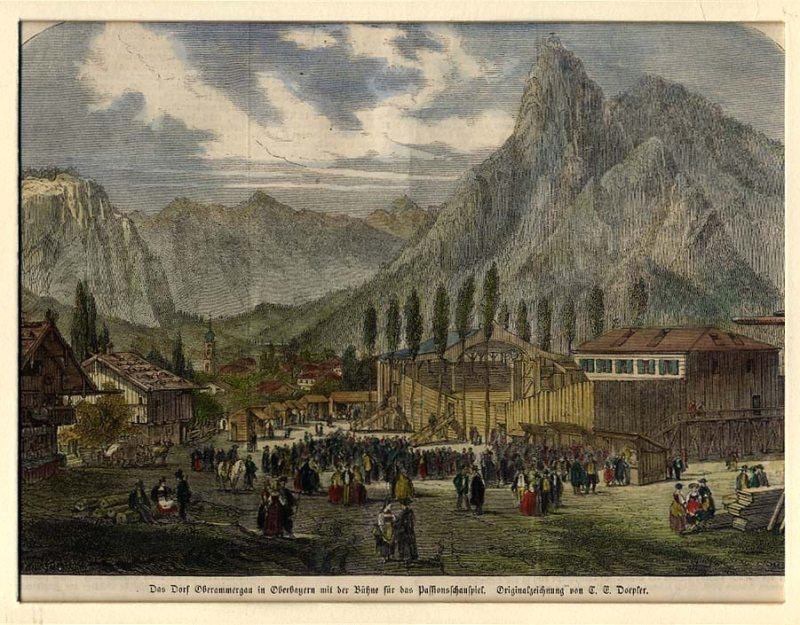
Oberammergau Passion Play 1860 Production. Image Wikipedia
Four
A Passion Play, depicting the final phase of the life of Jesus Christ, has taken place in a Bavarian village once every ten years (barring a few exceptions) since the 17 century. What is the village name?
Answer: Oberammergau
The Oberammergauer Passionsspiele, a passion play performed by the inhabitants of Oberammergau, Germany, depicts Jesus’ final days from His visit to Jerusalem to His crucifixion. The play, composed by several individuals and the village inhabitants, is the earliest surviving continuous vernacular drama of the Christian era.
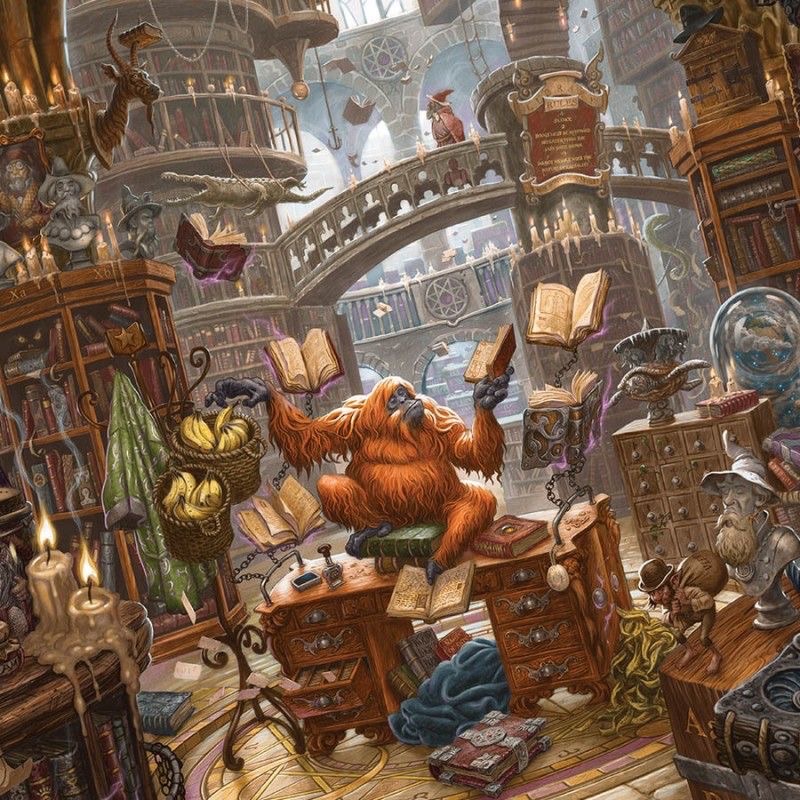
Librarian of the Unseen University, Ankh-Morpork. Image Pinterest
Five
What one creature answers both the following – In The Light Fantastic by Terry Pratchett, the university librarian is accidentally turned into one of these – One is featured in Edgar Allan Poe’s short story The Murders in the Rue Morgue
Answer: Orangutan (or orangutang)
In The Light Fantastic, the second instalment in Terry Pratchett’s Discworld fantasy novel series, the Librarian of the Unseen University undergoes an unexpected transformation into a sentient orangutan. This transformation persists throughout the series, and he actively resists any attempts to revert him to his original state. The Murders in the Rue Morgue tell how a sailor’s orangutan, imitating him shaving, runs off with his straight razor and later kills a woman and her daughter. The sailor, attempting to catch it, was heard arguing with the animal. The orangutan fled, leaving the sailor to sell it and the police to release their suspect, Le Bon.
The map above depicts the three fictional superstates from George Orwell’s Nineteen Eighty-Four, along with disputed territories (in grey). The black-coloured state encompassing the Americas, Australia and the United Kingdom, among others, is known by what name?
Two
Some tortures are physical and some are mental, but the one that is both is dental.
The above quote was originally made by which American humorist and poet?
Three
A competitive sport in which runners have to find their way across rough country with the aid of a map and compass. – Oxford English Dictionary
What sport is being defined above?
Four
A Passion Play, depicting the final phase of the life of Jesus Christ, has taken place in a Bavarian village once every ten years (barring a few exceptions) since the 17 century. What is the village name?
Five
What one creature answers both the following – In The Light Fantastic by Terry Pratchett, the university librarian is accidentally turned into one of these – One is featured in Edgar Allan Poe’s short story The Murders in the Rue Morgue











 Quizology.Online