Today’s first question relates to the date 1st June. The subsequent questions follow on, but I won’t reveal how.
One
The roles shown are from each decade between the 1980s and the present. Which actor born today links them? Hoke Colburn, Azeem Edin Bashir Al Bakir, Eddie Dupris, Sheikh Ilderim, and Thurmond Fowler.
Two
I love the smell of … in the morning.
What word is missing from this quote from a 1979 film?
Three
Singer Jack Jones had a top forty hit on the U.S. Billboard Hot 100 in 1966 with The Impossible Dream. What Broadway musical had the song been written for?
Four
In the United States, the state dog of the 49th state to be admitted to the Union is what?
Five
Which composer won the Academy Award for Best Original Score for the 2015 film The Hateful Eight?
The first question relates to an event on this day, and the remainder follow a theme created by the first?
One
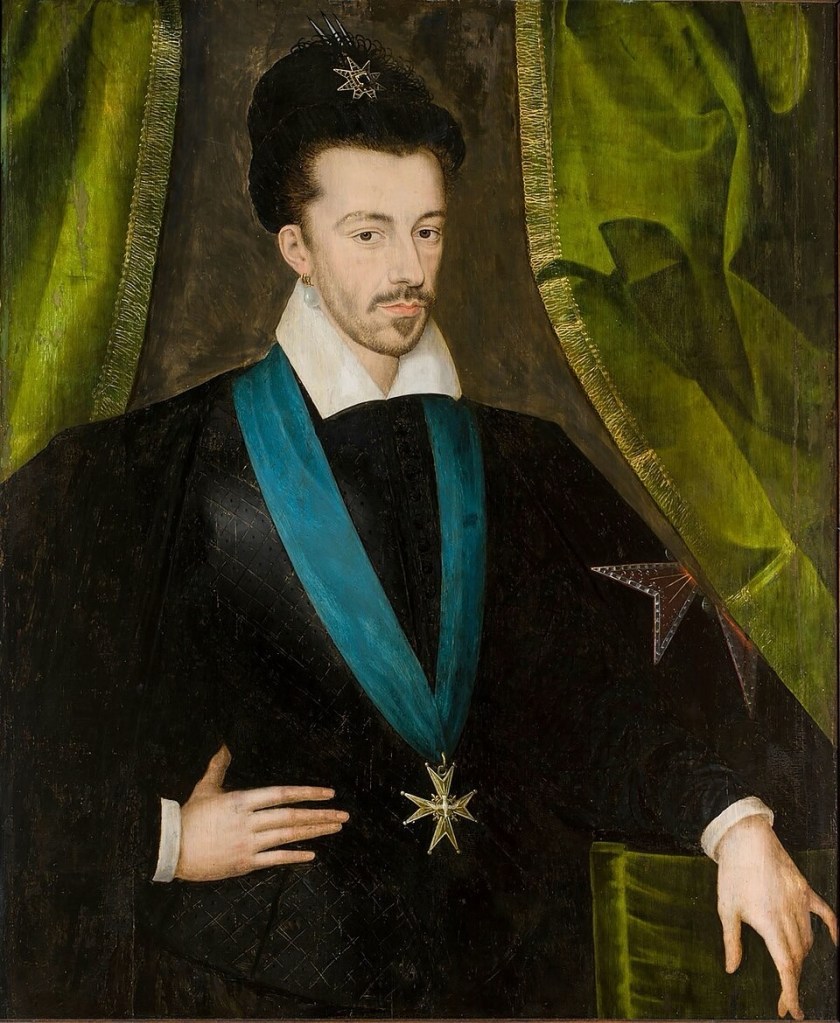
In 1578, King Henry III of France (pictured) laid the first stone of a bridge on the River Seine, which is now the oldest of all the bridges in Paris. The bridge is in two separate spans with an island between them. What is the name of the bridge, and what is the island?
Answer: Pont Neuf; Île de la Cité.
The Pont Neuf (New Bridge), Paris’s oldest bridge across the Seine, connects the left bank, Île de la Cité, and the right bank. Despite its name it is actually the oldest in the city. The Île de la Cité (Island of the City), a natural island in the Seine, is a historic centre in Paris. It boasts significant landmarks like Notre-Dame cathedral, Sainte-Chapelle and the Hôtel-Dieu hospital, as well as important government buildings.
Two
In what capital city did the world’s first underground passenger railway open in 1863?
Answer: London.
The London Underground, also called the Underground or Tube, is a rapid transit system in Greater London and parts of several surrounding counties. The Underground began with the steam locomotives and gas-lit wooden carriages of the Metropolitan Railway in 1863, the first underground passenger railway. The first electrified underground line was opened in London in 1890, making it the first metro system in the world. The system has expanded to 11 lines with 250 miles of track which serves up to 5 million daily journeys, with 1.216 billion in 2024/25.
Three
The Brooklyn Bridge, New York, opened in May 1883. What body of water does it cross, and what two islands does it join?
Answers: East River; Manhattan and Long Island.
The Brooklyn Bridge, a cable-stayed suspension bridge in New York City, connects boroughs of Manhattan (on Mahattan Island) and Brooklyn (Long Island), opening on May 24, 1883. Initially called the New York and Brooklyn Bridge, it was the world’s longest suspension bridge at its opening. Designed by John A. Roebling and completed by his son Washington and wife Emily, construction took thirteen years. Now a National Historic Landmark, it serves only passenger vehicles, pedestrians, and cyclists, remaining a major tourist attraction and New York City icon.
Four
Paris’s largest public park was opened to the public by Louis XV. What park is it?
Bois de Vincennes.
The Bois de Vincennes, Paris’s largest public park, spans 995 hectares, slightly larger than Bois de Boulogne and three times larger than New York’s Central Park. Created by Napoleon III (1855–1866), it features an English garden, lakes, a zoo, arboretum, botanical garden, hippodrome, velodrome, and a sports institute. Known for nighttime prostitution, it occupies 10% of Paris, nearly the size of the first six arrondissements.
Five
In what decade was London’s Royal Albert Hall opened, and who opened it?
Answers: 1860s.
The Royal Albert Hall in London, opened by Queen Victoria in 1871 and named in memory of her consort, Prince Albert, seats 5,272. It hosts over 390 main auditorium shows annually, including BBC Proms, concerts, and events. Amongst its diverse range of events, it hosts the Royal British Legion Festival of Remembrance annually on the evening before Remembrance Sunday, has featured speeches by Winston Churchill, and exhibition fights by Muhammad Ali. Eric Clapton has appeared there over 200 times, starting with Cream’s farewell concerts in 1968.
The first question relates to an event on this day, and the remainder follow a theme created by the first?
One
In 1578, King Henry III of France (pictured) laid the first stone of a bridge on the River Seine, which is now the oldest of all the bridges in Paris. The bridge is in two separate spans with an island between them. What is the name of the bridge, and what is the island?
Two
In what capital city did the world’s first underground passenger railway open in 1863?
Three
The Brooklyn Bridge, New York, opened in May 1883. What body of water does it cross, and what two islands does it join?
Four
Paris’s largest public park was opened to the public by Louis XV. What park is it?
Five
In what decade was London’s Royal Albert Hall opened, and who opened it?
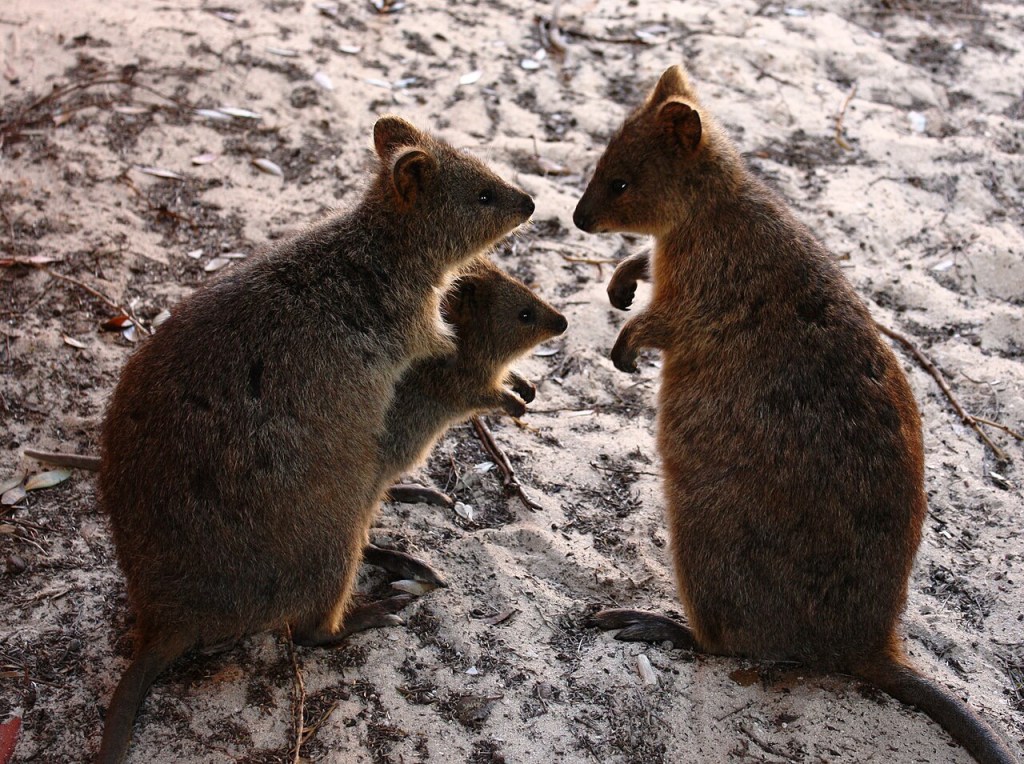
Quokkas—two adults and a juvenile at Rottnest Island, Western Australia. Image Wikimedia Commons
No theme, just a mixed bag of questions today.
One
A family of what cat-sized macropod with the Latin name Setonix brachyurus is pictured?
Answer: Quokka.
The quokka, a small herbivorous marsupial, is found in southwestern Australia, including Rottnest Island and Bald Island.
Two
What colour and make of car features in the title of a 1964 film starring Rex Harrison and Jeanne Moreau?
Answer: The Yellow Rolls-Royce.
The Yellow Rolls-Royce (1964) is a British film about three owners of a yellow Rolls-Royce Phantom II, set before and during WWII. The film features an all-star cast and won a Golden Globe for Best Original Song.
Three
What was the first single released from 50 Cent’s album Get Rich or Die Tryin’?
Answer: In Da Club.
In da Club by 50 Cent, from his debut album Get Rich or Die Tryin’, was released in 2003 and peaked at number one on the US Billboard Hot 100. The song, which was 50 Cent’s first number one, received critical acclaim and was nominated for several awards.
Four
Cambria is the Latinised form of what country’s name?
Answer: Wales.
Cambria is the Latinised form of Cymru — the Welsh name for Wales. It was not used during the period when the Romans were in Britain but emerged in the 12th century as an alternative to Britannia and Wallia, gaining popularity in the late Middle Ages.
Five
Janmashtami, a Hindu festival, celebrates the birth of which avatar of Vishnu?
Answer: Krishna.
Krishna Janmashtami celebrates the birth of Krishna, the eighth avatar of Vishnu, on the eighth day of the dark fortnight in the Hindu month of Bhadrapada. An important festival in Vaishnavism, it is observed with recitations, devotional singing, dance, dramatic reenactments, fasting, and midnight celebrations, ending with a feast. Celebrated worldwide, it usually falls in August or September.
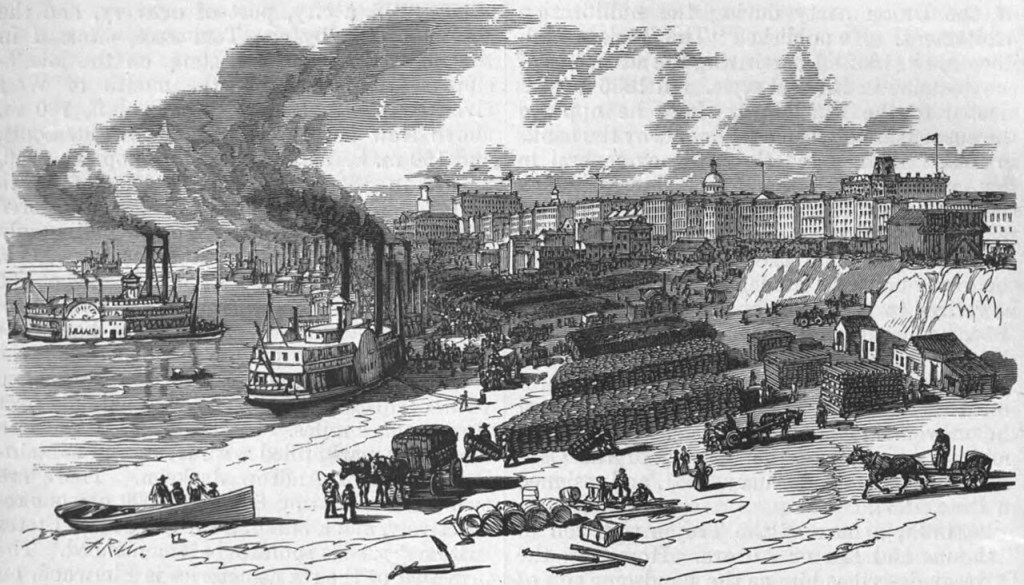
Woodcut representing the waterfront of Memphis, Tennessee, published 1879. Image Wikimedia Commons
Today’s five questions form a theme, and that is all I am alluding to.
One
The Perry Index sorts fables attributed to which ancient Greek writer?
Answer: Aesop.
The Perry Index is a comprehensive index of Aesop’s Fables, attributed to the ancient Greek storyteller Aesop (620-560 BC). Created by Ben Edwin Perry, a University of Illinois classics professor, it categorises and references the fables. Modern scholarship suggests Aesop didn’t compose all of the fables attributed to him; some predate him, others appear over a millennium after him.
Two
What singer’s debut album was Age Ain’t Nothing but a Number?
Answer: Aaliyah.
Age Ain’t Nothing but a Number is Aaliyah’s debut album, released on 24 May 1994. Produced by R. Kelly, it blends R&B with new jack swing, peaking at number 18 on the US Billboard 200. It sold over three million copies in the US and six million worldwide, featuring two gold-certified singles.
Three
In 1938, which national leader was named Time magazine’s Man of the Year?
Answer: Adolf Hitler.
TIME explained what was perhaps the most controversial of its choices thus: “Hitler became in 1938 the greatest threatening force that the democratic, freedom-loving world faces today” (1/2/39).
Hitler’s rise began in 1919, when he joined the German Workers Party, which was renamed the Nazi party. Within two years he was the party’s leader. In 1933, Hitler became chancellor of Germany and soon consolidated his power, banning other parties and establishing totalitarian rule. He put the unemployed to work in public programs, rebuilt the army and sent Jews, communists and others to concentration camps. On September 1, 1939, Hitler began World War II by invading Poland. By 1941, German troops had become bogged down in Russia, and in 1944 the Allies began their advance on Germany. Hitler lived his final months in a Berlin bunker, committing suicide on April 29, 1945.
Big River, a 1984 musical, is based on which Mark Twain novel?
Answer: Adventures of Huckleberry Finn.
Roger Miller’s Big River: The Adventures of Huckleberry Finn is a musical based on Mark Twain’s novel, featuring bluegrass and country music. The 1985 Broadway production ran for over 1,000 performances and won seven Tony Awards, including Best Musical.
Five
What word describes the repetition of the same sound at the start of each word?
Answer: Alliteration.
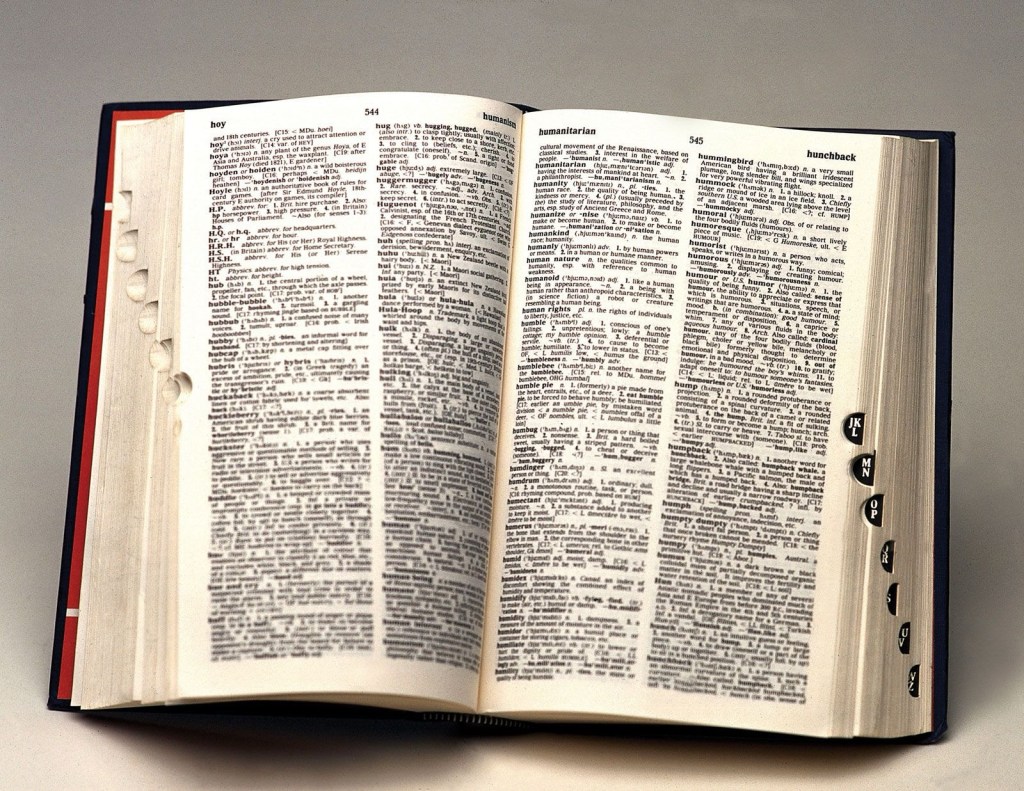
alliteration | əˌlɪtəˈreɪʃn | noun [mass noun] the occurrence of the same letter or sound at the beginning of adjacent or closely connected words: the alliteration of ‘sweet birds sang’ | [count noun] : alliterations are clustered in the last few lines. – ORIGIN early 17th century: from medieval Latin alliteratio(n-), from Latin ad– (expressing addition) + littera ‘letter’. Oxford English Dictionary
In the Beginning
The post title refers to all the answers beginning with ‘A’.
This twelve-letter noun means ‘a political candidate who seeks election in an area where they have no local connections’. What is this word?
Answer: Carpetbagger.
carpetbagger ▸ noun informal, derogatory a political candidate who seeks election in an area where they have no local connections. — ORIGIN mid 19th century: originally applied to people from the northern states of the US who went to the South after the Civil War to profit from the Reconstruction. Oxford English Dictionary
Two
This six-letter noun means ‘the period of a person’s or thing’s greatest success, popularity, activity, or vigour’. What is this noun?
Answer: Heyday.
heyday /ˈheɪdeɪ / ▸ (one’s heyday) noun the period of a person’s or thing’s greatest success, popularity, activity, or vigour: the paper has lost millions of readers since its heyday in 1964.
– ORIGIN late 16th century (denoting good spirits or passion): from archaic heyday!, an exclamation of joy, surprise, etc. Oxford English Dictionary
Three
This four-letter verb means ‘move along slowly and carefully’. What is it?
Answer: Inch.
inch verb [no object, with adverbial of direction] move along slowly and carefully. — ORIGIN late Old English ynce, from Latin uncia ‘twelfth part’, from unus ‘one’ (probably denoting a unit). Compare with ounce. Oxford English Dictionary
Four
This seven-letter verb means ‘criticise (someone or something) harshly’. What is this verb?
Answer: Lambast.
lambast /lamˈbast / (lambaste /lamˈbeɪst /) ▸ verb [with object] criticize (someone or something) harshly: they lambasted the report as a gross distortion of the truth.
– ORIGIN mid 17th century (in the sense ‘beat, thrash’): from lam1 + baste3. The current sense dates from the late 19th century. Oxford English Dictionary
Five
This five-letter verb means ‘inspire or permeate with (a feeling or quality)‘. What is the word?
Answer: Imbue.
imbue /ɪmˈbjuː / ▸ (be imbued with) verb ( imbues, imbuing, imbued) [with object] inspire or permeate with (a feeling or quality): his works are invariably imbued with a sense of calm and serenity.
– ORIGIN late Middle English (in the sense ‘saturate’): from French imbu ‘moistened’, from Latin imbutus, past participle of imbuere ‘moisten’. Oxford English Dictionary
Word Spice
The post title was a bit of a clue But not as straightforward as yesterday. The first letter of each answer spells ‘chili’ when taken in order — chili being a spice.
This nine-letter noun means ‘a tiny trace or spark of a specified quality or feeling’. What is the word?
Answer: Scintilla.
scintilla | sɪnˈtɪlə | noun [in singular] a tiny trace or spark of a specified quality or feeling: a scintilla of doubt. — ORIGIN late 17th century: from Latin. Oxford English Dictionary
Two
A twelve-letter noun used in law, mainly in Scotland, meaning ‘the preliminary examination of witnesses, especially to decide whether there is ground for a trial’. What is the word?
Answer: Precognition.
See usage 2 below.
precognition | ˌpriːkɒɡˈnɪʃn | noun 1 [mass noun] foreknowledge of an event, especially as a form of extrasensory perception. 2 Law, mainly Scottish English the preliminary examination of witnesses, especially to decide whether there is ground for a trial. — ORIGIN late Middle English: from late Latin praecognitio(n-), based on Latin cognoscere ‘know’. Oxford English Dictionary
Three
This four-letter noun, the ninth letter of the Greek alphabet, means ‘an extremely small amount’. Can you guess what it is?
Answer: Iota.
iota | ʌɪˈəʊtə | noun 1 the ninth letter of the Greek alphabet (Ι, ι), transliterated as ‘i’. •[followed by Latin genitive] Astronomy (Iota) the ninth star in a constellation: Iota Piscium. 2 [in singular, usually with negative] an extremely small amount: nothing she said seemed to make an iota of difference. — ORIGIN from Greek iōta. iota (sense 2 of the noun) arose because iota is the smallest letter of the Greek alphabet: compare with jot. Oxford English Dictionary
Four
This is a fourteen-letter noun meaning ‘a person who enjoys or is skilled at solving crosswords’. Can you identify the word?
Answer: Cruciverbalist.
cruciverbalist | ˌkruːsɪˈvəːbəlɪst | noun a person who enjoys or is skilled at solving crosswords. — ORIGIN 1970s: from Latin crux, cruci– ‘cross’ and verbalist. Oxford English Dictionary
Five
This ten-letter noun means ‘the formal art and practice of horsemanship and horse riding’. What is the word?
Answer: Equitation.
equitation | ˌɛkwɪˈteɪʃn | noun [mass noun] formal the art and practice of horsemanship and horse riding. — ORIGIN mid 16th century: from French équitation or Latin equitatio(n-), from equitare ‘ride a horse’, from eques, equit– ‘horseman’ (from equus ‘horse’). Oxford English Dictionary
Word Spice
The post title was a bit of a clue. The first letter of each answer spells ‘spice’ when taken in order.