Continuing the alphabet theme with all of today’s answers beginning with the letter ‘Y’.
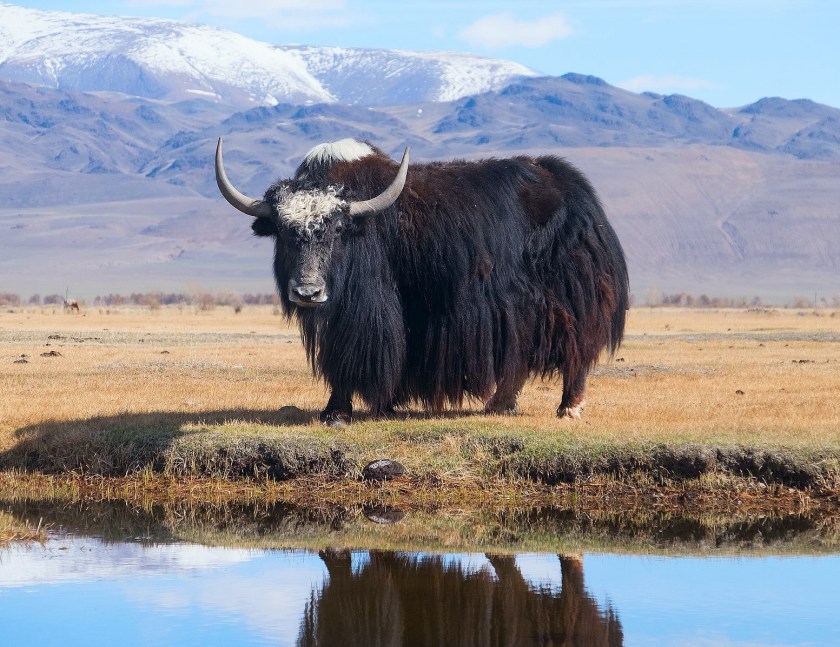
This is known as a Sarlyk in Altai, see question one. Image Wikipedia
One
Remembering the theme, the animal pictured is a…
Two
Located on the island of Honshu, what is Japan’s second-largest city in terms of population?
Three
The lyrics of this 1972 song by Carly Simon describe a self-absorbed lover, whose identity has long been a matter of speculation. What is the song?
Four
Susanna Clarke’s novel Jonathan Strange & Mr. Norrell begins,
‘Some years ago there was in the city of … a society of magicians. They met upon the third Wednesday of every month and read each other long, dull papers upon the history of English magic.’
What city is missing from this quote?
Five
What colour links these? – The cross on the flag of Sweden – A ball with a value of two points snooker
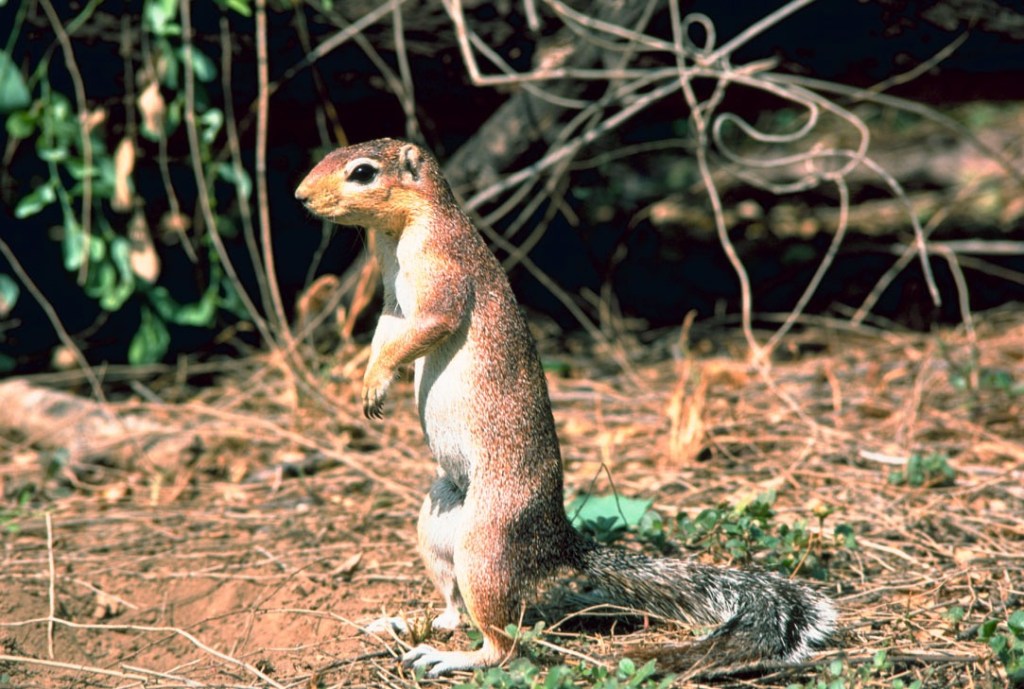
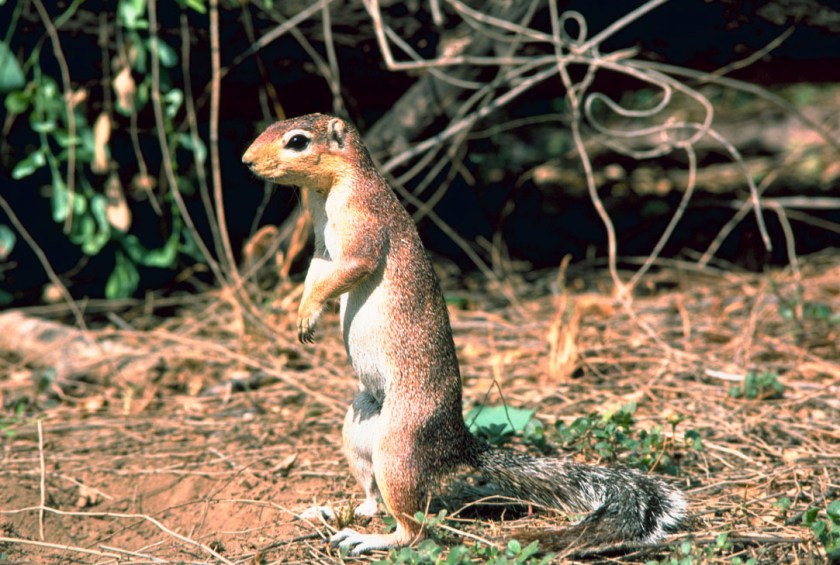
The unstriped ground squirrel is which of these? – Xandra Neramanius – Xerus rutilus – Xantia citroenus
Answer: Xerus rutilus
The unstriped ground squirrel is a rodent species found in dry savannas and shrublands across East Africa. The distractors provided were made-up terms: Xandra Neramani (us) is a character in Marvel comics, while Xantia citroen (us) refers to the Citroën Xantia, a French car manufactured between 1992 and 2001.
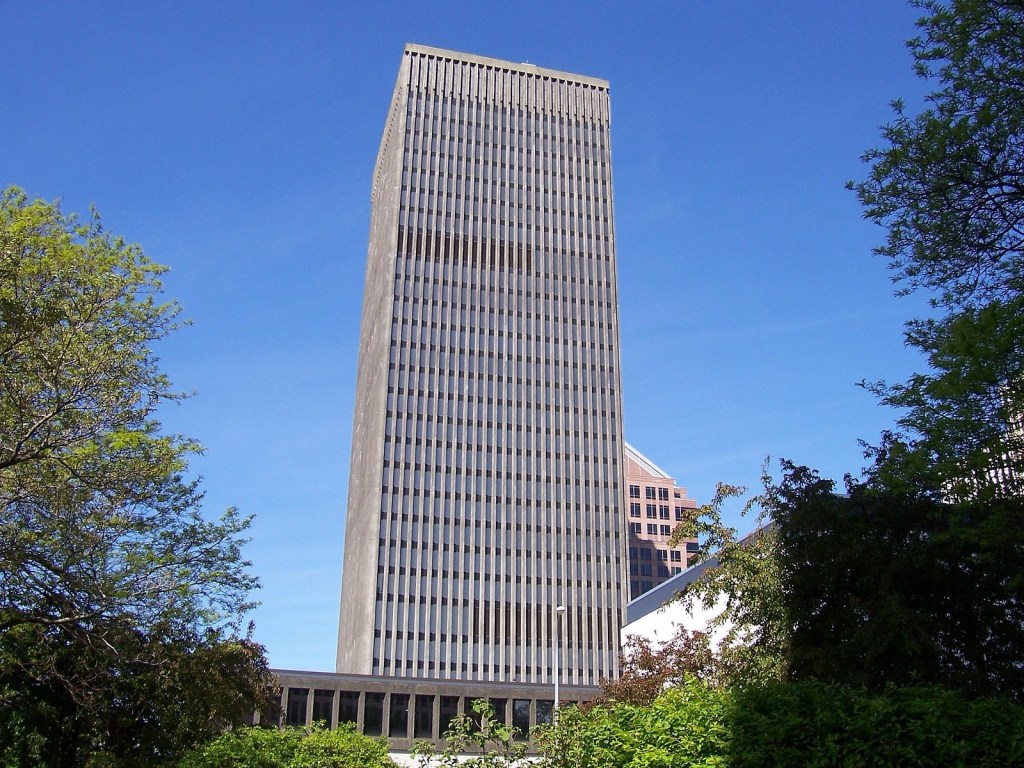
Founded in Rochester, New York in 1906 the Haloid Photographic Company is better known today as…
Answer: Xerox
Xerox, founded in 1906 as Haloid Photographic Company, commercialised Chester Carlson’s xerography process in 1951. Joseph C. Wilson, who took over Haloid, led the company’s development of xerography and renamed it Xerox Corporation in 1961. In 2019, it became Xerox Holdings Corporation.
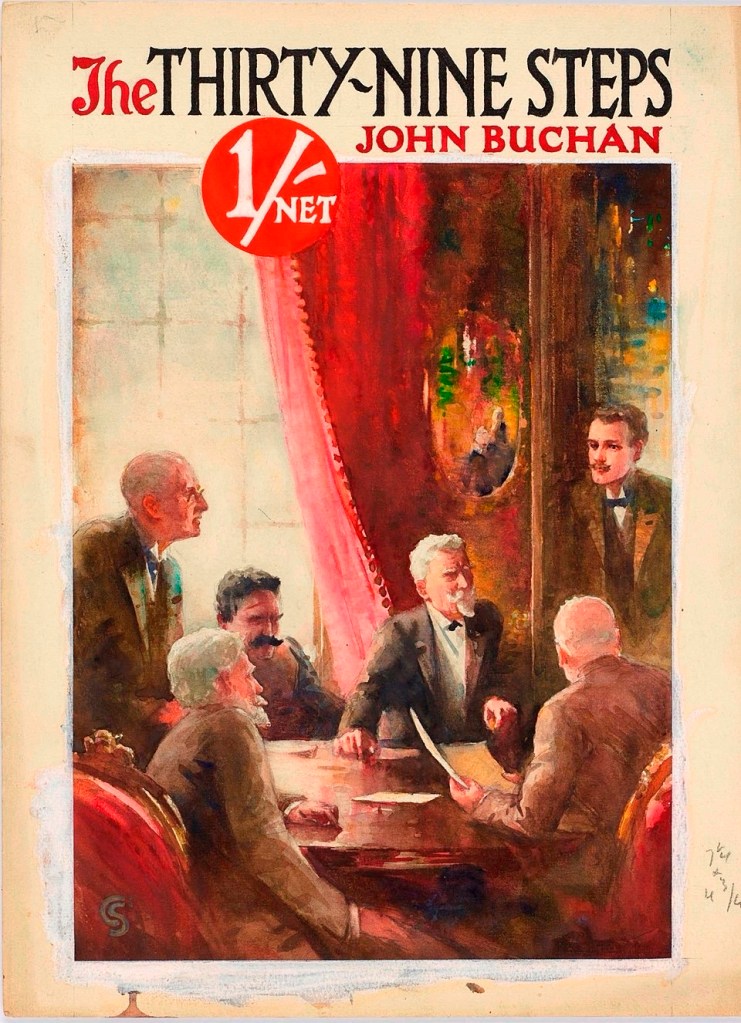
Cover of the first edition of The Thirty-nine Steps. Image Wikipedia
Three
Calculate the sum of the number of steps from the title of John Buchan’s 1915 novel plus the title of the 1979 Blake Edwards romantic comedy film starring Dudley Moore, Julie Andrews and Bo Derek. Please express your answer in Roman numerals.
Answer: XLIX
John Buchan’s steps are The Thirty-nine Steps and Blake Edward’s film is 10. Therefore, 39 + 10 = 49, which is written as XLIX in Roman numerals.
A Catholic missionary who was a co-founder of the Society of Jesus, and
The fictional Professor X from the Marvel universe.
Answer: Xavier
Francis Xavier, a cleric and missionary, co-founded the Society of Jesus and led the first Christian mission to Japan. He is venerated as a saint and known as the ‘Apostle of the Indies’ for his extensive missionary work in Asia, particularly in India and Japan.
In the Marvel universe, Professor Charles Francis Xavier, known as Professor X, is a powerful telepath and mutant. As the founder of the X-Men, Professor X runs a school for mutants in New York. The character has been portrayed by Patrick Stewart and James McAvoy in the X-Men film series.
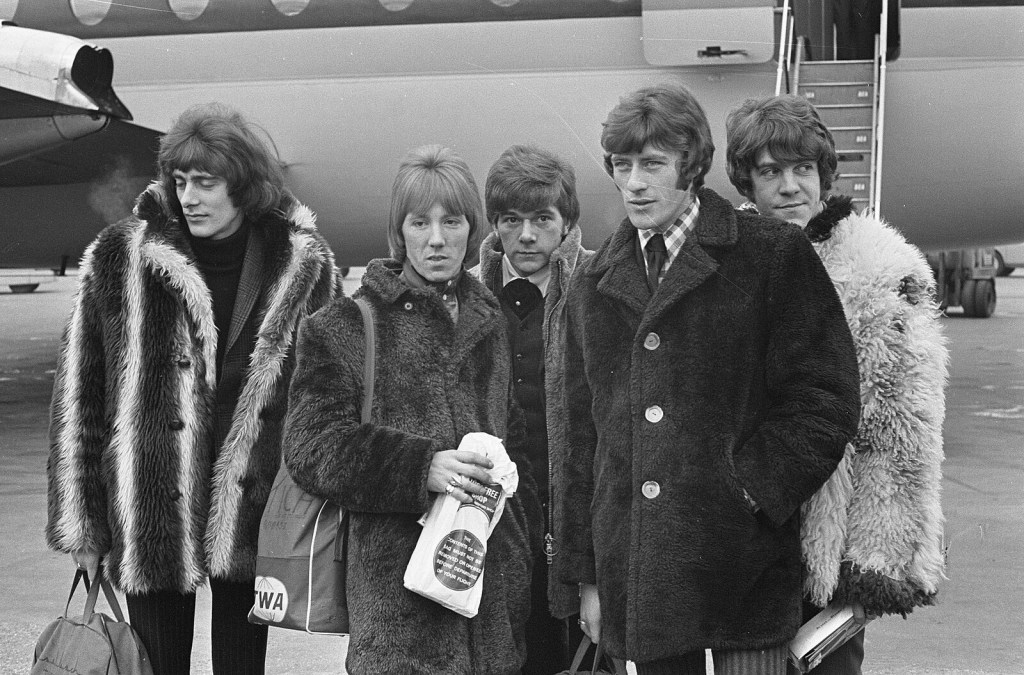
Dave Dee, Dozy, Beaky, Mick & Tich, January 1967. From left: John Dymond (Beaky), Ian Amey (Tich), Trevor Ward-Davies (Dozy), Mick Wilson (Mick) and Dave Dee. Image Wikipedia
Five
One word links the following?
A word in the first line of an 1816 poem by Samuel Taylor Coleridge poem
A 1968 by Dave Dee, Dozy, Beaky, Mick & Tich
A 1980 song by Olivia Newton-John and Electric Light Orchestra
Answer: Xanadu
The poem is Kubla Khan, shown in full below. The Legend of Xanadu was by Dave Dee, Dozy, Beaky, Mick & Tich and Olivia Newton-John and ELO’s song was Xanadu.
Kubla Khan
Samuel Taylor Coleridge
In Xanadu did Kubla Khan A stately pleasure-dome decree: Where Alph, the sacred river, ran Through caverns measureless to man Down to a sunless sea.
So twice five miles of fertile ground With walls and towers were girdled round: And there were gardens bright with sinuous rills, Where blossomed many an incense-bearing tree; And here were forests ancient as the hills, Enfolding sunny spots of greenery.
But oh! that deep romantic chasm which slanted Down the green hill athwart a cedarn cover! A savage place! as holy and enchanted As e’er beneath a waning moon was haunted By woman wailing for her demon-lover! And from this chasm, with ceaseless turmoil seething, As if this earth in fast thick pants were breathing, A mighty fountain momently was forced: Amid whose swift half-intermitted burst Huge fragments vaulted like rebounding hail, Or chaffy grain beneath the thresher’s flail: And ‘mid these dancing rocks at once and ever It flung up momently the sacred river. Five miles meandering with a mazy motion Through wood and dale the sacred river ran, Then reached the caverns measureless to man, And sank in tumult to a lifeless ocean: And ‘mid this tumult Kubla heard from far Ancestral voices prophesying war!
The shadow of the dome of pleasure Floated midway on the waves; Where was heard the mingled measure From the fountain and the caves. It was a miracle of rare device, A sunny pleasure-dome with caves of ice!
A damsel with a dulcimer In a vision once I saw: It was an Abyssinian maid, And on her dulcimer she played, Singing of Mount Abora. Could I revive within me Her symphony and song, To such a deep delight ‘twould win me That with music loud and long I would build that dome in air, That sunny dome! those caves of ice! And all who heard should see them there, And all should cry, Beware! Beware! His flashing eyes, his floating hair! Weave a circle round him thrice, And close your eyes with holy dread, For he on honey-dew hath fed And drunk the milk of Paradise.
The unstriped ground squirrel is which of these? – Xandra Neramanius – Xerus rutilus – Xantia citroenus
Two
Founded in Rochester, New York in 1906 the Haloid Photographic Company is better known today as…
Three
Calculate the sum of the number of steps from the title of John Buchan’s 1915 novel, plus the title of the 1979 Blake Edwards romantic comedy film starring Dudley Moore, Julie Andrews and Bo Derek. Please express your answer in Roman numerals.
Four
What surname links these?
A Catholic missionary who was a co-founder of the Society of Jesus, and
The fictional Professor X from the Marvel universe.
Five
One word links the following
A word found in the first line of an 1816 poem by Samuel Taylor Coleridge poem
A 1968 song by Dave Dee, Dozy, Beaky, Mick & Tich
A 1980 song by Olivia Newton-John and Electric Light Orchestra What is the word that links the above?
In what television programme did the above characters first appear?
Answer: Wacky Races
Dick Dastardly is a fictional character and the main antagonist in various animated series by Hanna-Barbera Productions Wacky Races and its spin-off Dastardly and Muttley in Their Flying Machines. The first appearance was in 1969. He is known for his catchphrases ’Muttley, do something!‘; ‘Curses, foiled again!’; ‘Drat, and double drat!’; or even ‘Triple dat!’.
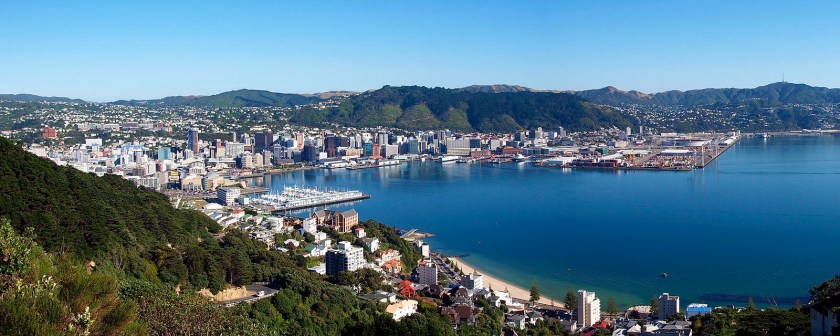
41°17′20″S is the latitude of the World’s windiest city. What is the city?
Answer: Wellington, New Zealand
Wellington, New Zealand’s capital, the world’s windiest city, by average wind speed—it is also the world’s southernmost capital. It is a cultural hub with a diverse, youth-driven culture, known for its film industry, financial services and livability. The city’s economy is service-based, with a focus on finance, business, government and technology.
The quote above is a line in the chorus of what song?
Answer: Wuthering Heights
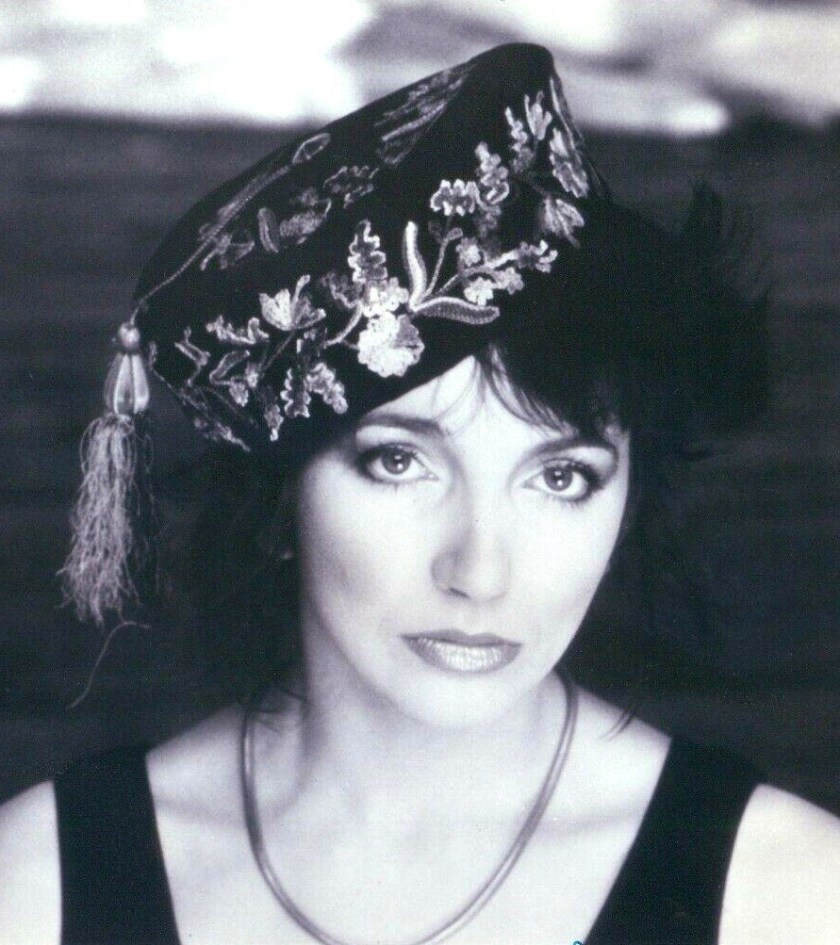
Wuthering Heights is Kate Bush’s debut single, released in 1978. It spent four weeks at number one in the UK and was the first number-one single by a female artist to be entirely self-written. Kate Bush wrote in a few hours after seeing the 1967 BBC adaptation of Emily Brontë’s novel Wuthering Heights, which she had not read. Subsequently reading the novel she discovered she shared her birthday with Emily Brontë. Lyrics are shown at the end of the post.
The chemical element Tungsten has the symbol ‘W’. What word does this symbol represent?
Answer: Wolfram
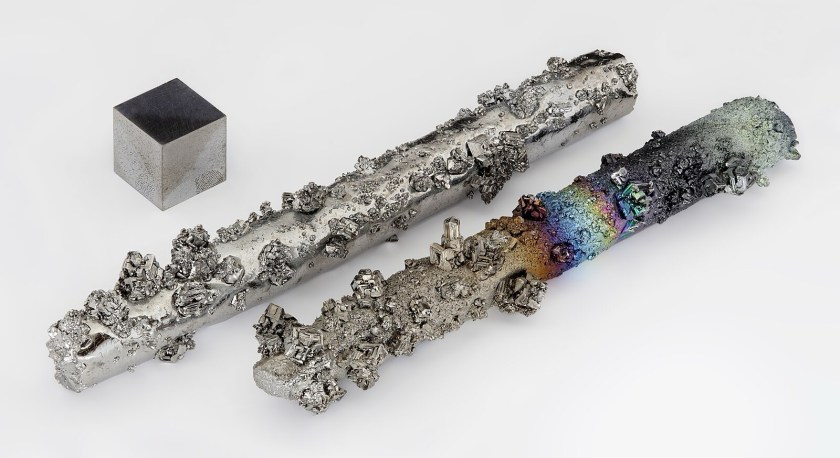
Tungsten, or wolfram, is a chemical element with the symbol W and atomic number 74. It is known for its high melting and boiling points, density, and hardness, making it useful in various applications such as light bulb filaments, X-ray tubes and tungsten carbide. Tungsten is also found in some biomolecules, though it can be toxic to most animal life.
Fort Laramie, Wyoming. Watercolour by Alfred Jacob Miller, c 1858-1860. Image Wikipedia
Five
This US State has a northern border with Montana and a southern border with Colorado. What state is it?
Answer: Wyoming
Wyoming is a landlocked state in the Mountain West, bordered by several states including Montana to the north and Colorado to the south. It is the least populous state despite being the 10th largest, with a semi-arid to continental climate and a significant portion of its land owned by the federal government.
Wuthering Heights
Kate Bush
Out on the wily, windy moors We’d roll and fall in green You had a temper like my jealousy Too hot, too greedy How could you leave me When I needed to possess you? I hated you. I loved you, too
Bad dreams in the night They told me I was going to lose the fight Leave behind my wuthering, wuthering Wuthering Heights
Heathcliff, it’s me, I’m Cathy I’ve come home. I’m so cold Let me in-a-your window
Heathcliff, it’s me, I’m Cathy I’ve come home. I’m so cold Let me in-a-your window
Ooh, it gets dark! It gets lonely On the other side from you I pine a lot. I find the lot Falls through without you I’m coming back, love Cruel Heathcliff, my one dream My only master
Too long I roam in the night I’m coming back to his side, to put it right I’m coming home to wuthering, wuthering Wuthering Heights
Heathcliff, it’s me, I’m Cathy I’ve come home. I’m so cold Let me in-a-your window
Heathcliff, it’s me, I’m Cathy I’ve come home. I’m so cold Let me in-a-your window
Ooh! Let me have it Let me grab your soul away Ooh! Let me have it Let me grab your soul away You know, it’s me – Cathy
Heathcliff, it’s me, I’m Cathy I’ve come home. I’m so cold Let me in-a-your window
Heathcliff, it’s me, I’m Cathy I’ve come home. I’m so cold Let me in-a-your window
Heathcliff, it’s me, I’m Cathy I’ve come home. I’m so cold
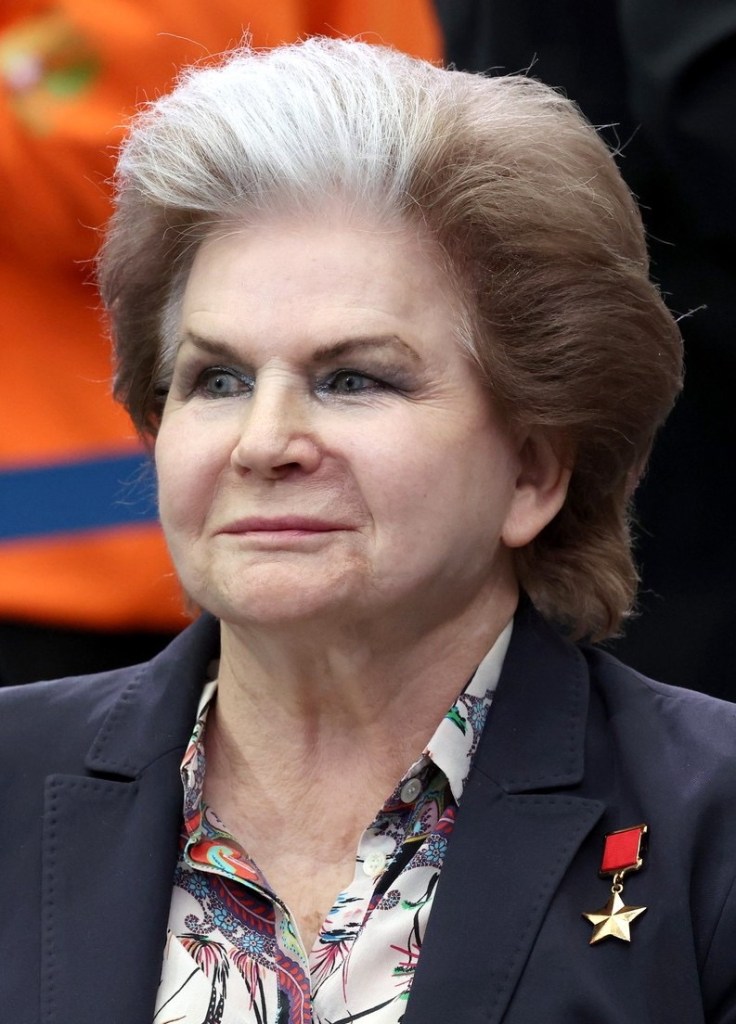
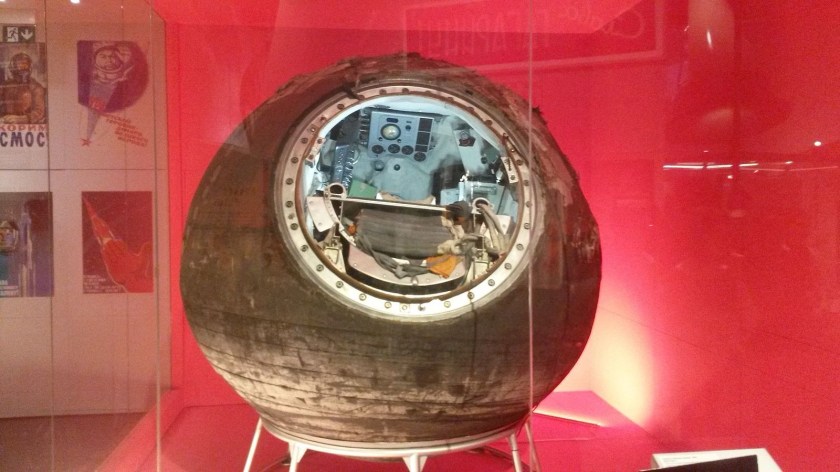
Valentina Tereshkova, a Russian engineer and former Soviet cosmonaut, was the first woman in space, completing a solo mission on Vostok 6 in 1963. She later became a prominent member of the Communist Party and a State Duma member.
A fictional patriarch who founded the Genco Pura Olive Oil Company was…
Answer: Vito Corleone
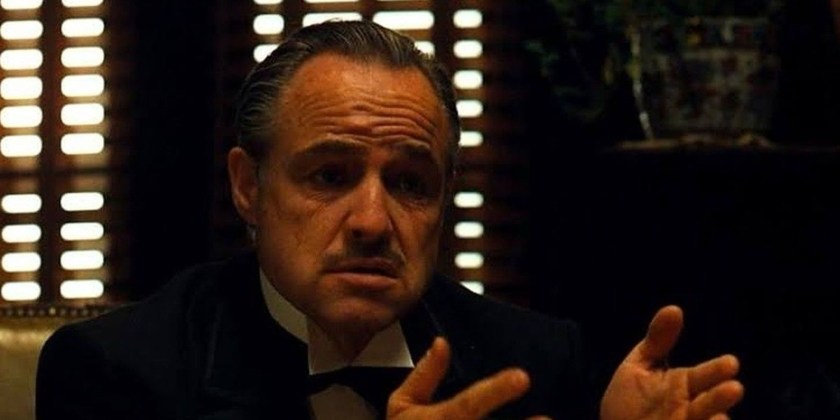
Vito Corleone, a fictional character in Mario Puzo’s novel The Godfather and the subsequent film trilogy by Francis Ford Coppola, is an Italian immigrant to America who builds a Mafia empire. He is known for his strict moral code of loyalty and respect, and is succeeded by his son Michael as Don of the Corleone crime family.
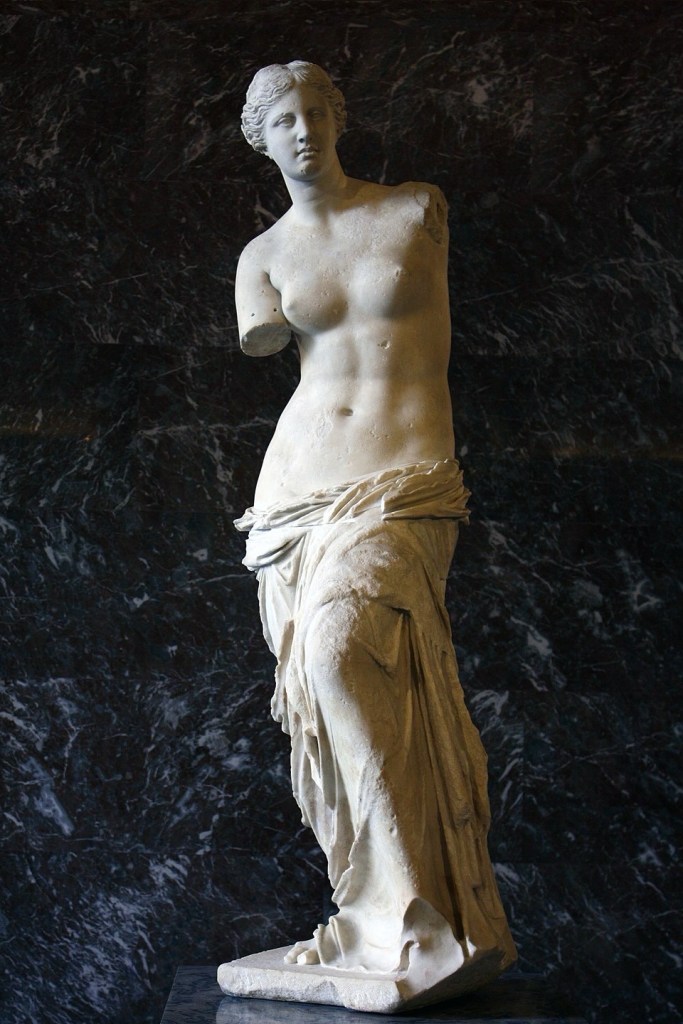
What sculpture in the Louvre Museum was discovered on the Greek island of Milos in 1820?
Answer: Venus de Milo
The Venus de Milo, a Parian marble statue of a Greek goddess, is likely Aphrodite. It stands over 2 metres (6 ft 7 in) tall and is missing both arms, the left foot and earlobes. Discovered in 1820 by a Greek farmer on the island of Milos, the discovery was witnessed by a French sailor, Olivier Voutier, who encouraged further excavation. It has been in the Louvre since 1821.
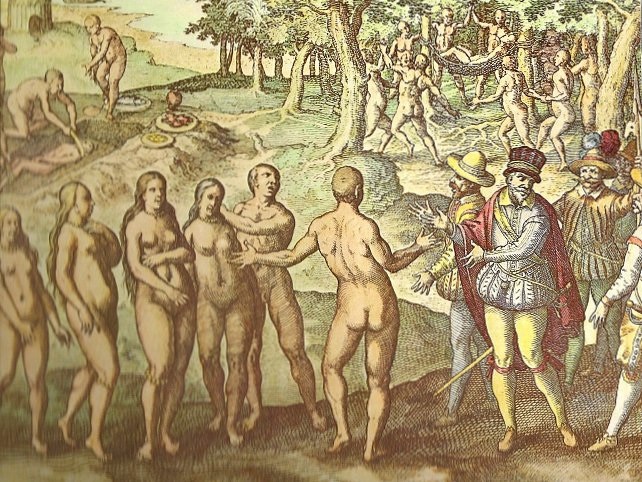
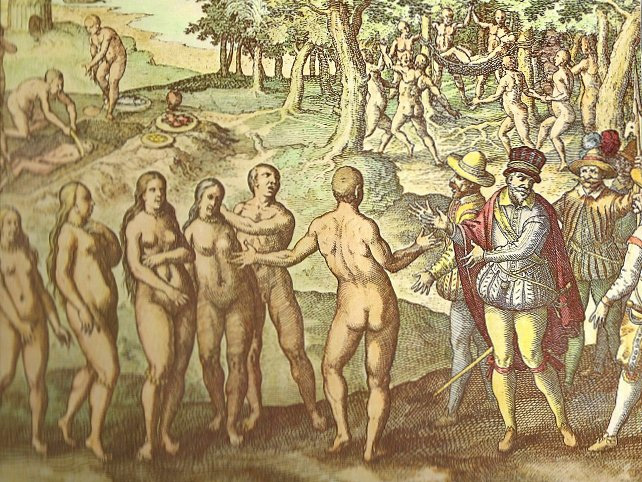
Amerigo Vespucci upon his arrival on his first voyage to the New World, 1497. Vespucci is offered native women, notice hammocks in the background. As described in Vespucci’s Letter to Soderini. description (uncertain location, prob. Central America, around Honduras or Yucatan; alternatively poss. Gulf of Paria in Venezuela). Engraving from c.1592 by Theodor de Bry (Flemish, 1528-1598). Image Wikipedia
Four
America is named after Amerigo who?
Answer: Vespucci (Amerigo Vespucci)
Amerigo Vespucci, an Italian explorer and navigator, participated in voyages between 1497 and 1504, claiming to have discovered the New World in 1501. His accounts, though disputed, popularised the discoveries and led to the continent being named ‘America’ in his honour.
A Vogon guard, as seen in the 1981 TV series of The Hitchhikers Guide to the Galaxy. Image Hitchhikers Fandom
Five
At the start of The Hitchhikers Guide to the Galaxy a ____ Constructor Fleet arrives to destroy Earth to make way for a hyperspace bypass? What word is missing?
Answer: Vogon (Constructor Fleet)
The ships of the Vogon Constructor Fleet were described as ‘impossibly huge yellow somethings,’ resembling the bulldozers that demolish Arthur’s house. They appeared to have been congealed rather than constructed and hung in the air in a peculiar manner, similar to bricks. Radar was said to be unable to detect them, and they were capable of travelling through hyperspace.
A fictional patriarch who founded the Genco Pura Olive Oil Company was…
Three
What sculpture in the Louvre Museum was discovered on the Greek island of Milos in 1820?
Four
America is named after Amerigo who?
Five
At the start of The Hitchhikers Guide to the Galaxy a ___ Constructor Fleet arrives to destroy Earth to make way for a hyperspace bypass? What word is missing?
The answers to my earlier post are shown highlighted below.
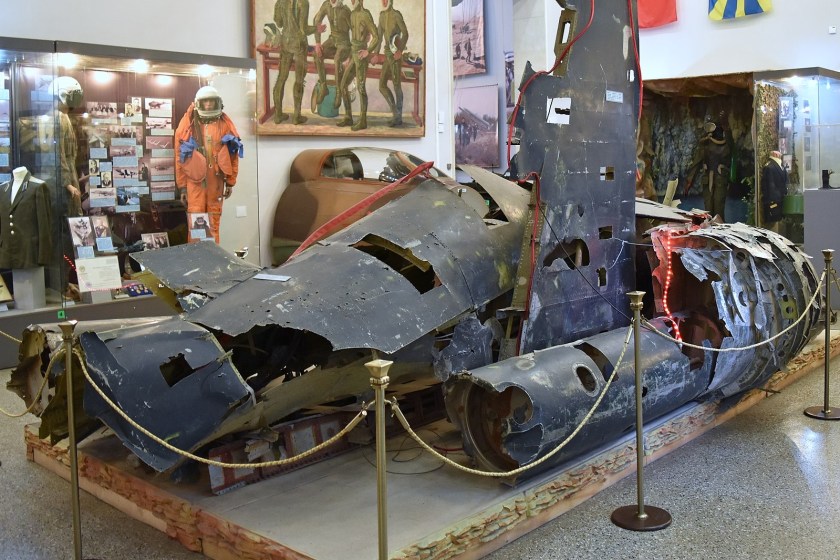
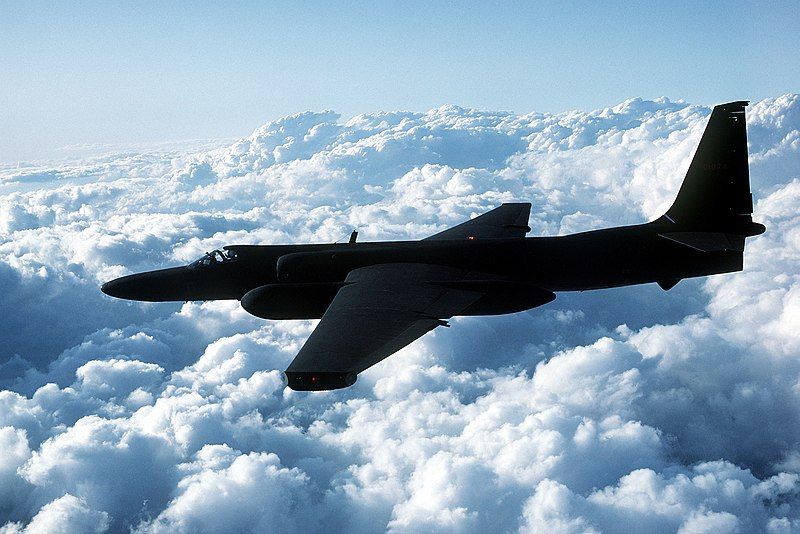
The remains of Francis Gary Powers’ U-2 (s/n 56-6693, msn 360) are now on display in the Central Armed Forces Museum, Moscow, Russia. Image Wikipedia
One
On 1 May 1960, an aircraft flown by American pilot Francis Gary Powers was shot down over Soviet territory. By what short name is the aircraft commonly known?
Answer: U-2
On 1 May 1960, a US Lockheed U-2 spy plane, flown by American pilot Francis Gary Powers, was shot down by the Soviet Air Defence Forces while conducting photographic aerial reconnaissance inside Soviet territory. The aircraft had taken off from Peshawar, Pakistan, and crashed near Sverdlovsk (now Yekaterinburg) after being hit by a surface-to-air missile. Powers parachuted to the ground and was subsequently captured.
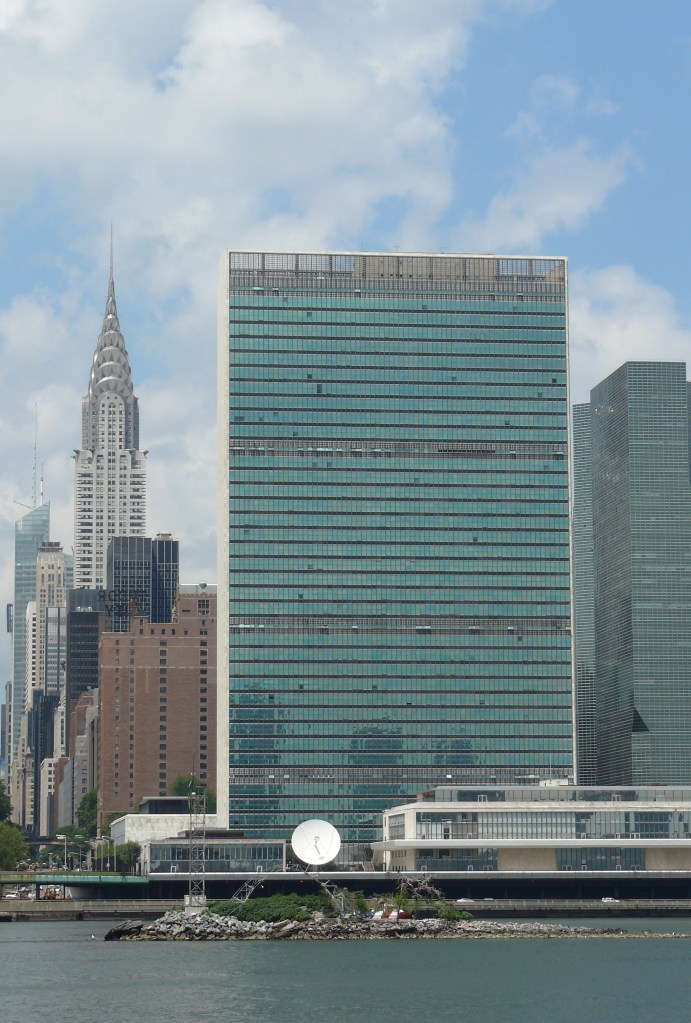
U Thant Island, in East River, New York City, in front of the UN Building. Image Wikipedia
Two
Belmont Island, located in front of the United Nations Secretariat Building in New York City, was, in 1982, officially renamed in with a UN connection. What name was it given?
Answer: U Thant Island
U Thant Island, formerly Belmont Island, is a small artificial island in New York City’s East River. It’s the smallest island in Manhattan and is home to a colony of double-crested cormorants. Belmont Island was renamed U Thant Island on October 7, 1982, in honour of the late U Thant, a former Secretary-General of the United Nations.
An alias the main protagonist is told to use in The Fellowship of the Ring
The first human settlement on Mars in Kim Stanley Robinson‘s novel Red Mars
A fictional character in Ursula K. Le Guin‘s short story The Rule of Names
Answer: Underhill
Underhill answered all three points in the question.
In JRR Tolkien’s The Fellowship of the Ring Frodo Baggins was told by Gandalf to use the alias Mr Underhill from when he left Hobbiton and until they met up at The Prancing Pony in Bree.
Red Mars follows the first hundred colonists on their journey to Mars, their first settlemet, Underhill; their efforts to terraform the planet, and their struggle for independence from Earth’s control. Led by differing ideologies, the colonists debate terraforming and Mars’ relationship with Earth, ultimately leading to a revolution against Earth’s influence.
The Rule of Names is a short story by Ursula K. Le Guin, introducing the Earthsea realm and its magic system. It features the dragon Yevaud and explains the significance of true names in Earthsea. A resident wizard is nicknamed Underhill because he lives in a cave below a hill.
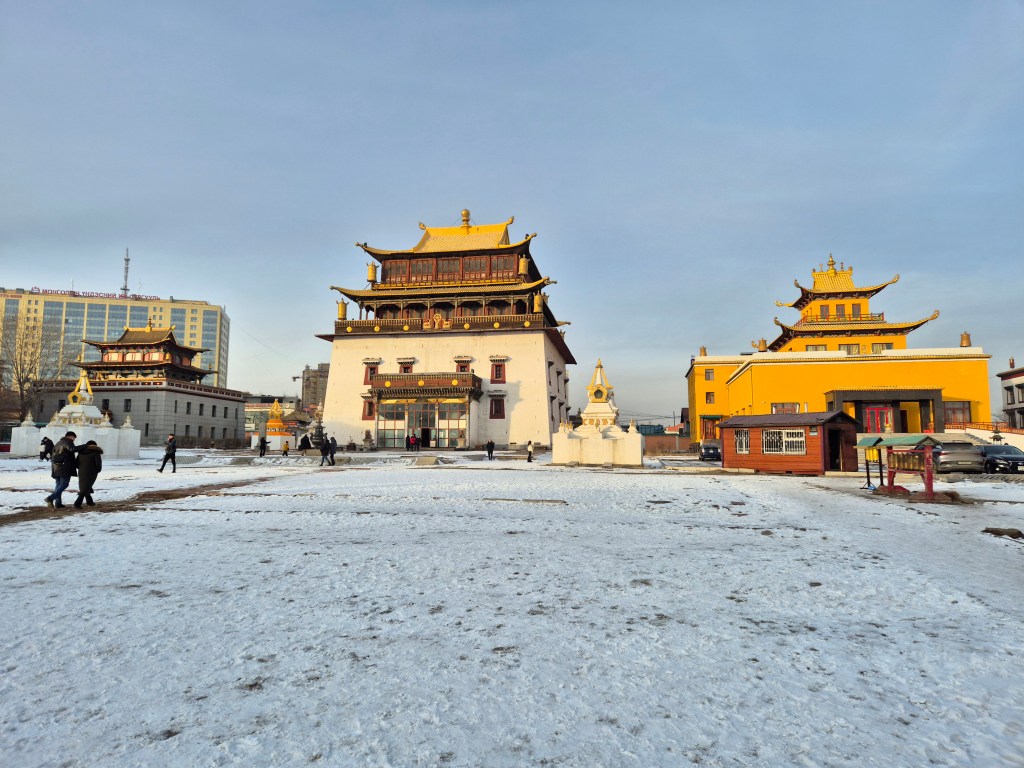
Gandantegchinlen Monastery, Bayangol, Ulaanbaatar, Mongolia. Image Wikipedia
Four
With an average annual temperature of 0.2 °C (32.4 °F), and coldest January temperatures dropping to between −36 and −40 °C (−32.8 and −40.0 °F), which capital city holds the distinction of being the coldest in the world?
Answer: Ulaanbaatar
Ulaanbaatar, the capital of Mongolia, is the coldest capital city in the world with an average annual temperature of 0.2 °C or 32.4 °F. It was founded in 1639 as a Buddhist monastic centre and became the country’s capital in 1924, now serving as its cultural, industrial and financial hub.
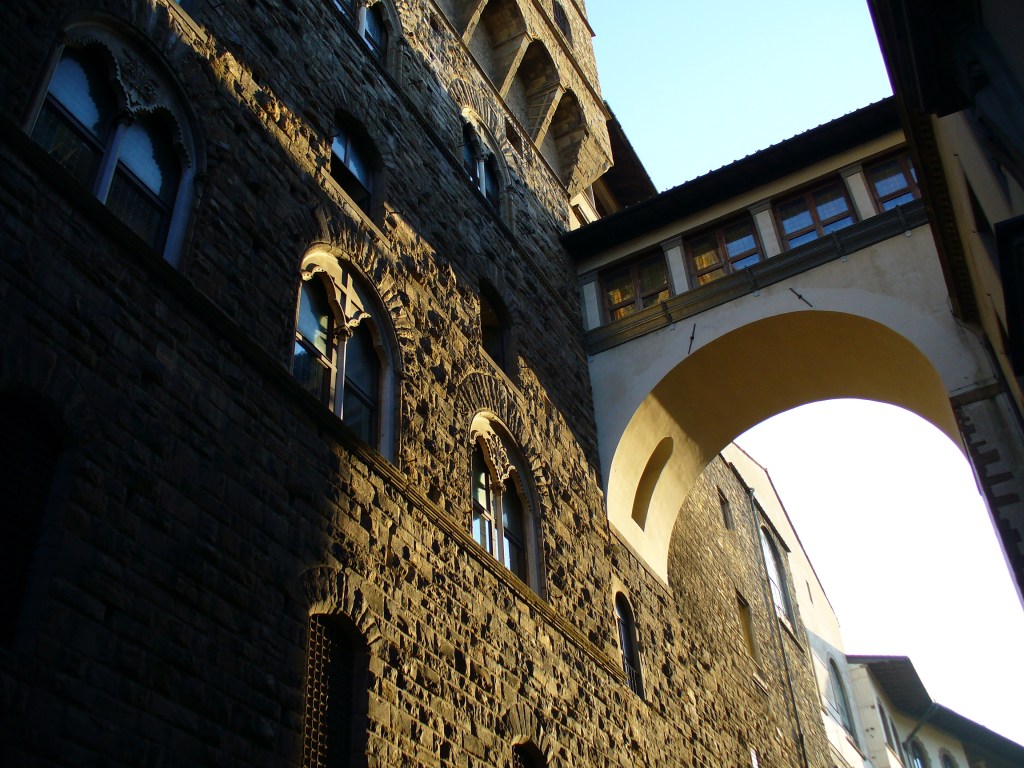
The Vasari Corridor’s bridge from the Palazzo Vecchio to Uffizi. Image Wikipedia
Five
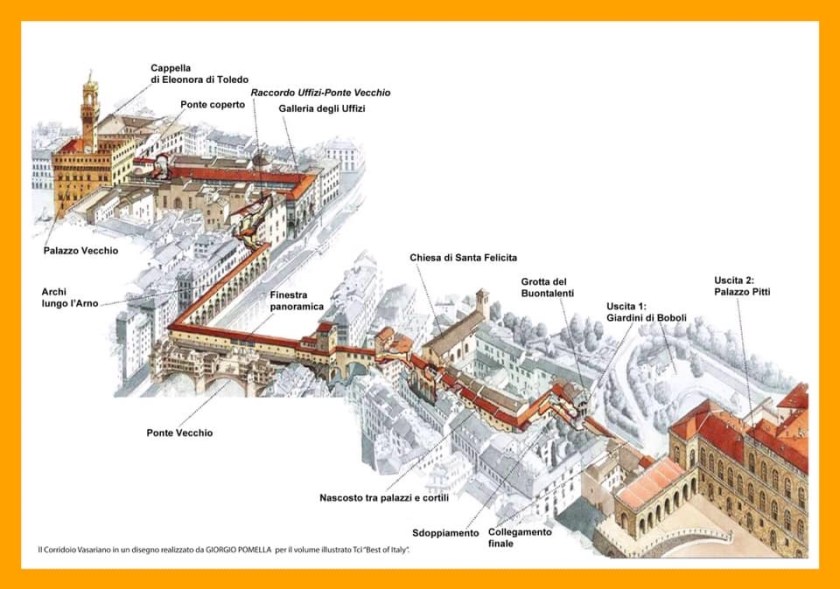
Florence’s Vasari Corridor is a long, raised passageway that connects Palazzo Vecchio in Piazza della Signoria to Palazzo Pitti. What gallery is found along its route?
Answer: Uffizi
The Vasari Corridor in Florence connects the Palazzo Vecchio to the Palazzo Pitti, passing through the Uffizi Gallery. Stretching approximately one kilometre, it crosses the Arno River at Ponte Vecchio and winds through the Oltrarno district.
On 1 May 1960, an aircraft flown by American pilot Francis Gary Powers was shot down over Soviet territory. By what short name is the aircraft commonly known?
Two
Belmont Island, located in front of the United Nations Secretariat Building in New York City, was, in 1982, officially renamed in with a UN connection. What name was it given?
Three
What one word answers all of these?
An alias the main protagonist is told to use in The Fellowship of the Ring
The first human settlement on Mars in Kim Stanley Robinson‘s novel Red Mars
A fictional character in Ursula K. Le Guin‘s short story The Rule of Names
Four
With an average annual temperature of 0.2 °C (32.4 °F), and coldest January temperatures dropping to between −36 and −40 °C (−32.8 and −40.0 °F), which capital city holds the distinction of being the coldest in the world?
Five
Florence’s Vasari Corridor is a long, raised passageway that connects Palazzo Vecchio in Piazza della Signoria to Palazzo Pitti. What gallery is found along its route?
The answers to my earlier post are shown highlighted below.
The Tagus River and the Roman bridge at Alcántara, in Extremadura, Spain, built between 104 and 106 CE by an order of the Roman emperor Trajan. Image Wikipedia
One
The 1,900-year-old Alcantara Bridge spans a river that rises in Spain’s Albarracín Mountains before travelling 626 miles (1,007 km) to empty into the Atlantic Ocean. Can you name the river?
Answer: Tagus
The Tagus, the longest river in the Iberian Peninsula, flows from its source in Spain to the Atlantic Ocean at Lisbon in Portugal. The Alcántara Bridge, built between 104 and 106 CE, is a Roman stone arch bridge. It was commissioned by Emperor Trajan.
Fred Perry, on the right, with Pat Hughes in 1934. Image Wikipedia
Two
In what sport did Fred Perry become the 1929 World Champion?
Answer: Table tennis
Frederick John Perry was a British tennis and table tennis player. His first love was table tennis, and he was World Champion in 1929. In tennis, he won ten Majors, including eight Grand Slam singles titles. He was the first player to win a ‘Career Grand Slam’ and the last British player to win a men’s singles Grand Slam title until Andy Murray in 2012.
Cover of the score for The Mikado, 1895. Image Wikipedia
Three
Pitti-Sing, Peep-Bo and Yum-Yum are characters in which Gilbert and Sullivan operetta?
Answer: The Mikado
The Mikado is a comic opera by Gilbert and Sullivan, satirising late 19th-century British institutions and politics through a fantasy Japanese setting. It premiered in London in 1885 and quickly became a global hit, with over 150 productions by the end of the year.
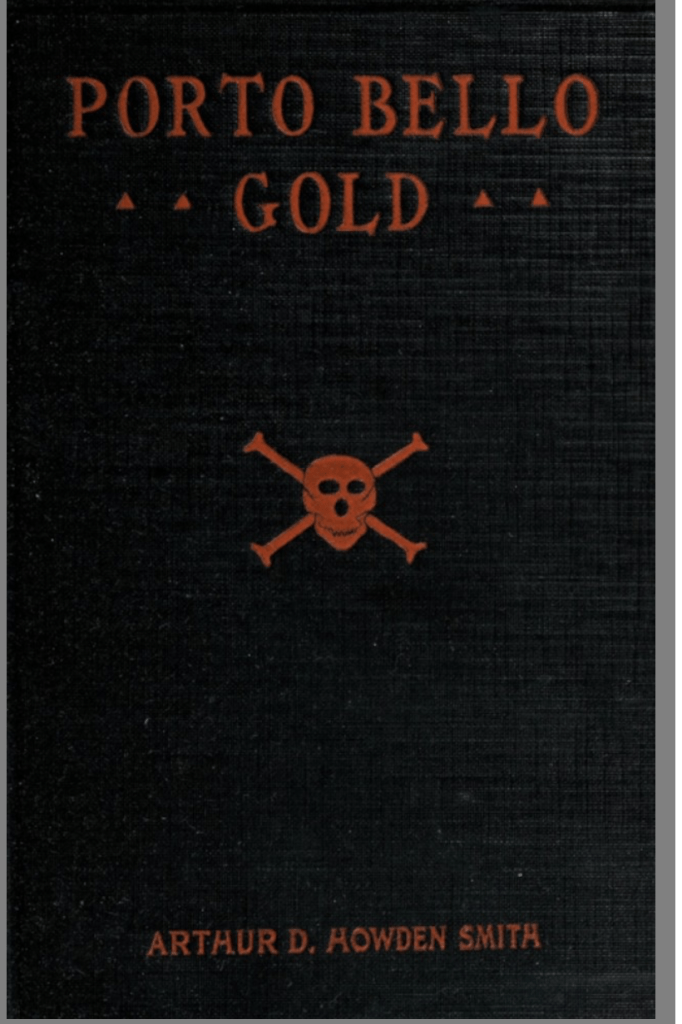
Porto Bello Gold (1924) by Arthur D. Howden Smith is a prequel to which 1883 Robert Louis Stevenson novel?
Answer: Treasure Island
Arthur D. Howden Smith was a great admirer of Robert Louis Stevenson. In Porto Bello Gold (1924), a prequel to Treasure Island – written with the permission of Robert Louis Stevenson’s executor, Lloyd Osbourne – Harry Ormerod’s son Robert goes to sea in the company of such famous pirates as Captain Flint, Long John Silver and Billy Bones and takes part in capturing the treasure which would be recovered in Stevenson’s book. – Wikipedia, Arthur D. Howden Smith
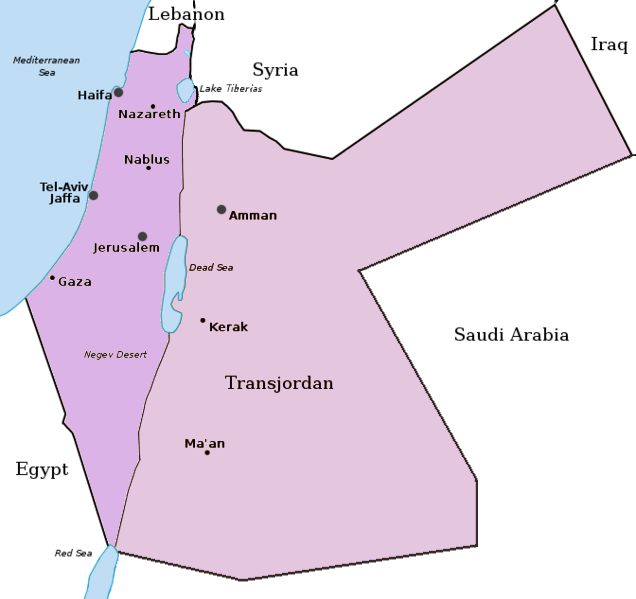
Jordan assumed its present name in 1949, what was it called immediately prior to that?
Answer: Transjordan
Transjordan, also known as the East Bank or the Transjordanian Highlands, is the region east of the Jordan River in the Southern Levant. Primarily located in present-day Jordan, it is a semi-arid region. Jordan is a constitutional monarchy with a population of 11.5 million, mostly Sunni Muslim. Since 1948, Jordan has accepted refugees from neighbouring countries, including 2.1 million Palestinians and 1.4 million Syrians as of 2015. Despite a skilled workforce and tourism industry, economic growth is hindered by a lack of natural resources, refugee influx, and regional instability.