Tag: americas

  • Nuclear Standoff

    Here are five questions about historical events some connected to today, October 22nd.

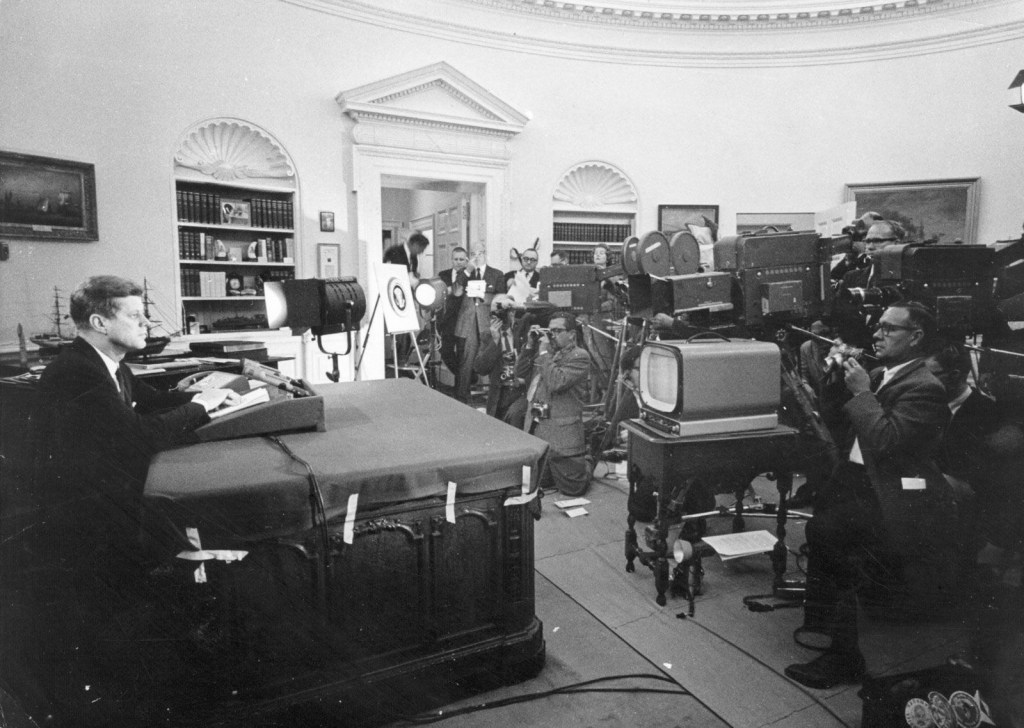
    U.S. Pres. John F. Kennedy announcing on television the U.S. naval blockade of Cuba, October 22, 1962.
    Image Encyclopædia Britannica

    One

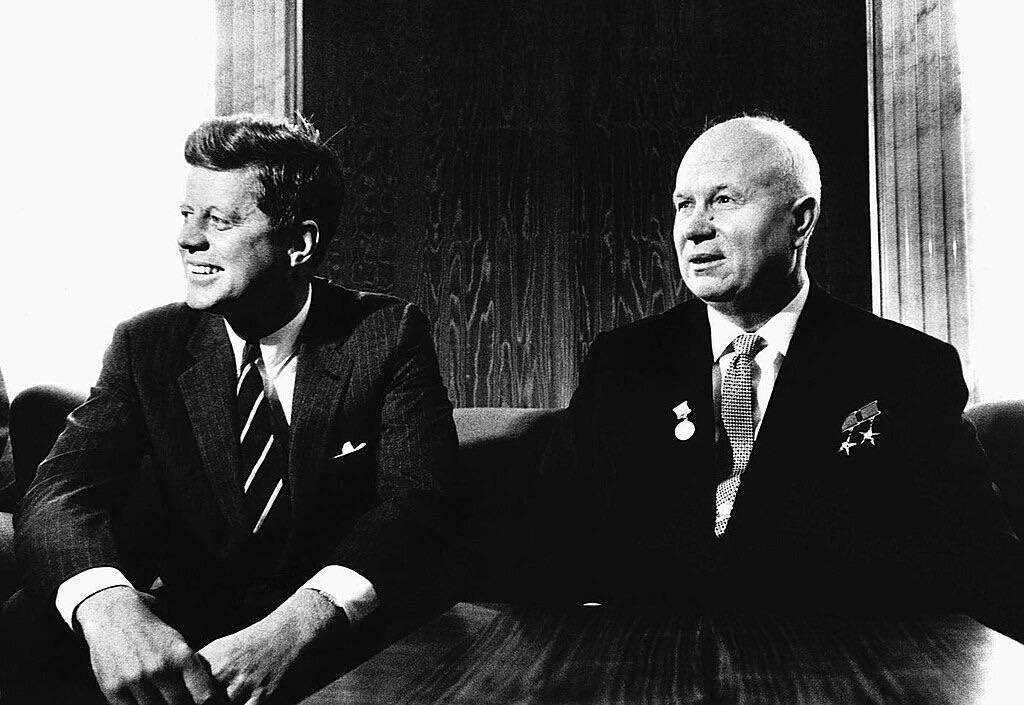
    President John F. Kennedy’s televised announcement on 22 October 1962 brought the world to the brink of nuclear war. What confrontation was it about?

    Two

    Tsar Peter I proclaimed the Russian Empire. In which century was this?

    Three

    On 22 October 1964, a French writer was awarded the Nobel Prize in Literature, though it was subsequently declined. Who was the author?

    Four

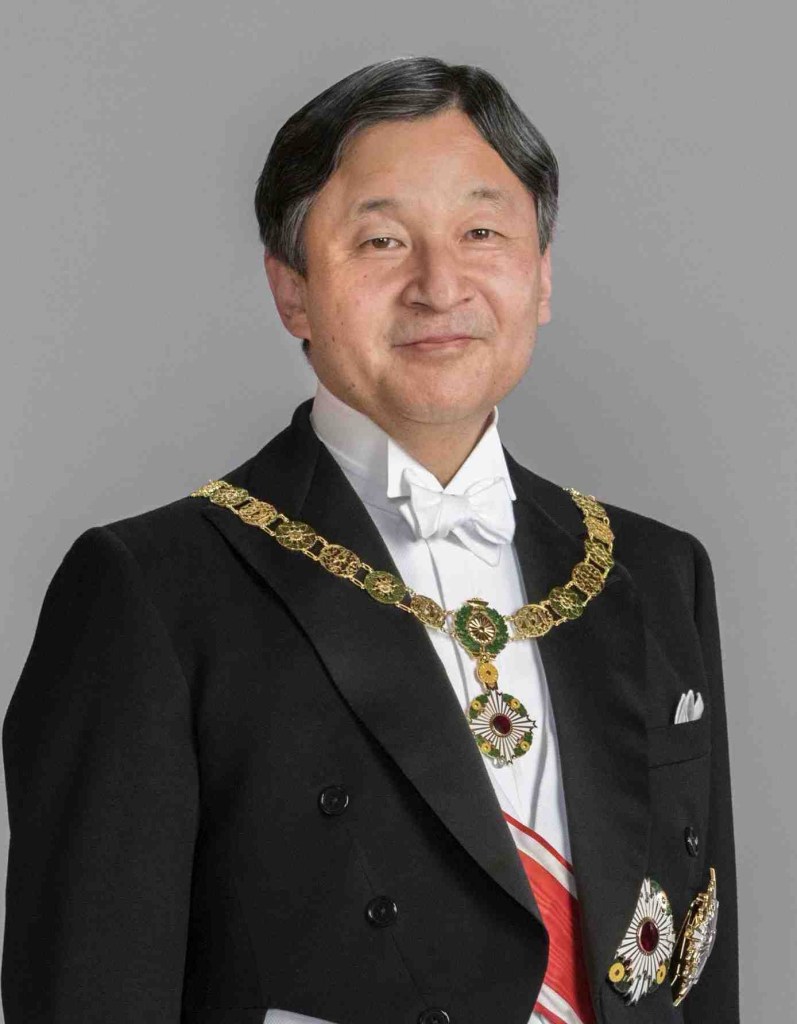
    Naruhito was officially enthroned as Japan’s 126th emperor on 22 October 2019. Earlier that year, he had ascended the Imperial Throne following the abdication of whom?

    Five

    Who became the first President of the Republic of Texas on 22 October 1836?

    Good luck! I’ll post the answers later.

  • Let There Be Light—Answers

    Here are the answers to the questions I posted earlier.

    Edison incandescent light bulb enclosed in cage.
    Image Wikipedia

    One

    On October 21, Thomas Edison applied for a patent for his design for an incandescent light bulb. In which decade did he make this application?

    Answer: 1870s

    Thomas Edison, an American inventor and businessman, developed influential devices like the phonograph and electric light bulb. He pioneered organised scientific invention and established the first industrial research laboratory.


    Two

    In 1984, Niki Lauda clinched Formula One’s World Drivers’ Championship for the final time. How many times had he won the title in total?

    Answer: Three

    Austrian racing driver Niki Lauda competed in Formula One from 1971 to 1979 and 1982 to 1985, winning three World Drivers’ Championships—1975, 1977 and 1984—with Ferrari and McLaren. He survived a horrific crash in 1976 and made a remarkable comeback to win his second and third titles. Beyond racing, Lauda founded three airlines and held advisory and team principal roles in Formula One.


    Three

    In 1940, the first edition of Ernest Hemingway’s For Whom the Bell Tolls was published. In what war was the story set?

    Answer: Spanish Civil War

    Ernest Hemingway’s 1940 novel, For Whom the Bell Tolls, follows Robert Jordan, an American volunteer in the Spanish Civil War, tasked with destroying a bridge. The book assumes knowledge of the war between the Republican government and the Nationalist faction, supported by Nazi Germany and Fascist Italy.


    Four

    The Guggenheim Museum opened in New York on this date in 1959. Which architect designed its iconic spiral building?

    Answer: Frank Lloyd Wright

    Wright’s radical design broke from traditional gallery layouts, using a continuous ramp to display art in a flowing, organic space. The museum is now a UNESCO World Heritage Site, recognized for its innovation.


    Five

    The Battle of Trafalgar, fought on 21 October 1805, took place in the …. It was named after a prominent geographic feature: …. Firstly, what body of water and secondly, what geographic feature fill the two gaps in the previous sentence?

    Answer: Atlantic Ocean; Cape Trafalgar

    The Battle of Trafalgar was a decisive victory for the British Royal Navy against the combined French and Spanish fleets during the Napoleonic Wars. Admiral Lord Nelson’s tactics ensured Britain’s naval supremacy but cost him his life. Trafalgar Square in London was named to commemorate this victory.

  • Let There Be Light

    Five questions which are all related to today, October 21st.

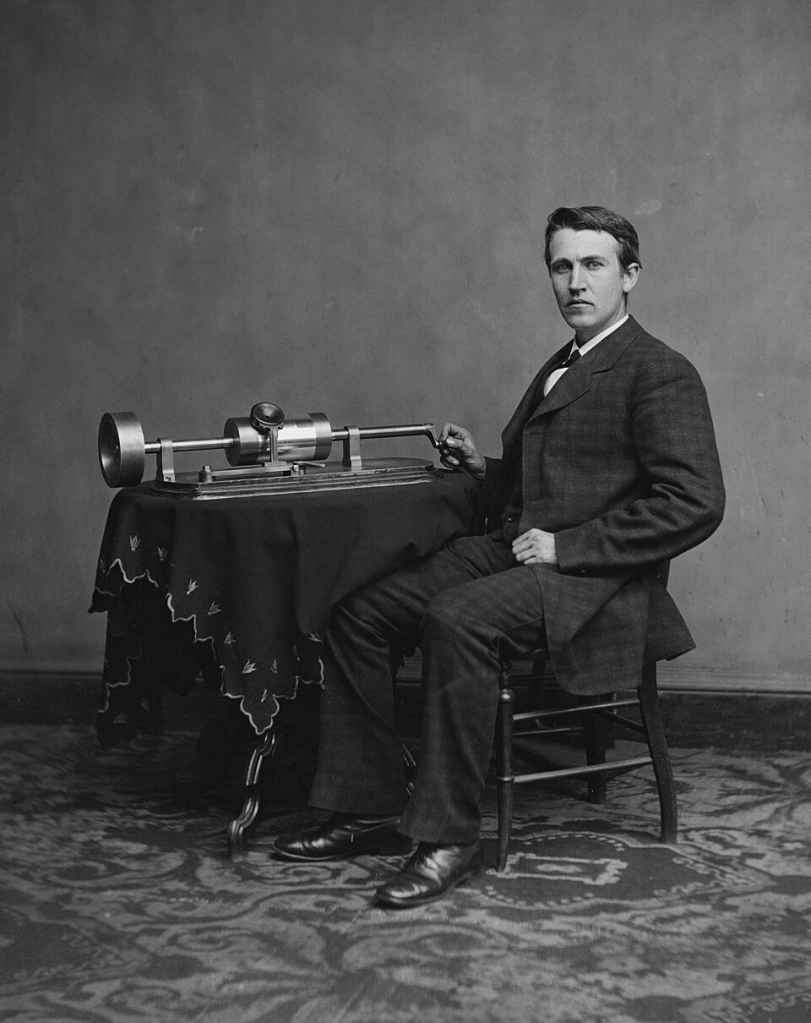
    Thomas Edison, c. 1878.
    Image Wikipedia

    One

    On 21 October Thomas Edison applied for a patent for his design for an incandescent light bulb. In which decade did he make this application?

    Two

    In 1984, Niki Lauda clinched Formula One’s World Drivers’ Championship for the final time. How many times had he won the title in total?

    Three

    In 1940, the first edition of Ernest Hemingway’s For Whom the Bell Tolls was published. In what war was the story set?

    Four

    The Guggenheim Museum opened in New York on this date in 1959. Which architect designed its iconic spiral building?

    Five

    The Battle of Trafalgar, fought on 21 October 1805, took place in the …. It was named after a prominent geographic feature: the …. Firstly, what body of water and secondly, what geographic feature fill the two gaps in the previous sentence?

    Good luck! I’ll post the answers later?

  • On This Day: October 20th—Answers

    Here are the answers to the questions in my earlier post.

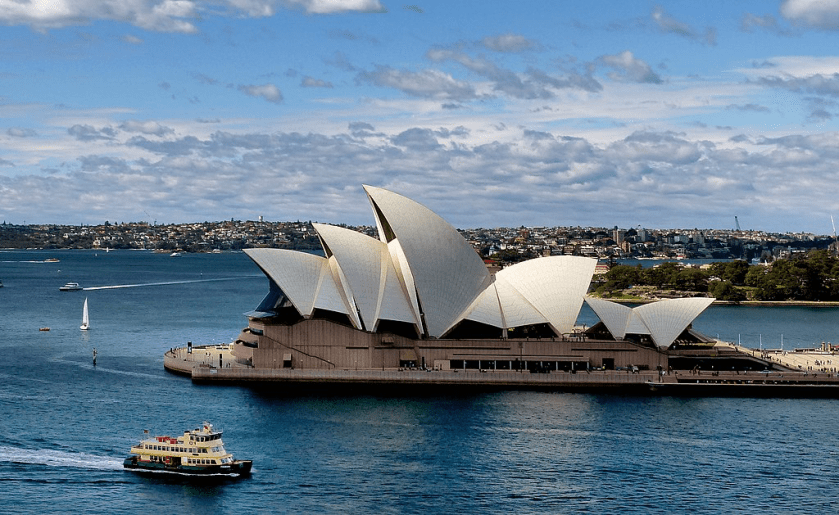
    Sydney Opera House.
    Image Wikipedia

    One

    On 20 October 1973, which Australian landmark officially opened to the public?  
    Sydney Opera House
    The Sydney Opera House, which was opened by Queen Elizabeth II, was named a UNESCO World Heritage Site, whose citation is

    Inaugurated in 1973, the Sydney Opera House is a great architectural work of the 20th century that brings together multiple strands of creativity and innovation in both architectural form and structural design. A great urban sculpture set in a remarkable waterscape, at the tip of a peninsula projecting into Sydney Harbour, the building has had an enduring influence on architecture. The Sydney Opera House comprises three groups of interlocking vaulted ‘shells’ which roof two main performance halls and a restaurant. These shell-structures are set upon a vast platform and are surrounded by terrace areas that function as pedestrian concourses. In 1957, when the project of the Sydney Opera House was awarded by an international jury to Danish architect Jørn Utzon, it marked a radically new approach to construction.
    UNESCO World Heritage Convention


    Two

    The Battle of Valdivia, part of the Chilean War of Independence, took place in which decade?  
    1820s
    This battle saw Chilean forces secure the southern stronghold from Spanish royalists, aiding in the country’s independence.


    The Traveling Wilburys—top: 1. Jeff Lynne, 2. Tom Petty;
    bottom: 3. Roy Orbison, 4. Bob Dylan, 5. George Harrison

    Three

    Which iconic rock musician gave his final live performance with his band, the Traveling Wilburys, on this day in 1990?  
    Roy Orbison
    Roy Orbison, part of the supergroup with George Harrison, Bob Dylan, Jeff Lynne and Tom Petty, passed away later that year.


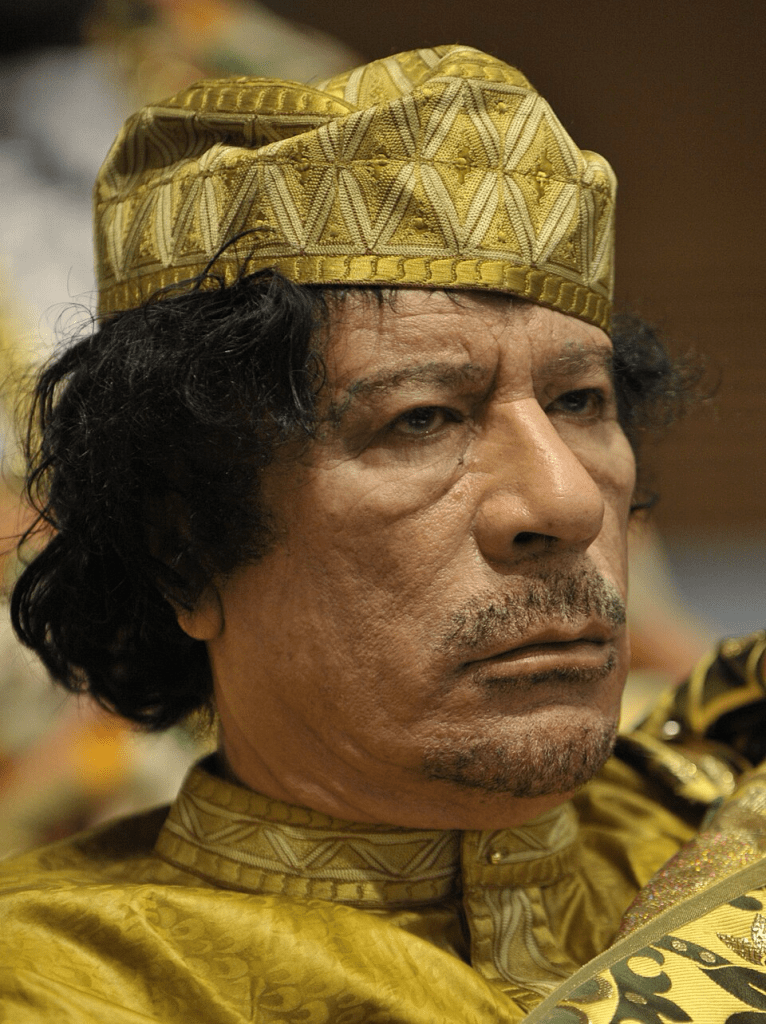
    Muammar Gaddafi.
    Image Wikipedia

    Four

    On 20 October 2011, which long-time Libyan leader was captured and killed during the civil conflict?  
    Muammar Gaddafi
    Muammar Gaddafi had ruled Libya for 42 years before being overthrown during the Arab Spring uprisings. His death, which ended one of Africa’s longest dictatorships, lead to years of instability in Libya.


    Five

    Which U.S. President signed the Louisiana Purchase Treaty on 20 October 1803?  
    Thomas Jefferson
    The Louisiana Purchase doubled the size of the United States, adding roughly 828,000 square miles of territory.

  • On This Day: October 20th

    Some trivia about today, October 20th.


    Flag of the United States (1795–1818).
    Image Wikipedia

    One

    On 20 October 1973, which Australian landmark officially opened to the public?  
    Sydney Opera House

    Two

    The Battle of Valdivia, part of the Chilean War of Independence, took place in which decade?  
    1820s

    Three

    Which iconic rock musician gave his final live performance with his band, the Traveling Wilburys, on this day in 1990?

    Four

    On 20 October 2011, which long-time Libyan leader was captured and killed during the civil conflict?

    Five

    Which U.S. President signed the Louisiana Purchase Treaty on 20 October 1803?  
    Thomas Jefferson

    Good luck! I’ll Post the answers later.

  • Shrouded in Mystery—Answers

    Here are the answers to the questions in my earlier post.

    Nero.
    Image Wikipedia

    One

    Is it true or false that in 1988 the Archbishop of Turin announced that carbon-14 dating of the Shroud of Turin placed its date in the first century CE?

    Answer: False

    He admitted the shroud’s origins date back to the Middle Ages. The Shroud of Turin, traditionally believed to be Jesus’ burial cloth, was radiocarbon dated in 1988 to the period 1260–1390 CE This contradicts its traditional association with Jesus’ crucifixion. While some question the reliability of the 1988 test, no expert has deemed it substantially unreliable.


    Two

    The 1972 Andes flight carrying the Old Christians Rugby Club became international news when it was revealed that the survivors had resorted to cannibalism to survive. Is it true or false that the flight originated from Buenos Aires, Argentina?

    Answer: False

    They were flying from Montevideo, Uruguay to Santiago, Chile. Old Christians Club, a Uruguayan sports club from Montevideo, is known for its rugby union team. The club also has football and field hockey branches. Forty rugby club members and five crew members were on board a plane that crashed in the Argentinean Andes. They endured an avalanche and weeks of starvation, resorting to eating the frozen bodies of the deceased. Sixteen survivors were rescued after two trekked across the mountains to seek help.


    Three

    Is it true of false that in 54 CE the Roman emperor Claudius died from poisoning and was succeeded by his son Caligula, rather than his son with Messalina?

    Answer: False

    He was succeeded by his adoptive son Nero rather than Britannicus, his son with Messalina. Ancient historians believe Claudius was poisoned, likely by his wife Agrippina, to secure Nero’s succession. However, some argue he died from illness or old age, citing his poor health and the lack of evidence against his taster Halotus.


    Four

    Is this statement true or false: In 2010, 33 miners were rescued from South America’s Patagonian Desert after spending a 69 days underground.

    Answer: False

    It was the Atacama Desert in Chile. The 2010 Copiapó mining accident trapped 33 miners 700 metres underground for a record 69 days after a cave-in at the San José mine in the Atacama Desert, Chile. The rescue operation, involving multiple countries and organisations, successfully brought the miners to the surface. The mine’s owner, San Esteban Mining Company, had a history of safety violations and negligence.


    Margaret Thatcher.
    Image Wikipedia

    Five

    Margaret Thatcher, who was born today in 1925 was the British Prime Minister from 1979 until 1990. Is it true or false that she was Member of Parliament for the constituency of Finchley for more than 32 years?

    Answer: True

    She became the MP for Finchley on 8 October 1959 and held the position until her retirement in the spring of 1992. Thatcher was Europe’s first female prime minister and the longest-serving British prime minister of the 20th century, also the only one to secure three consecutive terms.

  • Shrouded in Mystery

    Here are five questions which are all related to today, October 13th

    Shroud of Turin.
    Image Wikipedia

    One

    Is it true or false that in 1988 the Archbishop of Turin announced that carbon-14 dating of the Shroud of Turin placed its date in the first century CE?

    Two

    The 1972 Andes flight carrying the Old Christians Rugby Club became international news when it was revealed that the survivors had resorted to cannibalism to survive. Is it true or false that the flight originated from Buenos Aires, Argentina?

    Three

    Is it true of false that in 54 CE the Roman emperor Claudius died from poisoning and was succeeded by his son Caligula, rather than his son with Messalina?

    Four

    Is this statement true or false: In 2010, 33 miners were rescued from South America’s Patagonian Desert after spending a 69 days underground.

    Five

    Margaret Thatcher, who was born today in 1925 was the British Prime Minister from 1979 until 1990. Is it true or false that she was Member of Parliament for the constituency of Finchley for more than 32 years?

    Good luck! I’ll post the answers later today.

  • All in a Day—Answers

    One

    On 18 September 1905, the actress Greta Garbo was born. In which capital city was she born?

    Answer: Stockholm

    Greta Garbo, was born Greta Lovisa Gustafsson, in Stockholm, Sweden. The Swedish-American actress was a prominent figure in Hollywood’s silent and early golden eras. Known for her melancholic screen persona and subtle performances, she achieved international stardom with films like Flesh and the Devil and A Woman of Affairs. Despite her success, Garbo retired from acting in 1941, shunning publicity and leading a private life until her death in 1990.


    Two

    A Dictionary of the English Language, published 1755, was considered the most famous work of which English writer, poet, playwright and lexicographer who was born 18 September 1709?

    Answer: Samuel Johnson

    Samuel Johnson, an English writer, made significant contributions to literature as a poet, playwright, essayist, and lexicographer. His most famous work, A Dictionary of the English Language, was published in 1755 and remained influential for 150 years. Johnson’s friendship with James Boswell resulted in the renowned biography, Life of Samuel Johnson.


    Three

    Dylan Kwabena Mills, born today in 1984, is known professionally as whom?

    Answer: Dizzee Rascal

    Dizzee Rascal, a British rapper, is credited with pioneering British hip hop and grime music. His work, incorporating elements of UK garage, bassline, and R&B, brought UK rap into the mainstream and achieved international recognition.


    Four

    John G. Diefenbaker, who was born on this day in 1895, was the prime minister of which country from 1957 to 1963?

    Answer: Canada

    John G. Diefenbaker, leader of the Progressive Conservative Party, served as Canada’s prime minister from 1957 to 1963, ending 22 years of Liberal rule. His government faced challenges, including a crisis over nuclear weapons, leading to his defeat in the 1963 election.


    Five

    American police officer J.D. Tippit was born on 18 September 1924. When he was 39 years of age he was shot and killed while on duty by a suspect he was questioning regarding an earlier shooting. Who was he shot by?

    Answer: Lee Harvey Oswald

    After the assassination of President John F. Kennedy in Dallas, Texas at 1230 on 22 November 1963, bullet casings were found on the sixth floor of the Texas School Book Depository, where a rifle owned by Lee Harvey Oswald was discovered. Two employees were missing: one outside watching the motorcade and Oswald, who had been working there for a month. Oswald was seen on the sixth floor before the shooting and encountered by the building superintendent and a policeman afterward. Law enforcement circulated his description. Oswald returned to his boardinghouse, and then left again. At 1:15 pm he was confronted by Dallas policeman J.D. Tippit, whom he shot and killed. Witnesses saw Oswald enter the Texas Theatre, where he was apprehended by police at 1:50 PM.

  • All in a Day

    These questions all relate to people born on September 18th.

    Greta Garbo, 1925.
    Image Wikipedia

    One

    On 18 September 1905, the actress Greta Garbo was born. In which capital city was she born?

    Two

    A Dictionary of the English Language, published 1755, was considered the most famous work of which English writer, poet, playwright and lexicographer who was born 18 September 1709?

    Three

    Dylan Kwabena Mills, born today in 1984, is known professionally as whom?

    Four

    John G. Diefenbaker, who was born on this day in 1895, was the prime minister of which country from 1957 to 1963?

    Five

    American police officer J.D. Tippit was born on 18 September 1924. When he was 39 years of age he was shot and killed while on duty by a suspect he was questioning regarding an earlier shooting. Who was he shot by?

    Good luck! I’ll post the answers later.

  • Mr ? Goes to Washington—Answers

    Here are the answers to my earlier post.

    One

    Born on 27 August 1908 in Texas, this boy went on to become the president of the United States. Who is he?

    Answer: Lyndon B Johnson

    Lyndon B Johnson, the 36th President of the United States, served from 1963 to 1969. He assumed the presidency after John F. Kennedy’s assassination and was later elected in a landslide. Johnson’s presidency is remembered for his Great Society programmes, which aimed to expand civil rights, improve healthcare, and combat poverty, but his legacy is also marred by the Vietnam War.


    Two

    On this date, Ernst Heinkel’s He178 turbojet-powered aircraft achieved the historic first jet flight. In which decade did this event occur?

    Answer: 1930s (1939)

    The jet engine, though conceptually ancient, only became practical in the 20th century. Early attempts, like the Caproni Campini N.1 and Tsu-11, were unsuccessful. The breakthrough came with the gas turbine, leading to the development of the turbojet, with Frank Whittle and Hans von Ohain (He178) playing pivotal roles in its creation.


    Three

    The Anglo-Zanzibar War, the shortest war in history, took place on 27 August 1896. How long did the war last?
    1. Between 30 minutes and 60 minutes
    2. Between 510 minutes and 540 minutes
    3. Between 960 and 990 minutes

    Answer: Between 30 minutes and 60 minutes

    The war lasted no longer than 40 minutes, making it the shortest war in recorded history.
    Encyclopædia Britannica

    The conflict lasted between 38 and 45 minutes, marking it as the shortest recorded war in history.
    Wikipedia


    Four

    The world premiere of a film adaptation of a book by PL Travers took place on 27 August 1964 in Los Angeles. Which film?

    Answer: Mary Poppins

    Mary Poppins, a 1964 American musical film, features Julie Andrews as a magical nanny who transforms a troubled London household.


    Five

    On 27 August 1938, at Bonneville Salt Flats, Utah, USA, Captain George E.T. Eyston set a new land speed record. What speed did he achieve?
    1. 199.96 mph
    2. 273.13 mph
    3. 345.49 mph

    Answer: 345.49 mph

    Captain George Eyston, a British engineer and racing driver, broke the land speed record three times between 1937 and 1939.