Impressionable—Answers

Here are the answers to my questions which were posted earlier.

All of these questions relate to today’s date, February 25th.

Pierre-Auguste Renoir, self-portrait, 1910.
Image Wikimedia Commons

One

The painter of the above self-portrait was born in Limoges, France, on 25 February 1841. He became an early Impressionist but later adopted a more traditional style. Who is he?

Answer: Pierre-Auguste Renoir.

Pierre-Auguste Renoir (1841-1919) was a French artist and leading Impressionist painter. He later developed a more disciplined technique, focusing on portraits and figure paintings, particularly of women.


Two

This author, best known by a pen name but also using another — Joseph Kell, was born John Burgess Wilson on this day in 1917 in an inner-city suburb of Manchester, England. After wartime service, he left the British army in 1946 with the rank of sergeant-major. His most famous work, a dystopian satire published in 1962, was adapted into a controversial film in 1971. What is his best-known pen name?

Answer: Anthony Burgess.

Anthony Burgess (1917-1993) was an English novelist, critic, and man of letters renowned for his fictional explorations of modern dilemmas. He wrote over 50 books, including novels, literary criticism, biographies, and musical compositions. Burgess’s works often combined linguistic ingenuity, witty erudition, and sharp social satire. He is best known for his dystopian satire A Clockwork Orange and was also a versatile linguist and literary critic, writing numerous novels, librettos and screenplays.


Three

In 1986, after claiming victory in a fraudulent election which led to a military coup and revolution, President Ferdinand Marcos fled his country. Of what country was Marcos president, and which opposition leader replaced him as president?

Answers: Philippines; Corazon Aquino.

Ferdinand Marcos fled the Philippines on 25 February 1986, seeking refuge in Hawaii with his family and a vast fortune, in part consisting of 22 crates of cash valued at $717 million, 300 crates of assorted jewellery, $4 million worth of unset precious gems, 65 Seiko and Cartier watches, a 12 by 4 ft box full of pearls, a 3 ft solid gold statue covered in diamonds and other precious stones, $200,000 in gold bullion, nearly $1 million in Philippine pesos, and deposit slips to banks in the United States, Switzerland, and the Cayman Islands worth $124 million. While enjoying a lavish lifestyle, Filipinos back home grappled with the economic consequences of his rule. Amongst other things, Imelda Marcos, the ousted First Lady, was found to have a collection of 2,700 pairs of shoes. The revolution that ousted Marcos was fuelled by widespread discontent, with protests erupting not only in Manila but also in the provinces and islands. Source: Wikipedia.


Four

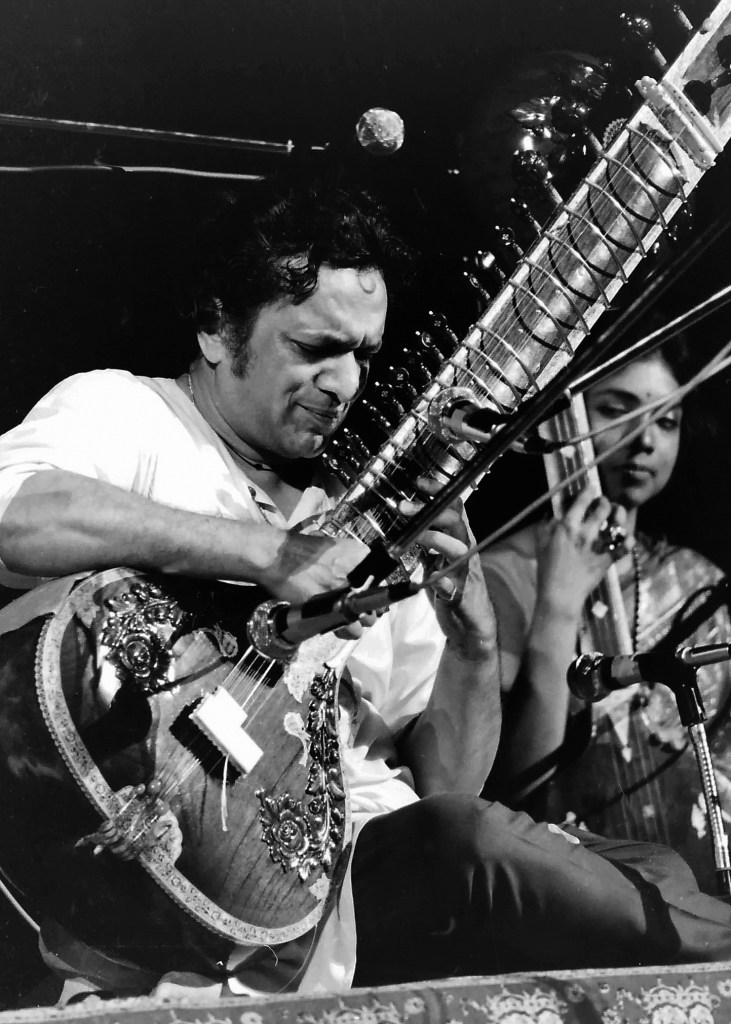
Born in 1943, this musician was a prominent figure in the music world during the swinging sixties. He was originally part of a band where he wrote hits like Here Comes the Sun and While My Guitar Gently Weeps. His sitar teacher was singer Norah Jones’ father. He later enjoyed a successful solo career. Who was he and who taught him to play the sitar?

Answers: George Harrison; Ravi Shankar.

George Harrison, lead guitarist of the Beatles, was known for his significant contributions to the band’s musical direction and his successful solo career. He incorporated non-Western musical influences, particularly Indian classical music, into the Beatles’ sound and later established himself as a solo artist with hits like My Sweet Lord. Harrison was also a prolific music and film producer, co-founding HandMade Films and producing acts for Apple Records. He produced the Monty Python’s troupe’s comedy film The Life of Brian (1979).


Five

In 1570, Pope Pius V excommunicated the English monarch from the Roman Catholic Church. Who was this monarch?

Answer: Elizabeth I.

Elizabeth I, the last Tudor monarch, ruled England and Ireland from 1558 to 1603. Her reign, marked by religious tolerance and cautious foreign policy, saw the establishment of the Church of England and the defeat of the Spanish Armada. Despite numerous courtships, Elizabeth remained unmarried, earning her the moniker ‘Virgin Queen’.


Impressionable

All of these questions relate to today’s date, February 25th.

Question One. Self-portrait, 1910.
Image Wikimedia Commons

One

The painter of the above self-portrait was born in Limoges, France, on 25 February 1841. He became an early Impressionist but later adopted a more traditional style. Who is he?


Two

This author, best known by a pen name but also using another — Joseph Kell, was born John Burgess Wilson on this day in 1917 in an inner-city suburb of Manchester, England. After wartime service, he left the British army in 1946 with the rank of sergeant-major. His most famous work, a dystopian satire published in 1962, was adapted into a controversial film in 1971. What is his best-known pen name?


Three

In 1986, after claiming victory in a fraudulent election which led to a military coup and revolution, President Ferdinand Marcos fled his country. Of what country was Marcos president, and which opposition leader replaced him as president?


Four

Born in 1943, this musician was a prominent figure in the music world during the swinging sixties. He was originally part of a band where he wrote hits like Here Comes the Sun and While My Guitar Gently Weeps. His sitar teacher was singer Norah Jones’ father. He later enjoyed a successful solo career. Who was he and who taught him to play the sitar?

Five

In 1570, Pope Pius V excommunicated the English monarch from the Roman Catholic Church. Who was this monarch?

Good luck! I’ll post the answers later.


From the land of the Pima Indian—Answers

Here are the answers to my earlier questions.

Today’s first question concerns this date, February 23rd, while the others follow on and share a common theme.

Ira Hayes Memorial.
Image Wikimedia Commons

One

Which famous photograph featuring US Marine Ira Hayes shows him and fellow servicemen raising the American flag during a pivotal World War II battle?

Answer: Raising the Flag on Iwo Jima

The photograph, taken by Joe Rosenthal during the Battle of Iwo Jima atop Mount Suribachi on 23 February 1945, became one of the most reproduced images in history and later inspired the U.S. Marine Corps War Memorial in Arlington, Virginia. Among the six men in the iconic Raising the Flag on Iwo Jima photograph was Ira Hamilton Hayes, a US Marine and Gila River Indian Community member who fought in WWII’s Bougainville and Iwo Jima campaigns. Hayes later struggled with PTSD and alcoholism and died in 1955, being commemorated in art, film, and song, The Ballad of Ira Hayes. The lyrics are copied at the end of the post.


Two

Goodbye, Norma Jeane
Though I never knew you at all
You had the grace to hold yourself
While those around you crawled
They crawled out of the woodwork
And they whispered into your brain
They set you on the treadmill
And they made you change your name

AZ Lyrics

Goodbye England’s rose
May you ever grow in our hearts
You were the grace that placed itself
Where lives were torn apart
You called out to our country
And you whispered to those in pain
Now you belong to heaven
And the stars spell out your name

AZ Lyrics

This song has two versions, and the first verse of each is shown above. The first was written in 1973, and it was adapted 24 years later; both were written about different people. There are several questions…

  1. What’s the song title in each case?
  2. Who were the songwriters?
  3. Who is the subject of each respective version?

Answers

  1. Candle in the Wind and Candle in the Wind 1997
  2. Elton John and Bernie Taupin
  3. Marilyn Monroe and Diana, princess of Wales

Candle in the Wind is a song written by Elton John and Bernie Taupin, originally in honour of Marilyn Monroe. A rewritten version, Candle in the Wind 1997, was performed as a tribute to Diana, Princess of Wales at her funeral. Adapted from Elton John’s 1973 song, Candle in the Wind 1997 became the best-selling single in UK and US chart history and won a Grammy Award.


Three

This 20th-century singer-songwriter wrote about the 1959 plane crash referred to as ‘The Day the Music Died’. He also wrote a song about a 19th-century artist whose opening line references a painting often mistaken for the song’s title. There are four questions…

  1. Who is the singer-songwriter?
  2. What are the titles of the two songs?
  3. Who were the three rock and roll musicians who died in the crash?
  4. Finally, who was the artist?

Answers

  1. Don McLean
  2. American Pie and Vincent
  3. Buddy Holly, Ritchie Valens and The Big Bopper
  4. Vincent van Gogh

American Pie by Don McLean, released in 1971, was a number-one hit in the US and several other countries. Known for its length and cryptic lyrics, the song reflects on the musicians deaths, the cultural changes and loss of innocence experienced by McLean’s generation. In 2017, the original recording was selected for preservation in the US National Recording Registry. McLean also wrote Vincent as a tribute to Vincent van Gogh, which topped the UK Singles Chart in 1972 and was ranked No. 94 by Billboard for that year.


Four

Lori Lieberman co-wrote this song with lyrics about Don McLean after watching him in performance. Arguably the best known version is Roberta Flack’s 1973 cover which became a number-one hit in the US, Australia and Canada, and a top ten hit in the UK. What is the song?

Answer: Killing Me Softly with His Song.

Killing Me Softly with His Song, composed by Charles Fox with lyrics by Norman Gimbel, was inspired by a Don McLean performance. Roberta Flack’s 1973 version topped charts worldwide, winning Grammy Awards. The Fugees’ 1996 cover also achieved global success, winning a Grammy and topping the Billboard Hot 100.


Five

Je t’aime… moi non plus was written in 1967 by Serge Gainsbourg. The best known version of it was Gainsbourg’s 1969 duet with Jane Birkin which topped the UK charts. Who, often referred to as ‘B.B.’, had Gainsbourg originally written the song for?

Answer: Brigitte Bardot.

Je t’aime… moi non plus (meaning ‘I love you… me neither’) is a 1967 song written by Serge Gainsbourg for Brigitte Bardot.  In 1969, Gainsbourg recorded a popular duet version with British actress Jane Birkin. While this version topped the charts in Birkin’s native United Kingdom, becoming the first foreign-language song to achieve this feat and reaching number two in Ireland, it faced censorship in several countries due to its explicit sexual content.  In 1976, Gainsbourg directed Birkin in an erotic film of the same name.


The Ballad Of Ira Hayes
By Peter La Farge

Ira Hayes, 
Ira Hayes

[CHORUS:]
Call him drunken Ira Hayes
He won’t answer anymore
Not the whiskey drinkin’ Indian 
Nor the Marine that went to war

Gather round me people there’s a story I would tell
About a brave young Indian you should remember well
From the land of the Pima Indian 
A proud and noble band
Who farmed the Phoenix valley in Arizona land

Down the ditches for a thousand years 
The water grew Ira’s peoples’ crops
‘Till the white man stole the water rights 
And the sparklin’ water stopped

Now Ira’s folks were hungry 
And their land grew crops of weeds
When war came, Ira volunteered 
And forgot the white man’s greed

[CHORUS:]
Call him drunken Ira Hayes
He won’t answer anymore
Not the whiskey drinkin’ Indian 
Nor the Marine that went to war

There they battled up Iwo Jima’s hill, 
Two hundred and fifty men
But only twenty-seven lived to walk back down again

And when the fight was over 
And when Old Glory raised
Among the men who held it high 
Was the Indian, Ira Hayes

[CHORUS:]
Call him drunken Ira Hayes
He won’t answer anymore
Not the whiskey drinkin’ Indian 
Nor the Marine that went to war

Ira returned a hero 
Celebrated through the land
He was wined and speeched and honored; Everybody shook his hand

But he was just a Pima Indian
No water, no crops, no chance
At home nobody cared what Ira’d done 
And when did the Indians dance

[CHORUS:]
Call him drunken Ira Hayes
He won’t answer anymore
Not the whiskey drinkin’ Indian 
Nor the Marine that went to war

Then Ira started drinkin’ hard;
Jail was often his home
They’d let him raise the flag and lower it
like you’d throw a dog a bone!

He died drunk one mornin’ 
Alone in the land he fought to save
Two inches of water in a lonely ditch 
Was a grave for Ira Hayes

[CHORUS:]
Call him drunken Ira Hayes
He won’t answer anymore
Not the whiskey drinkin’ Indian 
Nor the Marine that went to war

Yeah, call him drunken Ira Hayes 
But his land is just as dry
And his ghost is lyin’ thirsty 
In the ditch where Ira died

AZ Lyrics

From the land of the Pima Indian

Today’s first question concerns this date, February 23rd, while the others follow on and share a common theme.

Ira Hayes Memorial.
Image Wikimedia Commons

One

Which famous photograph featuring US Marine Ira Hayes shows him and fellow servicemen raising the American flag during a pivotal World War II battle?


Two

Goodbye, Norma Jeane
Though I never knew you at all
You had the grace to hold yourself
While those around you crawled
They crawled out of the woodwork
And they whispered into your brain
They set you on the treadmill
And they made you change your name

AZ Lyrics

Goodbye England’s rose
May you ever grow in our hearts
You were the grace that placed itself
Where lives were torn apart
You called out to our country
And you whispered to those in pain
Now you belong to heaven
And the stars spell out your name

AZ Lyrics

This song has two versions, and the first verse of each is shown above. The first was written in 1973, and it was adapted 24 years later; both were written about different people. There are several questions…

  1. What’s the song title in each case?
  2. Who were the songwriters?
  3. Who is the subject of each respective version?

Three

This 20th-century singer-songwriter wrote about the 1959 plane crash referred to as ‘The Day the Music Died’. He also wrote a song about a 19th-century artist whose opening line references a painting often mistaken for the song’s title. There are four questions…

  1. Who is the singer-songwriter?
  2. What are the titles of the two songs?
  3. Who were the three rock and roll musicians who died in the crash?
  4. Finally, who was the artist?

Four

Lori Lieberman co-wrote this song with lyrics about Don McLean after watching him in performance. Arguably the best known version is Roberta Flack’s 1973 cover which became a number-one hit in the US, Australia and Canada, and a top ten hit in the UK. What is the song?


Five

Je t’aime… moi non plus was written in 1967 by Serge Gainsbourg. The best known version of it was Gainsbourg’s 1969 duet with Jane Birkin which topped the UK charts. Who, often referred to as ‘B.B.’, had Gainsbourg originally written the song for?

Good luck! I’ll post the answers later.


Hello Dolly!—Answers

Here are the answers to the questions I posted earlier.

Todays questions are all related to the date, February 22nd.

Dolly the Sheep.
The taxidermy mount of Dolly on exhibit at the National Museum of Scotland, 2009.
Image Wikimedia Commons

One

On this day in 1997, the world was introduced to Dolly the sheep. Cloned at a Scottish institute sharing a name with a nearby chapel featured in a Dan Brown novel and film, both the institute and chapel’s names originate from that of a village with multiple spellings. What is it?

Answer: Roslin (Institute) or Rosslyn (Chapel) or Roslyn.

Dolly the Sheep was cloned at the Roslin Institute, the first mammal to be cloned from an adult cell. The nearby Rosslyn Chapel, founded in 1446 by Sir William St. Clair, is a remarkable example of ornate Gothic architecture. The chapel, known as a ‘Bible in stone’, features intricate carvings and sculptures, including the Apprentice Pillar, which is the subject of much speculation. Despite its association with the Knights Templar and the Holy Grail, the chapel’s true significance lies in its historical and architectural value. It featured in Dan Brown’s novel and film The Da Vinci Code.


Two

George Washington, the first president of the United States, was born on 22 February 1732 in Westmoreland, Virginia. This Virginian county was named after the British County of Westmorland, but on what island was this latter county found?

Answer: Great Britain.

Westmorland, a former county in North West England, is situated on the island of Great Britain. It encompassed part of the Lake District and the southern Vale of Eden. In 1974 it was incorporated into Cumbria and now forms part of the larger Westmorland and Furness unitary authority area.


Three

Exactly 200 years after the birth of George Washington, a United States politician was born into a political dynasty on this day. Who was he?

Answer: Ted Kennedy (in full Edward Moore Kennedy).

Edward Moore Kennedy, a prominent American politician and member of the Democratic Party, served as a United States Senator from Massachusetts from 1962 until his death in 2009. Known for his oratorical skills and liberal views, Kennedy championed numerous significant pieces of legislation, including the Immigration and Nationality Act of 1965 and the Americans with Disabilities Act of 1990. Despite his political achievements, his career was marred by the Chappaquiddick incident in 1969.


Four

In 1942, three members of an anti-Nazi group were executed by beheading in Munich. Over the following months, others were also executed and many more imprisoned for alleged connections to the group. The group’s two-word name was that of a colour and a flower; what was this name?

Answer: White Rose.

The White Rose was a non-violent resistance group in Nazi Germany, led by students and a professor. They conducted a leaflet and graffiti campaign against the Nazi regime, denouncing its crimes and calling for resistance. Their activities ended with further arrests and executions in 1943.


Five

On this date, NASCAR held the first Daytona 500. In what year was this, and which driver won the race?

Answers: 1959; Lee Petty.

The 1959 Daytona 500, the second race of the NASCAR Grand National Series season, was the inaugural race at the newly built Daytona International Speedway. The track, built by NASCAR founder Bill France, Sr., is a 2.5-mile superspeedway and is considered the most prestigious race on the NASCAR calendar.


Hello Dolly!

Todays questions are all related to the date, February 22nd.

Dolly the Sheep.
The taxidermy mount of Dolly on exhibit at the National Museum of Scotland, 2009.
Image Wikimedia Commons

One

On this day in 1997, the world was introduced to Dolly the sheep. Cloned at a Scottish institute sharing a name with a nearby chapel featured in a Dan Brown novel and film, both the institute and chapel’s names originate from that of a village with multiple spellings. What is it?


Two

George Washington, the first president of the United States, was born on 22 February 1732 in Westmoreland, Virginia. This Virginian county was named after the British County of Westmorland, but on what island was this latter county found?


Three

Exactly 200 years after the birth of George Washington, a United States politician was born into a political dynasty on this day. Who was he?


Four

In 1942, three members of an anti-Nazi group were executed by beheading in Munich. Over the following months, others were also executed and many more imprisoned for alleged connections to the group. The group’s two-word name was that of a colour and a flower; what was this name?


Five

On this date, NASCAR held the first Daytona 500. In what year was this, and which driver won the race?

Good luck! I’ll post the answers later.


On the Revolutions of the Heavenly Spheres—Answers

Here are the answers to my Walter posted questions.

Diagram of the Solar System from Copernicus’ manuscript of De revolutionibus orbium coelestium.
Image Wikimedia Commons

All of today’s questions relate to the date, February 19th.

One

In what century was Polish astronomer Nicolaus Copernicus born?

Answer: 15th century.

Born in 1473, Nicolaus Copernicus, a Renaissance polymath, formulated a heliocentric model of the universe, placing the Sun at its centre. His work, published in De revolutionibus orbium coelestium (On the Revolutions of the Heavenly Spheres) triggered the Copernican Revolution and significantly contributed to the Scientific Revolution.


Two

In 1945, the Battle of Iwo Jima began when US Marines invaded the Japanese volcanic island of Iwo Jima.  What does the name Iwo Jima mean in English?

Answer: Sulfur Island.

Iwo Jima, a volcanic island in the Ogasawara Archipelago, is administered by Tokyo. It was the site of a major WWII battle between Japan and the US, resulting in over 20,000 casualties on each side. Today, the island has no permanent inhabitants except for a Self-Defence Force base and is owned by a combination of individuals, the village, and the Japanese government.


Three

Andrew Mountbatten-Windsor was born in 1960 and was known as Prince Andrew. He would later also be known as the Duke of York. For the first 22 years of his life, he was second in the line of succession to the British throne, who, born in 1982, replaced him as second in the line of succession?

Answer: Prince William (The eldest son of Charles, Prince of Wales (now King Charles III) and Diana, Princess of Wales).

Andrew Mountbatten-Windsor faced controversy due to his friendship with Jeffrey Epstein. He denied allegations of sexual abuse but settled a civil lawsuit with Virginia Giuffre in 2022. In 2025, Charles III removed Andrew’s royal styles and honours, restricted his titles, and relocated him to private accommodation.


Four

Born in 1924, this actor was a decorated World War II veteran, where he served in the U.S. Marines. He won an Oscar for Best Actor for Cat Ballou (1965) where he played both Kid Shelleen and Tim Strawn. He appeared in The Dirty Dozen (1967) and Gorky Park (1983). He died in 1987. Who is this actor?

Answer: Lee Marvin.

Marvin, an American actor known for his tough-guy roles, received an Academy Award for his performance in Cat Ballou. He was also a decorated World War II veteran and a descendant of the Lee family of Virginia.


Five

In 1913, Pedro Lascuráin assumed the role of President of Mexico. What connects the number 45 to his presidency? Was it

  • 45 marriages (he was married 45 times during his presidency)
  • 45 minutes (he was in office for only 45 minutes)
  • 45 murders (he was connected to 45 murders during his presidency)

Answer: 45 minutes (he was in office for only 45 minutes)

During the Ten Tragic Days coup, Victoriano Huerta captured President Madero and convinced him to resign. Lascuráin, next in line, briefly assumed the presidency before appointing Huerta as his successor, making Lascuráin’s presidency the shortest in history of not only Mexico but the world.


On the Revolutions of the Heavenly Spheres

Diagram of the Solar System from Copernicus’ manuscript of De revolutionibus orbium coelestium.
Image Wikimedia Commons

All of today’s questions relate to the date, February 19th.

One

In what century was Polish astronomer Nicolaus Copernicus born?


Two

In 1945, the Battle of Iwo Jima began when US Marines invaded the Japanese volcanic island of Iwo Jima.  What does the name Iwo Jima mean in English?


Three

Andrew Mountbatten-Windsor was born in 1960 and was known as Prince Andrew. He would later also be known as the Duke of York. For the first 22 years of his life, he was second in the line of succession to the British throne, who, born in 1982, replaced him as second in the line of succession?


Four

Born in 1924, this actor was a decorated World War II veteran, where he served in the U.S. Marines. He won an Oscar for Best Actor for Cat Ballou (1965) where he played both Kid Shelleen and Tim Strawn. He appeared in The Dirty Dozen (1967) and Gorky Park (1983). He died in 1987. Who is this actor?


Five

In 1913, Pedro Lascuráin assumed the role of President of Mexico. What connects the number 45 to his presidency? Was it

  • 45 marriages (he was married 45 times during his presidency)
  • 45 minutes (he was in office for only 45 minutes)
  • 45 murders (he was connected to 45 murders during his presidency)

Good luck! I’ll post the answers later.


Everybody’s Talkin’—Answers

Here are today’s answers.

Today’s questions all relate to the date 16th February.

Kiefer Sutherland and Sally Field in Eye for an Eye (1996), directed by John Schlesinger.
Image Encyclopædia Britannica

One

Born in 1926, this director won the Academy Award for Best Director for Midnight Cowboy starring Dustin Hoffman and Jon Voight. He also directed Eye for an Eye (1996) featuring Sally Field and Kiefer Sutherland. Who is he?

Answer: John Schlesinger.

John Schlesinger was an English director and actor, known for his work in the British New Wave and Hollywood. He gained recognition for his documentaries and feature films, including the Academy Award-winning Midnight Cowboy, and received numerous accolades throughout his career. He also served as associate director of the National Theatre. Fred Neil’s song Everybody’s Talkin’ became the theme for the film and won a Grammy Award for Best Contemporary Vocal Performance by Harry Nilsson.


Two

In 1923, the burial chamber of King Tutankhamun was unsealed. Who was the archaeologist responsible for this discovery?

Answer: Howard Carter.

Tutankhamen, an Egyptian pharaoh, ruled in the 14th century BC and restored traditional religion. His tomb, discovered in 1922, contained treasures that made him renowned, despite his early death and limited achievements. The opening of the tomb was soon followed by stories that it was cursed. One of these relates that shortly after opening the tomb, Carter’s messenger found a cobra in Carter’s house, having killed Carter’s canary. This fuelled rumours of a curse, as the cobra was a symbol of the Egyptian monarchy.


Flag of Lithuania.
Image Encyclopædia Britannica

Three

In 1918, this country declared independence and two months later adopted this flag which is again the national flag today. Which country?

Answer: Lithuania.

The Act of Independence of Lithuania, signed on 16 February 1918, proclaimed Lithuania’s independence from Russia and established a democratic state with Vilnius as its capital. Although initially hindered by German occupation, Lithuania gained control over its territory after Germany’s defeat in World War I. The Act remains the legal basis for modern Lithuania’s existence. The national flag of Lithuania was adopted in April 1918 during this first period of independence (1918–1940). It was re-adopted in 1988, approximately one and a half years before Lithuania’s independence was re-established and almost three years before the Soviet Union’s collapse.


Four

Born in 1964, this English actor portrayed the ninth incarnation of The Doctor in BBC’s time-travelling series Doctor Who. As The Doctor, he was accompanied by Rose Tyler and inspired Charles Dickens. Who is this actor?

Answer: Christopher Eccleston.

Christopher Eccleston is an English actor known for his work in British social realist dramas and for playing the ninth Doctor in Doctor Who. He has received numerous award nominations and accolades for his performances in television, film and theatre.


Five

Born in 1973, this athlete made history in 2000 as the first Australian Aboriginal person to win an individual Olympic gold medal. Who is this athlete?

Answer: Cathy Freeman.

Cathy Freeman, an Australian sprinter, made history as the first Aboriginal person to win an individual Olympic gold medal in the 400-metres at the 2000 Sydney Olympics. She achieved numerous victories, including Commonwealth Games gold medals and a world championship title, and was a symbol of Aboriginal reconciliation. Freeman retired from competition in 2003 and established the Cathy Freeman Foundation to support Indigenous children.


Everybody’s Talkin’

Today’s questions all relate to the date 16th February.

Kiefer Sutherland and Sally Field in Eye for an Eye (1996).
Image Encyclopædia Britannica

One

Born in 1926, this director won the Academy Award for Best Director for Midnight Cowboy starring Dustin Hoffman and Jon Voight. He also directed Eye for an Eye (1996) featuring Sally Field and Kiefer Sutherland. Who is he?


Two

In 1923, the burial chamber of King Tutankhamun was unsealed. Who was the archaeologist responsible for this discovery?


Image Encyclopædia Britannica

Three

In 1918, this country declared independence and two months later adopted this flag which is again the national flag today. Which country?


Four

Born in 1964, this English actor portrayed the ninth incarnation of The Doctor in BBC’s time-travelling series Doctor Who. As The Doctor, he was accompanied by Rose Tyler and inspired Charles Dickens. Who is this actor?


Five

Born in 1973, this athlete made history in 2000 as the first Australian Aboriginal person to win an individual Olympic gold medal. Who is this athlete?

Good luck! I’ll post the answers later.