Who, What, When, Where, Why and How III

A “Who, What, When, Where, Why and How” which all relate to today, 26 April.

Ma Rainey.
Image Wikipedia
  1. Who, born 26 April 1886, in Columbus, Georgia, US; performed as Ma Rainey and was known as the “Mother of the blues”?
    • Beatrice Rutledge
    • Gertrude Pridgett
    • Hortense Gwinnett
  2. What best describes Petrarch, who climbed Mount Ventoux today in 1336 and, at some point, wrote about it?
    • Poet
    • Politician
    • Pundit
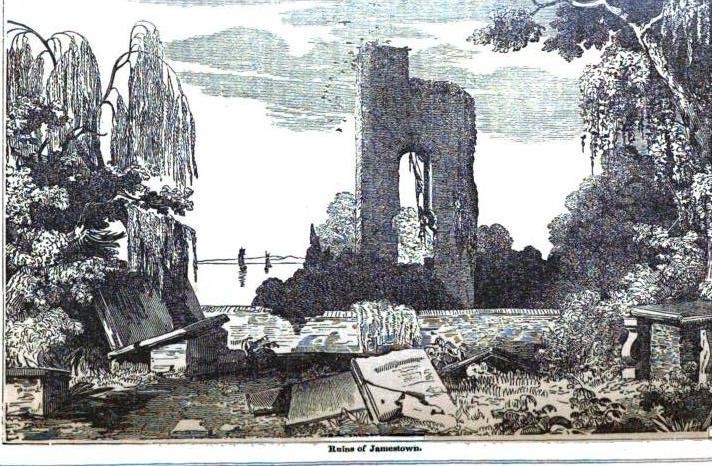
  3. When did the Virginia Company colonists make landfall at Cape Henry?
    • 1557
    • 1607
    • 1657
  4. Where, during World War II, was senior Nazi Rudolf Hess—born today in 1894—captured?
    • Scotland
    • Sweden
    • Switzerland
  5. Why were twelve thousand people in Canada left without a home on this date in 1900?
    • Avalanche
    • Fire
    • Flood
  6. How did John Wilkes Booth, the assassin of Abraham Lincoln, die?
    • Hanging
    • Gunshot
    • Drowning
John Wilkes Booth.
Image Wikipedia

Good luck! I will post the answers later today.
Cars, boats and telegraphy | Answers

Here are some questions relating to today, 25 April.

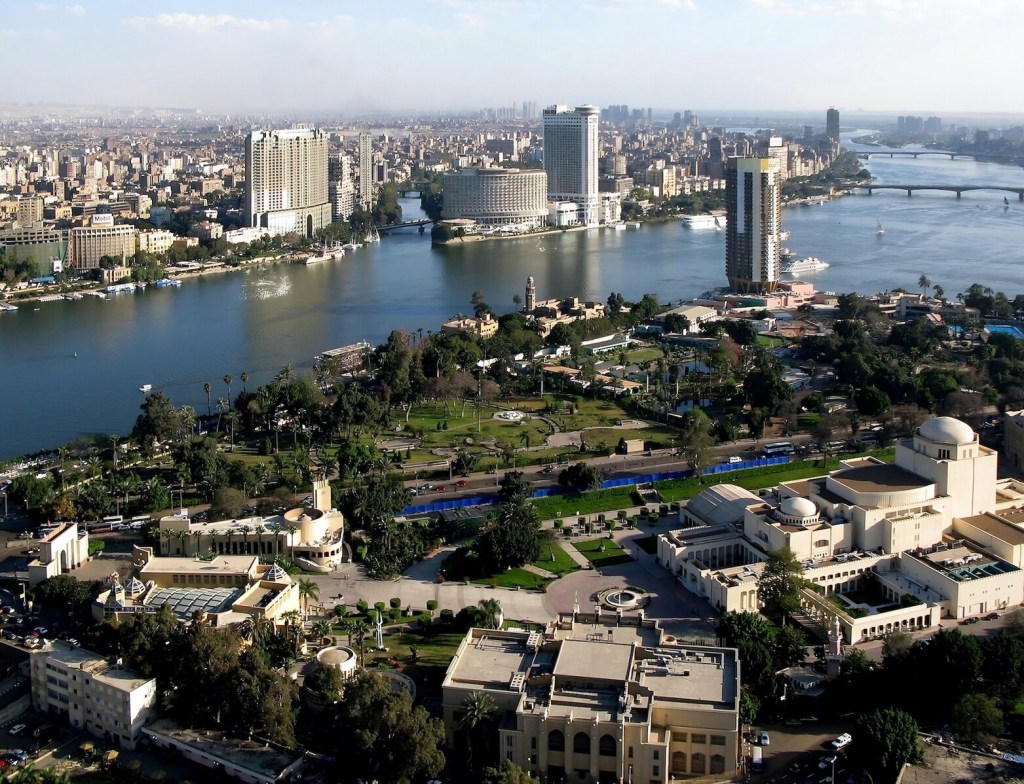
See #2. Aerial view of the Suez Canal at Suez.
Image Wikipedia
  1. On 25 April 1901, New York became the first US state to mandate license plates with a law ordering automobiles and motorcycles to display “the separate initials of the owner’s name placed upon the back thereof in a conspicuous place.” But where was the first place to legally require a registration or licence plate?
    • France—France introduced registration plates in 1893, followed by Germany and the Netherlands. The US began requiring plates in 1903, with New York being the first state (this was after NY first requiring in 1901 that the owner’s initials be clearly visible on the back of the vehicle).
  2. Today in 1859, construction of the Suez Canal officially began. How many countries does it pass through?
    • One—Egypt. The Suez Canal, a 120-mile (193 km) artificial waterway in Egypt, connects the Mediterranean and Red Seas, providing a direct trade route between Europe and Asia. Constructed between 1859 and 1869, it is operated by the Suez Canal Authority and offers a significant shortcut for vessels, reducing travel time between the Arabian Sea and Europe. Utilising several lakes, it is one of the world’s busiest shipping lanes. The canal’s strategic importance has led to historical events like its nationalisation in 1956 and closure during the Six-Day War.
      The Great Lakes and Saint Lawrence Seaway.
      Image Wikipedia
  3. Today in 1959, exactly 100 years after work began on the Suez Canal (see #2 above), the Saint Lawrence Seaway opened, completing the link from the Atlantic Ocean to the Great Lakes and allowing ocean-going ships to reach the westernmost point of Lake Superior. What distance is the westernmost point of Lake Superior from the Atlantic Ocean?
    • 2,340 miles/3,766 km—The Saint Lawrence Seaway, a joint Canada-US project, connects the Atlantic Ocean to the Great Lakes. It opened North America’s industrial and agricultural heartlands to deep-draft ocean vessels and forged the final link in a 2,340 miles/3,766 km long waterway from Duluth, Minnesota, to the Atlantic by clearing a throughway in an 186-mile/299 km stretch of the St. Lawrence River between Montreal and Lake Ontario.
      Guglielmo Marconi.
      Image Wikipedia
  • On this day in 1874, a physicist and Nobel Prize laureate (Physics, 1909) was born. He invented a successful system of radio telegraphy. Who was he?
    • Guglielmo Marconi—an Italian electrical engineer and physicist, invented the wireless telegraph, or radio, in 1896, and received the Nobel Prize for Physics in 1909. He later worked on shortwave wireless communication, the foundation of modern long-distance radio. Marconi’s early experiments in Italy led him to London, where he received support and filed his first radio patent in 1896. He founded the Marconi Company in the UK and was ennobled as a marquess in 1929.
  • On 25 April 1990, Violeta Barrios de Chamorro became Central America’s first female president. What country was she president of?
    • Nicaragua—Violeta Chamorro, became Central America’s first female president in 1990, serving until 1997. After her husband, Pedro Chamorro, was assassinated by the Somoza dictatorship in 1978, she took over his newspaper, La Prensa, and became a symbol of opposition against the Sandinista government that overthrew the Somozas. As president, Chamorro reversed Sandinista policies, privatised state industries and promoted national reconciliation. Her presidency was marked by economic strife and social unrest, but she successfully ended hyperinflation and re-established international banking relationships.
  • Flag of Nicaragua.
    Image Wikipedia

    Cars, boats and telegraphy

    Here are some questions relating to today, 25 April.

    See #1. The first automobile license plate issued in the State of Minnesota, 1903.
    Image Wikipedia
    1. On 25 April 1901, New York became the first US state to mandate license plates with a law ordering automobiles and motorcycles to display “the separate initials of the owner’s name placed upon the back thereof in a conspicuous place.” But where was the first place to legally require a registration or licence plate?
      • Belgium
      • France
      • United Kingdom
    2. Today in 1859, construction of the Suez Canal officially began. How many countries does it pass through?
      • One
      • Two
      • Three
    3. Today in 1959, exactly 100 years after work began on the Suez Canal (see #2 above), the Saint Lawrence Seaway opened, completing the link from the Atlantic Ocean to the Great Lakes and allowing ocean-going ships to reach the westernmost point of Lake Superior. What distance is the westernmost point of Lake Superior from the Atlantic Ocean?
      • 1,230 miles/1,979 km
      • 1,785 miles/2,873 km
      • 2,340 miles/3,766 km
    4. On this day in 1874, a physicist and Nobel Prize laureate (Physics, 1909) was born. He invented a successful system of radio telegraphy. Who was he?
      • Alessandro Volta
      • Enrico Fermi
      • Guglielmo Marconi
    5. On 25 April 1990, Violeta Barrios de Chamorro became Central America’s first female president. What country was she president of?
      • Guatemala
      • Honduras
      • Nicaragua

    Good luck! I will post the answers later today.
    A Star is Born | Answers

    The answers to my earlier post are shown in bold below.

    Poster for A Star is Born.
    Image Wikipedia
    1. Barbra Streisand, who was born on 24 April 1942, starred in the 1976 iteration of A Star is Born (1976). How often, up to April 2025, has the film been made?
      • Four timesA Star is Born has been made four times. The original film, released in 1937, starred Janet Gaynor and Fredric March and was directed by William A. Wellman. It was followed by a 1954 remake starring Judy Garland and James Mason, directed by George Cukor. Streisand starred with Kris Kristofferson in the 1976 remake, directed by Frank Pierson. The fourth film, released in 2018, starred Lady Gaga and Bradley Cooper, who also directed it.
        Tuthmosis III basalt statue in Luxor Museum.
        Image Wikipedia
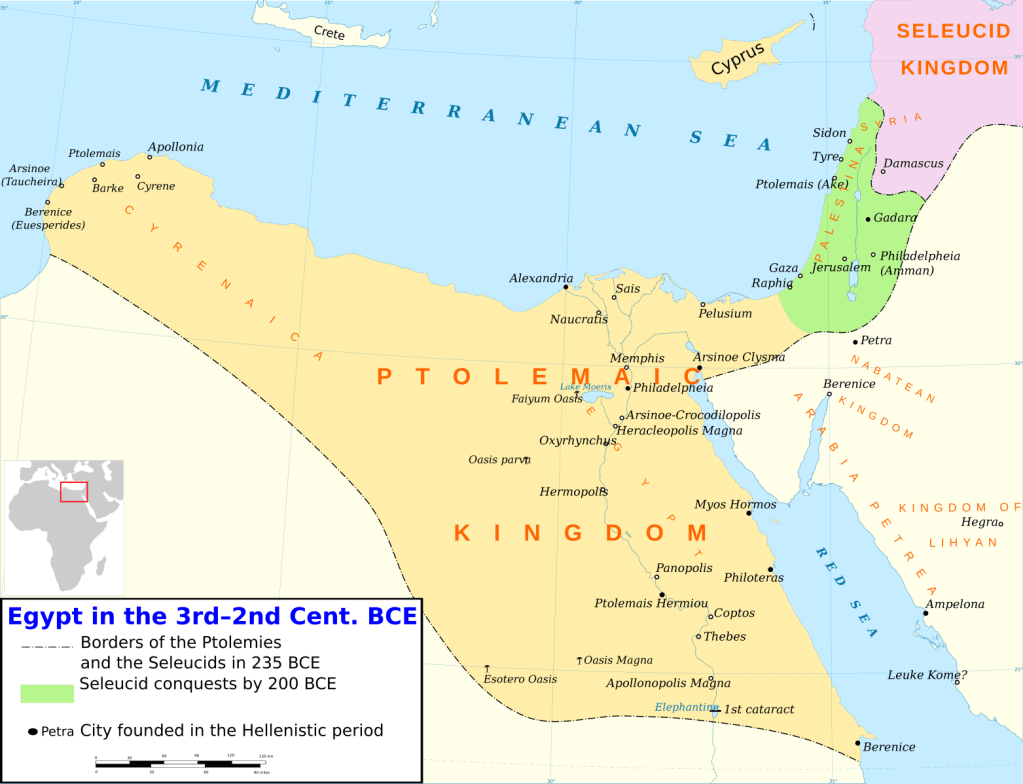
    2. On this day in 1479 BCE, Thutmose III ascended to the throne of…
      • Egypt—Thutmose III, the fifth pharaoh of the 18th Dynasty, ruled Egypt from around 1479 to 1425 BC. Known as the “Napoleon of Egypt,” he led many successful military campaigns, expanding Egypt’s empire, creating its navy and conquering all of Syria. He crossed the Euphrates to defeat the Mitannians and penetrated south along the Nile River to Napata in Sudan. Thutmose III was a skilled warrior who brought the Egyptian empire to its zenith and built numerous temples and monuments to commemorate his achievements.
        Pope Benedict XVI.
        Image Wikipedia
    3. Joseph Ratzinger was installed as Pope on 24 April. What papal name did he choose?
      • Benedict XVI—Benedict XVI—born Joseph Ratzinger— served as head of the Catholic Church from 2005 to 2013. During his tenure, he faced challenges such as declining vocations, church attendance and the sexual abuse scandal. A prominent theologian, he advocated for traditional Catholic values and revived several church traditions. Benedict resigned due to age-related health concerns, becoming the first pope to do so since 1415.
        Francis II of France and Mary, Queen of Scots, aged 14 and 15 respectively.
        Image Wikipedia
    4. On April 24, 1558, fifteen-year-old Mary, Queen of Scots, was married. Where did the wedding take place?
      • Notre-Dame de Paris, France—Mary, Queen of Scots, married Francis, Dauphin of France, at Notre-Dame de Paris in 1558 in a political alliance between Scotland and France, orchestrated by her mother, Mary of Guise, to strengthen their bond. Mary was sent to France at the age of five to be raised at the court of King Henry II, where she grew up to be a Frenchwoman, excelling in hunting, dancing and languages. At 15, she married Francis, the eldest son of Henry and Catherine, in a political union between France and Scotland.
        Portrait of Anthony Trollope by Samuel Laurence, c.1864
        Image Wikipedia
    5. Born on 24 April 1815, this English novelist, essayist and short story writer is credited with introducing Britain’s ubiquitous pillar box (mail box). Who is he?
      • Anthony Trollope—The first British wayside letter boxes were introduced in the Channel Islands in 1852 to address mail collection issues due to irregular sailing times. Designed by Anthony Trollope, the cast iron pillar boxes were an instant success, though initially, they faced rainwater ingress problems.

    A Star is Born

    Barbra Streisand.
    Image Wikipedia

    Here are a few questions which are related to today’s date, 24 April.

    1. Barbra Streisand, who was born on 24 April 1942, starred in the 1976 iteration of A Star is Born (1976). How often, up to April 2025, has the film been made?
      • Twice
      • Three times
      • Four times
    2. On this day in 1479 BCE, Thutmose III ascended to the throne of…
      • China
      • Egypt
      • Mesopotamia
    3. Joseph Ratzinger was installed as Pope on 24 April. What papal name did he choose?
      • Adrian VI
      • Benedict XVI
      • Clement X
    4. On April 24, 1558, fifteen-year-old Mary, Queen of Scots, was married. Where did the wedding take place?
      • Iona Abbey, Isle of Iona, Scotland
      • Notre-Dame de Paris, France
      • St Giles Cathedral, Edinburgh, Scotland
        British pillar box.
        West Gate, Warwick, Warwickshire, England. (1856 type).
        Image Wikipedia
    5. Born on 24 April 1815, this English novelist, essayist and short story writer is credited with introducing Britain’s ubiquitous pillar box (mail box). Who is he?
      • Charles Dickens
      • Anthony Trollope
      • Rudyard Kipling

    Good luck! I will post the answers later today.
    Three Kings | Answers

    Here, in bold, are the answers to the questions I posted earlier.

    April.

    Flag of Eritrea.
    Image Wikipedia
    1. The flag shown above is from a country where voting began on 23 April 1993, in a UN-monitored referendum to make its independence official. The country is…
      • Eritrea—Eritrea, located in the Horn of Africa on the Red Sea, gained independence from Ethiopia in 1993 after a nearly 30-year war. It is a multi-ethnic nation with nine recognised ethnic groups, primarily Tigrinya and Tigre, and is one of the least developed countries globally. Eritrea is a unitary one-party presidential republic, and its capital and largest city is Asmara.
        Lorraine Motel, Memphis, Tennessee, USA.
        Image Wikipedia
    2. On this day in 1998, James Earl Ray, the convicted assassin who had killed Martin Luther King, Jr., died in prison in the United States. Where had he assassinated King?
      • Memphis, Tennessee—Martin Luther King Jr., a leading civil rights figure, was assassinated in Memphis, Tennessee, on 4 April 1968, leading to widespread riots. James Earl Ray, a career criminal, initially pleaded guilty to the murder and was sentenced to 99 years in prison but later recanted, alleging a conspiracy. The King family also believes the assassination was part of a government conspiracy.
        Battle of Clontarf [1014] by Hugh Frazer, 1826.
        Image Wikipedia
    3. Today in 1014, the Battle of Clontarf took place, where the High King Brian Boru defeated Viking invaders but was killed in battle. Brian Boru was the king of…
      • Ireland—The Battle of Clontarf, fought on 23 April 1014 near Dublin, was a significant conflict between Brian Boru’s Irish forces and a coalition of Leinster, Dublin, and Vikings. Despite heavy casualties on both sides, including the deaths of Brian, his son, and grandson, as well as the opposing leaders, the battle marked a turning point in the decline of Viking power in Ireland and solidified Brian’s legacy as a prominent figure in Irish history.

        Drink Coca-Cola 5¢”, an 1890s advertising poster.
        Image Wikipedia
    4. On this day in 1985, a company replaced its tried-and-tested product with a new version. However, in the face of public backlash, they were forced to revert to the original within months. What company?
      • Coca-Cola—In April 1985, Coca-Cola introduced a new flavour, New Coke, to combat declining market share, following a formula developed through taste tests. Despite initial taste tests showing most consumers preferred New Coke over both the original Coke and Pepsi, the company faced significant public backlash due to nostalgia for the original taste. Consequently, Coca-Cola reverted to the original formula on 10 July 1985, marketing it as Coca-Cola Classic. New Coke continued to be available, was renamed Coke II in 1992, and was eventually discontinued in 2002.
        Ethelred the Unready, circa 968-1016. Illuminated manuscript, The Chronicle of Abindon, c.1220. MS Cott. Claude B.VI folio 87, verso, The British Library.
        Image Wikipedia
    5. On 23 April 1016, King Ethelred II of England passed away. What was his epithet?
      • Ethelred the Unready—Ethelred II, known as Ethelred the Unready— was King of the English from 978 to 1013 and again from 1014 until his death in 1016. His 37-year reign, the longest of any Anglo-Saxon English king, was marked by conflict with the Danes, including the St Brice’s Day massacre and the Danegeld tribute. As an ineffectual ruler, he failed to prevent Danish invasions, leading to distrust, disloyalty, and failed attempts to buy peace, ultimately resulting in his exile in 1013.

    Three Kings

    Here are a few questions related to today’s date, 23 April.

    Flag of Eritrea.
    Image Wikipedia
    1. The flag shown above is from a country where voting began on 23 April 1993, in a UN-monitored referendum to make its independence official. The country is…
      • Eritrea
      • South Sudan
      • Eswatini
    2. On this day in 1998, James Earl Ray, the convicted assassin who had killed Martin Luther King, Jr., died in prison in the United States. Where had he assassinated King?
      • Montgomery, Alabama
      • Memphis, Tennessee
      • Macon, Georgia
    3. Today in 1014, the Battle of Clontarf took place, where the High King Brian Boru defeated Viking invaders but was killed in battle. Brian Boru was the king of…
      • Ireland
      • Scotland
      • Wales
    4. On this day in 1985, a company replaced its tried-and-tested product with a new version. However, in the face of public backlash, they were forced to revert to the original within months. What company?
      • Budweiser
      • Coca-Cola
      • McDonald’s
    5. On 23 April 1016, King Ethelred II of England passed away. What was his epithet?
      • Ethelred the Unready
      • Ethelred the Unsteady
      • Ethelred the Unwieldy

    Good luck! I will post the answers later today.
    Mythical Creatures | Answers

    Flag of Wales. Image Wikipedia
    1. The image shown above is the flag of…
      • Wales—The flag of Wales features a red dragon on a green and white field, with the colours representing the Tudor family. The Red Dragon, a vexilloid—a flag or standard—possibly invented in Persia, was introduced to Britain during Roman rule and became a symbol for local rulers, including King Arthur and kings of the Wessex Saxons. It was traditionally associated with King Arthur and was officially recognised as the badge of Wales in 1801; the flag was officially recognised in 1959.
        Horus. Image Wikipedia
    2. The ancient Egyptian deity, normally depicted as a falcon or a man with a falcon’s head, is…
      • Horus—an ancient Egyptian deity, was worshipped as the god of kingship, healing, protection, the sun, and the sky. He was depicted as a falcon or a man with a falcon head and was associated with the ruling pharaoh
        Albrecht Dürer, Saint George Killing the Dragon. Image Wikipedia
    3. What links the royal arms of Aragon, the coat of arms of Moscow, Russia, and the coat of arms of Reggio Calabria, Italy?
      • Saint George and the dragon—The legend of Saint George slaying a dragon, originating in Cappadocia, was attributed to him in the 11th century and quickly spread through the Byzantine cultural sphere, reaching Western Christian tradition during the Crusades. This story became a popular subject in literature and art. Saint George, an early Christian martyr, is the patron saint of England and Georgia, depicted as a warrior-saint who famously saved a princess by slaying a dragon.
        The Royal coat of arms of the United Kingdom features two versions. The Scottish version, on the right, has the lion and unicorn swapped, with both crowned. Image Wikipedia
    4. The unicorn is the national symbol of…
      • Scotland—The unicorn, a symbol of purity and power in Celtic mythology, has been Scotland’s national animal since the mid-1500s and is depicted as the natural enemy of the lion, representing England. The royal arms of the United Kingdom feature both a unicorn and a lion, with variations highlighting Scottish or English elements. Initially, the Scottish royal coat of arms was supported by two unicorns, but after the Union of the Crowns, one was replaced by a lion. Scottish unicorns in heraldry are shown with gold chains, symbolising the power of Scottish kings.
    5. Finally, from Australia, a drop bear is a…
      • Carnivorous marsupial—In a hoax, drop bears are a ravenous species of koala attracted to foreign accents. They drop from trees to pounce on tourists, stunning them with the initial impact.
    Koala, not a drop bear. Image Wikipedia

    Mythical Creatures

    See #1 below. Wikipedia
    1. The image shown above is the flag of…
      • Brunei
      • Uzbekistan
      • Wales
      The gods Osiris, Anubis and Horus in the
      Tomb of Horemheb (KV57) in the Valley of the Kings.
      Wikipedia
    2. The ancient Egyptian deity, normally depicted as a falcon or a man with a falcon’s head, is…
      • Anubis
      • Horus
      • Osiris
    3. What links the royal arms of Aragon, Spain; the coat of arms of Moscow, Russia and the coat of arms of Reggio Calabria, Italy?
      • Saint Corbinian and the bear
      • Saint George and the dragon
      • Saint Jerome and the lion
    4. The unicorn is the national symbol of…
      • San Marino
      • Scotland
      • Spain
    5. Finally, from Australia, a drop bear is a…
      • Carnivorous marsupial
      • Strangling vine
      • Venomous plant

    Good luck! I will post the answers later today.
    Let’s Dance | Answers

    See #3 below. Superman shield. Wikipedia
    1. On 18 April 1980, Elmore City, Oklahoma, held the first dance in the town’s history. The Kevin Bacon film, which was loosely based on this, was…
      • Footloose—Footloose is a 1984 American musical drama film about Ren, a Chicago teenager who moves to Bomont, a town with a ban on rock ‘n’ roll and dancing. Ren struggles to fit in and gets into trouble when he falls for Ariel Moore, the preacher’s daughter. To challenge the ban, Ren confronts prejudice and the town’s strict preacher through dance. The film was a box office success, grossing $80 million in North America. It was loosely based on real events in Elmore City, where a ban on public dancing existed before statehood. In the 1979-1980 school year, students lobbied for a school prom with dancing, facing opposition from church leaders. Ultimately, the town mayor supported the students, declaring the prom a non-public event, and the school board authorised it. The controversy gained national attention, inspiring songwriter/screenwriter Dean Pitchford to create the film.
      Interior of dome, St Peter’s Basilica, Vatican City. Wikipedia
    2. In Vatican City, the cornerstone of the current St. Peter’s Basilica was laid on this day in…
      • 1506—Saint Peter’s Basilica in Vatican City, a renowned Italian Renaissance church designed by Bramante, Michelangelo and Maderno, is considered one of the holiest Catholic shrines and the largest church in the world by interior measure. Believed to be the burial site of Saint Peter, it was begun in 1506 and completed in 1615. The basilica, designed as a Latin cross with a prominent dome, serves as a major pilgrimage site and the church of the popes. Its construction involved several architects, including Michelangelo, who designed the iconic dome, and Gian Lorenzo Bernini, who designed the elliptical piazza in front of it.
    3. The publication, on 18 April 1938, of Action Comics #1 saw the debut of…
      • Superman—Superman, created by Jerry Siegel and Joe Shuster, first appeared in Action Comics #1 in 1938. He is the archetypal superhero, fighting crime as a vigilante with extraordinary abilities and popularised the superhero genre.
      Flag of Eswatini. Wikipedia
    4. Today in 2018, King Mswati III announced that his country’s name would change to Eswatini. The name it changed from was…
      • Swaziland—Eswatini, formerly Swaziland— is a landlocked country in Southern Africa bordered by South Africa and Mozambique. It has a lower-middle income economy, with agriculture and manufacturing as the main employment sectors. The country is an absolute monarchy ruled by King Mswati III since 1986 and faces significant health challenges, including high HIV/AIDS rates. Its capital is Phondvo, while Mbabane serves as the administrative centre.
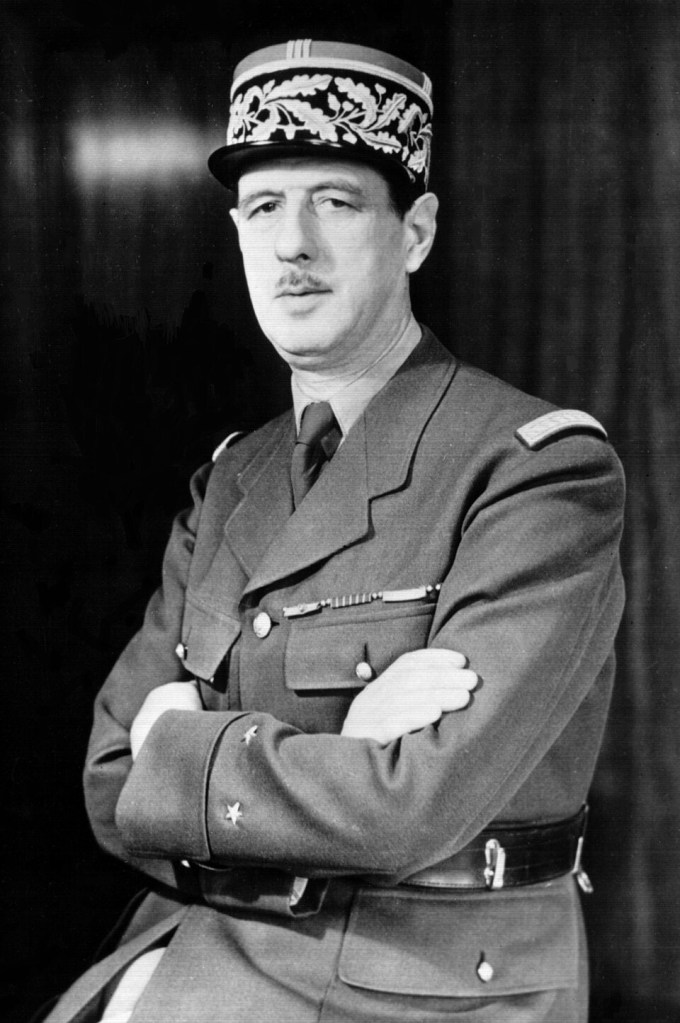
    5. On 18 April 1942, Pierre Laval became Prime Minister of…
      • Vichy France—Vichy France, established in 1940 under Marshal Philippe Pétain, governed the unoccupied zone of France after the Nazi German defeat. Initially collaborating with Germany, the regime shifted towards a corporatist state, emphasising “Work, family, fatherland”. However, after the Allied invasion of North Africa and the German occupation of the entire country, Vichy became increasingly subservient to Germany, ultimately collapsing with the Allied liberation in 1944. They were known as “Vichy France” as that city was the seat of their government.
    Marshal Philippe Pétain meeting Hitler in October 1940. Wikipedia