Milestones and Inventions

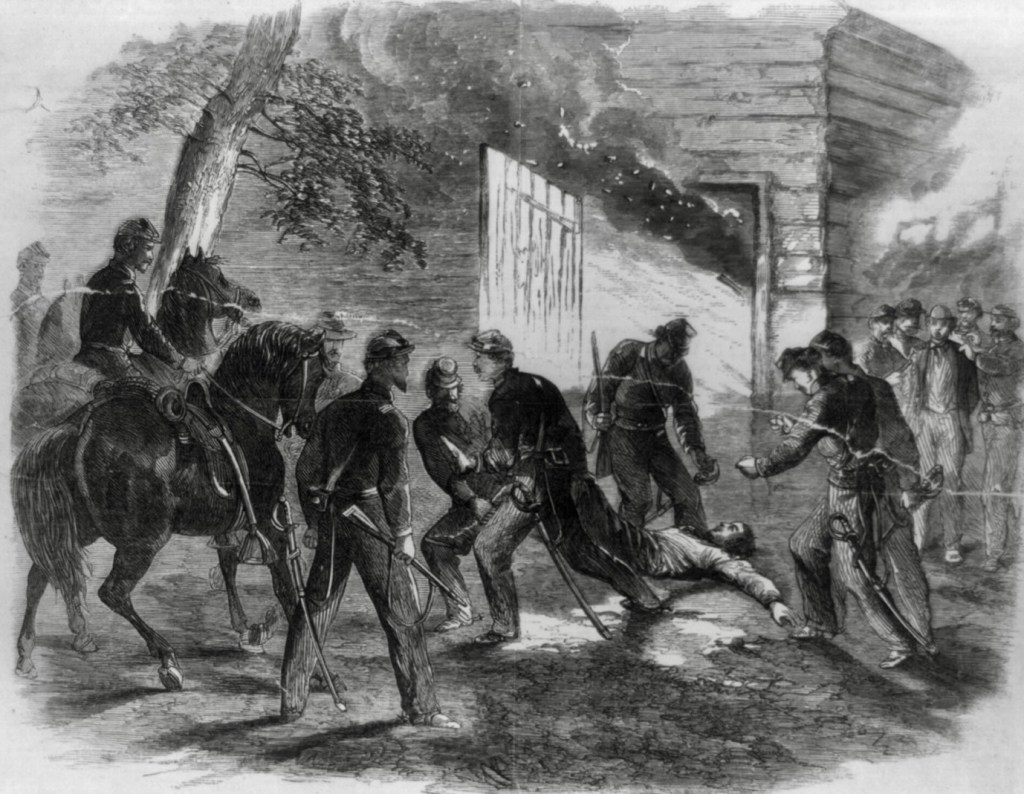
Pony Express postmark, 1860, westbound. Wikipedia

All of the following happened on today’s date, 3 April.

  1. On this day in 1860, the Pony Express mail delivery system was launched in the US. How long did the service operate?
    • 18 months
    • 32 months
    • 53 months
  2. On 3 April 1981, the first successful handheld portable computer was sold. By what name was it known?
    • Osborne 1
    • Page 1
    • Cooper 1
  3. In aviation, in what year did the first flight over Mount Everest take place?
    • 1927
    • 1933
    • 1939
  4. What city which had been liberated from the Ottoman Empire by Russian troops was named the capital of Bulgaria on 3 April 1879?
    • Bucharest
    • Sofia
    • Zagreb
  5. On this date in what year was the first handheld mobile telephone call made?
    • 1973
    • 1981
    • 1988

Good luck! I will post the answers later today.
Quirky Queries: A Journey Through Art, History and Curiosities | Answers

The answers to my earlier post are shown in bold below.

Ecstasy of St Teresa.
Wikipedia
  1. Bernini—Gian Lorenzo Bernini’s The Ecstasy of St. Teresa, depicting Teresa of Ávila’s mystical experience is in the Cornaro Chapel in Santa Maria della Vittoria, Rome. The chapel was commissioned by Federigo Cardinal Cornaro and St. Teresa is surrounded by sculptures of the cardinal and his family. Teresa of Ávila was born 28 March 1515.
    Istanbul.
    Wikipedia
  2. Istanbul—Istanbul, Turkey’s largest city, was the capital of the Byzantine and Ottoman Empires. Located on a peninsula between Europe and Asia, it has been a strategic city for over 2,500 years. The city’s name evolved from Byzantium to Constantinople, and finally to Istanbul in 1930.
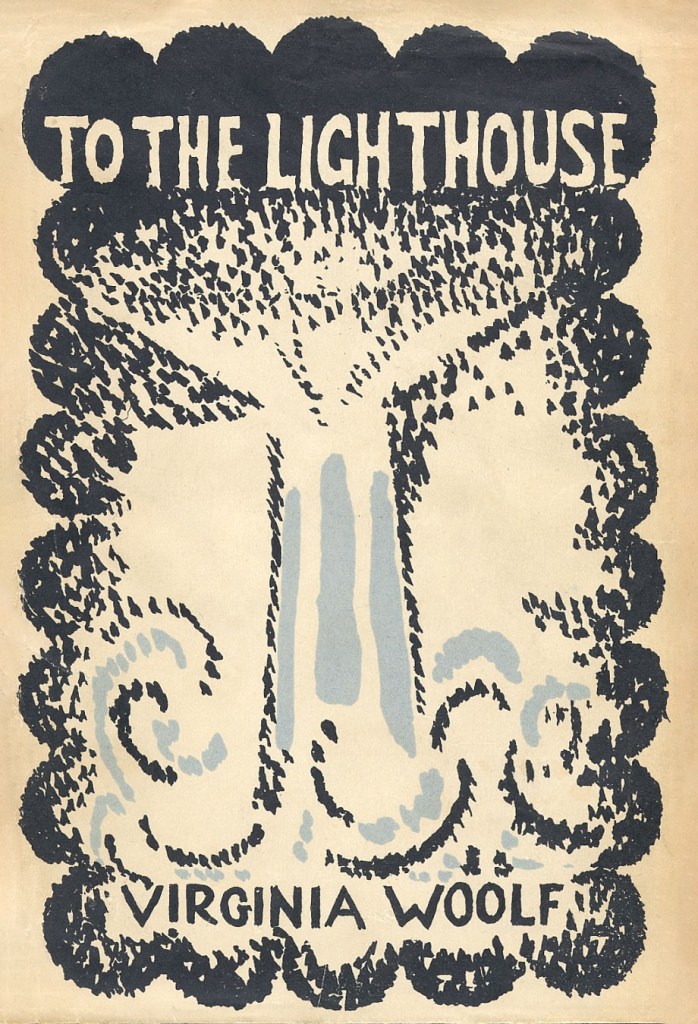
    Virginia Woolf. Wikipedia
  3. Virginia Woolf—Virginia Woolf, an English writer, is known for her novels, essays, and letters. Her works, including Mrs. Dalloway and To the Lighthouse, influenced the genre through their non-linear narrative.
    Three Mile Island on the Susquehanna
    River.
    Wikipedia
  4. Susquehanna River—The Three Mile Island accident near Harrisburg, Pennsylvania, in 1979 was the most serious nuclear power accident in US history. A valve malfunction caused a partial core meltdown, but fortunately, radioactive gases did not pose a threat to the surrounding population.
  5. Spanish Civil War—The Spanish Civil War (1936-1939) was a conflict between the Nationalists, supported by Italy and Germany, and the Republicans, aided by the Soviet Union and International Brigades. The Nationalists, led by General Francisco Franco, emerged victorious, establishing a dictatorship that lasted until his death in 1975.
General Francisco Franco.
Wikipedia

Quirky Queries: A Journey Through Art, History and Curiosities

All of today’s questions relate to 28 March.

Ecstasy of St Teresa
Wikipedia
  1. The Ecstasy of St. Teresa, shown above, is in the Cornaro Chapel, Santa Maria della Vittoria, Rome. Whose work is the sculpture?
    • Bernini
    • Donatello
    • Michelangelo
  2. This city, dating back to c657 BCE, underwent name changes under the Romans in the 4th century and again in 1930. Can you name it?
    • Baghdad
    • Istanbul
    • Sofia
  3. This author, who passed away on this day in 1941, is best known for her novels Mrs. Dalloway (1925) and To the Lighthouse (1927). Who is she?
    • Rebecca West
    • Katherine Mansfield
    • Virginia Woolf
  4. The Three Mile Island nuclear power plant experienced an accident on 28 March 1979 that resulted in radioactive leakage. On what river does the plant stand?
    • Atchafalaya River
    • Susquehanna River
    • Willamette River
  5. On this day in 1939, General Franco, the leader of the Nationalist forces during a civil war, captured his nation’s capital city. This was one of the last events before he declared victory. What civil war?
    • Austrian Civil War
    • Greek Civil War
    • Spanish Civil War

Good luck! I will post the answers later today.

Three Mile Island nuclear generating station, 1979.
Wikipedia

Who, What, When, Where, Why and How II | Answers

Here are the answers to my earlier post.

Calvin Coolidge.
Wikipedia
  1. Calvin Coolidge—was US President on the 26 March 1925. Calvin Coolidge, the 30th US President, served from 1923 to 1929. He is known for his small-government conservatism, taciturn personality, and support for racial equality. Coolidge oversaw economic growth during the “Roaring Twenties” but is criticised for failing to address economic inequality and for his potential role in the Great Depression.
  2. World War I—The First Battle of Gaza, fought on 26 March 1917, was a British defeat during the Sinai and Palestine Campaign of World War I. The British Desert Column, nearing capture of Gaza, withdrew due to darkness and Ottoman reinforcements.
  3. 2000—Vladimir Putin, a former KGB officer, has served as President of Russia since 2012, with previous terms from 2000 to 2008. His rule has been marked by economic growth, military conflicts, authoritarian tendencies, and human rights violations. Putin’s actions have led to international sanctions and a war crimes warrant.
    Israeli prime minister Menachem Begin and Egyptian president Anwar Sadat with U.S. president Jimmy Carter at Camp David in September 1978.
    Wikipedia
  4. Camp David, Maryland—the Camp David Accord was reached the previous September (1978) when President Carter hosted Egypt’s President Sadat and Israel’s Prime Minister Begin at his Maryland retreat.
  5. They believed a spacecraft was arriving to take them as immortal extraterrestrials to a better place
  6. 16-years

Who, What, When, Where, Why and How II

Kremlin, Moscow.
Wikipedia

All of the following relate to today’s date, 26 March.

  1. Who was the president of the United States of America 100 years ago today, 26 March 1925?
    • Warren G. Harding
    • Calvin Coolidge
    • Herbert Hoover
  2. What conflict saw the First Battle of Gaza take place on this date?
    • The Six Day War
    • World War I
    • World War II
  3. When was Vladimir Putin, a Russian intelligence officer and politician, elected president of Russia for the first time.
    • 2000
    • 2004
    • 2006
  4. Where did talks, mediated by US President Jimmy Carter, between Menachem Begin, the Israeli Prime Minister, and President Anwar Sadat of Egypt take place? These talks led to an historic peace treaty between Israel and Egypt that was signed on 26 March 1979.
    • Camp David, Maryland
    • Pearl Harbor, Hawaii
    • Plains, Georgia
  5. Why did these members of Heaven’s Gate kill themselves? On 26 March 1997 the bodies of 39 members of Heaven’s Gate were found after a mass suicide.
    • They believed they alone would be reincarnated as gods in an earthly paradise
    • They believed a spacecraft was arriving to take them as immortal extraterrestrials to a better place
    • They believed they had to poison themselves to meet Jesus
  6. How long had this interlude lasted? After a hiatus, the BBC sci-fi series Doctor Who made a triumphant return to television with a new episode in which Christopher Eccleston reprised the iconic role of the Doctor.
    • 6-years
    • 10-years
    • 16-years

Good luck! I will post the answers later today.
Tardis
Wikipedia

Historical Milestones and Cultural Icons: From Bach’s Birth to Twitter’s First Tweet—Answers

Field of Battersea.
A print caricaturing the Wellington–Winchilsea duel
by William Heath.
Wikipedia

The answers to my earlier pot are shown in bold below.

  1. 1685—Johann Sebastian Bach, a German composer, blended northern and southern German styles in his early compositions. He composed numerous cantatas, including the St. John Passion, and is known for his mastery of counterpoint and harmonic organisation.
    Jack Dorsey, 2014.
    Wikipedia
  2. $2.9m—Twitter, officially known as X since 2023, is a social networking service that allows users to share short text messages, images, and videos. It was created in 2006 and quickly grew to over 100 million users by 2012.
  3. Arthur Wellesley, 1st Duke of Wellington—The Duke of Wellington and Lord Winchilsea engaged in a duel at Battersea Fields, with Wellington firing first and missing, and Winchilsea firing into the air. This act of deloping cleared Winchilsea of cowardice allegations, allowing him to apologise unconditionally. The duel was the second, and last, fought by a sitting Prime Minister following the 1798 Pitt–Tierney duel on Putney Heath.
  4. San Diego, California—San Diego Comic-Con, founded in 1970, is a multi-genre entertainment event showcasing comic books, science fiction/fantasy media, and pop culture. It is the largest convention of its kind, attracting over 130,000 attendees annually.
    Stanley, a newspaper reporter and tireless self-promoter, was hired by the New York Herald to find the missing Livingstone in 1871, winning himself wealth and reputation. Kalulu is in the backgound.
    Wikipedia
  5. 700 miles (1,125 km)—Stanley travelled to Zanzibar in March 1871, claiming to have outfitted an expedition with 192 porters, though his diaries suggest a smaller number. After facing challenges including the death of his horse and desertion of porters, he found David Livingstone in Ujiji, Tanzania, famously greeting him with “Dr. Livingstone, I presume?”; this phrase was probably made up by Stanley after the event. Stanley joined Livingstone in exploring the region, later recounting his experiences in a book.
Routes of Henry Morton Stanley.
The Red route is the 1871-1872 is the expedition to find Livingstone.
Wikipedia

Historical Milestones and Cultural Icons: From Bach’s Birth to Twitter’s First Tweet

Johann Sebastian Bach
Wikipedia

All questions relate to today, 21 March.

  1. Johann Sebastian Bach, the composer of the Brandenburg Concertos and The Well-Tempered Clavier, was born this day in…
    • 1685
    • 1745
    • 1815
  2. Twitter, now X, was founded today in 2006 and Jack Dorsey, Twitter co-founder, sent the first public tweet, “just setting up my twttr.” Fifteen years later Dorsey auctioned this tweet as a nonfungible token (NFT) with the proceeds going to charity. It was bought using ether cryptocurrency for the equivalent of…
    • $1.4m
    • $2.9m
    • $5.8m
  3. 21 March saw the last time a serving UK Prime Minister fought a duel. Who was the Prime Minister?
    • Arthur Wellesley, 1st Duke of Wellington
    • William Lamb, 2nd Viscount Melbourne
    • William Cavendish-Bentinck, 3rd Duke of Portland
  4. A Comic-Con held its inaugural event on this date in 1970 and is now described by Forbes magazine as being “the largest pop and culture festival in the world”: it is held in…
    • Red Rock, Arizona
    • San Diego, California
    • Las Vegas, Nevada
  5. Henry Morton Stanley set out to find Dr David Livingstone today in 1871. His expedition was successful, finding Livingstone after trekking through tropical forest for…
    • 300 miles (482 km)
    • 450 miles (725 km)
    • 700 miles (1,125 km)

“Dr. Livingstone, I presume?”, an illustration from Stanley’s 1872 book How I Found Livingstone. Wikipedia

Interments to Independence: Navigating Anarchy’s Introduction—Answers


The body of former President and Chief Justice William Howard Taft lies in repose in the United States Capitol rotunda.
https://upload.wikimedia.org/wikipedia/commons/2/22/Taft_funeral_LCCN2016820348.jpg
  1. William Howard Taft—Taft lay in state at the United States Capitol rotunda. On 11 March, he became the first president and first member of the Supreme Court to be buried at Arlington National Cemetery. James Earle Fraser sculpted his grave marker out of Stony Creek granite.
    Ned Ludd
    Wikipedia
  2. Someone’s name—Ned Ludd, allegedly a weaver from near Leicester in England, is famously linked to the destruction of knitting frames in 1779. This act, reportedly due to being whipped or taunted, is first mentioned in The Nottingham Review on 20 December 1811, though its truth is unverified. John Blackner’s 1811 book offers a different account of a lad named “Ludlam,” who, instructed by his father to “square his needles,” destroyed them with a hammer. The story spread, and whenever frames were sabotaged, people humorously attributed it to “Ned Ludd,” contributing to the legend of the Luddites.
  3. 1959—In the 1950s, Hawaiʻi’s political landscape shifted as descendants of immigrant labourers, U.S. citizens, broke the plantation owners’ power by voting against the Hawaiʻi Republican Party, supported by plantation owners, and for the Democratic Party of Hawaiʻi. This shift led to Democratic dominance in territorial and state politics for over 40 years. Residents campaigned for statehood to gain full congressional and Electoral College representation. Initially, Hawaiʻi was expected to be a Republican stronghold, prompting its admission alongside Alaska, a Democratic stronghold. However, by 2017, Hawaiʻi generally voted Democratic, while Alaska typically voted Republican, contrary to initial predictions.
  4. Penicillin—Penicillin, discovered in 1928 by Alexander Fleming from the Penicillium mold, was found to inhibit bacterial growth, specifically Staphylococcus aureus. Howard Florey and Ernst Boris Chain later isolated and purified it, making it therapeutically available by 1941. Naturally occurring penicillins, like penicillin G and V, differ in acid stability and administration methods. Semisynthetic versions offer enhanced properties. Penicillins operate by disrupting bacterial cell wall synthesis, targeting actively replicating bacteria without harming human cells. Bacterial resistance led to penicillinase-resistant variants, though challenges like MRSA persist. Side effects include hypersensitivity reactions, ranging from mild rashes to rare, severe anaphylactic shock.
    Flag of Lithuania.
    Wikipedia
  5. Lithuania—On 11 March 1990, Lithuania’s Supreme Council declared independence, becoming the first Soviet-occupied state to do so. In response, the Soviets imposed a 74-day economic blockade on 20 April 1990, causing shortages of essential goods. Despite the blockade, Lithuania maintained its independence declaration. Tensions escalated in January 1991 when a coup attempt was made using Soviet forces, but it failed due to strong public resistance, resulting in 14 deaths and hundreds of injuries. The Medininkai Massacre occurred on 31 July 1991, with 7 border guards killed. Lithuania was admitted to the United Nations on 17 September 1991.

Interments to Independence: Navigating Anarchy’s Introduction

Arlington National Cemetery east entrance
Wikipedia

Sorry that this is a few hours later today, hope you enjoy.

  1. Who, on 11 March, became the first US president to be buried in Arlington National Cemetery, Virginia?
    • Ulysses S. Grant
    • William Howard Taft
    • John F. Kennedy
  2. Today in 1811, in Nottingham, England textile workers broke machinery that was taking their jobs in what was the first major Luddite riot. The term “Luddite” derives from…
    • Someone’s name
    • The riot’s location
    • The machinery’s manufacturer
  3. Hawaii was admitted into the union as the 50th US state, on 11 March in…
    • 1941
    • 1950
    • 1959
  4. In 1928, Alexander Fleming, a Scottish bacteriologist who died today in 1955, discovered…
    • Penicillin
    • Aspirin
    • Codeine
  5. The first Soviet republic to declare its independence from the USSR did so today in 1990. Which of these was it?
    • Latvia
    • Estonia
    • Lithuania

Good luck! The answers will be posted later today or tomorrow.

Fabulous Fantastic Fiascoes—Answers

Answers to the questions in the earlier post are shown in bold below.

US Military Academy, West Point, Coat of Arms
Image Wikipedia
  1. West Point military academy—Edgar Allan Poe attended the United States Military Academy at West Point in 1830. His time there was marked by academic success in subjects like mathematics, but he struggled with the strict military discipline. Poe deliberately sought dismissal by neglecting his duties and violating academy regulations. His tenure at West Point was brief, lasting less than a year, but it significantly influenced his literary career, as he turned his focus entirely to writing after leaving the academy.
    Pietà (1498–1499), by Michaelangelo. St. Peter’s Basilica, Vatican City
    Image Wikipedia
  2. 1475—Michelangelo di Lodovico Buonarroti Simoni (1475–1564), known simply as Michelangelo, was an influential Italian sculptor, painter, architect and poet of the High Renaissance. Born in Florence, his work drew inspiration from classical antiquity, leaving a profound impact on Western art. Renowned for masterpieces like the Sistine Chapel ceiling and the statue of David, Michelangelo epitomised the Renaissance man alongside Leonardo da Vinci. His exceptional talents spanned multiple disciplines, and extensive surviving records highlight his artistic journey. Celebrated by contemporaries, Michelangelo remains one of the most documented and revered artists of the 16th century.
    Penny Black with Queen Victoria profile.
    Image Wikipedia
  3. Victoria, queen of Great Britain —The Penny Black, introduced in the United Kingdom on 1 May 1840 and valid from 6 May, was the world’s first adhesive postage stamp for public postal use. Featuring Queen Victoria’s profile, it revolutionised postal services based on Sir Rowland Hill’s proposal to simplify complex, costly rates. Prior to this, recipients paid postage based on distance and sheet count. The Penny Black marked a shift to sender-paid postage, enabling letters up to ½ ounce (14 grams) to be delivered nationwide for a uniform rate of one penny, streamlining and democratising communication across distances.
    Valentina Tereshkova.
    Image Wikipedia
  4. Valentina Tereshkova—Valentina Tereshkova, a Russian engineer and former Soviet cosmonaut, was the first woman in space, completing a solo mission on Vostok 6 in 1963. It was her only space flight.
    This is a drawing of the Alamo Mission in San Antonio. It was first printed in 1854 in Gleason’s Pictorial Drawing Room Companion and was reprinted in Frank Thompson’s 2005 “The Alamo”, p 106.
    Image Wikipedia
  5. 13 days—The Siege of the Alamo took place from 23 February to 6 March 1836 during the Texas Revolution. Mexican forces led by General Antonio López de Santa Anna besieged the Alamo Mission in San Antonio, defended by Texian rebels including James Bowie, William B. Travis and Davy Crockett. Despite fierce resistance, the Texians were vastly outnumbered. After 13 days of relentless bombardment and attacks, the Mexican army overran the mission, killing nearly all defenders. The defeat became a rallying cry, “Remember the Alamo!”, inspiring Texian forces to eventual victory in the revolution.
    Old Package of Aspirin, 20 tabs 0.5 g
    Image Wikipedia
  6. Aspirin—Aspirin, a genericized trademark for acetylsalicylic acid (ASA), is a nonsteroidal anti-inflammatory drug (NSAID) used to alleviate pain, fever, and inflammation and as an antithrombotic. It treats specific inflammatory conditions like Kawasaki disease, pericarditis, and rheumatic fever. Long-term use helps prevent heart attacks, ischaemic strokes and blood clots in high-risk individuals. Effects for pain or fever usually start within 30 minutes. Aspirin functions like other NSAIDs but uniquely suppresses platelet function.
    Muhammad Ali.
    Image Wikipedia
  7. Cassius Clay—In 1964, Cassius Clay stunned the world by defeating Sonny Liston to win the heavyweight championship, defying the odds as an underdog. Just two days after his historic victory, Clay made headlines again by announcing his conversion to the Nation of Islam. This pivotal decision marked a profound personal transformation, as he embraced the teachings of Elijah Muhammad. On 6 March 1964, he adopted the name Muhammad Ali, symbolising his new identity and faith. Ali’s name change reflected not just a religious shift but a declaration of self-determination, which resonated throughout his illustrious boxing career and beyond.
    World Premiere Poster, 1853
    Image Wikipedia
  8. FiascoLa traviata premiered at La Fenice, Venice, in March 1853, amidst Verdi’s lingering apprehensions. The production faced hurdles from the start: Verdi disagreed with the casting of 38-year-old Fanny Salvini-Donatelli as Violetta, feeling she was ill-suited for the role of a youthful, consumptive heroine. Despite Verdi’s protests, no changes were made. The opening act received applause, but enthusiasm waned in the second act, where performances by baritone Felice Varesi and tenor Lodovico Graziani met with disapproval. Verdi later lamented in a letter, “La traviata last night a failure. Was the fault mine or the singers’? Time will tell.” He further said, “It was a fiasco!”
    Eleanor Roosevelt with female reporters at her first White House press conference on March 6, 1933.
    Credit: FDR Presidential Library & Museum
    Image via National Woman’s History Museum
  9. Eleanor Roosevelt—Eleanor Roosevelt recounted to journalist Lorena Hickok that the first White House press conference for women reporters, held on 6 March 1933—two days after FDR’s inauguration—was held in the Red Room. Thirty-five women attended, but there weren’t enough chairs, so some sat on the floor. These weekly conferences, open only to women, helped preserve their jobs and ensured news access. As Mrs Roosevelt noted without fresh stories, women reporters risked losing their jobs. The conferences focused on topics of interest to women, avoiding politics. Over twelve years, 348 conferences provided the First Lady with a national audience and significant publicity.
    Dmitri Mendeleev.
    Image Wikipedia
  10. 1869—On 6 March 1869, a scientist presented to the Russian Chemical Society about how elements’ properties relate to their atomic weights. He found that elements arranged by atomic weight show a pattern in their properties. Similar elements often have similar atomic weights or a regular increase in weight. Elements in groups based on atomic weight also match their valencies and chemical properties. He noted that widely spread elements have small atomic weights and that atomic weight influences an element’s nature. He predicted the discovery of new elements and suggested that atomic weights could help predict element properties.
Coloured periodic table showing the most common sets of elements (2023)
Image Wikipedia
Pietà (1498–1499), by Michaelangelo. St. Peter’s Basilica, Vatican City
Image Wikipedia