History’s Greatest Hits: From Napoleon’s Invasion to Elvis’s Chart-Topping Curtain Call—Answers

Map of the Old Swiss Confederacy, 1789
Image Wikipedia

The answers to the four questions posted earlier are in bold below.

  1. Switzerland—The period of the thirteen cantons in Swiss history, from 1513 to 1798, involved the Old Swiss Confederacy, a loose union of thirteen sovereign cantons united for mutual defence and foreign policy. These cantons were diverse in religion and culture, with some Catholic and others Protestant post-Reformation. The confederacy expanded in the 16th century due to its mercenary strength, gaining autonomy from the Holy Roman Empire while maintaining cantonal independence through treaties. Internal conflicts like the Wars of Kappel highlighted religious divisions, yet peace and neutrality prevailed. The era ended with the French invasion in 1798, leading to the Helvetic Republic and centralised governance.
    Georgy Malenkov
    Image Wikipedia
  2. Georgy Maximilianovich Malenkov—Georgy Malenkov served as the Premier of the Soviet Union from 1953 to 1955, succeeding Joseph Stalin. He aimed to improve the economy by focusing on consumer goods and agriculture, but faced opposition within the Communist Party. Malenkov also sought to decentralise the administration and reduce secret police power, but his reforms were resisted. In 1955, he resigned after a power struggle with Nikita Khrushchev, being replaced by Nikolai Bulganin. His tenure marked a brief shift towards economic reforms and a more open political atmosphere, which was reversed after his departure.
    Winston Churchill, 1941
    Image Wikipedia
  3. Winston Churchill—Churchill’s Iron Curtain speech, delivered  on March 5, 1946, at Westminster College, Fulton, Missouri, highlighted the need for the US and Britain to counter Soviet communism, which had created a political and ideological barrier across Europe. The term “iron curtain” described the USSR’s post-World War II isolation of eastern and central Europe from the West. Post-war, Western leaders were divided on how to engage with the Soviet Union, with some fearing Stalin’s expansionism and others believing in potential peace. Churchill and American diplomat George Kennan advocated for a containment policy, opposing Soviet expansion and advocating for Western military counterpressure. The relevant paragraph from his speech reads…
    “From Stettin in the Baltic to Trieste in the Adriatic an iron curtain has descended across the Continent. Behind that line lie all the capitals of the ancient states of Central and Eastern Europe. Warsaw, Berlin, Prague, Vienna, Budapest, Belgrade, Bucharest and Sofia, all these famous cities and the populations around them lie in what I must call the Soviet sphere, and all are subject in one form or another, not only to Soviet influence but to a very high and, in some cases, increasing measure of control from Moscow.”
    (The National Archives, full text.)
    Heartbreak Hotel.
    Image Wikipedia
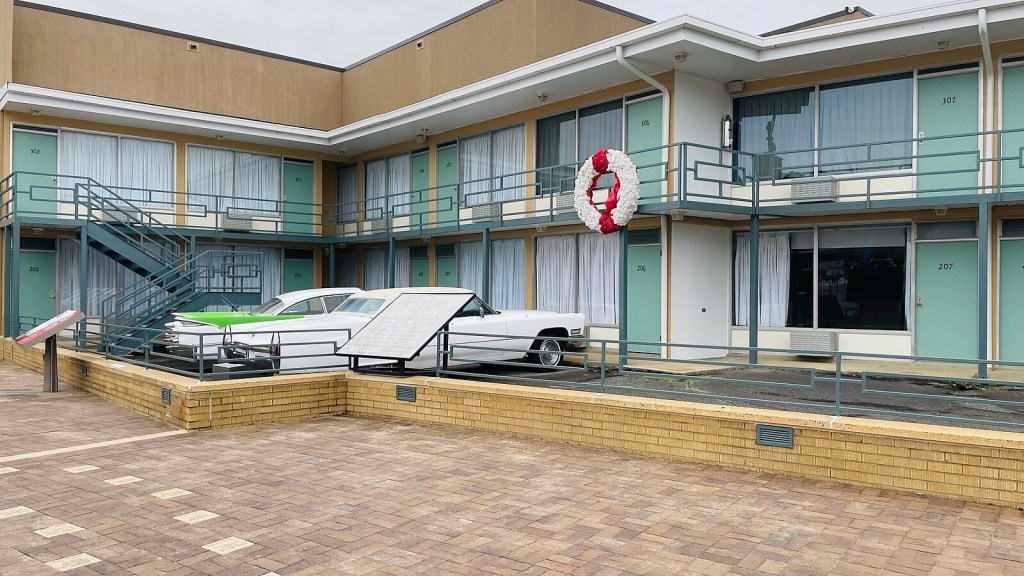
  4. Heartbreak HotelHeartbreak Hotel by Elvis Presley, released on January 27, 1956, was his first single with RCA Victor. Written by Mae Boren Axton, Tommy Durden, and Presley, it was inspired by a newspaper article about a man’s suicide. Recorded on January 10, 1956, with the Blue Moon Boys, Chet Atkins, and Floyd Cramer, it features an eight-bar blues progression and heavy reverberation. The song topped multiple charts, became Presley’s first million-seller, and was certified double platinum. It was inducted into the Grammy Hall of Fame in 1995 and named one of Rolling Stone’s 500 Greatest Songs of All Time in 2004.

Fiddler’s Bridge Rings—Answers

Here are the answers to the questions posed earlier today plus some additional information.

A portrait in oils in the Museo Internazionale e Biblioteca della Musica di Bologna is generally believed to be of Vivaldi.
Image Wikipedia
  1. Venice, Republic of Venice (now Italy)—Antonio Lucio Vivaldi (1678–1741) was a pivotal Italian composer and violinist of the Baroque era, known for his innovative contributions to orchestration, violin technique and the concerto form. Born in Venice, he was ordained a priest in 1703, earning the nickname Il Prete Rosso—the red priest. Vivaldi worked at the Ospedale della Pietà, composing numerous concertos, sacred works, and over fifty operas, including the famous The Four Seasons. Despite initial success, his popularity declined in the 1730s. He moved to Vienna in 1740, seeking royal support, but died in poverty. His works were rediscovered in the 1920s, reviving interest in his music.
    Forth Bridge pier off Inchgarvie Island. The Forth Road Bridge can be seen in the background.
    Image Wikipedia
  2. Edinburgh—The Forth Bridge, a cantilever railway bridge over the Firth of Forth (Estuary of the River Forth) in Scotland, was designed by Sir John Fowler and Sir Benjamin Baker in the late 1880s and opened on 4 March 1890. Initially criticised for its aesthetics, it is now a symbol of Scotland and a UNESCO World Heritage Site. Located 9 miles west of Edinburgh, it carries the Edinburgh–Aberdeen line, is 8,094 feet (2467 m) long and features three 1,348 ft (411 m) cantilevers and two 351 ft (107 m) suspended spans, with a total clear span of 1,699 ft (518 m). Constructed with 58,000 tons of steel at a cost of £3,000,000 (£493,000,000 in 2025). Recent research by the Queensferry Historian Group has discovered that 78 men died during the construction of the bridge.
    A plaque honoring Perkins at Boston’s Logan Airport.
    Image Wikipedia
  3. Franklin D. Roosevelt—Frances Perkins was appointed Secretary of Labor on 4 March 1933. Born on 10 April 1880, in Boston she was a pioneering American workers-rights advocate and the first woman in the U.S. cabinet, serving as Secretary of Labour from 1933 to 1945 under President Franklin D. Roosevelt. A key figure in the New Deal coalition, she focused on labour issues and social security policy, developing the Social Security Act in 1935. Perkins championed reforms like the minimum wage, maximum workweek, and child labour restrictions. Educated at Mount Holyoke College, Wharton School, and Columbia University, she passed away on 14 May 1965, in New York.
    Paul McCartney, George Harrison and John Lennon during a Beatles performance for Dutch television, 1964.
    Image Wikipedia
  4. John Lennon, Beatles—In 1966, during a controversial interview, John Lennon of the Beatles made a bold statement that would spark widespread debate and backlash around the world. Lennon asserted that the band had become “more popular than Jesus”. This comment was part of a larger discussion about the changing role of religion and the cultural influence of rock music, particularly among the youth of the 1960s. The remark was initially unnoticed in the UK but gained significant attention in the United States, leading to protests and record burnings by those who viewed the statement as blasphemous. Despite the uproar, the Beatles continued to dominate the music scene and influence the cultural landscape, solidifying their legacy as one of the most iconic bands in history.
  5. Voyager 1—Voyager 1, launched by NASA on September 5, 1977, is a pioneering interplanetary probe that visited Jupiter and Saturn, becoming the first spacecraft to reach interstellar space. Part of a twin mission with Voyager 2, it utilised a rare planetary alignment for a multiplanet tour. Voyager 1 discovered Jupiter’s ring and volcanic activity on Io, and revealed Saturn’s ring structures. It carries a gold-plated phonograph record with Earth’s images and sounds. By 2012, it entered interstellar space and is now the most distant human-made object. It is expected to operate until 2030.
Distance from Earth screenshot, 12:42 4 March 2025*
Image JPL NASA Voyager

*Voyager Live information can be viewed at JPL NASA Voyager.

Fiddler’s Bridge Rings

Image Wikipedia

Here are some questions based on this day in history.

  1. Antonio Vivaldi, composer and virtuoso violinist was born on 4 March 1678. Where was he born?
    • Vigo, Kingdom of Galicia (now Spain)
    • Vienna, Austria
    • Venice, Republic of Venice (now Italy) 
  2. What Scottish city is located about nine miles east of the bridge, which opened this day in 1890, pictured above? 
    • Aberdeen
    • Dundee
    • Edinburgh
    Frances Perkins
    Image Wikipedia
  3. Frances Perkins was the first woman ever to serve in a presidential cabinet in the United States. Which president appointed her as the fourth US Secretary of Labor?
    • Calvin Coolidge
    • Herbert Hoover
    • Franklin D. Roosevelt 
  4. On 4 March 1966, it was claimed during an interview that we are ‘more popular than Jesus’. Who made this claim?
    • John Lennon of the Beatles
    • Cass Elliot of the Mamas & the Papas
    • Mick Jagger of the Rolling Stones
  5. On this day in 1979 the first photograph of the rings of Jupiter (below) was sent back to Earth by what spacecraft?
    • Voyager 1
    • Galileo
    • Pioneer 11
Jupiter.
Image Wikipedia

Good luck! The answers will be posted later today.
Capital Cathedral—Answer

Helsinki

The cathedral is the Finnish Evangelical Lutheran cathedral of the Diocese of Helsinki, located in the centre of Helsinki, Finland and was also known as St Nicholas’s Church until Finnish independence in 1917.

Martin Luther
[Image from Wikipedia]

A notable neoclassical landmark in Helsinki, the building features a tall, green dome encircled by four smaller ones. Designed by Carl Ludvig Engel as the centrepiece of his Senate Square layout, it is surrounded by other smaller structures he created. The church’s design is a Greek cross, symmetrical in all directions, with each arm adorned with a colonnade and pediment. Engel’s plan included an additional row of columns at the western end for the main entrance, but this was never realised.

Altar, with Carl Timoleon von Neff’s painting The Descent of Jesus from the Cross donated by Nicholas I
[Image from Wikipedia]