Tag: Europe

  • Who’s Who—Answers

    Here are the answers

    All of these questions relate to people who are connected to today, February 6th.
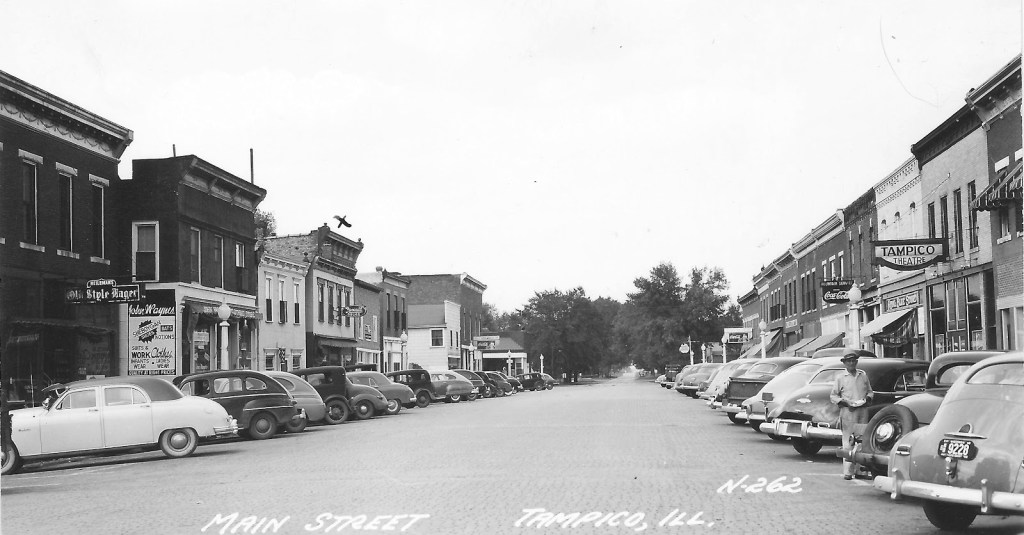
    Main Street, Tampico, Illinois.
    Image The Digital Research Library of Illinois History Journal

    One

    An American actor and politician born in Tampico, Illinois, in 1911. After Eureka College, he became a radio sports broadcaster in Iowa. He was actively involved with labour unions before getting into politics. He died in 2004. Who is he?

    Answer: Ronald Reagan

    Ronald Reagan, the 40th President of the United States, served from 1981 to 1989. His presidency was marked by significant economic policies, including tax cuts and increased defence spending, known as ‘Reaganomics’. While proponents highlight his accomplishments in economic growth and ending the Cold War, opponents criticise his policies for increasing the national debt and cutting social services.


    Two

    In 1694, Dandara, the warrior queen and leader of the runaway slaves Quilombo dos Palmares in Brazil, was captured and chose suicide over a return to slavery. What English seven-letter word, derived from Spanish cimarrón meaning ‘wild’, did European slavers use to describe these escaped slaves?

    Answer: Maroons

    In Brazil the Africans set up settlements known as Quilombos. The most famous of such settlements was Quilombo dos Palmares, in the northeastern part of Brazil. It functioned successfully as an independent republic of the maroons in the 17th century, following an African pattern of social organization. At its apex, it was the home and refuge of some 20,000 African men, women, and children who had managed to escape the dreadful experience of plantation life. — Encyclopædia Britannica


    Three

    In the mid-20th century, this person became ruler on the death of their father, who himself had not expected to hold the post. They remained in this role for an astonishing 25,782 days?

    Answer: Elizabeth II of the United Kingdom.

    Her father, George VI, came to the throne on the abdication of his brother Edward VIII. Elizabeth II, Queen of the United Kingdom and other Commonwealth realms, reigned for 70 years and 214 days, the longest of any British monarch. Born in 1926, she became queen in 1952 and witnessed significant political changes, including the UK’s accession and withdrawal from the European Communities. Despite occasional republican sentiment and media criticism, her popularity remained high throughout her reign.


    Four

    Born in Munich, Germany, in 1912, this woman met in 1929 the man who became Chancellor of Germany a few years later. She married him in 1945. She died in Berlin, Germany, aged 33. Who was she?

    Answer: Eva Braun

    Eva Braun, was Adolf Hitler’s longtime companion and briefly his wife. She lived with him from 1930 until their deaths in 1945, when they died by suicide in the Führerbunker as the war ended.


    Five

    This monarch ruled England, Scotland and Ireland from 1702 to 1707 and then Great Britain and Ireland until their death in 1714, which marked the end of a dynasty. Who was this monarch?

    Answer: Queen Anne.

    The Union of the Crowns in 1707 united the Kingdoms of England and Scotland into the Kingdom of Great Britain. Anne, the last Stuart monarch, ruled Great Britain and Ireland from 1702 to 1714. She favoured moderate Tory politicians and experienced estrangement from her sister Mary and friend Sarah Churchill. Despite 17 pregnancies, Anne died childless, marking the end of the House of Stuart and leading to the succession of George I of the House of Hanover.
  • Who’s Who

    All of these questions relate to people who are connected to today, February 6th.

    Main Street, Tampico, Illinois.
    Image The Digital Research Library of Illinois History Journal

    One

    An American actor and politician born in Tampico, Illinois, in 1911. After Eureka College, he became a radio sports broadcaster in Iowa. He was actively involved with labour unions before getting into politics. He died in 2004. Who is he?


    Two

    In 1694, Dandara, the warrior queen and leader of the runaway slaves Quilombo dos Palmares in Brazil, was captured and chose suicide over a return to slavery. What English seven-letter word, derived from Spanish cimarrón meaning ‘wild’, did European slavers use to describe these escaped slaves?


    Three

    In the mid-20th century, this person became ruler on the death of their father, who himself had not expected to hold the post. They remained in this role for an astonishing 25,782 days?


    Four

    Born in Munich, Germany, in 1912, this woman met in 1929 the man who became Chancellor of Germany a few years later. She married him in 1945. She died in Berlin, Germany, aged 33. Who was she?


    Five

    This monarch ruled England, Scotland and Ireland from 1702 to 1707 and then Great Britain and Ireland until their death in 1714, which marked the end of a dynasty. Who was this monarch?

    Good luck! I’ll post the answers later.


  • When—Answers

    Here are the answers to the questions i posted earlier.

    These questions all relate to today’s date, February 5th. Each question has a year or decade as the first part of the answer, followed by a supplementary question.


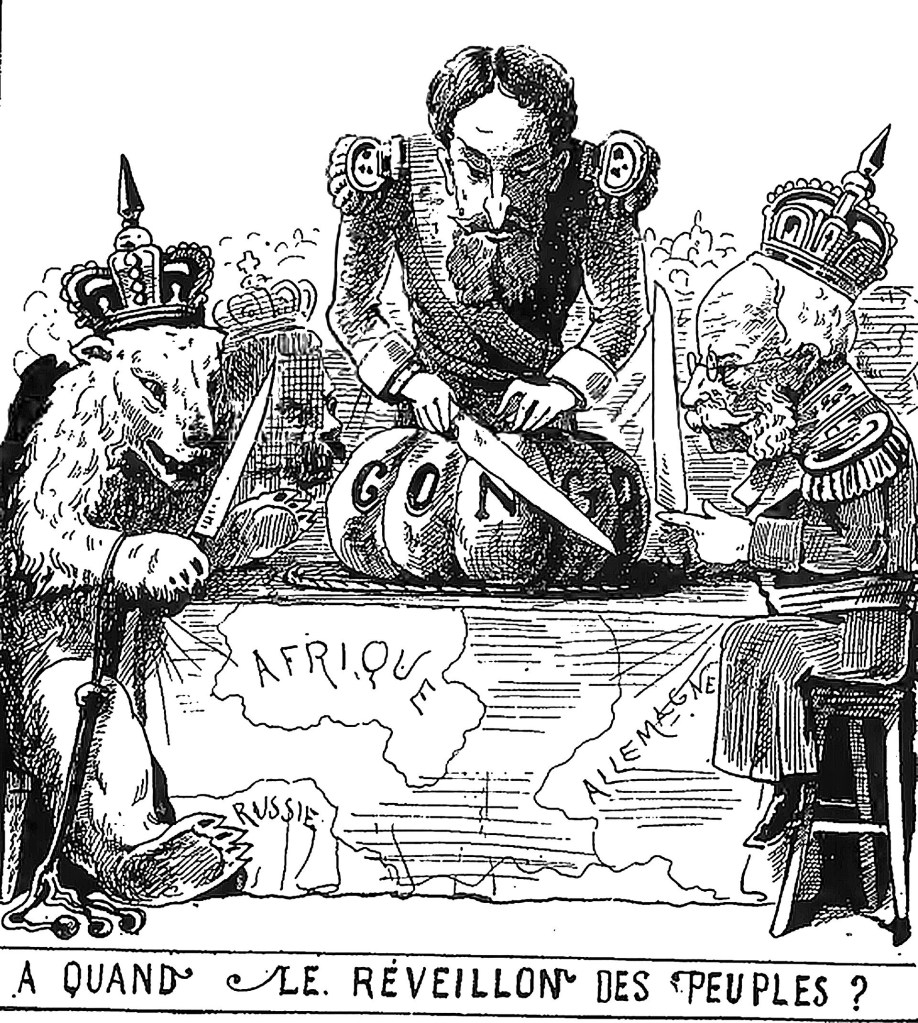
    Cartoon depicting Leopold II and other imperial powers at the Berlin Conference of 1884.
    Image Wikimedia Commons

    One

    In what decade did a European monarch establish the Congo Free State in West Africa? Who was the monarch, and what was the European country?

    Answer: 1880s; Leopold II and Belgium

    Belgian King Leopold II established the Congo Free State in 1885, seizing the land as his personal possession. His brutal reign, characterised by forced labour and widespread atrocities, led to international condemnation and the eventual transfer of control to Belgium in 1908.


    Two

    On this day in what year did Apollo 14 land on the Moon, and name any one of the three astronauts who flew on that mission or all three if you can?

    Answer: 1971; Alan B. Shepard Jr., Stuart A. Roosa or Edgar D. Mitchell

    Apollo 14, the third lunar landing, successfully landed in the Fra Mauro formation after overcoming malfunctions. Shepard and Mitchell collected Moon rocks and deployed experiments, while Roosa orbited the Moon.


    Three

    On this day, the New Hermitage Museum opened in Russia. In what decade did it open, and what—at that time—was the name of the city it is located in?

    Answer: 1850s; Saint Petersburg

    The New Hermitage Museum, part of the larger Hermitage Museum complex in St. Petersburg, was reconstructed between 1840 and 1852 and opened to the public in 1852. The museum is housed within five interconnected buildings, including the Winter Palace and the Small, Old and New Hermitages. The city was founded by Peter the Great in 1703 and named St. Petersburg, which it stayed until 1914 when it became Petrograd to reflect Russian patriotism during World War I by avoiding the German-sounding ‘Petersburg’. In 1924, the name changed to Leningrad in honour of Vladimir Lenin after his death, which it was until 1991 when the city’s population voted to return to the original name.


    Four

    United Artists, the American film production company, was founded on this day in what decade? Secondly, name any two of the four founders?

    Answer: 1910s; Charlie Chaplin, Mary Pickford, Douglas Fairbanks and D. W. Griffith.

    United Artists, founded in 1919, was established to allow actors more control over their own affairs. It was acquired by MGM in 1981 and later revived as United Artists Releasing in 2019. However, Amazon, MGM’s parent company, folded UAR into MGM in 2023. On 26 July 2024, Amazon MGM Studios announced the company’s revival.


    Five

    The creation of the first synthetic plastic was announced on this date. In what decade was this announcement made, and what was the name of this synthetic plastic?

    Answer: 1900s; Bakelite

    Leo Hendrik Baekeland, a Belgian chemist, invented Velox photographic paper and Bakelite, a versatile plastic, earning him the title ‘The Father of the Plastics Industry’. Bakelite, developed in 1907, became a commercial success due to its mouldability, heat resistance, and electrical nonconductivity. Its creation revolutionised the chemical industry and inspired the development of other synthetic plastics.


  • When

    These questions all relate to today’s date, February 5th. Each question has a year or decade as the first part of the answer, followed by a supplementary question.

    Contemporary cartoon.
    Image Wikimedia Commons

    One

    In what decade did a European monarch establish the Congo Free State in West Africa? Who was the monarch, and what was the European country?


    Two

    On this day in what year did Apollo 14 land on the Moon, and name any one of the three astronauts who flew on that mission or all three if you can?


    Three

    On this day, the New Hermitage Museum opened in Russia. In what decade did it open, and what—at that time—was the name of the city it is located in?


    Four

    United Artists, the American film production company, was founded on this day in what decade? Secondly, name any two of the four founders?


    Five

    The creation of the first synthetic plastic was announced on this date. In what decade was this announcement made, and what was the name of this synthetic plastic?

    Good luck! I’ll post the answers later.


  • Flying the Flag—Answers

    Here are the answers to the questions found in my earlier post.

    The first two questions reference today’s date, February 1st. The rest continue the flag theme.

    One

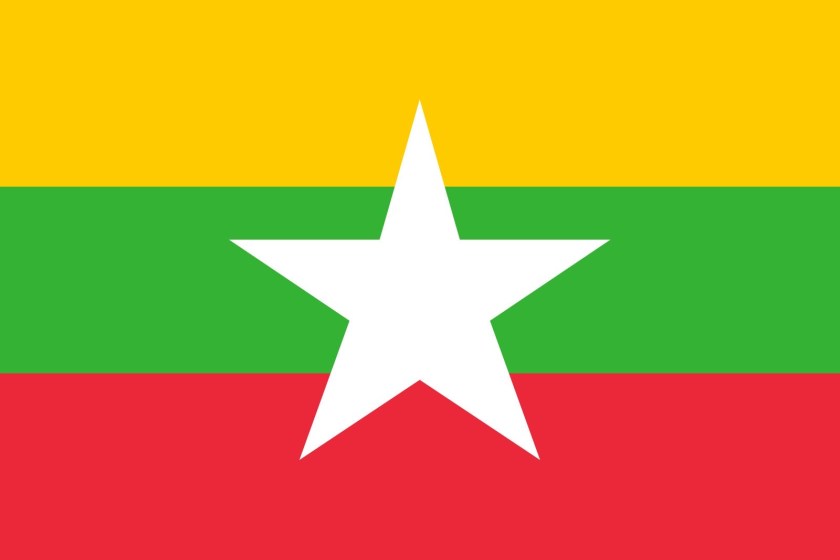
    Flag if Myanmar.
    Image Encyclopædia Britannica

    In 2021, the military of this country staged a coup d’état, ousting the country’s de facto leader. What country and who was the de facto leader?

    Answer: Myanmar; Aung San Suu Kyi

    Myanmar, officially the Republic of the Union of Myanmar, is a Southeast Asian country with a population of about 55 million. Aung San Suu Kyi, a prominent politician, State Counsellor, and Nobel laureate, faced criticism for her leadership and was arrested following the 2021 military coup.


    Two

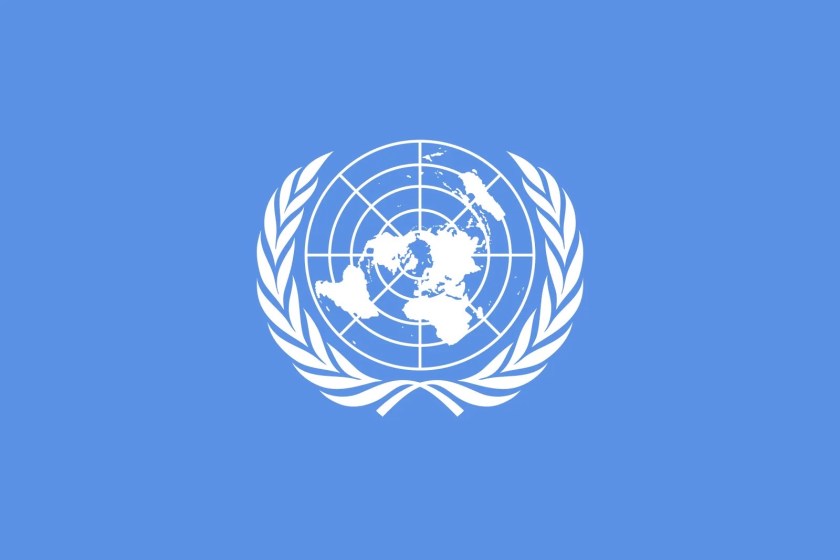
    Flag of United Nations.
    Image Encyclopædia Britannica

    In 1946, who was elected as this organisation’s first head and what was their title?

    Answer: Trygve Lie; Secretary-General of the United Nations

    Trygve Lie, the first UN Secretary-General, served from 1946 to 1952. He resigned due to Soviet opposition stemming from his support for UN intervention in the Korean War. Lie also faced challenges from McCarthyism in the United States.


    Today’s remaining questions continue the flag theme but are not related to the date.


    Three

    Flag of Nepal.
    Image Wikimedia Commons

    What country is flying high with this flag?

    Answer: Nepal

    Nepal stands alone as the only modern nation without a rectangular national flag. The flag, which was adopted in 1962, consists of two united pennant shapes, crimson with blue borders, and decorated with stylised sun and moon symbols. It uses traditional designs with symbolic elements representing bravery, peace and Nepal’s national flower.


    Four

    ‘P’ aka Blue Peter.
    Image Wikimedia Commons

    What does it signify if a ship in harbour displays this international maritime signal flag as a single flag?

    Answer: All persons should report on board as the vessel is about to proceed to sea.

    In English, the flag is known as the Blue Peter. It represents the letter ‘P’ if being used with other flags to spell out a message, and when flown on its own, in a harbour, it is an indication that the ship is preparing to depart, and all crew and passengers should report onboard.


    Five

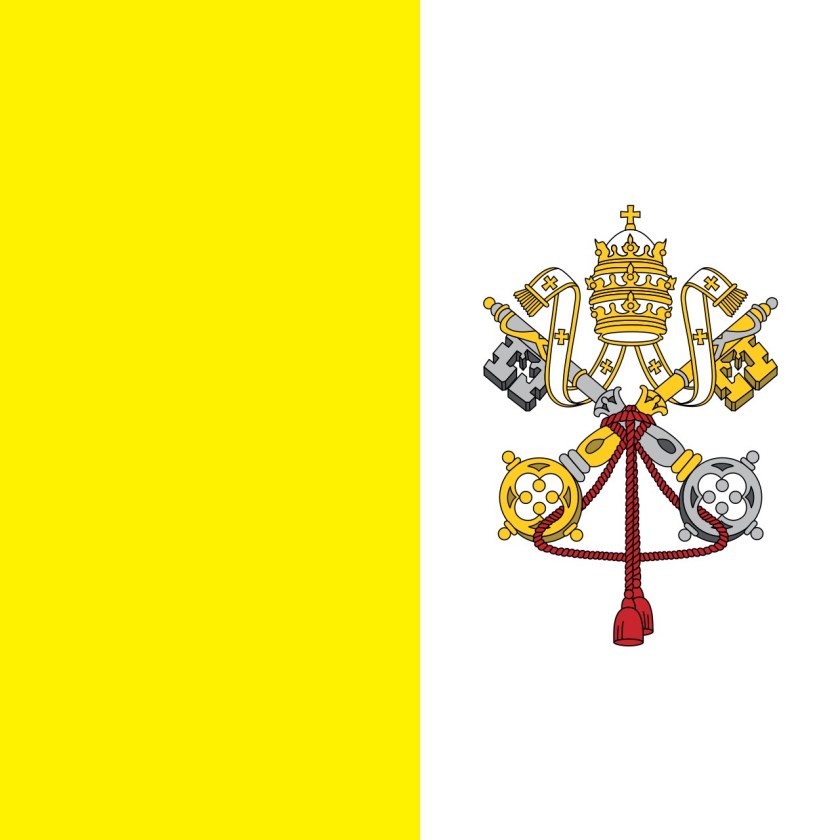
    Flag of Vatican City State.
    Image Wikimedia Commons

    This national flag was raised for the first time at the UN headquarters in 2015. Where does it represent?

    Answer: Vatican City State (or Holy See)

    The flag of Vatican City, adopted in 1929, features a vertical yellow and white bicolour with the emblem of the Holy See. It symbolises the Catholic faith and can be displayed at Catholic churches.


  • Flying the Flag

    The first two questions reference today’s date, February 1st. The rest continue the flag theme.

    One

    Image Encyclopædia Britannica

    In 2021, the military of this country staged a coup d’état, ousting the country’s de facto leader. What country and who was the de facto leader?


    Two

    Image Encyclopædia Britannica

    In 1946, who was elected as this organisation’s first head and what was their title?


    Today’s remaining questions continue the flag theme but are not related to the date.


    Three

    Image Wikimedia Commons

    What country is flying high with this flag?


    Four

    Image Wikimedia Commons

    What does it signify if a ship in harbour displays this international maritime signal flag as a single flag?


    Five

    Image Wikimedia Commons

    This national flag was raised for the first time at the UN headquarters in 2015. Where does it represent?

    Good luck! I’ll post the answers later.


  • Good Herb—Answers

    Here are the answers to the questions I posted earlier.

    These five questions are all related to today’s date, January 30th.

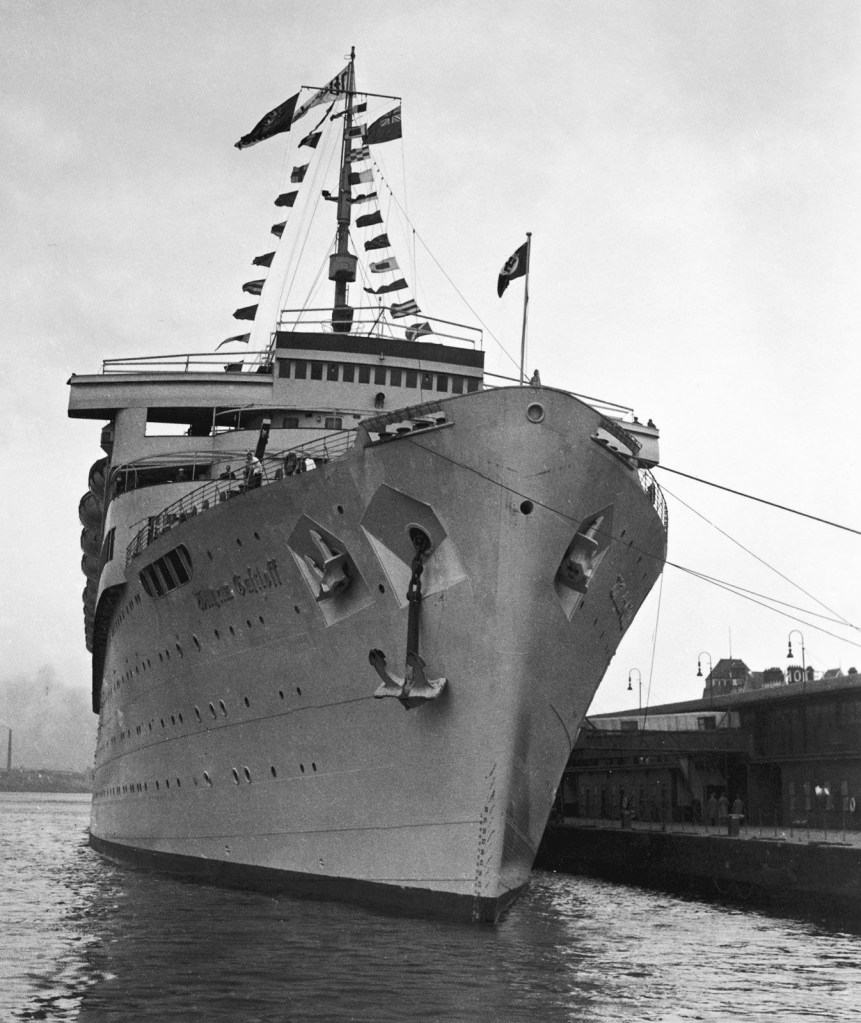
    MV Wilhelm Gustloff.
    Image Encyclopædia Britannica

    One

    On 30 January 1945, the greatest maritime disaster in history occurred as the German ocean liner Wilhelm Gustloff was sunk. In what body of water was this sinking, and approximately how many people perished?

    Answer: Baltic Sea; ≈ 9,000 lives were lost

    The MV Wilhelm Gustloff, a German ocean liner originally built as a cruise ship for the Nazi Strength Through Joy organisation, was sunk by a Soviet submarine S-13 in the Baltic Sea on 30 January 1945, during Operation Hannibal. The ship, carrying an estimated 10,000 people, including refugees and military personnel, sank in one hour after being hit by three torpedoes. This disaster resulted in the greatest maritime disaster in history, with an estimated 8,761 to 9,343 casualties. Despite the high civilian death toll, the sinking is not considered a war crime due to the presence of military personnel and weapons on board.


    Two

    On this day in 1847, Yerba Buena became what North American city?

    Answer: San Francisco

    Yerba Buena (good herb), now San Francisco, was claimed by the US in 1846 during the Mexican-American War. The city became a US military territory in 1848 and was admitted to the Union as a state in 1850.


    Three

    Charles I, king of England, Scotland, and Ireland, was executed in London. In what decade did this occur?

    Answer: 1640s

    Charles I, King of England, Scotland, and Ireland from 1625 to 1649, believed in the divine right of kings and clashed with Parliament over his policies, including taxation without consent and religious reforms. His actions led to the English Civil War, his defeat, and his execution for high treason in 1649. The monarchy was abolished but restored in 1660 with his son, Charles II.


    Four

    Oliver Cromwell was one of the regicides responsible for Charles I’s execution. What happened to Cromwell two years after his own death?

    Answer: He was disinterred and ritually executed.

    Oliver Cromwell, who had died in 1658, was subjected to a posthumous execution. His body was disinterred, hanged at Tyburn, and beheaded. Then it was thrown into a pit and his head placed on a spike at the end of Westminster Hall facing the spot where Charles I had been executed.


    Five

    On this day in 1931 City Lights premiered. The film was written, produced, directed by, and starred whom?

    Answer: Charlie Chaplin

    City Lights is a 1931 American romantic comedy-drama film written, produced, directed by, and starring Charlie Chaplin. The film, which follows the Tramp’s misadventures, was released with a synchronised musical score and sound effects despite the rise of talking pictures. City Lights was a critical and commercial success, and is considered one of Chaplin’s greatest films.


    Good Herb

    The post title is the translation of Yerba Buena, which is now the city of San Francisco. See question two.

  • Good Herb

    These five questions are all related to today’s date, January 30th.

    MV Wilhelm Gustloff.
    Image Encyclopædia Britannica

    One

    On 30 January 1945, the greatest maritime disaster in history occurred as the German ocean liner Wilhelm Gustloff was sunk. In what body of water was this sinking, and approximately how many people perished?


    Two

    On this day in 1847, Yerba Buena became what North American city?


    Three

    Charles I, king of England, Scotland, and Ireland, was executed in London. In what decade did this occur?


    Four

    Oliver Cromwell was one of the regicides responsible for Charles I’s execution. What happened to Cromwell two years after his own death?


    Five

    On this day in 1931 City Lights premiered. The film was written, produced, directed by, and starred whom?

    Good luck! I’ll post the answers later.


  • Today’s the Day—Answers

    Here are the answers to the questions in my earlier post.

    All of today’s questions are related to the date, January 28th.

    Flag of Canada.
    Image Encyclopædia Britannica

    One

    On this day, Charlemagne, the ruler of the Holy Roman Empire, died in Aachen, Germany. In what century did this occur?

    Answer: 9th Century

    Charlemagne, an 8th-century Frankish king, united most of Europe, restored the Western Roman Empire, and facilitated a cultural renaissance. He was crowned ’emperor of the Romans’ by Pope Leo III in 800 CE.


    Two

    In 1813, Jane Austen’s Pride and Prejudice was first published in the United Kingdom. The novel features Mr and Mrs Bennet and their family. How many daughters do they have, and what are their names?

    Answer: Five; Jane, Elizabeth, Mary, Catherine ‘Kitty’ and Lydia Bennet

    Pride and Prejudice follows Elizabeth Bennet’s character development as she learns about hasty judgements and the difference between superficial and actual goodness. The novel examines the societal pressures on the Bennet family, particularly the expectation that their daughters must marry well to secure their future.


    Three

    On this day, a proclamation by the Monarch of Canada officially introduced a new Canadian flag. In which decade was this, and which monarch made the proclamation?

    Answer: 1960s; Queen Elizabeth II

    On this day in 1965, Queen Elizabeth II, in her role as Queen of Canada signed the Royal proclamation of the national flag of Canada. The hand written illuminated document on vellum had ben flown to the United Kingdom for the signing.


    Four

    In 1896, Walter Arnold of East Peckham, Kent, U.K., became the first person convicted of speeding in a horseless carriage after a police chase on 28th January. At what speed was he driving?

    Answer: 8mph

    Guinness World Records highlights several key points about Walter Arnold’s offence. He received this first speeding ticket on January 28, 1896, for driving at 8 mph in a 2 mph zone. Arnold was charged with multiple violations, including operating a locomotive without a horse, operating it with fewer than three people, exceeding the speed limit, and failing to display his name and address. Found guilty on all counts, he was fined £4 7s, with 10 shillings specifically for speeding. Adjusted for inflation, this total fine would amount to £507 today, as of December 2025.


    Five

    Pippi Långstrump, a 1945 Swedish children’s novel, was first published in English in 1950. What English title was it published under, and who was its author?

    Answer: Astrid Lindgren

    Pippi Longstocking, a beloved children’s book by Astrid Lindgren, follows the adventures of a strong, independent nine-year-old girl living alone with her monkey and horse. The book, originally published in Swedish in 1945, has been translated into numerous languages and adapted for film and television. On this day in 2002, Astrid Lindgren died at the age of 94.


  • Today’s the Day

    All of today’s questions are related to the date, January 28th.

    Flag of Canada.
    Image Encyclopædia Britannica

    One

    On this day, Charlemagne, the ruler of the Holy Roman Empire, died in Aachen, Germany. In what century did this occur?


    Two

    In 1813, Jane Austen’s Pride and Prejudice was first published in the United Kingdom. The novel features Mr and Mrs Bennet and their family. How many daughters do they have, and what are their names?


    Three

    On this day, a proclamation by the Monarch of Canada officially introduced a new Canadian flag. In which decade was this, and which monarch made the proclamation?


    Four

    In 1896, Walter Arnold of East Peckham, Kent, U.K., became the first person convicted of speeding in a horseless carriage after a police chase on 28th January. At what speed was he driving?


    Five

    Pippi Långstrump, a 1945 Swedish children’s novel, was first published in English in 1950. What English title was it published under, and who was its author?

    Good luck! I’ll post the answers later today.