Today we have five unrelated and unconnected questions.
The Öresund Bridge, which features in the Nordic noir television drama series The Bridge, carries European Route E20, see question 1. Image Wikipedia
One
The European Route E20 stretches approximately 1,168 miles (1,880 km) from a river estuary airport in the west to the northernmost city of over a million people in the east. Which airport and city are these?
Two
A television medical drama that ran from October 1982 to May 1988 was set in St Elegius Hospital, Boston. What was its title?
Three
In what novel by Charles Dickens does Esther Summerson tell her own story in the past tense?
Four
The Chalcolithic period, an archaeological era, was primarily defined by a rise in the use of what specific material?
Five
In October 2025, the Supreme Governor of the Church of England prayed with Robert Francis Prevost on the Apennine Peninsula. Who is the Supreme Governor of the Church of England and who is Robert Francis Prevost known as?
Here are the answers to the questions posed earlier.
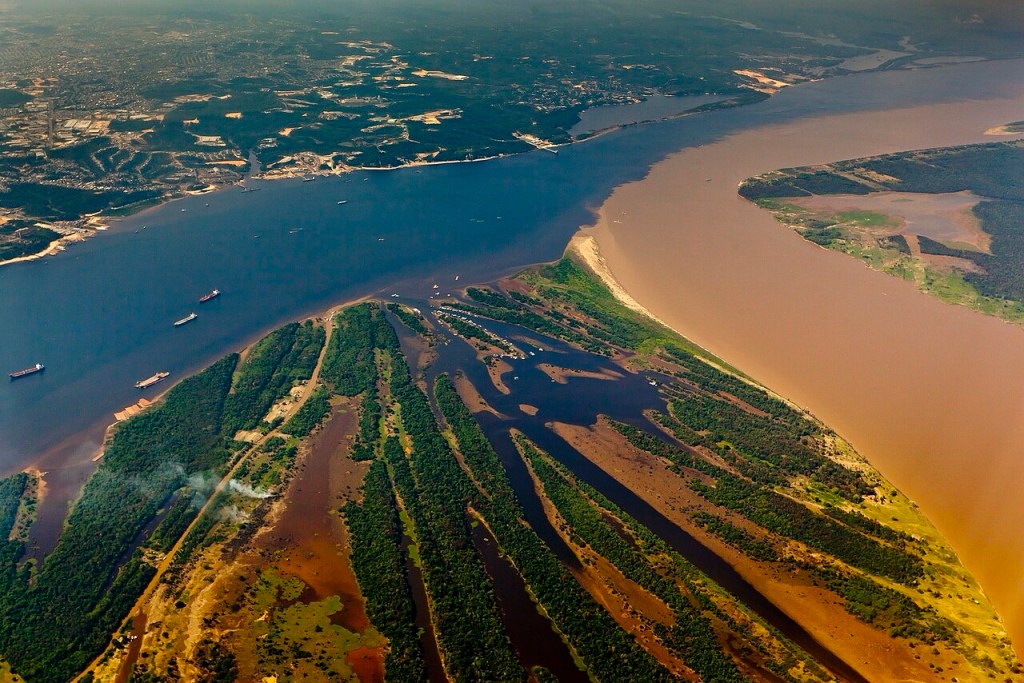
Meeting of the waters is the confluence between the dark Rio Negro (blackwater) and the pale sandy-coloured Amazon River (whitewater), referred to as the Solimões River in Brazil upriver of this confluence. Image Wikipedia
One
The confluence of what two rivers is shown in the above picture?
Answer: Rio Negro and Amazon aka (Rio Solimões)
The Meeting of Waters in Brazil is where the dark Rio Negro meets the pale, sediment-rich Rio Solimões (Amazon River) but flows side by side for kilometres without mixing due to differences in speed, temperature, and sediment content. The Rio Negro is slower, warmer, and almost sediment-free, while the Solimões is faster, cooler, and carries Andean sediments. This striking visual contrast continues for many kilometres before blending fully.
Two
Who composed the original Star Wars film score?
Answer: John Williams.
Williams’ iconic score, recorded with the London Symphony Orchestra, revitalized interest in grand orchestral film music and remains one of the most recognizable movie themes in history.
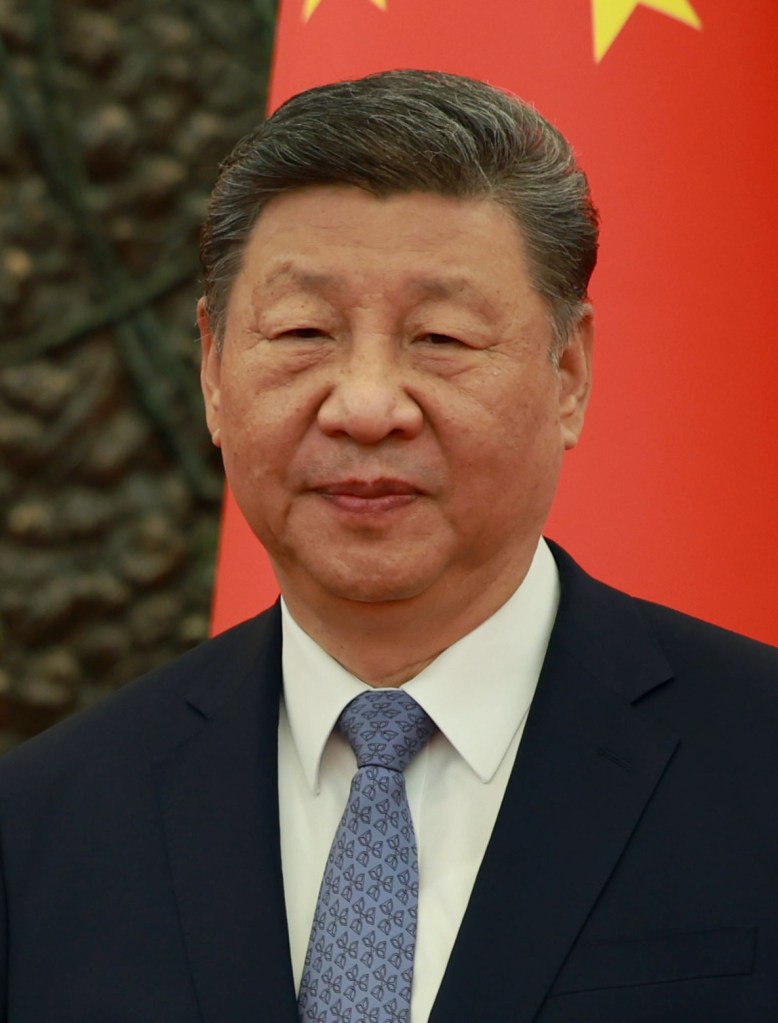
Is it true that China’s President Xi Jinping spent part of his childhood living in a cave?
Answer: True
As of 2010, approximately 3 million people in China’s Shanxi province resided in yaodong, which are caves dug into soft yet insulating dirt. These caves are naturally cool in summer and warm in winter, making them an affordable housing option. China’s president, Xi Jinping, spent part of his childhood in a similar cave in a nearby province. In 1968, at the age of 15, Xi applied to leave Beijing for the countryside, influenced by Mao Zedong’s Down to the Countryside Movement. On 13 January 1969, he moved to Liangjiahe Village in Yan’an, Shaanxi. The rural conditions were challenging which fostered his connection with the rural poor. Initially unable to adapt, he attempted to return to Beijing but was arrested and sent to a work camp. Persuaded by his aunt and uncle, he returned to the village, where he served as the party secretary and lived in a cave house.
Yaodong(earth shelter) covered in snow. Image Wikipedia
Four
What is the most abundant gas in Earth’s atmosphere?
Answer: Nitrogen
Nitrogen makes up about 78% of Earth’s atmosphere. Despite being so common, most living organisms can’t use atmospheric nitrogen directly — it must first be made into usable forms by bacteria and plants.
Five
The novel Brave New World was written by whom?
Answer: Aldous Huxley
Published in 1932, Brave New World predicted technologies and societal trends — such as genetic engineering and consumerism — that became eerily relevant decades later.
Here are the answers to the wrapping in my earlier post.
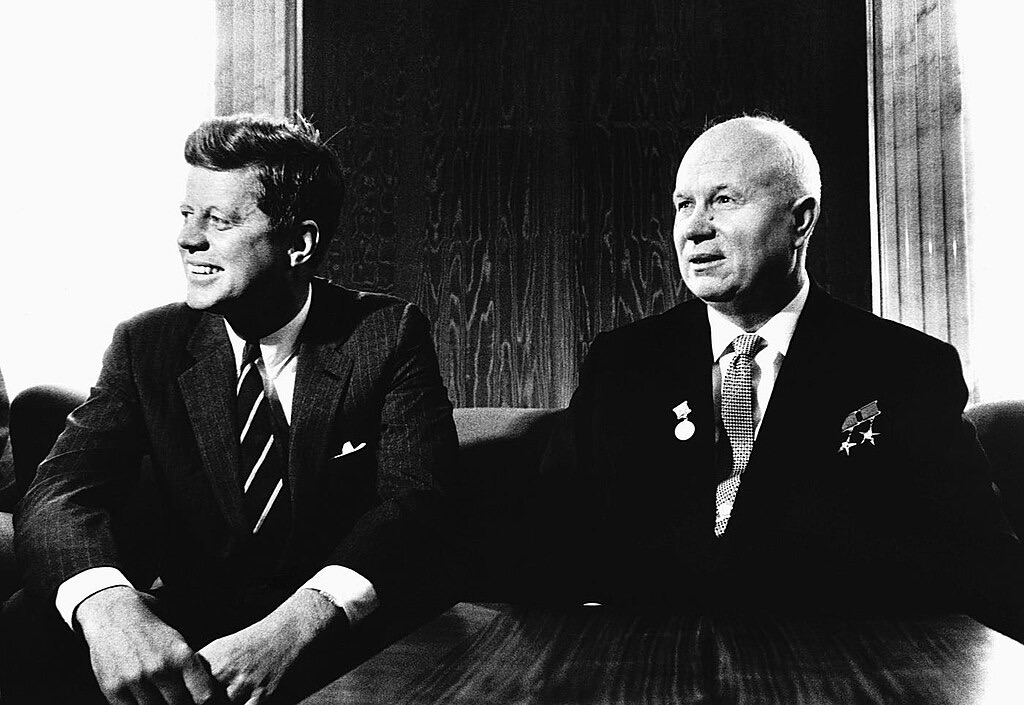
John F. Kennedy (1917–1963) and Nikita Khrushchev (1894–1971) in Vienna, Austria in May 1961. Image Wikipedia
One
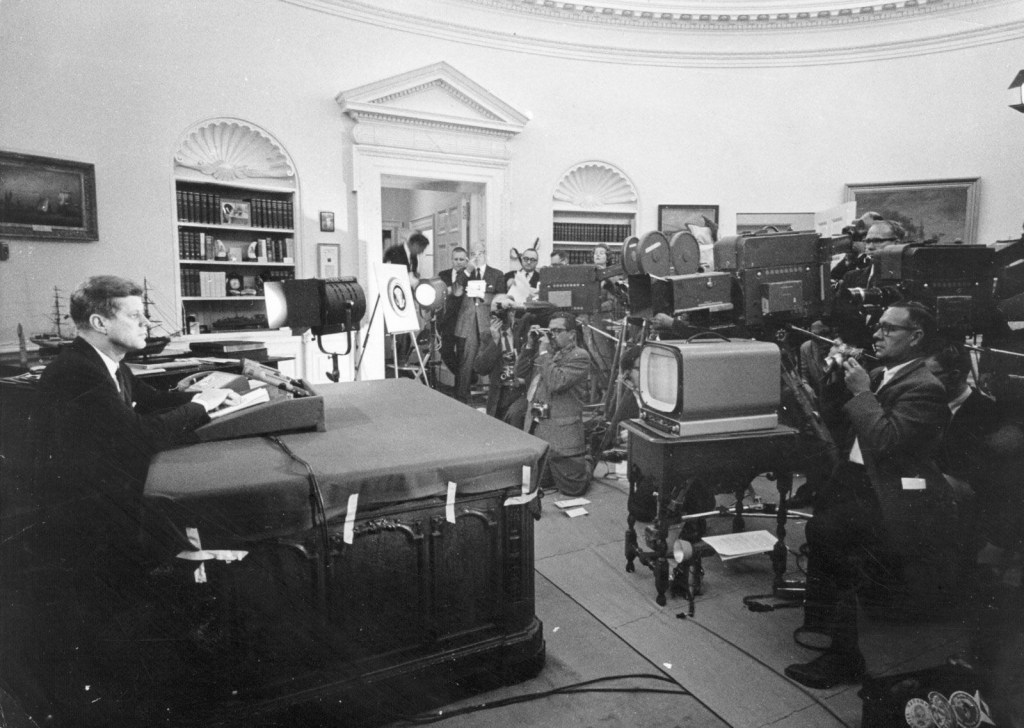
President John F. Kennedy’s televised announcement on 22 October 1962 brought the world to the brink of nuclear war. What confrontation was it about?
Answer: Cuban Missile Crisis
President Kennedy, following advice from Dwight D. Eisenhower, announces that American reconnaissance aircraft have identified Soviet nuclear weapons in Cuba and that he has ordered a naval ‘quarantine’ of the Communist country.
Two
Tsar Peter I proclaimed the Russian Empire. In which century was this?
Answer: 18th (1721)
> The title was transformed from the previous title of tsar and grand prince of all Russia. The old title tsar (or tsaritsa) continued to be popularly used to refer to the emperor (or empress) until the monarchy was abolished in 1917. — Wikipedia
Three
On 22 October 1964, a French writer was awarded the Nobel Prize in Literature, though it was subsequently declined. Who was the author?
Answer: Jean-Paul Sartre
Jean-Paul Sartre declined the 1964 Nobel Prize in Literature, citing his refusal to accept official honours and his belief that the prize favoured Westerners and Eastern rebels. The Swedish Academy acknowledged his decision but maintained the validity of the award.
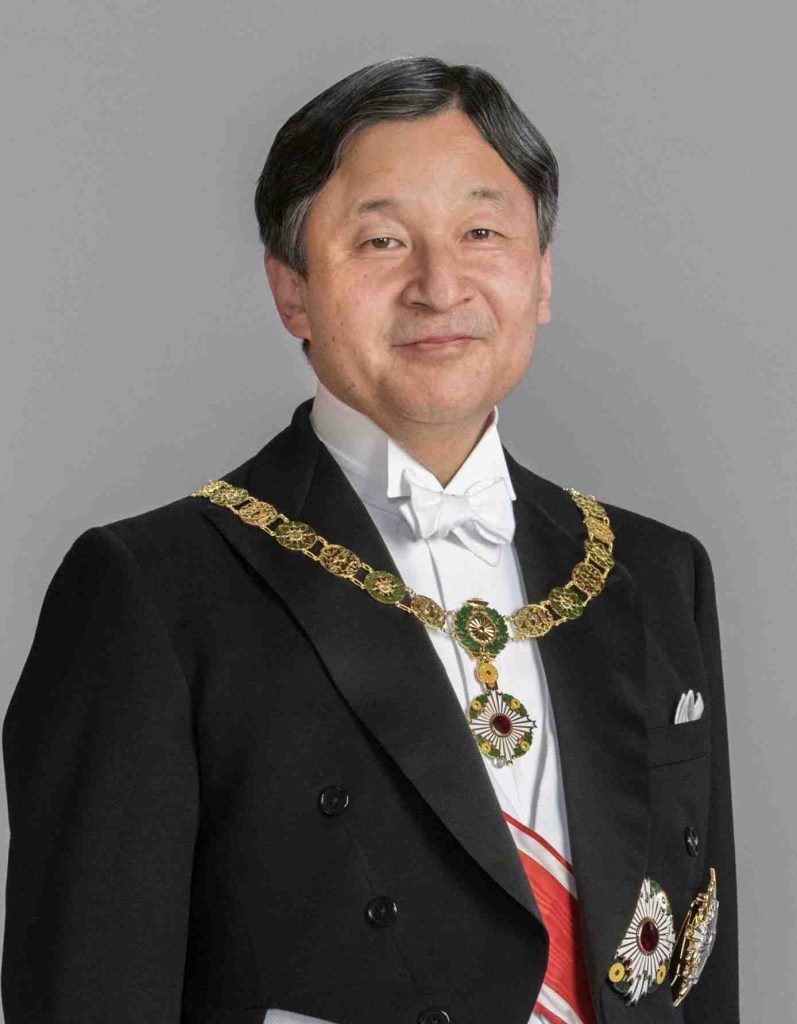
Emperor Naruhito, official portrait 2019. Image Wikipedia
Four
Naruhito was officially enthroned as Japan’s 126th emperor on 22 October 2019. Earlier that year, he had ascended the Imperial Throne following the abdication of whom?
Answer: Emperor Akihito
Five
Who became the first President of the Republic of Texas on 22 October 1836?
Here are five questions about historical events some connected to today, October 22nd.
U.S. Pres. John F. Kennedy announcing on television the U.S. naval blockade of Cuba, October 22, 1962. Image Encyclopædia Britannica
One
President John F. Kennedy’s televised announcement on 22 October 1962 brought the world to the brink of nuclear war. What confrontation was it about?
Two
Tsar Peter I proclaimed the Russian Empire. In which century was this?
Three
On 22 October 1964, a French writer was awarded the Nobel Prize in Literature, though it was subsequently declined. Who was the author?
Four
Naruhito was officially enthroned as Japan’s 126th emperor on 22 October 2019. Earlier that year, he had ascended the Imperial Throne following the abdication of whom?
Five
Who became the first President of the Republic of Texas on 22 October 1836?
Here are the answers to the questions I posted earlier.
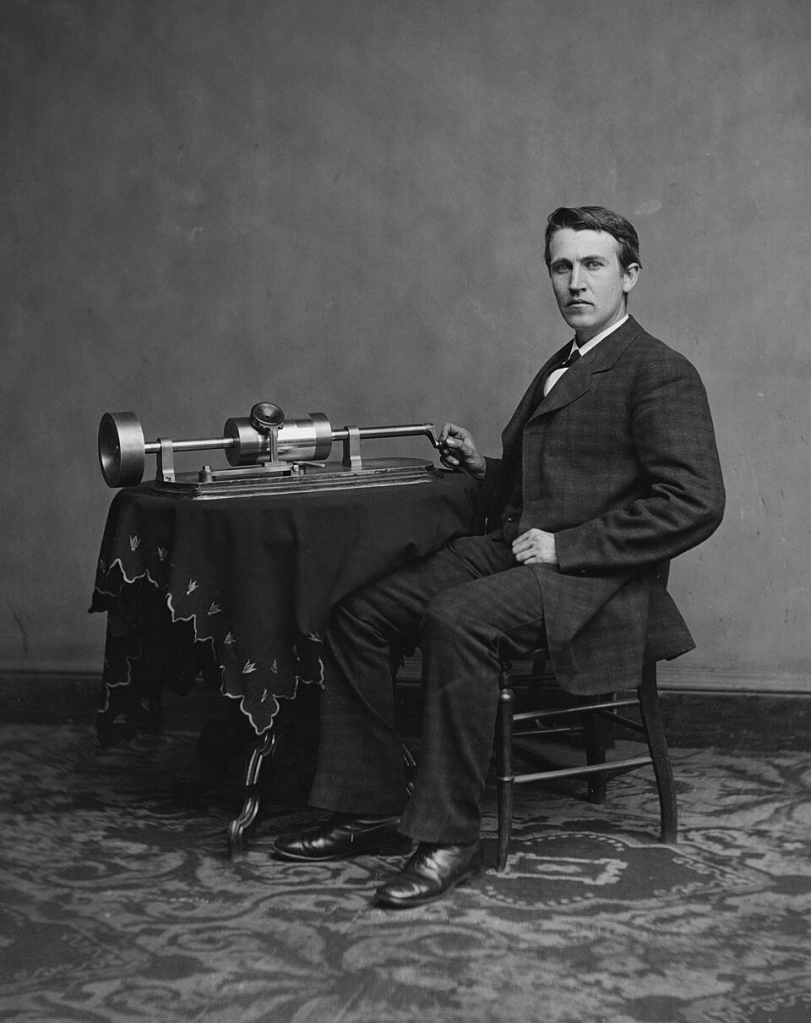
Edison incandescent light bulb enclosed in cage. Image Wikipedia
One
On October 21, Thomas Edison applied for a patent for his design for an incandescent light bulb. In which decade did he make this application?
Answer: 1870s
Thomas Edison, an American inventor and businessman, developed influential devices like the phonograph and electric light bulb. He pioneered organised scientific invention and established the first industrial research laboratory.
Two
In 1984, Niki Lauda clinched Formula One’s World Drivers’ Championship for the final time. How many times had he won the title in total?
Answer: Three
Austrian racing driver Niki Lauda competed in Formula One from 1971 to 1979 and 1982 to 1985, winning three World Drivers’ Championships—1975, 1977 and 1984—with Ferrari and McLaren. He survived a horrific crash in 1976 and made a remarkable comeback to win his second and third titles. Beyond racing, Lauda founded three airlines and held advisory and team principal roles in Formula One.
Three
In 1940, the first edition of Ernest Hemingway’s For Whom the Bell Tolls was published. In what war was the story set?
Answer: Spanish Civil War
Ernest Hemingway’s 1940 novel, For Whom the Bell Tolls, follows Robert Jordan, an American volunteer in the Spanish Civil War, tasked with destroying a bridge. The book assumes knowledge of the war between the Republican government and the Nationalist faction, supported by Nazi Germany and Fascist Italy.
Four
The Guggenheim Museum opened in New York on this date in 1959. Which architect designed its iconic spiral building?
Answer: Frank Lloyd Wright
Wright’s radical design broke from traditional gallery layouts, using a continuous ramp to display art in a flowing, organic space. The museum is now a UNESCO World Heritage Site, recognized for its innovation.
Five
The Battle of Trafalgar, fought on 21 October 1805, took place in the …. It was named after a prominent geographic feature: …. Firstly, what body of water and secondly, what geographic feature fill the two gaps in the previous sentence?
Answer: Atlantic Ocean; Cape Trafalgar
The Battle of Trafalgar was a decisive victory for the British Royal Navy against the combined French and Spanish fleets during the Napoleonic Wars. Admiral Lord Nelson’s tactics ensured Britain’s naval supremacy but cost him his life. Trafalgar Square in London was named to commemorate this victory.
On 21 October Thomas Edison applied for a patent for his design for an incandescent light bulb. In which decade did he make this application?
Two
In 1984, Niki Lauda clinched Formula One’s World Drivers’ Championship for the final time. How many times had he won the title in total?
Three
In 1940, the first edition of Ernest Hemingway’s For Whom the Bell Tolls was published. In what war was the story set?
Four
The Guggenheim Museum opened in New York on this date in 1959. Which architect designed its iconic spiral building?
Five
The Battle of Trafalgar, fought on 21 October 1805, took place in the …. It was named after a prominent geographic feature: the …. Firstly, what body of water and secondly, what geographic feature fill the two gaps in the previous sentence?
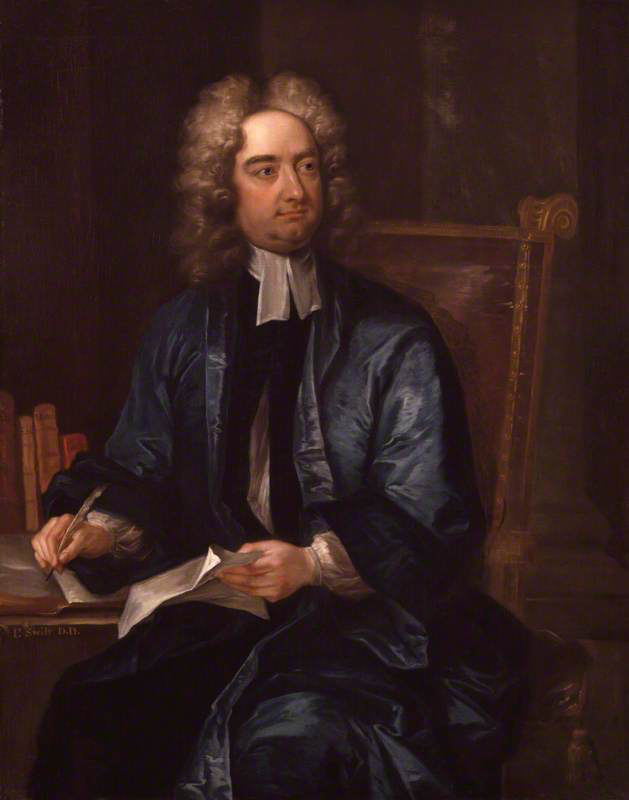
Houyhnhnms driving a herd of Yahoos. Image Metropolitan Museum of Art/Wikipedia
One
Jonathan Swift, author and clergyman, died on this date in 1745. The Wikipedia quote below describes a fictional race from his most famous work but what descriptive word is missing, and what’s the title of the work which has also been removed?
Houyhnhnms are a fictional race of intelligent … described in the last part of … by Jonathan Swift. — Wikipedia
Answers: Horses and Gulliver’s Travels
Gulliver’s Travels, a 1726 prose satire by Jonathan Swift, satirises human nature and the “travellers’ tales” genre. It popularised the fictional island of Lilliput and is considered a classic of English literature. Houyhnhnms, rational equine beings, contrast with the savage Yahoos, representing the worst of humanity. Gulliver prefers the Houyhnhnms’ company despite their biological differences.
Two
The Unseen University is located in what fictional city, and as a result of a transformation, the university’s librarian became what?
Answers: Ankh-Morpork and an orang-utan
This is from Terry Pratchett’s Discworld series of novels. Ankh-Morpork, a fictional city, draws inspiration from real-world cities like Tallinn, Prague, London, Seattle and New York City. Pratchett aimed for consistency between the city’s descriptions and its map to enhance visualisation. The Unseen University, a school of wizardry in the Discworld series, is situated in Ankh-Morpork and staffed by inept wizards.
Three
Mos Eisley is a city in which science fiction franchise, and on which planet is it situated?
Answers: Star Wars and Tatooine
Tatooine, a fictional desert planet in the Star Wars universe, is where Luke and Anakin Skywalker reside. Known for its iconic binary sunset, Mos Eisley, the planet’s largest city, is a bustling spaceport with a thriving criminal underworld. Chalmun’s Cantina, a popular saloon frequented by diverse alien species, is located there.
Four
In a trilogy published in the early 1950s, a series of short stories explores the decline of a galactic empire, drawing parallels to the fall of the Western Roman Empire. The story centres on Hari Seldon, a mathematician and psychologist, who develops psychohistory, a new science. What is the title of the trilogy and its author?
Answers: The Foundation Trilogy by Isaac Asimov
Isaac Asimov’s Foundation series, inspired by Gibbon’s The Decline and Fall of the Roman Empire, explores the concept of psychohistory, a method for predicting societal behaviour. The series follows the Foundation, established by Hari Seldon on Terminus, as it navigates challenges and strives to shorten the impending age of barbarism following the Galactic Empire’s collapse. The original trilogy, comprising Foundation, Foundation and Empire, and Second Foundation, was published between 1951 and 1953.
Five
Arthur Dent, a human, embarks on a journey with Ford Prefect, an alien, after Earth’s destruction. He discovers Earth was a supercomputer designed to uncover the ‘Ultimate Question of Life the Universe and Everything’ and his mind holds the answer. What is the six-word title of this work, and in what medium was it first published?
Answers: The Hitchhiker’s Guide to the Galaxy; Radio series
The Hitchhiker’s Guide to the Galaxy, a comedy science fiction franchise created by Douglas Adams, follows Arthur Dent’s adventures after Earth’s destruction. The franchise includes radio, novels, comics, TV, film and a 40th-anniversary celebration.
The world of reality has its limits; the world of imagination is boundless. — Jean-Jacques Rousseau
Today the first question is related to today’s date, October 19th, setting a theme for the remainder. There are two answers required for each question.
Jonathan Swift, author and clergyman, died on this date in 1745. The Wikipedia quote below describes a fictional race from his most famous work but what descriptive word is missing, and what’s the title of the work which has also been removed?
Houyhnhnms are a fictional race of intelligent … described in the last part of … by Jonathan Swift. — Wikipedia
Two
The Unseen University is located in what fictional city, and as a result of a transformation, the university’s librarian became what?
Three
Mos Eisley is a city in which science fiction franchise, and on which planet is it situated?
Four
In a trilogy published in the early 1950s, a series of short stories explores the decline of a galactic empire, drawing parallels to the fall of the Western Roman Empire. The story centres on Hari Seldon, a mathematician and psychologist, who develops psychohistory, a new science. What is the title of the trilogy and its author?
Five
Arthur Dent, a human, embarks on a journey with Ford Prefect, an alien, after Earth’s destruction. He discovers Earth was a supercomputer designed to uncover the ‘Ultimate Question of Life the Universe and Everything’ and his mind holds the answer. What is the six-word title of this work, and in what medium was it first published?
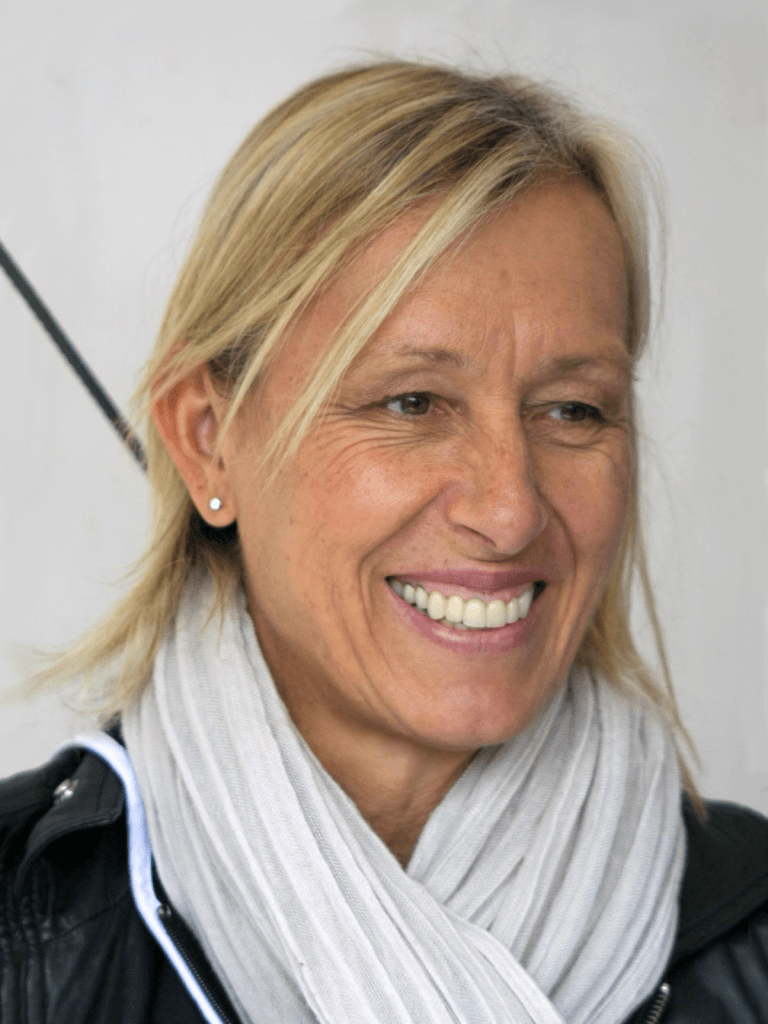
In 1956, Martina Navratilova, who went on to dominate women’s tennis, was born? In what city was she born and how many Grand Slam singles titles did she win?
Answer: 18 (Grand Slam singles titles)
Martina Navratilova, a Czech-American former tennis player, dominated women’s tennis in the 1980s. She holds numerous records, including nine Wimbledon singles titles and a career Grand Slam in singles, doubles, and mixed doubles. Navratilova became a US citizen in 1981 and later reacquired Czech citizenship in 2008.
Two
In 1939, the man who would later be accused of assassinating President John F. Kennedy — and who himself would be fatally shot two days afterward — was born in New …. What was his name and his place of birth?
Answer: Lee Harvey Oswald and New Orleans
Lee Harvey Oswald, a former U.S. Marine, assassinated President John F. Kennedy on 22 November 1963 and was himself killed by Jack Ruby two days later. The Warren Commission concluded Oswald, who had a troubled past and at one time defected to the Soviet Union, acted alone, a finding supported by multiple investigations, though many Americans remain sceptical.
Three
The BBC, a national broadcasting service, was founded in London on this day. Which decade saw this happen?
Answer: 1920s
The British Broadcasting Corporation—established in 1922 as the British Broadcasting Company—is headquartered in London and is the oldest and largest broadcaster in the UK. Funded primarily by a television licence fee, it provides radio, TV, and online services, including the BBC World Service.
Four
On this day in 1867, following the US’s approval of the purchase of Alaska from Russia, the American flag was unfurled over the capital for the first time. Where was that capital and how far apart are Alaska and Russia at their closest point, measured in miles?
Answer: Sitka and 2.4 miles or 3.8 km
The Alaska Purchase, negotiated by William H. Seward in 1867, was finalised on October 18th with a flag-raising ceremony at Fort Sitka, now celebrated as Alaska Day.
Anything between 2 and 3 miles or 3 and 4 km is acceptable.
The Diomede Islands, Little Diomede (Alaska, U.S.) and Big Diomede (Chukotka, Russia), are located in the Bering Strait, between Alaska and Siberia.
The distance between the islands is about 2.4 miles (3.8 kilometres).
The International Date Line runs between them, making Big Diomede almost one day ahead of Little Diomede; consequently, they are sometimes called ‘Tomorrow Island’ (Big Diomede) and ‘Yesterday Island’ (Little Diomede).
Five
The Whale, first published in London on this day in 1851, was written by whom?
Answer: Herman Melville
The British edition of The Whale was published on October 18th with only 500 copies printed, a small print run due to slow sales of previous books. The American editions—titled Moby Dick or The Whale was released on November 14th.