On 16 August 1923, the UK named the Ross Dependency. On what continent is the Ross Dependency?
Two
Born in 1888, a military strategist and archaeological scholar also authored Seven Pillars of Wisdom. Who is he, and what by-name is he commonly known?
Three
On 16 August 1858, a new transatlantic telegraph cable was inaugurated. The inaugural event involved an exchange of greetings between the Heads of State of the United Kingdom and the United States. Who were these two Heads of State?
Four
Madonna, the singer and actress, celebrates her birthday on August 16th. In which city and state was she born?
Five
On this day in 1876, Richard Wagner’s penultimate opera in his Ring cycle premiered at the Bayreuth Festspielhaus. What was the name of the opera?
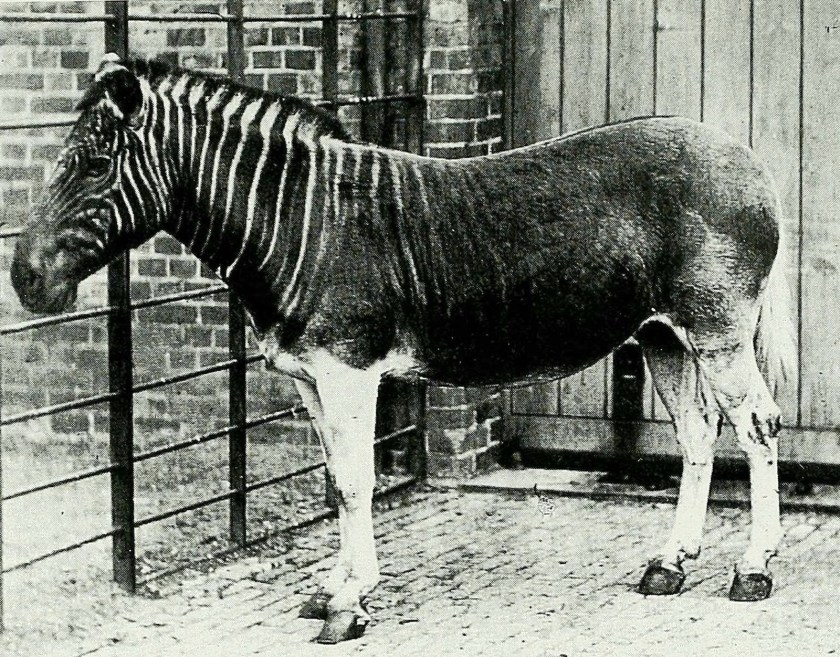
A quagga died in Amsterdam Zoo on 12 August 1883. Native to South Africa, the quagga was a type of…
Answer: Zebra
The quagga, a subspecies of plains zebra, was native to South Africa, where it was found in vast herds on the great plains, but is now extinct. It had a reddish-brown body with dark stripes and a white underside.
Two
What ‘Q’ links the novelist Herman Melville with Special Agent Dana Scully?
Answer: Queequeg
Queequeg, a Polynesian royal with facial tattoos, befriends Ishmael in Moby-Dick and becomes a harpooner on the Pequod. In The X-Files Scully names her dog Queequeg after the Moby-Dick character and used the name as her email handle and home alarm password.
Three
In which fictional series does Max Quordlepleen, a comedian and host, appear hosting a show at Milliways?
Answer: The Hitchhikers Guide to the Galaxy
‘Ladies and gentlemen,’ he said, ‘the Universe as we know it has been in existence for over one hundred and seventy thousand million billion years and will be ending in a little over half an hour. So, welcome to Milliways, the Restaurant at the End of the Universe!’
With a gesture he deftly conjured another round of spontaneous applause. With another gesture he cut it. “I am your host for tonight,” he said, “my name is Max Quordlepleen.” — The Restaurant at the End of the Universe, The Ultimate Hitchhikers Guide to the Galaxy (Pan Books).
Four
What ‘Q’ is a capital city which sits on the equator and is officially known as San Francisco de …
Answer: Quito
Officially known as San Francisco de Quito, the capital of Ecuador, is the highest national capital city in the world. It is the political and cultural centre of Ecuador, with a rich history dating back to its incorporation into the Inca Empire in the late 15th century.
Five
Quirinus Quirrell is a character in the works of which novelist?
Answer: J.K. Rowling
In J.K. Rowling’s Harry Potter stories, Quirinus Quirrell, Defence Against the Dark Arts professor, is possessed by Voldemort during Harry’s first year at Hogwarts. Harry defeats Quirrell, allowing Dumbledore to arrive and Voldemort to flee, resulting in Quirrell’s death.
The first question relates to today’s date, August 12th, and contains a word beginning with a ‘Q’. The rest of the questions follow a ‘Q’ theme, either with a ‘Q’ in the question or answer.
One
A quagga died in Amsterdam Zoo on 12 August 1883. Native to South Africa, the quagga was a type of…
Two
What ‘Q’ links the novelist Herman Melville with Special Agent Dana Scully?
Three
In which fictional series does Max Quordlepleen, a comedian, appear hosting a show at Milliways?
Four
What ‘Q’ is a capital city which sits on the equator and is officially known as San Francisco de …
Five
Quirinus Quirrell is a character in the works of which novelist?
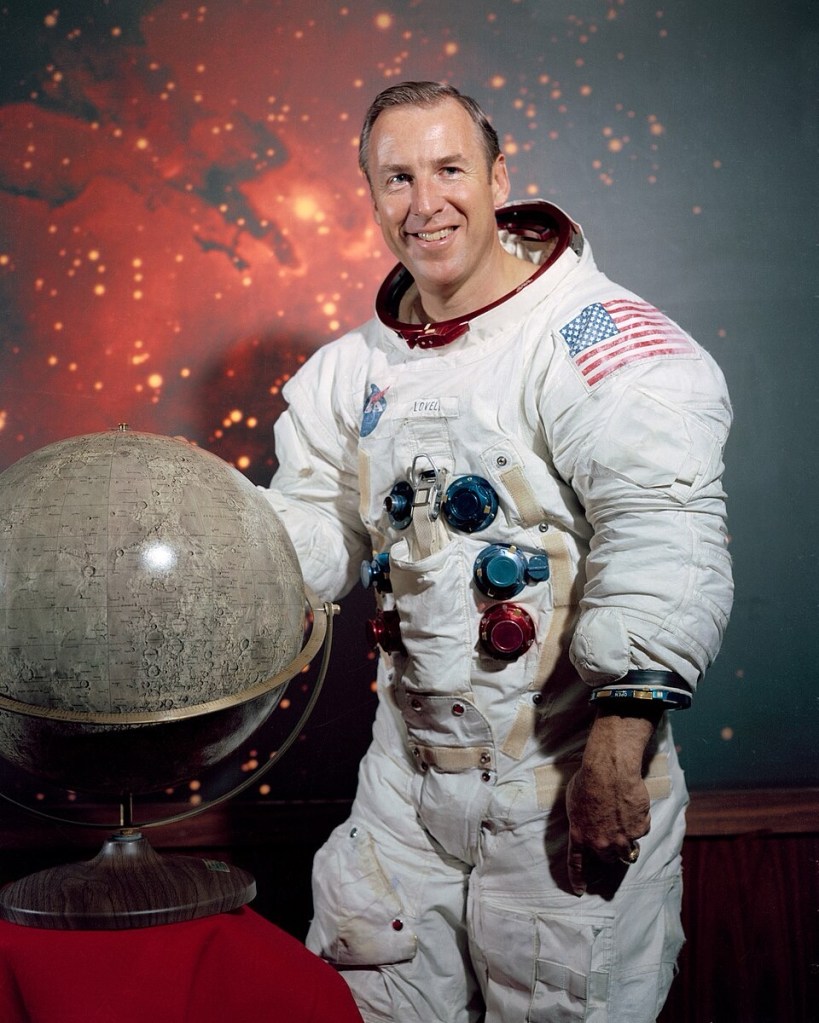
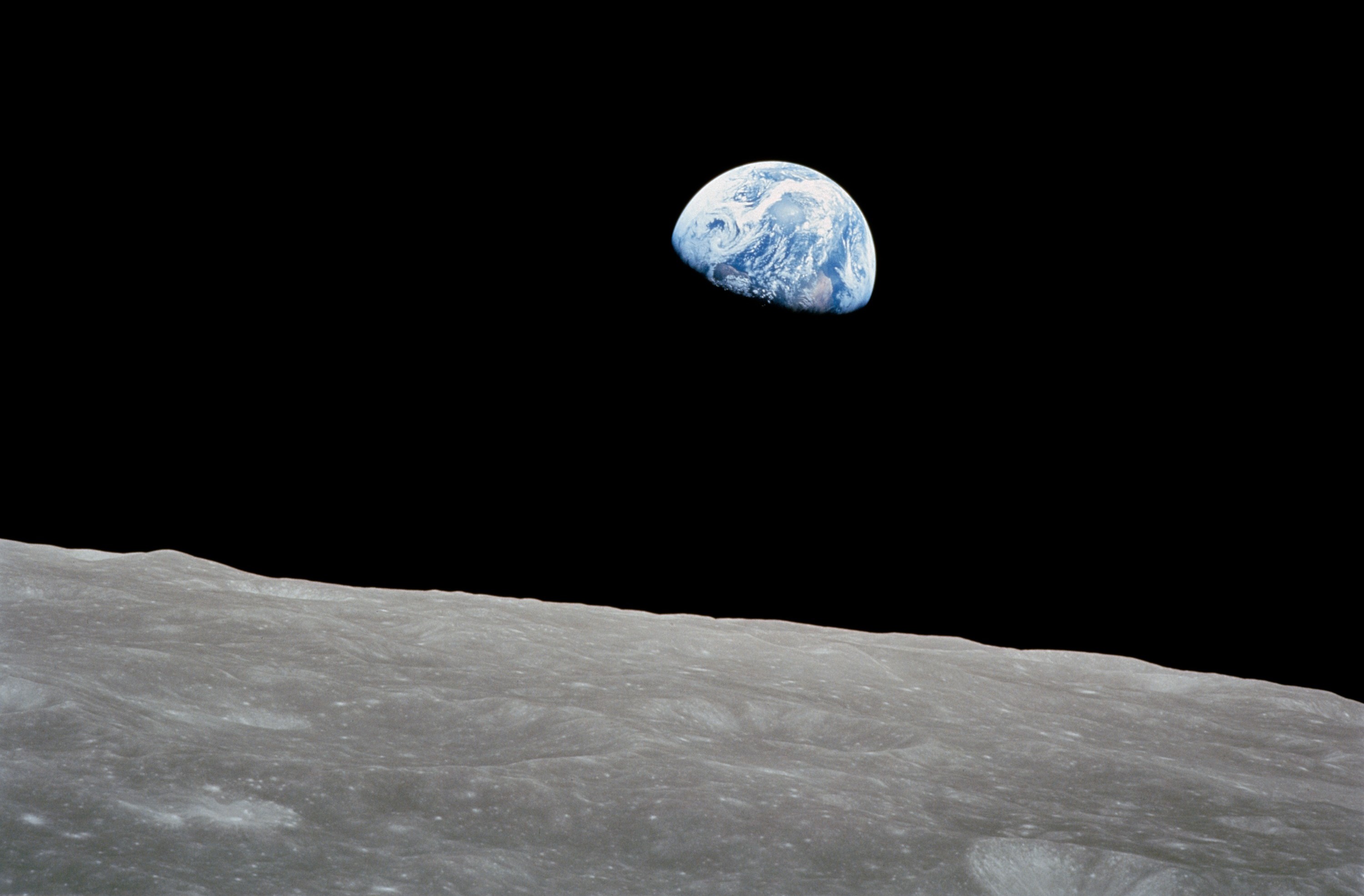
Jim Lovell, Gemini 7, Gemini 12, Apollo 8 and Apollo 13. (March 25, 1928—August 7, 2025). Image Wikipedia
One
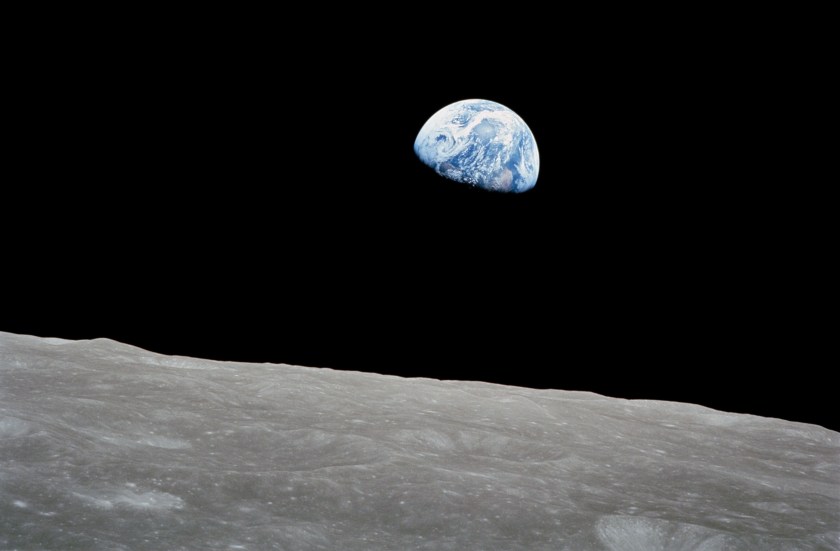
In 1968, what became the first crewed spacecraft to reach the Moon, orbit it and return?
Answer: Apollo 8
Apollo 8, launched on 21 December 1968, became the first human spaceflight to reach the Moon. During its mission, the crew orbited the Moon ten times, conducting various tasks such as photography and navigation, while also transmitting telecasts worldwide. The spacecraft safely splashed down in the Pacific Ocean on 27 December, 147 hours after launch. This question was prompted by the death of Jim Lovell, aged 97, on 7 August 2025. He flew to the Moon and back twice but never landed.
Two
The 1999 Open Championship was decided in a play-off between Jean Van de Velde and which two other players?
Answer: Justin Leonard and Paul Lawrie
Jean Van de Velde, ranked 152nd, nearly won the 1999 Open Championship but famously collapsed on the 18th hole. His triple-bogey seven led to a playoff, which he lost to Paul Lawrie.
What word is missing from the end of the above quote?
Answer: Christianity
Nietzsche’s quote suggests that he viewed both Christianity and alcohol as ‘narcotics’, substances or influences that dull the senses and provide an escape from reality.
Four
Which Canadian province is named after the fourth daughter of Queen Victoria, born in 1848?
The above quote is the opening line of which poem?
Answer: Anthem for Doomed Youth
Wilfred Owen’s poem Anthem for Doomed Youth, written in 1917, vividly captures the horrors of war. Enlisting in the British army in 1915, Owen was sent to France with the Lancashire Fusiliers to fight in the trenches during World War I. In 1917, during his first six months of battle, his troop was gassed and forced to sleep in an open field of snow. One incident involved Owen spending several days huddled in a foxhole near the body of a fallen soldier. These experiences profoundly impacted Owen as a poet, leading to rapid maturity. The poems written after January 1917 are characterised by anger at war’s brutality, and pity for those who ‘die as cattle’.
On 9 August 1942, Dmitri Shostakovich’s 7th symphony premiered in a besieged city. Can you name that city?
Answer: Leningrad
Shostakovich’s Symphony No. 7 was premiered in Leningrad on 9 August 1942 during the Nazi siege. Despite the musicians’ starvation and the orchestra’s limited rehearsal time, the performance was a success, bolstered by a Soviet military offensive and broadcast to German lines.
Two
Construction of the campanile of the Cathedral of Pisa, also known as the Leaning Tower of Pisa, began on this day. In which century did this construction commence, and approximately how long did it take to complete?
Answer: 12th Century and 199 years (two centuries) to complete
The Leaning Tower of Pisa, a freestanding bell tower in Pisa, Italy, is known for its nearly four-degree lean due to an unstable foundation. It is one of the most visited tourist attractions in the world, receiving over 5 million visitors annually.
Three
Answer: Jesse Owens and long jump
Jesse Owens, an exceptionally gifted athlete, won four gold medals at the 1936 Berlin Olympics, defying Adolf Hitler’s hopes of showcasing Aryan supremacy. Owens’ achievements, which also include setting three world records in one hour in 1935, remain unparalleled.
Four
Born in Maryborough, Queensland, on 9 August 1899, this writer is best known for her Mary Poppins books. Who is she?
Answer: P.L. Travers
P.L. Travers, an Australian-English writer, authored the Mary Poppins books, a series of eight children’s books illustrated by Mary Shepard. The books follow the magical nanny Mary Poppins and her adventures with the Banks children. Walt Disney adapted the books into two musical films: Mary Poppins (1964) and its sequel, Mary Poppins Returns (2018). A stage musical, created by Disney Theatrical and Sir Cameron Mackintosh, ran on Broadway from 2006 to 2013.
Five
On this day in 1945, Bockscar sealed a place in history. Who or what was Bockscar?
Answer: Boeing B-29 Superfortress
Bockscar, a Boeing B-29 Superfortress bomber, dropped the second nuclear weapon on Nagasaki during WWII. It was one of 15 Silverplate B-29s used by the 509th Composite Group.
A few questions related to events connected to today, August 9th.
One
On 9 August 1942, Dmitri Shostakovich’s 7th symphony premiered in a besieged city. Can you name that city?
Two
Construction of the campanile of the Cathedral of Pisa, also known as the Leaning Tower of Pisa, began on this day. In which century did this construction commence, and approximately how long did it take to complete?
Three
On 9 August 1936, at the Summer Olympics in Berlin, Germany, Jesse Owens of the USA won his fourth gold medal of the games in the 4 x 100m sprint relay. He also won gold medals in the 100m dash and 200m sprint. In what other event did he win gold at these games?
Four
Born in Maryborough, Queensland, on 9 August 1899, this writer is best known for her Mary Poppins books. Who is she?
Five
On this day in 1945, Bockscar sealed a place in history. Who or what was Bockscar?
It was a bright cold day in April, and the clocks were striking…
The above quote is from the opening sentence of a dystopian novel published in 1949. Can you identify the missing number?
Answer: Thirteen
Nineteen Eighty-Four, a dystopian novel by George Orwell, examines the effects of totalitarianism, mass surveillance, and truth manipulation. Set in a future where Airstrip One is part of Oceania, the story portrays a society under the control of Big Brother and the Party’s Thought Police. Winston Smith, a Party member, attempts to rebel against the oppressive regime but is eventually captured, tortured, and forced to betray Julia, ultimately submitting to Big Brother.
Two
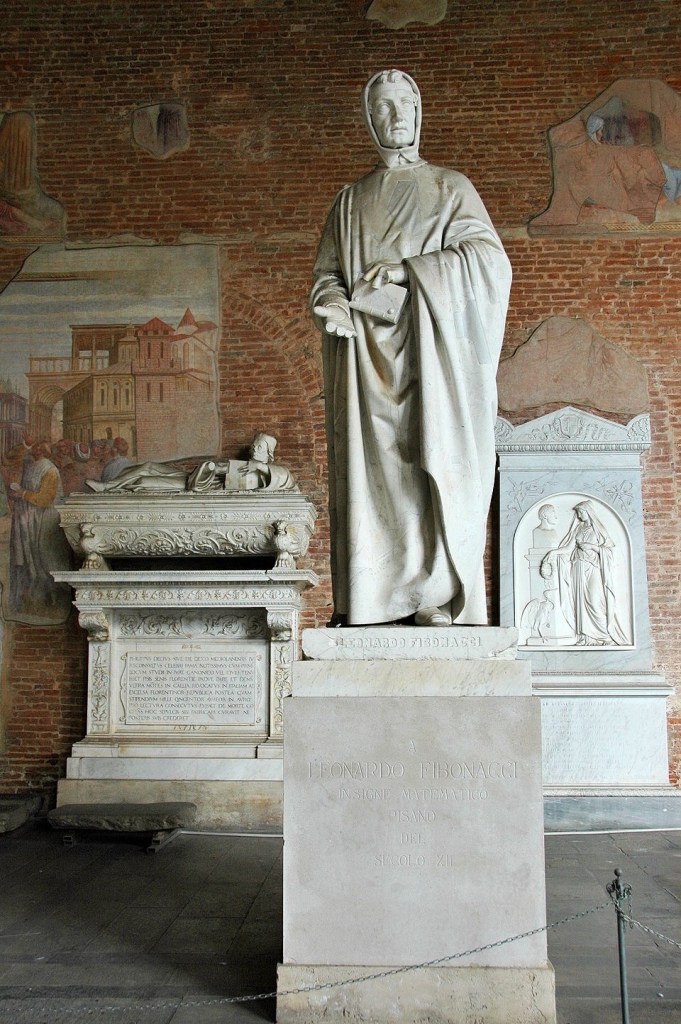
If the Fibonacci sequence starts with F0 = 0 and F1 = 1, what is F13 equal to?
Answer: 233
The Fibonacci sequence is a series of numbers in which each number (Fibonacci number) is the sum of the two preceding numbers. The simplest is the series 1, 1, 2, 3, 5, 8, etc. In fiction they had a role to play in Dan Brown’s The Da Vinci Code.
F0
F1
F2
F3
F4
F5
F6
F7
0
1
1
2
3
5
8
13
F8
F9
F10
F11
F12
F13
F14
F15
21
34
55
89
144
233
377
610
Three
What birthday does Bilbo celebrate near the beginning of the novel The Fellowship of the Ring (1954) and the 2001 film adaptation?
Answer: 111th
The beginning of the first chapter in the book begins quite lightly, following on from The Hobbit which is more of a children’s story than The Lord of the Rings. It begins with Bilbo Baggins celebrating his 111th (or eleventy first, as it is called) birthday, on the same day that Frodo celebrates his 33rd birthday. (His ‘coming of age’) At the birthday party, Bilbo disappears after his speech, to the surprise of all. Frodo later learns about the ring which he had used to make himself invisible, and also to some of its darker powers. — Tolkien Gateway
Four
In what year was Donald J. Trump, the President of the United States, born?
Answer: 1946
Donald Trump (born June 14, 1946, New York, New York, U.S.) is the 45th and 47th president of the United States (2017–21; 2025– ). Following his inauguration on January 20, 2025, Trump became only the second president to serve two nonconsecutive terms, the first being Grover Cleveland (1885–89; 1893–97). In January 2025, upon his sentencing without punishment for a felony conviction in 2024, Trump officially became the first convicted felon to be elected president. At age 78, Trump is the oldest person to win the office. — Encyclopædia Britannica
Five
Ray Bradbury’s 1953 dystopian novel, Fahrenheit…, is missing a number from its title. What is it?
Answer: 451
Fahrenheit 451‘s title. The title page of the book explains the title as follows: Fahrenheit 451—The temperature at which book paper catches fire and burns…. On inquiring about the temperature at which paper would catch fire, Bradbury had been told that 451 °F (233 °C) was the autoignition temperature of paper. In various studies, scientists have placed the autoignition temperature at a range of temperatures between 424 and 475 °F (218 and 246 °C), depending on the type of paper.
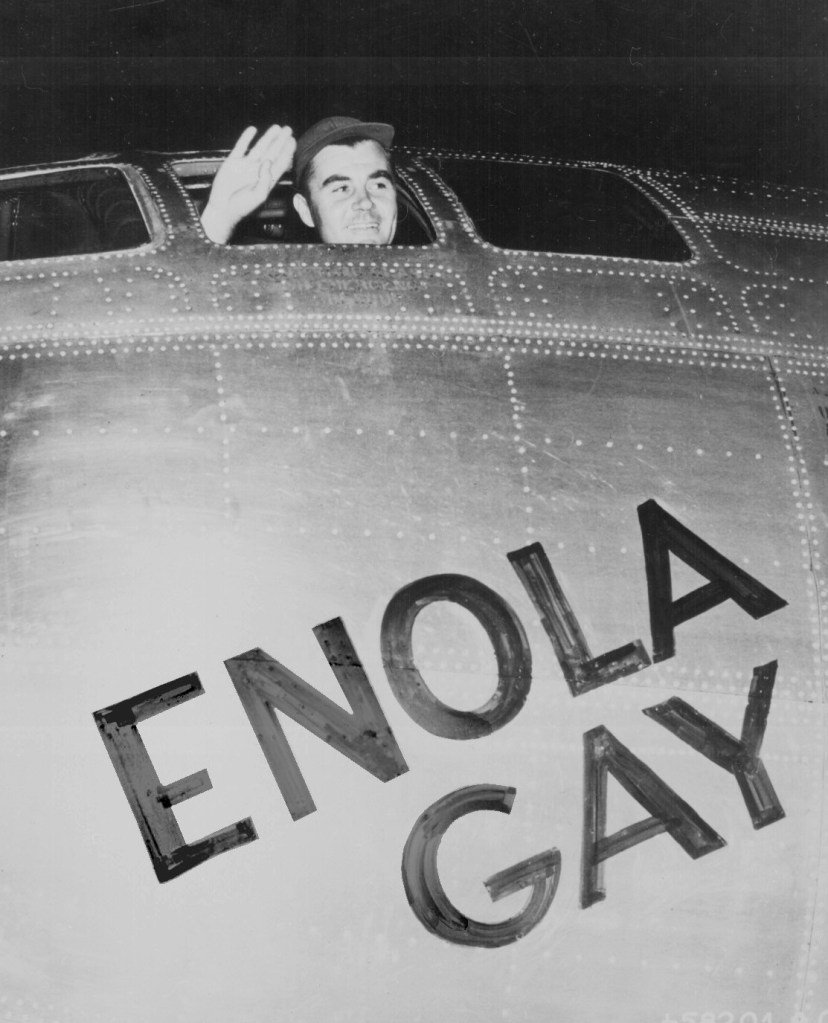
Colonel Paul Tibbets, in the B-29 he named Enola Gay, August 1945. Image Wikipedia
One
On 6 August 1945, the United States dropped an atomic bomb on the Japanese city of Hiroshima. Firstly, what was the name of the bomb, and secondly, what name did the pilot of the aircraft which dropped the bomb give to that aircraft?
Answer: Little Boy and Enola Gay
On this day in 1945, the United States dropped an atomic bomb on Hiroshima, Japan, killing more than 70,000 people and destroying most of the city in an effort to hasten the end of World War II. The blast, caused by the atomic bomb Little Boy dropped by the U.S. B-29Enola Gay, resulted in around 70,000 instant deaths, with tens of thousands more dying in subsequent years from burns and radiation poisoning. The B-29 Superfortress Enola Gay was named after Enola Gay Tibbets by the pilot, her son, Colonel Paul Tibbets.
Two
Scottish bacteriologist Alexander Fleming, who was born on on the 6 August 1881, revolutionised antibiotics in 1928 with the discovery of…
Answer: Penicillin
Alexander Fleming, who was born on 6 August 1881 at Lochfield Farm, Darvel, Ayrshire, was a Scottish bacteriologist best known for discovering penicillin in 1928, which revolutionised antibiotics and earned him the Nobel Prize in 1945.
Three
This actor, who was born 6 August 1917, portrayed Sheriff J.P. Harrah in the 1966 western El Dorado and was Charles Shaughnessy in Ryan’s Daughter (1970). Who is he?
Answer: Robert Mitchum
Robert Mitchum, an American actor known for his antihero roles and film noir appearances, received numerous accolades including an Academy Award nomination and a star on the Hollywood Walk of Fame. He starred in numerous films, including Out of the Past and Cape Fear, and was praised by critics for his deep voice and weary eyes.
Four
The Old Man of Hoy, a 449-foot sea stack, was first climbed by three mountaineers including Chris Bonnington, born on 6 August 1934. This sea stack is located in which British archipelago?
Answer: Orkney
The Old Man of Hoy is a 449-foot sea stack on Hoy, in the Orkney archipelago, Scotland. Formed from Old Red Sandstone, it is popular with climbers and may soon collapse. It was first climbed in 1966 by mountaineers Chris Bonington, Rusty Baillie and Tom Patey.
Five
A poet born on this day in 1809, penned the lines quoted
Someone had blundered. Theirs not to make reply, Theirs not to reason why, Theirs but to do and die. Who was the poet and what poem are the lines from?
Answer: Alfred, Lord Tennyson and The Charge of the Light Brigade
Alfred Tennyson, 1st Baron Tennyson, was an English poet and Poet Laureate during Queen Victoria’s reign. He is known for his short lyrics, classical mythological themes, and blank verse, with many of his phrases becoming commonplace in the English language. The lines quoted were from The Charge of the Light Brigade which is a narrative poem by Tennyson (The full poem is shown bellow). It describes the Charge of the Light Brigade, a disastrous British cavalry attack against heavily defended Russian troops at the Battle of Balaklava in October 1854 during the Crimean War. The suicidal assault placed the British light horse brigade, commanded by the Earl of Cardigan, against a Russian infantry and cavalry defence supported by heavy artillery batteries that commanded three sides of a narrow valley.
I Half a league, half a league, Half a league onward, All in the valley of Death Rode the six hundred. “Forward, the Light Brigade! Charge for the guns!” he said. Into the valley of Death Rode the six hundred.
II “Forward, the Light Brigade!” Was there a man dismayed? Not though the soldier knew Someone had blundered. Theirs not to make reply, Theirs not to reason why, Theirs but to do and die. Into the valley of Death Rode the six hundred.
III Cannon to right of them, Cannon to left of them, Cannon in front of them Volleyed and thundered; Stormed at with shot and shell, Boldly they rode and well, Into the jaws of Death, Into the mouth of hell Rode the six hundred.
IV Flashed all their sabres bare, Flashed as they turned in air Sabring the gunners there, Charging an army, while All the world wondered. Plunged in the battery-smoke Right through the line they broke; Cossack and Russian Reeled from the sabre stroke Shattered and sundered. Then they rode back, but not Not the six hundred.
V Cannon to right of them, Cannon to left of them, Cannon behind them Volleyed and thundered; Stormed at with shot and shell, While horse and hero fell. They that had fought so well Came through the jaws of Death, Back from the mouth of hell, All that was left of them, Left of six hundred.
VI When can their glory fade? O the wild charge they made! All the world wondered. Honour the charge they made! Honour the Light Brigade, Noble six hundred!