Really Useful Robots—Answers

Here are the answers to my earlier questions.

Today the questions all relate to February 11th.

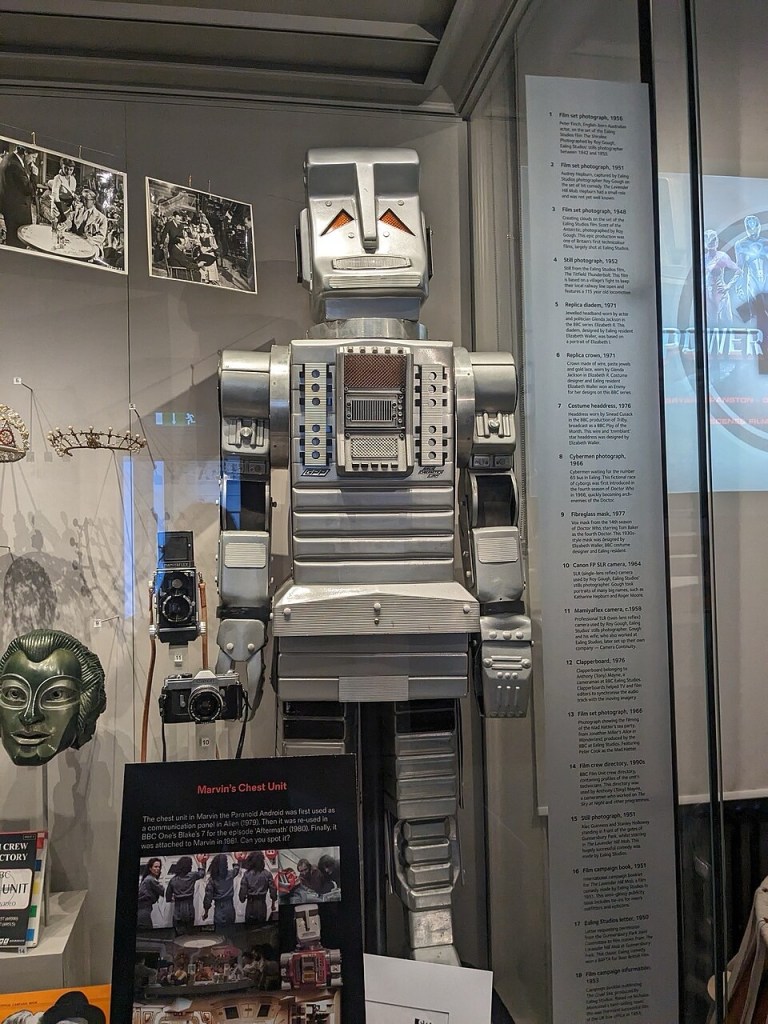
An example of a robot but not one connected to question one.
Marvin the Paranoid Android from
The Hitchhiker’s Guide to the Galaxy,
Gunnersbury park museum, London
Image Wikimedia Commons

One

In what decade was the first science fiction television programme broadcast?

Answer: 1930s.

The first known science fiction television programme was produced by the BBC’s pre-war television service in Great Britain. On 11 February 1938, a 35-minute adapted extract of the play R.U.R., written by the Czech playwright Karel Čapek, was broadcast live from the BBC’s Alexandra Palace studios. Concerning a future world in which robots rise up against their human masters, it was the only piece of science fiction to be produced before the television service was suspended for the duration of the war. Today’s post title is a hint towards this play, using the same initials, but the play’s ‘R.U.R.’ stands for Rossumovi Univerzální Roboti—Rossum’s Universal Robots—and not Really Useful Robots.


Two

On this day in 1929, a treaty was signed recognising papal sovereignty over Vatican City. What was the treaty’s name and who was the Italian signatory?

Answer: Lateran Treaty; Benito Mussolini.

The Lateran Treaty of 1929 established Vatican City as an independent state and settled the Roman question between Italy and the Holy See. The treaty was named after the Lateran Palace where it was signed on 11 February 1929. It was revised in 1984, ending Catholicism as Italy’s sole state religion.


Three

Today marks the traditional date for Jimmu’s founding of which country’s empire in 660 BCE?

Answer: Japan.

Emperor Jimmu, the legendary first emperor of Japan, is said to have ascended the throne in 660 BCE. His story, recounted in the Nihon Shoki and Kojiki, involves a divine lineage from the sun goddess Amaterasu and a military expedition from Kyushu to Yamato. While his existence is debated by scholars, Jimmu’s legacy endures as a symbol of Japan’s imperial lineage and is celebrated annually on February 11th as National Foundation Day.


Four

In 1858, 14-year-old Mademoiselle Soubirous had visions of the Virgin Mary. Where did this occur, and what was Mademoiselle Soubirous’s first name?

Answer: Lourdes, France; Bernadette.

In February 1858, 14-year-old Bernadette Soubirous reported seeing visions of a ‘small young lady’ at the grotto of Massabielle in Lourdes, later believed to be the Virgin Mary. The apparitions, which continued daily for two weeks despite scepticism from local authorities and clergy, including Father Peyramale, instructed Bernadette to perform acts of penance. On 25 March, Bernadette claimed the Virgin revealed herself as the ‘Immaculate Conception’, prompting further investigation and increasing pilgrimages. The growing number of witnesses to Bernadette’s visions led to widespread attention and speculation.


Five

On this date, and in what year did the World Health Organisation officially name the coronavirus outbreak COVID-19? And up to February 2026, to the nearest million, how many people have died from COVID-19?

Answer: 2020; 7 million.

The COVID-19 pandemic has resulted in an estimated 7.1 million confirmed deaths worldwide. Estimates indicate that the total number of deaths could range from 19.1 to 36 million.


Really Useful Robots

Today the questions all relate to February 11th.

An example of a robot but not one connected to question one.
Marvin the Paranoid Android from
The Hitchhiker’s Guide to the Galaxy,
Gunnersbury park museum, London
Image Wikimedia Commons

One

In what decade was the first science fiction television programme broadcast?


Two

On this day in 1929, a treaty was signed recognising papal sovereignty over Vatican City. What was the treaty’s name and who was the Italian signatory?


Three

Today marks the traditional date for Jimmu’s founding of which country’s empire in 660 BCE?


Four

In 1858, 14-year-old Mademoiselle Soubirous had visions of the Virgin Mary. Where did this occur, and what was Mademoiselle Soubirous’s first name?


Five

On this date, and in what year did the World Health Organisation officially name the coronavirus outbreak COVID-19? And up to February 2026, to the nearest million, how many people have died from COVID-19?

Good luck! I’ll post the answers later.


Hatches, Matches and Despatches Part Deux—Answers

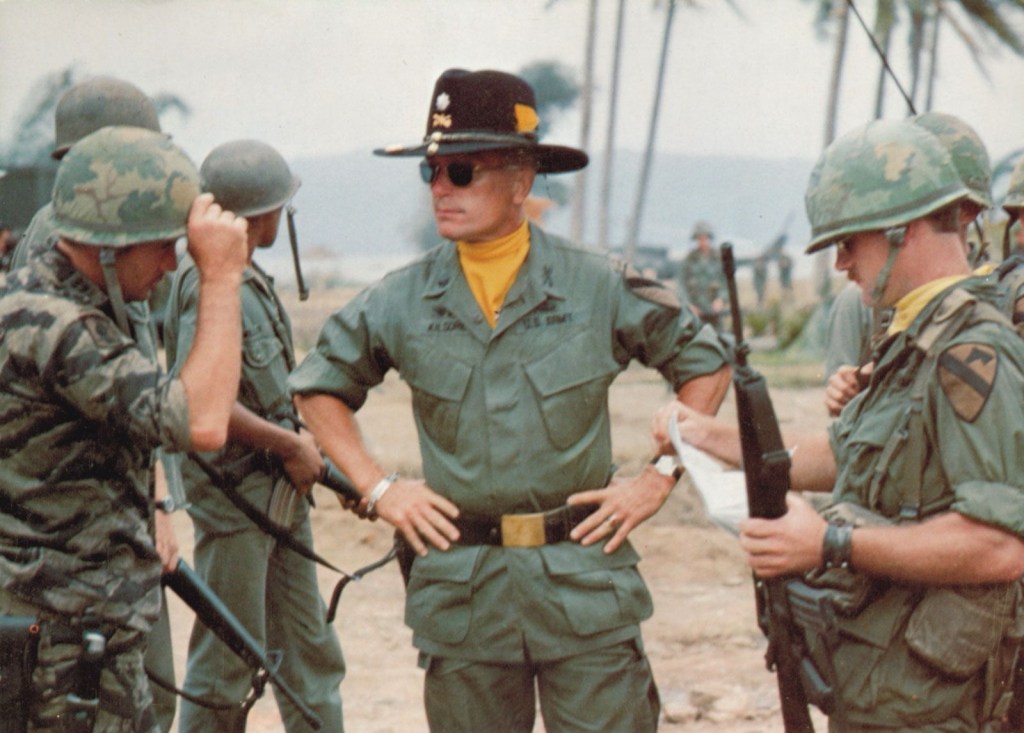
Apocalypse Now. See question 3.
Image Encyclopædia Britannica

Here are the answers to the questions I posted earlier.

Today’s questions focus on individuals born, married or deceased on December 3rd.

One

Which heavy metal band, formed in Birmingham in 1968 and known for pioneering the genre, featured Ozzy Osbourne as its original lead vocalist?

Answer: Black Sabbath

Ozzy Osbourne was born this day in 1948. Black Sabbath’s 1970 self-titled debut album is often cited as one of the first true heavy-metal records, in part because its tritone-based title track was considered unusually dark and ominous for its time.


Two

Which pioneering psychoanalyst, daughter of Sigmund Freud, became one of the founders of child psychoanalysis?

Answer: Anna Freud

During World War II, Anna Freud co-founded the Hampstead War Nurseries in London, providing care for bomb-displaced children and shaping her influential theories on child development. She was born in Vienna, Austria, on this day in 1895.


Three

Which Polish-born British novelist wrote Heart of Darkness, the novella that later inspired the 1979 film Apocalypse Now?

Answer: Joseph Conrad

Conrad did not speak fluent English until his twenties, yet became one of the language’s most celebrated stylists. He was born on this day in 1857.


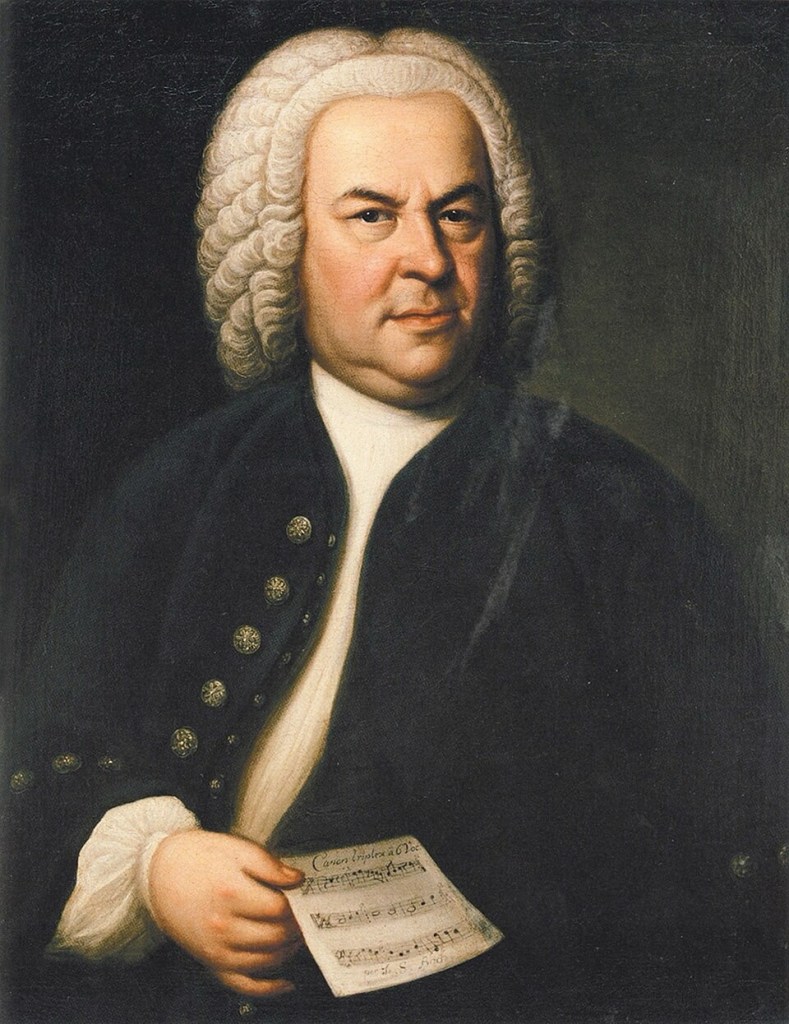
Johann Sebastian Bach.
Image Wikipedia

Four

Which Baroque composer, known for works such as the Brandenburg Concertos, married Anna Magdalena Wilcken on 3 December 1721?

Answer: Johann Sebastian Bach

Anna Magdalena herself was an accomplished singer, and Bach compiled two Notebooks for Anna Magdalena Bach, collections of keyboard pieces for her to study and perform.


Five

Which co-founder of the Jesuit order, famed for missionary work in India, Japan and Southeast Asia, died off the coast of China in 1552?

Answer: St. Francis Xavier

Xavier’s extensive travels—over 60,000 miles by ship—made him one of the most widely travelled religious figures of the 16th century.

Hatches, Matches and Despatches Part Deux

Apocalypse Now. See question 3.
Image Encyclopædia Britannica

Today’s questions focus on individuals born, married or deceased on December 3rd.

One

Which heavy metal band, formed in Birmingham in 1968 and known for pioneering the genre, featured Ozzy Osbourne as its original lead vocalist?


Two

Which pioneering psychoanalyst, daughter of Sigmund Freud, became one of the founders of child psychoanalysis?


Three

Which Polish-born British novelist wrote Heart of Darkness, the novella that later inspired the 1979 film Apocalypse Now?


Four

Which Baroque composer, known for works such as the Brandenburg Concertos, married Anna Magdalena Wilcken on 3 December 1721?


Five

Which co-founder of the Jesuit order, famed for missionary work in India, Japan and Southeast Asia, died off the coast of China in 1552?

Good luck! I’ll post the answers later.

Theirs not to reason why, /  Theirs but to do and die. | Answers

The answers to my earlier post are shown below.

Colonel Paul Tibbets, in the B-29 he named Enola Gay, August 1945.
Image Wikipedia

One

On 6 August 1945, the United States dropped an atomic bomb on the Japanese city of Hiroshima. Firstly, what was the name of the bomb, and secondly, what name did the pilot of the aircraft which dropped the bomb give to that aircraft?

Answer: Little Boy and Enola Gay

On this day in 1945, the United States dropped an atomic bomb on Hiroshima, Japan, killing more than 70,000 people and destroying most of the city in an effort to hasten the end of World War II. The blast, caused by the atomic bomb Little Boy dropped by the U.S. B-29 Enola Gay, resulted in around 70,000 instant deaths, with tens of thousands more dying in subsequent years from burns and radiation poisoning.
The B-29 Superfortress Enola Gay was named after Enola Gay Tibbets by the pilot, her son, Colonel Paul Tibbets.


Two

Scottish bacteriologist Alexander Fleming, who was born on on the 6 August 1881, revolutionised antibiotics in 1928 with the discovery of…

Answer: Penicillin

Alexander Fleming, who was born on 6 August 1881 at Lochfield Farm, Darvel, Ayrshire, was a Scottish bacteriologist best known for discovering penicillin in 1928, which revolutionised antibiotics and earned him the Nobel Prize in 1945.


Three

This actor, who was born 6 August 1917, portrayed Sheriff J.P. Harrah in the 1966 western El Dorado and was Charles Shaughnessy in Ryan’s Daughter (1970). Who is he?

Answer: Robert Mitchum

Robert Mitchum, an American actor known for his antihero roles and film noir appearances, received numerous accolades including an Academy Award nomination and a star on the Hollywood Walk of Fame. He starred in numerous films, including Out of the Past and Cape Fear, and was praised by critics for his deep voice and weary eyes.


Four

The Old Man of Hoy, a 449-foot sea stack, was first climbed by three mountaineers including Chris Bonnington, born on 6 August 1934. This sea stack is located in which British archipelago?

Answer: Orkney

The Old Man of Hoy is a 449-foot sea stack on Hoy, in the Orkney archipelago, Scotland. Formed from Old Red Sandstone, it is popular with climbers and may soon collapse. It was first climbed in 1966 by mountaineers Chris Bonington, Rusty Baillie and Tom Patey.


Five

A poet born on this day in 1809, penned the lines quoted

Someone had blundered.
   Theirs not to make reply,
   Theirs not to reason why,
   Theirs but to do and die.
Who was the poet and what poem are the lines from?

Answer: Alfred, Lord Tennyson and The Charge of the Light Brigade

Alfred Tennyson, 1st Baron Tennyson, was an English poet and Poet Laureate during Queen Victoria’s reign. He is known for his short lyrics, classical mythological themes, and blank verse, with many of his phrases becoming commonplace in the English language.
The lines quoted were from The Charge of the Light Brigade which is a narrative poem by Tennyson (The full poem is shown bellow). It describes the Charge of the Light Brigade, a disastrous British cavalry attack against heavily defended Russian troops at the Battle of Balaklava in October 1854 during the Crimean War. The suicidal assault placed the British light horse brigade, commanded by the Earl of Cardigan, against a Russian infantry and cavalry defence supported by heavy artillery batteries that commanded three sides of a narrow valley.


The Charge of the Light Brigade

ALFRED, LORD TENNYSON

I
Half a league, half a league,
Half a league onward,
All in the valley of Death
   Rode the six hundred.
“Forward, the Light Brigade!
Charge for the guns!” he said.
Into the valley of Death
   Rode the six hundred.

II
“Forward, the Light Brigade!”
Was there a man dismayed?
Not though the soldier knew
   Someone had blundered.
   Theirs not to make reply,
   Theirs not to reason why,
   Theirs but to do and die.
   Into the valley of Death
   Rode the six hundred.
   
III
Cannon to right of them,
Cannon to left of them,
Cannon in front of them
   Volleyed and thundered;
Stormed at with shot and shell,
Boldly they rode and well,
Into the jaws of Death,
Into the mouth of hell
   Rode the six hundred.

IV
Flashed all their sabres bare,
Flashed as they turned in air
Sabring the gunners there,
Charging an army, while
   All the world wondered.
Plunged in the battery-smoke
Right through the line they broke;
Cossack and Russian
Reeled from the sabre stroke
   Shattered and sundered.
Then they rode back, but not
   Not the six hundred.

V
Cannon to right of them,
Cannon to left of them,
Cannon behind them
   Volleyed and thundered;
Stormed at with shot and shell,
While horse and hero fell.
They that had fought so well
Came through the jaws of Death,
Back from the mouth of hell,
All that was left of them,
   Left of six hundred.

VI
When can their glory fade?
O the wild charge they made!
   All the world wondered.
Honour the charge they made!
Honour the Light Brigade,
   Noble six hundred!

The Charge of the Light Brigade
The Poetry Foundation

Theirs not to reason why, /  Theirs but to do and die.

One

On 6 August 1945, the United States dropped an atomic bomb on the Japanese city of Hiroshima. Firstly, what was the name of the bomb, and secondly, what name did the pilot of the aircraft which dropped the bomb give to that aircraft?

Two

Scottish bacteriologist Alexander Fleming, who was born on on the 6 August 1881, revolutionised antibiotics in 1928 with the discovery of…

Three

This actor, who was born 6 August 1917, portrayed Sheriff J.P. Harrah in the 1966 western El Dorado and was Charles Shaughnessy in Ryan’s Daughter (1970). Who is he?

Four

The Old Man of Hoy, a 449-foot sea stack, was first climbed by three mountaineers including Chris Bonnington, born on 6 August 1934. This sea stack is located in which British archipelago?

Five

A poet born on this day in 1809, penned the lines quoted

Someone had blundered.
   Theirs not to make reply,
   Theirs not to reason why,
   Theirs but to do and die.

Who was the poet and what poem are the lines from?

Good luck! I will post the answers later today.

Candle in the Wind | Answers

The answers to my earlier post are shown below.

Joseph Merrick, c 1889. See #2 below.
Image Wikipedia

One

Answer: Los Angeles, California

Marilyn Monroe, born Norma Jeane Mortenson, was an American actress and model who became a popular sex symbol in the 1950s and early 1960s. Known for her ‘blonde bombshell’ characters, she starred in numerous successful films, including Gentlemen Prefer Blondes and Some Like It Hot. Despite her success, Monroe’s personal life was troubled, and she died of a barbiturate overdose at the age of 36.


Two

Answer: John Hurt

Joseph Carey Merrick, known as ‘The Elephant Man’ was an English man born in 1862 who suffered from a rare disorder causing severe physical deformities, possibly Proteus syndrome. After being exhibited in freak shows, he lived at the London Hospital under the care of Sir Frederick Treves. There he became well-known in London society and received visits from prominent individuals. Merrick died at age 27 from accidental suffocation. A film The Elephant Man starring John Hurt as Merrick was made about his life.


Three

Answer: Atacama Desert

In 2010, a collapse at the San José copper-gold mine in Chile‘s Atacama Desert trapped 33 miners underground for 69 days. Despite the mine’s history of safety violations and geological instability, the miners were successfully rescued after a global effort involving multiple organisations and governments.


Four

Answer: Smoking Gun (tape)

The US Supreme Court ordered President Nixon to release tapes of conversations, including the ‘Smoking Gun’ tape, which revealed his involvement in the Watergate coverup. This led to the loss of his political support and imminent impeachment, prompting his resignation on August 8, 1974.


Five

Answer: Denmark

Vitus Bering, a Danish-born Russian explorer, led two expeditions exploring the north-eastern coast of Russia and the western coast of North America. He discovered the Bering Strait, proving that Asia and America were not connected by land. Bering died of scurvy on Bering Island in 1741, along with 28 of his men.

Candle in the Wind

Marilyn Monroe.
Image Wikipedia

One

Marilyn Monroe was found dead on the morning of 5 August 1962 in her Los Angeles home. Where was she born?

Two

Joseph Merrick, born on 5 August 1862, was renowned for his severe physical deformities and was exhibited in freak shows for a period. A film about Merrick’s life was made by David Lynch in 1980. In this film, who portrayed Joseph Merrick?

Three

On 5 August 2010, thirty-three miners became trapped in a mine collapse for a prolonged period of time, attracting international attention. In what desert area was the mine situated?

Four

On this day in 1974, President Richard Nixon released subpoenaed tapes after being ordered to do so by the US Supreme Court. One tape, recorded on 23 June 1972, clearly showed the president’s connection to the Watergate burglaries from shortly after they occurred. This tape is known by what two-word term?

Five

Vitus Bering, born on 5 August 1681, led two Russian expeditions to explore the northeast Russian coast and the western coast of North America. Despite being an officer in the Russian Navy, in what country was he born?

Good luck! I will post the answers later today.

Today’s Firsts | Answers

The answers to my earlier post are shown highlighted below.

One

Svetlana Yevgenyevna Savitskaya.
Encyclopædia Britannica

Answer: True

Svetlana Savitskaya, a Russian former aviator and Soviet cosmonaut, made history as the second woman in space in 1982 when she flew aboard Soyuz T-7. She further broke barriers in 1984, becoming the first woman to fly twice and perform a spacewalk on Soyuz T-12.


Two

General Grant, 1861.
Image Wikipedia

Answer: False

On this day, future president Ulysses S. Grant became the first person to be promoted to this rank after the United States Congress passed the necessary legislation authorising it.
General Bel Riose, a fictional character in Isaac Asimov’s Foundation series, is the last great general of the declining Galactic Empire. In the 1945 novella Dead Hand, Riose targets the Foundation, but is outmanoeuvred by its agents.


Three

Cooke and Wheatstone’s five-needle telegraph from 1837.
Image Wikipedia

Answer: False

The William Cooke and Charles Wheatstone telegraph, invented in the 1830s, was the first commercial telegraph system. It employed electromagnetic coils to move needles that indicated letters on a board, catering to users who preferred a visual representation over codes. On 25 July 1837, Cooke and Wheatstone demonstrated their telegraph system, with Cooke stationed at Camden Town and Wheatstone at Euston, both London, UK. Wheatstone transmitted the inaugural message, to which Cooke responded.


Four

Robert Edwards and Louise Brown celebrating 25 years of in vitro fertilization (IVF).
Image Encyclopædia Britannica

Answer: True

Louise Joy Brown, born in 1978, was the first human conceived through in vitro fertilisation (IVF) after her parents struggled with infertility. Her sister, Natalie, also conceived through IVF, was the first IVF baby to give birth naturally. In 2010, Robert Edwards, surviving member of the development team, was awarded the Nobel Prize in Physiology or Medicine.


Five

Answer: False

It was correct in a lot of detail, the date, pilot and the English Channel but he did not fly from Le Touquet to Hastings. On 25 July 1909, Louis Blériot became the first person to fly across the English Channel by aeroplane, winning a £1,000 prize from Lord Northcliffe. Despite poor navigation and challenging weather conditions, Blériot successfully completed the 24-mile journey from Les Baraques, near Calais, France, to near Dover Castle, above the cliffs of Dover, England, in just over 30 minutes.

Today’s Firsts

Today’s questions are all about firsts which happened on July 25th. You have simply to decide if each statement is either true or false.

One

Svetlana Yevgenyevna Savitskaya.
Image Encyclopædia Britannica, 24 July 2025.

On July 25, 1984, Soviet cosmonaut Svetlana Yevgenyevna Savitskaya (pictured) made history as the first woman to walk in space. Is this statement true or false?

Two

Is it true or false that today, in 1866, in the United States, Brigadier General Bel Riose was promoted to General of the Army?

Three

Today in 1837, Walter Samson and Stewart Cuthbertson successfully demonstrated the first commercial use of an electrical telegraph; this demonstration took place in New York, US. Is this statement true or false?

Four

Is it true that Louise Joy Brown, the first human born after conception by in vitro fertilisation (IVF), was born in Greater Manchester, UK, on this day in 1978?

Five

On this date in 1909, Louis Blériot embarked on a historic flight from Le Touquet, France. This marked the inaugural crossing of the English Channel in a heavier-than-air aircraft, with the landing occurring near Hastings, England. Is this true or false?

Good luck! I will post the answers later today.