Tag: music

  • Historical Milestones and Cultural Icons: From Bach’s Birth to Twitter’s First Tweet—Answers

    Field of Battersea.
    A print caricaturing the Wellington–Winchilsea duel
    by William Heath.
    Wikipedia

    The answers to my earlier pot are shown in bold below.

    1. 1685—Johann Sebastian Bach, a German composer, blended northern and southern German styles in his early compositions. He composed numerous cantatas, including the St. John Passion, and is known for his mastery of counterpoint and harmonic organisation.
      Jack Dorsey, 2014.
      Wikipedia
    2. $2.9m—Twitter, officially known as X since 2023, is a social networking service that allows users to share short text messages, images, and videos. It was created in 2006 and quickly grew to over 100 million users by 2012.
    3. Arthur Wellesley, 1st Duke of Wellington—The Duke of Wellington and Lord Winchilsea engaged in a duel at Battersea Fields, with Wellington firing first and missing, and Winchilsea firing into the air. This act of deloping cleared Winchilsea of cowardice allegations, allowing him to apologise unconditionally. The duel was the second, and last, fought by a sitting Prime Minister following the 1798 Pitt–Tierney duel on Putney Heath.
    4. San Diego, California—San Diego Comic-Con, founded in 1970, is a multi-genre entertainment event showcasing comic books, science fiction/fantasy media, and pop culture. It is the largest convention of its kind, attracting over 130,000 attendees annually.
      Stanley, a newspaper reporter and tireless self-promoter, was hired by the New York Herald to find the missing Livingstone in 1871, winning himself wealth and reputation. Kalulu is in the backgound.
      Wikipedia
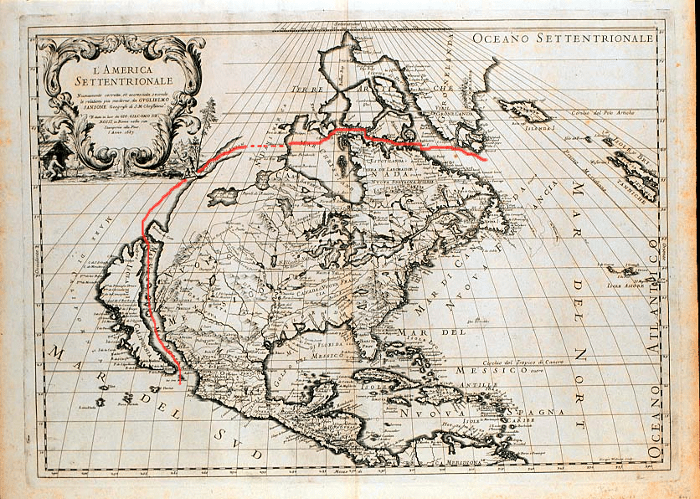
    5. 700 miles (1,125 km)—Stanley travelled to Zanzibar in March 1871, claiming to have outfitted an expedition with 192 porters, though his diaries suggest a smaller number. After facing challenges including the death of his horse and desertion of porters, he found David Livingstone in Ujiji, Tanzania, famously greeting him with “Dr. Livingstone, I presume?”; this phrase was probably made up by Stanley after the event. Stanley joined Livingstone in exploring the region, later recounting his experiences in a book.
    Routes of Henry Morton Stanley.
    The Red route is the 1871-1872 is the expedition to find Livingstone.
    Wikipedia
  • Historical Milestones and Cultural Icons: From Bach’s Birth to Twitter’s First Tweet

    Johann Sebastian Bach
    Wikipedia

    All questions relate to today, 21 March.

    1. Johann Sebastian Bach, the composer of the Brandenburg Concertos and The Well-Tempered Clavier, was born this day in…
      • 1685
      • 1745
      • 1815
    2. Twitter, now X, was founded today in 2006 and Jack Dorsey, Twitter co-founder, sent the first public tweet, “just setting up my twttr.” Fifteen years later Dorsey auctioned this tweet as a nonfungible token (NFT) with the proceeds going to charity. It was bought using ether cryptocurrency for the equivalent of…
      • $1.4m
      • $2.9m
      • $5.8m
    3. 21 March saw the last time a serving UK Prime Minister fought a duel. Who was the Prime Minister?
      • Arthur Wellesley, 1st Duke of Wellington
      • William Lamb, 2nd Viscount Melbourne
      • William Cavendish-Bentinck, 3rd Duke of Portland
    4. A Comic-Con held its inaugural event on this date in 1970 and is now described by Forbes magazine as being “the largest pop and culture festival in the world”: it is held in…
      • Red Rock, Arizona
      • San Diego, California
      • Las Vegas, Nevada
    5. Henry Morton Stanley set out to find Dr David Livingstone today in 1871. His expedition was successful, finding Livingstone after trekking through tropical forest for…
      • 300 miles (482 km)
      • 450 miles (725 km)
      • 700 miles (1,125 km)

    “Dr. Livingstone, I presume?”, an illustration from Stanley’s 1872 book How I Found Livingstone. Wikipedia
  • Sheelah’s Day—Answers

    Here, in bold, are the answers to the questions I posted earlier.

    Sophie Myles, 2007.
    Wikipedia
    1. Sophia MylesWikipedia describes her as “an English actress… best known in film for portraying Lady Penelope Creighton-Ward in Thunderbirds(2004), Isolde in Tristan & Isolde (2006), Darcy in Transformers: Age of Extinction (2014), Erika in Underworld(2003) and Underworld: Evolution (2006), and Freya in Outlander (2008)”.
    2. Caldwell, New Jersey—Stephen Grover Cleveland, the 22nd and 24th US President, was the first Democrat elected after the Civil War and the first to serve two non-consecutive terms. Known for his honesty and principled approach, he blocked legislative excesses during his first term and championed political reform, fiscal conservatism, and classical liberalism, gaining support from both Democrats and Republicans. His presidency saw significant legislation such as the Interstate Commerce Act and the Dawes Act. However, his stance on government intervention during the economic collapse and the legacy of the Dawes Act have resulted in mixed assessments of his legacy.
      Wilfred Owen
      Wikipedia
    3. Wilfred Owen, an English poet and soldier, expressed anger at war’s cruelty and waste through his poetry. Based on his World War I experiences, his war poetry was about the horrors of trenches and gas warfare. At only 25 years of age, he was killed in action at the Battle of the Sambre on 4 November 1918, exactly a week before the war’s end. His best-known works— most of which were published posthumously— are Anthem for Doomed Youth, Dulce et Decorum est, Futility, and Spring Offensive

      Final draft of Anthem for Doomed Youth by Wilfred Owen, penned by the author.
      Wikipedia
      Honoree Queen Latifah speaks at the Kennedy Center Honors dinner at the State Department in Washington, D.C., Saturday, December 2, 2023. (Official State Department photo by Freddie Everett)
      Wikipedia
    4. Queen Latifah—American musician and actress. She rose to fame in the late 1980s with her debut album, All Hail the Queen, which blended diverse styles and feminist themes. The name Latifah is Arabic for “delicate” or “sensitive”.
    5. Neville Chamberlain—Prime Minister of the UK from 1937 to 1940—is known for his policy of appeasement towards Hitler’s Germany. He served in various government positions, including Chancellor of the Exchequer, before becoming Prime Minister. Despite signing the Munich Agreement with Hitler in 1938, the latter’s invasion of Poland less than a year later compelled Chamberlain to declare war on Germany.
    Chamberlain holding up the paper signed by both Hitler and himself on his return to Great Britain from Munich, Germany.
    Wikipedia

    Sheelah’s Day

    Sheelah’s Day is celebrated on 18 March, the day after Saint Patrick’s Day, and is observed in the Irish diaspora in Australia and Canada. Although there are no Sheelahs included in my post today, all of the questions are about people born on 18 March.

  • Sheelah’s Day

    Shamrock
    Wikipedia

    Sheelah’s Day is celebrated on 18 March the day after Saint Patrick’s Day and is observed in the Irish diaspora in Australia and Canada. No Sheelah’s included here today but all of the following are about people born on 18 March.

    1. Born 1980. Actress who links the following roles: Penelope (in 2004), Isolde (2006), Erika (2003 and 2006), Darcy (2014) and Freya (2008). Who is she?
      • Rose Keegan
      • Sophia Myles
      • Lucy Russell
      Grover Cleveland
      Wikipedia
    2. Born 1837, Grover Cleveland, served as the 22nd and 24th president of the United States. Where was he born?
      • Amherst, New Hampshire
      • Brighton, New York
      • Caldwell, New Jersey
    3. Anthem for Doomed Youth was written by a war poet born this day in 1893. Who was he?
      • Rupert Brook
      • Wilfred Owen
      • Siegfried Sassoon
    4. Who is Dana Elaine Owens, born 18 March 1970, a musician and actress, better known as?
      • Lauryn Hill
      • Missy Elliott
      • Queen Latifah
    5. Born today in 1869, this British prime minister returned from Germany with a “piece of paper” promising to “have brought you back peace — but a peace I hope with honour.” Who was he?
      • Stanley Baldwin
      • Neville Chamberlain
      • Winston Churchill

    Good luck! I will post the answers later today.

  • Truth or Consequence—Answers

    Truth and Consequence City Hall.
    Wikipedia

    Here, in bold, are the answers to my earlier post.

    1. False—It changed name to Truth or Consequence (not Tacos or Chocolate) in 1950 after the radio show of the same name ran a competition for a town or city to do so; the prize being that the show would be broadcast from the winner—the first settlement to change their town’s name. 
    2. False—Nothing to do with First Lady’s. It was chosen because it sounded like the French for help me, m’aider and was picked in 1920 by the head of radio in air traffic control at Croydon Aerodrome (then the world’s busiest) as most of their flights were from France.
    3. False—No, not Martin Luther King. It was about the assassination of JFK.
    4. False—Not the Inca Empire. Hernán Cortés conquered the Aztec Empire in what is now central Mexico in 1521 not the Inca’s in what is now Peru.
      Lucy in the Sky with Diamonds
      Wikipedia
    5. True—Lucy was named after the Beatles song, Lucy in the Sky with Diamonds.
    6. False—Pete Conrad, Apollo 12 was the third person to walk on the Moon. Michael Collins was the command module pilot of Apollo 11 and did not land on the Moon but remained in orbit while Neil Armstrong and Buzz Aldrin landed on the lunar surface.
      Goldeneye Estate
      Wikipedia
    7. False—Not Skyfall. Fleming’s house and estate were both named GoldenEye and are now a hotel complex.
    8. True—It is a neighbourhood on the West Side of Midtown Manhattan.
    9. False—Not Coprophagia which is dung-eating. Lalochezia is the release of stress etc by swearing.
    10. False—It wasn’t Please Mister Postman. The third number one, I Want to Hold Your Hand, was released in November 1963 with the B-side This Boy.
    Pete Conrad
    Conrad descends the Lunar Module ladder, moments before becoming the third human to walk on the Moon.
    Wikipedia
  • Truth or Consequence

    For some variety a selection of true or false questions unconnected to today.

    Hot Springs, New Mexico.
    Wikipedia
    1. True or false: the American city of Hot Springs, New Mexico is now known as ‘T or C’ after changing its name to Tacos or Chocolate in 1950.
    2. True or false: Mayday, the international distress signal, was chosen in honour of the then US First Lady.
    3. True or false: in 2020, Murder Most Foul was released as a single by Bob Dylan. The murder referred to in the title was the assassination of Martin Luther King in 1967.
    4. True or false: Hernán Cortés was a Spanish conquistador who conquered the Inca Empire in the Americas in 1521.
    5. True or false: Lucy the 3.2 million-year-old skeleton found in Ethiopia was named after a Beatles song.
    6. True or false: the Apollo astronaut Michael Collins was the third person to walk on the Moon.
    7. True or false: Ian Fleming, the author who created James Bond, had a home on Jamaica’s north coast named Skyfall.
    8. True or false: there is a neighbourhood of New York City called Hell’s Kitchen.
    9. True or false: relief of stress, pain and frustration by swearing is known as coprophagia.
    10. True or false: The Beatles third UK No. 1 hit I Want to Hold Your Hand was released with the B-side Please Mister Postman.

    Good luck! The answers will be posted later today.

  • Where have you gone Joe DiMaggio—Answers

    Joe DiMaggio.
    Wikipedia
    1. Paul Simon and the song was Mrs Robinson—DiMaggio’s elegant style and sophisticated demeanour inspired nostalgic lines in literature and music, including Paul Simon’s tribute to forgotten heroes in Mrs. Robinson from the film The Graduate:”—
      “Where have you gone, Joe DiMaggio? 
      A nation turns its lonely eyes to you, whoa, whoa, whoa 
      What’s that you say, Mrs. Robinson? 
      Joltin Joe has left and gone away, hey, hey, hey 
      Hey, hey, hey”
      Queen Anne
      by Michael Dahl
      Wikipedia
    2. Anne—Anne, born on 6 February 1665, in London, became the last Stuart monarch of Great Britain on 8 March 1702, succeeding under the Act of Settlement of 1701. She reigned until her death on 1714, marking the end of the Stuart monarchy. Despite her desire for independent rule, Anne’s health issues and intellectual limitations led her to rely on ministers, who guided the country through the War of the Spanish Succession. Her reign was marked by Whig-Tory rivalries and succession uncertainty. Anne, raised Protestant, married Prince George of Denmark in 1683 and had a significant political relationship with Sarah Jennings Churchill.
      The cover for The Wind in the Willows
      Wikipedia
    3. Kenneth Grahame—Kenneth Grahame, born on 8 March 1859, in Edinburgh, Scotland, was a British author renowned for The Wind in the Willows (1908), a beloved children’s classic featuring animal characters with human traits. Orphaned young, he lived with his grandmother in England and attended St. Edward’s School, Oxford. Financial constraints prevented university attendance, leading him to a career at the Bank of England until his retirement in 1908 due to ill health. Grahame also contributed to journals like the St. James Gazette and published works such as Pagan Papers (1893), The Golden Age (1895), and Dream Days (1898), showcasing his insight into childhood.
      Althing logo.
      Wikipedia
    4. Althing—The Althing, Iceland’s unicameral legislature, is one of the world’s oldest national parliaments, founded around 930 at Thingvellir. It was the first representative assembly in medieval Scandinavia to hold national legislative power. The Althing met at Thingvellir until 1798 and was abolished by the Danish crown in 1800. It was reconvened in Reykjavík in 1845, with a special session at Thingvellir on June 17, 1944, to proclaim Iceland’s republic. Despite its historical interruptions, the Althing continues to serve as Iceland’s legislative body, reflecting its enduring significance in the nation’s political history.
    5. Clove and coconut plantations—1964 Revolutionary government of Zanzibar nationalized all farms and clove and coconut plantations. 
    Flag of independent People Republic of Zanzibar in use between 12 January and 26 April 1964.
    Wikipedia
  • Where have you gone Joe DiMaggio

    Joe DiMaggio
    Wikipedia
    1. In 1999 Joe DiMaggio died. A few decades before he died  he was mentioned in a lament to lost heroes in the line “Where have you gone Joe DiMaggio”—Who wrote the song that contained that line?
      • David Crosby
      • Bob Dylan
      • Paul Simon, and
      • as a bonus what was the song?
    2. On this day in 1702, who became the last Stuart monarch of Great Britain?
      • Anne
      • James VII
      • Charles II
    3. In 1859 the author of The Wind in the Willows was born, who was he?
      • Kenneth Grahame
      • Jerome K. Jerome
      • AA Milne 
    4. In 1844, the parliament of Iceland was reopened after a closure of 45 years, by what name is it known?
      • Althing
      • Storting
      • Folketing
    5. 1964 Revolutionary government of Zanzibar nationalized all…
      • Antimony and arsenic production
      • Banking and betting professions
      • Clove and coconut plantations

    Good luck! The answers will be posted later

  • Hatches and Despatches—Answers

    The answers to the questions posted earlier are shown in bold.

    Bryan Cranston, Comic-Con, San Diego, 2012
    Wikipedia
    1. Bryan Cranston—Bryan Lee Cranston is an acclaimed American actor renowned for his roles as Walter White in Breaking Bad and Hal in Malcolm in the Middle. He has won six Primetime Emmy Awards, two Tony Awards and two Golden Globes, with nominations for an Academy Award and a BAFTA. Cranston’s Breaking Bad performance earned him four Emmys and a Golden Globe, and he also won for Outstanding Drama Series as a producer. On stage, he won a Tony for All the Way and another for Network. Notable films include Trumbo, Saving Private Ryan, and Godzilla.
      Sir Edwin Landseer
      By Francis Grant.
      National Portrait Gallery
      Wikipedia
    2. Edwin Landseer—Landseer, born in London to engraver John Landseer and Jane Potts, was a prodigious artist recognised early on. He studied under his father and Benjamin Robert Haydon, who encouraged dissections to understand animal anatomy. Landseer’s association with the Royal Academy began at 13, exhibiting as an “Honorary Exhibitor,” becoming an Associate at 24, and an Academician in 1831. He was acquainted with Charles Robert Leslie and visited Scotland in 1824, which influenced him. In 1823, he painted Georgiana Russell, Duchess of Bedford, with whom he had an affair. Knighted in 1850, he declined the Royal Academy Presidency in 1866. Suffering from mental health issues, he was declared insane in 1872.
      Crossing of the Strait of Dover by Blanchard and Jefferies, 1785.
      Wikipedia
    3. Jean-Pierre Blanchard—Jean-Pierre Blanchard (1753–1809) was a French inventor and pioneer of gas balloon flight. He achieved fame with a hydrogen balloon flight in Paris in 1784 and later crossed the English Channel in 1785, earning praise from Louis XVI. Blanchard toured Europe, demonstrating balloons and parachutes, using the latter for a successful escape in 1793. In 1792, he conducted the first balloon flight in the Americas, observed by President George Washington. Blanchard married Sophie Blanchard in 1804 and died of a heart attack in 1808. His widow continued balloon demonstrations until her accidental death.
      Rachel Weisz
      Wikipedia
    4. Rachel Weisz—Rachel Weisz is an acclaimed English actress known for her roles in both independent films and blockbusters. She began her career in the early 1990s, gaining recognition with her film debut in Death Machine (1994) and winning a Critics’ Circle Theatre Award for Design for Living. Her breakthrough came with The Mummy series (1999-2001). Weisz won an Academy Award for The Constant Gardener (2005) and a Laurence Olivier Award for A Streetcar Named Desire (2009). She continued to excel in films like The Bourne Legacy (2012) and The Favourite (2018),winning a BAFTA for the latter.
      Viv Richards
      Wikipedia
    5. Viv Richards—Sir Vivian Richards is a retired Antiguan cricketer celebrated as one of the greatest batsmen ever. Representing the West Indies from 1974 to 1991, he was pivotal in their 1975 and 1979 World Cup victories and a runner-up in 1983. Richards made his Test debut in 1974 and scored 8,540 runs in 121 matches, becoming the West Indies’ leading run-scorer. Despite eye surgery in 1984, he continued to excel. Knighted in 1999, he was named a Cricketer of the Century by Wisden in 2000 and inducted into the ICC Hall of Fame in 2009.
      Ranulph Fiennes at the Celebrating Captain Scott’s Legacy: 100 Years of Discovery and Diplomacy in Antarctica event in London.
      Wikipedia
    6. Ranulph Fiennes—Sir Ranulph Twisleton-Wykeham-Fiennes is a renowned British explorer, writer and poet, holding several endurance records. He served in the British Army for eight years, including counter-insurgency work in Oman. Fiennes is celebrated for being the first to visit both the North and South Poles by surface means and the first to cross Antarctica on foot. In 2009, at 65, he summited Mount Everest. Recognised by the Guinness Book of World Records in 1984 as the world’s greatest living explorer, he has authored numerous books on his adventures and explorers like Robert Falcon Scott and Ernest Shackleton.
      Maurice Ravel
      Wikipedia
    7. Maurice Ravel—Maurice Ravel was a distinguished French composer, pianist, and conductor, often associated with Impressionism alongside Claude Debussy, though both distanced themselves from the label. His work gained international acclaim in the 1920s and 1930s, earning him the title of France’s greatest living composer. Ravel’s compositions are celebrated for their intricate harmonies and innovative orchestration, exemplified in Boléro (1928) and his arrangement of Mussorgsky’s Pictures at an Exhibition (1922). Despite facing bias at the Paris Conservatoire, he developed a unique style blending modernism, baroque, neoclassicism and jazz, known for its clarity and experimentation.
      Amanda Gorman steps to the podium to recite her inaugural poem, “The Hill We Climb,” during the 59th Presidential Inauguration ceremony in Washington, Jan. 20, 2021.
      (DOD Photo by Navy Petty Officer 1st Class Carlos M. Vazquez II)
      Wikipedia
    8. Amanda Gorman—Amanda Gorman is an American poet, activist and model known for addressing issues like oppression, feminism, race, and marginalisation. She was the first National Youth Poet Laureate and published The One for Whom Food Is Not Enough in 2015. Gorman gained global fame in 2021 for her poem The Hill We Climb at Joe Biden’s inauguration, leading to best-selling books and a management contract. She was featured in Time magazine’s 100 Next list and became the first poet to perform at the Super Bowl, delivering Chorus of the Captains at Super Bowl LV.
      Ivan Lendl, 1984.
      Wikipedia
    9. Ivan Lendl—Ivan Lendl is a Czech-American former professional tennis player and coach, celebrated as one of the greatest in the sport. He held the world No. 1 ranking for 270 weeks and won 94 singles titles, including eight majors. Lendl is the only player with a match-winning percentage over 90% in five different years and leads head-to-head against rivals Jimmy Connors and John McEnroe. Known as the ‘Father Of Modern Tennis’, he pioneered aggressive baseline power tennis. Post-retirement, he coached Andy Murray to three major titles and a world No. 1 ranking.
    10. Stanley Kubrick—Stanley Kubrick (1928–1999) was an acclaimed American filmmaker known for his meticulous attention to detail, innovative cinematography and dark humour. Born in New York City, he developed an early interest in literature, photography, and film, teaching himself filmmaking after high school. Kubrick’s notable works include The Killing, Paths of Glory, Spartacus, Lolita, Dr. Strangelove, 2001: A Space Odyssey, A Clockwork Orange, Barry Lyndon, The Shining and Full Metal Jacket. He moved to England in 1961, where he maintained artistic control over his films, often using groundbreaking techniques. Kubrick’s legacy includes numerous award nominations and critical acclaim.
    Production photo of director Stanley Kubrick (left, seated) and actor Tony Curtis (right) on the set of the 1960 film Spartacus.
    Wikipedia
  • Hatches and Despatches

    I am…

    See question 10. Poster for the film Spartacus (1960)
    Wikipedia

    Ten questions about people who were either born or sadly died on the 7 March—each answer will follow these two words: “I am…”

    Question 1. The second man to walk on the Moon.
    Wikipedia
    1. Born today in 1956 in Los Angeles, California, I played the second man to walk on the moon in From the Earth to the Moon (1998). I did voice work on the animated series Family GuyRobot Chicken and SuperMansion. I am…
      • Bryan Cranston
      • Patrick Warburton
      • Hulk Hogan
        Question 2. Monarch of the Glen.
        Wikipedia
    2. Born 7 March 1802, I am British painter and sculptor best known for my paintings of animals such as the Monarch of the Glen (above). I am…
      • Frank Knight
      • Edwin Landseer
      • Langford Monroe
    3. Died today in 1809. I am a French balloonist who, with the American physician John Jeffries, made the first aerial crossing of the English Channel. I am…
      • Jean Pierre Alfred Nadal
      • Jacques-Étienne Montgolfier
      • Jean-Pierre Blanchard
    4. Born today in 1970, I am an actor and appeared as as Evelyn Carnahan in the Hollywood action films The Mummy (1999) and its sequel. I was Tessa Abbott-Quayle in the 2005 film adaptation of John le Carré’s The Constant Gardener. I am…
      • Abigail Cruttenden
      • Olivia d’Abo
      • Rachel Weisz
    5. Born this day in 1952, I am a West Indian cricketer described by Encyclopædia Britannica as “arguably the finest batsman of his generation”. I am…
    6. Born today in 1944, I am a British adventurer and explorer who, as part of the Transglobe Expedition circumnavigated the world via the North and South Pole. I also ran seven marathons on seven continents in seven consecutive days. I am…
      • Benedict Allen
      • Ranulph Fiennes
      • Gino Watkins
        Question 7. Jayne Torville and Christopher Dean, Dancing on Ice, 2011
        Wikipedia
    7. Born 7 March 1875, I am a composer probably best known for
      Boléro (1928) which gained new popular following after featuring in the film 10 (1979) and the 1984 Olympics when used by ice-dancers Torvill and Dean. I am…
      • Antonín Dvořák
      • Maurice Ravel
      • John Philip Sousa
    8. Born this in 1998, I am a poet and activist who gained international fame when I read my poem The Hill We Climb at Joe Biden’s 2021 presidential inauguration. I am…
      • Amanda Gorman
      • Amanda Grayson
      • Amanda Hunsaker
    9. Born today in 1960, I’m a former American tennis player of Czech descent who was very successful in the 1980s and early 1990s. As a right-hander, I was known for my powerful forehand. I won eight Grand Slam titles, including three consecutive US Open championships from 1985 to 1987. I am…
      • Goran Ivanišević
      • Ivan Lendl
      • Ilie Năstase
    10. Died this day in 1999 in England. In 1960, I took over direction of Spartacus, the slave revolt epic set in Ancient Rome; I am also known for my Odyssey. I am…
      • David Lean
      • Stanley Kubrick
      • Otto Preminger

    The births and deaths used in my Hatches and Despatches post were all listed in Encyclopædia Britannica’s Biographies on This Day in History: March 7.

    Good luck! The answers will be posted later today.