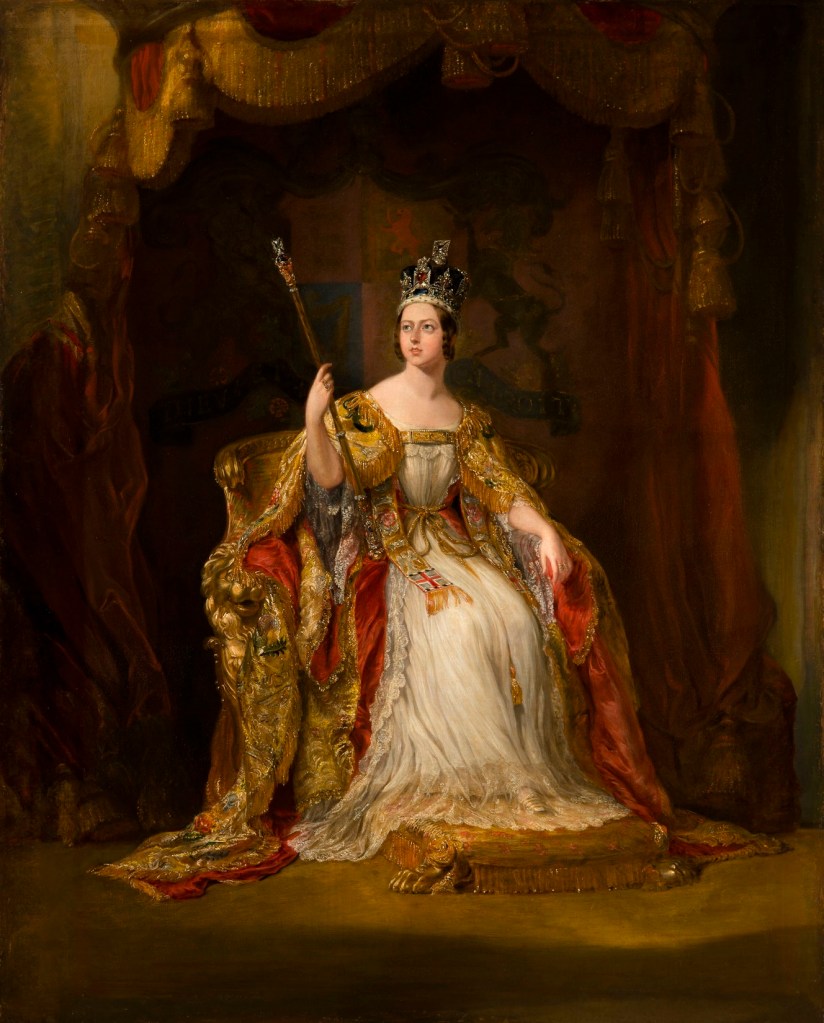
Queen Victoria, Coronation portrait by George Hayter. Image Wikimedia Commons
The first four questions are connected to today’s date, 20 June. The fifth is not date-related but is connected to the post title.
One
In 1789, French Deputies of the Third Estate found themselves locked out of their meeting hall. Nearby, they regrouped indoors and swore an oath promising not to separate until a written constitution was established. This oath, named after their location, became known as the what, and who was the French king at the time?
Two
Born in Honolulu, Hawaii, in 1967, this actor made their stage debut in London. They played five different roles in Sir David Hare’s The Blue Room and then transferred the play to New York, where they made their Broadway debut. Also credited as a producer of 2015’s The Family Fang, who is this actor?
Three
On this date, American racing driver Barney Oldfield achieved the feat of becoming the first driver to cover a mile in a minute. This incredible speed translates to 60 miles per hour or 96.56 kilometres per hour. In what year did Oldfield accomplish this?
Four
On this day, Victoria became queen of the United Kingdom. Her succession followed the death of her predecessor. Who was her predecessor and what was their relationship to Victoria?
Five
The theme song for the The Savage Seven, a 1968 biker film, was performed by what rock group?
There is a simple theme running through today’s questions, which I’m sure you will work out very quickly.
One
What five-letter word means sausages and an area of, for example, St. Andrew’s, Scotland?
Answer: Links.
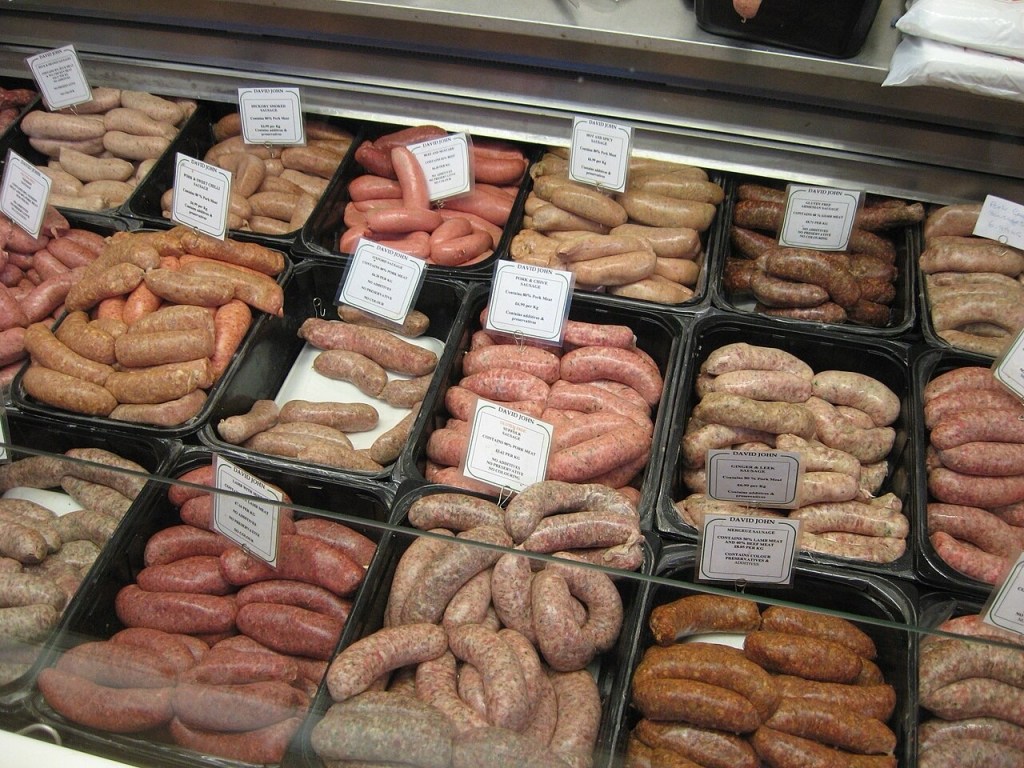
Sausages in a chain are links, as is a seaside golf course on ‘linksland’. The Oxford English Dictionary definition of the golf variety is shown below.
links /lɪŋks / ▸ plural noun [treated as singular or plural] (also golf links) a golf course, especially one on grass-covered sandy ground near the sea: a couple of days’ golf on a sunny Spanish links. ▪ another term for linksland
– ORIGIN Old English hlinc ‘rising ground’, perhaps related to lean1.
— Oxford English Dictionary
Two
What eight-letter word relates to all of these: Joe Gilmore, a barman at the Savoy Hotel, London in 1969; Apollo 11, 1969; Mr Bean, 1969; Michael Jackson, 1983?
Answer: Moonwalk.
Joe Gilmore created the Moonwalk cocktail to celebrate Neil Armstrong and Buzz Aldrin’s landing on the Moon in Apollo 11 and their moonwalks. Mr. Bean was Apollo 12’s Alan Bean who, along with his colleague Pete Conrad, also walked on the Moon a few months later. Michael Jackson’s famous Moonwalk was first publicly performed in 1983.
Three
What connects Fort Providence to the Beaufort Sea?
Answer: Mackenzie River.
The Mackenzie River, in Canada’s Northwest Territories, is, with the Slave, Peace and Finlay Rivers, the longest river system in Canada, with the second-largest drainage basin of any North American river after the Mississippi. The Mackenzie’s main stem flows 1,738 km (1,079 miles) from Great Slave Lake at Fort Providence to the Arctic Ocean at the Beaufort Sea, in the Inuvik Region. Historically significant, it supports limited economic development, including oil, minerals, and agriculture.
Four
Dr. John Watson; Bilbo Baggins; Lester Nygaard; Chris Carson. Who is the connection?
Answer: Martin Freeman.
English actor Martin Freeman has won two Emmy Awards, a BAFTA Award, and a Screen Actors Guild Award. He portrayed Dr. John Watson in Sherlock (2010–2017); a young Bilbo Baggins in the The Hobbit film trilogy (2012–2014); Lester Nygaard in Fargo (2014), and Chris Carson in The Responder (from 2022).
Five
What one title is shared by these: a 1956 film about Vincent van Gogh; an Iggy Pop album from 1977; a 2017 Lana Del Rey album?
Answer: Lust for Life.
Lust for Life is a 1956 biographical film about Vincent van Gogh, directed by Vincente Minnelli and starring Kirk Douglas. Lust for Life was also the title of Iggy Pop’s second solo album, released in 1977. Finally, Lust for Life is Lana Del Rey’s fifth studio album, released in 2017.
Sausages
As explained in the first answer sausages in a chain are links and today’s questions are all about links.
There is a simple theme running through today’s questions, which I’m sure you will work out very quickly.
One
What five-letter word means sausages and an area of, for example, St. Andrew’s, Scotland?
Two
What eight-letter word relates to all of these: Joe Gilmore, a barman at the Savoy Hotel, London in 1969; Apollo 11, 1969; Mr Bean, 1969; Michael Jackson, 1983?
Three
What connects Fort Providence to the Beaufort Sea?
Four
Dr. John Watson; Bilbo Baggins; Lester Nygaard; Chris Carson. Who is the connection?
Five
What one title is shared by these: a 1956 film about Vincent van Gogh; an Iggy Pop album from 1977; a 2017 Lana Del Rey album?
These questions are all about people from the creative arts who were born on today’s date, 17 June.
One
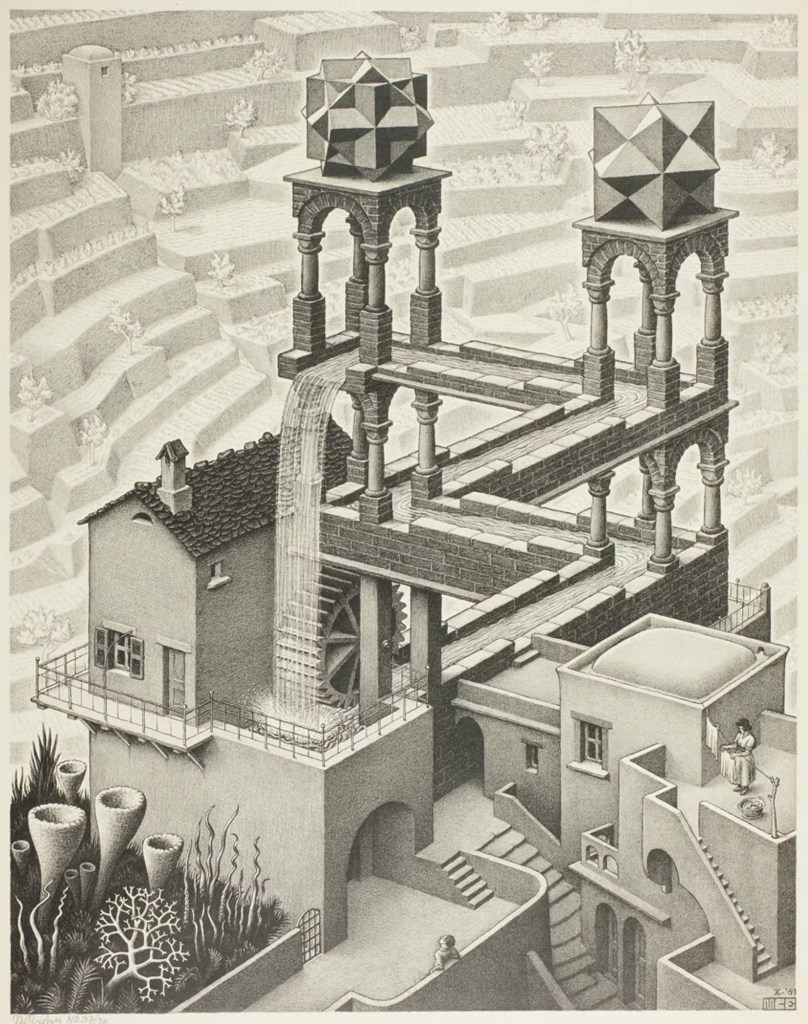
Which Dutch artist, born 1898, created the lithograph Waterfall shown above?
Answer: M.C. Escher.
Waterfall is a stunning visual representation of the concept of perpetual motion, depicting a never-ending cascade of water that flows uphill and back into itself. The piece combines elements of mathematics, physics, and art to create a seamless illusion of movement and transformation, inviting the viewer to contemplate the nature of change and the eternal cycle of life. — MyArtBroker.com
Two
Born in 1882, this composer was commissioned to write three ballets for the Ballets Russes’ Paris seasons: The Firebird (1910), Petrushka (1911), and The Rite of Spring (1913). Who is the composer?
Answer: Igor Stravinsky.
Igor Stravinsky (1882–1971) was a Russian composer with French and American citizenship, pivotal in modernist music. His career spanned three periods: Russian, neoclassical, and serial. Known for ballets like The Rite of Spring, he influenced composers like Copland and Glass. Stravinsky died in New York City, leaving six memoirs.
Three
Barry Manilow, who was born in 1943, won the Grammy for Song of the Year in 1977 for a Bruce Johnston-written song. What song did Manilow ironically sing to win this award?
Answer: I Write the Songs.
Barry Manilow won a Grammy in 1977 for I Write the Songs — which, ironically, he did not write — written by Bruce Johnston. Manilow has produced, arranged, and performed for musicals, films, and commercials, including for McDonald’s and Pepsi. Nominated for 15 Grammy Awards, winning once, he has produced Grammy-nominated albums for Bette Midler and others. As a solo artist, he has sold over 85 million records globally.
Four
This English filmmaker, born 1936, received the Palme d’Or at the Cannes Film Festival for both The Wind That Shakes the Barley (2006) and I, Daniel Blake (2016). He is also known for Cathy Come Home (1966) and Kes (1969). Who is this filmmaker?
Answer: Ken Loach.
Ken Loach is a British director known for his social realism films. Initially studying law at Oxford, he transitioned to acting and directing, notably for the BBC. His 1966 docudrama Cathy Come Home highlighted homelessness. Loach’s acclaimed films include Kes, Hidden Agenda (1990), The Wind That Shakes the Barley and I, Daniel Blake, the latter two winning the Palme d’Or. He also directed documentaries like The Spirit of ’45 (2013) and received the Praemium Imperiale in 2003.
Five
Born in California in 1987, this American rapper and songwriter received the 2018 Pulitzer Prize for Music, and has, at the time of writing, won 27 Grammys. Who is this musician?
Answer: Kendrick Lamar.
Kendrick Lamar, born in 1987, is a renowned American rapper known for his introspective lyrics and social commentary. He signed with TDE in 2005, achieving fame with albums like Good Kid, M.A.A.D City and To Pimp a Butterfly. Lamar has won 27 Grammys, headlined the Super Bowl, and co-founded PGLang.
These questions are all about people from the creative arts who were born on today’s date, 17 June.
One
Which Dutch artist, born 1898, created the lithograph Waterfall shown above?
Two
Born in 1882, this composer was commissioned to write three ballets for the Ballets Russes’ Paris seasons: The Firebird (1910), Petrushka (1911), and The Rite of Spring (1913). Who is the composer?
Three
Barry Manilow, who was born in 1943, won the Grammy for Song of the Year in 1977 for a Bruce Johnston-written song. What song did Manilow ironically sing to win this award?
Four
This English filmmaker, born 1936, received the Palme d’Or at the Cannes Film Festival for both The Wind That Shakes the Barley (2006) and I, Daniel Blake (2016). He is also known for Cathy Come Home (1966) and Kes (1969). Who is this filmmaker?
Five
Born in California in 1987, this American rapper and songwriter received the 2018 Pulitzer Prize for Music, and has, at the time of writing, won 27 Grammys. Who is this musician?
There is no theme with these questions but the five answers are linked to something written in this post prior to the questions.
One
What is American novelist F. Scott Fitzgerald’s first name?
Answer: Francis.
Francis Scott Fitzgerald, an American novelist, essayist, and short story writer, is best known for his novels depicting the Jazz Age. He achieved transient success in the 1920s and is now regarded as one of the greatest American writers of the 20th century.
Two
What title was shared by both of these: a 1966 single by Cream from their album Fresh Cream, and a 1988 track from Belinda Carlisle’s album, Heaven on Earth?
Answer: I Feel Free.
I Feel Free by Cream, released in 1966, blends blues rock and psychedelic pop. It reached number 11 on the UK singles chart and was the band’s debut single in the US. In 1987, American singer Belinda Carlisle recorded a cover of the song for her second studio album Heaven on Earth.
Three
John Updike’s 1960 novel was the first in a series of books with titles which included the nickname of the main character. What was the title of that 1960 novel?
Answer: Rabbit, Run.
Rabbit, Run, a 1960 novel by John Updike, follows Harry ’Rabbit’ Angstrom, a former basketball player trapped in a loveless marriage and a boring job. The novel spawned several sequels and a novella, exploring Rabbit’s life against the backdrop of major events in the latter half of the 20th century.
Four
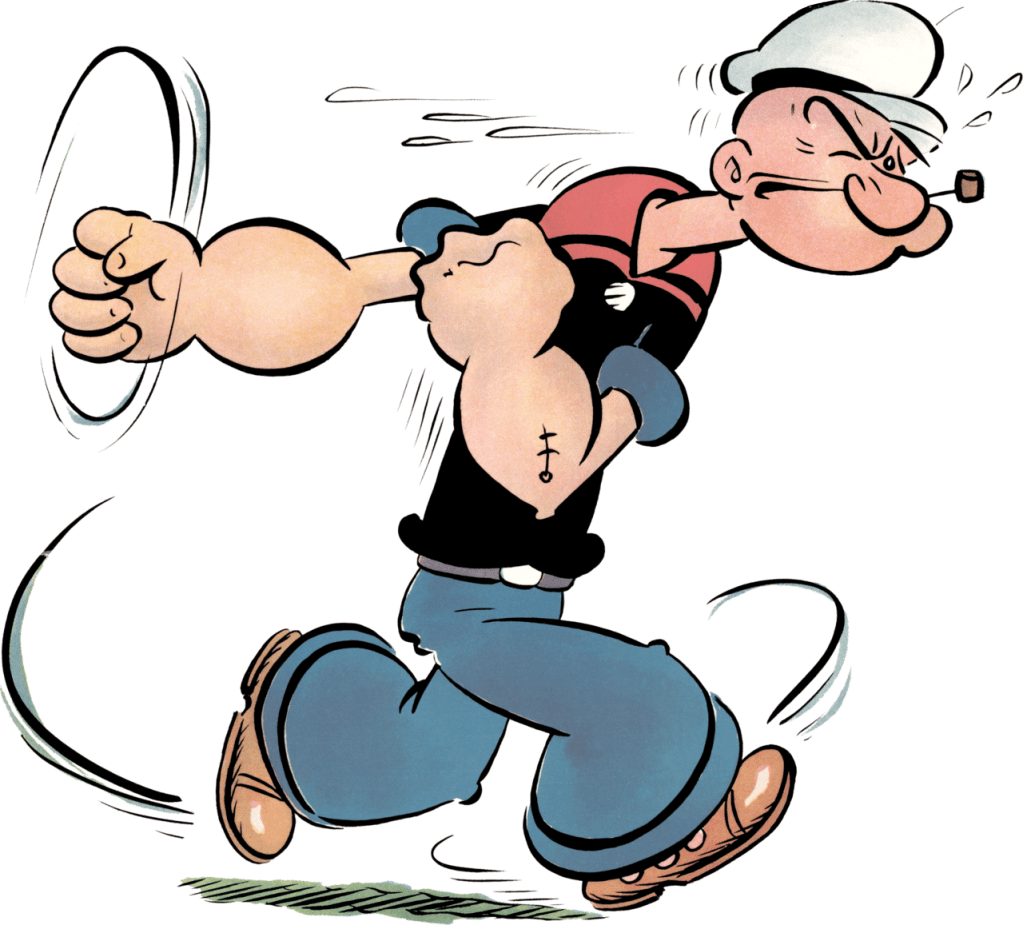
This character is normally known by a nickname but Popeye named them in 1933 as ‘Schooner Seawell Georgia Washenting Christiffer Columbia Daniel Boom’. What is the nickname?
Answer: Swee’Pea.
Swee’Pea, a character in E.C. Segar’s comic strip Thimble Theatre/Popeye, is named after the sweet pea flower. He debuted in 1933 and, despite ageing, remained a crawling baby who could speak and fight.
Five
In what sport are these the major prizes at the world championships. Swaythling Cup (men’s team), Corbillon Cup (women’s team), St. Bride’s Vase (men’s singles) and Geist Prize (women’s singles)?
Answer: Table tennis.
These world championship prizes are described by Wikipedia as
Team competition:
Swaythling Cup for men’s team, donated in 1926 by Gladys, Baroness Swaythling, mother of the first ITTF president, Ivor Montagu.
Corbillon Cup for women’s team, donated in 1933 by Marcel Corbillon, president of the French Table Tennis Association. The original Cup was won by German team in 1939, and disappeared during Berlin occupation after World War II; the current Corbillon Cup is a replica made in 1949.
Singles competition:
St. Bride Vase for men’s singles, donated in 1929 by C.Corti Woodcock, member of the exclusive St. Bride Table Tennis Club in London, after Fred Perry of England won the title in Budapest.
Geist Prize for women’s singles, donated in 1931 by Dr. Gaspar Geist, president of the Hungarian Table Tennis Association for women’s singles, donated in 1931 by Dr. Gaspar Geist, president of the Hungarian Table Tennis Association.
First
The post title provided the first letter of each of the answers. The reason for the title ‘First’ was a personal one: today marks the anniversary of me starting out in my chosen career — 15 June 1970 — long before I entered the trivia world that has provided a second career.
There is no theme with these questions but the five answers are linked to something written in this post prior to the questions.
One
What is American novelist F. Scott Fitzgerald’s first name?
Two
What title was shared by both of these: a 1966 single by Cream from their album Fresh Cream, and a 1988 track from Belinda Carlisle’s album, Heaven on Earth?
Three
John Updike’s 1960 novel was the first in a series of books with titles which included the nickname of the main character. What was the title of that 1960 novel?
Four
This character is normally known by a nickname but Popeye named them in 1933 as ‘Schooner Seawell Georgia Washenting Christiffer Columbia Daniel Boom’. What is the nickname?
Five
In what sport are these the major prizes at the world championships. Swaythling Cup (men’s team), Corbillon Cup (women’s team), St. Bride’s Vase (men’s singles) and Geist Prize (women’s singles)?
Today’s questions are not date related but follow a sequence which may become obvious as you venture through it.
One
What Canadian Province has borders with the US states of Maine, New Hampshire, New York and Vermont?
Answer: Quebec.
Quebec, Canada’s largest province by area, is the only Francophone-majority province. It has a rich history, having been a French colony, then a British colony, before becoming part of Canada in 1867. Quebec’s economy is diverse, with key industries including aeronautics, hydroelectricity, and mining, and it is renowned for its distinct culture and contributions to Canadian society.
Two
In the film Some Like It Hot (1959) the band’s singer Sugar Kane also played what stringed instrument?
Answer: Ukulele.
Some Like It Hot is a 1959 American crime comedy film directed by Billy Wilder, starring Marilyn Monroe, Tony Curtis and Jack Lemmon. The film, set in the Prohibition era, follows two musicians (Curtis and Lemmon) who disguise themselves as women to escape mobsters.
Three
What was the title of the 1983 Paul McCartney/Stevie Wonder duet?
Answer: Ebony and Ivory.
Ebony and Ivory is a 1982 duet by Paul McCartney and Stevie Wonder, promoting racial harmony. The song topped charts in the UK and US, but was banned in South Africa during apartheid after wonder dedicated his Academy Award to Nelson Mandela.
Four
What letter of the Greek alphabet is used to indicate a mathematical function for ‘the sum of’?
Answer: Sigma.
Sigma is the eighteenth letter of the Greek alphabet, with a value of 200 in Greek numerals. It is used as a summation operator in mathematics and is the origin of the Latin letter S.
Five
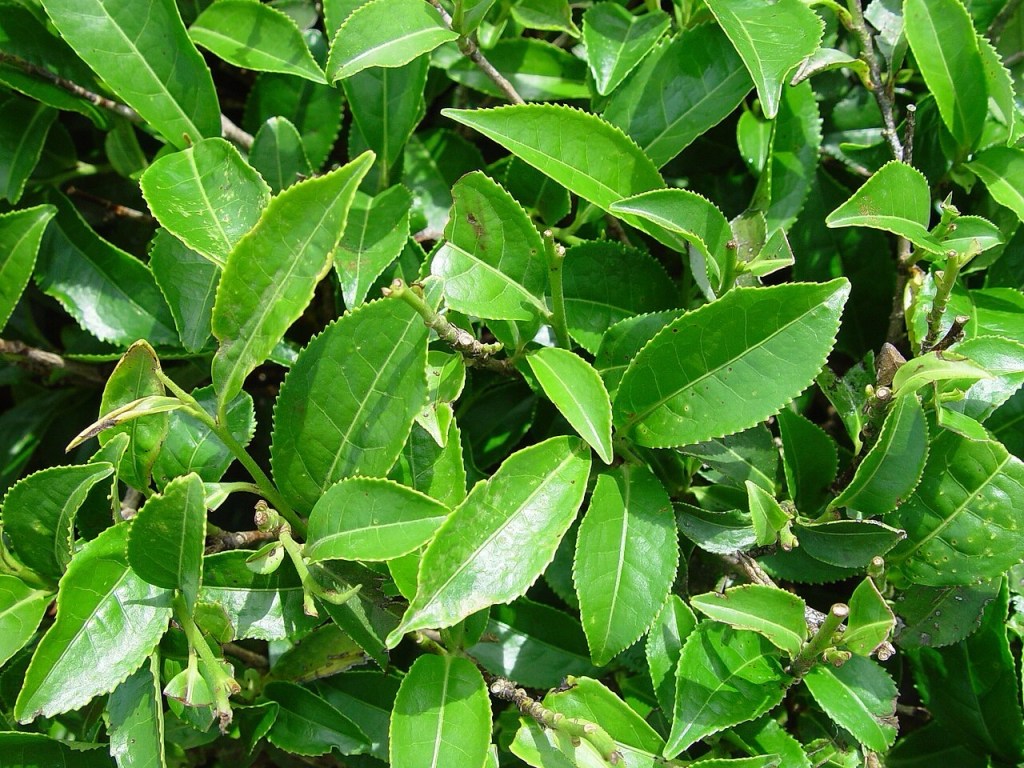
Camellia sinensis is the plant used to make what?
Answer: Tea.
Camellia sinensis, an evergreen shrub or small tree, is used to produce various types of tea. The name sinensis means ‘from China’ in Botanical Latin, and the genus name Camellia honours Rev. Georg Kamel.
Voyage of Discovery
The post title was a voyage of discovery, or a quest, and if you look at the answers, the initial letters spell out Q U E S T.
Continuing the recent trend, today’s first question is connected to today’s date, 9 June. The remainder of the questions are not date-related but follow on a theme begun in question one.
One
In 1781, an English engineer who Encyclopædia Britannica describes as ‘the principal inventor of the railroad locomotive’ was born. Who is he, and which of his locomotives inaugurated public rail travel in September 1828?
Answer: George Stephenson; Active (aka Locomotion).
George Stephenson, born on 9 June 1781, in Wylam, Northumberland, England, revolutionised transportation with his locomotive innovations. After building the Blucher and introducing the ‘steam blast’, he gained fame with a mine-safety lamp. In 1825, his Active (renamed Locomotion) locomotive inaugurated public rail travel. He constructed the Liverpool-Manchester line, overcoming opposition, and his Rocket won a 1829 competition. Stephenson’s work spurred global railroad expansion, and he continued as a leading figure in transportation engineering until his death on 12 August 1848.
Two
Tea bags were reportedly invented by accident. Modern tea bags are made from paper but what material were the early ones made from?
Answer: Silk.
Tea bags were popularised in the early 20th century, reportedly by accident. Around 1908, American tea merchant Thomas Sullivan sent tea samples in small silk bags. Some customers are said to have brewed the tea directly in the bags, mistaking them for a replacement for traditional metal infusers, leading to the development of the modern tea bag. As stated, early tea bags were made of silk; paper tea bags did not become common until later, when manufacturers developed cheaper and more practical filter-paper versions.
Three
(Note, in this question, the word ‘houghing’ is an obsolete form of ‘hoeing’ as done with a horse-drawn hoe (hough)).
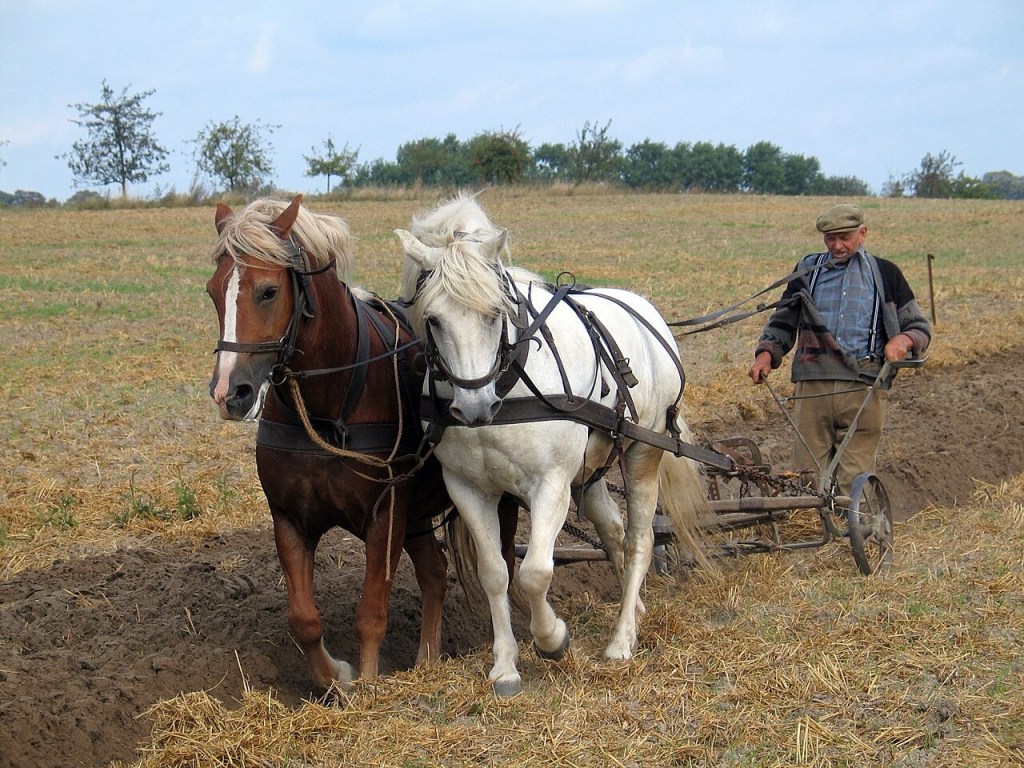
What name links the book The New Horse Houghing Husbandry: Or an Essay on the Principles of Tillage and Vegetation, which was published in 1731, with the 1978 album Heavy Horses?
Answer: Jethro Tull.
Jethro Tull (1674–1741) was an influential English agronomist and inventor whose innovations shaped modern British agriculture. Initially trained for law, Tull managed his father’s farm in Oxfordshire, where he developed a horse-drawn seed drill around 1701. In 1709, he purchased a farm in Berkshire, adopting vineyard cultivation methods and inventing a horse-drawn hoe. His work, published in The New Horse Houghing Husbandry: Or an Essay on the Principles of Tillage and Vegetation (1731), faced initial criticism but eventually revolutionised farming practices. The eleventh studio album by the band Jethro Tull, Heavy Horses, was released in 1978. It is a folk rock album dedicated to British working ponies and horses. It continues the band’s combination of folk and progressive rock with a darker sound.
Four
Adolphe Sax, best known for inventing the saxophone, was born in which present-day country, and in what decade did he patent the saxophone?
Answer: Belgium; 1840s.
Adolphe Sax, born in 1814 in Dinant, Belgium, was a Belgian-French instrument maker and inventor of the saxophone, which he patented in 1846. He also developed the saxhorn, saxo-tromba, and saxtuba, and redesigned the bass clarinet. Sax studied flute and clarinet before moving to Paris in 1842 to exhibit his saxophone. Appointed instructor at the Paris Conservatory in 1857, he faced legal battles over patents and died in poverty in 1894. Sax’s innovations significantly impacted the world of music.
Five
What are the ‘Four Great Inventions’ traditionally attributed to ancient China?
Answer: Papermaking, printing, the compass, and gunpowder.
These four inventions profoundly influenced world history. Papermaking and printing revolutionised the spread of knowledge, the compass transformed navigation and exploration, and gunpowder changed warfare. The concept of the ‘Four Great Inventions’ became especially popular in the nineteenth century as a way of highlighting China’s major contributions to global civilisation.
Before They Invented Drawing Boards What Did They Go Back To?
The post title was a quote from the American stand-up comedian, George Carlin (1937-2008).
 Quizology.Online