In 1982, Catherine, princess of Wales was born. What was her maiden surname?
Middleditch
Middlesmyth
Middleton
Three
Which traditional American folk song, recorded by Joan Baez on her 1960 debut album, became one of her signature performances and helped spark the 1960s folk revival?
This Land Is Your Land
Silver Dagger
John Henry
Four
In 1816, Humphrey Davy tested what device at Hebburn Colliery in England?
Safety fuse
Safety helmet
Safety lamp
Five
Born in 1913, Richard Nixon, the 37th President of the United States. During his presidency Nixon became associated with what group of tradesmen?
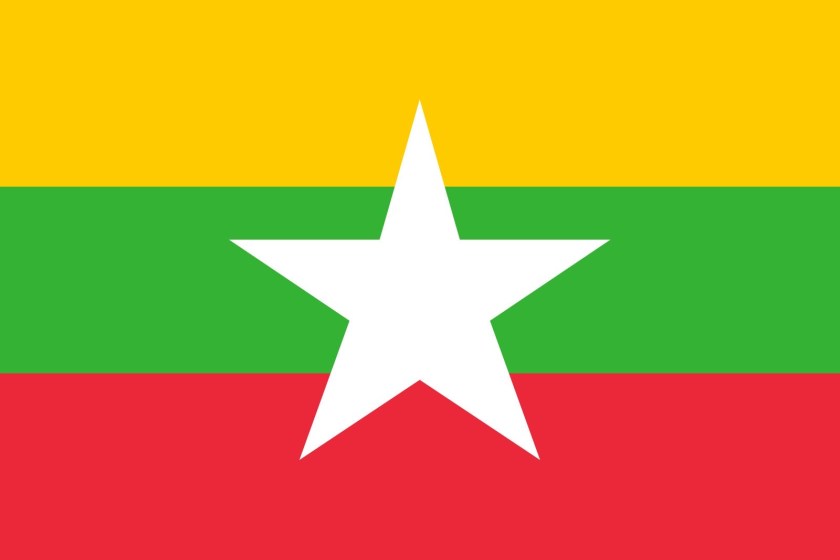
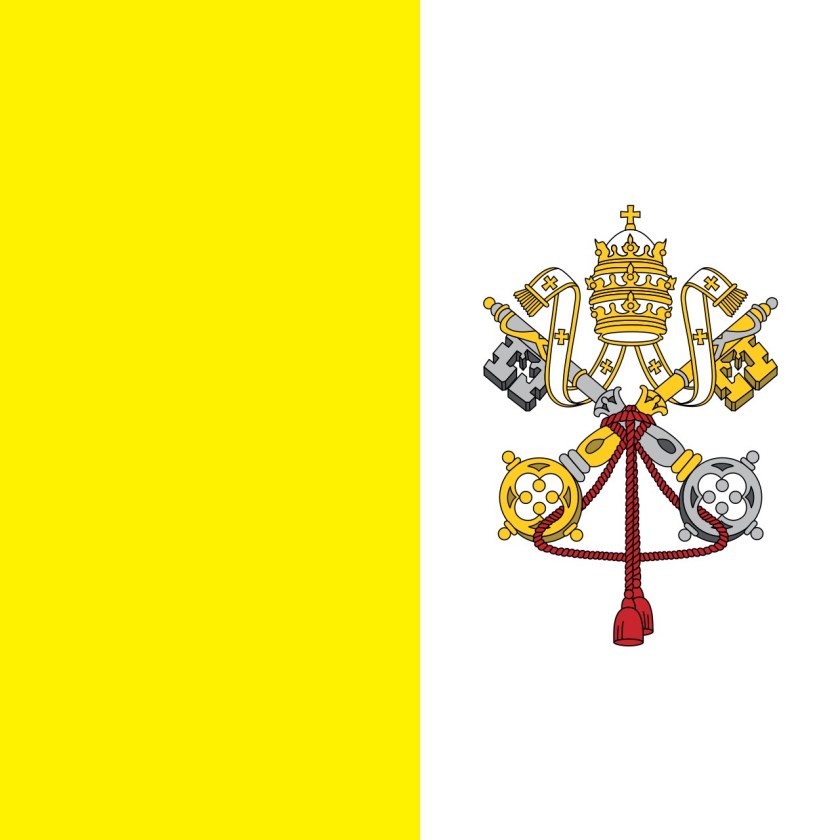
On this day in 1997, what family commemorated 700 years of ruling the place represented by the flag shown above? Who are the family and where do they rule?
Borgia, Republic of San Marino
Grimaldi family, Principality of Monaco
Medici family, Vatican City State
Answer: 2. Grimaldi family, Principality of Monaco.
Monaco, a sovereign city-state on the French Riviera, is the second smallest sovereign state in the world. It is a semi-constitutional monarchy with Prince Albert II as head of state. Monaco is known for its wealth, casinos, and as a tax haven, attracting a high percentage of millionaires.
Two
What year and state complete the following sentence? In …, Elvis Presley was born in …
1933; Alabama
1935; Mississippi
1937; Tennessee
Answer: 2. 1935; Mississippi.
Elvis Presley, the King of Rock and Roll, was a highly influential American singer and actor. Born on 8 January 1935 in Tupelo, Mississippi, he rose to fame in the 1950s with his unique blend of country and rhythm and blues, becoming a cultural icon despite initial controversy. Presley’s successful music career spanned multiple genres, and he remains one of the best-selling music artists of all time.
Three
On this day, Charles de Gaulle was inaugurated as president of France’s …
First Republic
Fourth Republic
Fifth Republic
Answer: 3. Fifth Republic.
Charles de Gaulle, a pivotal figure in French history, led the Free French forces during WWII, became the provisional president, and was instrumental in establishing the Fifth Republic. As President from 1959 to 1969, he navigated challenges like the Algerian War, strengthened France’s economy and international position, and aimed to increase France’s global influence.
__
Four
Born on this day, Stephen Hawking, a British theoretical physicist and cosmologist, who suffered from motor neurone disease did NOT take part in which one of these?
Have I Got News for You
Monty Python
The Hitchhiker’s Guide to the Galaxy radio series
Answer: 1. Have I Got News for You.
Stephen Hawking was an English theoretical physicist and cosmologist, known for his work on black holes and cosmology. He was diagnosed with motor neurone disease at age 21, but continued his work and achieved commercial success with his book A Brief History of Time. He featured at the Monty Python Live (Mostly) show in 2014. He was shown to sing an extended version of the Galaxy Song, after running down Brian Cox with his wheelchair, in a pre-recorded video. In 2018, Hawking was the voice of The Book Mark II on The Hitchhiker’s Guide to the Galaxy radio series
The ocean liners RMS Queen Mary 2 and her namesake Queen Mary are both named after the same person. Who?
Mary I
Mary, Queen of Scots
Mary of Teck
Answer: 3. Mary of Teck.
Queen Mary, now berthed permanently at Long Beach, California, United States, was launched in 1934 when she was named after, and by, Queen Mary, the consort of Britain’s King George V. On 8 January 2004, Queen Mary’s granddaughter, Elizabeth II, named Queen Mary 2 after her grandmother, the same Queen Mary who was born Mary of Teck. Cunard legend has it that the 1934 ship was to be named after Queen Victoria, and following protocol, they advised the king, ‘We have decided to name our new ship after England’s greatest queen.’ George V allegedly responded, ‘My wife [Queen Mary] will be delighted that you are naming the ship after her.’
Flag details with answers. Image Wikimedia Commons
One
On this day in 1997, what family commemorated 700 years of ruling the place represented by the flag shown above? Who are the family and where do they rule?
Borgia, Republic of San Marino
Grimaldi family, Principality of Monaco
Medici family, Vatican City State
Two
What year and state complete the following sentence? In …, Elvis Presley was born in …
1933; Alabama
1935; Mississippi
1937; Tennessee
Three
On this day, Charles de Gaulle was inaugurated as president of France’s …
First Republic
Fourth Republic
Fifth Republic
__
Four
Born on this day, Stephen Hawking, a British theoretical physicist and cosmologist, who suffered from motor neurone disease did NOT take part in which one of these?
Have I Got News for You
Monty Python
The Hitchhiker’s Guide to the Galaxy radio series
Five
The ocean liners RMS Queen Mary 2 and her namesake Queen Mary are both named after the same person. Who?
Born in 1969, Brian Hugh Warner is better known as whom?
Answer: Marilyn Manson
Marilyn Manson, born Brian Warner on 5 January 1969, is an American musician, actor and artist, best known as the lead vocalist of the rock band he co-founded in 1989 with guitarist Scott Putesky. The band, named after Marilyn Monroe and Charles Manson, is renowned for its controversial image and lyrics, blending industrial rock, glam rock, and alternative metal. It gained a cult following in South Florida for its theatrical and visually shocking performances, often challenging societal norms and promoting themes of drugs, sex, violence and Satanism. Despite achieving commercial success with several platinum and gold albums, Manson has faced criticism and legal battles, including allegations of abuse and human trafficking in the 2020s, which he has denied.
Two
In 1968, Alexander Dubček rose to power and implemented reforms that led to an invasion by fellow Warsaw Pact members, forcing his resignation. He came to power in which country and what two-word name – both six letters long – has been given to this period of liberalisation and reform?
Answer: Czechoslovakia; Prague Spring
Alexander Dubček, a Slovak statesman, led Czechoslovakia from 1968 to 1969, implementing reforms known as the Prague Spring. His liberalisation efforts, which included increased freedoms and a move towards federalism, were reversed following the Warsaw Pact invasion on August 20, 1968, forcing him to resign. Dubček later became a symbol of the Velvet Revolution and was awarded the Sakharov Prize in 1989. After the fall of communism, he returned to prominence, becoming chairman of the Federal Assembly and later the leader of Slovakia’s Social Democrats before his death in 1992.
Three
In Samuel Beckett’s Waiting for Godot, besides Vladimir and Estragon, what are the names of the other two characters, the travellers? Furthermore, what has happened to each of these travellers by the time they return in Act II?
Answer: Pozzo and Lucky; Pozzo is blind and Lucky is mute
Waiting for Godot is a tragicomedy play by Samuel Beckett, first published in 1952. The play revolves around two characters, Vladimir and Estragon, who engage in various activities while waiting for the titular Godot, who never arrives. The play is known for its enigmatic nature and has been widely acclaimed and adapted for various mediums.
Four
The future King Juan Carlos of Spain was born on this date. In what decade did he become king, and who did he replace as head of state?
Answer: 1970s; Francisco Franco
Juan Carlos, born in 1938, became King of Spain in 1975 after the death of Francisco Franco. He played a pivotal role in Spain’s transition to democracy, appointing reformist leaders and supporting political parties. Despite his initial support for Franco, Juan Carlos’s reign was marked by liberal reforms, including divorce and abortion laws. However, his later years were overshadowed by corruption scandals and financial controversies, leading to his abdication in 2014 and subsequent self-exile in 2020.
Five
Italian author Umberto Eco, born in 1932, wrote a novel set in 1970s Milan. It centres on a fictional conspiracy involving the Knights Templar, created by the characters Casaubon, Belbo and Diotallevi. What was the novel?
Answer: Foucault’s Pendulum
Umberto Eco (1932-2016) was an Italian literary critic, novelist, and semiotician, best known for his novels The Name of the Rose and Foucault’s Pendulum. He also wrote extensively on various topics, including semiotics, medieval studies and political commentary, with notable works such as A Theory of Semiotics and Semiotics and the Philosophy of Language. Eco explored other areas of communication and published numerous works on criticism, history and language.
The Misfits
The post title originates from a 1961 film of the same name starring Marilyn Monroe. As mentioned in the answer to question one, Brian Warner adopted the first part of Monroe’s name as his pseudonym, which, to me, feels somewhat incongruous, something of a misfit.
Born in 1969, Brian Hugh Warner is better known as whom?
Two
In 1968, Alexander Dubček rose to power and implemented reforms that led to an invasion by fellow Warsaw Pact members, forcing his resignation. He came to power in which country and what two-word name – both six letters long – has been given to this period of liberalisation and reform?
Three
In Samuel Beckett’s Waiting for Godot, besides Vladimir and Estragon, what are the names of the other two characters, the travellers? Furthermore, what has happened to each of these travellers by the time they return in Act II?
Four
The future King Juan Carlos of Spain was born on this date. In what decade did he become king, and who did he replace as head of state?
Five
Italian author Umberto Eco, born in 1932, wrote a novel set in 1970s Milan. It centres on a fictional conspiracy involving the Knights Templar, created by the characters Casaubon, Belbo and Diotallevi. What was the novel?
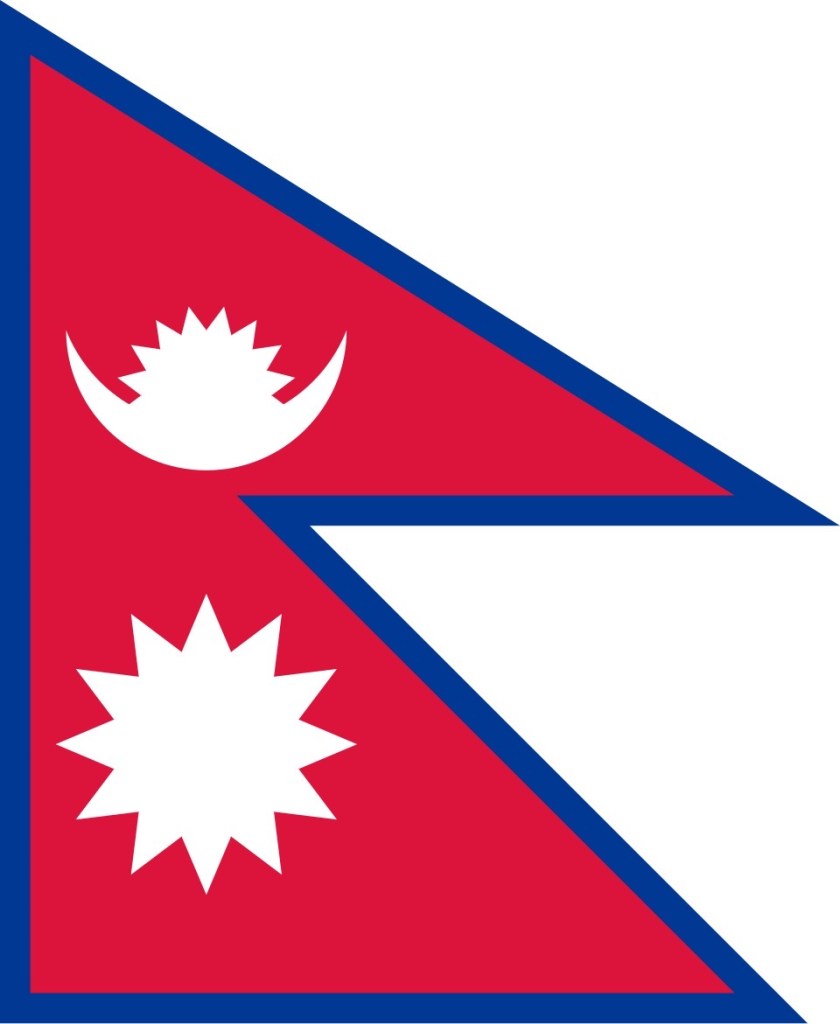
In 1990, the country whose flag is shown above put into effect its constitution. What is that country?
Answer: Croatia
The Republic of Croatia’s Constitution was promulgated today in 1990. It grants civil rights, including freedom of speech, religion, information, and association, as well as guaranteeing equality of nationalities.
Two
What gate in Berlin was reopened in 1989, having been obstructed and inaccessible during the Cold War?
Answer: Brandenburg Gate
The Brandenburg Gate, a Berlin landmark, symbolises both Germany’s division and reunification. Built in the late 18th century, it was closed off during the Berlin Wall era and reopened in 1989, marking a pivotal moment in German history.
Three
In 1965, Doctor Zhivago premiered. Who played Larissa Ameliava Antipova in the film and whose 1957 novel was the film an adaption?
Answers: Julie Christie; Boris Pasternak
Doctor Zhivago, a 1965 American film directed by David Lean, is a sweeping adaptation of Boris Pasternak’s novel. The film, set against the backdrop of World War I and the Russian Revolution, follows the love story between physician and poet Yury Zhivago and Larissa Ameliava Antipova, ‘Lara’. Despite mixed reviews, the film became a box-office success, known for its grand scale, cinematography, and Maurice Jarre’s score. Boris Pasternak’s novel, Doctor Zhivago, although published in 1957, was banned in the Soviet Union until 1987.
Four
In 1894, Alfred Dreyfus, a French army officer, was sentenced to life imprisonment for treason and sent to Devil’s Island, a remote penal colony, to serve his sentence. Four years later, his case was the subject of a now-famous letter, *J’Accuse…!, *which was published in the French press. Where was Devil’s Island, and who wrote J’Accuse…!?
Answers: French Guiana; Émile Zola
The Devil’s Island penal colony, officially the penal colony of Cayenne, in French Guiana operated from 1852 to 1952. It was notorious for harsh treatment, high mortality rates, and the exile of political prisoners like Captain Dreyfus. Émile Zola’s open letter, J’Accuse…!, published in 1898, accused the French government of antisemitism and the unlawful jailing of Alfred Dreyfus. The letter, published in L’Aurore, sparked international outrage and led to Zola’s prosecution for libel. The letter heightened support for Dreyfus
Five
In 1941, two weeks after Pearl Harbor, the US president and British prime minister met in Washington DC to discuss World War II. Who were these two men?
Answers: Franklin D. Roosevelt and Winston Churchill
The First Washington Conference, attended by Roosevelt and Churchill, prioritised defeating Germany and established the Combined Chiefs of Staff. Allies committed to the Declaration by United Nations, vowing no separate peace and full resource utilisation.
See question 5. Artist pression of ESA’s Gaia satellite observing the Milky Way, with a background image of the sky compiled from data from more than 1.8 billion stars. Image ESA via Wikipedia
One
… was dead: to begin with. There is no doubt whatever about that.
Published for the first time on this date in 1843, what begins with the quote above and whose surname is missing from the start?
Answer: A Christmas Carol; Marley
A Christmas Carol, a novella by Charles Dickens, recounts the story of Ebenezer Scrooge’s transformation after visits from the ghosts of Christmas Past, Present, and Yet to Come. The novella, published in 1843, was inspired by Dickens’s experiences and the Victorian revival of Christmas traditions. It has never been out of print and has been widely adapted.
Two
Born on this day in 1906, what Soviet leader, along with US President Jimmy Carter, signed the unsuccessful SALT II treaty in Vienna in 1979?
Answer: Leonid Brezhnev
Leonid Brezhnev, a Soviet statesman, led the Soviet Union for 18 years. He prioritised foreign and military affairs, implementing the Brezhnev Doctrine to justify Soviet intervention in Czechoslovakia and expanding the Soviet military-industrial complex. While achieving parity with the US in nuclear weapons and space programmes, Brezhnev’s focus on defence led to economic decline, impacting agriculture, consumer goods and healthcare.
Three
A singer born in Paris, France, on 19 December 1915, came to be known as ‘little sparrow’. Who was she?
Answer: Edith Piaf
Edith Piaf, a French singer and actress, gained international fame for her interpretation of the chanson. Her life, marked by tragedy and hardship, deeply influenced her music, which often reflected themes of loss and love. Despite her struggles with health and addiction, Piaf’s powerful voice and dramatic style captivated audiences, leaving a lasting legacy.
Four
On this day in 1606, Christopher Newport, in command of the Discovery, the Godspeed, and the Susan Constant, sailed from London, England. The following April, they entered a bay—the largest estuary in the United States—and went on to set up the first permanent English settlement in North America. What was the name of the bay and the colony?
Answer: Chesapeake Bay; Jamestown
Newport, a member of the colony’s governing body, led a total five voyages between Virginia and England, bringing supplies and settlers to the Jamestown colony between 1606 and 1611.
Five
In 2013, the European Space Agency launched a spacecraft that could be described as a space telescope or astronomical observatory. Named after the personification of Earth in Greek mythology, what was its name?
Answer: Gaia
Gaia, the Greek personification of Earth, is the mother of Uranus, Pontus, the Titans, Cyclopes and Giants.
From 27 July 2014 to 15 January 2025, Gaia has made more than three trillion observations of two billion stars and other objects throughout our Milky Way galaxy and beyond, mapping their motions, luminosity, temperature and composition. Gaia’s extraordinarily precise three-dimensional map will provide the data needed to tackle an enormous range of important questions related to the origin, structure and evolutionary history of our galaxy.
Today’s five questions are on a government-related theme.
Parliament House, Canberra, Australia. Image Wikipedia
One
The parliament of what country is pictured above and in what city is it sited?
Answer: Australia; Canberra
Parliament House in Canberra, Australia, is the meeting place of the Parliament of Australia and houses the executive branch. It replaced Old Parliament House and was officially opened on 9 May 1988.
Two
How many individuals were president of the United States during the 20th century? (The answer is a number.)
Answer: 18
This list displays each president and their respective years in office.
William McKinley 1897–1901
Theodore Roosevelt 1901–1909
William Howard Taft 1909–1913
Woodrow Wilson 1913–1921
Warren G. Harding 1921–1923
Calvin Coolidge 1923–1929
Herbert Hoover 1929–1933
Franklin D. Roosevelt 1933–1945
Harry S. Truman 1945–1953
Dwight D. Eisenhower 1953–1961
John F. Kennedy 1961–1963
Lyndon B. Johnson 1963–1969
Richard Nixon 1969–1974
Gerald Ford 1974–1977
Jimmy Carter 1977–1981
Ronald Reagan 1981–1989
George H. W. Bush 1989–1993
Bill Clinton 1993–2001
Three
What building is located at 55, Rue du Faubourg Saint-Honoré, 75008 Paris, France?
Answer: Élysée Palace
The Élysée Palace, completed in 1722, is the official residence of the French president. Located on Rue du Faubourg Saint-Honoré, its name derives from the Elysian Fields in Greek mythology.
Four
How many individuals were prime minister of the United Kingdom during the 20th Century? (The answer is a number.)
Answer: 20
Robert Gascoyne-Cecil, 3rd Marquess of Salisbury 1895–1902
Arthur Balfour 1902–1905
Henry Campbell-Bannerman 1905–1908
H. H. Asquith 1908–1916
David Lloyd George 1916–1922
Andrew Bonar Law 1922–1923
Stanley Baldwin 1923–1924; 1924–1929; 1935–1937
Ramsay MacDonald 1924; 1929–1935
Neville Chamberlain 1937–1940
Winston Churchill 1940–1945; 1951–1955
Clement Attlee 1945–1951
Anthony Eden 1955–1957
Harold Macmillan 1957–1963
Alec Douglas-Home 1963–1964
Harold Wilson 1964–1970; 1974–1976
Edward Heath 1970–1974
James Callaghan 1976–1979
Margaret Thatcher 1979–1990
John Major 1990–1997
Tony Blair 1997–2007
Five
The National People’s Congress, the highest organ of state power in the People’s Republic of China, convenes annually for how many weeks?
Answer: Two weeks
The National People’s Congress (NPC) is the highest organ of state power in China, responsible for amending the Constitution, legislating, and overseeing government operations. It is a unicameral legislature with 2,977 members, elected for a five-year term, and operates under the leadership of the Chinese Communist Party. The NPC meets annually for two weeks, with most power delegated to its Standing Committee.
In 1962, David Lean’s Lawrence of Arabia, which went on to became one of the most celebrated epics in the history of cinema, had its world premiere. Who starred as _ _ Lawrence, and what two initials are missing before his surname?
Answer: Peter O’Toole (as) T.E. (Lawrence)
Lawrence of Arabia is a 1962 British historical epic biographical adventure drama film directed by David Lean. It portrays Thomas Edward Lawrence’s experiences in the Ottoman provinces during World War I and his involvement in the Arab National Council. The film, which won seven Academy Awards including Best Picture and Best Director, is widely regarded as one of the greatest films ever made. It follows Lawrence’s journey from a military cartographer to a leader of the Arab Revolt against the Turks, and is renowned for its stunning desert landscapes, shot on location in Jordan, Spain and Morocco.
Two
Which government officially surrendered on this day in 1932 after a month-long battle against thousands of large flightless birds, and what were the birds?
Answer: Australian; Emus
The Emu War was a brief and unsuccessful 1932 military operation in Australia aimed at controlling the emu population, which was damaging crops in Western Australia. Three members of the Royal Australian Artillery were tasked with culling approximately 20,000 emus using machine guns, but the weapons and tactics were ineffective. Despite petitions from local farmers, the campaign, which lasted from November to December, resulted in fewer than 1,000 emus being killed and became a subject of national and international ridicule.
Portrait of Ada, Countess of Lovelace (Ada Lovelace), c1840. Image Wikipedia
Three
Ada Lovelace, often regarded as the first computer programmer, was born in Marylebone, London. In which decade was she born, and who was her famous father?
Answer: 1810s; Lord Byron
Born in 1815, Ada Lovelace, the daughter of the poet Lord Byron, was an English mathematician and writer renowned for her work on Charles Babbage’s Analytical Engine. She recognised its potential beyond mere calculation and developed a vision of computers’ capabilities, leading to her being considered the first computer programmer. Her contributions are celebrated on Ada Lovelace Day.
Four
In 1948, the General Assembly of the United Nations adopted the Universal Declaration of Human Rights. Which former First Lady of the United States chaired the United Nations Commission on Human Rights that was responsible for the drafting of the document?
Answer: Eleanor Roosevelt
The Universal Declaration of Human Rights (UDHR), adopted by the UN General Assembly in 1948, is a foundational document of international human rights law. Drafted by a team including John Humphrey, Eleanor Roosevelt and René Cassin, it comprises 30 articles outlining civil, political, economic, social, and cultural rights. Although not legally binding, the UDHR has achieved significant moral authority and has influenced numerous international treaties and national constitutions.
Five
The first part of the first edition of the Encyclopædia Britannica, the English-language general encyclopaedia, was published and advertised for sale on this day. In what century and in what city did this occur?
Answer: 18th century; Edinburgh,Scotland, United Kingdom
The Encyclopædia Britannica, a general-knowledge English-language encyclopaedia, was first published in Edinburgh, Scotland, in 1768 by a group of Scottish gentlemen. Initially released in three volumes, it introduced a “new plan” by combining treatises on arts and sciences with short articles on technical terms, catering to both serious students and those seeking quick reference material. William Smellie, an Edinburgh printer, is credited with devising this plan and writing or compiling many of the articles. The encyclopaedia transitioned from print to digital in 2012 due to strong competition from digital encyclopaedias like Microsoft Encarta and Wikipedia, yet it maintained its reputation for authoritative and scholarly content and is now available exclusively online.
Utility ought to be the principal intention of every publication.
The title of today’s post is the first sentence of the preface to the first edition of Encyclopædia Britannica.
“UTILITY ought to be the principal intention of every publication. Wherever this intention does not plainly appear, neither the books nor their authors have the smallest claim to the approbation of mankind” . So begins the preface to Britannica’s 1st edition, which began publication 250 years ago this month (on December 10, 1768). Encyclopædia Britannica via Instagram