Over the next nine days, 46 questions will be posed, one for each letter of the alphabet plus 20 others (There will be six one day). The 20 others appear as duplicate letters, and these duplicates spell out the name of the Roman Fortification which in CE 150 to 160 was the furthest boundary from the city of Rome, and the country that it was situated in. It is a three-word answer with eight letters in the first part of the name and four in the second part; the country has eight letters in its name. BTW Fit, as used in the post title, is an archaic term meaning ‘a division of a song, ballad, or story’.
One
To whom was R. Kelly married from 1994 to 1995?
Two
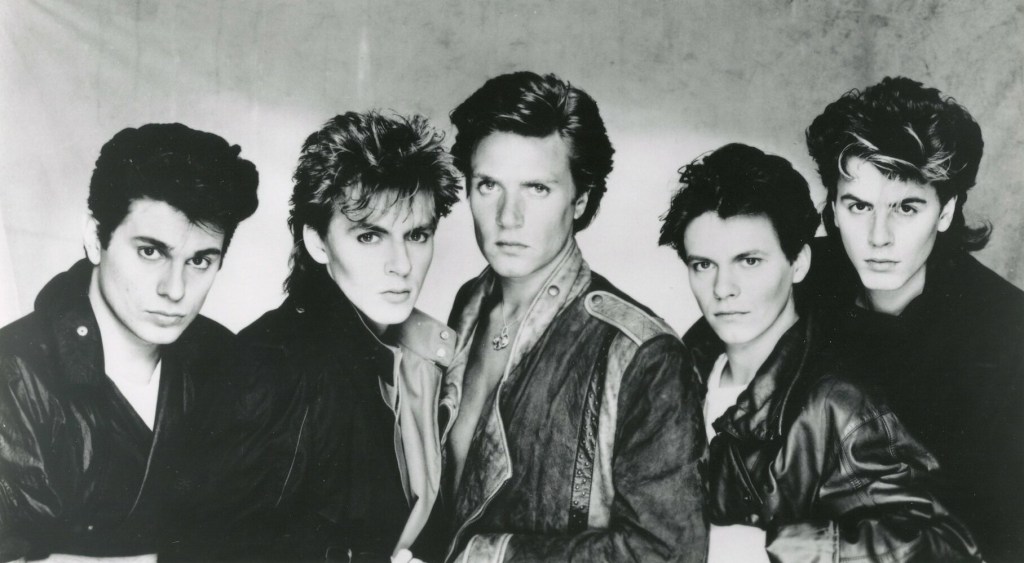
What 1968 film influenced the band Duran Duran’s choice of name?
Three
The Chinese Exclusion Act was signed into law by the 21st president of the US in 1882 who incidentally gave his name to an elementary school in a 1995 film. Who was this president?
Four
In what month and year was the world’s first atomic bomb dropped on the Japanese city of Hiroshima?
Five
What word can be defined as: the number below the line in a vulgar fraction; a divisor?
Good luck! I’ll post all of the answers after the questions have all been asked.
My blog will be somewhat different over the next few days. I will pose five questions each day for six days across various subjects, and each answer will begin with a distinct letter of the alphabet. As you likely deduced, five questions per day across six days yields thirty answers, each starting with a unique letter, leaving four unaccounted for. Consequently, four duplicates exist; in their order of appearance, they spell the name of a villainous figure from the eighth volume of a comic originally serialised in the first half of the 20th century. Although this character is not widely known, the aim is to correctly identify the second, duplicate iteration of these initial letters to reveal the name. The answers will not be given on the same day as the questions but at the end.
One
Moloko Plus, a barbiturate-spiked milk drink, features in which Anthony Burgess novel?
Two
What is the only planet in our solar system named after a Greek god rather than a Roman one?
Three
Israel defeated Egypt, Jordan and Syria in the deftly named 5–10 June 1967 war?
Four
What English archaeologist, army officer, diplomat and writer had the forenames Thomas Edward?
Five
Which letter represents tungsten within the periodic table of elements?
Good Luck! The answers will be posted after day six questions. More questions tomorrow.
The first question is related to today, 20 August. The subsequent ones relate to each other.
One
On 20 August 1968, the Soviet Union led the other member nations of the Warsaw Pact, with the exception of Albania and Romania, in an invasion of Czechoslovakia to end Alexander Dubček’s liberalisation, known as the Prague Spring.
What country and city respectively are missing from the above statement?
Answers: Czechoslovakia; Prague.
The Prague Spring was a period of political liberalisation in Czechoslovakia from January to August 1968, led by Alexander Dubček. It ended with a Soviet-led invasion. Dubček’s reforms included media freedom and decentralisation. Czechoslovakia remained under Soviet control until 1989 and, in 1993, split into the Czech Republic and Slovakia.
Two
When the Warsaw Pact was established in 1955, how many nations were members, and what were they?
Answers: Eight; Albania, Bulgaria, Czechoslovakia, East Germany, Hungary, Poland, Romania and Soviet Union.
The Warsaw Pact, established in 1955, served as a Soviet-led military alliance opposing NATO during the Cold War. It encompassed the Eastern Bloc states listed above; Albania was removed in 1961 and officially left in 1968, while East Germany exited in 1990 and Romania remained an independent, non-Soviet member. Following the Revolutions of 1989 and German reunification, the pact ended in 1991. Former members such as East Germany, the Czech Republic, and Slovakia later joined NATO.
Three
The Soviet Union was also known as the USSR; what did this abbreviation stand for in English; and for how many years did it exist?
Answer: Union of Soviet Socialist Republics; 69 years.
Established in 1922 and ending in 1991, the Soviet Union was a transcontinental communist state directed by the Communist Party from Moscow. Stalin’s leadership produced industrialisation and purges, while World War II resulted in 27 million deaths. Cold War tensions emerged, and reforms under Gorbachev prompted secession and dissolution. As a superpower, it possessed the largest nuclear arsenal and served on the UN Security Council.
Four
Name the permanent members of the United Nations Security Council?
Answer: China, France, Russia, United Kingdom and United States.
The UN Charter grants China, France, Russia, the United Kingdom, and the United States permanent Security Council seats with veto power. Ten elected members complete the 15-state body. The permanent members of the UN Security Council, known as the P5, are China, France, Russia, the UK, and the US. They were WWII Allies and possess nuclear weapons and veto power. The Council has 15 members, with 10 elected. Reform proposals face opposition from the Uniting for Consensus movement.
Five
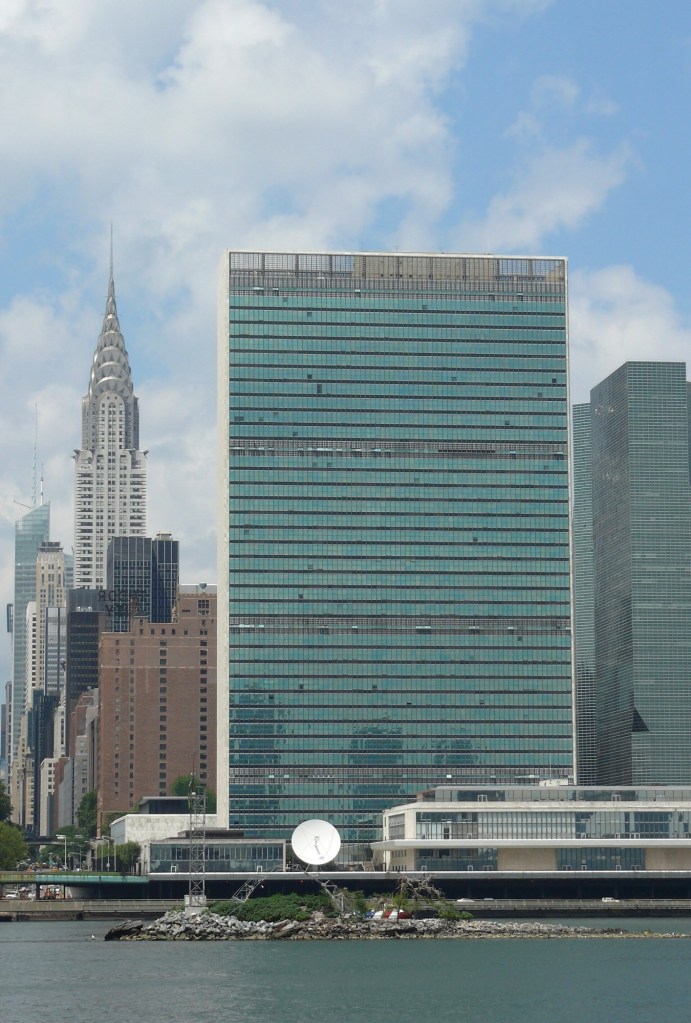
The picture above shows the United Nations Building. What body of water is in the foreground of this picture?
Answer: East River.
The United Nations headquarters is located in Midtown Manhattan, New York City, completed in 1952. It includes the Secretariat, Conference, and General Assembly buildings. Designed by Wallace Harrison, it is extraterritorial under a U.S. treaty. The UN has regional headquarters in Geneva, Vienna, and Nairobi, but not its specialised agencies. The East River is not a river but a saltwater tidal estuary and strait in New York City linking Upper New York Bay to Long Island Sound. It separates Brooklyn and Queens from Manhattan and the Bronx.
The first question is related to today, 20 August. The subsequent ones relate to each other.
One
On 20 August 1968, the Soviet Union led the other member nations of the Warsaw Pact, with the exception of Albania and Romania, in an invasion of … to end Alexander Dubček’s liberalisation, known as the … Spring.
What country and city respectively are missing from the above statement?
Two
When the Warsaw Pact was established in 1955, how many nations were members, and what were they?
Three
The Soviet Union was also known as the USSR; what did this abbreviation stand for in English; and for how many years did it exist?
Four
Name the permanent members of the United Nations Security Council?
Five
The picture above shows the United Nations Building. What body of water is in the foreground of this picture?
United Nations Building, New York City. See question five. Image Wikimedia Commons
Five unassociated questions.
One
Travelling west along the Trans-Canada Highway (TCH) from its western terminus, how many provincial and territorial capitals do you pass through, and what, in geographical order, are their names along with their respective province or territory?
Answers: Six; Victoria, British Columbia; Regina, Saskatchewan; Winnipeg, Manitoba; Québec City, Quebec; Fredericton, New Brunswick; St. John’s, Newfoundland and Labrador.
The Trans-Canada Highway is a transcontinental highway system spanning all ten Canadian provinces, with its main route covering 7,821 kilometres from Victoria, British Columbia, to St. John’s, Newfoundland and Labrador. Construction began in 1950, the highway officially opened in 1962, and the final section was completed in 1971. The entire system, including routes such as the Yellowhead Highway, totals about 12,800 kilometres. Design standards vary along its length, although most sections remain two-lane, undivided highways. The longest continuous divided section extends for about 1,500 kilometres from the Rocky Mountains to the Manitoba–Ontario border. Although the network does not extend into Canada’s three territories or to the U.S. border, it forms part of the National Highway System. In addition to passing through six provincial capitals, the Trans-Canada Highway also serves Canada’s national capital, Ottawa.
Two
A fictitious error deliberately placed in a reference work is a what?
Ballicatter
Frauendienst
Mountweazel
Answer: Mountweazel.
A fictitious entry is a deliberate error in reference works used as a copyright trap. Types include Mountweazel, trap street, and paper town. Henry Alford coined “Mountweazel” after a fake entry in the 1975 New Columbia Encyclopaedia. These entries are also known as nihilartikel.
Three
The title of a 2017, single by Drake shares its name with a fruit, the flower of which is shown above. What was the title of the single?
Answer: Passionfruit.
Passionfruit by Drake, featuring Zoë Kravitz, is a tropical house, R&B, pop, and dancehall song from his 2017 mixtape More Life. It peaked at number 8 on the US Billboard Hot 100 and number 2 on the Canadian Hot 100.
Four
Three questions based the standard UK and US editions of monopoly.
What on the UK edition is the equivalent of the American Marvin Gardens?
The British Leicester Square is the equivalent of what on the American edition?
What colour are these properties on both the British and American versions?
Answers
Piccadilly
Atlantic Avenue
Yellow
Monopoly, derived from Lizzie Magie’s 1903 game, involves moving tokens to buy properties and bankrupt opponents. Parker Brothers published it in 1935; Hasbro acquired it in 1991. It has sold 275 million copies across 113 countries.
Five
In this post, No. 3 was appointed on 30 November 1962. The first, Gladwyn Jebb, serving in an ‘acting’ capacity and therefore unnumbered, held the post for 101 days in 1945/46. Nos. 1 and 2 were Scandinavian, while No. 3 was the first non-European. What is this post, who was No. 3, and what was his nationality?
Answers: Secretary-General of the United Nations; U Thant and Burmese.
The secretary-general of the United Nations oversees the Secretariat under Chapter XV of the Charter, appointed by the General Assembly after a Security Council recommendation, with any permanent member able to veto. Precedent excludes permanent members’ citizens, favours regional rotation and gender equality, and all appointees are career diplomats. Since 1971, five-year terms are standard, with reselection common. The secretary-general’s duties include advocacy, diplomacy, and civil service, with informal powers for dispute prevention.
United Nations Building, New York City. See question five. Image Wikimedia Commons
Five unassociated questions.
One
Travelling west along the Trans-Canada Highway (TCH) from its western terminus, how many provincial and territorial capitals do you pass through, and what, in geographical order, are their names along with their respective province or territory?
Two
A fictitious error deliberately placed in a reference work is a what?
Ballicatter
Frauendienst
Mountweazel
Three
The title of a 2017, single by Drake shares its name with a fruit, the flower of which is shown above. What was the title of the single?
Four
Three questions based the standard UK and US editions of monopoly.
What on the UK edition is the equivalent of the American Marvin Gardens?
The British Leicester Square is the equivalent of what on the American edition?
What colour are these properties on both the British and American versions?
Five
In this post, No. 3 was appointed on 30 November 1962. The first, Gladwyn Jebb, serving in an ‘acting’ capacity and therefore unnumbered, held the post for 101 days in 1945/46. Nos. 1 and 2 were Scandinavian, while No. 3 was the first non-European. What is this post, who was No. 3, and what was his nationality?
All of today’s questions are related to the date, 1 August.
One
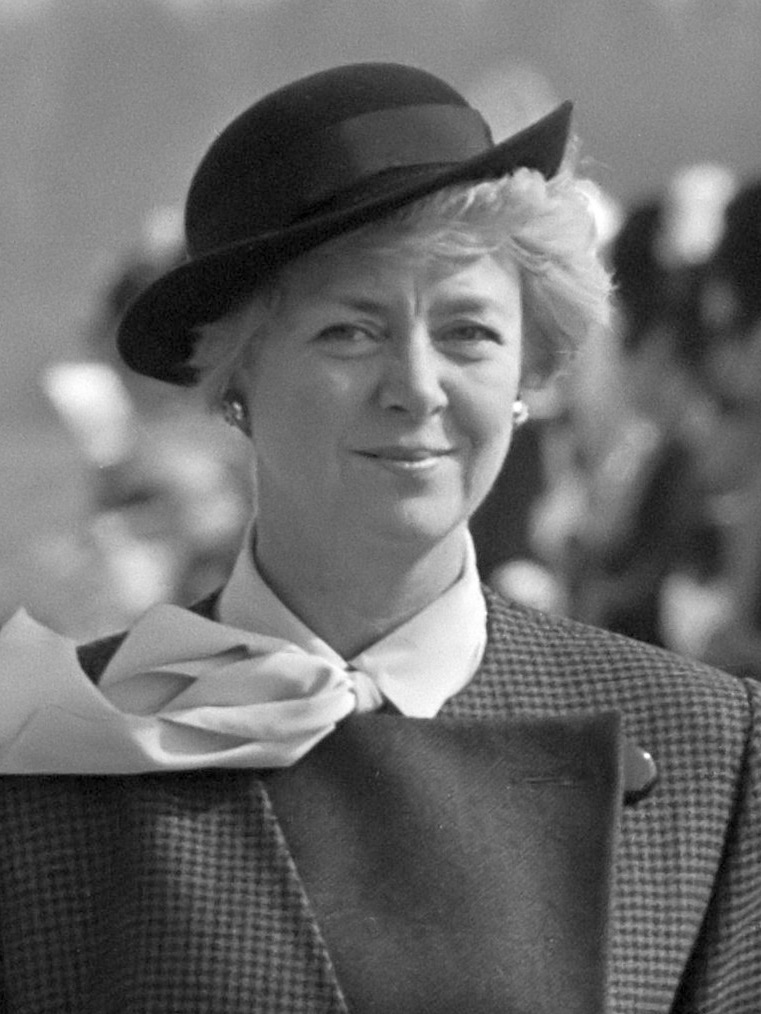
In 1980, for the first time anywhere in the world, a woman was elected head of state in a national election. This election was the first of four terms in this role. Who is she, and of what country was she president?
Answer: Vigdís Finnbogadóttir; Iceland.
Vigdís Finnbogadóttir served as Iceland’s president from 1980 to 1996 and was the first woman globally elected head of state. After retiring from office Finnbogadóttir chaired the UNESCO World Commission on the Ethics of Scientific Knowledge and Technology from 1997 to 2001 and became UNESCO’s goodwill ambassador for languages in 1998.
Two
In 1996, George R.R. Martin published the first volume of a book series. What is the book series called?
Answer: A Song of Ice and Fire.
George R.R. Martin, born in 1948, is an American fantasy writer known for his A Song of Ice and Fire series, adapted into Game of Thrones and House of the Dragon. He began his career with short fiction and television writing before returning to novels.
Three
What Formula 1 driver, who suffered extensive burns in a severe accident in the 1976 German Grand Prix at the Nürburgring, returned to racing still heavily bandaged, having only missed two races?
Answer: Niki Lauda
Niki Lauda, after a near-fatal crash in 1976, won his second championship with Ferrari in 1977. He took a two-year hiatus before returning with McLaren, winning his third championship in 1984, and retiring in 1985.
Four
On this date, the Guam Organic Act was signed, officially establishing Guam as an organised unincorporated territory of the United States. Who was the U.S. president at the time?
Answer: Harry S. Truman.
Guam, a territory since 1899, was acquired at the end of the Spanish-American War. It’s home to Naval Base Guam and Andersen Air Force Base. Organised under the Guam Organic Act of 1950, it granted U.S. citizenship to Guamanians and established a local government. The act was amended in 1968 to allow for the election of a governor.
Five
In 1620, Myles Standish, his wife Rose and others sailed from Delfshaven, Netherlands to England where they would join with the Mayflower to sail to America. What is the name of the ship on which Standish and his wife sailed from Delfshaven, and in what modern country is Delfshaven?
Answer: Speedwell; Netherlands.
On 1 August 1620, the Pilgrim Fathers left Delfshaven on the Speedwell. After delays due to leaks, they departed Southampton on 5 August with the Mayflower. The Speedwell was abandoned, and its passengers, including the Standishes, joined the Mayflower for the voyage to the New World.
All of today’s questions are related to the date, 1 August.
One
In 1980, for the first time anywhere in the world, a woman was elected head of state in a national election. This election was the first of four terms in this role. Who is she, and of what country was she president?
Two
In 1996, George R.R. Martin published the first volume of a book series. What is the book series called?
Three
What Formula 1 driver, who suffered extensive burns in a severe accident in the 1976 German Grand Prix at the Nürburgring, returned to racing still heavily bandaged, having only missed two races?
Four
On this date, the Guam Organic Act was signed, officially establishing Guam as an organised unincorporated territory of the United States. Who was the U.S. president at the time?
Five
In 1620, Myles Standish, his wife Rose and others sailed from Delfshaven, Netherlands to England where they would join with the Mayflower to sail to America. What is the name of the ship on which Standish and his wife sailed from Delfshaven, and in what modern country is Delfshaven?
All of these questions are related to today’s date, 13 July.
One
American actor Harrison Ford was born on this day in 1942. In a 1989 film, he played an archaeologist whose father was also an archaeologist. Both were held captive in a castle.
Who played his father?
Which castle and country was it located in?
Answers
Sean Connery
Castle Brunwald (or Brunwald Castle), Austria.
Indiana Jones and the Last Crusade (1989), directed by Steven Spielberg, stars Harrison Ford and Sean Connery. Set in 1938, Indiana searches for his kidnapped father, a Holy Grail scholar. The film, praised for its lighthearted tone, grossed $474.2 million, won an Academy Award, and led to sequels in 2008 and 2023.
Two
In 1985, what song featured with an emotional film of starving Ethiopian children during the Live Aid concert, and what group sang it?
Answer: Drive, Cars.
“One afternoon before the concert, Bowie was up in the office and we started looking through some videos of news footage, and we watched the CBC piece [footage from the Ethiopian famine, cut to the Cars’ song “Drive”]. Everyone just stopped. Bowie said: ‘You’ve got to put that in the show; it’s the most dramatic thing I’ve ever seen.’ That was probably one of the most evocative things in the whole show and really got the money rolling in.” —Live Aid promoter Harvey Goldsmith on Bowie picking out the CBC news piece for the concert, a video Bowie introduced on the big screen at Wembley after his set. davidbowie.com
Three
One artist performed live at the 1985 Live Aid concert in London and then appeared on stage at the same day’s concert in Philadelphia, USA. He performed solo at both venues but also supported other artists by playing live piano and drums.
Who is this artist?
Who did he play piano for in London?
What band did he play drums for in Philadelphia?
Answers
Phil Collins
Sting
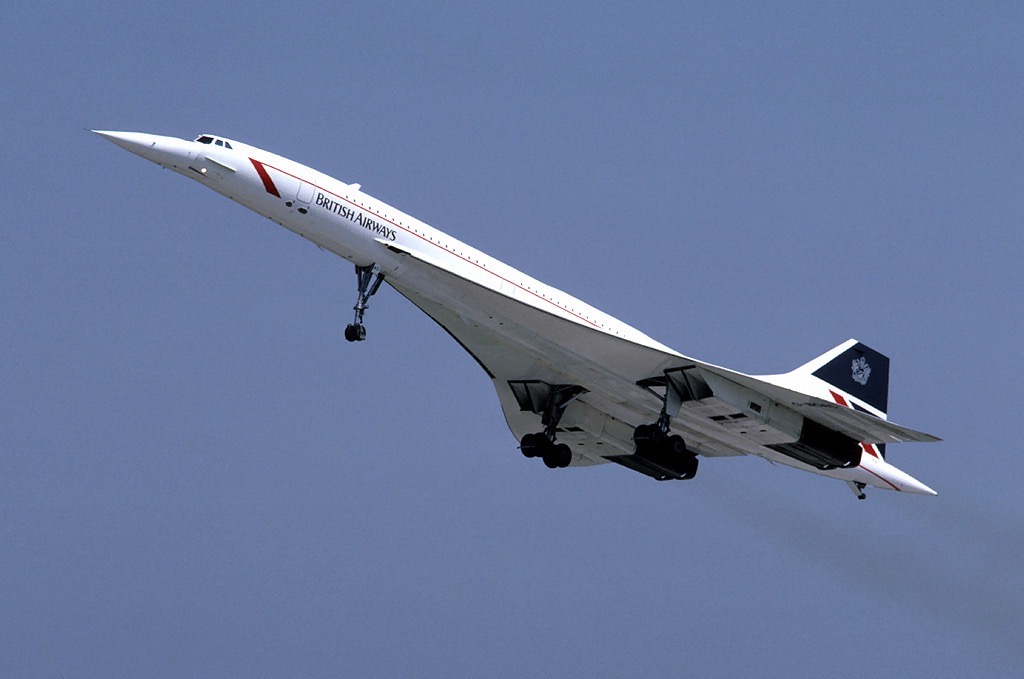
Led Zeppelin At the Live Aid concerts on July 13, 1985, Phil Collins performed solo at both venues, played piano for Sting at Wembley Stadium and drums for Led Zeppelin at JFK Stadium. This was made possible by him travelling between the two locations on a Concorde flight.
Four
Who became the second woman Prime Minister of the United Kingdom on 13 July 2016, and how long did she hold the office?
Theresa May; three years (3 years, 11 days to be exact).
Theresa May, born in 1956, served as UK Prime Minister and Conservative Party Leader from 2016 to 2019, and Home Secretary from 2010 to 2016. She was MP for Maidenhead (1997-2024) and joined the House of Lords in 2024. May led Brexit negotiations and survived two no-confidence votes.
Five
In 1939, what singer, backed by trumpeter Harry James, recorded his first single, From the Bottom of My Heart?
Answer: Frank Sinatra.
Francis Albert Sinatra, born in 1915, was a renowned American singer and actor, nicknamed ‘Chairman of the Board’ and ‘Ol’ Blue Eyes’. He sold 150 million records, won 13 Grammys, and starred in films like From Here to Eternity. Sinatra received numerous accolades, including the Presidential Medal of Freedom.
Who’s gonna plug their ears / When you scream?
Is a line from Cars’ song Drive which featured with an emotional video during the Live Aid concerts and immediately led to an upsurge in donations. The lyrics are shown below.
Drive Cars
Who’s gonna tell you when It’s too late? Who’s gonna tell you things Aren’t so great?
You can’t go on thinking Nothing’s wrong, oh oh Who’s gonna drive you home Tonight?
Who’s gonna pick you up When you fall? Who’s gonna hang it up When you call? Who’s gonna pay attention To your dreams? Yeah, who’s gonna plug their ears When you scream?
You can’t go on thinking Nothing’s wrong, oh oh Who’s gonna drive you home Tonight?
Who’s gonna hold you down When you shake? Who’s gonna come around When you break?
You can’t go on thinking Nothing’s wrong, oh oh Who’s gonna drive you home Tonight?
You know you can’t go on thinking Nothing’s wrong Who’s gonna drive you home Tonight? — AZ Lyrics
All of these questions are related to today’s date, 13 July.
One
American actor Harrison Ford was born on this day in 1942. In a 1989 film, he played an archaeologist whose father was also an archaeologist. Both were held captive in a castle.
Who played his father?
Which castle and country was it located in?
Two
In 1985, what song featured with an emotional film of starving Ethiopian children during the Live Aid concert, and what group sang it?
Three
One artist performed live at the 1985 Live Aid concert in London and then appeared on stage at the same day’s concert in Philadelphia, USA. He performed solo at both venues but also supported other artists by playing live piano and drums.
Who is this artist?
Who did he play piano for in London?
What band did he play drums for in Philadelphia?
Four
Who became the second woman Prime Minister of the United Kingdom on 13 July 2016, and how long did she hold the office?
Five
In 1939, what singer, backed by trumpeter Harry James, recorded his first single, From the Bottom of My Heart?