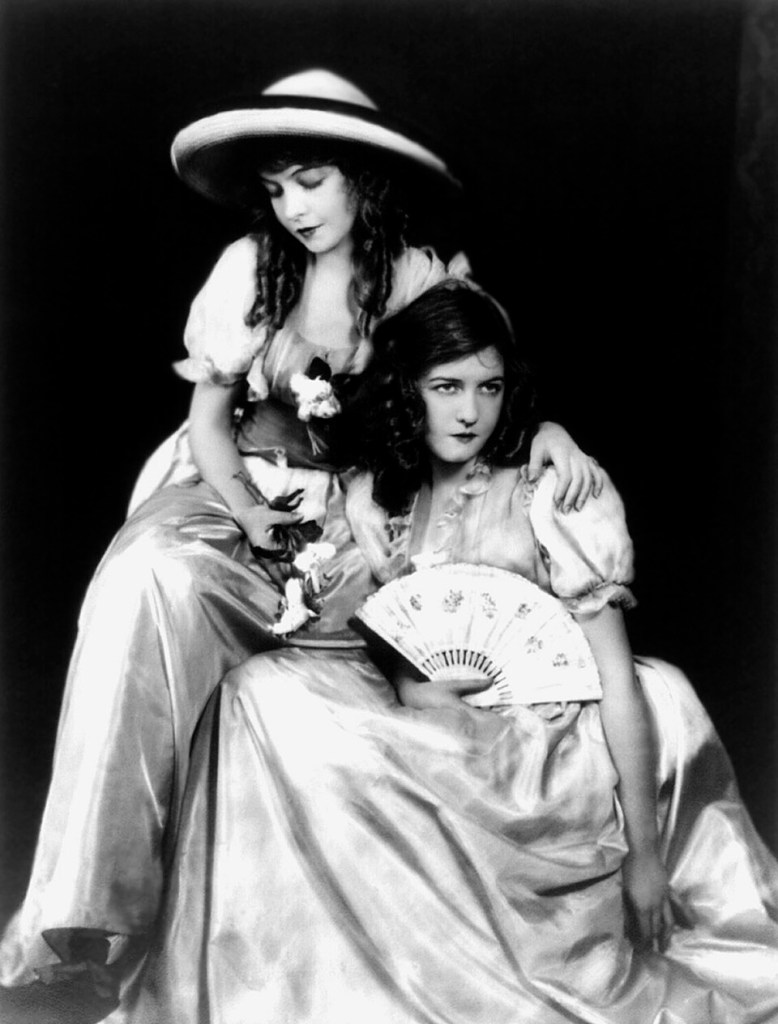
Born in 1898, Miss Gish, pictured on the right with her sister, who both became major movie stars during the silent era. What were the sisters’ names?
Four
In 1995, Russian athlete Yolanda Chen, appearing at the World Indoor Championships in Barcelona, Spain, set a new world indoor record of 15.03 metres and won the gold medal. In what event was Ms Chen competing?
Five
The Daily Courant was Britain’s first national daily newspaper. In what decade was it published?
Here are the answers to my questions from earlier.
Today five pieces of miscellany.
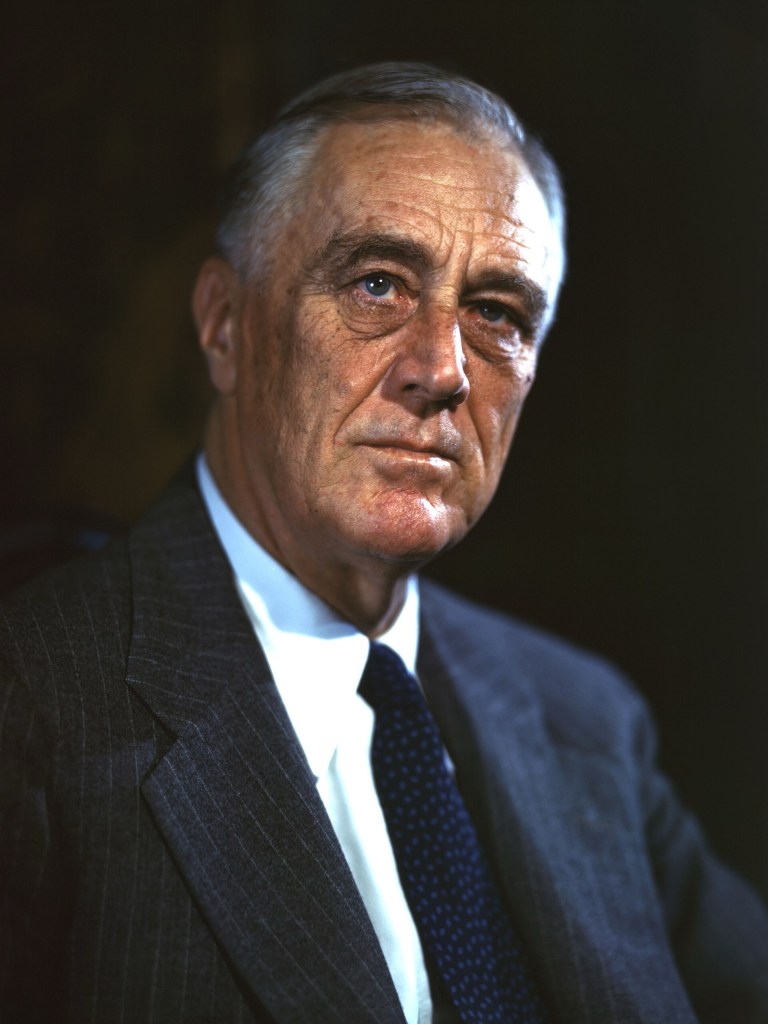
See question five. Franklin D. Roosevelt, president of the United States. Image Wikimedia Commons
One
What two words appear with ‘Band’, ’Heart’, and ’Fields’ in the titles of three songs from 1970, 1972 and 1993 respectively?
Answer: of Gold.
Band of Gold by Freda Payne, a 1970 hit, was written by Holland-Dozier-Holland and Ron Dunbar. Heart of Gold by Neil Young, from his album Harvest, is his only US No. 1 single and reached No. 1 in Canada twice. Fields of Gold is a 1993 song by Sting from his album Ten Summoner’s Tales. It reached No. 16 on the UK Singles Chart and No. 23 on the US Billboard Hot 100.
Two
This modern city was mentioned in the Icelandic sagas when it was known as Mikligarðr — from the Old Norse mikill ‘big’ and garðr ‘wall’ or ‘stronghold’. What city?
Answer: Istanbul.
Pliny the Elder called it Lygos, Augusta Antonina and New Rome were other names for Istanbul. Originally called Byzantium, it evolved into Constantinople and is now known by its Turkish name reflecting its rich history. The Turkish government advocated for “Istanbul” in English which the US State Department adopted in 1930.
Three
The Catahoula Leopard Dog became the State Dog of which U.S. state in 1979?
Answer: Louisiana.
The Catahoula Leopard Dog, named after Catahoula Parish, Louisiana, is a herding breed recognised by the United Kennel Club and the American Kennel Club Foundation Stock Service. Despite it having a herding designation it has traditionally been used in hunting feral boars It was officially named the state dog of Louisiana in 1979.
Four
What creatures home world is the planet Kashyyyk?
Answer: Wookies.
Wookiees are fictional humanoid aliens from the Star Wars franchise, originating from the planet Kashyyyk. They are known for their large size, furry appearance, and intelligence, with Chewbacca being a prominent character.
Five
Three questions rolled into one. Hi-Catoctin was a retreat in Frederick County, Maryland for U.S. Federal Agents and their families from the mid-1930s. In 1942, President Franklin D. Roosevelt converted it to a presidential retreat and renamed it. In 1953, the then incumbent president gave it its present name in honour of two people.
What did President Roosevelt name it in 1942?
Which president renamed it in 1953?
By what current name has it been known since?
Answers
Shangri-La
Dwight D. Eisenhower
Camp David The origin of the name Camp David seems to be agreed but Shangri-La raises different opinions. Both extracts below sourced 9 March 2026.
President Franklin D. Roosevelt took it over in a few years and named it “Shangri-La,” for the mountain kingdom in Lost Horizon, the 1933 novel by James Hilton.
It was renamed in 1953 by President Dwight D. Eisenhower in honor of his then-five-year-old grandson, Dwight David Eisenhower II. — United States National Archives
President Dwight D. Eisenhower’s grandson David Eisenhower posed beneath his name on the sign at Camp David in 1960. According to Press Secretary Jim Haggerty, President Eisenhower renamed the retreat after his grandson and father, both named David, and David was his own middle name. President Franklin Roosevelt’s name “Shangri-La, was just a little fancy for a Kansas farm boy,” according to the president. — The White House Historical Association
See question five. Franklin D. Roosevelt, president of the United States. Image Wikimedia Commons
One
What two words appear with ‘Band’, ’Heart’, and ’Fields’ in the titles of three songs from 1970, 1972 and 1993 respectively?
Two
This modern city was mentioned in the Icelandic sagas when it was known as Mikligarðr — from the Old Norse mikill ‘big’ and garðr ‘wall’ or ‘stronghold’. What city?
Three
The Catahoula Leopard Dog became the State Dog of which U.S. state in 1979?
Four
What creatures home world is the planet Kashyyyk?
Five
Three questions rolled into one. Hi-Catoctin was a retreat in Frederick County, Maryland for U.S. Federal Agents and their families from the mid-1930s. In 1942, President Franklin D. Roosevelt converted it to a presidential retreat and renamed it. In 1953, the then incumbent president gave it its present name in honour of two people.
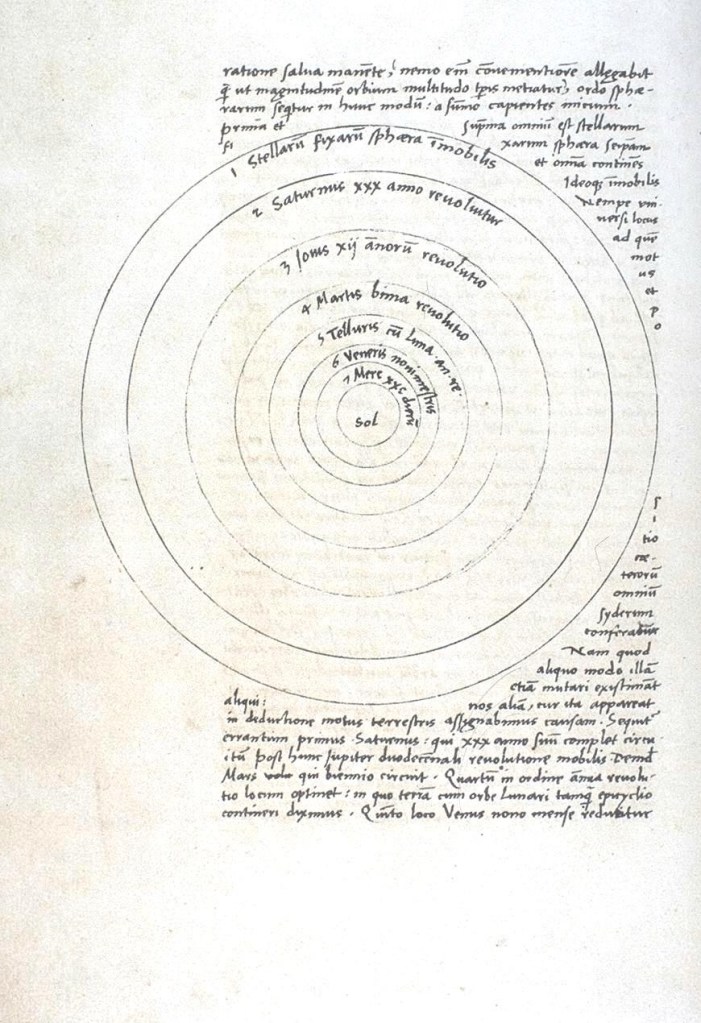
Diagram of the Solar System from Copernicus’ manuscript of De revolutionibus orbium coelestium. Image Wikimedia Commons
All of today’s questions relate to the date, February 19th.
One
In what century was Polish astronomer Nicolaus Copernicus born?
Two
In 1945, the Battle of Iwo Jima began when US Marines invaded the Japanese volcanic island of Iwo Jima. What does the name Iwo Jima mean in English?
Three
Andrew Mountbatten-Windsor was born in 1960 and was known as Prince Andrew. He would later also be known as the Duke of York. For the first 22 years of his life, he was second in the line of succession to the British throne, who, born in 1982, replaced him as second in the line of succession?
Four
Born in 1924, this actor was a decorated World War II veteran, where he served in the U.S. Marines. He won an Oscar for Best Actor for Cat Ballou (1965) where he played both Kid Shelleen and Tim Strawn. He appeared in The Dirty Dozen (1967) and Gorky Park (1983). He died in 1987. Who is this actor?
Five
In 1913, Pedro Lascuráin assumed the role of President of Mexico. What connects the number 45 to his presidency? Was it
45 marriages (he was married 45 times during his presidency)
45 minutes (he was in office for only 45 minutes)
45 murders (he was connected to 45 murders during his presidency)
Today’s questions all relate to the date 16th February.
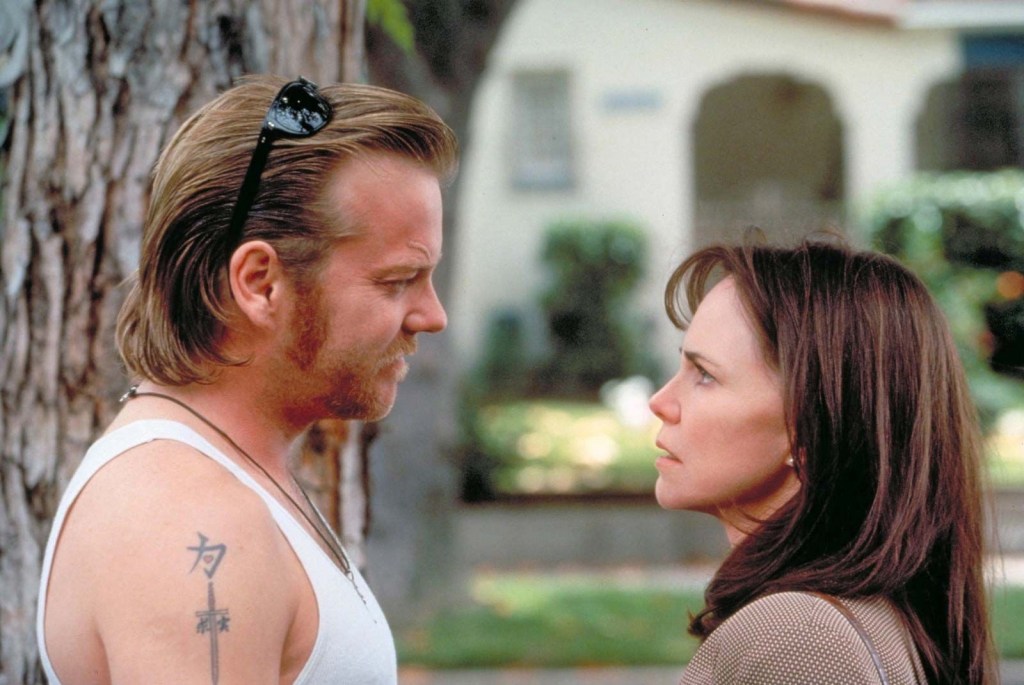
Kiefer Sutherland and Sally Field in Eye for an Eye (1996), directed by John Schlesinger. Image Encyclopædia Britannica
One
Born in 1926, this director won the Academy Award for Best Director for Midnight Cowboy starring Dustin Hoffman and Jon Voight. He also directed Eye for an Eye (1996) featuring Sally Field and Kiefer Sutherland. Who is he?
Answer: John Schlesinger.
John Schlesinger was an English director and actor, known for his work in the British New Wave and Hollywood. He gained recognition for his documentaries and feature films, including the Academy Award-winning Midnight Cowboy, and received numerous accolades throughout his career. He also served as associate director of the National Theatre. Fred Neil’s song Everybody’s Talkin’ became the theme for the film and won a Grammy Award for Best Contemporary Vocal Performance by Harry Nilsson.
Two
In 1923, the burial chamber of King Tutankhamun was unsealed. Who was the archaeologist responsible for this discovery?
Answer: Howard Carter.
Tutankhamen, an Egyptian pharaoh, ruled in the 14th century BC and restored traditional religion. His tomb, discovered in 1922, contained treasures that made him renowned, despite his early death and limited achievements. The opening of the tomb was soon followed by stories that it was cursed. One of these relates that shortly after opening the tomb, Carter’s messenger found a cobra in Carter’s house, having killed Carter’s canary. This fuelled rumours of a curse, as the cobra was a symbol of the Egyptian monarchy.
In 1918, this country declared independence and two months later adopted this flag which is again the national flag today. Which country?
Answer: Lithuania.
The Act of Independence of Lithuania, signed on 16 February 1918, proclaimed Lithuania’s independence from Russia and established a democratic state with Vilnius as its capital. Although initially hindered by German occupation, Lithuania gained control over its territory after Germany’s defeat in World War I. The Act remains the legal basis for modern Lithuania’s existence. The national flag of Lithuania was adopted in April 1918 during this first period of independence (1918–1940). It was re-adopted in 1988, approximately one and a half years before Lithuania’s independence was re-established and almost three years before the Soviet Union’s collapse.
Four
Born in 1964, this English actor portrayed the ninth incarnation of The Doctor in BBC’s time-travelling series Doctor Who. As The Doctor, he was accompanied by Rose Tyler and inspired Charles Dickens. Who is this actor?
Answer: Christopher Eccleston.
Christopher Eccleston is an English actor known for his work in British social realist dramas and for playing the ninth Doctor in Doctor Who. He has received numerous award nominations and accolades for his performances in television, film and theatre.
Five
Born in 1973, this athlete made history in 2000 as the first Australian Aboriginal person to win an individual Olympic gold medal. Who is this athlete?
Answer: Cathy Freeman.
Cathy Freeman, an Australian sprinter, made history as the first Aboriginal person to win an individual Olympic gold medal in the 400-metres at the 2000 Sydney Olympics. She achieved numerous victories, including Commonwealth Games gold medals and a world championship title, and was a symbol of Aboriginal reconciliation. Freeman retired from competition in 2003 and established the Cathy Freeman Foundation to support Indigenous children.
Born in 1926, this director won the Academy Award for Best Director for Midnight Cowboy starring Dustin Hoffman and Jon Voight. He also directed Eye for an Eye (1996) featuring Sally Field and Kiefer Sutherland. Who is he?
Two
In 1923, the burial chamber of King Tutankhamun was unsealed. Who was the archaeologist responsible for this discovery?
In 1918, this country declared independence and two months later adopted this flag which is again the national flag today. Which country?
Four
Born in 1964, this English actor portrayed the ninth incarnation of The Doctor in BBC’s time-travelling series Doctor Who. As The Doctor, he was accompanied by Rose Tyler and inspired Charles Dickens. Who is this actor?
Five
Born in 1973, this athlete made history in 2000 as the first Australian Aboriginal person to win an individual Olympic gold medal. Who is this athlete?
In what decade was the first science fiction television programme broadcast?
Answer: 1930s.
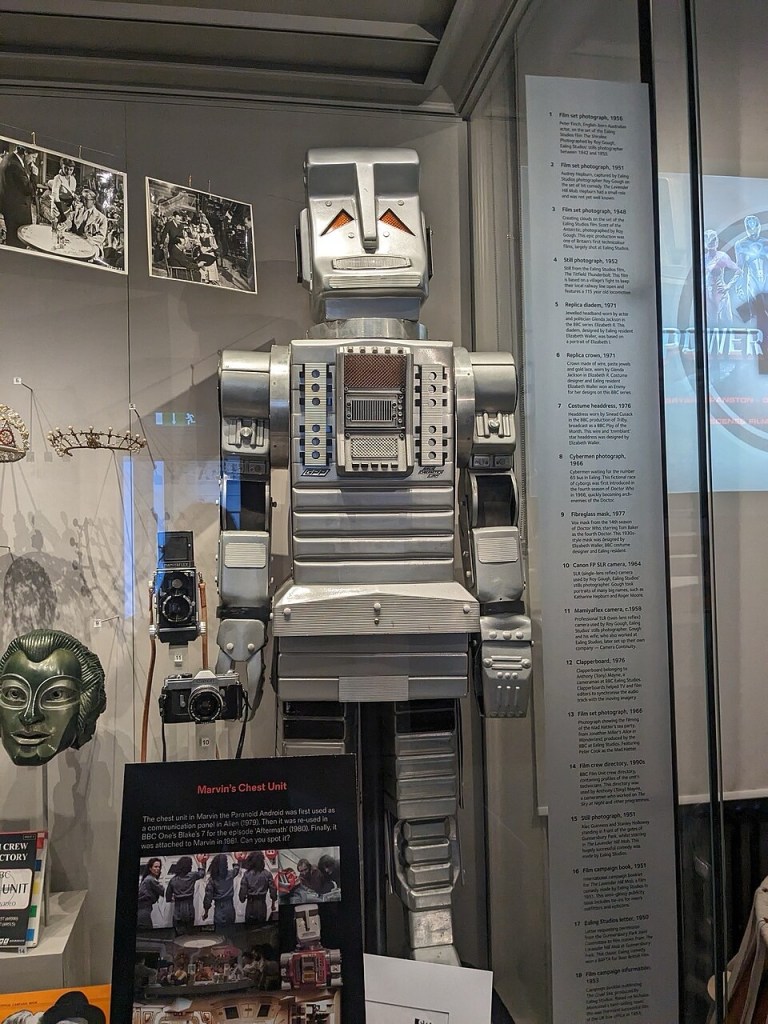
The first known science fiction television programme was produced by the BBC’s pre-war television service in Great Britain. On 11 February 1938, a 35-minute adapted extract of the play R.U.R., written by the Czech playwright Karel Čapek, was broadcast live from the BBC’s Alexandra Palace studios. Concerning a future world in which robots rise up against their human masters, it was the only piece of science fiction to be produced before the television service was suspended for the duration of the war. Today’s post title is a hint towards this play, using the same initials, but the play’s ‘R.U.R.’ stands for Rossumovi Univerzální Roboti—Rossum’s Universal Robots—and not Really Useful Robots.
Two
On this day in 1929, a treaty was signed recognising papal sovereignty over Vatican City. What was the treaty’s name and who was the Italian signatory?
Answer: Lateran Treaty; Benito Mussolini.
The Lateran Treaty of 1929 established Vatican City as an independent state and settled the Roman question between Italy and the Holy See. The treaty was named after the Lateran Palace where it was signed on 11 February 1929. It was revised in 1984, ending Catholicism as Italy’s sole state religion.
Three
Today marks the traditional date for Jimmu’s founding of which country’s empire in 660 BCE?
Answer: Japan.
Emperor Jimmu, the legendary first emperor of Japan, is said to have ascended the throne in 660 BCE. His story, recounted in the Nihon Shoki and Kojiki, involves a divine lineage from the sun goddess Amaterasu and a military expedition from Kyushu to Yamato. While his existence is debated by scholars, Jimmu’s legacy endures as a symbol of Japan’s imperial lineage and is celebrated annually on February 11th as National Foundation Day.
Four
In 1858, 14-year-old Mademoiselle Soubirous had visions of the Virgin Mary. Where did this occur, and what was Mademoiselle Soubirous’s first name?
Answer: Lourdes, France; Bernadette.
In February 1858, 14-year-old Bernadette Soubirous reported seeing visions of a ‘small young lady’ at the grotto of Massabielle in Lourdes, later believed to be the Virgin Mary. The apparitions, which continued daily for two weeks despite scepticism from local authorities and clergy, including Father Peyramale, instructed Bernadette to perform acts of penance. On 25 March, Bernadette claimed the Virgin revealed herself as the ‘Immaculate Conception’, prompting further investigation and increasing pilgrimages. The growing number of witnesses to Bernadette’s visions led to widespread attention and speculation.
Five
On this date, and in what year did the World Health Organisation officially name the coronavirus outbreak COVID-19? And up to February 2026, to the nearest million, how many people have died from COVID-19?
Answer: 2020; 7 million.
The COVID-19 pandemic has resulted in an estimated 7.1 million confirmed deaths worldwide. Estimates indicate that the total number of deaths could range from 19.1 to 36 million.
In what decade was the first science fiction television programme broadcast?
Two
On this day in 1929, a treaty was signed recognising papal sovereignty over Vatican City. What was the treaty’s name and who was the Italian signatory?
Three
Today marks the traditional date for Jimmu’s founding of which country’s empire in 660 BCE?
Four
In 1858, 14-year-old Mademoiselle Soubirous had visions of the Virgin Mary. Where did this occur, and what was Mademoiselle Soubirous’s first name?
Five
On this date, and in what year did the World Health Organisation officially name the coronavirus outbreak COVID-19? And up to February 2026, to the nearest million, how many people have died from COVID-19?
Here are the answers to the questions I posted earlier.
All of today’s questions are about writers who were born on December 16th.
Contrary to my previous statement, this is Mark Twain, a writer, but not one born on December 16th. Image Wikipedia
One
Everytime I read Pride and Prejudice I want to dig her up and beat her over the skull with her own shin-bone
To which writer, born this day in 1775, was Mark Twain referring when he said the above?
Answer: Jane Austen
Jane Austen was an English novelist known for her six novels that critique the English landed gentry and explore women’s dependence on marriage. Although her novels were moderately successful during her lifetime, they gained widespread acclaim and popularity after her death. Austen’s work has inspired numerous adaptations and critical essays.
Two
What television writer, born in 1943, was a creator of both Hill Street Blues and NYPD Blue?
Answer: Steven Bochco
Steven Bochco, an American television writer and producer, developed numerous crime dramas including Hill Street Blues and NYPD Blue.
Three
Ubik, a 1969 science fiction novel by an American writer born in 1928, was selected by Time magazine in 2009 as one of the 100 greatest novels since 1923. Who was the writer?
Answer: Philip K. Dick
Philip K. Dick was an American science fiction writer known for exploring philosophical and social questions in his work. He wrote 45 novels and 121 short stories, gaining acclaim with The Man in the High Castle and later works like Do Androids Dream of Electric Sheep? and Ubik. His posthumous influence extended to Hollywood, inspiring numerous films and TV adaptations.
Four
Born on this day in 1899, this English playwright, actor and composer had a part as a convict in The Italian Job (1969). Who was this?
Answer: Noël Coward
Noël Coward was a prolific English playwright, composer, director, actor and singer known for his wit and flamboyance. He achieved enduring success with over 50 plays, numerous songs and a diverse body of work spanning six decades.
Five
In Arthur C. Clarke’s 1953 short story The Nine Billion Names of God, what unexpected device do Tibetan monks acquire to complete a sacred task that has taken generations?
Answer: Computer
When the story was published, computers were still room-sized, rare machines known mainly to scientists and governments. Clarke’s tale is often cited as one of the earliest and most striking examples of science fiction exploring the uneasy intersection between advanced technology and ancient religious belief—ending with a famously chilling final line as the task is completed.
The Moving Finger Writes
The post title comes from
The Moving Finger writes; and, having writ,
 Moves on: nor all thy Piety nor Wit
   Shall lure it back to cancel half a Line,
 Nor all thy Tears wash out a Word of it.
RUBAIYAT OF OMAR KHAYYAM by Omar Khayyam
(Translated by Edward Fitzgerald)
— Full text at Project Gutenberg
Houyhnhnms driving a herd of Yahoos. Image Metropolitan Museum of Art/Wikipedia
One
Jonathan Swift, author and clergyman, died on this date in 1745. The Wikipedia quote below describes a fictional race from his most famous work but what descriptive word is missing, and what’s the title of the work which has also been removed?
Houyhnhnms are a fictional race of intelligent … described in the last part of … by Jonathan Swift. — Wikipedia
Answers: Horses and Gulliver’s Travels
Gulliver’s Travels, a 1726 prose satire by Jonathan Swift, satirises human nature and the “travellers’ tales” genre. It popularised the fictional island of Lilliput and is considered a classic of English literature. Houyhnhnms, rational equine beings, contrast with the savage Yahoos, representing the worst of humanity. Gulliver prefers the Houyhnhnms’ company despite their biological differences.
Two
The Unseen University is located in what fictional city, and as a result of a transformation, the university’s librarian became what?
Answers: Ankh-Morpork and an orang-utan
This is from Terry Pratchett’s Discworld series of novels. Ankh-Morpork, a fictional city, draws inspiration from real-world cities like Tallinn, Prague, London, Seattle and New York City. Pratchett aimed for consistency between the city’s descriptions and its map to enhance visualisation. The Unseen University, a school of wizardry in the Discworld series, is situated in Ankh-Morpork and staffed by inept wizards.
Three
Mos Eisley is a city in which science fiction franchise, and on which planet is it situated?
Answers: Star Wars and Tatooine
Tatooine, a fictional desert planet in the Star Wars universe, is where Luke and Anakin Skywalker reside. Known for its iconic binary sunset, Mos Eisley, the planet’s largest city, is a bustling spaceport with a thriving criminal underworld. Chalmun’s Cantina, a popular saloon frequented by diverse alien species, is located there.
Four
In a trilogy published in the early 1950s, a series of short stories explores the decline of a galactic empire, drawing parallels to the fall of the Western Roman Empire. The story centres on Hari Seldon, a mathematician and psychologist, who develops psychohistory, a new science. What is the title of the trilogy and its author?
Answers: The Foundation Trilogy by Isaac Asimov
Isaac Asimov’s Foundation series, inspired by Gibbon’s The Decline and Fall of the Roman Empire, explores the concept of psychohistory, a method for predicting societal behaviour. The series follows the Foundation, established by Hari Seldon on Terminus, as it navigates challenges and strives to shorten the impending age of barbarism following the Galactic Empire’s collapse. The original trilogy, comprising Foundation, Foundation and Empire, and Second Foundation, was published between 1951 and 1953.
Five
Arthur Dent, a human, embarks on a journey with Ford Prefect, an alien, after Earth’s destruction. He discovers Earth was a supercomputer designed to uncover the ‘Ultimate Question of Life the Universe and Everything’ and his mind holds the answer. What is the six-word title of this work, and in what medium was it first published?
Answers: The Hitchhiker’s Guide to the Galaxy; Radio series
The Hitchhiker’s Guide to the Galaxy, a comedy science fiction franchise created by Douglas Adams, follows Arthur Dent’s adventures after Earth’s destruction. The franchise includes radio, novels, comics, TV, film and a 40th-anniversary celebration.




 Quizology.Online