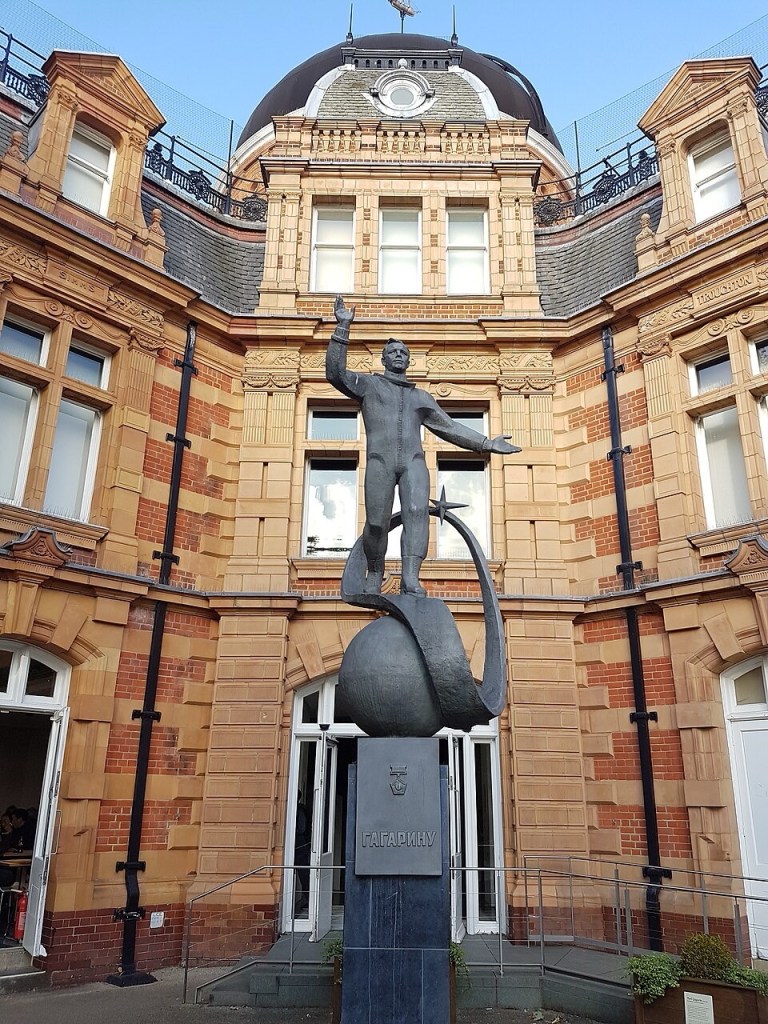
Statue of Yuri Gagarin, outside the Royal Observatory, Greenwich, London, UK. Image Wikimedia Commons
The opening question concerns today’s date, 12 August. The following questions do not relate to the date but continue a theme introduced in the first.
One
British surgeon and scientist Joseph Lister performed the first antiseptic surgery on this date. In what decade and in what city did this take place?
Answer: 1860s; Glasgow, Scotland.
On 12 August 1865, Joseph Lister, who was the Regius Chair of Surgery, at the University of Glasgow, used carbolic acid to treat James Greenlees’s compound fracture.
In 1867, Joseph Lister published a series of articles in The Lancet that were to be the first examples of antisepsis in action. Each of the cases occurred during his time working at the Glasgow Royal Infirmary. His first case was a young boy by the name of James Greenlees, who had an open fracture of his leg. Lister set the fracture and dressed the wound in carbolic acid to prevent infection. James made a full recovery. This was the birth of antisepsis. — The Royal College of Physicians and Surgeons of Glasgow
Two
In 1960, which US submarine became the first vessel to execute a submerged circumnavigation of the world?
Answer: USS Triton.
USS Triton (SSRN/SSN-586), a unique nuclear-powered radar picket submarine, was the largest, most powerful, and expensive submarine at commissioning in 1959. She completed the first submerged circumnavigation of the Earth in 1960. Obsolete by 1962, she became an attack submarine, flagship, and was decommissioned in 1969.
Three
In sport, who won his first men’s grand slam doubles title with Peter Fleming at Wimbledon in 1979?
Answer: John McEnroe.
John McEnroe is an American tennis player, ranked world No. 1 in singles for 170 weeks and doubles for 269 weeks. He won 155 titles, including seven singles majors. Known for his skill and rivalries, McEnroe also contributed to five Davis Cup titles and remains active as a television commentator during the majors.
Four
Who was the first astronaut to orbit the Earth, and what was the name and number assigned to his spacecraft for the flight?
Answer: Yuri Gagarin; Vostok 1.
Launched on 12 April 1961 from Baikonur Cosmodrome, Vostok 1 marked the first human orbital flight when Soviet cosmonaut Yuri Gagarin became the first person to orbit Earth, completing one circuit in 108 minutes before parachuting to the ground apart from his capsule. As a Soviet pilot and cosmonaut, Gagarin, the first person in space died in 1968 in a MiG-15 crash.
Five
Clint Eastwood won his first Best Director Oscar for which film?
Answer: Unforgiven.
Unforgiven (1992), directed by Clint Eastwood, stars him as an aging outlaw. Co-starring Gene Hackman, Morgan Freeman, and Richard Harris, it grossed over $159 million. Praised for acting, directing, and cinematography, it won four Oscars, including Best Picture. Eastwood dedicated it to Sergio Leone and Don Siegel. In 2004, Unforgiven was chosen for preservation in the United States National Film Registry by the Library of Congress. It was recognised for its cultural, historical, or aesthetic significance, highlighting its enduring impact and importance in American cinema.
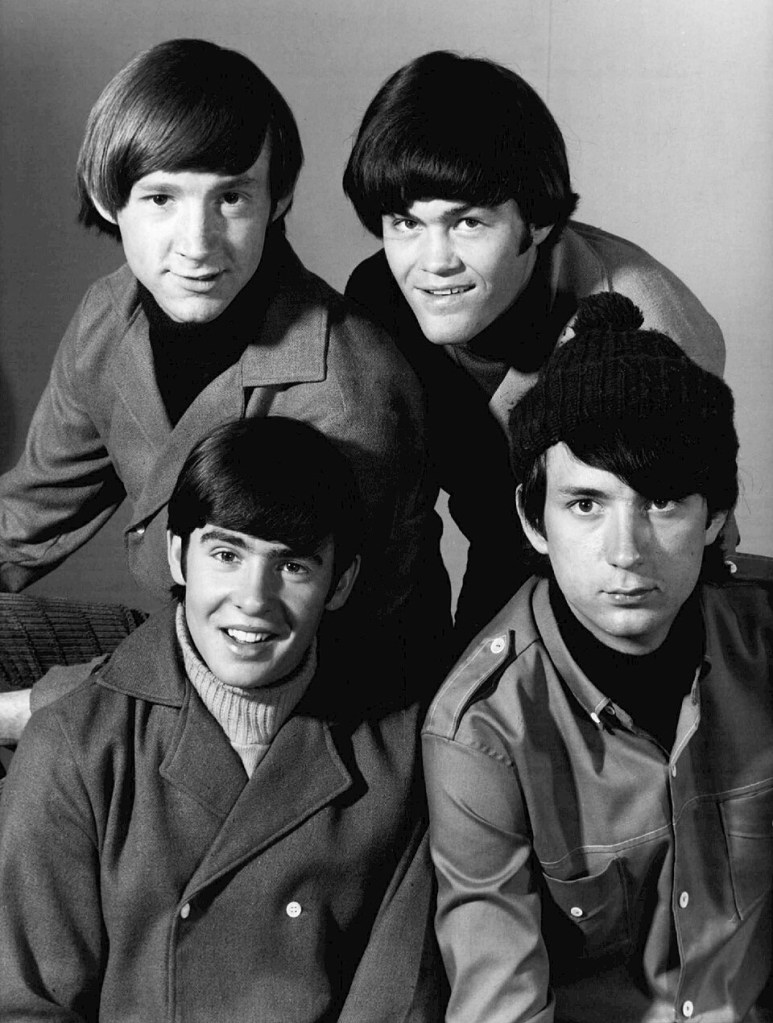
Is it true or false that Shorty Blackwell, a track on The Monkees 1969 album Instant Replay was inspired by and named after a school teacher?
Answer: False.
Micky Dolenz wrote Shorty Blackwell about his life and cat, recording piano in January 1968 and expanding it beyond five minutes with added instrumentation. Shorty Rogers arranged brass, strings, percussion, cello and flute; Rubini and Tommy Tedesco contributed. Micky and Coco recorded vocals in May; Micky finished it in June, later dismissing it as a Sgt. Pepper attempt.
Two
Is it true or false that the sea lion is the only marine member of the family Felidae?
Answer: False.
Sea lions are pinnipeds in family Otariidae with external ear flaps, long fore-flippers, four-legged movement, short hair and large chests; six extant and one extinct species span subarctic to tropical waters except the northern Atlantic.
Three
Is it true or false that in tennis Stirling Moss won the men’s singles at Wimbledon in 1969?
Answer: False.
Stirling Moss, a British driver and broadcaster, won 212 races including 16 Formula One Grands Prix. Runner-up to Juan Manuel Fangio and Mike Hawthorn, he retired after a 1962 accident. He was BBC Sports Personality of the Year and entered the International Motorsports Hall of Fame.
Four
Is it true or false that in the classic World War II love story Casablanca (1942), Rick Blaine (Humphrey Bogart) says ‘Play it again, Sam’?
Answer: False.
A line closely associated with Casablanca—”Play it again, Sam”—is not spoken in the film. When Ilsa first enters the Café Américain, she spots Sam and asks him, “Play it once, Sam, for old times’ sake.” After he feigns ignorance, she responds, “Play it, Sam. Play ‘As Time Goes By’.” Later that night, alone with Sam, Rick says, “You played it for her, you can play it for me”, and “If she can stand it, I can! Play it!” — Wikipedia
Five
Is it true or false that Australia has three locations where New Year’s Eve occurs three times annually?
Answer: True.
New Year’s Eve is celebrated three times each year in Cameron Corner, Poeppel Corner and Surveyor Generals Corner, because three states, which are in three time zones, meet at each of these corners. Cameron Corner, Queensland is adjacent to the borders with New South Wales and South Australia. Poeppel Corner in Queensland is where it meets South Australia and the Northern Territory. Surveyor Generals Corner is the meeting of South Australia, Western Australia and the Northern Territory.
Flag of Côte d’Ivoire/Ivory Coast. See question three. Image Wikimedia Commons
All of these questions relate to today’s date, 7 August.
One
In what sport could a ‘Salchow’ be performed?
Answer: Ice skating.
Swedish skater Ulrich Salchow, born 7 August 1877. The salchow, named the Salchow, an edge jump, after him. It is the easiest figure skating jump. It involves taking off from the back inside edge of one skate, completing one or more full turns, and landing on the back outside edge of the opposite skate. American skater Theresa Weld was reprimanded at the 1920 Olympics for performing a single Salchow jump because her skirt would fly up to her knees, creating an image deemed too risqué.
Two
The six-month-long Battle of Guadalcanal, which began on 7 August 1942, unfolded in which country?
Answer: Solomon Islands.
Guadalcanal Island, the largest island in the Solomon Islands, is situated in the southwestern Pacific Ocean. The Battle of Guadalcanal, occurring from August 1942 to February 1943, involved a series of World War II land and sea engagements between Allied and Japanese forces on and around Guadalcanal, one of the southern Solomon Islands in the South Pacific. Alongside the naval Battle of Midway, the combat on Guadalcanal signified a turning point in favour of the Allies in the Pacific War.
Three
In 1960, the country represented by the flag shown above gained independence from France. What country is it?
Answer: Côte d’Ivoire/Ivory Coast.
Côte d’Ivoire, located on the western coast of Africa, was previously a French colony. Abidjan functions as the de facto capital, while Yamoussoukro has been the administrative capital since 1983. Known as Ivory Coast, this West African nation is the leading cocoa exporter globally and has seen substantial economic growth since 2011. Nonetheless, 46.1% of its population remains in poverty. The economy is predominantly dependent on agriculture, especially smallholder cash-crop production.
Four
How many persons were onboard Thor Heyerdahl’s balsa wood raft, Kon-Tiki when it reached Raroia in the Tuamotu Islands after sailing 4,300 mile (7,000 km) in 101-days?
Answer: Six.
The Kon-Tiki expedition in 1947, led by Thor Heyerdahl, was a raft journey from South America to Polynesia. Named after the Inca god Viracocha, it inspired Heyerdahl’s book and a 1950 Oscar-winning documentary. A 2012 dramatised film was nominated for Best Foreign Language Film.
Five
In 1926, in motor racing the first British Grand Prix was held. Where was the race held?
Answer: Brooklands.
Built in 1907 near Weybridge, Surrey, Brooklands was the first purpose-built motor racing venue and one of the UK’s first airfields. The British Grand Prix debuted there on 7 August 1926, won by Robert Sénéchal and Louis Wagner. The second race, on 1 October 1927, was also held there.
Bonus Question
The post title is two lines taken from a popular song, what song?
In olden days a glimpse of stocking Was looked on as something shocking
It is part of the lyrics from Anything Goes from the Cole Porter musical of the same name. It is used here only as an oblique remark about Ms Weld’s risqué performance; see answer one.
Anything Goes
By Cole Porter
[RENO] Times have changed, And we’ve often rewound the clock, Since the Puritans got a shock, When they landed on Plymouth Rock. If today, Any shock they should try to stem, ‘Stead of landing on Plymouth Rock, Plymouth Rock would land on them.
In olden days a glimpse of stocking Was looked on as something shocking, But now, God knows, Anything Goes.
Good authors too who once knew better words, Now only use four letter words Writing prose, Anything Goes.
The world has gone mad today And good’s bad today, And black’s white today, And day’s night today, When most guys today That women prize today Are just silly gigolos And though I’m not a great romancer I know that you’re bound to answer When I propose, Anything goes
When grandmama whose age is eighty In night clubs is getting matey with gigolo’s, Anything Goes.
When mothers pack and leave poor father Because they decide they’d rather be tennis pros, Anything Goes.
If driving fast cars you like, If low bars you like, If old hymns you like, If bare limbs you like, If Mae West you like Or me undressed you like, Why, nobody will oppose! When every night, The set that’s smart Is intruding in nudist parties in studios, Anything Goes.
[RENO, PASSENGERS & CREW] The world has gone mad today And good’s bad today, And black’s white today, And day’s night today, When most guys today That women prize today Are just silly gigolos And though I’m not a great romancer I know that you’re bound to answer When I propose, Anything goes
[RENO] If saying your prayers you like, If green pears you like If old chairs you like, If back stairs you like, If love affairs you like With young bears you like, Why nobody will oppose!
[ALL] And though I’m not a great romancer And though I’m not a great romancer I know that you’re bound to answer When I propose, Anything goes… Anything goes! — All Musicals
All of these questions relate to today’s date, 7 August.
One
In what sport could a ‘Salchow’ be performed?
Two
The six-month-long Battle of Guadalcanal, which began on 7 August 1942, unfolded in which country?
Three
In 1960, the country represented by the flag shown above gained independence from France. What country is it?
Four
How many persons were onboard Thor Heyerdahl’s balsa wood raft, Kon-Tiki when it reached Raroia in the Tuamotu Islands after sailing 4,300 mile (7,000 km) in 101-days?
Five
In 1926, in motor racing the first British Grand Prix was held. Where was the race held?
Bonus Question
The post title is two lines taken from a popular song, what song?
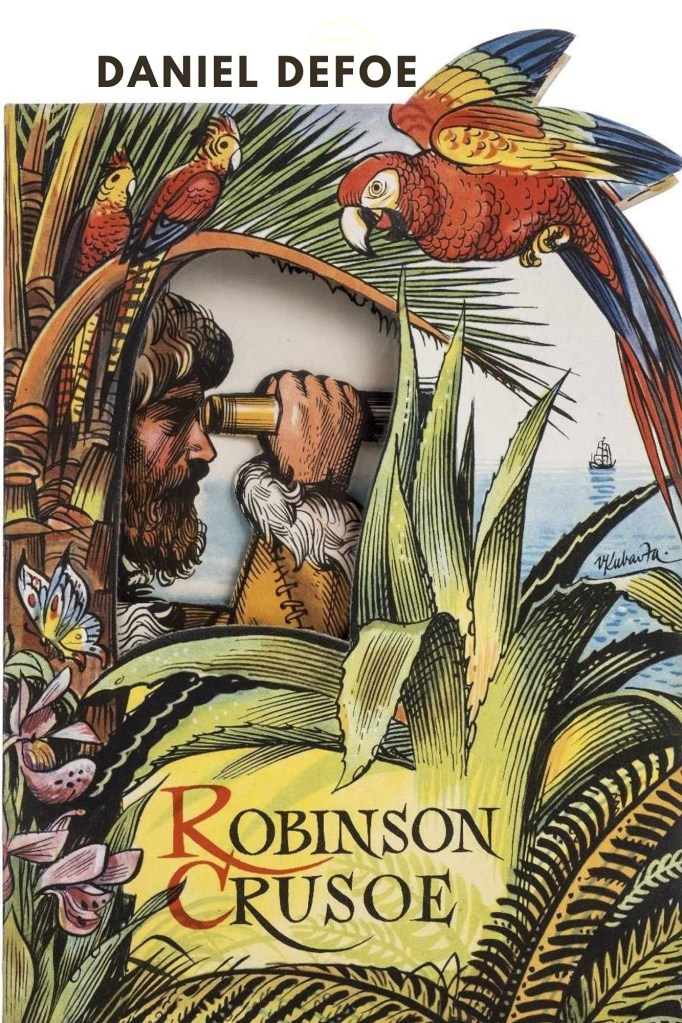
See question two. Robinson Crusoe. Image Goodreads
Five questions which follow are not date related but do follow a theme.
One
The 2010 autobiography of whom is titled 9.58?
Answer: Usain Bolt.
Usain Bolt, born 21 August 1986, is a retired Jamaican sprinter, considered the greatest ever. An eight-time Olympic gold medallist, he holds world records in the 100m, 200m, and 4x100m relay. Known as ‘Lightning Bolt’, he won multiple World Championships and numerous prestigious awards, retiring in 2017.
Two
The location of the uninhabited island where Robinson Crusoe was shipwrecked is described as being ‘near the mouth of the great river …’— what river mouth?
Answer: Oroonoque or Orinoco.
Either Oroonoque or Orinoco as the spelling varies between editions. Robinson Crusoe, published on 25 April 1719 by Daniel Defoe, is an English adventure novel often credited as the start of realistic fiction. It follows Robinson Kreutznaer’s 28-year survival on a desert island, inspired by real-life castaways. Initially believed non-fiction, it was well-received for its narrative style. By the end of 1719, the book had four editions and became one of history’s most published works. It inspired numerous imitations across literature, film, television, and radio, defining the Robinsonade genre
Three
Historically known as Alexandretta, this city featured in a 1984 film starring Sean Connery. What was the film, and by what name is the city now known?
Answer: İskenderun; Indiana Jones and the Last Crusade.
İskenderun, historically known as Alexandretta, is a district in Hatay Province, Turkey, with a population of 251,682 as of 2022. Situated on the Mediterranean coast, it experienced significant damage from the earthquakes in February 2023. The city was likely founded during the Hellenistic period by a successor of Alexander the Great and has since been under the control of the Seleucid, Roman, Abbasid, and Mamluk empires. It became part of the Ottoman Empire until World War I, after which it was a French mandate sanjak until gaining independence in 1938 and officially joining Turkey in 1939. İskenderun appears in Indiana Jones and the Last Crusade.
Four
Which song begins:
Risin’ up, back on the street Did my time, took my chances
Answer: Eye of the Tiger
“Eye of the Tiger” by Survivor, written for Rocky III, topped charts worldwide and won a Grammy. It was also nominated for an Academy Award.
Five
Who played the title role in the 1973 film Serpico?
Answer: Al Pacino.
Serpico is a 1973 biographical crime drama film about Frank Serpico, a whistleblower who exposed corruption in the NYPD. The film, directed by Sidney Lumet and starring Al Pacino, was a critical and commercial success, earning several award nominations.
The Great Vowel Shift
Today’s title really in this instance only refers to the answers starting with one of the five vowels which have been ‘shifted’ into reverse order, U – O – I – E – A. The Great Vowel Shift, occurring between 1400 and 1700, altered the pronunciation of all Middle English long vowels and some consonant sounds. This shift, beginning in southern England, significantly influenced English dialects and contributed to the divergence between English spelling and pronunciation.
See question two. Robinson Crusoe. Image Goodreads
Five questions which follow are not date related but do follow a theme.
One
The 2010 autobiography of whom is titled 9.58?
Two
The location of the uninhabited island where Robinson Crusoe was shipwrecked is described as being ‘near the mouth of the great river …’— what river mouth?
Three
Historically known as Alexandretta, this city featured in a 1984 film starring Sean Connery. What was the film, and by what name is the city now known?
Four
Which song begins:
Risin’ up, back on the street Did my time, took my chances
Five
Who played the title role in the 1973 film Serpico?
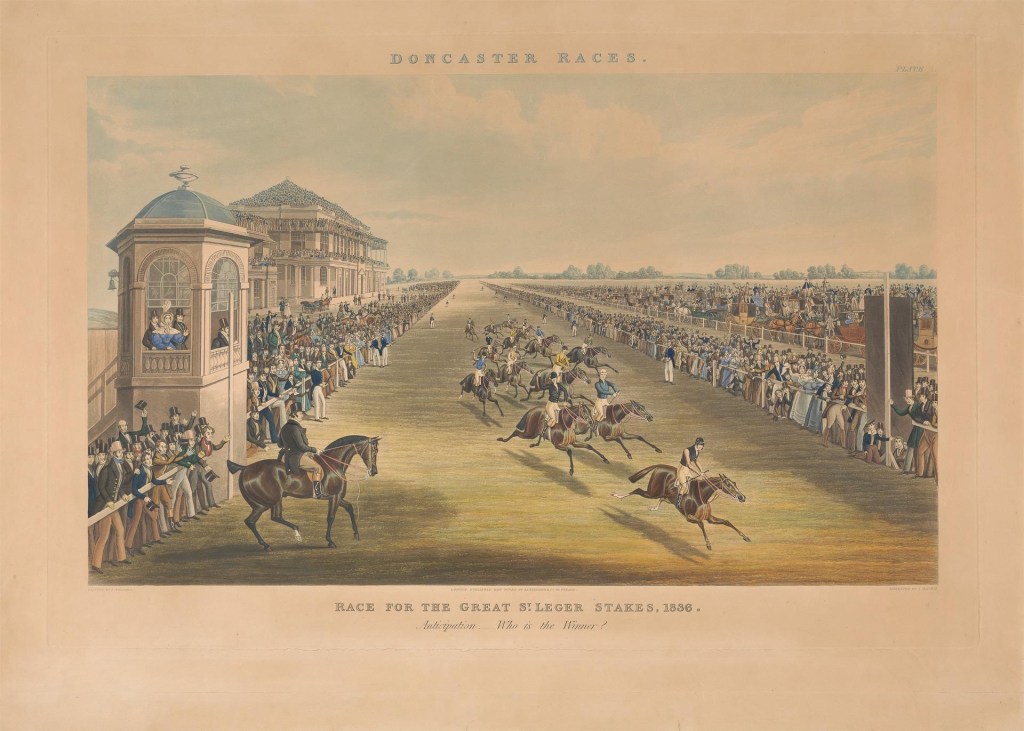
The St Leger, the oldest of Britain’s five Classic races, is the last of the five to be run each year, and its distance is longer than any of the other four. In what decade was it first ran?
Answer: 1770s (1776).
The St Leger Stakes, established in 1776, is Great Britain’s oldest Group 1 flat horse race, held annually in September at Doncaster. It concludes the English and Fillies Triple Crowns. The race spans 2,921 metres and is the longest of Britain’s five Classic races, with Camelot being a recent notable contender.
Two
What J.K. Rowling book was first published in the U.K. in June 1997, and under what title was the same book published the following year in the U.S.?
Answers: Harry Potter and the Philosopher’s Stone and Harry Potter and the Sorcerer’s Stone.
Harry Potter and the Philosopher’s Stone, J.K. Rowling’s debut, follows young wizard Harry Potter discovering his magical heritage. Published in 1997, it became a bestseller, translated into 85 languages, and adapted into a film. Praised for imagination and plot, it sold over 120 million copies, influencing education and marketing.
Three
What geometric shape is also the path of the Earth around the Sun, and how far approximately, in miles or km, does the Earth travel on that path in a year?
Answer: Ellipse; 584 million miles or 940 million km.
Earth orbits the Sun every 365.256 days in a counterclockwise, elliptical path at an average distance of 149.6 million km. Travelling at 29.78 km/s, it appears to move 1° eastward daily relative to the stars. This orbit’s near-circular eccentricity keeps the Sun close to its centre.
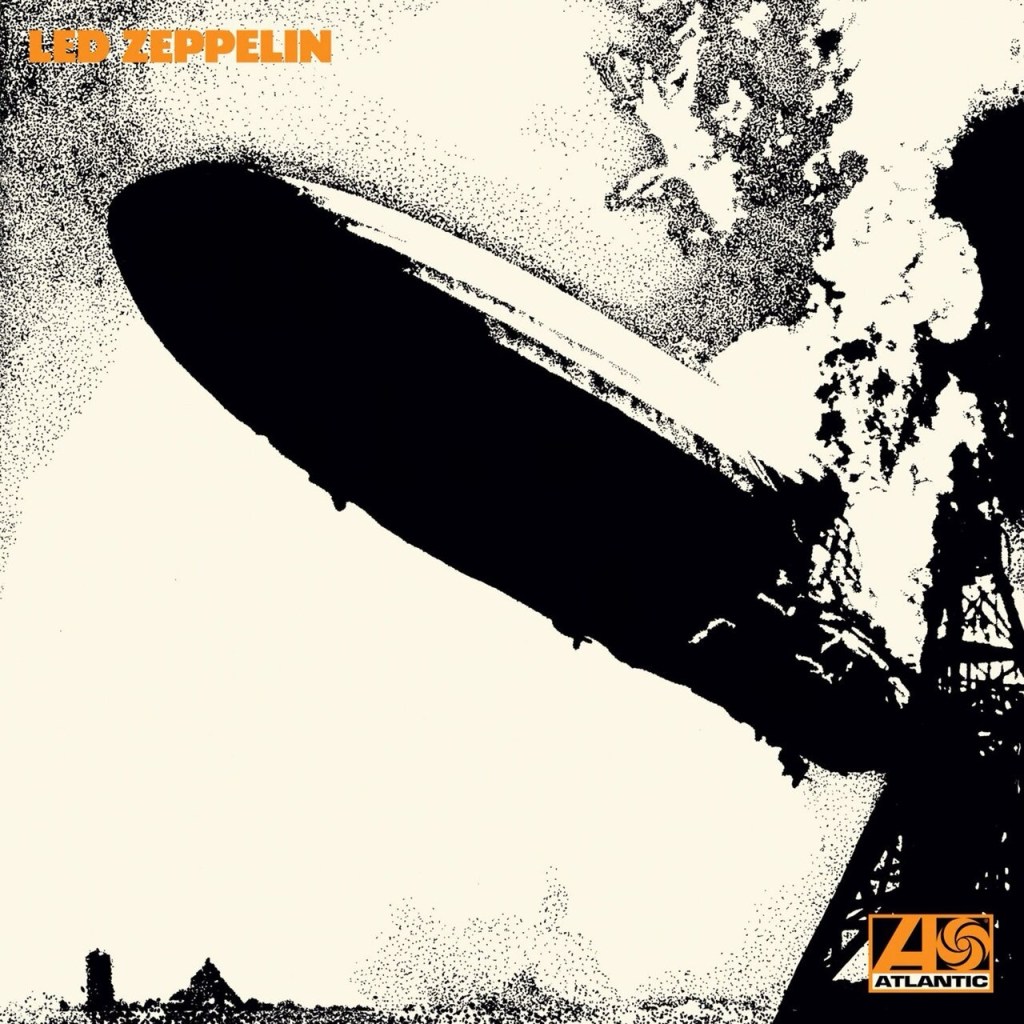
The cover of which debut studio album from 1969 depicts the Hindenburg exploding?
Answer: Led Zeppelin
Led Zeppelin, the debut album by the English rock band of the same name, was released in January 1969 in the US and March 1969 in the UK. Recorded in 36 hours at Olympic Studios, London, it features a mix of original and rearranged blues and folk songs. The album achieved top 10 success in the UK and US.
Five
What tennis Grand Slam takes place in a stadium which is named after a World War 1 fighter pilot who was killed in action?
Answer: French Open.
Eugène Adrien Roland Georges Garros, a French aviation pioneer, first crossed the Mediterranean by airplane in 1913. A self-taught pilot, he joined the French Army in World War I and helped to developed a forward-firing machine gun. He was killed in action in 1918. The Roland Garros tennis stadium in Paris, opened in 1928, honours him and the French Open is alternatively called Roland-Garros.
Off the Shelf
Today’s answers were straight off the ‘shelf’ in that the letters from that word provided the initial letter of each answer.