Over the next nine days, 46 questions will be posed, one for each letter of the alphabet plus 20 others (There will be six one day). The 20 others appear as duplicate letters, and these duplicates spell out the name of the Roman Fortification which in CE 150 to 160 was the furthest boundary from the city of Rome, and the country that it was situated in. It is a three-word answer with eight letters in the first part of the name and four in the second part; the country has eight letters in its name. BTW Fit, as used in the post title, is an archaic term meaning ‘a division of a song, ballad, or story’.
Eleven
In what sport are the men’s world team championships contested for the Swaythling Cup?
Answer: Table tennis.
Twelve
Grand-Bassam and Bingerville are former capitals of which French African colony, now a country?
Answer: Ivory Coast.
Thirteen
What Japanese sash is also the partial name of a character from Star Wars?
Answer: Obi.
Fourteen
Which 1973 Tina Turner song features the name of a Tennessee town which was a childhood home for her?
Answer: Nutbush.
Fifteen
In the Solar System, which of these planets is nearest to the Sun: Jupiter, Saturn or Uranus?
Answer: Jupiter.
Good luck! I’ll post the answers once all the questions have been asked.
Over the next nine days, 46 questions will be posed, one for each letter of the alphabet plus 20 others (There will be six one day). The 20 others appear as duplicate letters, and these duplicates spell out the name of the Roman Fortification which in CE 150 to 160 was the furthest boundary from the city of Rome, and the country that it was situated in. It is a three-word answer with eight letters in the first part of the name and four in the second part; the country has eight letters in its name. BTW Fit, as used in the post title, is an archaic term meaning ‘a division of a song, ballad, or story’.
Six
Beyoncé Knowles portrayed which singer in the 2008 film Cadillac Records?
Seven
What US president was in office for 12 years and 39 days?
Eight
What character sings Memory at the climax of the musical Cats?
Nine
Of what country did Haakon VIII become king in 2006?
Ten
In 1873, a club published the rules of polo, which are still followed by most of the world to this day? What club?
Good luck! I’ll post the answers once all the questions have been asked.
Over the next nine days, 46 questions will be posed, one for each letter of the alphabet plus 20 others (There will be six one day). The 20 others appear as duplicate letters, and these duplicates spell out the name of the Roman Fortification which in CE 150 to 160 was the furthest boundary from the city of Rome, and the country that it was situated in. It is a three-word answer with eight letters in the first part of the name and four in the second part; the country has eight letters in its name. BTW Fit, as used in the post title, is an archaic term meaning ‘a division of a song, ballad, or story’.
One
To whom was R. Kelly married from 1994 to 1995?
Two
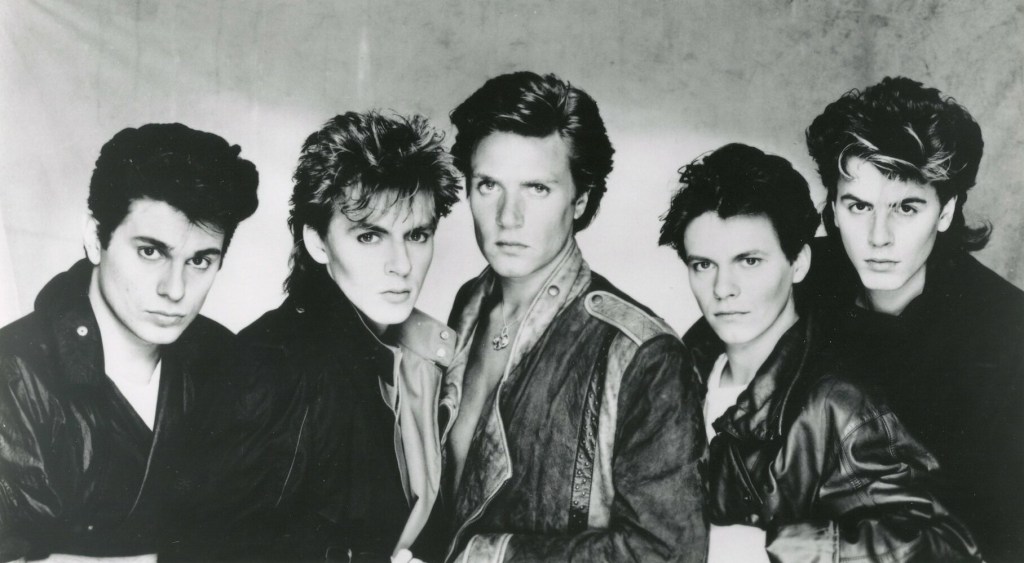
What 1968 film influenced the band Duran Duran’s choice of name?
Three
The Chinese Exclusion Act was signed into law by the 21st president of the US in 1882 who incidentally gave his name to an elementary school in a 1995 film. Who was this president?
Four
In what month and year was the world’s first atomic bomb dropped on the Japanese city of Hiroshima?
Five
What word can be defined as: the number below the line in a vulgar fraction; a divisor?
Good luck! I’ll post all of the answers after the questions have all been asked.
Today’s first question is connected to the date, 8 September. The subsequent ones are not date-related but follow a similar theme to the first.
One
A controversial photographer and film director (Triumph of the Will) died this day in 2003 at the age of 103. Her association and collaboration with the Nazi regime before and during World War II led to severe reputational damage. Who was she?
Answer: Leni Riefenstahl.
Helene Bertha Amalie Riefenstahl (1902–2003) was a German filmmaker, actress, and photographer, active from 1925 to 2002. Notable works include The Victory of Faith, Triumph of the Will, Olympia, and Tiefland. Riefenstahl notably created Nazi propaganda films Triumph of the Will and Olympia in the 1930s. Post-war, her reputation suffered due to her previous association with Hitler. She later focused on photography, releasing Tiefland and photo books on the Nuba peoples of Sudan.
Two
Macro photography can be described by what two-word, hyphenated term?
Answer: Close-up.
Macro photography, or photomacrography, is extreme close-up photography which reproduces subjects larger than actual size, typically capturing small organisms such as insects.
Three
Which Dada and Surrealist photographer’s work from 1926 is pictured at the top of this post?
Answer: Man Ray (or Emmanuel Radnitzky).
Man Ray, born Emmanuel Radnitzky, was an American-born, French-naturalised visual artist prominent in the Dada and Surrealist movements. Primarily a painter, he innovated in photography, fashion, and portraiture, notably creating photograms called ‘rayographs’. He spent most of his career in Paris, contributing significantly to modern art.
Four
The RolleifleX, a line of high-end cameras, was originally made by which German company?
Answer: Franke & Heidecke.
Rolleiflex, renowned for medium format TLR cameras, offered exceptional quality, compact size, and superior optics. Known for Zeiss and Schneider lenses, it featured a semi-automatic film loading mechanism. Accessories enhanced its versatility. Production by DHW Fototechnik ended in 2015 after insolvency, with models remaining sought after by photographers and collectors.
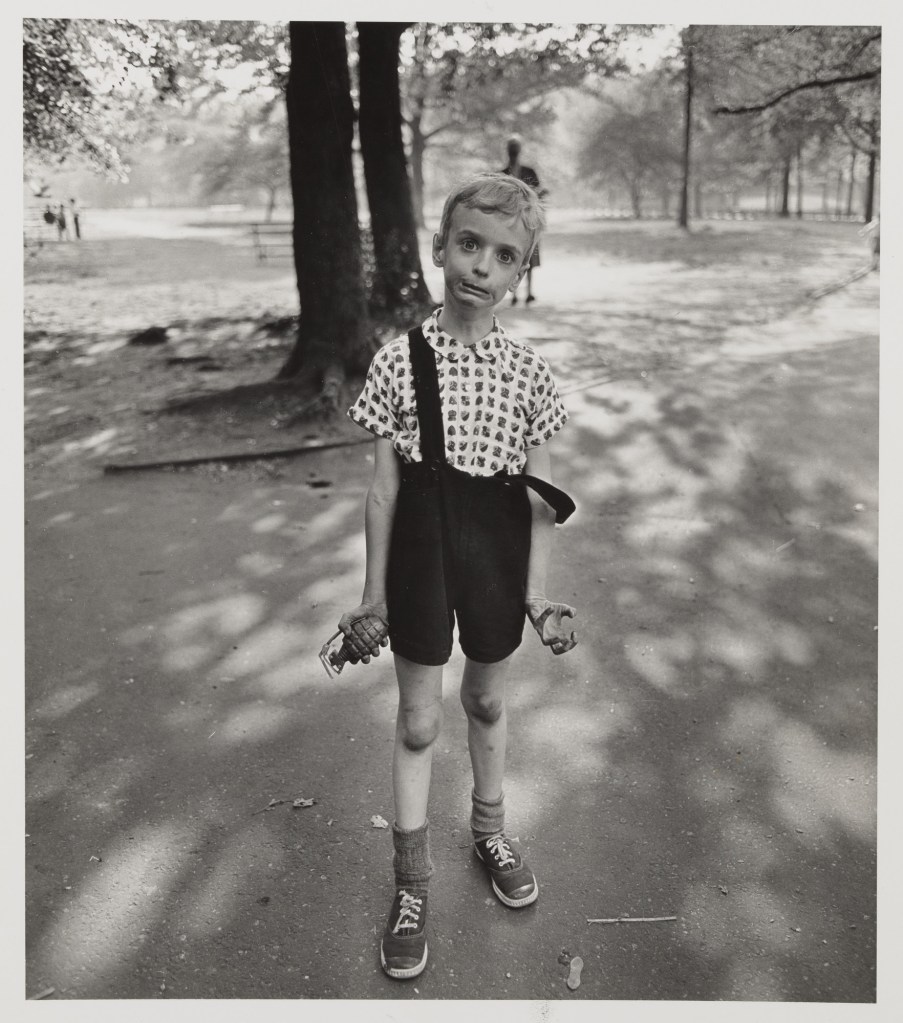
Child with a toy hand grenade in Central Park, N.Y.C., 1962. Image MOMA
Five
The 1962 photograph Child with a Toy Hand Grenade in Central Park, NYC was taken by whom?
Answer: Diane Arbus.
Diane Arbus, an American photographer, captured diverse subjects in familiar settings. By befriending rather than objectifying them, she expanded acceptable subject matter and achieved rare psychological intensity.
Today’s first question is connected to the date, 8 September. The subsequent ones are not date-related but follow a similar theme to the first.
One
A controversial photographer and film director (Triumph of the Will) died this day in 2003 at the age of 103. Her association and collaboration with the Nazi regime before and during World War II led to severe reputational damage. Who was she?
Two
Macro photography can be described by what two-word, hyphenated term?
Three
Which Dada and Surrealist photographer’s work from 1926 is pictured at the top of this post?
Four
The RolleifleX, a line of high-end cameras, was originally made by which German company?
Five
The 1962 photograph Child with a Toy Hand Grenade in Central Park, NYC was taken by whom?
Today’s questions are all related to today, 7th September.
One
The first Miss America pageant took place on this day. In what decade, and at what location did this occur?
Answer: 1920s; Atlantic City, New Jersey, USA.
The inaugural Miss America pageant began on 7 September 1921, when the two-day Inter-City Beauty event opened in Atlantic City during the Fall Frolic. Margaret Gorman, representing Washington, D.C., secured victory on the first day and again in the Bathers’ Revue the following day. She was named ‘the most beautiful bathing girl in America’.
Two
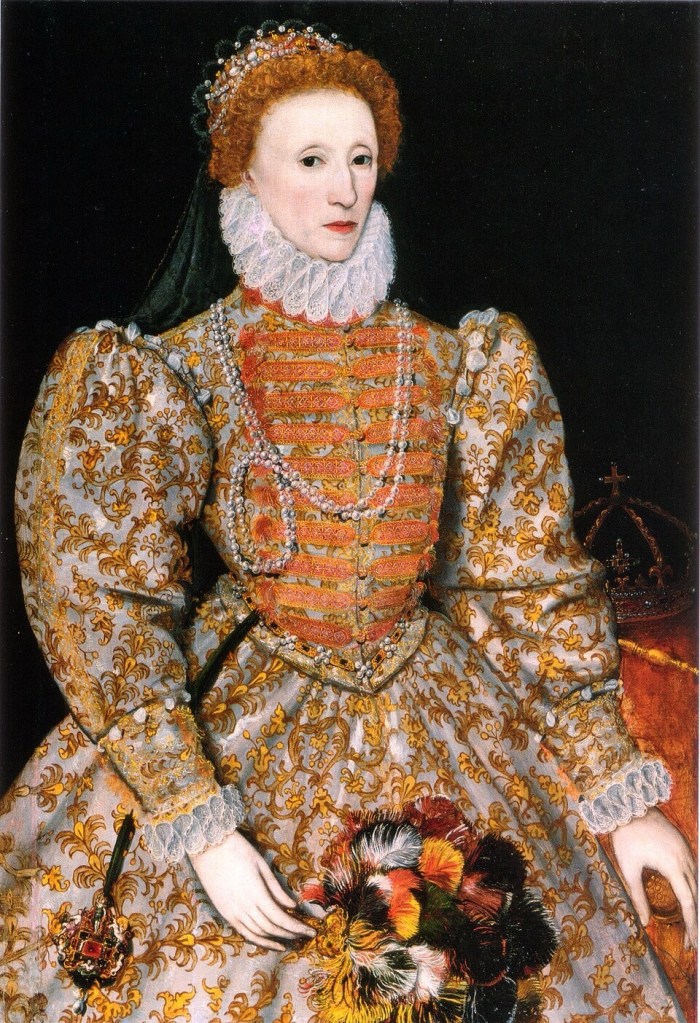
England’s future Queen Elizabeth I was born on this day. In what decade, and at what palace was she born?
Answers: 1530s; Greenwich Palace.
Elizabeth I, born on this day in 1533, ruled England from 1558 to 1603. Her reign, known as the Elizabethan Age, saw the country emerge strongly as a leading European force in politics, trade, and the arts.
Three
The earliest recorded submarine attack occurred when an attempt was made by the Turtle to fix an explosive device with a timer to the British ship HMS Eagle in a harbour. In what decade, and in what harbour, did this occur?
Answers: 1770s; New York Harbor.
American colonial accounts describe how on 7 September 1776, Ezra Lee launched the first submarine strike in the Turtle, aiming to fix a timed explosive to HMS Eagle in New York Harbor, though British records do not confirm the event.
Four
A songwriter achieved a record-setting milestone while working at EMI by having written seven simultaneous hits by different artists on the Billboard Hot 100 charts. In what decade did she achieve this, and who was she?
Answers: 1980’s; Diane Eve Warren.
Her success drew praise from EMI’s UK Chairman, Peter Reichardt, who famously described her as ‘the most important songwriter in the world’. Although Warren is recognised for her extensive catalogue of hits with some of the most popular artists, she is strongly committed to safeguarding her creative rights; she founded Realsongs to retain ownership of her masters, a step that grants her full control over how her music is used and how revenue is generated.
Five
Georgi Markov, a Bulgarian dissident, was assassinated while walking across Waterloo Bridge in London, U.K. by Bulgarian secret police. In what decade did this happen, and what was the weapon speculated to have been used?
Answers: 1970s; Umbrella.
On 7 September 1978, Markov felt a sharp pain on his right thigh at a bus stop on Waterloo Bridge and reported seeing a man pick up an umbrella behind him. A post mortem examination later found a tiny pellet measuring 0.067 in (1.70 mm) in diameter in his leg. The assumption is that Francesco Gullino, a Bulgarian secret police agent, killed him using a ricin pellet launched from a purpose-built umbrella.
Today’s questions are all related to today, 7th September.
One
The first Miss America pageant took place on this day. In what decade, and at what location did this occur?
Two
England’s future Queen Elizabeth I was born on this day. In what decade, and at what palace was she born?
Three
The earliest recorded submarine attack occurred when an attempt was made by the Turtle to fix an explosive device with a timer to the British ship HMS Eagle in a harbour. In what decade, and in what harbour, did this occur?
Four
A songwriter achieved a record-setting milestone while working at EMI by having written seven simultaneous hits by different artists on the Billboard Hot 100 charts. In what decade did she achieve this, and who was she?
Five
Georgi Markov, a Bulgarian dissident, was assassinated while walking across Waterloo Bridge in London, U.K. by Bulgarian secret police. In what decade did this happen, and what was the weapon speculated to have been used?
Tallinn old town during sunrise. View from Patkul viewing platform in September 2018. Wikipedia Picture of the Day 5 September 2026. Image Hendrik Mändla.via Wikimedia Commons
Today: carpe diem! Following on from yesterday, we again have five questions but ten answers.
One
The above picture is of a national capital city (population population of 452,563), sitting on its country’s north coast and on the Gulf of Finland. What is the city, and of what country is it the capital?
Answers: Tallinn; Estonia.
Tallinn is Estonia’s capital and main centre, with 452,563 residents in 2026 and a 2024 metropolitan estimate of 646,315. Historically known as Reval, it gained Lübeck rights in 1248 and hosts the EU IT agency and NATO Cyber Defence Centre of Excellence. The picture above is by Hendrik Mändla and shows Tallinn old town during sunrise. It was taken from the Patkul viewing platform in September 2018 and was a Wikipedia Picture of the Day on 5 September 2026. The image is courtesy of Wikimedia Commons.
Two
The Moon landing in November 1969 landed in one of the Moon’s maria: what was the landing site named, and what mission was it?
Answers: Oceanus Procellarum aka Ocean of Storms; Apollo 12.
Award yourself a bonus point if you answered Oceanus Procellarum. The landing site for the Apollo 12 mission in 1969, Oceanus Procellarum, which translates from Latin as the ‘Ocean of Storms’, is the largest of the dark plains (maria) on the near side of the Moon, and unique in being the only one to be named an ocean. It covers roughly 10.5% of the total lunar surface and was formed by ancient volcanic eruptions that flooded the area with solidified magma.
Three
… 45 is a 170 m high tourist attraction in a desert in the Sossusvlei area of Namibia, which gets its name from being at the 45th kilometre on the Sesriem–Sossusvlei road. What word is missing from … 45, and what desert is it in?
Answer: Dune; Namib Desert.
Dune 45 is a star dune in Namibia’s Sossusvlei area, named after the 45th kilometre of the Sesriem–Sossusvlei road. Over 170 m high, it comprises 5-million-year-old sand from the Orange River and Kalahari Desert. It is frequently photographed and climbed.
Four
What 2009 film became the first film to gross more than $2 billion, and who directed it?
Answers: Avatar; James Cameron.
James Cameron’s 2009 film Avatar depicts humans mining Pandora and using genetically engineered bodies to interact with the Na’vi. It used new visual effects, earned over $2 billion, won three Academy Awards and became the highest-grossing film.
Five
The Wallis WA-116 featured in a James Bond film: what film, and what was it?
Answers: You Only Live Twice; autogyro.
Sean Connery’s James Bond is sent to Japan after American and Soviet spacecraft disappear. On a remote island, he confronts SPECTRE’s Ernst Stavro Blofeld, who is inciting Cold War conflict for an unnamed Asian power. During his investigation of Blofeld’s base Bond uses the autogyro Little Nellie on a reconnaissance mission.
Today: Carpe Diem
This post is headed ‘Today: Carpe Diem‘ (seize the day). My intention is that you seize the specific ‘day’ mentioned: Today. The answers therefore begin with the letters T, O, D, A, Y.
Tallinn old town during sunrise. View from Patkul viewing platform in September 2018. Image Hendrik Mändla.via Wikimedia Commons
Today: carpe diem! Following on from yesterday, we again have five questions but ten answers.
One
The above picture is of a national capital city (population population of 452,563), sitting on its country’s north coast and on the Gulf of Finland. What is the city, and of what country is it the capital?
Two
The Moon landing in November 1969 landed in one of the Moon’s maria: what was the landing site named, and what mission was it?
Three
… 45 is a 170 m high tourist attraction in a desert in the Sossusvlei area of Namibia, which gets its name from being at the 45th kilometre on the Sesriem–Sossusvlei road. What word is missing from … 45, and what desert is it in?
Four
What 2009 film became the first film to gross more than $2 billion, and who directed it?
Five
The Wallis WA-116 featured in a James Bond film: what film, and what was it?
Despite today’s questions being all over the place, the locus is fixed. BTW five questions: ten answers.
One
What European nation is one of only two doubly landlocked countries in the world; and what two landlocked nations surround it?
Answer: Liechtenstein; Austria and Switzerland.
Liechtenstein, the world’s sixth-smallest sovereign state by area, is one of only two (Uzbekistan is the other) doubly landlocked countries in the world, meaning it is entirely surrounded by other landlocked nations: Austria and Switzerland.
Two
What sultanate on the Arabian Sea has been ruled by the Al Bu Said dynasty since 1744?
Answer: Oman.
Oman is a country in the southeastern Arabian Peninsula with a population of about 5.46 million. Its capital is Muscat, Islam is the state religion, and Arabic is the official language. As the oldest independent state in the Arab world, it has been ruled by the Al Bu Said dynasty since 1744 and was historically a major regional empire.
Three
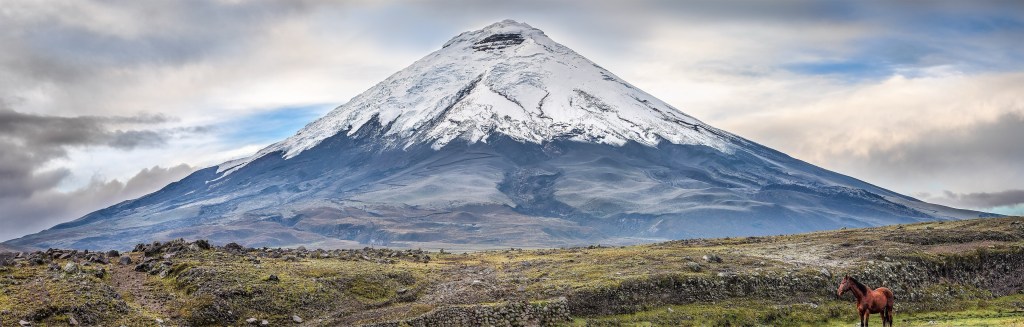
What active stratovolcano is about 30 miles (50 km) south of the city of Quito; in what country and mountain range is this volcano located?
Answer: Cotopaxi; Ecuador and the Andes Mountains.
Cotopaxi is an active stratovolcano in the Andes Mountains of Ecuador. It is the second-highest summit in Ecuador at 5,897 metres, putting it amongst the highest active volcanoes in the world.
Four
The seventh planet from the Sun was the first planet to be classified as such with the aid of a telescope? What planet and who discovered it?
Answer: Uranus; William Herschel.
Uranus is visible to the naked eye but was not recognised as a planet by ancient observers due to its dimness and slow orbit. William Herschel discovered it while using his homemade telescope on March 13, 1781, making it the first planet found using a telescope. This discovery effectively doubled the known size of the Solar System, as Uranus is about twice as far from the Sun as Saturn.
Five
Who or what is the island nation of the Solomon Islands named after?
Answer: Solomon.
The Solomon Islands, with a population of roughly 828,857, has Honiara as its capital on the island of Guadalcanal. The country takes its name from the broader Solomon Islands archipelago which, in 1568, was visited by Spanish navigator Álvaro de Mendaña, the first European to visit the islands. Although he only named individual islands, the archipelago was later named ‘Solomon Islands’ by others. They optimistically linked his voyage to the wealthy biblical King Solomon and the legendary city of Ophir.
Fixed Locus
Locus is defined as ‘a particular position or place where something occurs or is situated’. Despite the questions being all over place, locus is fixed and the initial letter of the first, and only the first, part of each answer should follow as such L, O, C, U, S.