The first question is connected to today, 16 August. The subsequent questions are not date-related but continue a Superlative’s theme which moves on from first, to furthest, heaviest, furthest (again) and finally shortest.
One
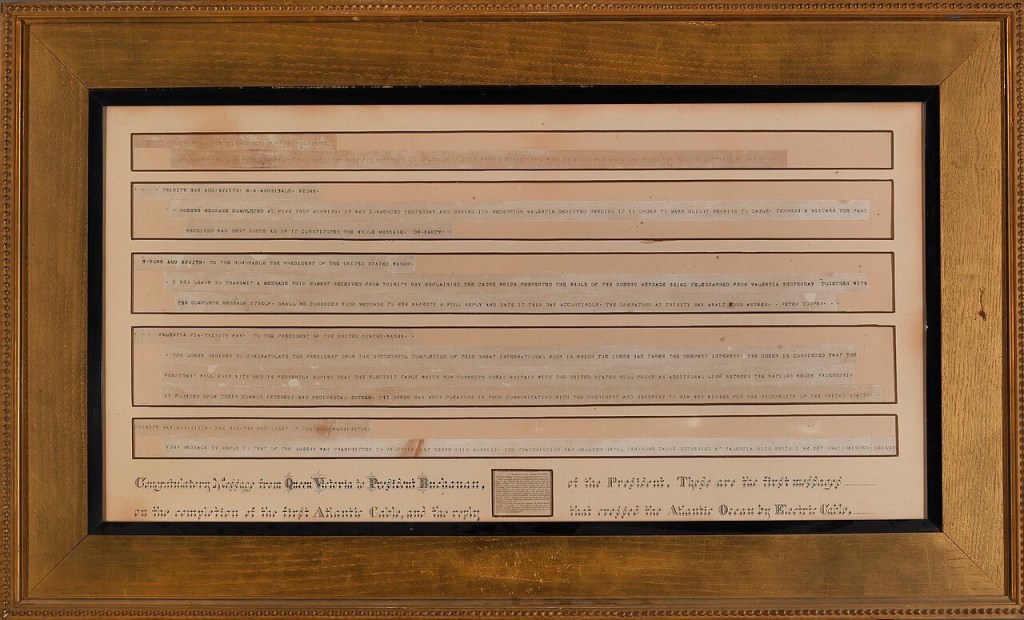
In 1858, Queen Victoria sent the U.S. President the first message via the Transatlantic telegraph. How long did the transmission of the message take:
7 minutes
9 hours
16 hours
Answer: 3. 16 hours
On this day in 1858, the first successful transatlantic telegraph exchange between heads of state took place. Queen Victoria sent the initial message to U.S. President James Buchanan. Although nearly instantaneous by 19th-century standards, the transmission required more than 16 hours. Unfortunately, the cable failed on 1 September, and a functioning line was not restored until 1866.
Two
The summit of what stratovolcano is the furthest point from the centre of the Earth?
Chimborazo, Ecuador
Eyjafjallajökull, Iceland
Kogajajima, Japan
Answer: 1. Mount Chimborazo, Ecuador.
Chimborazo, an inactive volcano which sits between Guayaquil and Quito, wins due to Earth’s oblate spheroid shape, placing Whymper — the tallest of its four summits — 7,096 feet (2,163 m) farther from the centre of the Earth than Everest.
Three
Which species is the heaviest living monkey?
Mandrill
Nepal Grey Langur
Olive Baboon
Answer: 1. Mandrill
Mandrills (Mandrillus sphinx), is a colourful, sexually dimorphic Old World monkey from west central Africa, closely related to the drill and white-eyelid mangabeys. Active by day on the ground, it eats fruit, seeds and animals in large female-centred hordes; dominant males are solitary outside breeding.
Four
On 15 August 2026, how far was Voyager 1 from Earth?
8.7 billion miles (14.0 billion km)
11.3 billion miles (18.2 billion km)
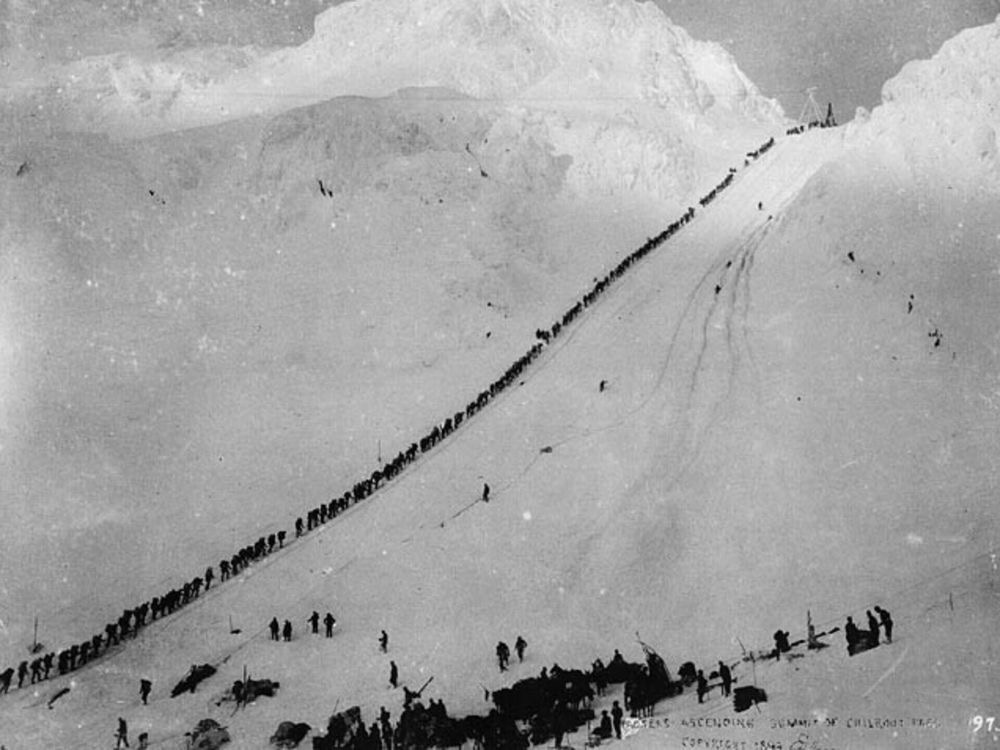
15.9 billion miles (25.6 billion km)
Answer: 3. 15.9 billion miles.
Voyager 1 was launched on the 5 September 1977 16 days after Voyager 2.
On Wednesday, Nov. 18, 2026, at 2:16:07 a.m. PST, NASA’s Voyager 1 spacecraft will be 16,094,799,096 miles (25,902,068,356 kilometers) away from Earth — or, the distance light travels in 24 hours, also known as one light-day. Voyager 1 will be the first human-made object to reach this distance from Earth, adding to a long list of historic firsts for the mission. Voyager 1 and its twin, Voyager 2, are the only spacecraft to ever operate outside the heliosphere, or the protective bubble of particles and magnetic fields generated by the Sun. — NASA
Five
What is the fastest time taken to complete the world’s shortest domestic scheduled flight?
53 seconds
97 seconds
131 seconds
Answer: 1. 53 seconds.
The shortest domestic scheduled flight is 2.74 km (1.7 miles) between the Orkney islands of Westray and Papa Westray. The flight takes two minutes (including taxiing) and is operated by Loganair which has been flown with Britten-Norman Islander eight-seat aircraft since September 1967. The total distance is less than either of the runways at Heathrow Airport, London, UK. Stuart Linklater announced his retirement as airplane pilot on the record route and between Stronsay, Sanday, North Ronaldsay and Eday in May 2013. He flew the routes 12,000 time over more than 24 years, clocking up 1.3 million miles. Loganair reported that he had set the fastest time for the Westray and Papa Westray route, with 53 seconds. — Guinness World Records
The first question is connected to today, 16 August. The subsequent questions are not date-related but continue a Superlative’s theme which moves on from first, to furthest, heaviest, furthest (again) and finally shortest.
One
In 1858, Queen Victoria sent the U.S. President the first message via the Transatlantic telegraph. How long did the transmission of the message take:
7 minutes
9 hours
16 hours
Two
The summit of what stratovolcano is the furthest point from the centre of the Earth?
Chimborazo, Ecuador
Eyjafjallajökull, Iceland
Kogajajima, Japan
Three
Which species is the heaviest living monkey?
Mandrill
Nepal Grey Langur
Olive Baboon
Four
On 15 August 2026, how far was Voyager 1 from Earth?
8.7 billion miles (14.0 billion km)
11.3 billion miles (18.2 billion km)
15.9 billion miles (25.6 billion km)
Five
What is the fastest time taken to complete the world’s shortest domestic scheduled flight?
The first date-related question sets a theme for the subsequent questions and/or answers.
One
Napoleon Bonaparte was strongly linked to three islands: (i) where he was born on 15 August 1769; (ii) where he was exiled in 1814 and subsequently escaped; and (iii) where he was exiled in 1815 and subsequently died. What are these islands and in what seas or oceans are they found?
Answers: (i) Corsica, Mediterranean Sea; (ii) Elba, Mediterranean Sea and (iii) Saint Helena, South Atlantic Ocean (or Atlantic Ocean).
Corsica is a French island in the Mediterranean Sea, known for its mountainous terrain and historical ties to Italy it has a population of 355,528. Napoleon was born in Ajaccio, Corsica in 1769. Elba is a Mediterranean island in Tuscany, Italy, known for being the site of Napoleon’s first exile from 1814 to 1815. It is the largest island in the Tuscan Archipelago and the third largest in Italy. Saint Helena is a remote volcanic island in the South Atlantic Ocean, part of a British overseas territory. It was uninhabited until the 16th century and served as a crucial stopover for ships between Europe and Asia before the Suez Canal opened. The island is also known for being Napoleon Bonaparte’s second place of exile from 1815 until his death in 1821.
Two
Ursus arctos middendorffi, the largest brown bear species, has a common name derived from an archipelago; which archipelago is it, and in what sea or ocean is it located?
Answer: Kodiak (Archipelago); North Pacific Ocean (or Pacific Ocean).
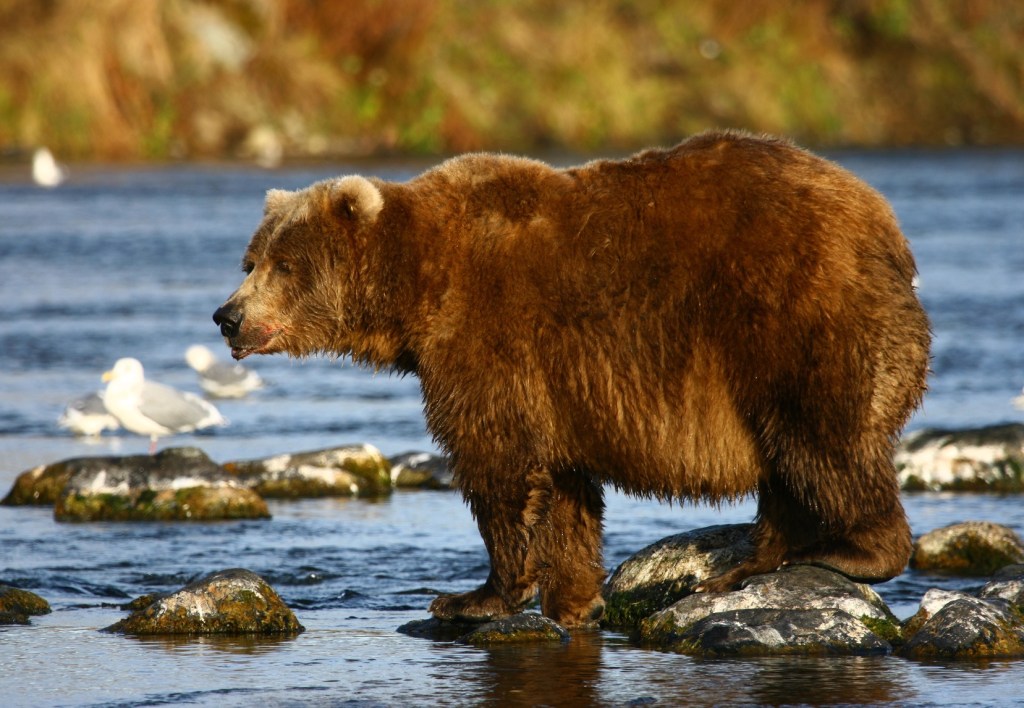
The Kodiak bear inhabits the Kodiak Archipelago and is among the largest bears, averaging 1.5 to 2 times larger than other brown bears. Human interactions include hunting and protection efforts; the Alaska Department of Fish and Game and United States Fish and Wildlife Service monitor the population.
Three
Puerto Ayora, also called Santa Cruz, is the largest town in which island group, and these islands are part of which country?
Answers: Galápagos Islands; Ecuador.
Puerto Ayora, the most populous Galápagos town with 12,696 people, sits on Santa Cruz Island’s southern shore as the seat of Santa Cruz Canton and honours former president, Isidro Ayora.
Four
Leaving in about 982 from Snæfellsjökull, one of the westernmost points of …, Erik and a small group of men reached land on the opposite shore of …, a land that had been skirted by the Norwegian Gunnbjörn Ulfsson earlier in the 10th century. — Encyclopædia Britannica
The above quote from Encyclopædia Britannica has had two island countries removed from it. What are these two countries?
Answers: Iceland; Greenland.
Exiled from Iceland around 980, Erik explored and named Greenland, settling at Brattahlid. Returning in 985 or 986, he led 14 ships to Eystribygd, Norse Greenland, establishing a colony of up to 3,000 that lasted until the mid-15th century.
Five
What is the second-largest Canadian island, and in what ocean is it found?
Answers; Victoria Island; Arctic Ocean.
Victoria Island, Canada’s second-largest landmass, spans Nunavut and the Northwest Territories, supporting 2,168 residents in Cambridge Bay and Ulukhaktok. It lies off the northern coast within the Arctic Ocean, east of the Beaufort Sea. Known in Inuinnaqtun as Kitlineq, the island was named for Queen Victoria and charted by Europeans beginning in 1826.
See question two. Ursus arctos middendorffi. Image Wildlife Trip.
The first date-related question sets a theme for the subsequent questions and/or answers.
One
Napoleon Bonaparte was strongly linked to three islands: (i) where he was born on 15 August 1769; (ii) where he was exiled in 1814 and subsequently escaped; and (iii) where he was exiled in 1815 and subsequently died. What are these islands and in what seas or oceans are they found?
Two
Ursus arctos middendorffi, the largest brown bear species, has a common name derived from an archipelago; which archipelago is it, and in what sea or ocean is it located?
Three
Puerto Ayora, also called Santa Cruz, is the largest town in which island group, and these islands are part of which country?
Four
Leaving in about 982 from Snæfellsjökull, one of the westernmost points of …, Erik and a small group of men reached land on the opposite shore of …, a land that had been skirted by the Norwegian Gunnbjörn Ulfsson earlier in the 10th century. — Encyclopædia Britannica
The above quote from Encyclopædia Britannica has had two island countries removed from it. What are these two countries?
Five
What is the second-largest Canadian island, and in what ocean is it found?
As with yesterday’s questions these are not date-related but follow a theme mentioned in the title.
One
Who, in 1965, became the second cricket player to hit six sixes in an over, and whose record did he equal?
Answers: Ravi Shastri; Gary Sobers.
On 31 August 1968, Sobers became the first man to hit six sixes off a single six-ball over in first-class cricket, off the bowling of Malcolm Nash in Nottinghamshire’s first innings against Glamorgan at St Helen’s in Swansea. Nash, a seam bowler, decided to try his arm at spin bowling, and this achievement was caught on film. On 10 January 1985, Shastri equalled Sobers’ record by hitting six sixes in an over, off the bowling of Baroda’s Tilak Raj.
Two
Which planet in our solar system is an ice giant and the second farthest from the Sun?
Answer: Uranus.
Uranus, the seventh planet from the Sun, is one of the two ice giants in our solar system, the other being Neptune. Its interior is thought to consist largely of high-pressure water, ammonia and methane. Uranus has the coldest planetary atmosphere in the Solar System, with minimum temperatures of about −224 °C (−371 °F), and an axial tilt of about 97.8°, causing retrograde rotation. It has a dark ring system, 29 known moons and unusually low internal heat. Discovered by William Herschel in 1781, it was visited by Voyager 2 in 1986, and a dedicated Uranus mission remains a major priority for future planetary exploration.
Three
The active volcano Popocatépetl is which country’s second-highest peak?
Answer: Mexico.
Popocatépetl is an active stratovolcano on the borders of the Mexican states of Puebla, Morelos and the State of Mexico, reaching 5,393 m (17,694 ft) and linked to Iztaccíhuatl by the Paso de Cortés. It is Mexico’s second-highest mountain after Citlaltépetl (Pico de Orizaba) at 5,636 m (18,491 ft). Its summit glaciers largely disappeared by 2001 owing to a combination of volcanic activity and climatic warming, and its eruptions primarily produce magnesium-rich andesite and dacite.
Four
No Need to Argue (1994) was what band’s second album?
Answer: The Cranberries.
No Need to Argue, released on 3 October 1994 via Island Records, is the Cranberries’ best-selling album with over 17 million copies sold by 2014. It includes “Zombie” and is darker than their debut.
Five
Jacqueline Roque was the muse and second wife, from 1961, of which artist?
Answer: Pablo Picasso.
Jacqueline Picasso, also known as Jacqueline Roque, Pablo Picasso’s muse and second wife. Their marriage spanned 12 years until his death, during which he produced more than 400 portraits of her—a greater number than for any other partner.
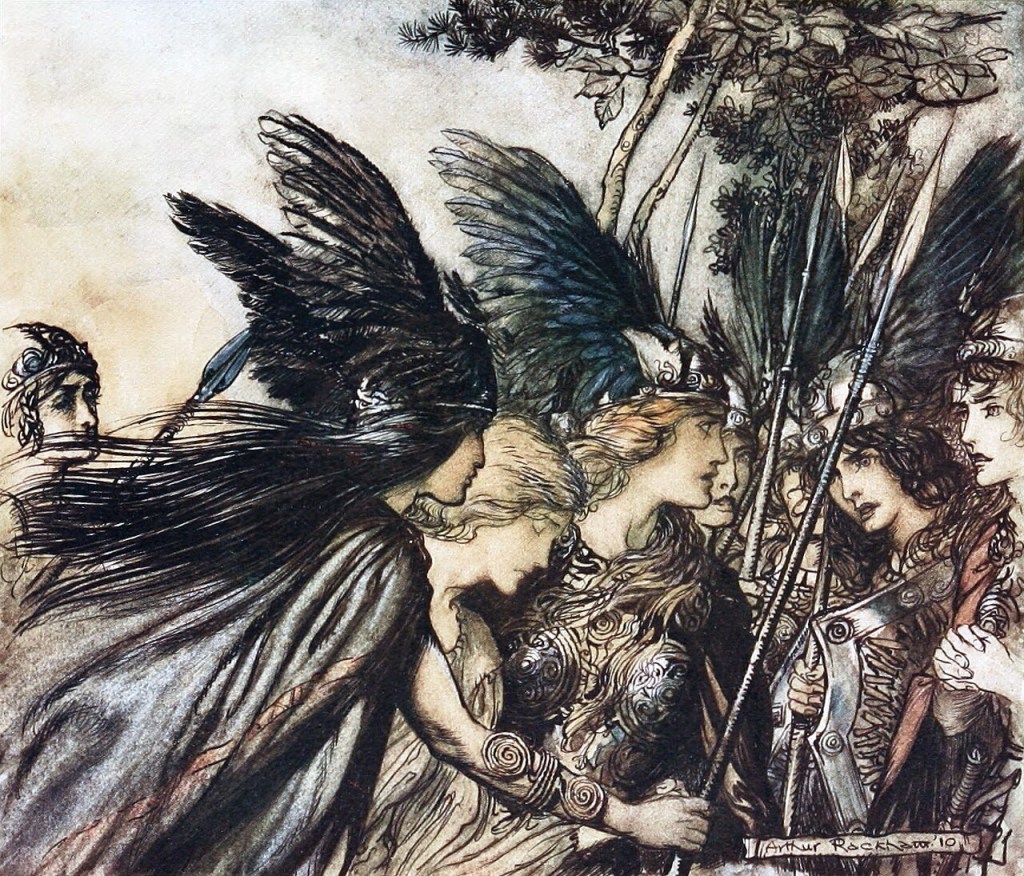
See question three. Brünnhilde pleads with her sisters to rescue Sieglinde: (Arthur Rackham, 1910). Image Wikimedia Commons
These questions are not date-related but do follow a theme mentioned in the title.
One
What is the title of the second volume of J.R.R. Tolkien’s The Lord of the Rings novel?
Answer: The Two Towers.
Published in 1954, The Two Towers is the second volume of J.R.R. Tolkien’s The Lord of the Rings. Its title remains ambiguous, as five towers appear in the text. The narrative creates suspense through interwoven storylines. Critics have praised its epic and romantic qualities, and it became the basis for Peter Jackson’s 2002 film The Lord of the Rings: The Two Towers.
Two
When it is visible, it is the most brilliant planet in the sky.
The above sentence is from an Encyclopædia Britannica article about a planet. What planet?
Answer: Venus.
Venus, second from the Sun and closest large body to Earth, appears near sunrise or sunset as the brightest planet. Although today named after the Roman goddess of love and beauty, ancient records, which include Babylonian, Chinese, Central American, Egyptian, and Greek, show it was studied by multiple civilisations.
Three
The third drama conceived and written, yet the second opera in Wagner’s tetralogy Der Ring des Nibelungen. Which mythic creatures does this drama take its name from?
Answer: Valkyries.
Die Walküre, the second opera in Wagner’s Der Ring des Nibelungen (The Ring of the Nibelung), premiered in Munich in June 1870 and as part of the cycle in 1876. Based on Norse mythology, it follows Volsung twins Sieglinde and Siegmund, whose love angers the gods. Brünnhilde defies them, saving Sieglinde and her unborn child.
Four
The … Revolution created the second independent country in the Americas after the United States became independent in 1783.
An adjective has been omitted from the preceding quote; which nation does the term describe?
Answer: Haiti.
Haitian was removed from the quote. The Haitian Revolution established the second independent American nation after the U.S. in 1783. Haiti, formerly St. Domingue, was a profitable French colony reliant on slave labour. The French Revolution sparked a slave revolt in 1791, led by Toussaint L’Ouverture. U.S. leaders, many of whom were slaveowners, were ambivalent about the revolt. Initially, they aided its suppression but later supported L’Ouverture. Due to policy shifts and domestic issues, the U.S. didn’t recognise Haiti’s independence until 1862. Jefferson initially aided L’Ouverture but later isolated Haiti.
Five
Sir Arthur Conan Doyle’s second Sherlock Holmes novel involves the theft of the Agra treasure. What is the title of the novel?
Answer: The Sign of the Four (aka The Sign of Four).
The Sign of the Four is Arthur Conan Doyle’s second novel featuring Sherlock Holmes. In it, he investigates Mary Morstan’s case involving her missing father. Dr Watson, Holmes’ companion, marries Mary Morstan. Published in February 1890 it followed the first novel, A Study in Scarlet.
See question three. Brünnhilde pleads with her sisters to rescue Sieglinde: (Arthur Rackham, 1910). Image Wikimedia Commons
These questions are not date-related but do follow a theme mentioned in the title.
One
What is the title of the second volume of J.R.R. Tolkien’s The Lord of the Rings novel?
Two
When it is visible, it is the most brilliant planet in the sky.
The above sentence is from an Encyclopædia Britannica article about a planet. What planet?
Three
The third drama conceived and written, yet the second opera in Wagner’s tetralogy Der Ring des Nibelungen. Which mythic creatures does this drama take its name from?
Four
The … Revolution created the second independent country in the Americas after the United States became independent in 1783.
An adjective has been omitted from the preceding quote; which nation does the term describe?
Five
Sir Arthur Conan Doyle’s second Sherlock Holmes novel involves the theft of the Agra treasure. What is the title of the novel?
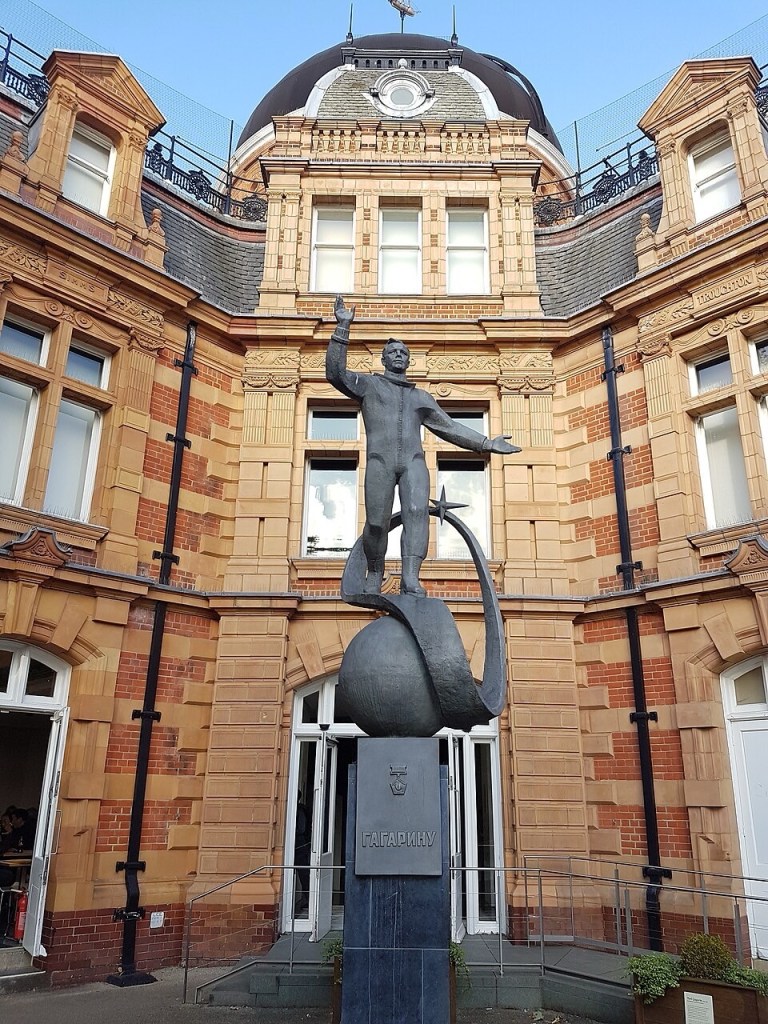
Statue of Yuri Gagarin, outside the Royal Observatory, Greenwich, London, UK. Image Wikimedia Commons
The opening question concerns today’s date, 12 August. The following questions do not relate to the date but continue a theme introduced in the first.
One
British surgeon and scientist Joseph Lister performed the first antiseptic surgery on this date. In what decade and in what city did this take place?
Answer: 1860s; Glasgow, Scotland.
On 12 August 1865, Joseph Lister, who was the Regius Chair of Surgery, at the University of Glasgow, used carbolic acid to treat James Greenlees’s compound fracture.
In 1867, Joseph Lister published a series of articles in The Lancet that were to be the first examples of antisepsis in action. Each of the cases occurred during his time working at the Glasgow Royal Infirmary. His first case was a young boy by the name of James Greenlees, who had an open fracture of his leg. Lister set the fracture and dressed the wound in carbolic acid to prevent infection. James made a full recovery. This was the birth of antisepsis. — The Royal College of Physicians and Surgeons of Glasgow
Two
In 1960, which US submarine became the first vessel to execute a submerged circumnavigation of the world?
Answer: USS Triton.
USS Triton (SSRN/SSN-586), a unique nuclear-powered radar picket submarine, was the largest, most powerful, and expensive submarine at commissioning in 1959. She completed the first submerged circumnavigation of the Earth in 1960. Obsolete by 1962, she became an attack submarine, flagship, and was decommissioned in 1969.
Three
In sport, who won his first men’s grand slam doubles title with Peter Fleming at Wimbledon in 1979?
Answer: John McEnroe.
John McEnroe is an American tennis player, ranked world No. 1 in singles for 170 weeks and doubles for 269 weeks. He won 155 titles, including seven singles majors. Known for his skill and rivalries, McEnroe also contributed to five Davis Cup titles and remains active as a television commentator during the majors.
Four
Who was the first astronaut to orbit the Earth, and what was the name and number assigned to his spacecraft for the flight?
Answer: Yuri Gagarin; Vostok 1.
Launched on 12 April 1961 from Baikonur Cosmodrome, Vostok 1 marked the first human orbital flight when Soviet cosmonaut Yuri Gagarin became the first person to orbit Earth, completing one circuit in 108 minutes before parachuting to the ground apart from his capsule. As a Soviet pilot and cosmonaut, Gagarin, the first person in space died in 1968 in a MiG-15 crash.
Five
Clint Eastwood won his first Best Director Oscar for which film?
Answer: Unforgiven.
Unforgiven (1992), directed by Clint Eastwood, stars him as an aging outlaw. Co-starring Gene Hackman, Morgan Freeman, and Richard Harris, it grossed over $159 million. Praised for acting, directing, and cinematography, it won four Oscars, including Best Picture. Eastwood dedicated it to Sergio Leone and Don Siegel. In 2004, Unforgiven was chosen for preservation in the United States National Film Registry by the Library of Congress. It was recognised for its cultural, historical, or aesthetic significance, highlighting its enduring impact and importance in American cinema.