All of these questions relate to today’s date, 7 August.
One
In what sport could a ‘Salchow’ be performed?
Two
The six-month-long Battle of Guadalcanal, which began on 7 August 1942, unfolded in which country?
Three
In 1960, the country represented by the flag shown above gained independence from France. What country is it?
Four
How many persons were onboard Thor Heyerdahl’s balsa wood raft, Kon-Tiki when it reached Raroia in the Tuamotu Islands after sailing 4,300 mile (7,000 km) in 101-days?
Five
In 1926, in motor racing the first British Grand Prix was held. Where was the race held?
Bonus Question
The post title is two lines taken from a popular song, what song?
pomology /pə(ʊ)ˈmɒlədʒi/ ▶ noun [mass noun] the science of fruit-growing. → pomological /pə(ʊ)məˈlɒdʒɪk(ə)l/ adjective → pomologist /pə(ʊ)ˈmɒlədʒɪst/ noun early 19th century: from Latin pomum ‘fruit’ + -logy. — Oxford English Dictionary
Two
What word is a noun which means a person who collects postcards?
Answer: Deltiologist.
deltiologist /ˌdɛltiˈɒlədʒɪst/ ♫ ▶ noun a person who collects postcards as a hobby. → deltiology noun 1940s: from Greek deltion (diminutive of deltos ‘writing tablet’) + -logist. — Oxford English Dictionary
Three
Potamology is the scientific study of which geographical features?
Answer: Rivers.
Potamology, a branch of hydrology, studies rivers, including their hydrological processes, morphometry, channel processes, and sediment regime.
Four
What is the scientific study of trees?
Answer: Dendrology.
Dendrology, or xylology, is the study of woody plants, focusing on their taxonomic classifications. It encompasses both economically useful and all woody plants in a region, distinguishing it from the study of sylvics, which focusses on autecology.
Five
In etymology, which botanical term is used to mean the earliest form of a word?
Answer: Root.
A root is the basic part of a word that can’t be broken down into smaller, meaningful pieces. It’s like the core of a word, and you can add prefixes or suffixes to it to change its meaning. Roots are important because they carry the main meaning of a word and are part of a word family. Sometimes, ‘root’ also refers to a word without its endings that show tense or number, but with its main meaning intact. In some languages, roots can stand alone as words, but in others, they need to be combined with other parts to form words. Roots are often marked with a special symbol to distinguish them from other parts of a word.
Ologies
Ology (plural ologies) a subject of study; a branch of knowledge: the word originates in the early 19th century: from –ology, a combining form that typically forms part of the name of sciences and subjects of study (see -logy). — Oxford English Dictionary
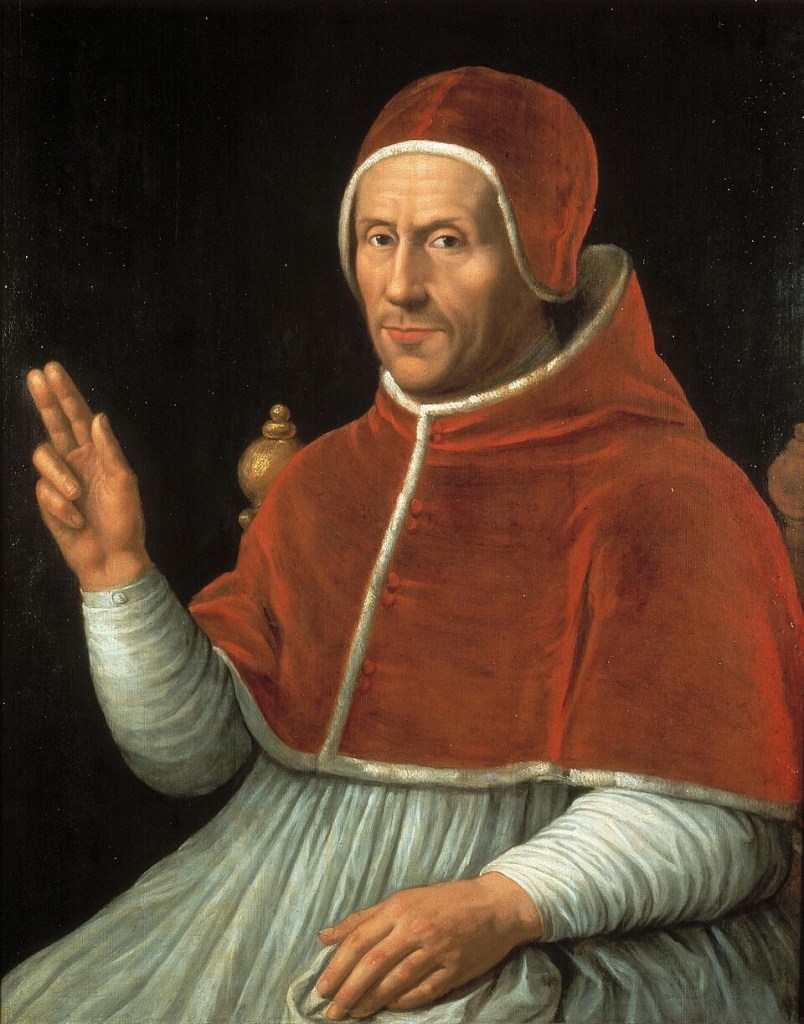
Pope Adrian VI. Image Wikimedia Commons/Image copyright Centraal Museum, Utrecht
Five questions today which are not date-related and follow a religious theme.
One
Adrian VI was the last non-Italian to be elected pope until John Paul II in 1978. In what year had Adrian been elected?
Answer: 1522
Adrian VI, born Adriaan Florensz Boeyens, served as pope from 1522 to 1523. The only Dutchman elected, he attempted reform and admitted Curia fault but faced resistance. He was succeeded by Clement VII.
Two
The word “antidisestablishmentarianism” refers to opposition to what?
Answer: The disestablishment of the Church of England.
antidisestablishmentarianism
▸ noun [mass noun] rare opposition to the disestablishment of the Church of England: I never realized that you leaned towards antidisestablishmentarianism.
Antidisestablishmentarianism is very occasionally found in genuine use, but it is most often cited as an example of a very long word.
In the book title The Red and the Black what do the colours symbolise?
Answer: The army (red) and the church (black).
The title of Stendhal’s 1830 novel The Red and the Black is ambiguous, but the colours are widely seen as symbolising the two careers available to Julien Sorel in post-Napoleonic France. Red refers to the red uniform of the army, especially the glory and advancement associated with Napoleon’s military career. Black refers to the black cassock of the clergy, representing the Church as an alternative route to power, status, and influence after Napoleon’s fall.
Four
Which Unification Church leader founded The Washington Times in 1982?
Answer: Sun Myung Moon.
Sun Myung Moon founded the Unification Church, authored Divine Principle and promoted mass weddings. An anti-communist advocate for Korean reunification, he led News World Communications and Tongil Group. Imprisoned in Korea and convicted in United States v. Sun Myung Moon, he engaged with political figures.
Five
Since 9/11 a Manhattan church exhibits police and firefighter memorabilia, what church?
Answer: St Paul’s.
St Paul’s Chapel provided refuge for recovery workers after 11 September 2001, with volunteers working round the clock for nine months. A sycamore tree protected the building; its root is preserved in a bronze memorial. The organ was refurbished.
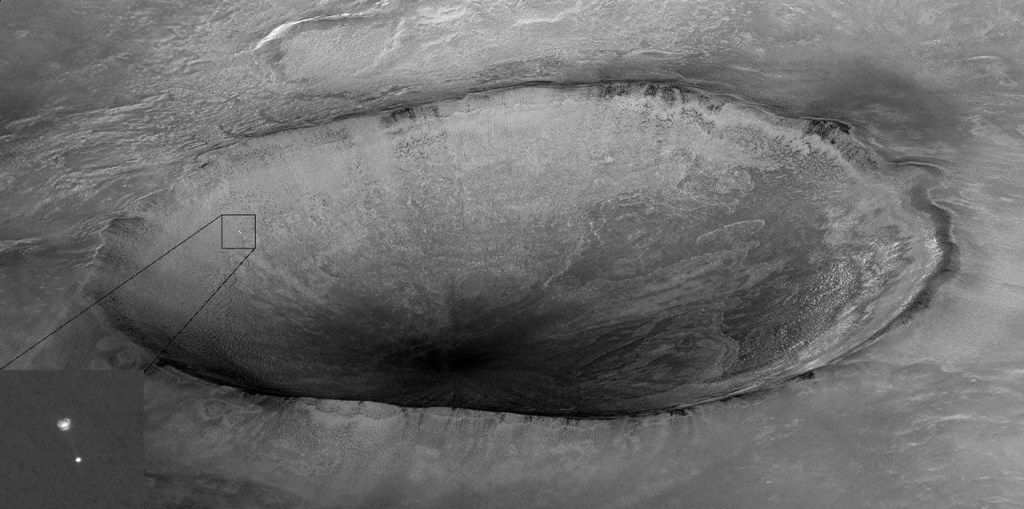
Mars Reconnaissance Orbiter caught this image of Phoenix hanging from its parachute as it descended to the Martian surface in 2008. Image NASA/JPL-Caltech/University of Arizona
Question one is date-related, but the rest are not. There is a space theme in all of the questions.
One
A U.S. space probe was launched on this day in 2007 and a year later it landed on Mars. What mythical creature was the probe named after?
Answer: Phoenix.
Launched on 4 August 2007, the Mars Phoenix lander touched down on 25 May 2008 in Vastitas Borealis to examine Martian water history and organic molecules. It confirmed subsurface water ice, detected perchlorate, and identified alkaline soil containing salts. With a robotic arm, ovens, and a laboratory, it analysed soil volatiles, mapped geology, and monitored atmospheric conditions. The mission, extended by late August, concluded on 2 November 2008, having announced water on Mars on 31 July.
Two
What two words are missing from this 1969 quote: “Houston, … here. The Eagle has landed.”
Answer: Tranquility Base.
Apollo 11 landed humans on the Moon from 16–24 July 1969 using Saturn V. Neil Armstrong and Buzz Aldrin walked on the surface while Michael Collins orbited; 21.5 kg of material was collected. The mission fulfilled Kennedy’s goal and broadcast Armstrong’s statement to 600 million viewers.
Three
In 2012, travelling a whopping 480 million kilometres to reach our ears, … was the first tune to be broadcast from another planet. — BBC Sky at Night magazine
The above quote is missing the name of the song which was broadcast. What was that song and who had especially written it for this purpose?
Answer: Reach for the Stars by will.i.am.
American recording artist will.i.am wrote, produced, and recorded the song “Reach for the Stars” (and their instrumental-driven version subtitled “Mars Edition” and “NASA Edition”) in commemoration of the landing of the Curiosity rover on Mars. The song was first released on August 28, 2012, and it became the first song that was successfully broadcast from another planet Wikipedia
Four
If Voyager 2’s flyby of Uranus occurred in January 1986, when was its next encounter, the Neptune Flyby? (Month and Year)
Answer: August 1989.
Voyager 2 was launched on 20 August 1977, and these key dates on its journey are from NASA:
July 9, 1979: Jupiter Flyby Aug 25, 1981: Saturn Flyby Jan 24, 1986: Uranus Flyby Aug 25, 1989: Neptune Flyby Aug 30, 2007: Crossed Termination Shock Nov 25, 2018: Entered Interstellar Space — NASA
Five
For what planet in the Solar System is the following true?
The Sun rises twice each year.
The Sun rises in the west, and
A day is longer than a year.
Answer: Venus.
Venus is the second planet from the Sun and Earth’s closest planetary neighbor. Similar in size to Earth, it is covered by thick clouds of carbon dioxide and sulfuric acid. Its atmosphere creates an intense greenhouse effect, making Venus the hottest planet in the Solar System, with surface temperatures around 465°C. The planet rotates very slowly and in the opposite direction to most planets. Volcanoes, vast plains, and rugged highlands dominate its hidden surface today.
Mars Reconnaissance Orbiter caught this image of … hanging from its parachute as it descended to the Martian surface in 2008. Image NASA/JPL-Caltech/University of Arizona
Question one is date-related, but the rest are not. There is a space theme in all of the questions.
One
A U.S. space probe was launched on this day in 2007 and a year later it landed on Mars. What mythical creature was the probe named after?
Two
What two words are missing from this 1969 quote: “Houston, … here. The Eagle has landed.”
Three
In 2012, travelling a whopping 480 million kilometres to reach our ears, … was the first tune to be broadcast from another planet. — BBC Sky at Night magazine
The above quote is missing the name of the song which was broadcast. What was that song and who had especially written it for this purpose?
Four
If Voyager 2’s flyby of Uranus occurred in January 1986, when was its next encounter, the Neptune Flyby? (Month and Year)
Five
For what planet in the Solar System is the following true?
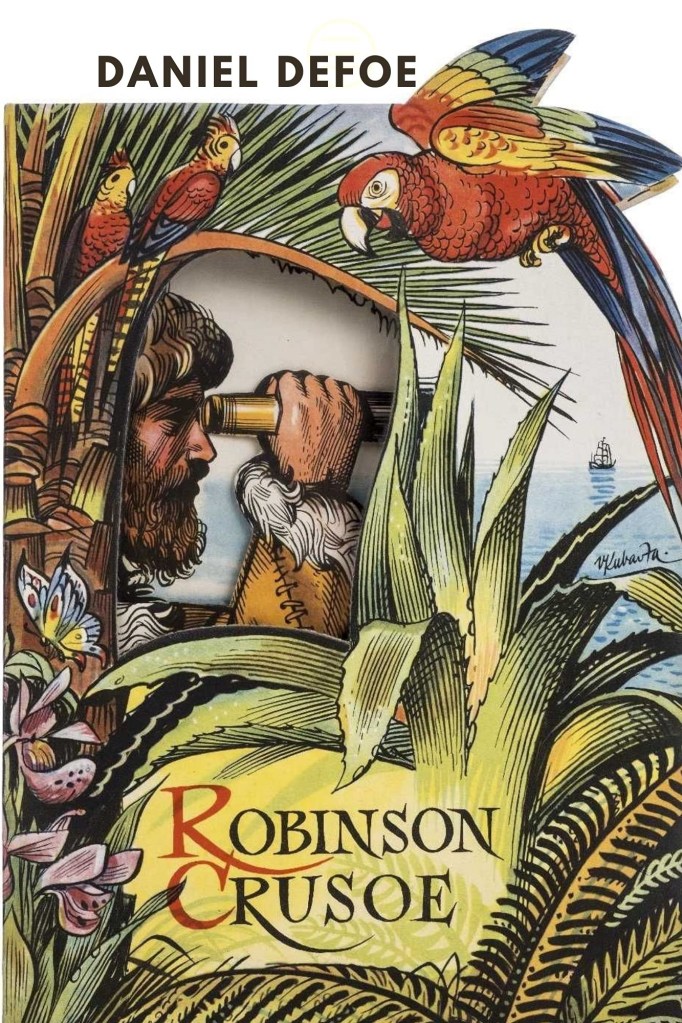
See question two. Robinson Crusoe. Image Goodreads
Five questions which follow are not date related but do follow a theme.
One
The 2010 autobiography of whom is titled 9.58?
Answer: Usain Bolt.
Usain Bolt, born 21 August 1986, is a retired Jamaican sprinter, considered the greatest ever. An eight-time Olympic gold medallist, he holds world records in the 100m, 200m, and 4x100m relay. Known as ‘Lightning Bolt’, he won multiple World Championships and numerous prestigious awards, retiring in 2017.
Two
The location of the uninhabited island where Robinson Crusoe was shipwrecked is described as being ‘near the mouth of the great river …’— what river mouth?
Answer: Oroonoque or Orinoco.
Either Oroonoque or Orinoco as the spelling varies between editions. Robinson Crusoe, published on 25 April 1719 by Daniel Defoe, is an English adventure novel often credited as the start of realistic fiction. It follows Robinson Kreutznaer’s 28-year survival on a desert island, inspired by real-life castaways. Initially believed non-fiction, it was well-received for its narrative style. By the end of 1719, the book had four editions and became one of history’s most published works. It inspired numerous imitations across literature, film, television, and radio, defining the Robinsonade genre
Three
Historically known as Alexandretta, this city featured in a 1984 film starring Sean Connery. What was the film, and by what name is the city now known?
Answer: İskenderun; Indiana Jones and the Last Crusade.
İskenderun, historically known as Alexandretta, is a district in Hatay Province, Turkey, with a population of 251,682 as of 2022. Situated on the Mediterranean coast, it experienced significant damage from the earthquakes in February 2023. The city was likely founded during the Hellenistic period by a successor of Alexander the Great and has since been under the control of the Seleucid, Roman, Abbasid, and Mamluk empires. It became part of the Ottoman Empire until World War I, after which it was a French mandate sanjak until gaining independence in 1938 and officially joining Turkey in 1939. İskenderun appears in Indiana Jones and the Last Crusade.
Four
Which song begins:
Risin’ up, back on the street Did my time, took my chances
Answer: Eye of the Tiger
“Eye of the Tiger” by Survivor, written for Rocky III, topped charts worldwide and won a Grammy. It was also nominated for an Academy Award.
Five
Who played the title role in the 1973 film Serpico?
Answer: Al Pacino.
Serpico is a 1973 biographical crime drama film about Frank Serpico, a whistleblower who exposed corruption in the NYPD. The film, directed by Sidney Lumet and starring Al Pacino, was a critical and commercial success, earning several award nominations.
The Great Vowel Shift
Today’s title really in this instance only refers to the answers starting with one of the five vowels which have been ‘shifted’ into reverse order, U – O – I – E – A. The Great Vowel Shift, occurring between 1400 and 1700, altered the pronunciation of all Middle English long vowels and some consonant sounds. This shift, beginning in southern England, significantly influenced English dialects and contributed to the divergence between English spelling and pronunciation.
See question two. Robinson Crusoe. Image Goodreads
Five questions which follow are not date related but do follow a theme.
One
The 2010 autobiography of whom is titled 9.58?
Two
The location of the uninhabited island where Robinson Crusoe was shipwrecked is described as being ‘near the mouth of the great river …’— what river mouth?
Three
Historically known as Alexandretta, this city featured in a 1984 film starring Sean Connery. What was the film, and by what name is the city now known?
Four
Which song begins:
Risin’ up, back on the street Did my time, took my chances
Five
Who played the title role in the 1973 film Serpico?
All of today’s questions are related to the date, 1 August.
One
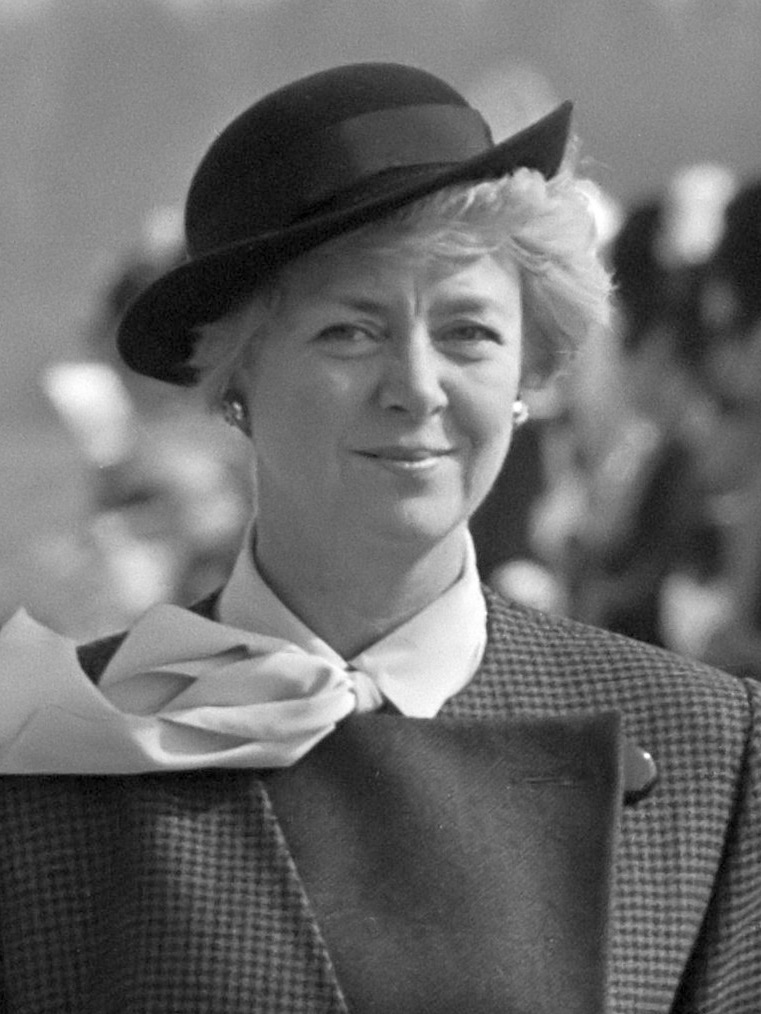
In 1980, for the first time anywhere in the world, a woman was elected head of state in a national election. This election was the first of four terms in this role. Who is she, and of what country was she president?
Answer: Vigdís Finnbogadóttir; Iceland.
Vigdís Finnbogadóttir served as Iceland’s president from 1980 to 1996 and was the first woman globally elected head of state. After retiring from office Finnbogadóttir chaired the UNESCO World Commission on the Ethics of Scientific Knowledge and Technology from 1997 to 2001 and became UNESCO’s goodwill ambassador for languages in 1998.
Two
In 1996, George R.R. Martin published the first volume of a book series. What is the book series called?
Answer: A Song of Ice and Fire.
George R.R. Martin, born in 1948, is an American fantasy writer known for his A Song of Ice and Fire series, adapted into Game of Thrones and House of the Dragon. He began his career with short fiction and television writing before returning to novels.
Three
What Formula 1 driver, who suffered extensive burns in a severe accident in the 1976 German Grand Prix at the Nürburgring, returned to racing still heavily bandaged, having only missed two races?
Answer: Niki Lauda
Niki Lauda, after a near-fatal crash in 1976, won his second championship with Ferrari in 1977. He took a two-year hiatus before returning with McLaren, winning his third championship in 1984, and retiring in 1985.
Four
On this date, the Guam Organic Act was signed, officially establishing Guam as an organised unincorporated territory of the United States. Who was the U.S. president at the time?
Answer: Harry S. Truman.
Guam, a territory since 1899, was acquired at the end of the Spanish-American War. It’s home to Naval Base Guam and Andersen Air Force Base. Organised under the Guam Organic Act of 1950, it granted U.S. citizenship to Guamanians and established a local government. The act was amended in 1968 to allow for the election of a governor.
Five
In 1620, Myles Standish, his wife Rose and others sailed from Delfshaven, Netherlands to England where they would join with the Mayflower to sail to America. What is the name of the ship on which Standish and his wife sailed from Delfshaven, and in what modern country is Delfshaven?
Answer: Speedwell; Netherlands.
On 1 August 1620, the Pilgrim Fathers left Delfshaven on the Speedwell. After delays due to leaks, they departed Southampton on 5 August with the Mayflower. The Speedwell was abandoned, and its passengers, including the Standishes, joined the Mayflower for the voyage to the New World.