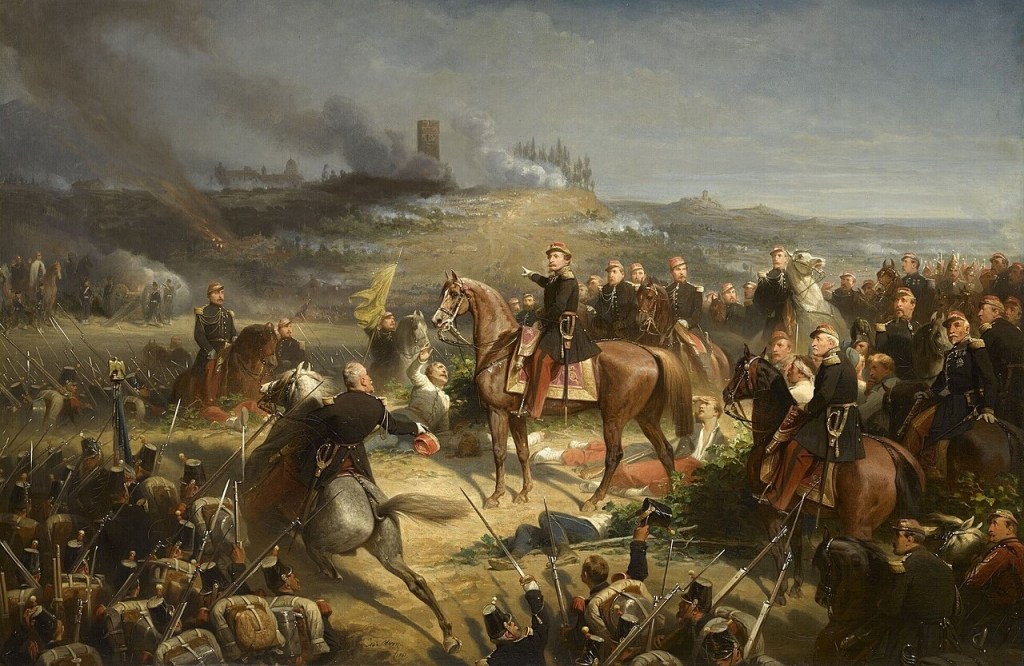
See question two. Napoleon III at the decisive moment of the Battle of Solferino, 1859. Image Wikimedia Commons
Today’s first question centres around the date 6th June, and the subsequent questions build on a theme established by the first.
One
The YMCA was founded on this day. Which decade and major city was it established in?
Two
The aftermath of the Battle of Solferino on 24 June 1859, during the Second War of Italian Independence, resulted in the 1863 formation of what organisation?
Three
By what name were the Poor Fellow-Soldiers of Christ and of the Temple of Solomon commonly known by; in what century were they founded and where were their headquarters?
Four
What organisation founded in 1945 has major offices in New York City, Geneva, Nairobi, Vienna and The Hague; and, to the nearest ten, how many of the world’s states are members of it?
Five
The British branch of an international organisation founded in 1961 began running charity fundraising shows in 1976 to support the organisation’s wider mission. These shows gained popularity and became known as The Secret Policeman’s Balls. What is the name of the international organisation founded in 1961?
No theme today, just five general knowledge questions.
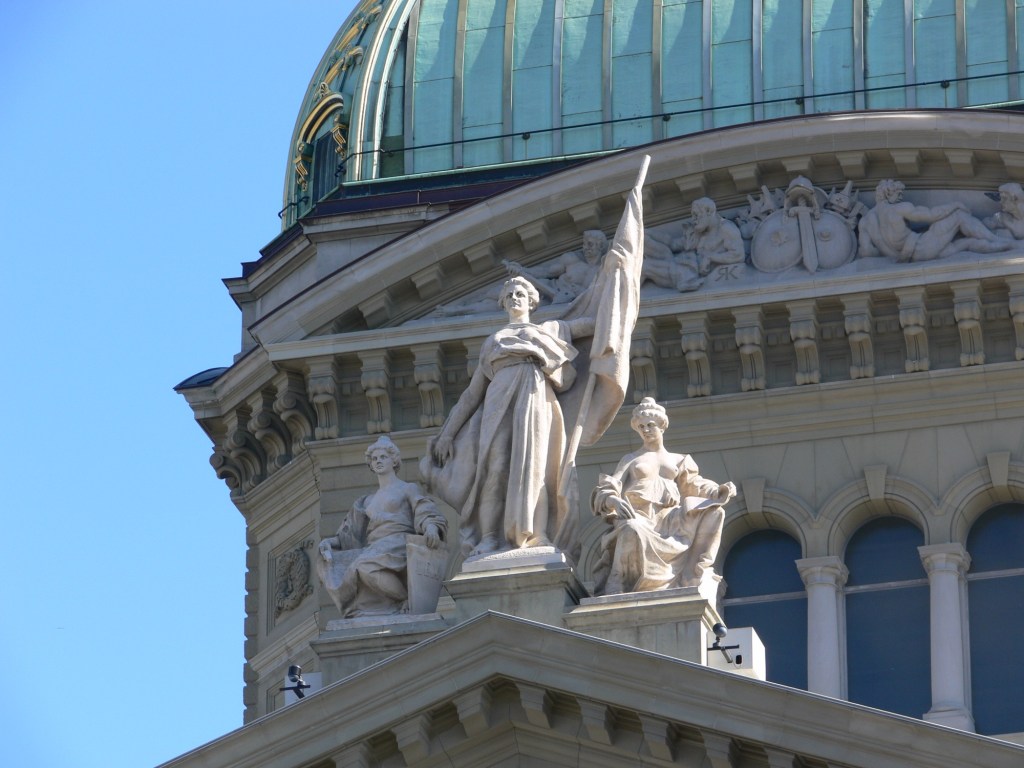
Statue of Helvetia on the Federal Palace of Switzerland, Bern. Image Wikimedia Commons
One
The image shown is that of ‘Statue of Helvetia on the Federal Palace of …’. What country finishes the previous statement, and in what city is the Federal Palace located?
Answers: Switzerland; Bern.
Helvetia, the national personification of Switzerland, is depicted with flowing clothing, with the Swiss flag, braided hair, and often with shield and a wreath. The name derives from the Helvetii, a Gaulish tribe.
Two
The …, or boreal forest, is the world’s largest land biome. In North America, it covers most of inland Canada, Alaska, and parts of the northern contiguous United States. In Eurasia, it covers most of Sweden, Finland, much of Russia from Karelia in the west to the Pacific Ocean (including much of Siberia), much of Norway and, some of the Scottish Highlands, some lowland/coastal areas of Iceland, and areas of northern Kazakhstan, northern Mongolia, and northern Japan (on the island of Hokkaido).
The above quote from Wikipedia describes a biome whose name has been omitted. What is that missing name?
Answer: Taiga.
taiga /ˈtʌɪɡə / ▸ (the taiga) noun [mass noun] the swampy coniferous forest of high northern latitudes, especially that between the tundra and steppes of Siberia: the coniferous forest of the taiga.
– ORIGIN late 19th century: from Russian taĭga, from Mongolian. — Oxford English Dictionary
Three
What word completes the title of this 1957 sci-fi novel: The Midwich …; and who wrote it?
Answers: Cuckoos; John Wyndham.
The Midwich Cuckoos, a 1957 sci-fi novel by John Wyndham, explores moral ambiguities in an English village where women become pregnant by aliens.
Four
What calendar was replaced in England by the Gregorian in 1752?
Answer: Julian.
The Julian calendar, proposed by Julius Caesar in 46 BC, is a solar calendar with a leap year every four years. It gained one day every 128 years compared to the solar year, leading to a drift against the solar year. The Gregorian calendar, introduced in 1582, corrected this by eliminating occasional leap days, reducing the average year length to 365.2425 days. Although introduced in 1582 it took a lot longer to be adopted by individual nations. As stated in the question England adopted it in 1752 but Greece and turkey did not adopt until the 1920s and Saudi Arabia’s adoption of it was not until 2016.
Five
Who played the Hulk in The Incredible Hulk television series which originally aired between 1978 and 1982?
Answer: Lou Ferrigno.
The Incredible Hulk is a CBS series starring Bill Bixby as Dr. David Banner and Lou Ferrigno as the Hulk. Banner, a scientist transformed by gamma radiation, travels the U.S. helping others while pursued by reporter Jack McGee. The series aired 80 episodes from 1978 to 1982, starting with a pilot on November 4, 1977. In 1988, New World Television acquired filming rights from MCA/Universal for TV movies to conclude The Incredible Hulk series, with NBC broadcasting. They produced three films: The Incredible Hulk Returns, The Trial of the Incredible Hulk, and The Death of the Incredible Hulk, directed by Nicholas J. Corea and Bill Bixby.
No theme today, just five general knowledge questions.
Statue of Helvetia on the Federal Palace of …. Image Wikimedia Commons
One
The image shown is that of ‘Statue of Helvetia on the Federal Palace of …’. What country finishes the previous statement, and in what city is the Federal Palace located?
Two
The …, or boreal forest, is the world’s largest land biome. In North America, it covers most of inland Canada, Alaska, and parts of the northern contiguous United States. In Eurasia, it covers most of Sweden, Finland, much of Russia from Karelia in the west to the Pacific Ocean (including much of Siberia), much of Norway and, some of the Scottish Highlands, some lowland/coastal areas of Iceland, and areas of northern Kazakhstan, northern Mongolia, and northern Japan (on the island of Hokkaido).
The above quote from Wikipedia describes a biome whose name has been omitted. What is that missing name?
Three
What word completes the title of this 1957 sci-fi novel: The Midwich …; and who wrote it?
Four
What calendar was replaced in England by the Gregorian in 1752?
Five
Who played the Hulk in The Incredible Hulk television series which originally aired between 1978 and 1982?
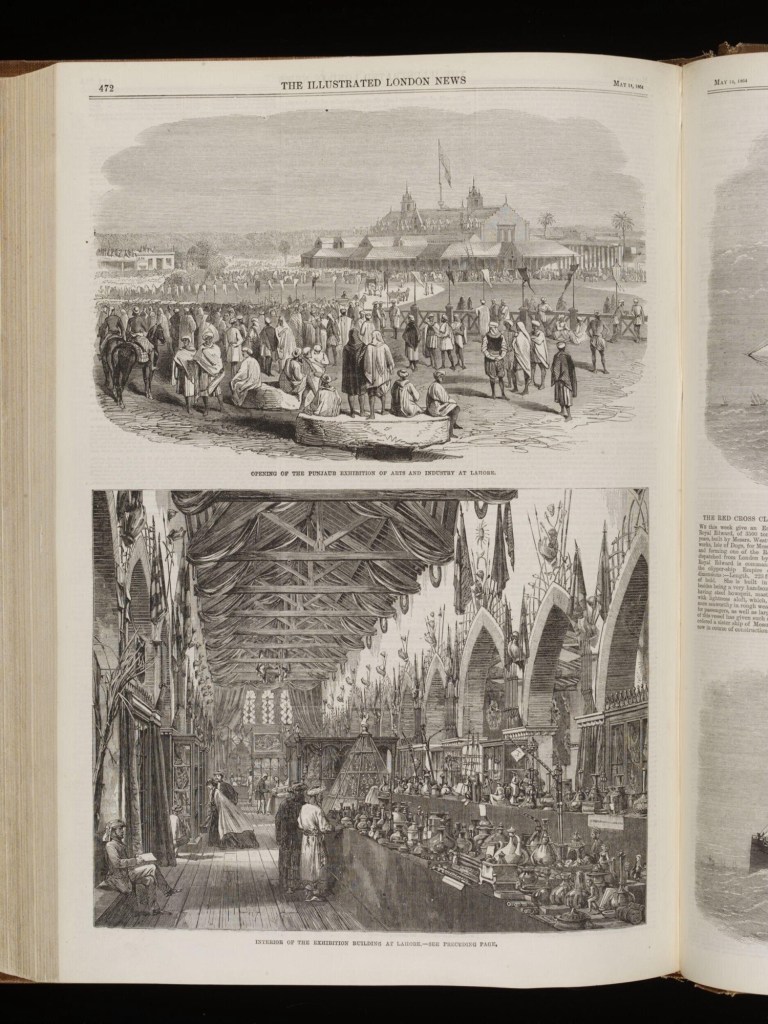
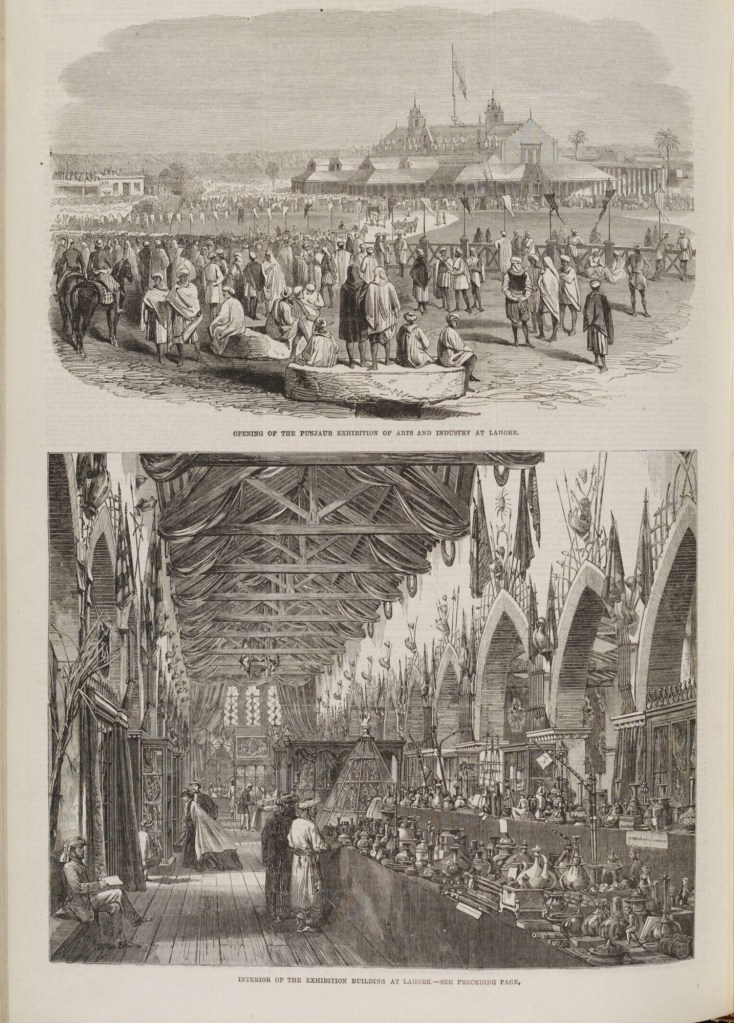
Images from an Exhibition at Lahore. The Illustrated London News, 1864. Image Victoria & Albert Museum.
These are all connected to today’s date, May 14th.
One
1842 saw the first publication of an illustrated weekly news magazine, named The Illustrated … News. The image is from a later edition. What city completed the name of this periodical?
Answer: London. The Illustrated London News
Founded by Herbert Ingram, The Illustrated London News debuted on 14 May 1842 as the first illustrated weekly news magazine. It published weekly until 1971, then less frequently, ceasing in 2003. The company, now Illustrated London News Ltd, remains a publishing and digital agency in London, preserving its archives.
Two
The United States’ first space station was launched on this date. In what year was this, and what was it called?
Answers: 1973; Skylab.
Skylab, the US’s first space station, was occupied for 24 weeks in 1973-1974. It was constructed from a repurposed Saturn V third stage and included an orbital workshop, solar observatory, and Earth observation capabilities. Skylab’s orbit eventually decayed and it disintegrated in the atmosphere on July 11, 1979 scattering debris across the Indian Ocean and Western Australia.
Three
In 2004, the then Crown Prince Frederik of Denmark married Mary Donaldson at Copenhagen Cathedral. The couple are now the king and queen of Denmark. On what island was the bride born?
Answer: Tasmania.
Mary, born Mary Elizabeth Donaldson in 1972 at Hobart, Tasmania, Australia, is the Queen of Denmark and wife of King Frederik X. They met at the 2000 Olympics and married in 2004, having four children together. Mary is a patron of over 30 charities and founded the Mary Foundation in 2007.
Four
The practice of holding a two-minute silence to remember the dead from the First World War began on 14 May 1918. In what port city of the then British Empire did it begin?
Answer: Cape Town, South Africa.
The Remembrance Day two-minute silence began in Cape Town in 1918, when Mayor Sir Harry Hands introduced a daily pause after the death of his son in the First World War. Organised with councillor Robert Rutherford Brydone, the ceremony halted traffic while buglers played the ‘Last Post’ and ‘Reveille’. The practice spread across the British Empire after Sir Percy FitzPatrick promoted it to King George V, who officially adopted the two-minute Armistice Day silence in 1919.
Five
Born Catherine Élise today in 1969 in Victoria. This actress won an award for her role as Katharine Hepburn and later played KGB agent Irina Spalko. Who is she?
Answer: Cate Blanchett.
Cate Blanchett, an Australian actress born Catherine Élise Blanchett on 14 May 1969 in Melbourne, Victoria, Australia, is 56 years old. Known for her multidimensional characters and wide range of roles, her breakthrough came playing a young Queen Elizabeth I in Elizabeth (1998). She later appeared in The Lord of the Rings series, The Aviator (2004), and Blue Jasmine (2013). Blanchett won an Academy Award for Best Supporting Actress for her role as Katharine Hepburn in The Aviator and another for her performance in Blue Jasmine. She also portrayed Irina Spalko, the main antagonist in the 2008 film Indiana Jones and the Crystal Skull.
Images from an Exhibition at Lahore (cropped). The Illustrated … News, 1864. Image Victoria & Albert Museum.
These are all connected to today’s date, May 14th.
One
1842 saw the first publication of an illustrated weekly news magazine, named The Illustrated … News. The image above is from a later edition. What city completed the name of this periodical?
Two
The United States’ first space station was launched on this date. In what year was this, and what was it called?
Three
In 2004, Crown Prince Frederik of Denmark married Mary Donaldson at Copenhagen Cathedral. The couple are now the king and queen of Denmark. On what island was the bride born?
Four
The practice of holding a two-minute silence to remember the dead from the First World War began on 14 May 1918. In what port city of the then British Empire did it begin?
Five
Born Catherine Élise today in 1969 in Victoria. This actress won an award for her role as Katharine Hepburn and later played KGB agent Irina Spalko. Who is she?
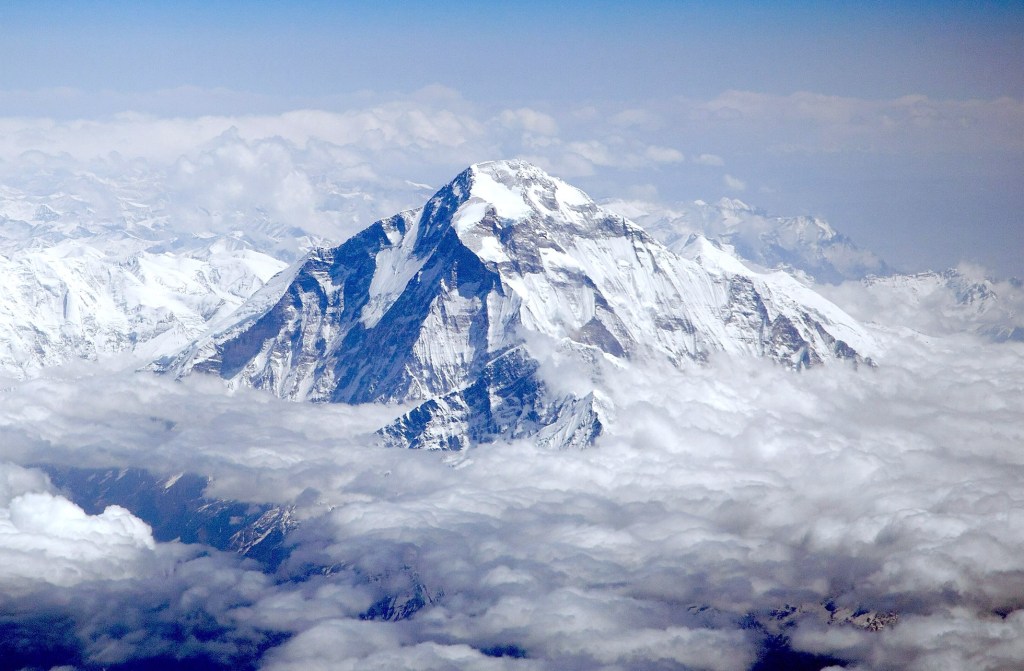
See question five. Dhaulagiri, at 8167 m, the world’s seventh-highest mountain above sea level. Image Wikimedia Commons
Today’s date-related questions are all connected to May 13th.
One
In 1637, according to tradition France’s Cardinal Richelieu invented the table knife by having the tips of knives rounded. He did this to prevent what?
Answer: To stop his companions picking their teeth with the knife-points.
The distinguishing feature of a table knife is a blunt or rounded end. The origin of this, and thus of the table knife itself, is attributed by tradition to Cardinal Richelieu around 1637, reputedly to cure dinner guests of the habit of picking their teeth with their knife-points. — Wikipedia
Two
On this day in 1940, some eight months into World War II, Winston Churchill faced the United Kingdom’s House of Commons for the first time as prime minister and informed them that “I have nothing to offer but …, …, … and ….” What four words have been removed from this quotation?
Answer: Blood, toil, tears [and] sweat.
I would say to the House, as I said to those who have joined this government: “I have nothing to offer but blood, toil, tears and sweat.” — International Churchill Society
Three
97-year-old Doris von Kappelhoff died on this day in 2019. Who was she better known as?
Answer: Doris Day.
Doris Day, born Doris Von Kappelhoff, was an American singer and actress who rose to fame in the 1950s and 1960s. She starred in numerous musicals and sex comedies, becoming a leading Hollywood star and embodying the ideal American woman of the era. Later in life, she dedicated herself to animal welfare, founding several organisations to advocate for animal rights.
Four
In 1981, the pope survived an assassination attempt. What pope and where did this happen?
Answers: Pope John Paul II; St. Peter’s Square, Vatican City.
On 13 May 1981, Pope John Paul II was shot and critically wounded by Mehmet Ali Ağca in St. Peter’s Square. The Pope credited the Blessed Virgin Mary with saving his life and later visited Ağca in prison, forgiving him. Numerous theories emerged about the assassination attempt, including a controversial claim that the Soviet Union was responsible, though the Pope publicly denied this.
Five
The world’s seventh-highest mountain above sea level has several peaks exceeding 25,000 feet (7,620 m) and one at 26,795 feet (8,167 m). It has a name meaning ‘white mountain’; what is that name?
Answer: Dhaulagiri.
Dhaulagiri, a Himalayan massif in Nepal, features peaks over 25,000 feet, including Dhaulagiri I at 26,795 feet. Known as ‘white mountain’ in Sanskrit, its steep south wall and cold climate delayed its ascent until May 13, 1960, when a Swiss team led by Max Eiselin reached the summit.
See question five. The world’s seventh-highest mountain 8167 m above sea level. Image Wikimedia Commons
Today’s date-related questions are all connected to May 13th.
One
In 1637, according to tradition France’s Cardinal Richelieu invented the table knife by having the tips of knives rounded. He did this to prevent what?
Two
On this day in 1940, some eight months into World War II, Winston Churchill faced the United Kingdom’s House of Commons for the first time as prime minister and informed them that “I have nothing to offer but …, …, … and ….” What four words have been removed from this quotation?
Three
97-year-old Doris von Kappelhoff died on this day in 2019. Who was she better known as?
Four
In 1981, the pope survived an assassination attempt. What pope and where did this happen?
Five
The world’s seventh-highest mountain above sea level has several peaks exceeding 25,000 feet (7,620 m) and one at 26,795 feet (8,167 m). It has a name meaning ‘white mountain’; what is that name?
Today’s questions are multiple-choice and don’t have a specific theme.
One
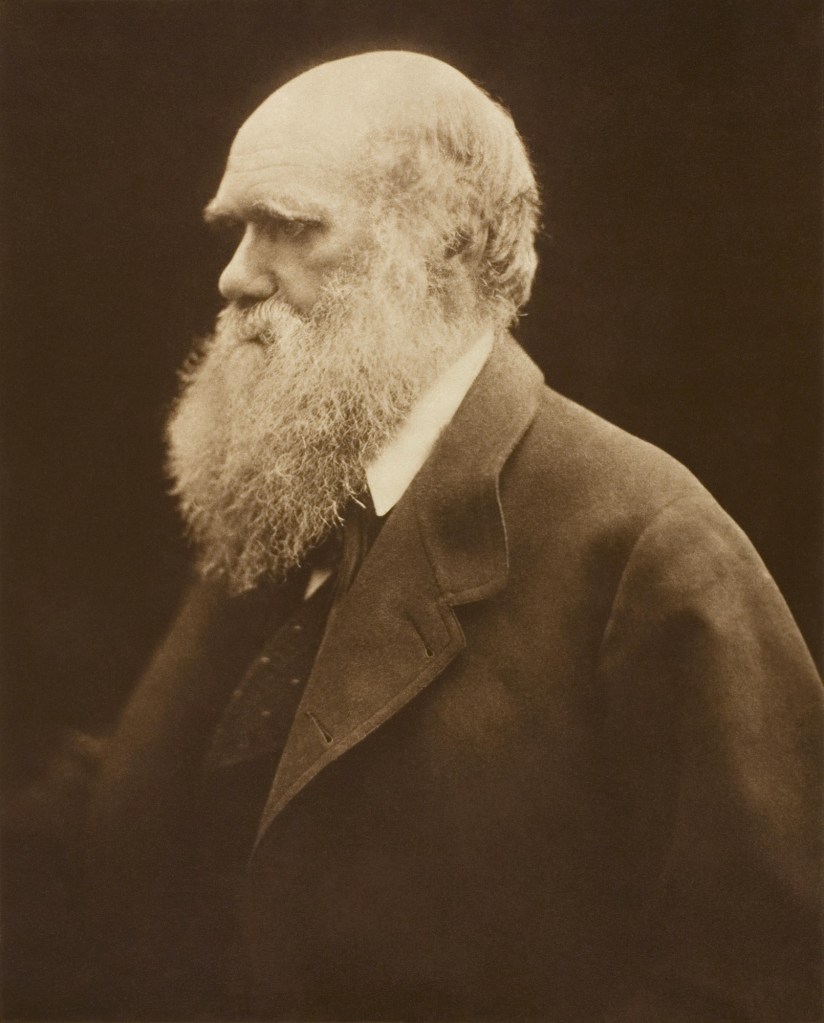
… was one of the names commonly used for evolutionary ideas in the 19th century before Charles Darwin published On The Origin of Species (1859). — Wikipedia
Which of these words is missing from the beginning of this quote from Wikipedia?
Transactional
Transmutation
Transubstantiation
Answer: 2. Transmutation.
Transmutation, a term used for evolutionary ideas before Darwin, was coined by Joseph Gottlieb Kölreuter to describe species changes through hybridisation. The term ‘evolution’ gained widespread use in the 1860s.
Two
Who was an American Formula 1 driver?
Mario Andretti
Mario Puzo
Mario Lanza
Answer: 1. Mario Andretti.
Mario Andretti, an American former racing driver, competed in Formula One from 1968 to 1982 and IndyCar from 1964 to 1994. He won the Formula One World Drivers’ Championship in 1978 and achieved numerous victories in various racing disciplines, including the Indianapolis 500 and Daytona 500. Andretti’s legacy as a racing icon is cemented by his 111 official victories and his induction into the International Motorsports Hall of Fame. Mario Puzo, an American author, wrote The Godfather. Mario Lanza was an American tenor and actor.
Three
Which of these is a World Heritage Site described as ‘an area of approximately 40,000 interlocking basalt columns’?
Skara Brae
Giant’s Causeway
Macgillycuddy’s Reeks
Answer: 2. Giant’s Causeway.
The Giant’s Causeway, a UNESCO World Heritage Site in County Antrim, Northern Ireland, features 40,000 interlocking basalt columns formed by an ancient volcanic eruption. Owned by the National Trust, it is a popular tourist attraction, receiving nearly one million visitors annually.
Four
What noun means ‘a herd of wild swine’?
Blunder
Pounder
Sounder
Answer: 3. Sounder.
Sounder’s origin is described by the Oxford English Dictionary as
– ORIGIN late Middle English: from Old French sundre, sonre, of Germanic origin. — Oxford English Dictionary
Five
What Hollywood actress was born with the surname FitzSimons, in Ranelagh, Dublin, Ireland on 17 August 1920.
Carole Lombard
Maureen O’Hara
Rita Hayworth
Answer: 2. Maureen O’Hara.
Maureen O’Hara was an Irish-American actress known for her roles in Westerns and adventure films, particularly her collaborations with John Ford and John Wayne. She was nicknamed “the Queen of Technicolour” and starred in numerous successful films throughout the 1940s to 1960s. O’Hara retired in 1971 but returned to acting in 1991 and received an Honorary Academy Award in 2014.
Today’s questions are multiple-choice and don’t have a specific theme.
One
… was one of the names commonly used for evolutionary ideas in the 19th century before Charles Darwin published On The Origin of Species (1859). — Wikipedia
Which of these words is missing from the beginning of this quote from Wikipedia?
Transactional
Transmutation
Transubstantiation
Two
Who was an American Formula 1 driver?
Mario Andretti
Mario Puzo
Mario Lanza
Three
Which of these is a World Heritage Site described as ‘an area of approximately 40,000 interlocking basalt columns’?
Skara Brae
Giant’s Causeway
Macgillycuddy’s Reeks
Four
What noun means ‘a herd of wild swine’?
Blunder
Pounder
Sounder
Five
What Hollywood actress was born with the surname FitzSimons, in Ranelagh, Dublin, Ireland on 17 August 1920.
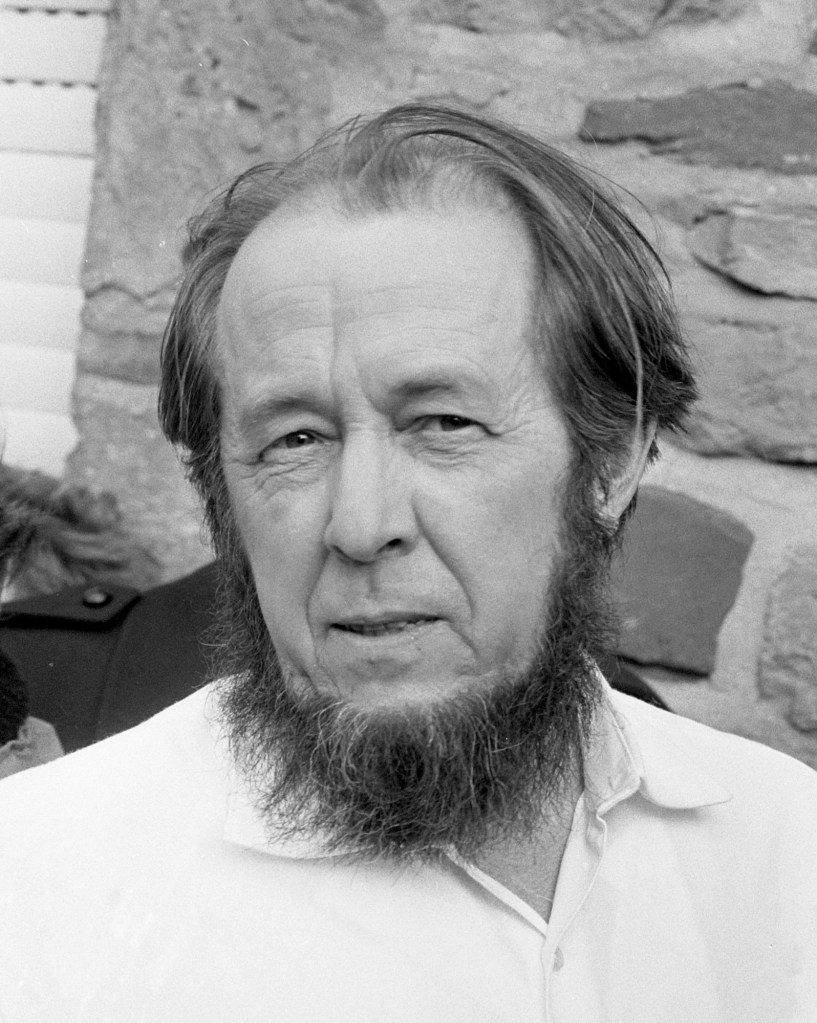
See Question Three. Aleksandr Solzhenitsyn, 1974. Image Wikimedia Commons
The first question concerns today, May 4th. The rest follow a theme related to the first.
One
On 4 May, Napoleon landed on an island to begin his first exile. What island and in what year?
The first question related to ‘exile’ so we will continue with that theme for the remainder.
Two
Which band released the double album Exile on Main St on this day in 1972?
Three
After eight years in a labour camp and a year of internal exile, Aleksandr Solzhenitsyn was finally permitted to receive cancer treatment in Tashkent, Uzbekistan, in 1954. Which 1966 Solzhenitsyn novel specifically depicts this period?
Four
Dante Alighieri, known as Dante, poet, writer and philosopher who was the author of Divine Comedy was, in the early 14th century, exiled from his native city for life. What was that city?
Five
Five music questions spread over the past fifty years?
King Crimson’s song Exiles was featured on their 1973 album …’ Tongues in Aspic. What word completes the album title?
Irish singer Enya’s song Exile was from her 1988 album Water…. What four letters complete the album’s one-word title?
Exile, a track from the 1997 album also titled Exile, was performed by a man considered a pioneer of electronic music. Who was this singer?
Exile featured on Slayer’s 2001 album … Hates Us All. What word is missing from the start of the album name?