Something a bit different today. You can earn a total of 55 points by answering all the questions completely. The first question is worth one point and has only one correct answer. The second question is worth two points for two correct answers and so on… until the tenth question which is worth ten points for ten correct answers.
Posted in two parts with the second part following tomorrow.
One
For ONE point, in what country was the composer Franz Liszt born
Answer: Hungary
Two
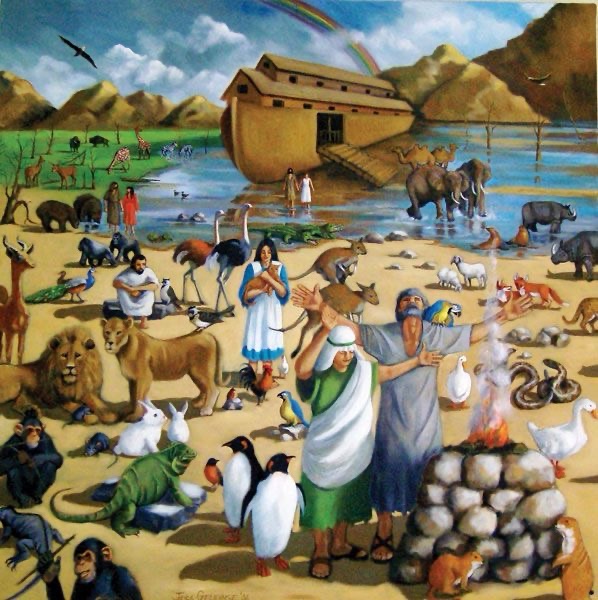
For TWO points. According to the Bible story, Noah released two birds from the ark to determine whether the flood had abated; what birds?
Answer: Raven—Dove
Three
For THREE points. In Alexandre Dumas’ novel, The Three Musketeers, the title characters meet and befriend d’Artagnan; what are their names?
Answer: Athos—Porthos—Aramis
Four
For FOUR points, list the patron saints of Scotland, England, Wales and Ireland.
Answer: Andrew—George—David—Patrick
Five
For FIVE points, list the five boroughs of New York City.
Answer: The Bronx—Brooklyn—Manhattan—Queens—Staten Island
Something a bit different today. You can earn a total of 55 points by answering all the questions completely. The first question is worth one point and has only one correct answer. The second question is worth two points for two correct answers and so on… until the tenth question which is worth ten points for ten correct answers.
Posted in two parts with the second part following tomorrow.
One
For ONE point, in what country was the composer Franz Liszt born
Two
For TWO points. According to the Bible story, Noah released two birds from the ark to determine whether the flood had abated; what birds?
Three
For THREE points. In Alexandre Dumas’ novel, The Three Musketeers, the title characters meet and befriend d’Artagnan; what are their names?
Four
For FOUR points, list the patron saints of Scotland, England, Wales and Ireland.
Five
For FIVE points, list the five boroughs of New York City.
Good luck! I’ll post the answers later and part II follows tomorrow.
On this day in 1997, what family commemorated 700 years of ruling the place represented by the flag shown above? Who are the family and where do they rule?
Borgia, Republic of San Marino
Grimaldi family, Principality of Monaco
Medici family, Vatican City State
Answer: 2. Grimaldi family, Principality of Monaco.
Monaco, a sovereign city-state on the French Riviera, is the second smallest sovereign state in the world. It is a semi-constitutional monarchy with Prince Albert II as head of state. Monaco is known for its wealth, casinos, and as a tax haven, attracting a high percentage of millionaires.
Two
What year and state complete the following sentence? In …, Elvis Presley was born in …
1933; Alabama
1935; Mississippi
1937; Tennessee
Answer: 2. 1935; Mississippi.
Elvis Presley, the King of Rock and Roll, was a highly influential American singer and actor. Born on 8 January 1935 in Tupelo, Mississippi, he rose to fame in the 1950s with his unique blend of country and rhythm and blues, becoming a cultural icon despite initial controversy. Presley’s successful music career spanned multiple genres, and he remains one of the best-selling music artists of all time.
Three
On this day, Charles de Gaulle was inaugurated as president of France’s …
First Republic
Fourth Republic
Fifth Republic
Answer: 3. Fifth Republic.
Charles de Gaulle, a pivotal figure in French history, led the Free French forces during WWII, became the provisional president, and was instrumental in establishing the Fifth Republic. As President from 1959 to 1969, he navigated challenges like the Algerian War, strengthened France’s economy and international position, and aimed to increase France’s global influence.
__
Four
Born on this day, Stephen Hawking, a British theoretical physicist and cosmologist, who suffered from motor neurone disease did NOT take part in which one of these?
Have I Got News for You
Monty Python
The Hitchhiker’s Guide to the Galaxy radio series
Answer: 1. Have I Got News for You.
Stephen Hawking was an English theoretical physicist and cosmologist, known for his work on black holes and cosmology. He was diagnosed with motor neurone disease at age 21, but continued his work and achieved commercial success with his book A Brief History of Time. He featured at the Monty Python Live (Mostly) show in 2014. He was shown to sing an extended version of the Galaxy Song, after running down Brian Cox with his wheelchair, in a pre-recorded video. In 2018, Hawking was the voice of The Book Mark II on The Hitchhiker’s Guide to the Galaxy radio series
The ocean liners RMS Queen Mary 2 and her namesake Queen Mary are both named after the same person. Who?
Mary I
Mary, Queen of Scots
Mary of Teck
Answer: 3. Mary of Teck.
Queen Mary, now berthed permanently at Long Beach, California, United States, was launched in 1934 when she was named after, and by, Queen Mary, the consort of Britain’s King George V. On 8 January 2004, Queen Mary’s granddaughter, Elizabeth II, named Queen Mary 2 after her grandmother, the same Queen Mary who was born Mary of Teck. Cunard legend has it that the 1934 ship was to be named after Queen Victoria, and following protocol, they advised the king, ‘We have decided to name our new ship after England’s greatest queen.’ George V allegedly responded, ‘My wife [Queen Mary] will be delighted that you are naming the ship after her.’
Flag details with answers. Image Wikimedia Commons
One
On this day in 1997, what family commemorated 700 years of ruling the place represented by the flag shown above? Who are the family and where do they rule?
Borgia, Republic of San Marino
Grimaldi family, Principality of Monaco
Medici family, Vatican City State
Two
What year and state complete the following sentence? In …, Elvis Presley was born in …
1933; Alabama
1935; Mississippi
1937; Tennessee
Three
On this day, Charles de Gaulle was inaugurated as president of France’s …
First Republic
Fourth Republic
Fifth Republic
__
Four
Born on this day, Stephen Hawking, a British theoretical physicist and cosmologist, who suffered from motor neurone disease did NOT take part in which one of these?
Have I Got News for You
Monty Python
The Hitchhiker’s Guide to the Galaxy radio series
Five
The ocean liners RMS Queen Mary 2 and her namesake Queen Mary are both named after the same person. Who?
In 1990, the country whose flag is shown above put into effect its constitution. What is that country?
Answer: Croatia
The Republic of Croatia’s Constitution was promulgated today in 1990. It grants civil rights, including freedom of speech, religion, information, and association, as well as guaranteeing equality of nationalities.
Two
What gate in Berlin was reopened in 1989, having been obstructed and inaccessible during the Cold War?
Answer: Brandenburg Gate
The Brandenburg Gate, a Berlin landmark, symbolises both Germany’s division and reunification. Built in the late 18th century, it was closed off during the Berlin Wall era and reopened in 1989, marking a pivotal moment in German history.
Three
In 1965, Doctor Zhivago premiered. Who played Larissa Ameliava Antipova in the film and whose 1957 novel was the film an adaption?
Answers: Julie Christie; Boris Pasternak
Doctor Zhivago, a 1965 American film directed by David Lean, is a sweeping adaptation of Boris Pasternak’s novel. The film, set against the backdrop of World War I and the Russian Revolution, follows the love story between physician and poet Yury Zhivago and Larissa Ameliava Antipova, ‘Lara’. Despite mixed reviews, the film became a box-office success, known for its grand scale, cinematography, and Maurice Jarre’s score. Boris Pasternak’s novel, Doctor Zhivago, although published in 1957, was banned in the Soviet Union until 1987.
Four
In 1894, Alfred Dreyfus, a French army officer, was sentenced to life imprisonment for treason and sent to Devil’s Island, a remote penal colony, to serve his sentence. Four years later, his case was the subject of a now-famous letter, *J’Accuse…!, *which was published in the French press. Where was Devil’s Island, and who wrote J’Accuse…!?
Answers: French Guiana; Émile Zola
The Devil’s Island penal colony, officially the penal colony of Cayenne, in French Guiana operated from 1852 to 1952. It was notorious for harsh treatment, high mortality rates, and the exile of political prisoners like Captain Dreyfus. Émile Zola’s open letter, J’Accuse…!, published in 1898, accused the French government of antisemitism and the unlawful jailing of Alfred Dreyfus. The letter, published in L’Aurore, sparked international outrage and led to Zola’s prosecution for libel. The letter heightened support for Dreyfus
Five
In 1941, two weeks after Pearl Harbor, the US president and British prime minister met in Washington DC to discuss World War II. Who were these two men?
Answers: Franklin D. Roosevelt and Winston Churchill
The First Washington Conference, attended by Roosevelt and Churchill, prioritised defeating Germany and established the Combined Chiefs of Staff. Allies committed to the Declaration by United Nations, vowing no separate peace and full resource utilisation.
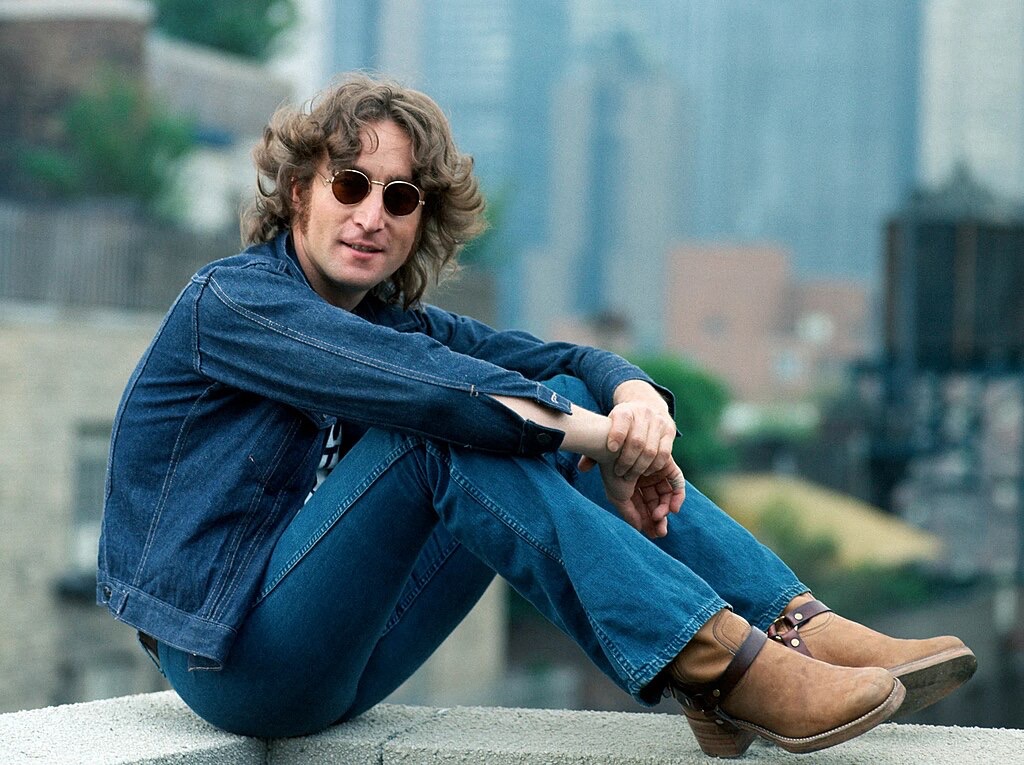
John Lennon was murdered in 1980. What song did Paul McCartney write as a tribute to John Lennon after his death. The song was released on his album, Tug of War (1982).
Answer: Here Today
Composed as a heartfelt tribute to John Lennon, this song expresses the emotions Paul felt he couldn’t fully convey to him during their time together. It’s structured as an imagined conversation exploring their affection, regret and complex friendship. McCartney performs it frequently at concerts as a dedicated moment for Lennon. McCartney featured on George Harrison’s tribute song All Those Years Ago (1981) alongside Ringo Starr on drums. McCartney, Linda and Denny Laine provided backing vocals. The post title In My Life is a Beatles song from their 1965 album Rubber Soul.
Two
The first woman to appear on a public stage in England did so on this date, in what decade did this occur?
Answer: 1660s (1660)
Margaret Hughes, also known as Peg Hughes, is widely regarded as the first professional actress to appear on the English stage. She made theatre history on 8 December 1660 when she played Desdemona in Othello, a landmark moment that signalled a major shift in Restoration-era drama, as women began performing publicly for the first time. Anne Marshall, another pioneer, is also sometimes credited with being the actress to appear on this date.
Three
Mary, Queen of Scots, was born on this day, and six days later she became queen of Scotland. In what decade did this occur?
Answer: 1540s (1542)
Mary, Queen of Scots, ascended to the throne at six days old. After marrying Francis, Dauphin of France, she became queen consort of France until his death. Returning to Scotland, her reign was marked by religious and political turmoil, culminating in her forced abdication and imprisonment. Seeking refuge in England, she was perceived as a threat to Elizabeth I and executed after being found guilty of plotting against her.
Four
In 1991, after the Soviet Union’s breakup, which three former Soviet republics formed the Commonwealth of Independent States?
Answer: Russia, Ukraine and Belarus
The Commonwealth of Independent States (CIS) was formed in 1991 by Russia, Ukraine and Belarus, replacing the USSR. There were eventually twelve former Soviet republics as members, including the Central Asian republics: Kazakhstan, Kyrgyzstan, Tajikistan, Turkmenistan and Uzbekistan; and the Transcaucasian republics of Armenia, Azerbaijan, and Georgia; and Moldova. Notably, the former Soviet republics in the Baltic area—Estonia, Latvia and Lithuania—declined to join the CIS.
Five
…an emotionally shattering look at the effects of the Vietnam War on the young American men sent to fight in it, the movie later won an Oscar for best picture
Which 1978 Oscar-winning film directed by Michael Cimino is described in the above Encyclopædia Britannica quote?
Answer: The Deer Hunter
The Deer Hunter is a 1978 American war drama film about three Slavic-American steelworkers whose lives are changed by the Vietnam War. The film, directed by Michael Cimino, received critical acclaim and won five Academy Awards, including Best Picture and Best Director.
John Lennon was murdered in 1980. What song did Paul McCartney write as a tribute to John Lennon after his death. The song was released on his album, Tug of War (1982).
Two
The first woman to appear on a public stage in England did so on this date, in what decade did this occur?
Three
Mary, Queen of Scots, was born on this day, and six days later she became queen of Scotland. In what decade did this occur?
Four
In 1991, after the Soviet Union’s breakup, which three former Soviet republics formed the Commonwealth of Independent States?
Five
…an emotionally shattering look at the effects of the Vietnam War on the young American men sent to fight in it, the movie later won an Oscar for best picture
Here are the answers to the questions which were posted earlier.
All of these questions are related to today, December 6th.
One
In 1998, Hugo Chávez was victorious in presidential elections in what country?
Answer: Venezuela
Hugo Chávez was a Venezuelan politician and revolutionary who served as president from 1999 until his death in 2013. He founded the Fifth Republic Movement and later the United Socialist Party of Venezuela, implementing social reforms and nationalising industries as part of the Bolivarian Revolution. While his policies initially improved poverty and social welfare, they also led to economic instability and shortages.
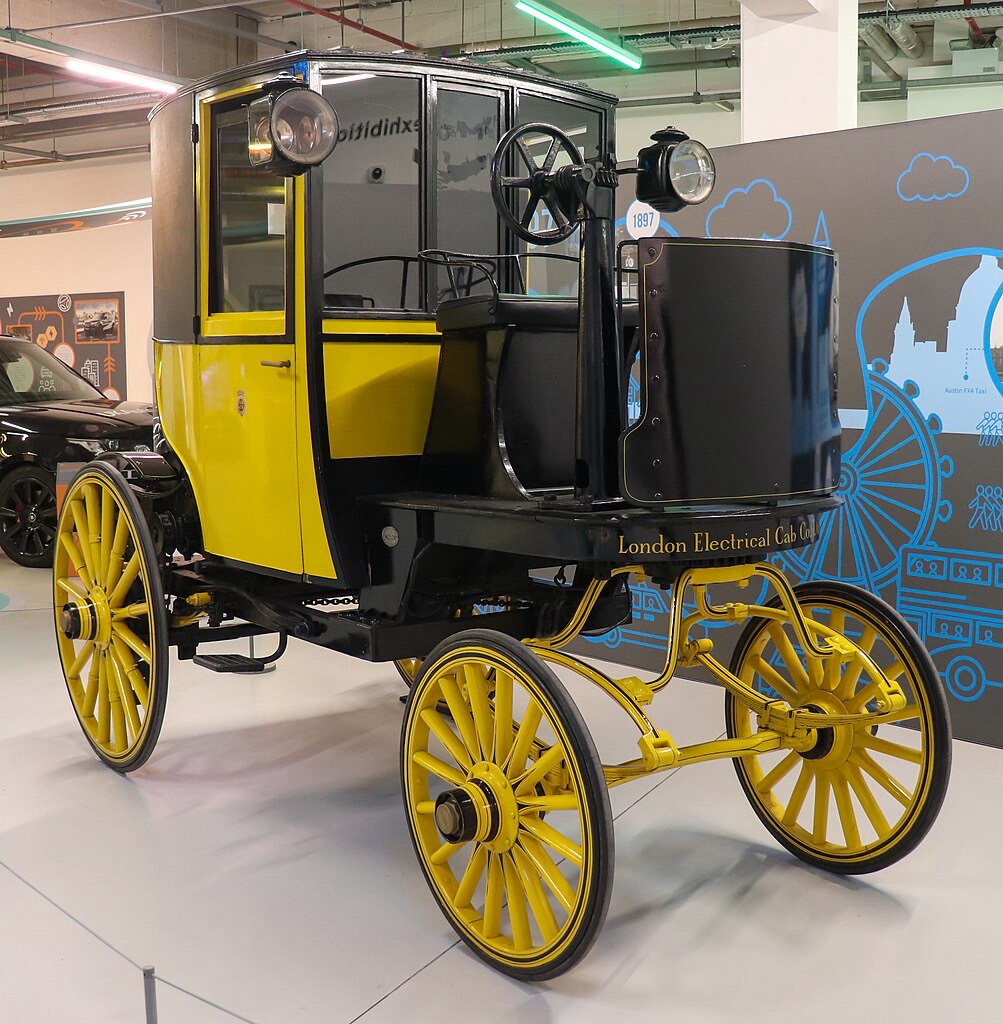
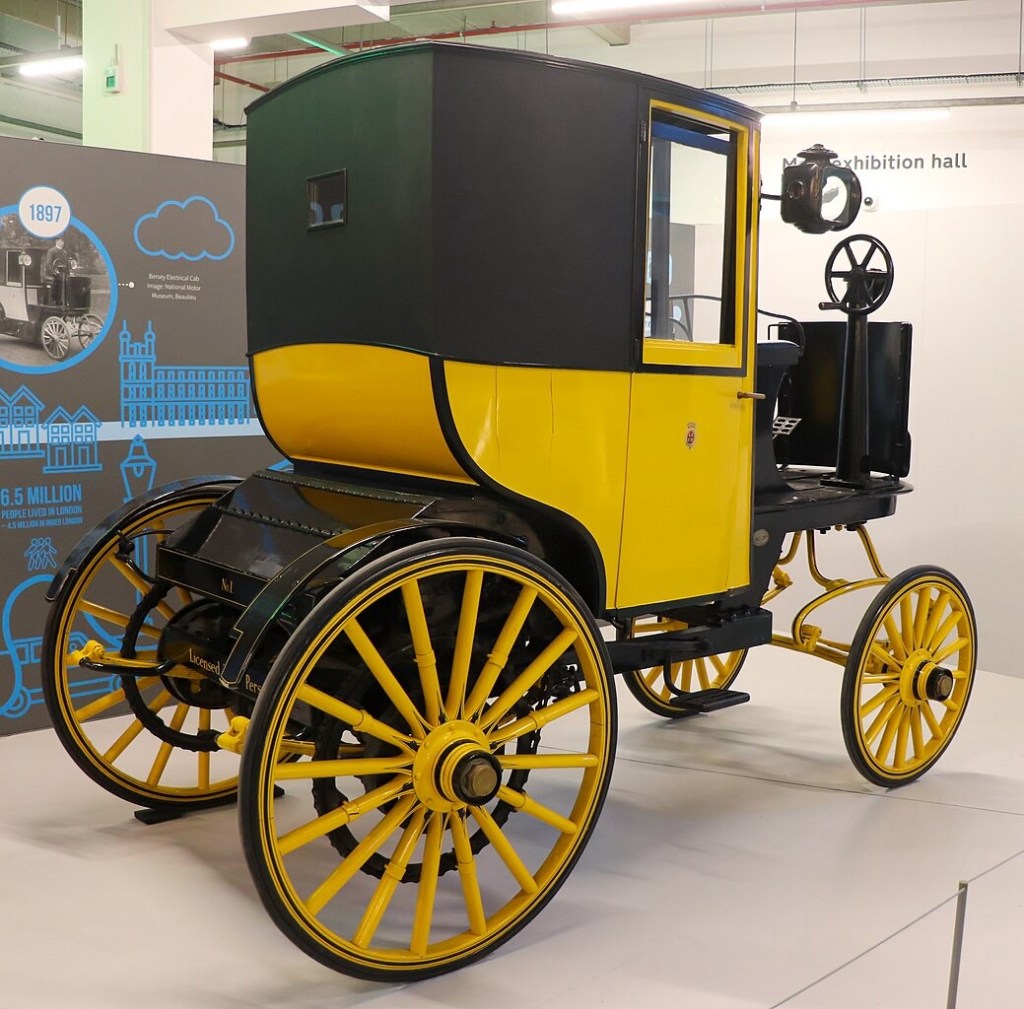
1897 Bersey Electrical Cab, British Motor Museum, Gaydon. Image Wikipedia
Two
In 1897, which capital city became the first in the world to host licensed self-propelled motorised taxicabs?
Answer: London, United Kingdom
The first of these motorised cabs were electric-powered vehicles, nicknamed ‘Hummingbirds’ due to the quiet sound of their electric motors. A fleet of these cabs, designed by Walter C. Bersey, was introduced on 19 August 1897, and officially licensed by 6 December of the same year. However, London had a system for licensed horse-drawn carriages (known as “hackney carriages”) much earlier, with the first official licences issued in 1662. The 1897 date specifically marks the introduction and licensing of motorised, rather than horse-drawn, cabs.
Three
In 1969, the ill-fated Altamont festival, a free one-day rock festival, at the Altamont Speedway, Livermore, California, United States, was put on by an act as a thank-you gesture to their fans? The haphazardly organised festival was put on by what act?
Answer: The Rolling Stones
The Altamont Speedway Free Festival in California was a counterculture rock concert intended as a thank-you to fans by The Rolling Stones. However, the event turned deadly when a security guard, a member of the Hell’s Angels, fatally stabbed Meredith Hunter. Marred by violence and three accidental deaths, the festival is often remembered as a dark ending to the 1960s counterculture.
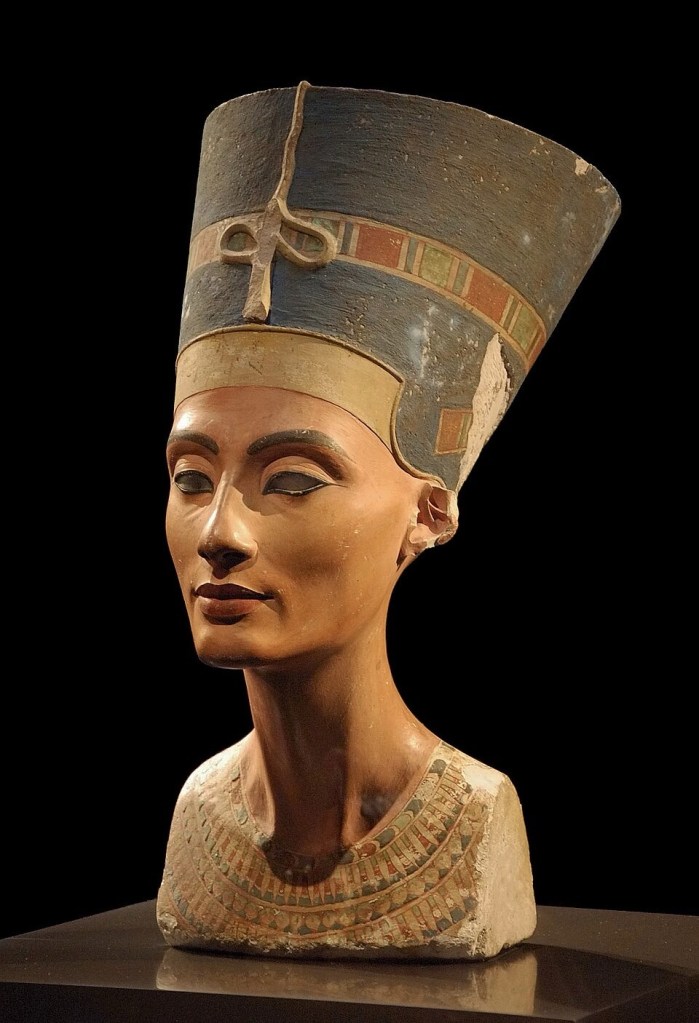
In 1912, a bust of a queen of Egypt was discovered during excavations at Tell el-Amarna, Egypt. Who was this queen from the 14th century BCE?
Answer: Nefertiti
Nefertiti, queen of Egypt and wife of King Akhenaton, played a prominent role in the cult of the sun god Aton. She bore six daughters, two of whom became queens, and is depicted in early images accompanying her husband and later usurping kingly privileges in religious rituals. The sculpture later went on display in a Berlin museum, and it became a source of controversy as an alleged plundered artefact.
Five
On this day in 1933, a US Federal judge declared a book featuring Stephen Dedalus, Leopold and Molly Bloom not obscene. Can you name the book and its author?
Answer: Ulysses by James Joyce
Ulysses, a modernist novel by James Joyce, parallels Homer’s Odyssey and chronicles the experiences of three Dubliners—Stephen Dedalus, Leopold Bloom and Molly Bloom—on 16 June 1904, representing Telemachus, Odysseus and Penelope. Published in Paris in 1922, the novel is considered a classic of modernist literature, known for its experimental style, rich characterisation, and exploration of themes like antisemitism, human sexuality and Irish nationalism.
All of these questions are related to today, December 6th.
One
In 1998, Hugo Chávez was victorious in presidential elections in what country?
1897 Bersey Electrical Cab.
Two
In 1897, which capital city became the first in the world to host licensed self-propelled motorised taxicabs?
Three
In 1969, the ill-fated Altamont festival, a free one-day rock festival, at the Altamont Speedway, Livermore, California, United States, was put on by an act as a thank-you gesture to their fans? The haphazardly organised festival was put on by what act?
Four
In 1912, a bust of a queen of Egypt was discovered during excavations at Tell el-Amarna, Egypt. Who was this queen from the 14th century BCE?
Five
On this day in 1933, a US Federal judge declared a book featuring Stephen Dedalus, Leopold and Molly Bloom not obscene. Can you name the book and its author?
Here are the answers to the questions posted earlier.
Today’s questions are simply either Who, What, When, Where or Why.
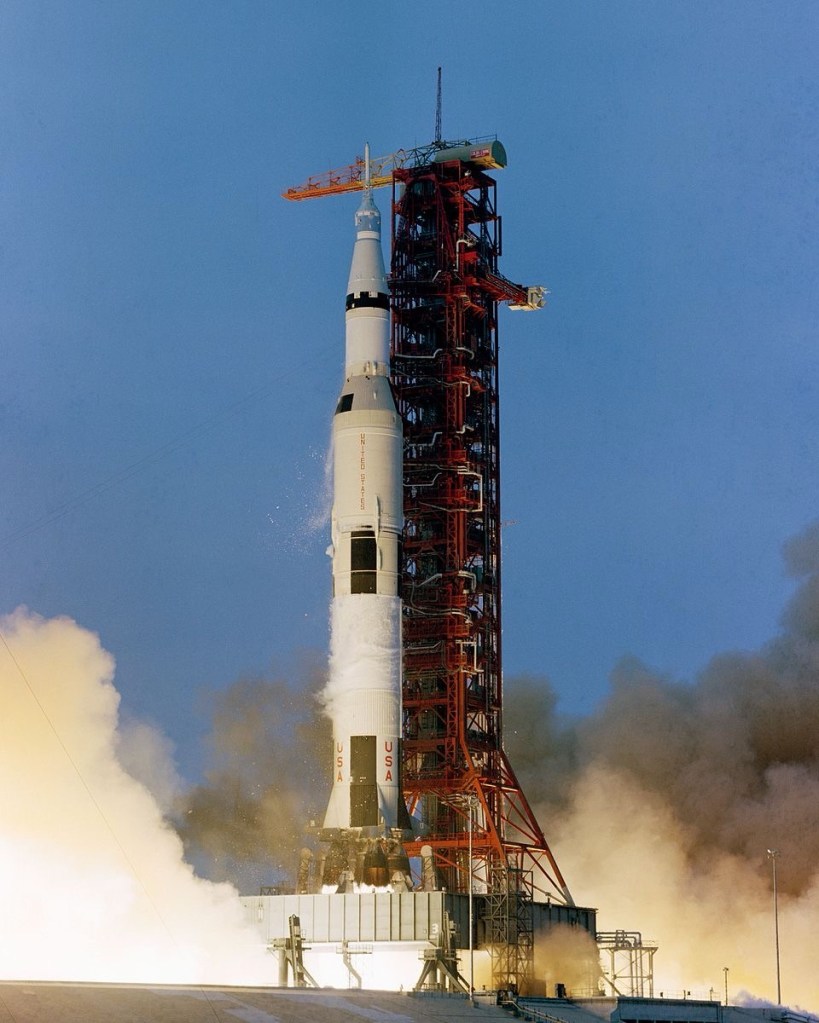
Apollo 13 launches from Kennedy Space Center, April 11, 1970. Image Wikipedia
One
Who was the only astronaut on the Apollo program to be the only person to fly to the Moon twice without landing?
Answer: Jim Lovell
James Lovell was an American astronaut, naval aviator, and engineer. He flew on four space missions, including Apollo 8 and Apollo 13, and was the first person to fly into space four times. Lovell received numerous awards and honours for his contributions to space exploration.
Two
What uninvited stony visitor injured Elizabeth Hodges while she napped on her couch in Alabama in 1954?
Answer: Meteorite
Ann Elizabeth Fowler Hodges, the first documented person struck by a meteorite and survive, was injured when a meteorite fragment crashed through her roof and hit her while she napped on 30 November 1954.
Three
When was the Mongol Empire founded by Genghis Khan, was it (i) 11th Century; (ii) 12th Century; (iii) 13th Century
Answer: (iii) 13th Century
The Mongol Empire, founded by Genghis Khan in 1206, eventually covering some 9 million square miles (23 million square km) from the Pacific Ocean to the Danube River and the Persian Gulf by the late 13th century.
Four
Where on the planet is the farthest point from the Earth’s centre. Is it the summit of (i) Chimborazo, Ecuador; (ii) Eyjafjallajökull, Iceland or (iii) Mount Erebus, Ross Island, Antarctica?
Answer: (i) Chimborazo, Ecuador
Chimborazo, a stratovolcano in Ecuador, is the highest mountain in the country and the 39th-highest peak in the Andes. Despite not being the tallest mountain on Earth, its summit is the farthest point from the Earth’s centre due to its equatorial location on the planet’s equatorial bulge.
Five
Why was 1936 a year of three kings in the United Kingdom, and who were they?
Answer: Abdication crisis; George V, Edward VIII and George VI
On the death of George V his eldest son became Edward VIII but he abdicated only 326 days later and his younger brother Albert became king as George VI. Edward VIII, later the Duke of Windsor, proposed marriage to Wallis Simpson, an American divorcée, led to a constitutional crisis and his abdication in favour of his brother, George VI. After his abdication, Edward, who was made Duke of Windsor by the new king, married Simpson and they lived in France until his death in 1972.



 Quizology.Online