Quizology.Online

“There is much pleasure to be gained from useless knowledge.”

— Bertrand Russell

Tag: film

  • Tuesday on My Mind

    Pancake Race, Olney, Buckinghamshire, England, 2009.
    Image Wikimedia Commons

    Today’s questions have a simple theme.

    One

    Olney, Buckinghamshire, holds England’s oldest pancake race; on what day does it recur annually?


    Two

    What song contains the line “We are drinking beer at noon on Tuesday”? Who wrote this song, and featured it on their debut album, what was that album called?


    Three

    This actress was nominated for the Best Supporting Actress Academy Award for her role as Katherine Dunn in the 1977 film Looking for Mr. Goodbar. Who is she?


    Four

    Which weekday links songs by the Rolling Stones, the Moody Blues and the Pogues; and what, respectively, are the songs?


    Five

    Apparently being fat on this particular day is cause for the culmination of a carnival: what carnival?


    Good luck! I’ll post the answers later.


  • Gallimaufry XV — Answers

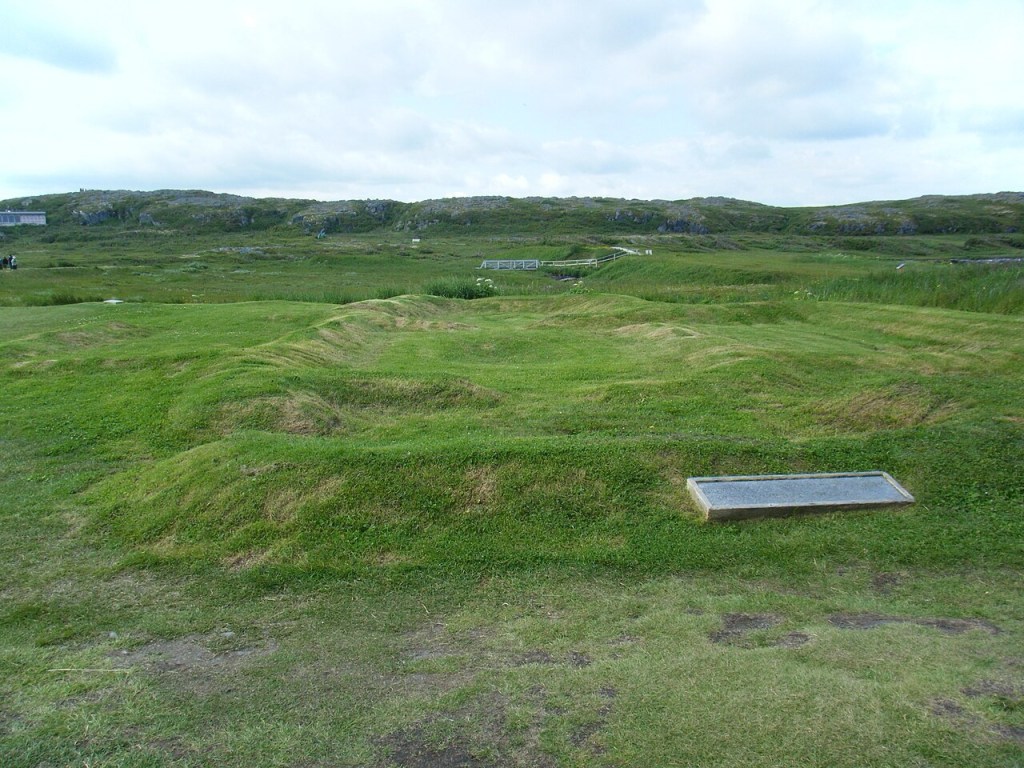
    L’Anse aux Meadows. The remains of seven Norse buildings were uncovered during the excavation of the site.
    Image Wikimedia Commons

    Today’s Answers

    No theme, simply five diverse questions.

    One

    The World Heritage Site L’Anse aux Meadows is an archaeological site of a … settlement dating to roughly 1,000 years ago. Which noun describing the inhabitants has been omitted from the preceding sentence, and where is this World Heritage Site located?

    Answers: Norse; Newfoundland, Canada.

    L’Anse aux Meadows is an archaeological site in North America linked to Leif Erikson and Norse sagas. It served as a base camp for exploration and includes the remains of eight sod-and-wood buildings. Over 800 Norse artifacts have been unearthed there, along with evidence of iron production. The site was designated a National Historic Site of Canada in 1968 and a UNESCO World Heritage Site in 1978.


    Two

    What surname is shared by two Bond villains: one portrayed by Adolfo Celi in a 1965 film and the other, played by Klaus Maria Brandauer, in an ‘unofficial’ 1983 production; and what were the two films?

    Answers: Largo; Thunderball; and Never Say Never Again.

    Emilio Largo is a fictional character and the main antagonist in the 1961 James Bond novel Thunderball and its 1965 film adaptation, where he is portrayed by Italian actor Adolfo Celi. He also appears as the main antagonist in the 1983 unofficial James Bond film Never Say Never Again, a remake of Thunderball, where his name was changed to Maximillian Largo and he was played by Austrian actor Klaus Maria Brandauer.

    Three

    What ancient city which is still occupied is home to the Sycamore Tree of Zacchaeus? To the nearest 1,000 years how old is the city?

    Answers: Jericho; (either) 10,000 or 11,000 years old.

    Jericho is roughly 10,000 to 11,000 years old, with human settlement and activity at the site dating back to around 9000 BCE.

    Four

    This fish, when improperly prepared as a Japanese dish, can be fatal. What is the English name of the fish, and the Japanese name of the fish and the dish?

    Answers: Pufferfish; fugu.

    Fugu (pufferfish) is a highly celebrated delicacy in Japanese, Korean, and Chinese cuisine, often served as sashimi or in hot pots. However, it is strictly regulated due to its extreme toxicity. Only chefs with three or more years of rigorous training are legally allowed to prepare it. While the liver was traditionally considered the most flavourful part, serving it was banned in Japan in 1984 because it is highly poisonous, and domestic preparation of the fish still occasionally leads to accidental death.

    Five

    Which poet composed The Rime of the Ancient Mariner? At the opening, a man is halted by the title figure, who then recounts a story. Where was the man heading when interrupted?

    Answers: Samuel Taylor Coleridge; a wedding.

    Samuel Taylor Coleridge’s poem, The Rime of the Ancient Mariner describes how the mariner stops a wedding guest to share his story, shifting the guest’s mood from amusement to fascination. The poem is noted for its use of personification and repetition to create varying atmospheres, and it is considered a key work in the start of British Romantic literature.


  • Gallimaufry XV

    L’Anse aux Meadows. The remains of seven Norse buildings were uncovered during the excavation of the site.
    Image Wikimedia Commons

    No theme, simply five diverse questions.

    One

    The World Heritage Site L’Anse aux Meadows is an archaeological site of a … settlement dating to roughly 1,000 years ago. Which noun describing the inhabitants has been omitted from the preceding sentence, and where is this World Heritage Site located?


    Two

    What surname is shared by two Bond villains: one portrayed by Adolfo Celi in a 1965 film and the other, played by Klaus Maria Brandauer, in an ‘unofficial’ 1983 production; and what were the two films?

    Three

    What ancient city which is still occupied is home to the Sycamore Tree of Zacchaeus? To the nearest 1,000 years how old is the city?

    Four

    This fish, when improperly prepared as a Japanese dish, can be fatal. What is the English name of the fish, and the Japanese name of the fish and the dish?

    Five

    Which poet composed The Rime of the Ancient Mariner? At the opening, a man is halted by the title figure, who then recounts a story. Where was the man heading when interrupted?


    Good luck! I’ll post the answers later.


  • At First Glance — Answers

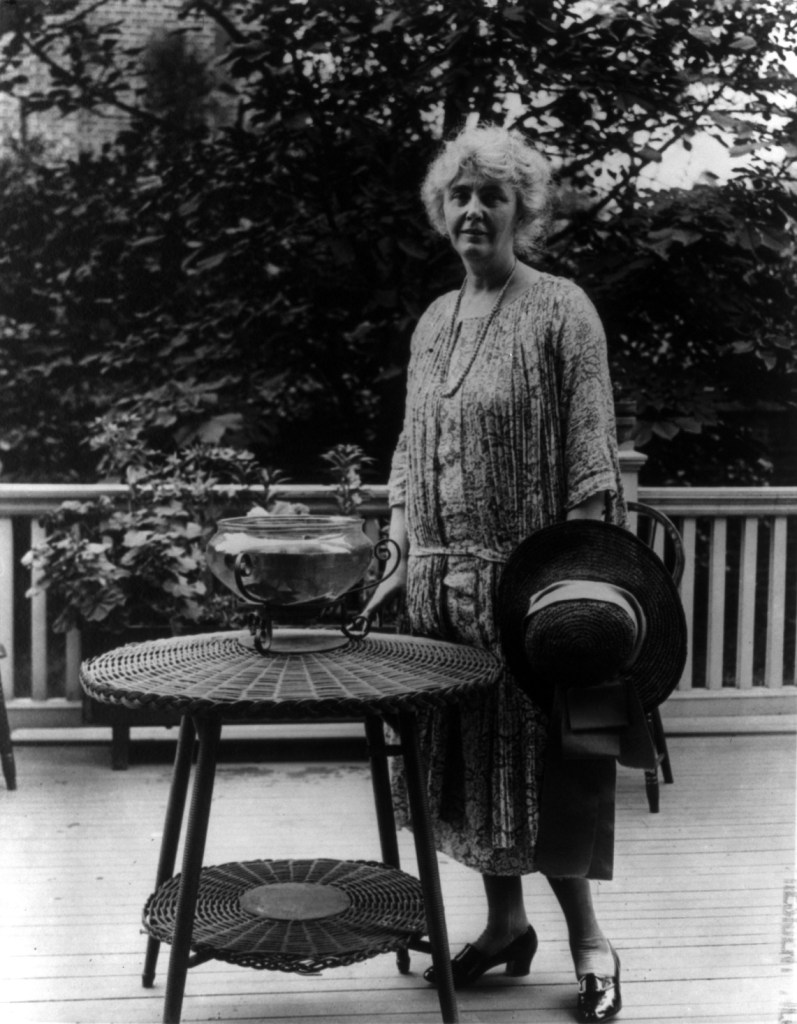
    This lady was born in 1874 and became relevant to question six in 1929. This image of Lou Hoover is from 1926.
    Image Wikimedia Commons

    Today’s Answers

    Six questions today. The first five answers are all names, and the forenames, and in some cases nicknames or monikers, are a clue to assist with question six.

    One

    Who is the songwriter and singer whose single Walk on the Wild Side was released as a double A-side with Perfect Day?

    Answer: Lou Reed.

    Lou Reed’s Walk on the Wild Side, produced by David Bowie and Mick Ronson, became his signature hit. Its lyrics describe Factory figures including Holly Woodlawn and Candy Darling, addressing taboo themes such as transgender people and drugs.


    Two

    Who, lyrically, ‘Waits at the window, wearing the face that she keeps in a jar by the door’?

    Answer: Eleanor Rigby.

    Ah, look at all the lonely people

    Ah, look at all the lonely people

    Eleanor Rigby picks up the rice in the church where a wedding has been

    Lives in a dream

    Waits at the window, wearing the face that she keeps in a jar by the door

    Who is it for?

    All the lonely people

    Where do they all come from?

    All the lonely people

    Where do they all belong?

    — The Beatles’ Eleanor Rigby


    Three

    This long-reigning English Tudor monarch was known by a moniker which began ‘Good Queen …’: What was her regnal name and the moniker?

    Answers: Elizabeth I; Bess.

    Elizabeth I, the last Tudor monarch, ruled England and Ireland from 1558 to 1603. After being declared illegitimate and later restored, she succeeded her half-sister Mary I following imprisonment. She governed with advisers led by William Cecil.


    Four

    Who is the landlady who rents an attic apartment to the Solomon family for the duration of 3rd Rock from the Sun?

    Answer: Mrs Mamie Dubcek.

    Mrs Dubcek, the Solomon family’s landlady, rents them an attic and lives below. Portrayed as carefree with many partners, she serves as an unlikely guide for their love lives.


    Five

    The 1966 novel Valley of the Dolls is one of the best-selling books in publishing history.
    Who was the author?

    Answer: Jacqueline Susann.

    Valley of the Dolls, the 1966 debut novel by American writer Jacqueline Susann, became the best-selling novel of its year. Despite receiving largely negative reviews, it has sold over 31 million copies by 2016, making it one of the best-selling fictional works in publishing history.


    Six

    If the forenames which answer the five preceding answers are listed in the above order, they form a chronological list. What links these given names and who would be next on this chronological list?

    Answer: First Ladies of the United States; Claudia ‘Lady Bird’ Johnson

    1. Lou Hoover: wife of Herbert Hoover
    2. Eleanor Roosevelt: wife of Franklin D. Roosevelt
    3. Elizabeth ‘Bess’ Truman: wife of Harry S. Truman
    4. Mary ‘Mamie’ Eisenhower: wife of Dwight D. Eisenhower
    5. Jacqueline Kennedy: wife of John F. Kennedy
    6. Claudia ‘Lady Bird’ Johnson: wife of Lyndon B. Johnson

  • At First Glance

    This lady was born in 1874 and became relevant to question six in 1929. This image is from 1926.
    Image Wikimedia Commons

    Six questions today. The first five answers are all names, and the forenames, and in some cases nicknames or monikers, are a clue to assist with question six.

    One

    Who is the songwriter and singer whose single Walk on the Wild Side was released as a double A-side with Perfect Day?


    Two

    Who, lyrically, ‘Waits at the window, wearing the face that she keeps in a jar by the door’?


    Three

    This long-reigning English Tudor monarch was known by a moniker which began ‘Good Queen …’: What was her regnal name and the moniker?


    Four

    Who is the landlady who rents an attic apartment to the Solomon family for the duration of 3rd Rock from the Sun?


    Five

    The 1966 novel Valley of the Dolls is one of the best-selling books in publishing history.
    Who was the author?


    Six

    If the forenames which answer the five preceding answers are listed in the above order, they form a chronological list. What links these given names and who would be next on this chronological list?


    Good luck! I’ll post the answers later.


  • Who, What, When, Where, Why and How IX — Answers

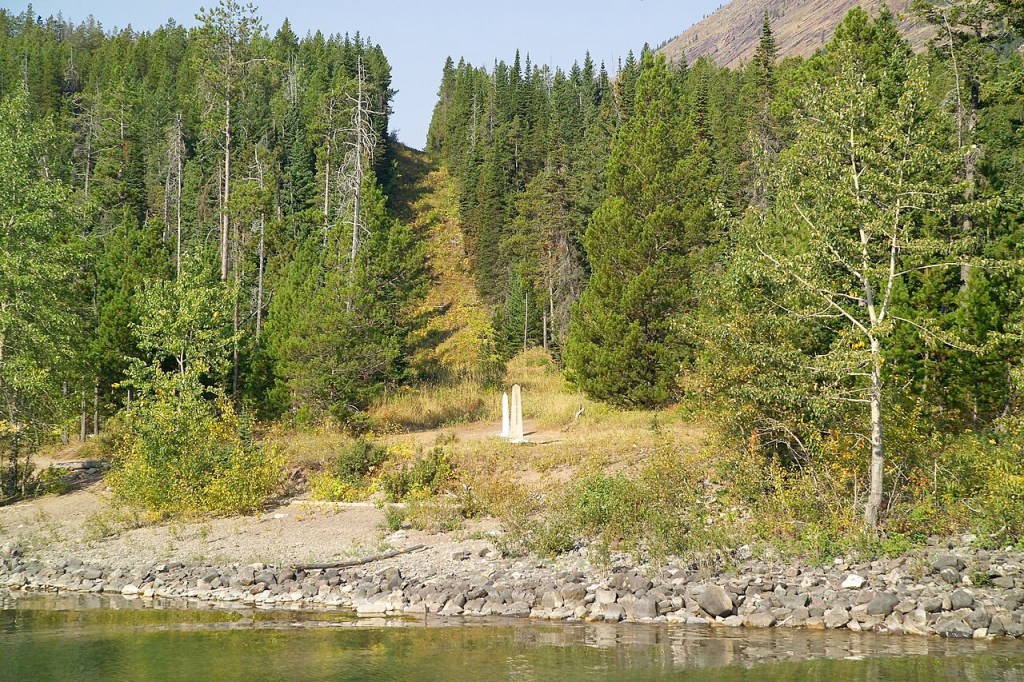
    Canada–US Border: Boundary markers and a 25 foot (7.6 m) swath cut into the forest marking the Alberta–Montana border.
    Image Wikimedia Commons

    Today’s Answers

    Six questions today, each starting with one of these words: Who, What, When, Where, Why, and How.

    One

    Who led the expedition which became the first undisputed to walk to the North Pole, and in what decade was this achieved?

    Answers: Wally Herbert; 1960s.

    In 1969, Wally Herbert led the British Trans-Arctic Expedition, completing a 3,800-mile (6,115 km) overland crossing of the Arctic Ocean from Alaska to Spitsbergen. Accompanied by Allan Gill, Roy Koerner and Kenneth Hedges, he reached the North Pole on 6 April after spending the winter drifting with the ice. His achievement coincided with the 60th anniversary of Robert Peary’s disputed expedition, and Herbert became the first man widely recognised as having reached the pole on foot. Sir Ranulph Fiennes later described him as “the greatest polar explorer of our time.”


    Two

    What Baltic capital, once labelled the ‘Jerusalem of the North’ by Napoleon, launched a campaign calling itself the ‘G-spot of Europe’, and which country does it serve as the capital of?

    Answers: Vilnius, Lithuania.

    The Vilnius tourist commission has launched a new campaign branding the city as ‘the G-spot of Europe’ to attract young British tourists, using the tagline “Nobody knows where it is, but when you find it – it’s amazing.” The campaign, which has gained international attention, plays on the idea that while few people know where Vilnius is, visitors quickly fall in love with it once they arrive.


    Three

    When did Nils Bohlin’s three-point seat belt first appear (year) as standard equipment in production cars, and which Swedish manufacturer employed him to develop and build them?

    Answers: 1959; Volvo.

    The three-point seat belt was invented by Nils Bohlin a mechanical engineer. Bohlin drew on his experience designing ejection seats for SAAB and spent roughly a year developing the seat belt. The seat belt was first fitted to the Volvo PV544 in 1959. The US National Highway Traffic Safety Administration reports that the seat belt saves approximately 15,000 lives annually in the US. Additionally a study of 28,000 accidents in Sweden, which showed that no belted occupants were fatally injured at speeds below 60 mph or as long as the passenger compartment remained intact.


    Four

    Where does ‘Mr. Smith’ go in the title of an early James Stewart movie?

    Answers: Washington

    Mr. Smith Goes to Washington was initially controversial in the U.S. for its portrayal of Washington politics but became a major box office success and made James Stewart a star. The film received eleven Academy Award nominations, winning Best Original Story, and was among the first 25 films selected for the U.S. National Film Registry in 1989 for its cultural and historical significance.


    Five

    Why was the Australian city of Darwin rebuilt twice in the 20th century (two answers one for each rebuilding)?

    Answers: Air raids; Cyclone

    On February 19, 1942, Japanese warplanes attacked Darwin, Australia, in two waves, using the same fleet that bombed Pearl Harbor. The attack caused extensive damage and killed at least 243 people, making it the most serious wartime attack on Australia. On December 25, 1974, Cyclone Tracy struck Darwin, killing 71 people and destroying over 70% of the city’s buildings. This led to the evacuation of 30,000 residents in Australia’s largest airlift. The city was rebuilt in the late 1970s using newer materials, and the satellite city of Palmerston was established nearby in the early 1980s.


    Six

    How many Canadian Provinces share an international border with the U.S.A., and how many U.S. states have such a border with Canada?

    Answers: Eight; Thirteen.

    The length of the terrestrial boundary is 8,891 km (5,525 mi), of which 6,416 km (3,987 mi) is between Canada and the contiguous 48 US states, and 2,475 km (1,538 mi) is between Canada and Alaska. Eight out of thirteen provinces and territories of Canada and thirteen out of fifty U.S. states share this international boundary.

    — Wikipedia


  • Who, What, When, Where, Why and How IX

    Canada–US Border: Boundary markers and a 25 foot (7.6 m) swath cut into the forest marking the border.
    Image Wikimedia Commons

    Six questions today, each starting with one of these words: Who, What, When, Where, Why, and How.

    One

    Who led the expedition which became the first undisputed to walk to the North Pole, and in what decade was this achieved?


    Two

    What Baltic capital, once labelled the ‘Jerusalem of the North’ by Napoleon, launched a campaign calling itself the ‘G-spot of Europe’, and which country does it serve as the capital of?


    Three

    When did Nils Bohlin’s three-point seat belt first appear (year) as standard equipment in production cars, and which Swedish manufacturer employed him to develop and build them?


    Four

    Where does ‘Mr. Smith’ go in the title of an early James Stewart movie?


    Five

    Why was the Australian city of Darwin rebuilt twice in the 20th century (two answers one for each rebuilding)?


    Six

    How many Canadian Provinces share an international border with the U.S.A., and how many U.S. states have such a border with Canada?


    Good luck! I’ll post the answers later.


  • Final Few What ‘*’ — Answers

    Today’s Answers

    Today there are six questions to get us to the end of the alphabet.

    One

    Now. . . those three curses – Avada Kedavra, Imperius, and Cruciatus – are known as the … Curses.

    — Professor Moody, Harry Potter and the Goblet of Fire, Chapter 14.

    What ‘U’ is the word removed from before the word ‘Curses’ in the above quote from JK Rowling’s Harry Potter and the Goblet of Fire? Secondly, what subject is being taught to the class when the quote is used?

    Answers: Unforgivable; Defence Against the Dark Arts.

    The Unforgivable Curses—Killing, Cruciatus and Imperius—carried life sentences in Azkaban from 1717, with exceptions such as Auror use or Imperius influence. They were permitted during the First Wizarding War and legalised under Lord Voldemort before repeal.


    Two

    What ‘V’, the first aeroplane to fly coast to coast across the United States, was named after a sponsor’s soft drink? What company made the aircraft, and in what cities were the starting point and official destination of the flight?

    Answers: Vin Fiz Flyer. Wright Company (or Wright Brothers); New York and Pasadena, California (or Long Beach).

    Starting point: Sheepshead Bay, Brooklyn, New York, on the Atlantic coast.
    Official finishing point: Pasadena, California.
    Final destination: Long Beach, California, on the Pacific coast.

    The first crossing of the United States by airplane was achieved by Calbraith Perry Rodgers in 1911. In 1910, famed publishing magnate William Randolph Hearst announced his offer of a $50,000-prize for a U.S. transcontinental flight in thirty days or less. Rodgers’ Wright EX biplane was named the Vin Fiz after his sponsor’s grape soda product. He left Sheepshead Bay, New York, on September 17, 1911. A “hangar” car, a rolling workshop filled with spare parts to repair and maintain the airplane, followed along. The flight was punctuated by numerous stops, delays, and accidents. When Hearst’s 30-day time limit expired, Rodgers had only reached Kansas City, Missouri. Undaunted, he continued on, determined to make the first transcontinental airplane flight whether he received the money or not. He arrived in Pasadena, California, to a hero’s welcome, 49 days after setting out. Although Pasadena was the official end of the coast-to-coast journey, Rodgers flew on to Long Beach to complete the flight at the shore of the Pacific Ocean. The total distance covered was 6,914 km (4,321 mi) in 82 hours, 4 minutes, total flying time at an average speed of 82.4 kph (51.5 mph).

    — National Air and Space Museum

    Rodgers was killed in a crash shortly after his coast to coast flight.


    Three

    What ‘W’, a 19th-century battle, was known at the time as both the Battle of Mont Saint-Jean and La Belle Alliance? In what present-day country was it fought?

    Answers: Waterloo; Belgium.

    The Battle of Waterloo, fought on June 18, 1815, near Waterloo, marked the final defeat of Napoleon Bonaparte. The French Imperial Army, led by Napoleon, was defeated by the combined forces of the Seventh Coalition: a British-led army under the Duke of Wellington and a Prussian army under Field Marshal Gebhard Leberecht von Blücher.


    Four

    What ‘X’ was a film directed by Matthew Vaughn that was released in 2011, and who in this film plays a character with a surname also beginning with ‘X’?

    Answers: X-Men: First Class; James McAvoy.

    The 2011 superhero film X-Men: First Class, directed by Matthew Vaughn. Serving as a prequel to the original X-Men movie, it is set in 1962 during the Cuban Missile Crisis and explores the early relationship between Charles Xavier and Erik Lehnsherr (Magneto) as they confront the Hellfire Club.


    Five

    What ‘Y’, a present-day city, did the Roman Empire know as Eboracum? How many Roman emperors died at Eboracum?

    Answers: York. Two.

    The name Eboracum derives from the Common Brittonic Eburākon, which carries a debated meaning. It might signify “yew tree place” or “rowan tree place”, or perhaps stem from the Latin for ivory, suggesting boar’s tusks. Latinisation altered the ending to -um, and the term shares origins with several modern French place names. Two Roman emperors died in Eboracum: Septimius Severus in 211 AD and Constantius Chlorus in ‘Y306 AD.


    Six

    What ‘Z’ was the regal name of the last king of Albania and in what two decades did he reign?

    Answer: Zog I; 1920s and ‘30s.

    After serving as prime minister and president with dictatorial powers, Ahmed Muhtar Bey Zogolli declared himself King Zog I of Albania in 1928. His reign was marked by an alliance with Fascist Italy, which eventually led to the Italian invasion of Albania in 1939. Zog was forced into exile, living in England during World War II and later in France, as the post-war Communist government barred his return. He died in 1961, and his remains were transferred to Tirana in 2012.

  • Final Few What ‘*’

    Today there are six questions to get us to the end of the alphabet.

    One

    Now. . . those three curses – Avada Kedavra, Imperius, and Cruciatus – are known as the … Curses.

    — Professor Moody, Harry Potter and the Goblet of Fire, Chapter 14.

    What ‘U’ is the word removed from before the word ‘Curses’ in the above quote from JK Rowling’s Harry Potter and the Goblet of Fire? Secondly, what subject is being taught to the class when the quote is used?


    Two

    What ‘V’, the first aeroplane to fly coast to coast across the United States, was named after a sponsor’s soft drink? What company made the aircraft, and in what cities were the starting point and official destination of the flight?

    Three

    What ‘W’, a 19th-century battle, was known at the time as both the Battle of Mont Saint-Jean and La Belle Alliance? In what present-day country was it fought?


    Four

    What ‘X’ was a film directed by Matthew Vaughn that was released in 2011, and who in this film plays a character with a surname also beginning with ‘X’?


    Five

    What ‘Y’, a present-day city, did the Roman Empire know as Eboracum? How many Roman emperors died at Eboracum?


    Six

    What ‘Z’ was the regal name of the last king of Albania and in what two decades did he reign?


    Good luck! I’ll post the answers later.


  • Yet More What ‘*’ — Answers

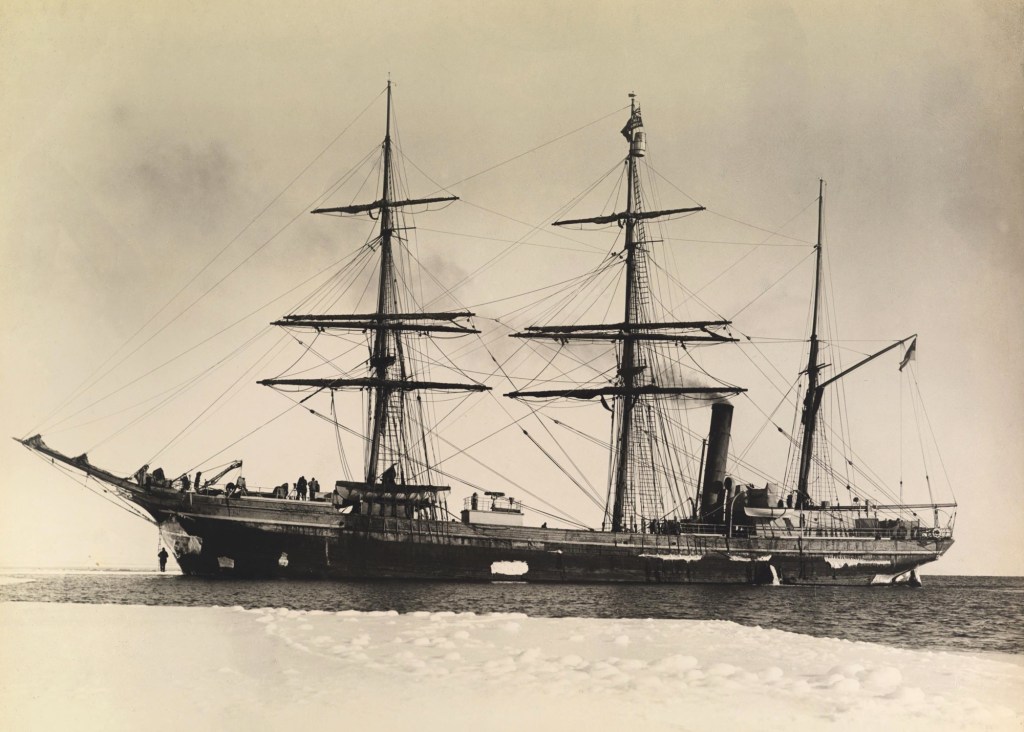
    Expedition ship Terra Nova during the British Antarctic Expedition, c.1911.
    Image Wikimedia Commons

    Today’s Answers

    Day 4 of our continuing theme.

    One

    What ‘P’ links a creature from Greek myth and Bénouville Bridge, Normandy?

    Answer: Pegasus.

    Pegasus is a winged white stallion in Greek mythology, sired by Poseidon and born from Medusa after she was decapitated by Perseus. He later ascended to heaven to serve Zeus by bringing lightning and thunder from Olympus.

    Pegasus Bridge, originally the Bénouville Bridge, is a historic road crossing over the Caen Canal in Normandy. Built in 1934, it became famous during the Second World War when a British glider-borne force captured it intact on 6 June 1944 to limit German counter-attacks after the Normandy invasion. Renamed in honour of the operation and the shoulder emblem worn by British airborne forces, the original bridge is now a war memorial at the Memorial Pegasus museum, having been replaced by a modern bascule bridge in 1994.


    Two

    What ‘Q’ is a capital city; sits on the equator; and is amongst the highest capitals by elevation? Of what country is this city the capital, and what other country’s two capitals vie with this one as highest capitals?

    Answers: Quito, Ecuador; Bolivia.

    Quito, formally known as San Francisco de Quito, serves as the capital and second-largest city of Ecuador. Its population is estimated at 1.7 million within the city and 2.8 million across the metropolitan area. Situated in a valley on the eastern slopes of the active stratovolcano Pichincha in the Andes at 2,850 metres (9,350 ft), Quito ranks as either the highest or second-highest national capital globally, depending on whether La Paz or Sucre is regarded as Bolivia’s capital.


    Three

    Which ‘R’ was somewhat of a maverick before becoming a saint, then adopted a licence to kill on seven occasions? Who is the actor, and in which television production did Tony Curtis appear as a co-star?

    Answers: Roger Moore; The Persuaders!.

    Sir Roger George Moore was an English actor best known as the third actor to portray James Bond, starring in seven feature films between 1973 and 1985. On television, he played the lead role of Simon Templar in The Saint, starred in the American Western Maverick, and appeared alongside Tony Curtis in The Persuaders!.


    Four

    What ‘S’, in 1991, superseded SALT, which dated from the sixties? The answers are both an acronym and its meaning.

    Answers: START; Strategic Arms Reduction Treaty.

    The START I treaty, proposed by U.S. President Ronald Reagan, led to the removal of about 80% of strategic nuclear weapons by late 2001. Following the Soviet Union’s collapse, Russia, Belarus, Ukraine, and Kazakhstan agreed to its terms. After START I there were START II, III and then the New START Treaty in 2010, which extended nuclear weapon reductions until its expiration in February 2026, despite Russia suspending its participation in 2023.


    Five

    What ‘T’ was Captain Robert F. Scott’s ship on his ill-fated trip to Antarctica? Which explorer beat him to the South Pole by a few weeks?

    Answers: Terra Nova; Roald Amundsen.

    Captain Robert Falcon Scott and his party of five reached the South Pole on January 17, 1912, only to find Roald Amundsen had arrived first. On their return journey, a planned meeting with supporting dog teams failed, and the entire party died from exhaustion, starvation, and extreme cold just miles from their next supply depot. When their bodies were discovered, they were found with the first Antarctic fossils, which later proved the continent was once forested and connected to other landmasses.