Quizology.Online

“There is much pleasure to be gained from useless knowledge.”

— Bertrand Russell

Tag: film

  • Who, What, When, Where, Why and How IX — Answers

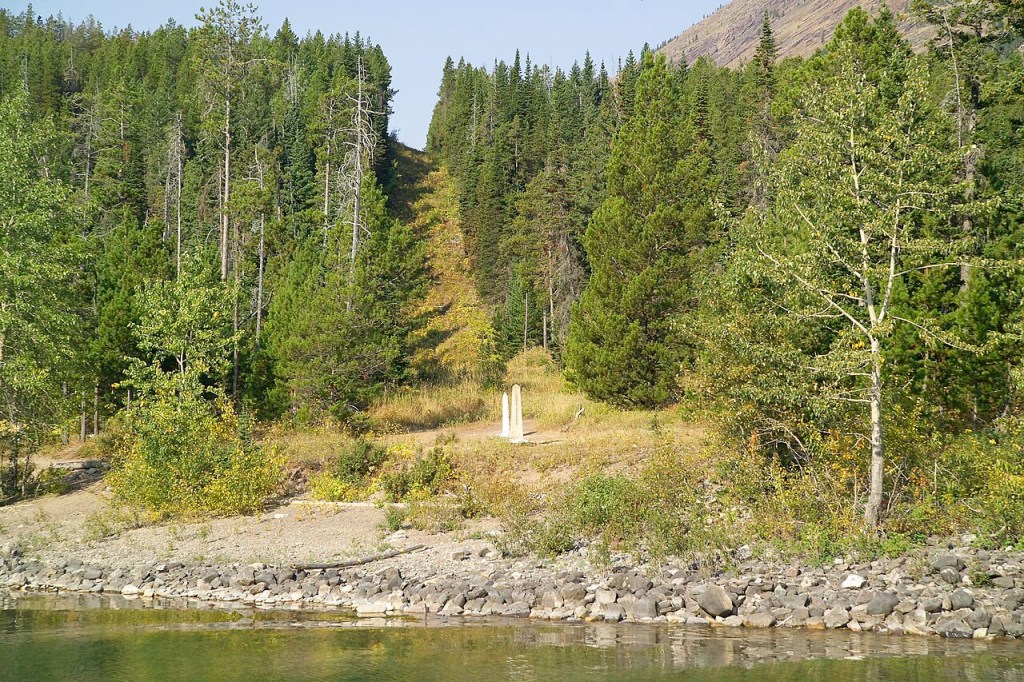
    Canada–US Border: Boundary markers and a 25 foot (7.6 m) swath cut into the forest marking the Alberta–Montana border.
    Image Wikimedia Commons

    Today’s Answers

    Six questions today, each starting with one of these words: Who, What, When, Where, Why, and How.

    One

    Who led the expedition which became the first undisputed to walk to the North Pole, and in what decade was this achieved?

    Answers: Wally Herbert; 1960s.

    In 1969, Wally Herbert led the British Trans-Arctic Expedition, completing a 3,800-mile (6,115 km) overland crossing of the Arctic Ocean from Alaska to Spitsbergen. Accompanied by Allan Gill, Roy Koerner and Kenneth Hedges, he reached the North Pole on 6 April after spending the winter drifting with the ice. His achievement coincided with the 60th anniversary of Robert Peary’s disputed expedition, and Herbert became the first man widely recognised as having reached the pole on foot. Sir Ranulph Fiennes later described him as “the greatest polar explorer of our time.”


    Two

    What Baltic capital, once labelled the ‘Jerusalem of the North’ by Napoleon, launched a campaign calling itself the ‘G-spot of Europe’, and which country does it serve as the capital of?

    Answers: Vilnius, Lithuania.

    The Vilnius tourist commission has launched a new campaign branding the city as ‘the G-spot of Europe’ to attract young British tourists, using the tagline “Nobody knows where it is, but when you find it – it’s amazing.” The campaign, which has gained international attention, plays on the idea that while few people know where Vilnius is, visitors quickly fall in love with it once they arrive.


    Three

    When did Nils Bohlin’s three-point seat belt first appear (year) as standard equipment in production cars, and which Swedish manufacturer employed him to develop and build them?

    Answers: 1959; Volvo.

    The three-point seat belt was invented by Nils Bohlin a mechanical engineer. Bohlin drew on his experience designing ejection seats for SAAB and spent roughly a year developing the seat belt. The seat belt was first fitted to the Volvo PV544 in 1959. The US National Highway Traffic Safety Administration reports that the seat belt saves approximately 15,000 lives annually in the US. Additionally a study of 28,000 accidents in Sweden, which showed that no belted occupants were fatally injured at speeds below 60 mph or as long as the passenger compartment remained intact.


    Four

    Where does ‘Mr. Smith’ go in the title of an early James Stewart movie?

    Answers: Washington

    Mr. Smith Goes to Washington was initially controversial in the U.S. for its portrayal of Washington politics but became a major box office success and made James Stewart a star. The film received eleven Academy Award nominations, winning Best Original Story, and was among the first 25 films selected for the U.S. National Film Registry in 1989 for its cultural and historical significance.


    Five

    Why was the Australian city of Darwin rebuilt twice in the 20th century (two answers one for each rebuilding)?

    Answers: Air raids; Cyclone

    On February 19, 1942, Japanese warplanes attacked Darwin, Australia, in two waves, using the same fleet that bombed Pearl Harbor. The attack caused extensive damage and killed at least 243 people, making it the most serious wartime attack on Australia. On December 25, 1974, Cyclone Tracy struck Darwin, killing 71 people and destroying over 70% of the city’s buildings. This led to the evacuation of 30,000 residents in Australia’s largest airlift. The city was rebuilt in the late 1970s using newer materials, and the satellite city of Palmerston was established nearby in the early 1980s.


    Six

    How many Canadian Provinces share an international border with the U.S.A., and how many U.S. states have such a border with Canada?

    Answers: Eight; Thirteen.

    The length of the terrestrial boundary is 8,891 km (5,525 mi), of which 6,416 km (3,987 mi) is between Canada and the contiguous 48 US states, and 2,475 km (1,538 mi) is between Canada and Alaska. Eight out of thirteen provinces and territories of Canada and thirteen out of fifty U.S. states share this international boundary.
    — Wikipedia


  • Who, What, When, Where, Why and How IX

    Canada–US Border: Boundary markers and a 25 foot (7.6 m) swath cut into the forest marking the border.
    Image Wikimedia Commons

    Six questions today, each starting with one of these words: Who, What, When, Where, Why, and How.

    One

    Who led the expedition which became the first undisputed to walk to the North Pole, and in what decade was this achieved?


    Two

    What Baltic capital, once labelled the ‘Jerusalem of the North’ by Napoleon, launched a campaign calling itself the ‘G-spot of Europe’, and which country does it serve as the capital of?


    Three

    When did Nils Bohlin’s three-point seat belt first appear (year) as standard equipment in production cars, and which Swedish manufacturer employed him to develop and build them?


    Four

    Where does ‘Mr. Smith’ go in the title of an early James Stewart movie?


    Five

    Why was the Australian city of Darwin rebuilt twice in the 20th century (two answers one for each rebuilding)?


    Six

    How many Canadian Provinces share an international border with the U.S.A., and how many U.S. states have such a border with Canada?


    Good luck! I’ll post the answers later.


  • Final Few What ‘*’ — Answers

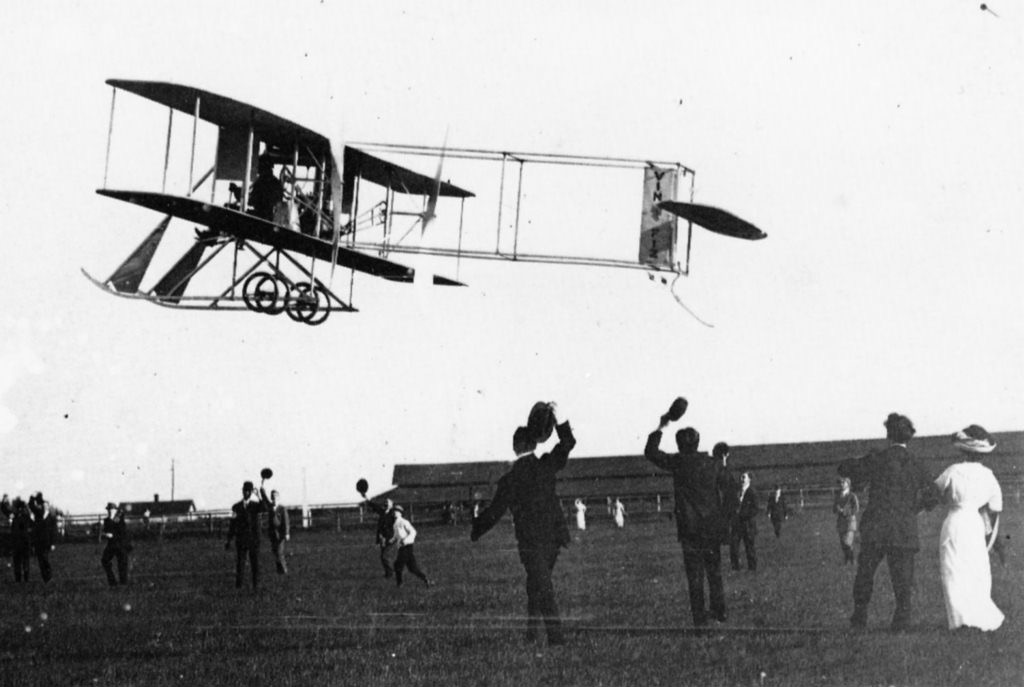
    See question two. Vin Fiz Flyer, a Wright Model EX takes off from Sheepshead Bay, NY.
    Image Wikimedia Commons

    Today’s Answers

    Today there are six questions to get us to the end of the alphabet.

    One

    Now. . . those three curses – Avada Kedavra, Imperius, and Cruciatus – are known as the … Curses.

    — Professor Moody, Harry Potter and the Goblet of Fire, Chapter 14.

    What ‘U’ is the word removed from before the word ‘Curses’ in the above quote from JK Rowling’s Harry Potter and the Goblet of Fire? Secondly, what subject is being taught to the class when the quote is used?

    Answers: Unforgivable; Defence Against the Dark Arts.

    The Unforgivable Curses—Killing, Cruciatus and Imperius—carried life sentences in Azkaban from 1717, with exceptions such as Auror use or Imperius influence. They were permitted during the First Wizarding War and legalised under Lord Voldemort before repeal.


    Two

    What ‘V’, the first aeroplane to fly coast to coast across the United States, was named after a sponsor’s soft drink? What company made the aircraft, and in what cities were the starting point and official destination of the flight?

    Answers: Vin Fiz Flyer. Wright Company (or Wright Brothers); New York and Pasadena, California (or Long Beach).

    Starting point: Sheepshead Bay, Brooklyn, New York, on the Atlantic coast.
    Official finishing point: Pasadena, California.
    Final destination: Long Beach, California, on the Pacific coast.

    The first crossing of the United States by airplane was achieved by Calbraith Perry Rodgers in 1911. In 1910, famed publishing magnate William Randolph Hearst announced his offer of a $50,000-prize for a U.S. transcontinental flight in thirty days or less. Rodgers’ Wright EX biplane was named the Vin Fiz after his sponsor’s grape soda product. He left Sheepshead Bay, New York, on September 17, 1911. A “hangar” car, a rolling workshop filled with spare parts to repair and maintain the airplane, followed along. The flight was punctuated by numerous stops, delays, and accidents. When Hearst’s 30-day time limit expired, Rodgers had only reached Kansas City, Missouri. Undaunted, he continued on, determined to make the first transcontinental airplane flight whether he received the money or not. He arrived in Pasadena, California, to a hero’s welcome, 49 days after setting out. Although Pasadena was the official end of the coast-to-coast journey, Rodgers flew on to Long Beach to complete the flight at the shore of the Pacific Ocean. The total distance covered was 6,914 km (4,321 mi) in 82 hours, 4 minutes, total flying time at an average speed of 82.4 kph (51.5 mph).

    — National Air and Space Museum

    Rodgers was killed in a crash shortly after his coast to coast flight.


    Three

    What ‘W’, a 19th-century battle, was known at the time as both the Battle of Mont Saint-Jean and La Belle Alliance? In what present-day country was it fought?

    Answers: Waterloo; Belgium.

    The Battle of Waterloo, fought on June 18, 1815, near Waterloo, marked the final defeat of Napoleon Bonaparte. The French Imperial Army, led by Napoleon, was defeated by the combined forces of the Seventh Coalition: a British-led army under the Duke of Wellington and a Prussian army under Field Marshal Gebhard Leberecht von Blücher.


    Four

    What ‘X’ was a film directed by Matthew Vaughn that was released in 2011, and who in this film plays a character with a surname also beginning with ‘X’?

    Answers: X-Men: First Class; James McAvoy.

    The 2011 superhero film X-Men: First Class, directed by Matthew Vaughn. Serving as a prequel to the original X-Men movie, it is set in 1962 during the Cuban Missile Crisis and explores the early relationship between Charles Xavier and Erik Lehnsherr (Magneto) as they confront the Hellfire Club.


    Five

    What ‘Y’, a present-day city, did the Roman Empire know as Eboracum? How many Roman emperors died at Eboracum?

    Answers: York. Two.

    The name Eboracum derives from the Common Brittonic Eburākon, which carries a debated meaning. It might signify “yew tree place” or “rowan tree place”, or perhaps stem from the Latin for ivory, suggesting boar’s tusks. Latinisation altered the ending to -um, and the term shares origins with several modern French place names. Two Roman emperors died in Eboracum: Septimius Severus in 211 AD and Constantius Chlorus in ‘Y306 AD.


    Six

    What ‘Z’ was the regal name of the last king of Albania and in what two decades did he reign?

    Answer: Zog I; 1920s and ‘30s.

    After serving as prime minister and president with dictatorial powers, Ahmed Muhtar Bey Zogolli declared himself King Zog I of Albania in 1928. His reign was marked by an alliance with Fascist Italy, which eventually led to the Italian invasion of Albania in 1939. Zog was forced into exile, living in England during World War II and later in France, as the post-war Communist government barred his return. He died in 1961, and his remains were transferred to Tirana in 2012.


    Keep the current Quizology end-of-post separator exactly as it is, including the Quizology branding, quote, attribution, typography, layout, and proportions. Remove only the solid black background and make it transparent. Do not alter, rewrite, crop, resize, or redesign any lettering or artwork.

  • Final Few What ‘*’

    See question two. A Wright Model EX takes off from Sheepshead Bay, NY.
    Image Wikimedia Commons

    Today there are six questions to get us to the end of the alphabet.

    One

    Now. . . those three curses – Avada Kedavra, Imperius, and Cruciatus – are known as the … Curses.

    — Professor Moody, Harry Potter and the Goblet of Fire, Chapter 14.

    What ‘U’ is the word removed from before the word ‘Curses’ in the above quote from JK Rowling’s Harry Potter and the Goblet of Fire? Secondly, what subject is being taught to the class when the quote is used?


    Two

    What ‘V’, the first aeroplane to fly coast to coast across the United States, was named after a sponsor’s soft drink? What company made the aircraft, and in what cities were the starting point and official destination of the flight?

    Three

    What ‘W’, a 19th-century battle, was known at the time as both the Battle of Mont Saint-Jean and La Belle Alliance? In what present-day country was it fought?


    Four

    What ‘X’ was a film directed by Matthew Vaughn that was released in 2011, and who in this film plays a character with a surname also beginning with ‘X’?


    Five

    What ‘Y’, a present-day city, did the Roman Empire know as Eboracum? How many Roman emperors died at Eboracum?


    Six

    What ‘Z’ was the regal name of the last king of Albania and in what two decades did he reign?


    Good luck! I’ll post the answers later.


    Keep the current Quizology end-of-post separator exactly as it is, including the Quizology branding, quote, attribution, typography, layout, and proportions. Remove only the solid black background and make it transparent. Do not alter, rewrite, crop, resize, or redesign any lettering or artwork.
  • Yet More What ‘*’ — Answers

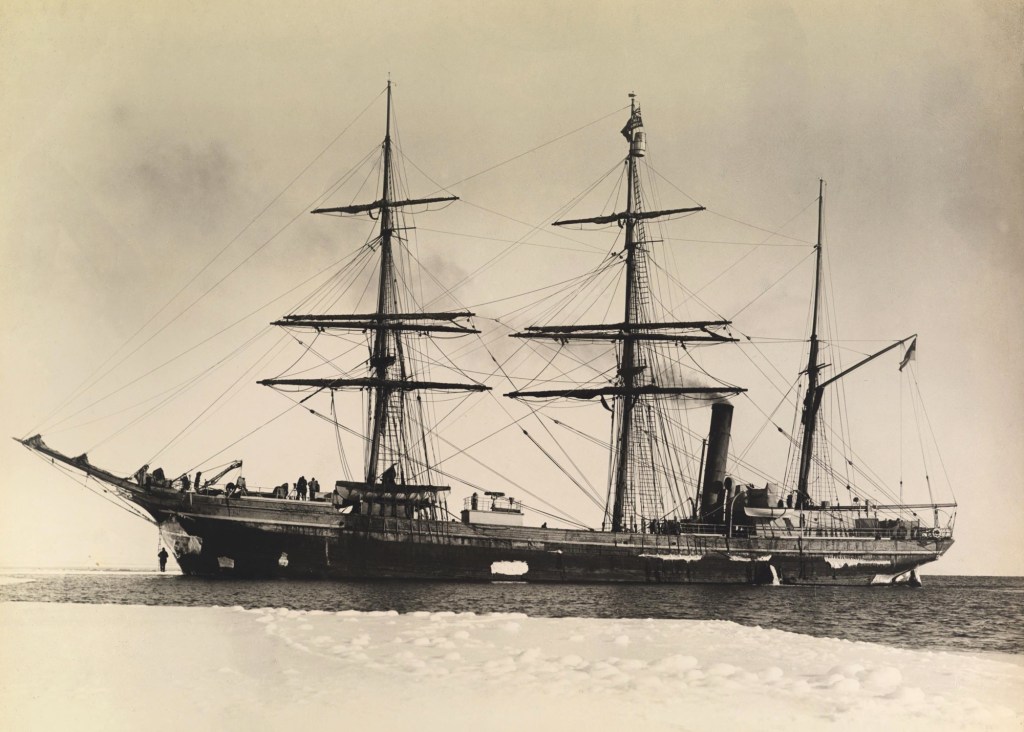
    Expedition ship Terra Nova during the British Antarctic Expedition, c.1911.
    Image Wikimedia Commons

    Today’s Answers

    Day 4 of our continuing theme.

    One

    What ‘P’ links a creature from Greek myth and Bénouville Bridge, Normandy?

    Answer: Pegasus.

    Pegasus is a winged white stallion in Greek mythology, sired by Poseidon and born from Medusa after she was decapitated by Perseus. He later ascended to heaven to serve Zeus by bringing lightning and thunder from Olympus.

    Pegasus Bridge, originally the Bénouville Bridge, is a historic road crossing over the Caen Canal in Normandy. Built in 1934, it became famous during the Second World War when a British glider-borne force captured it intact on 6 June 1944 to limit German counter-attacks after the Normandy invasion. Renamed in honour of the operation and the shoulder emblem worn by British airborne forces, the original bridge is now a war memorial at the Memorial Pegasus museum, having been replaced by a modern bascule bridge in 1994.


    Two

    What ‘Q’ is a capital city; sits on the equator; and is amongst the highest capitals by elevation? Of what country is this city the capital, and what other country’s two capitals vie with this one as highest capitals?

    Answers: Quito, Ecuador; Bolivia.

    Quito, formally known as San Francisco de Quito, serves as the capital and second-largest city of Ecuador. Its population is estimated at 1.7 million within the city and 2.8 million across the metropolitan area. Situated in a valley on the eastern slopes of the active stratovolcano Pichincha in the Andes at 2,850 metres (9,350 ft), Quito ranks as either the highest or second-highest national capital globally, depending on whether La Paz or Sucre is regarded as Bolivia’s capital.


    Three

    Which ‘R’ was somewhat of a maverick before becoming a saint, then adopted a licence to kill on seven occasions? Who is the actor, and in which television production did Tony Curtis appear as a co-star?

    Answers: Roger Moore; The Persuaders!.

    Sir Roger George Moore was an English actor best known as the third actor to portray James Bond, starring in seven feature films between 1973 and 1985. On television, he played the lead role of Simon Templar in The Saint, starred in the American Western Maverick, and appeared alongside Tony Curtis in The Persuaders!.


    Four

    What ‘S’, in 1991, superseded SALT, which dated from the sixties? The answers are both an acronym and its meaning.

    Answers: START; Strategic Arms Reduction Treaty.

    The START I treaty, proposed by U.S. President Ronald Reagan, led to the removal of about 80% of strategic nuclear weapons by late 2001. Following the Soviet Union’s collapse, Russia, Belarus, Ukraine, and Kazakhstan agreed to its terms. After START I there were START II, III and then the New START Treaty in 2010, which extended nuclear weapon reductions until its expiration in February 2026, despite Russia suspending its participation in 2023.


    Five

    What ‘T’ was Captain Robert F. Scott’s ship on his ill-fated trip to Antarctica? Which explorer beat him to the South Pole by a few weeks?

    Answers: Terra Nova; Roald Amundsen.

    Captain Robert Falcon Scott and his party of five reached the South Pole on January 17, 1912, only to find Roald Amundsen had arrived first. On their return journey, a planned meeting with supporting dog teams failed, and the entire party died from exhaustion, starvation, and extreme cold just miles from their next supply depot. When their bodies were discovered, they were found with the first Antarctic fossils, which later proved the continent was once forested and connected to other landmasses.


  • Yet More What ‘*’

    See question five. Expedition ship … during the British Antarctic Expedition, c.1911.
    Image Wikimedia Commons

    Day 4 of our continuing theme.

    One

    What ‘P’ links a creature from Greek myth and Bénouville Bridge, Normandy?


    Two

    What ‘Q’ is a capital city; sits on the equator; and is amongst the highest capitals by elevation? Of what country is this city the capital, and what other country’s two capitals vie with this one as highest capitals?


    Three

    Which ‘R’ was somewhat of a maverick before becoming a saint, then adopted a licence to kill on seven occasions? Who is the actor, and in which television production did Tony Curtis appear as a co-star?


    Four

    What ‘S’, in 1991, superseded SALT, which dated from the sixties? The answers are both an acronym and its meaning.


    Five

    What ‘T’ was Captain Robert F. Scott’s ship on his ill-fated trip to Antarctica? Which explorer beat him to the South Pole by a few weeks?


    Good luck! I’ll post the answers later.


  • For the Birds — Answers

    Today’s Answers

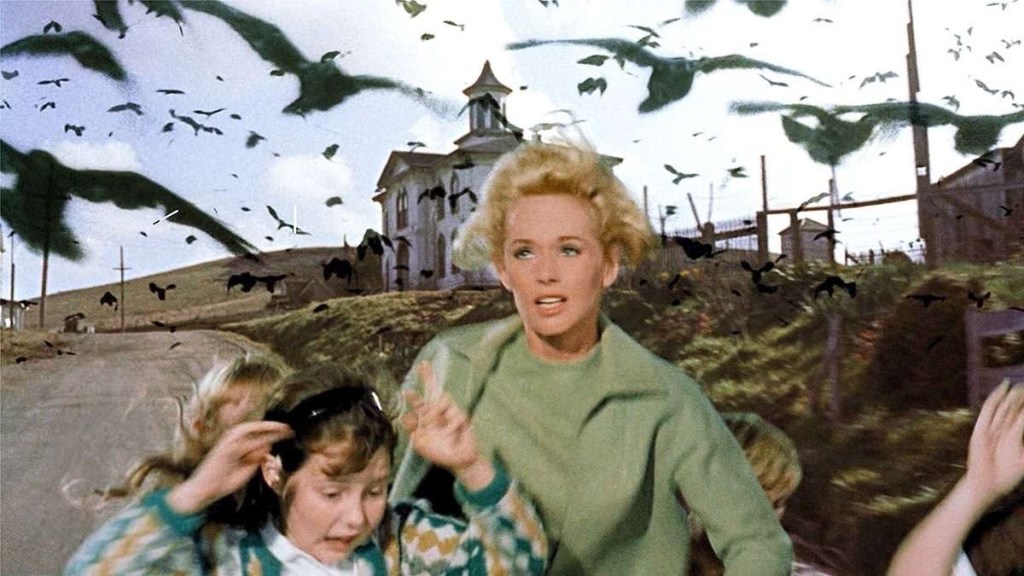
    The Birds.
    Image source here.

    There is no date connection today, but there is a theme.

    One

    This links Max Yasgur’s dairy farm to C. Brown’s dog?

    Answer: Woodstock.

    Woodstock in 1969 took place on Max Yasgur’s farm, while in the Peanuts cartoons Snoopy, Charlie Brown’s dog, has a bird companion called Woodstock.


    Two

    What is the name of the pet owl in Disney’s The Sword in the Stone (1963) and what character’s pet was he?

    Answer: Archimedes; Merlin.

    Archimedes is Merlin’s educated but grouchy pet owl who can speak. He is loyal to Merlin but frequently points out the wizard’s flaws. The character is based on the talking owl from the book The Sword in the Stone, where he also teaches Wart how to fly.


    Three

    In the Harry Potter stories, what is the name and species of Ron Weasley’s pet owl?

    Answers: Pigwidgeon; Scops owl.

    Pigwidgeon, nicknamed ‘Pig’, is a tiny, hyperactive Scops owl given to Ron Weasley by Sirius Black to replace his lost pet rat, Scabbers. Named by Ginny Weasley, Pigwidgeon is known for being loud, bothersome, and a bit of a show-off, often annoying other owls. Despite his small size, he was used to deliver letters, including heavy loads, and was borrowed by Harry Potter to communicate with Sirius during the Triwizard Tournament. He stayed at The Burrow when Ron left to hunt Horcruxes with Harry and Hermione.


    Four

    What 2016 film featured a kingfisher named Kiki?

    Answer: Robinson Crusoe (aka The Wild Life).

    Robinson Crusoe, released in North America as The Wild Life, is a 2016 3D animated film directed by Vincent Kesteloot and Ben Stassen. Based on Daniel Defoe’s novel from the animals’ perspective, it grossed $42.4 million against a $13 million budget despite negative reviews.


    Five

    What song gave Fleetwood Mac their only UK number one hit?

    Answer: Albatross.

    The Fleetwood Mac instrumental Albatross, composed by Peter Green and released in 1968, was the band’s only number-one single in the UK. It was later re-released in 1973, reaching number two.


  • For the Birds

    The Birds.
    Image source here.

    There is no date connection today, but there is a theme.

    One

    This links Max Yasgur’s dairy farm to C. Brown’s dog?


    Two

    What is the name of the pet owl in Disney’s The Sword in the Stone (1963) and what character’s pet was he?


    Three

    In the Harry Potter stories, what is the name and species of Ron Weasley’s pet owl?


    Four

    What 2016 film featured a kingfisher named Kiki?


    Five

    What song gave Fleetwood Mac their only UK number one hit?

    Good luck! I’ll post the answers later.


  • And Now For Something Completely Different — Answers

    Today’s Answers .

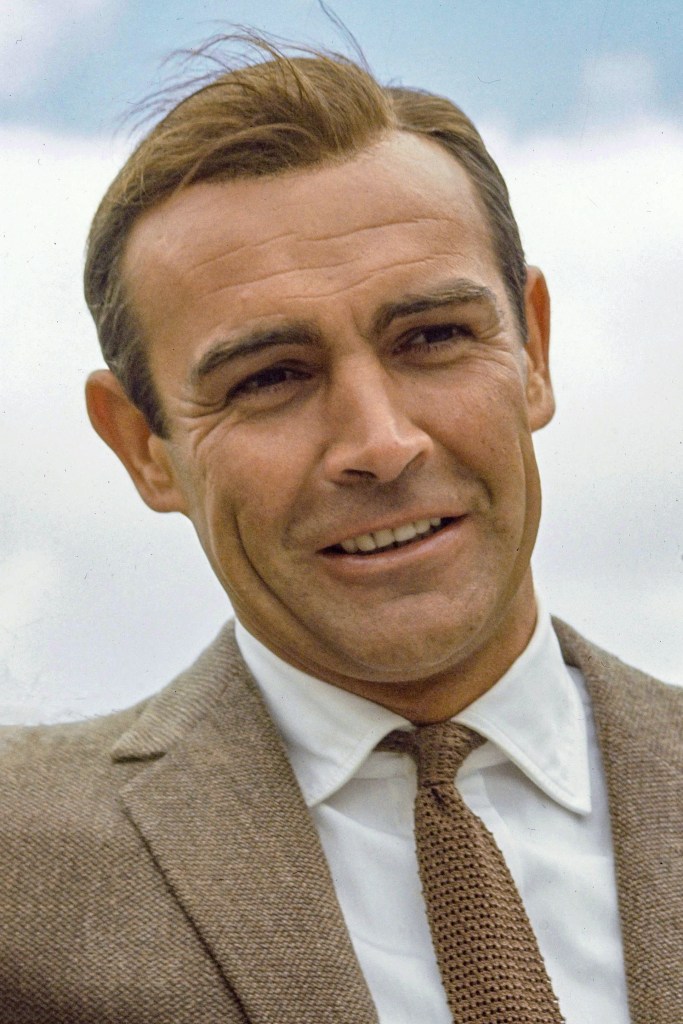
    Sean Connery as James Bond. See question four.
    Image Wikimedia Commons

    One

    On 5 October 1969, I was in my mid-teens and interested in aviation, so I settled in to watch a new BBC TV series at its debut. Although it turned out to be unrelated to flight, it was excellent and became a turning point for television comedy: what was the programme, and who were the half-dozen people who created, wrote, and performed in it?

    Answers: Monty Python’s Flying Circus; Graham Chapman, John Cleese, Eric Idle, Terry Jones, Michael Palin, and Terry Gilliam.

    Monty Python’s Flying Circus is a British surreal sketch comedy series created by the “Pythons”—Graham Chapman, John Cleese, Eric Idle, Terry Jones, Michael Palin, and Terry Gilliam. Premiering in 1969, the show aired 45 episodes over four series until 1974 and is known for its absurd situations, observational sketches without punchlines, and unique animations by Gilliam. The troupe also produced five films including Monty Python and the Holy Grail (1975) and Monty Python’s Life of Brian (1979).


    Two

    Born on this day in 1975, this actress portrayed Ophelia, Rose, Hester, and Iris across five years starting in the mid-nineties. Who is she, and in which four films did she assume these roles?

    Answer: Kate Winslet; Hamlet; Titanic; Enigma and Iris.

    Kate Winslet is an English actress known for her roles as headstrong women in independent films and period dramas. Born in 1975, she has won numerous accolades, including an Academy Award, two Emmys, five BAFTAs, and five Golden Globes, and was appointed a CBE in 2012. She studied at Redroofs Theatre School and made her screen debut at age fifteen.


    Three

    In October 1970 PBS began broadcasting on American television taking over many of the functions of what predecessor organisation; and what children’s show featuring live-action, sketch comedy, animation, and puppetry were one of its great successes?

    Answer: National Educational Television (NET).

    PBS, a nonprofit in Arlington, Virginia, distributes educational programmes via over 350 member stations. Funding includes dues, pledges, sponsorships and donations; Corporation for Public Broadcasting support runs from 1969 to 2025. Standards prevent funding influence.


    Four

    In 1962, the first ‘official’ Bond movie by Eon Productions premiered on this day. What was the film and what actress, although she is not to appear on the screen in this film, is widely regarded as the first ‘Bond girl’ and what was her role?

    Answers: Dr. No; Ursula Andress as Honey Ryder.

    Dr. No, directed by Terence Young and starring Sean Connery, launched the James Bond series in 1962. Bond investigates a disappearance in Jamaica, uncovering Dr. No’s plot against Cape Canaveral. It established iconic elements and achieved financial success. Although Honey Rider is widely regarded as the first Bond girl, Eunice Gayson as Sylvia Trench and Zena Marshall as Miss Taro.


    Five

    In 1961, the comedy Breakfast at Tiffany’s premiered. Your answers are four names: who starred as Holly Golightly and Paul Varjak; who directed the film; and who wrote the novella the film was based on?

    Answers: Audrey Hepburn and George Peppard; Blake Edwards; Truman Capote.

    Directed by Blake Edwards from George Axelrod’s screenplay, Breakfast at Tiffany’s (1961) stars Audrey Hepburn and George Peppard. It earned two Academy Awards and was preserved in the National Film Registry, though Mickey Rooney’s role caused controversy as being perceived as racist.


    And Now For Something Completely Different

    The post title was frequently used in Monty Python often as a transition between sketches and was also the title of the troupe’s first film released in 1971.


  • And Now For Something Completely Different

    Sean Connery as James Bond. See question four.
    Image Wikimedia Commons

    One

    On 5 October 1969, I was in my mid-teens and interested in aviation, so I settled in to watch a new BBC TV series at its debut. Although it turned out to be unrelated to flight, it was excellent and became a turning point for television comedy: what was the programme, and who were the half-dozen people who created, wrote, and performed in it?


    Two

    Born on this day in 1975, this actress portrayed Ophelia, Rose, Hester, and Iris across five years starting in the mid-nineties. Who is she, and in which four films did she assume these roles?


    Three

    In October 1970 PBS began broadcasting on American television taking over many of the functions of what predecessor organisation; and what children’s show featuring live-action, sketch comedy, animation, and puppetry were one of its great successes?


    Four

    In 1962, the first ‘official’ Bond movie by Eon Productions premiered on this day. What was the film and what actress, although she is not to appear on the screen in this film, is widely regarded as the first ‘Bond girl’ and what was her role?


    Five

    In 1961, the comedy Breakfast at Tiffany’s premiered. Your answers are four names: who starred as Holly Golightly and Paul Varjak; who directed the film; and who wrote the novella the film was based on?


    Good luck! I’ll post the answers later.