Image Wikimedia Commons
Today’s first question centres around the date 12th July and a Wild West legend. The subsequent questions aren’t date-related but continue the legend theme.
One
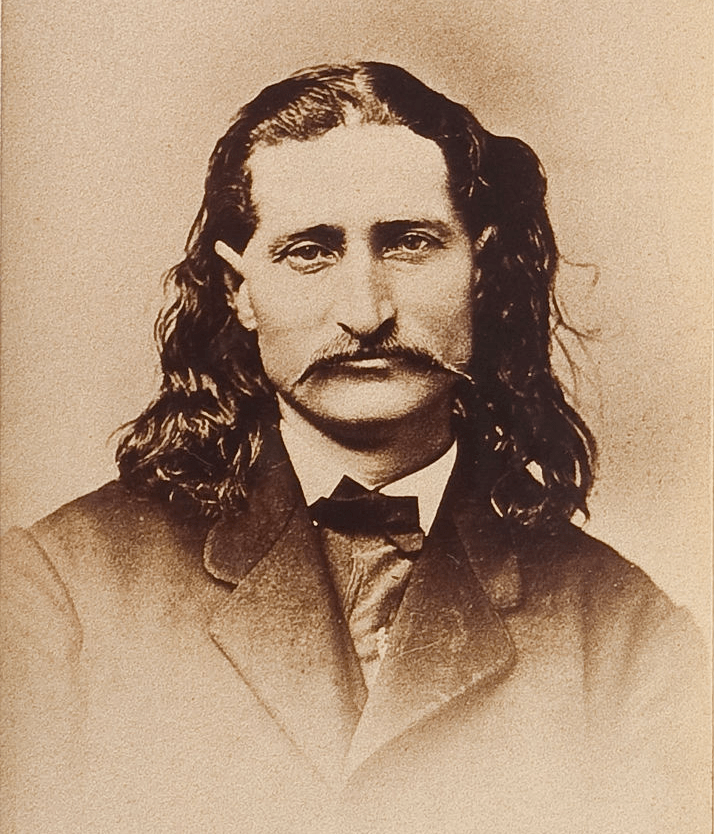
On 12 July 1861, Wild Bill Hickok supposedly fought his first gunfight in which three men died. Hickok was acquitted in court after claiming self-defence. The court papers referred to Hickok by which of these names: Dollar Bill; Double Bill or Duck Bill?
Answer: Duck Bill.
In 1861, in Rock Creek, Nebraska, a legend began as Wild Bill Hickok reportedly engaged in his first gunfight at a postal station. This event marked the start of his storied reputation in the Wild West. James Butler Hickok, known for his adventurous life, survived a bear attack and worked at a Pony Express station. A confrontation with David McCanles over rent turned violent, resulting in McCanles and two men’s deaths. Hickok, called ’Duck Bill’ in the court records, was acquitted, claiming self-defence.
Two
In which Rossini opera is Gesler, the Austrian governor of Uri and Schwyz, the villain?
Answer: William Tell (or Italian: Guglielmo Tell; French: Guillaume Tell).
William Tell, a legendary Swiss folk hero, is renowned for shooting an apple off his son’s head and assassinating tyrant Albrecht Gessler. His defiance inspired Swiss rebellion, leading to the Confederacy’s formation. Emerging in 1307, Tell symbolises Swiss identity and resistance, influencing the 19th-century Restoration and 1848 Revolutions. There is no definitive evidence of Tell’s existence. Guillaume Tell is a French-language opera by Gioachino Rossini, based on the William Tell legend. It was Rossini’s last opera, featuring a famous overture with a storm and the March of the Swiss Soldiers.
Three
Born Robert MacGregor, this Scottish Jacobite outlaw and folk hero inspired a novel, a play, an operetta and several films. What was he better known as?
Answer: Rob Roy.
Robert Roy MacGregor was a Jacobite Scottish outlaw born on 7 March 1671 and died on 28 December 1734. He later became a folk hero in Scotland and among Jacobites. An 1817 novel by Walter Scott based on MacGregor’s life was the basis for a play and an overture.
Four
Gjergj Kastrioti, known as Skanderbeg, is a national hero from the 15th century. In what modern-day country is he a hero for uniting principalities and influencing national awakening?
Answer: Albania.
Skanderbeg (Gjergj Kastrioti) was an Albanian nobleman and military leader who led the League of Lezhë against the Ottomans. A national hero, he deserted the Ottomans in 1443, unified Albanian principalities, and allied with Naples. Skanderbeg is celebrated for his persistent resistance and influence on the Albanian National Awakening.
Five
Which of these is a film that is the 1993 retelling of the Robin Hood story?
- Robin Hood: Men in Sherwood
- Robin Hood: Men in Tights
- Robin Hood: Men in Uttoxeter
Answer: Robin Hood: Men in Tights
Robin Hood, a legendary 14th-century English outlaw, rebelled against authority by robbing officials and aiding the poor, primarily in South Yorkshire. His main adversary was the Sheriff of Nottingham. Despite numerous attempts, his historical existence remains unproven, with claims likely originating from an 18th-century fabrication. Robin Hood: Men in Tights is a 1993 Mel Brooks comedy film parodying the Robin Hood story, starring Cary Elwes and Richard Lewis.


Leave a Reply