Tag: opera

  • Legends Are Not Born; They Are Made — Answers

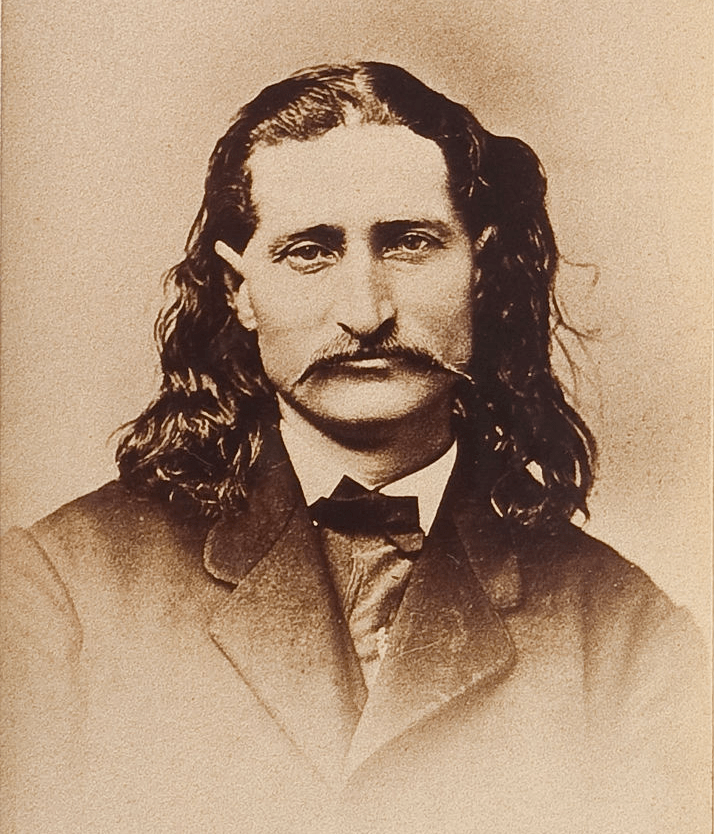
    Wild Bill Hickok.
    Image Wikimedia Commons

    Today’s first question centres around the date 12th July and a Wild West legend.  The subsequent questions aren’t date-related but continue the legend theme.

    One

    On 12 July 1861, Wild Bill Hickok supposedly fought his first gunfight in which three men died. Hickok was acquitted in court after claiming self-defence. The court papers referred to Hickok by which of these names: Dollar Bill; Double Bill or Duck Bill?

    Answer: Duck Bill.

    In 1861, in Rock Creek, Nebraska, a legend began as Wild Bill Hickok reportedly engaged in his first gunfight at a postal station. This event marked the start of his storied reputation in the Wild West. James Butler Hickok, known for his adventurous life, survived a bear attack and worked at a Pony Express station. A confrontation with David McCanles over rent turned violent, resulting in McCanles and two men’s deaths. Hickok, called ’Duck Bill’ in the court records, was acquitted, claiming self-defence.


    Two

    In which Rossini opera is Gesler, the Austrian governor of Uri and Schwyz, the villain? 

    Answer: William Tell (or Italian: Guglielmo Tell; French: Guillaume Tell).

    William Tell, a legendary Swiss folk hero, is renowned for shooting an apple off his son’s head and assassinating tyrant Albrecht Gessler. His defiance inspired Swiss rebellion, leading to the Confederacy’s formation. Emerging in 1307, Tell symbolises Swiss identity and resistance, influencing the 19th-century Restoration and 1848 Revolutions. There is no definitive evidence of Tell’s existence. Guillaume Tell is a French-language opera by Gioachino Rossini, based on the William Tell legend. It was Rossini’s last opera, featuring a famous overture with a storm and the March of the Swiss Soldiers.


    Three

    Born Robert MacGregor, this Scottish Jacobite outlaw and folk hero inspired a novel, a play, an operetta and several films. What was he better known as?

    Answer: Rob Roy.

    Robert Roy MacGregor was a Jacobite Scottish outlaw born on 7 March 1671 and died on 28 December 1734.  He later became a folk hero in Scotland and among Jacobites. An 1817 novel by Walter Scott based on MacGregor’s life was the basis for a play and an overture.


    Four

    Gjergj Kastrioti, known as Skanderbeg, is a national hero from the 15th century. In what modern-day country is he a hero for uniting principalities and influencing national awakening?

    Answer: Albania.

    Skanderbeg (Gjergj Kastrioti) was an Albanian nobleman and military leader who led the League of Lezhë against the Ottomans. A national hero, he deserted the Ottomans in 1443, unified Albanian principalities, and allied with Naples. Skanderbeg is celebrated for his persistent resistance and influence on the Albanian National Awakening.


    Five

    Which of these is a film that is the 1993 retelling of the Robin Hood story?

    • Robin Hood: Men in Sherwood
    • Robin Hood: Men in Tights 
    • Robin Hood: Men in Uttoxeter

    Answer: Robin Hood: Men in Tights 

    Robin Hood, a legendary 14th-century English outlaw, rebelled against authority by robbing officials and aiding the poor, primarily in South Yorkshire. His main adversary was the Sheriff of Nottingham. Despite numerous attempts, his historical existence remains unproven, with claims likely originating from an 18th-century fabrication. Robin Hood: Men in Tights is a 1993 Mel Brooks comedy film parodying the Robin Hood story, starring Cary Elwes and Richard Lewis.


  • Legends Are Not Born; They Are Made.

    Wild Bill Hickok.
    Image Wikimedia Commons

    Today’s first question centres around the date 12th July and a Wild West legend.  The subsequent questions aren’t date-related but continue the legend theme.

    One

    On 12 July 1861, Wild Bill Hickok supposedly fought his first gunfight in which three men died. Hickok was acquitted in court after claiming self-defence. The court papers referred to Hickok by which of these names: Dollar Bill; Double Bill or Duck Bill?


    Two

    In which Rossini opera is Gesler, the Austrian governor of Uri and Schwyz, the villain? 


    Three

    Born Robert MacGregor, this Scottish Jacobite outlaw and folk hero inspired a novel, a play, an operetta and several films. What was he better known as?


    Four

    Gjergj Kastrioti, known as Skanderbeg, is a national hero from the 15th century. In what modern-day country is he a hero for uniting principalities and influencing national awakening?


    Five

    Which of these is a film that is the 1993 retelling of the Robin Hood story?

    • Robin Hood: Men in Sherwood
    • Robin Hood: Men in Tights 
    • Robin Hood: Men in Uttoxeter

    Good luck! I’ll post the answers later.


  • Poetic Licence — Answers

    Here are the answers to today’s questions.

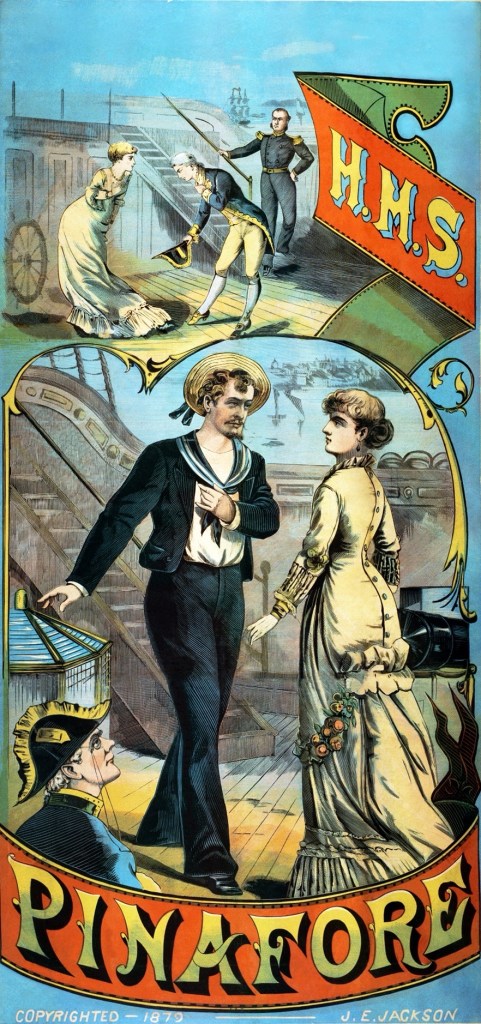
    H.M.S. Pinafore; or, The Lass That Loved a Sailor, theatrical poster.
    Image Wikimedia Commons

    All of these questions are related to today’s date, May 25th.


    One

    What was the first X-rated film to win the Academy Award for best picture?

    Midnight Cowboy.

    Released on this day in 1969, Midnight Cowboy, directed by John Schlesinger, stars Dustin Hoffman and Jon Voight as New York hustlers. It won three Academy Awards, including Best Picture, and is the only X-rated film to do so. Ranked 36th and 43rd on AFI’s lists, it was preserved in the U.S. National Film Registry in 1994.
    X-certification has been renamed in some domains; for example, in the U.K., it is now an 18 certificate, which is suitable only for persons aged 18 years and over, and in the U.S., NC-17, No one 17 and under admitted.


    Two

    He did not wear his scarlet coat,
    For blood and wine are red,
    And blood and wine were on his hands
    When they found him with the dead,
    The poor dead woman whom he loved,
    And murdered in her bed.

    The above lines are the opening verse of an 1897 poem which was published under the pseudonym C.3.3. What is the poem, and who wrote it?

    Answer: The Ballad of Reading Gaol by Oscar Wilde.

    On 25 May 1895, Wilde had been convicted of ‘committing acts of gross indecency with certain male persons’, sentenced to two years’ hard labour; he served the majority of his sentence in Reading Gaol. His poem, The Ballad of Reading Gaol, which was written after his release from prison, narrates the execution of Charles Thomas Wooldridge. It highlights the brutalisation of punishment and Wilde’s identification with prisoners. Published in 1898, under the pseudonym C.3.3. — his prison identification by which he was addressed — it remained anonymous until Wilde’s identity as author was revealed in 1899. The poem, which sold well, provided Wilde with an income for life.


    Three

    The author who created the character Jason Bourne in a 1980 novel was born in 1927. Who was this author?

    Answer: Robert Ludlum.

    Robert Ludlum, an American author known for his spy thrillers, wrote best-sellers like The Bourne Identity and The Scarlatti Inheritance. Despite criticism of his plots and prose, his fast-paced espionage novels were immensely popular. He authored 27 thriller novels, including the Jason Bourne series, which have been published in 33 languages and sold an estimated 300-500 million copies.


    Four

    An actor, born in 1939, links the roles of John Profumo in 1989, Mithrandir (2001), and Leigh Teabing (2006). What actor?

    Answer: Ian McKellen.

    Ian McKellen, who was born in England on this day in 1939, played John Profumo in Scandal (1989). In 2001, he took on the role of Gandalf the Grey in The Lord of the Rings: The Fellowship of the Ring — Mithrandir is how Gandalf is known by the Elves in their Sindarin language. He portrayed Sir Leigh Teabing in The Da Vinci Code (2006).


    Five

    …; or, The Lass That Loved a Sailor, a comic opera, debuted in London in 1878. What has been omitted from the beginning of the opera’s title?

    Answer: H.M.S. Pinafore.

    H.M.S. Pinafore; or, The Lass That Loved a Sailor, a comic opera by Gilbert and Sullivan, premiered in 1878, running for 571 performances. Set on a Royal Navy ship, it humorously critiques the British class system and authority. Its success led to other popular works, influencing modern musical theatre.


  • Poetic Licence

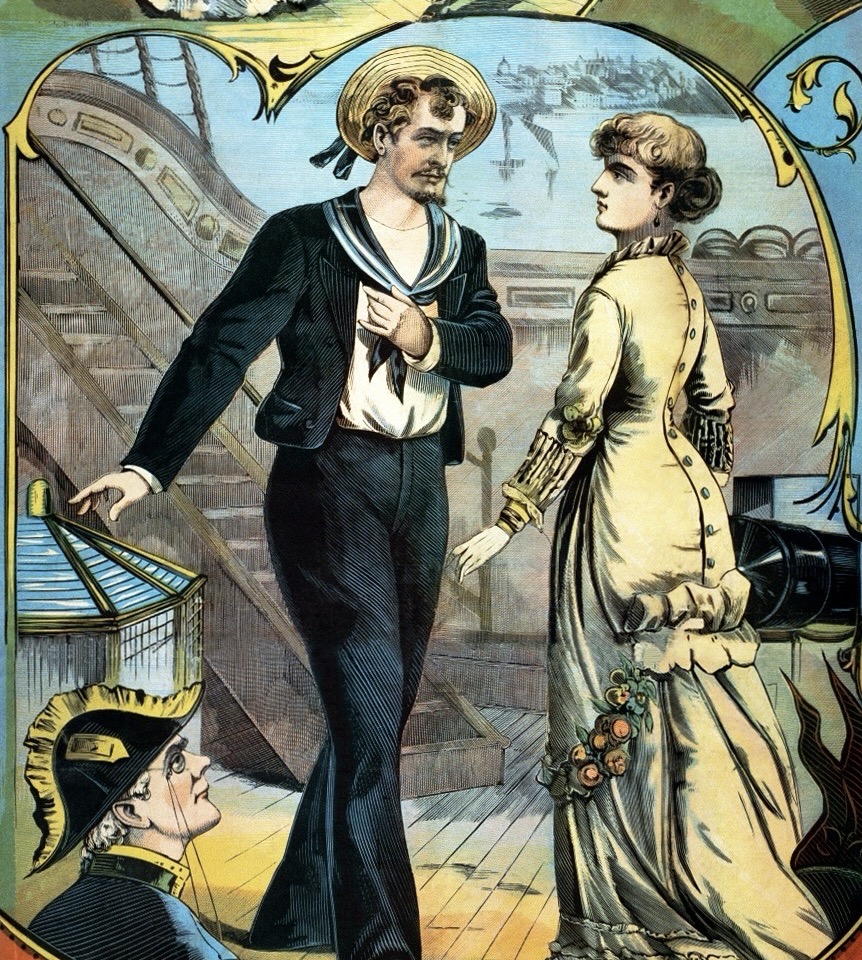
    …; or, The Lass That Loved a Sailor, theatrical poster (cropped). See question five.
    Image Wikimedia Commons

    All of these questions are related to today’s date, May 25th.


    One

    What was the first X-rated film to win the Academy Award for best picture?


    Two

    He did not wear his scarlet coat,
    For blood and wine are red,
    And blood and wine were on his hands
    When they found him with the dead,
    The poor dead woman whom he loved,
    And murdered in her bed.

    The above lines are the opening verse of an 1897 poem which was published under the pseudonym C.3.3. What is the poem, and who wrote it?


    Three

    The author who created the character Jason Bourne in a 1980 novel was born in 1927. Who was this author?


    Four

    An actor, born in 1939, links the roles of John Profumo in 1989, Mithrandir (2001), and Leigh Teabing (2006). What actor?


    Five

    …; or, The Lass That Loved a Sailor, a comic opera, debuted in London in 1878. What has been omitted from the beginning of the opera’s title?


    Good luck! I’ll post the answers later.


  • There is Only One Cure for Grey Hair — Answers

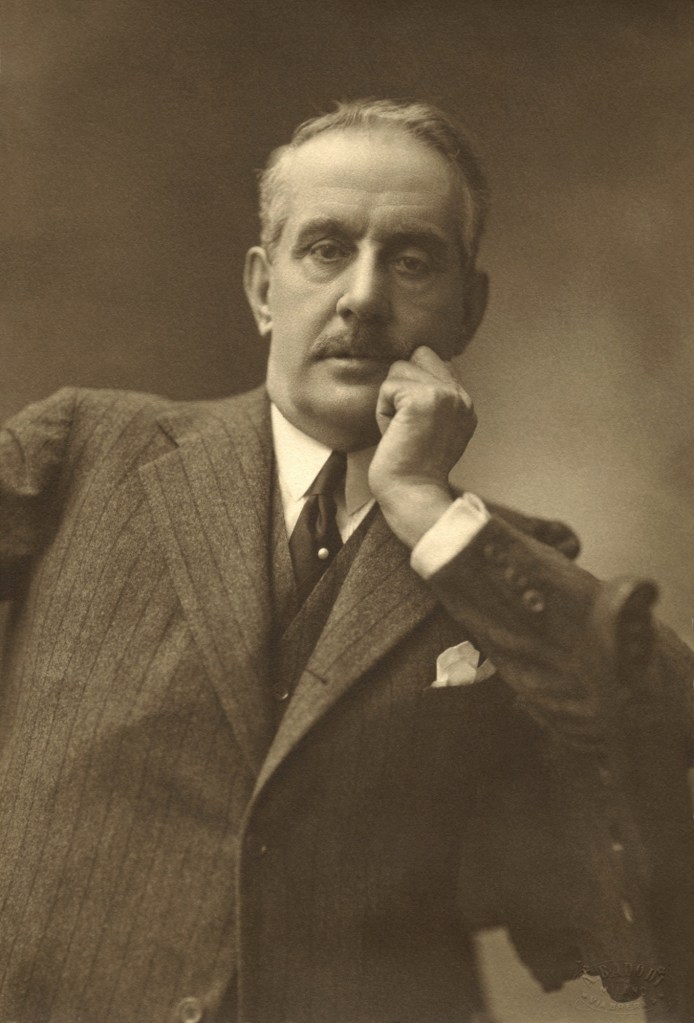
    Giacomo Puccini, 1924.
    Image Wikimedia Commons

    All of these questions are related to today’s date, April 25th.

    One

    In 1959, the St. Lawrence Seaway was officially opened. What canal, part of the Seaway, extends from Port Weller to Port Colborne, and in what country is this canal located?

    Answer: Welland Canal; Canada.

    Part of the St. Lawrence Seaway, the Welland Canal in Ontario, Canada, connects Lake Ontario and Lake Erie, bypassing Niagara Falls. It facilitates 3,000 ships annually, transporting 40 million tonnes of cargo. First opened in 1829, the Welland Canal has undergone four reconstructions, with the current version featuring eight locks, allowing ships to pass in opposite directions.


    Two

    In 1926, Turandot premiered some sixteen months after the death of the opera’s composer. Who, pictured above, was the composer?

    Answer: Giacomo Puccini.

    Giacomo Puccini (1858–1924) was an Italian composer renowned for his operas, including La bohèmeToscaMadama Butterfly, and Turandot. Puccini’s final opera, Turandot, was left unfinished at the composer’s death, and Franco Alfano completed the last two scenes using sketches from the composer. Turandot boasts several memorable arias, including the iconic Nessun dorma.


    Three

    In 1792, the louisette was first used in France. Originally named after its inventor, Antoine Louis, a surgeon and physiologist, it became more commonly known by the name used today. What is it now known as?

    Answer: Guillotine.

    The guillotine, introduced in France in 1792, was a device for capital punishment by decapitation, consisting of two upright posts and a weighted angled blade. Legislation promoted by Joseph-Ignace Guillotin to ensure equality and minimise suffering, it was first used on 25 April 1792. Originally called the louisette, it became infamous during the French Revolution and Reign of Terror, executing thousands including Louis XVI and Marie-Antoinette. Use declined after the 1960s, with it last being used in 1977, and France abolishing both capital punishment and the guillotine in 1981.


    Four

    As a precursor to licence or registration plates, what did New York State require that motor vehicle owners must display on the back of their vehicle from 1901?

    Answer: Owners initials.

    France introduced vehicle registration plates in 1893, followed by Germany in 1896. The Netherlands issued national plates in 1898. In the U.S., New York required that the owner’s initials be clearly visible on the back of the vehicle from 1901, and licence plates displayed from 1903. 


    Five

    British and French engineers broke ground in 1859 at the site of a canal which has a terminus at Port Tewfik. What canal is it, and what rugged, arid peninsula is situated to the east of this canal?

    Answer: Suez Canal; Sinai Peninsula.

    The Suez Canal, a 193.30-kilometre-long waterway in Egypt, connects the Mediterranean Sea at Port Said with the Red Sea at Port Tewfik, Suez, separating Africa and Asia. Built in 1869 by Ferdinand de Lesseps’ Compagnie de Suez, it was nationalised in 1956. A new side channel opened in 2016, enhancing its role in global trade and military strategy.


    There is Only One Cure for Grey Hair

    Today’s title There is Only One Cure for Grey Hair, a reference to the answer to question three, is from a P.G. Wodehouse quote —

    There is only one cure for grey hair. It was invented by a Frenchman. It is called the guillotine.
    — P.G. Wodehouse


  • There is Only One Cure for Grey Hair

    See question two.
    Image Wikimedia Commons

    All of these questions are related to today’s date, April 25th.

    One

    In 1959, the St. Lawrence Seaway was officially opened. What canal, part of the Seaway, extends from Port Weller to Port Colborne, and in what country is this canal located?


    Two

    In 1926, Turandot premiered some sixteen months after the death of the opera’s composer. Who, pictured above, was the composer?


    Three

    In 1792, the louisette was first used in France. Originally named after its inventor, Antoine Louis, a surgeon and physiologist, it became more commonly known by the name used today. What is it now known as?


    Four

    As a precursor to licence or registration plates, what did New York State require that motor vehicle owners must display on the back of their vehicle from 1901?


    Five

    British and French engineers broke ground in 1859 at the site of a canal which has a terminus at Port Tewfik. What canal is it, and what rugged, arid peninsula is situated to the east of this canal?


    Good luck! I’ll post the answers later.


  • The Three ‘Bs’ — Answers

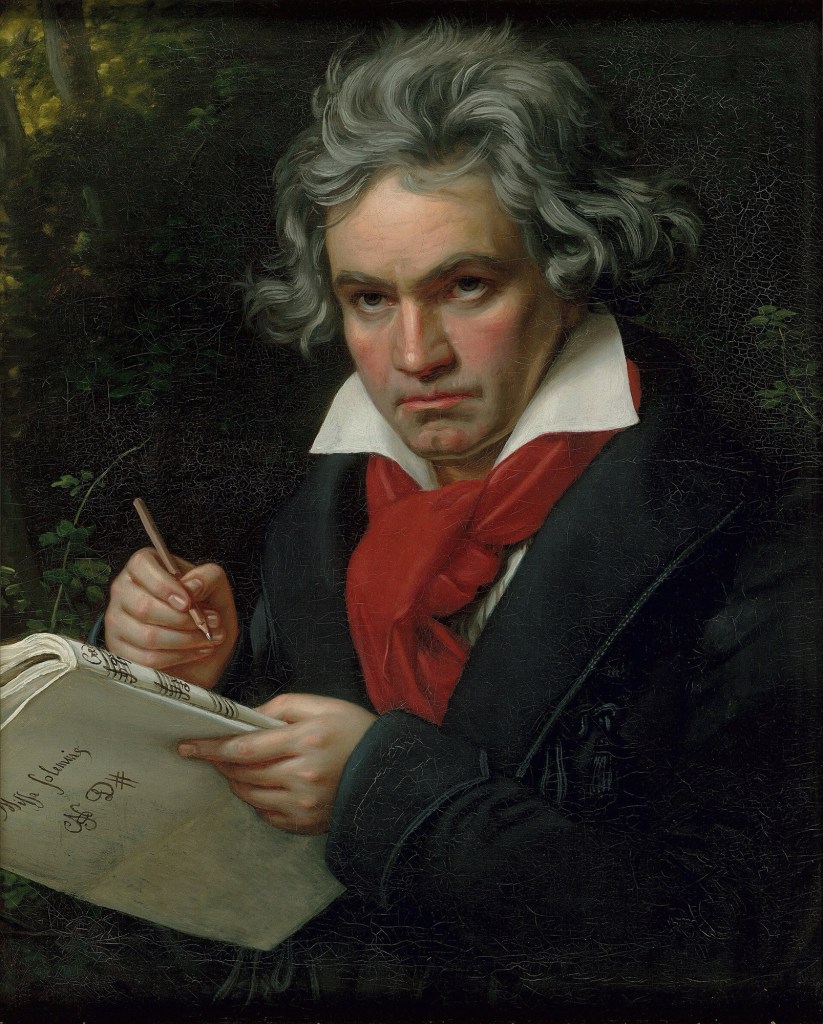
    Ludwig van Beethoven with the
    manuscript of the Missa solemnis, 1820.
    Image Wikimedia Commons

    On 2 April 1800, Ludwig van Beethoven led the premiere of his First Symphony, Symphony No. 1 in C major, Op. 21 in Vienna, so today’s questions are all about music.

    One

    When Hans von Bulow referred to three composers as ‘The three Bs’, one was Ludwig van Beethoven, but who were the other two?

    Answer: Johann Sebastian Bach and Johannes Brahms.

    ’The Three Bs’ refers to the primacy of Bach, Beethoven and Brahms in classical music. The term originated from an expression by Peter Cornelius in 1854, who included Berlioz as the third B before Hans von Bülow substituted Brahms for Berlioz.


    Two

    What is the name of the priest in Eleanor Rigby ?

    Answer: Father McKenzie

    Eleanor Rigby by the Beatles, from their 1966 album Revolver, is a song about loneliness featuring a double string quartet arrangement. Paul McCartney, who came up with the melody and most of the lyrics has variously stated the name came from an old lady he knew; the actress Eleanor Bron; and a Bristol store, Rigby & Evens Ltd. The song topped singles charts in several countries.


    Three

    Who composed the opera Aida, and where was it set?

    Answer: Giuseppe Verdi; Ancient Egypt.

    Aida is a tragic opera in four acts by Giuseppe Verdi, set in ancient Egypt. Commissioned by Cairo’s Khedivial Opera House, it premiered there on 24 December 1871. The opera was met with great acclaim and quickly became a staple in the operatic canon, receiving performances worldwide.


    Four

    ‘But I shot a man in Reno, just to watch him die’, are lyrics from what song, and who wrote it?

    Answer: Folsom Prison Blues; Johnny Cash

    Folsom Prison Blues is a song by Johnny Cash, written in 1953 and released as a single in 1955. The song, inspired by the movie Inside the Walls of Folsom Prison, combines elements of train and prison songs, and became one of Cash’s signature songs. A live version recorded at Folsom State Prison in 1968 became a number-one hit and won a Grammy Award.


    Five

    First performed in 1934, A Boy was Born is a choral composition by which English composer? 

    Answer: Benjamin Britten.

    A Boy Was Born, Op. 3, is a choral composition by Benjamin Britten, subtitled Choral variations for men’s, women’s and boys’ voices, unaccompanied. Composed between 1932 and 1933, it was first performed in 1934 and revised in 1955. The work, a musical theme and six variations, sets ten different texts related to Christmas.


  • The Three ‘Bs’

    Ludwig van Beethoven with the
    manuscript of the Missa solemnis, 1820.
    Image Wikimedia Commons

    On 2 April 1800, Ludwig van Beethoven led the premiere of his First Symphony, Symphony No. 1 in C major, Op. 21 in Vienna, so today’s questions are all about music.

    One

    When Hans von Bulow referred to three composers as ‘The three Bs’, one was Ludwig van Beethoven, but who were the other two?


    Two

    What is the name of the priest in Eleanor Rigby ?


    Three

    Who composed the opera Aida, and where was it set?


    Four

    ‘But I shot a man in Reno, just to watch him die’, are lyrics from what song, and who wrote it?


    Five

    First performed in 1934, A Boy was Born is a choral composition by which English composer? 

    Good luck! I’ll post the answers later.


  • Where – Who – Where – Who (& When) – Where—Answers

    Here are the answers to my earlier questions.
    All of today’s questions are connected to the date, March 20th. There are three places and two people to find in these multiple-choice questions.

    The Gypsy Theatre, Moscow, c.1931. Image New York Public Library via Wikimedia Commons

    One

    The first Romani language operetta, Children of the Forests, premiered on 20 March 1888. Where was it staged?

    1. Bucharest, Romania
    2. Kyiv, Ukraine
    3. Moscow, Russia

    Answer: 3. Moscow, Russia.

    The premiere of the very first Romani language operetta Children of the Forests was staged in the Maly Theatre, Moscow, Russia on 20 March 1888. It was performed solely by the Romani troupe. The production ran for 18 years and was a great success. The first Romani theatre troupe, founded by Nikolai Shishkin, performed in Moscow and Saint Petersburg in the late 19th century. The troupe’s success led to the establishment of the Romen Theatre in Moscow in 1931.


    Two

    In 1923, the Arts Club of Chicago hosted the United States’ first showing of Original Drawings by… This event signalled the club’s early embrace of modern art in America. There is an artist’s name missing from the show’s title: who is the artist?

    1. Salvador Dali
    2. Pablo Picasso
    3. Jackson Pollock

    Answer: 2. Pablo Picasso

    The Arts Club of Chicago, founded in 1916, is a private club and public exhibition space dedicated to showcasing international contemporary art. The club, known for its pro-Modernist stance, has presented groundbreaking exhibitions by artists like Pablo Picasso and Jean Dubuffet. It curates its own exhibits, emphasising cutting-edge and avant-garde art.


    Three

    Harriet Beecher Stowe’s Uncle Tom’s Cabin was first published on this date in 1852. Between 1832 and 1850 she lived in a city where her personal observations and research informed the basis of her story. Where was this city?

    1. Alexandria, Virginia
    2. Baltimore, Maryland
    3. Cincinnati, Ohio

    Answers: 3. Cincinatti, Ohio.

    On this day in 1852, Harriet Beecher Stowe published Uncle Tom’s Cabin as a novel. The book, which had previously been serialised, played a crucial role in shifting public opinion towards abolitionism and contributed to the outbreak of the Civil War.


    Four

    Who became the first woman to win the Iditarod Trail Sled Dog Race, and when did she achieve this?

    1. Kelly Quinault in 1973
    2. Libby Riddles in 1985
    3. Molly Semyonova in 1997

    Answers: 2. Libby Riddles in 1985

    The Iditarod Trail Sled Dog Race is an annual long-distance sled dog race in Alaska, covering the distance from Anchorage to Nome in eight to fifteen days. The race, which began in 1973, is a symbolic link to Alaska’s history and a popular sporting event, attracting competitors from around the world. The race is known for its challenging conditions, including blizzards, gale-force winds, and sub-zero temperatures, which with wind chill can reach −100 °F (−73 °C).


    Five

    Albert Einstein submitted his paper The Foundation of the General Theory of Relativity in 1916. Where was he working at that time?

    1. Federal Institute of Technology, Zurich
    2. Prussian Academy of Sciences, Berlin
    3. Charles University, Prague

    Answer: Prussian Academy of Sciences, Berlin.

    Albert Einstein was working at the Prussian Academy of Sciences in Berlin when he published The Foundation of the General Theory of Relativity in 1916. He had accepted a position at the Prussian Academy in 1914, specifically to work on his new theory of gravity. The paper was submitted on March 20, 1916, and published later that year in the journal Annalen der Physik. This period marked a significant time in Einstein’s career, as he was developing groundbreaking theories that would change our understanding of gravity and the universe.


  • Where – Who – Where – Who (& When) – Where

    All of today’s questions are connected to the date, March 20th. There are three places, two people and a year to find in these multiple-choice questions.

    The Gypsy Theatre, c.1931. Image New York Public Library via Wikimedia Commons

    One

    The first Romani language operetta, Children of the Forests, premiered on 20 March 1888. Where was it staged?

    1. Bucharest, Romania
    2. Kyiv, Ukraine
    3. Moscow, Russia

    Two

    In 1923, the Arts Club of Chicago hosted the United States’ first showing of Original Drawings by… This event signalled the club’s early embrace of modern art in America. There is an artist’s name missing from the show’s title: who is the artist?

    1. Salvador Dali
    2. Pablo Picasso
    3. Jackson Pollock

    Three

    Harriet Beecher Stowe’s Uncle Tom’s Cabin was first published on this date in 1852. Between 1832 and 1850 she lived in a city where her personal observations and research informed the basis of her story. Where was this city?

    1. Alexandria, Virginia
    2. Baltimore, Maryland
    3. Cincinnati, Ohio

    Four

    Who became the first woman to win the Iditarod Trail Sled Dog Race, and when did she achieve this?

    1. Kelly Quinault in 1973
    2. Libby Riddles in 1985
    3. Molly Semyonova in 1997

    Five

    Albert Einstein submitted his paper The Foundation of the General Theory of Relativity in 1916. Where was he working at that time?

    1. Federal Institute of Technology, Zurich
    2. Prussian Academy of Sciences, Berlin
    3. Charles University, Prague

    Good luck! I’ll post the answers later.