There is a simple theme running through today’s questions, which I’m sure you will work out very quickly.
One
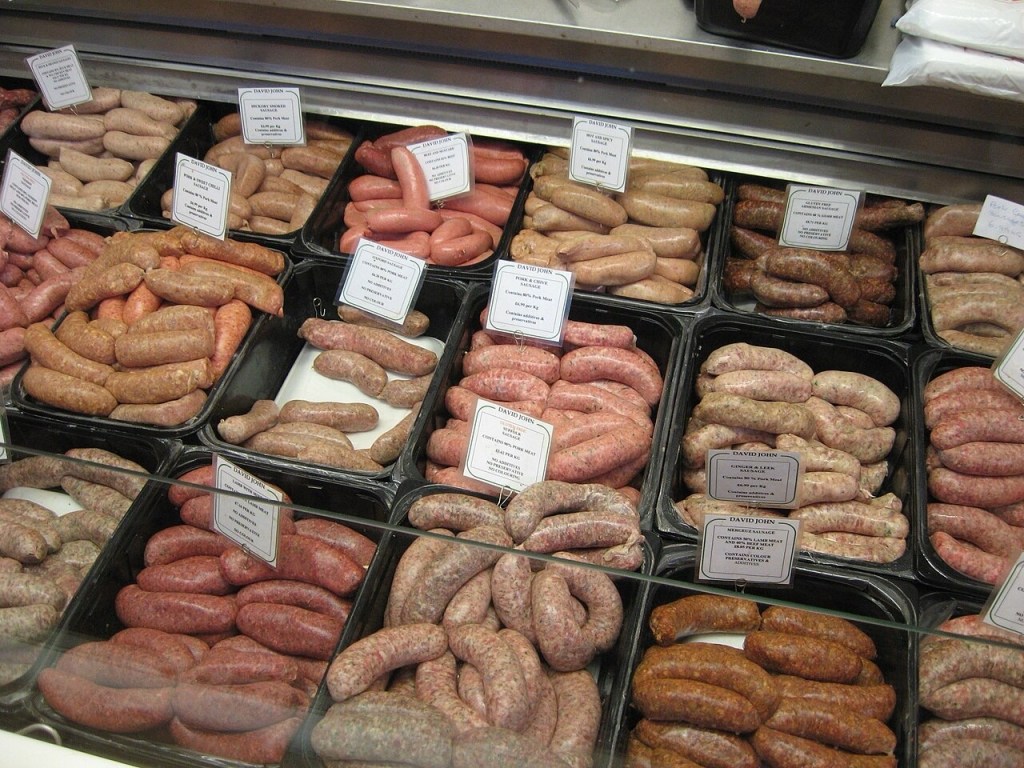
What five-letter word means sausages and an area of, for example, St. Andrew’s, Scotland?
Two
What eight-letter word relates to all of these: Joe Gilmore, a barman at the Savoy Hotel, London in 1969; Apollo 11, 1969; Mr Bean, 1969; Michael Jackson, 1983?
Three
What connects Fort Providence to the Beaufort Sea?
Four
Dr. John Watson; Bilbo Baggins; Lester Nygaard; Chris Carson. Who is the connection?
Five
What one title is shared by these: a 1956 film about Vincent van Gogh; an Iggy Pop album from 1977; a 2017 Lana Del Rey album?
Continuing the recent trend, today’s first question is connected to today’s date, 9 June. The remainder of the questions are not date-related but follow on a theme begun in question one.
One
In 1781, an English engineer who Encyclopædia Britannica describes as ‘the principal inventor of the railroad locomotive’ was born. Who is he, and which of his locomotives inaugurated public rail travel in September 1828?
Answer: George Stephenson; Active (aka Locomotion).
George Stephenson, born on 9 June 1781, in Wylam, Northumberland, England, revolutionised transportation with his locomotive innovations. After building the Blucher and introducing the ‘steam blast’, he gained fame with a mine-safety lamp. In 1825, his Active (renamed Locomotion) locomotive inaugurated public rail travel. He constructed the Liverpool-Manchester line, overcoming opposition, and his Rocket won a 1829 competition. Stephenson’s work spurred global railroad expansion, and he continued as a leading figure in transportation engineering until his death on 12 August 1848.
Two
Tea bags were reportedly invented by accident. Modern tea bags are made from paper but what material were the early ones made from?
Answer: Silk.
Tea bags were popularised in the early 20th century, reportedly by accident. Around 1908, American tea merchant Thomas Sullivan sent tea samples in small silk bags. Some customers are said to have brewed the tea directly in the bags, mistaking them for a replacement for traditional metal infusers, leading to the development of the modern tea bag. As stated, early tea bags were made of silk; paper tea bags did not become common until later, when manufacturers developed cheaper and more practical filter-paper versions.
Three
(Note, in this question, the word ‘houghing’ is an obsolete form of ‘hoeing’ as done with a horse-drawn hoe (hough)).
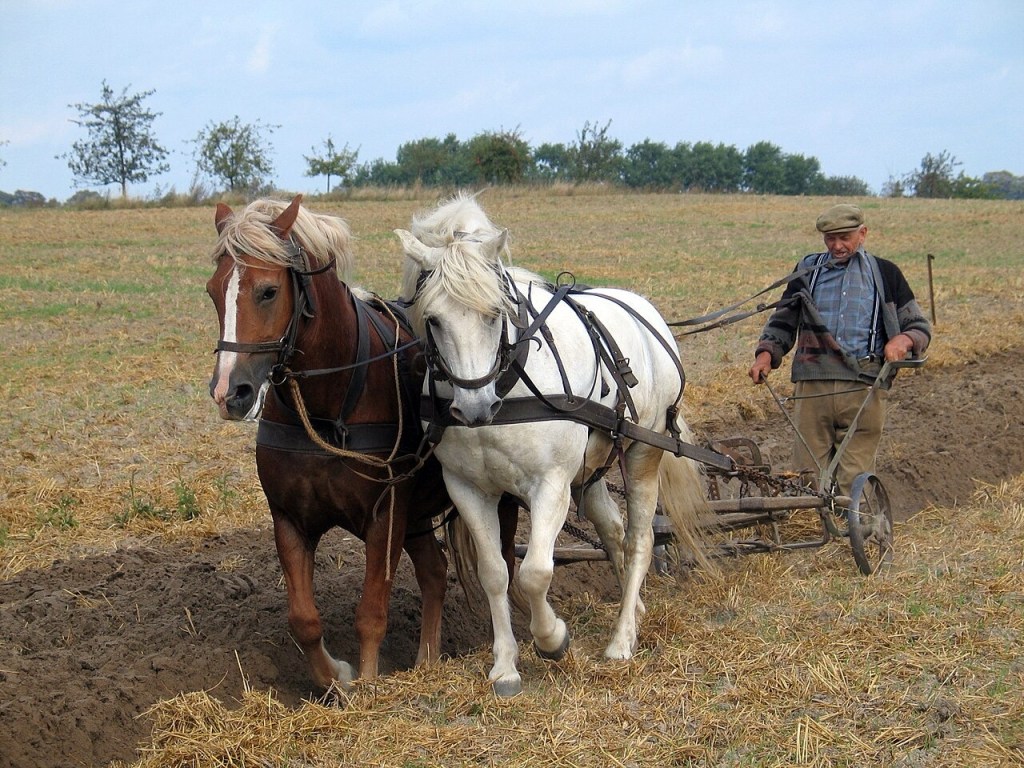
What name links the book The New Horse Houghing Husbandry: Or an Essay on the Principles of Tillage and Vegetation, which was published in 1731, with the 1978 album Heavy Horses?
Answer: Jethro Tull.
Jethro Tull (1674–1741) was an influential English agronomist and inventor whose innovations shaped modern British agriculture. Initially trained for law, Tull managed his father’s farm in Oxfordshire, where he developed a horse-drawn seed drill around 1701. In 1709, he purchased a farm in Berkshire, adopting vineyard cultivation methods and inventing a horse-drawn hoe. His work, published in The New Horse Houghing Husbandry: Or an Essay on the Principles of Tillage and Vegetation (1731), faced initial criticism but eventually revolutionised farming practices. The eleventh studio album by the band Jethro Tull, Heavy Horses, was released in 1978. It is a folk rock album dedicated to British working ponies and horses. It continues the band’s combination of folk and progressive rock with a darker sound.
Four
Adolphe Sax, best known for inventing the saxophone, was born in which present-day country, and in what decade did he patent the saxophone?
Answer: Belgium; 1840s.
Adolphe Sax, born in 1814 in Dinant, Belgium, was a Belgian-French instrument maker and inventor of the saxophone, which he patented in 1846. He also developed the saxhorn, saxo-tromba, and saxtuba, and redesigned the bass clarinet. Sax studied flute and clarinet before moving to Paris in 1842 to exhibit his saxophone. Appointed instructor at the Paris Conservatory in 1857, he faced legal battles over patents and died in poverty in 1894. Sax’s innovations significantly impacted the world of music.
Five
What are the ‘Four Great Inventions’ traditionally attributed to ancient China?
Answer: Papermaking, printing, the compass, and gunpowder.
These four inventions profoundly influenced world history. Papermaking and printing revolutionised the spread of knowledge, the compass transformed navigation and exploration, and gunpowder changed warfare. The concept of the ‘Four Great Inventions’ became especially popular in the nineteenth century as a way of highlighting China’s major contributions to global civilisation.
Before They Invented Drawing Boards What Did They Go Back To?
The post title was a quote from the American stand-up comedian, George Carlin (1937-2008).
Continuing the recent trend, today’s first question is connected to today’s date, 9 June. The remainder of the questions are not date-related but follow on a theme begun in question one.
One
In 1781, an English engineer who Encyclopædia Britannica describes as ‘the principal inventor of the railroad locomotive’ was born. Who is he, and which of his locomotives inaugurated public rail travel in September 1828?
Two
Tea bags were reportedly invented by accident. Modern tea bags are made from paper but what material were the early ones made from?
Three
(Note, in this question, the word ‘houghing’ is an obsolete form of ‘hoeing’ as done with a horse-drawn hoe (hough)).
What name links the book The New Horse Houghing Husbandry: Or an Essay on the Principles of Tillage and Vegetation, which was published in 1731, with the 1978 album Heavy Horses?
Four
Adolphe Sax, best known for inventing the saxophone, was born in which present-day country, and in what decade did he patent the saxophone?
Five
What are the ‘Four Great Inventions’ traditionally attributed to ancient China?
The first question relates to today’s date, April 11th, and the answer begins with the letter ‘S’. The remaining questions are not date-related but follow the ‘S’ theme.
One
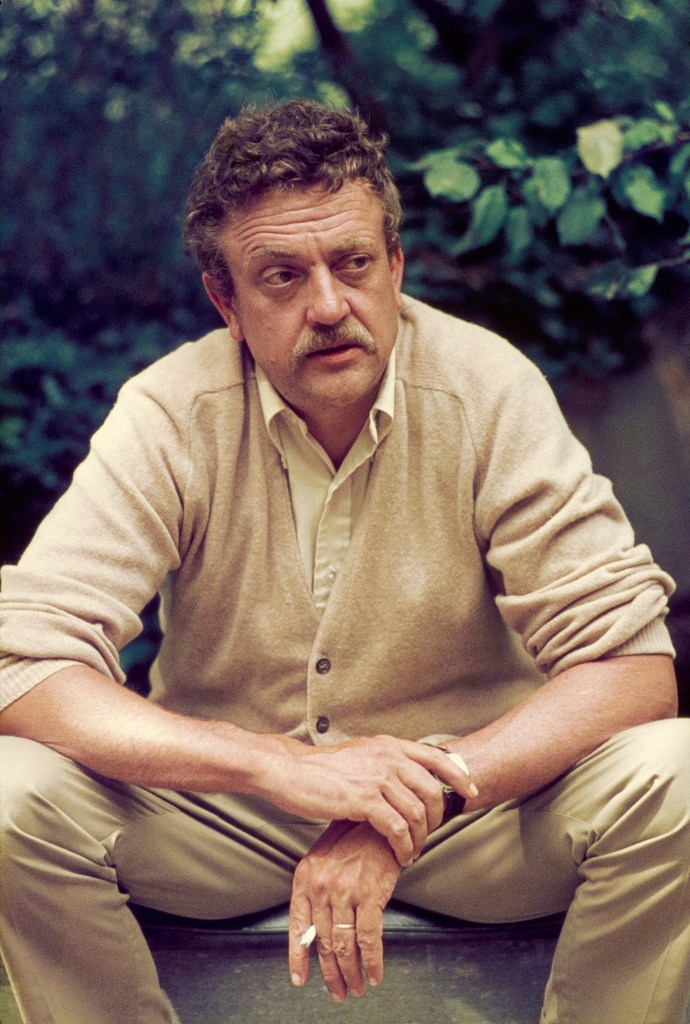
Kurt Vonnegut, who passed away at the age of 84 on this day in 2007, published a novel in 1969. It follows the life and psychological traumas of Billy Pilgrim. What ‘S’ is the title of this novel?
Answer: Slaughterhouse-Five.
Slaughterhouse-Five is a 1969 anti-war novel by Kurt Vonnegut. It follows Billy Pilgrim, a soldier who experiences time travel and psychological trauma after surviving the Allied firebombing of Dresden whilst he was being held as a prisoner of war, like Vonnegut himself.
Two
What ‘S’ is an acoustic sensing method first used by Leonardo da Vinci in the 15th century but more associated with the Cold War?
Answer: Sonar.
Sonar, a technique using sound propagation, is employed for navigation, distance measurement, communication, and object detection underwater. It can operate passively by listening for sounds or actively by emitting sound pulses and listening for echoes. Initially used by Leonardo da Vinci in 1490, who employed a tube inserted into the water to detect vessels by ear, sonar was further developed during WWI with a passive sonar system to counter submarines developed by 1918. Modern active sonar utilises acoustic transducers to detect objects.
Three
What ’S’ can this description apply to?
A republic with two heads of state
Official language: Italian
Currency: Euro
Answer: San Marino.
San Marino, a landlocked country in Southern Europe. It claims to be the oldest sovereign state and constitutional republic, being founded in AD 301. It has a unique political structure with two heads of state, the Captains Regent, elected every six months. San Marino is a member of the Council of Europe, uses the euro, and has a strong economy based on finance, industry, services, retail and tourism.
Four
What ‘S’ was the traditional garment worn by Roman women and the equivalent of the toga worn by men?
Answer: Stola.
The stola was the traditional garment of Roman women, akin to the men’s toga, and was also referred to as vestis longa due to its length. A well-known depiction of the stola is on the Statue of Liberty in New York City, which represents Libertas, the Roman goddess of liberty. Libertas, known to the ancient Greeks as Eleutheria, is portrayed wearing the stola, a crown, and sandals.
Five
What ‘S’ connects the Moby-Dick to coffee (at least to 88.889%)?
Answer: Starbuck(s).
Starbuck, the young chief mate, is a thoughtful Quaker who opposes Ahab’s quest for revenge against Moby Dick, believing it to be madness and blasphemous. Despite his objections and desire to return home, he feels bound to obey Ahab.
Moby-Dick didn’t have anything to do with Starbucks directly; it was only coincidental that the sound seemed to make sense.
The first question relates to today’s date, April 11th, and the answer begins with the letter ‘S’. The remaining questions are not date-related but follow the ‘S’ theme.
One
Kurt Vonnegut, who passed away at the age of 84 on this day in 2007, published a novel in 1969 which follows the life and psychological traumas of Billy Pilgrim. What is the title of this novel?
Two
What ‘S’ is an acoustic sensing method first used by Leonardo da Vinci in the 15th century but more associated with the Cold War?
Three
What ’S’ can this description apply to?
A republic with two heads of state
Official language: Italian
Currency: Euro
Four
What ‘S’ was the traditional garment worn by Roman women and the equivalent of the toga worn by men?
Five
What ‘S’ connects the Moby-Dick to coffee (at least to 88.889%)?
Five questions with the answers beginning with the letters from A to E, with each letter being used only once, but they are not in alphabetical order.
See question two. Death in the Afternoon. Image A Couple Cooks
One
Who wrote, produced, and directed Moulin Rouge (2001) and Australia (2008)?
Answers: Baz Luhrman.
Baz Luhrmann is an Australian film director, producer, writer, and actor known for his Red Curtain Trilogy and other films like Australia, The Great Gatsby, and Elvis. He is also involved in opera, theatre, music, and the recording industries, with Grammy-nominated soundtracks and his own record label.
Two
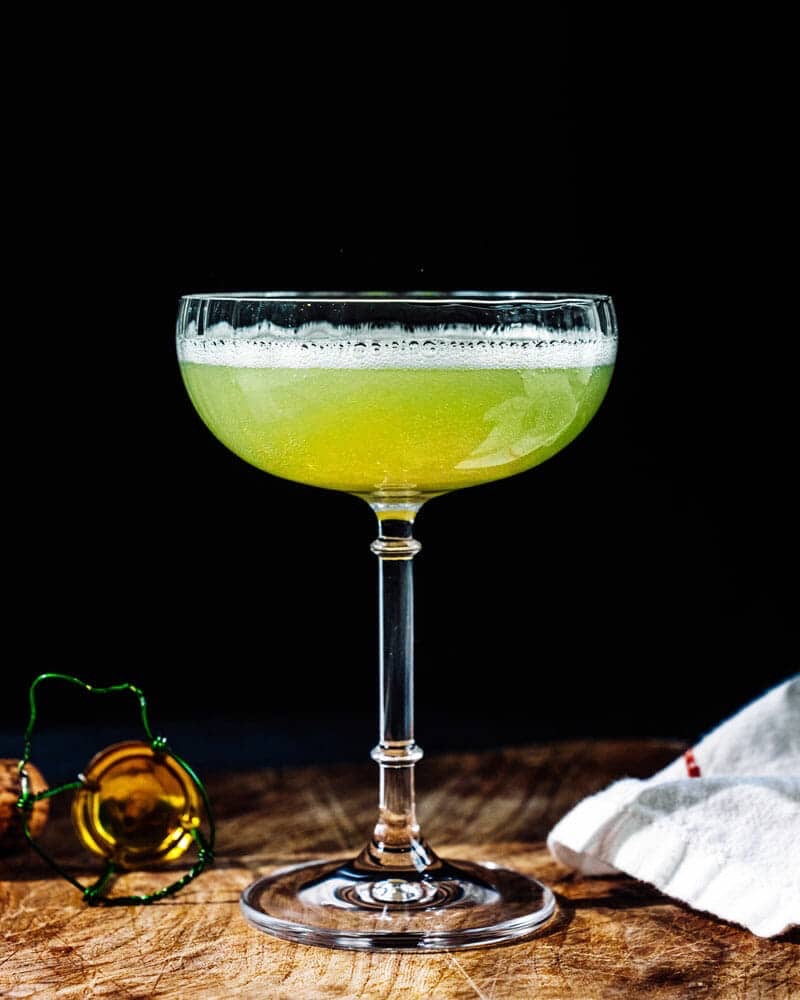
An absinthe-Champagne cocktail was invented by an author and shares its name with his 1932 non-fiction book about a sport in a southern European nation. Who is the author, and what is the book and cocktail’s shared name?
Answers: Ernest Hemingway; Death in the Afternoon.
Death in the Afternoon, a 1932 non-fiction book by Ernest Hemingway, explores Spanish bullfighting, fear, and courage. Its namesake, a cocktail invented by Hemingway, is made with absinthe and Champagne. The drink, known for its decadence and high strength, can be made with absinthe alternatives like Absente or Pernod.
Three
Which chemical element derives its name from the Latin for ‘coal’?
Answer: Carbon.
Carbon, symbol C and atomic number 6, a non-metal which has two main forms, diamond and graphite, and which also occurs in impure form in charcoal, soot and coal. It is the 15th most abundant element in Earth’s crust and the fourth most abundant in the universe.
Four
Which small dog breed, which is not a terrier, is sometimes known as the monkey terrier?
Answer: Affenpinscher.
The Affenpinscher, a German toy dog breed, originated as a ratter and is now a popular companion worldwide. The breed, whose name is sometimes translated from German as ‘Monkey Terrier’, is believed to be ancestral to the Griffon Bruxellois and Miniature Schnauzer.
Five
The Malawian city of Blantyre was named after the Scottish birthplace of which missionary and explorer (1813-73)?
Answer: David Livingstone
Blantyre, Malawi’s second-largest city and commercial centre, was founded in 1876 by the Church of Scotland. It grew rapidly due to its role in colonial trade and became a major manufacturing centre. The city’s development was influenced by various factors, including commerce, industry, and administration, and it was merged with Limbe in 1956.
Five questions with the answers beginning with the letters from A to E, with each letter being used only once, but they are not in alphabetical order.
See question two. Image A Couple Cooks
One
Who wrote, produced, and directed Moulin Rouge (2001) and Australia (2008)?
Two
An absinthe-Champagne cocktail was invented by an author and shares its name with his 1932 non-fiction book about a sport in a southern European nation. Who is the author, and what is the book and cocktail’s shared name?
Three
Which chemical element derives its name from the Latin for ‘coal’?
Four
Which small dog breed, which is not a terrier, is sometimes known as the monkey terrier?
Five
The Malawian city of Blantyre was named after the Scottish birthplace of which missionary and explorer (1813-73)?
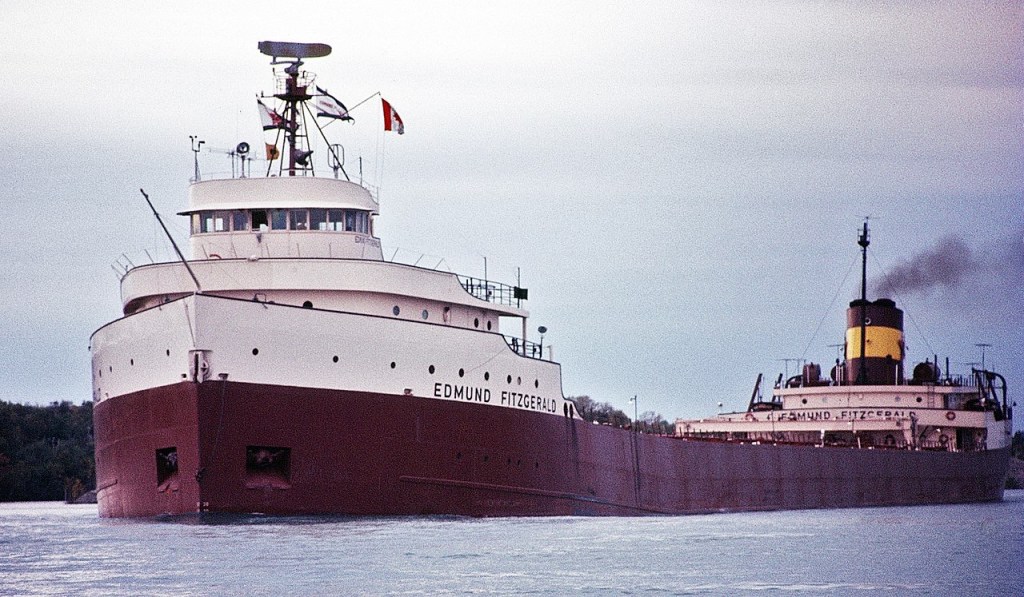
On which of the Great Lakes did the SS Edmund Fitzgerald sink with the loss of her entire crew in 1975?
Lake Michigan
Lake Ontario
Lake Superior
Answer: 3. Lake Superior.
The SS Edmund Fitzgerald, the largest ship on the Great Lakes, sank during a storm on November 10, 1975, with all 29 crew members lost. The cause of the sinking remains unknown, though it is believed to have been due to a combination of factors such as structural failure and high waves. The disaster led to changes in Great Lakes shipping regulations and practices. The Edmund Fitzgerald disaster, immortalised in Gordon Lightfoot’s ballad, led to significant changes in Great Lakes shipping regulations, including mandatory survival suits and increased inspections.
Two
This Eurasian woodland plant, Allium uranium, with broad shiny leaves and round heads of flowers, producing a strong aroma of garlic is also called wild garlic. What is it?
Larsons
Ramsons
Tamsons
Answer: 2. Ramsoms.
Allium ursinum, or wild garlic, is a bulbous perennial flowering plant native to Eurasia. It is a wild relative of onion and garlic. It has several names including ramsons; it is also known as buckrams, broad-leaved garlic, cowleekes, cows’s leek, cowleek, wood garlic, Eurasian wild garlic, onion grass, bear leek and bear’s garlic.
Three
What letter(s) is the symbol which represents the element tungsten?
T
Gs
W
Answer: 3. W.
Tungsten, also known as wolfram, is a chemical element with the symbol W and atomic number 74. It is a metal found naturally in compounds and was first isolated as a metal in 1783.
Four
Who, on a sixties album, released a version of the Christmas carol Silent Night with a simulated 7 O’clock News, which featured real events from the preceding summer, being read over it?
Crosby, Stills and Nash
Joni Mitchell
Simon & Garfunkel
Answer: 3. Simon & Garfunkel.
7 O’Clock News/Silent Night by Simon & Garfunkel is a sound collage from their 1966 album, combining Silent Nightwith a simulated news bulletin. A sound collage juxtaposes Silent Night with a news report, highlighting social issues like civil rights, Lenny Bruce’s death, and the Vietnam War. The track’s mix emphasises the contrast between the news and the Christmas song.
Five
In which Scottish body of water was the German High Seas Fleet scuttled in June 1919?
Loch Ness
Scapa Flow
Firth of Lorn
Andwer: 2. Scapa Flow.
Scapa Flow is a strait in the Orkney Islands, Scotland. It was an important British naval base, especially in the First World War. The German High Seas Fleet was interned there after its surrender, and was scuttled in 1919 as an act of defiance against the terms of the Versailles peace settlement.
The Wind in the Wires Made a Tattle-tale Sound — Post Title
The post title is a line from The Wreck of the Edmund Fitzgerald by Gordon Lightfoot. Full lyrics below from AZ Lyrics.
The Wreck Of The Edmund Fitzgerald
By Gordon Lightfoot.
The legend lives on from the Chippewa on down Of the big lake they call Gitche Gumee The lake, it is said, never gives up her dead When the skies of November turn gloomy With a load of iron ore twenty-six thousand tons more Than the Edmund Fitzgerald weighed empty [Former version:] That good ship and true was a bone to be chewed [Latter version:] That good ship and crew was a bone to be chewed When the gales of November came early
The ship was the pride of the American side Coming back from some mill in Wisconsin As the big freighters go, it was bigger than most With a crew and good captain well seasoned Concluding some terms with a couple of steel firms When they left fully loaded for Cleveland Then later that night when the ship’s bell rang Could it be the north wind they’d been feelin’?
The wind in the wires made a tattle-tale sound When the wave broke over the railing And every man knew, as the captain did too ‘Twas the witch of November come stealin’ The dawn came late and the breakfast had to wait When the gales of November came slashin’ When afternoon came it was freezing rain In the face of a hurricane west wind
When suppertime came, the old cook came on deck Saying, “Fellas, it’s too rough to feed ya.” [Former version:] At seven PM a main hatchway caved in [Latter version:] At seven PM it grew dark, it was then He said, “Fellas, it’s been good to know ya.” The captain wired in he had water comin’ in And the good ship and crew was in peril And later that night when his lights went out of sight Came the wreck of the Edmund Fitzgerald
Does anyone know where the love of God goes When the waves turn the minutes to hours? The searchers all say they’d have made Whitefish Bay If they’d put fifteen more miles behind her They might have split up or they might have capsized They may have broke deep and took water And all that remains is the faces and the names Of the wives and the sons and the daughters
Lake Huron rolls, Superior sings In the rooms of her ice-water mansion Old Michigan steams like a young man’s dreams The islands and bays are for sportsmen And farther below, Lake Ontario Takes in what Lake Erie can send her And the iron boats go as the mariners all know With the gales of November remembered
[Former version:] In a musty old hall in Detroit they prayed [Latter version:] In a rustic old hall in Detroit they prayed In the Maritime Sailors’ Cathedral The church bell chimed ’til it rang twenty-nine times For each man on the Edmund Fitzgerald The legend lives on from the Chippewa on down Of the big lake they call Gitche Gumee Superior, they said, never gives up her dead When the gales of November come early. AZ Lyrics.
On which of the Great Lakes did the SS Edmund Fitzgerald sink with the loss of her entire crew in 1975?
Lake Michigan
Lake Ontario
Lake Superior
Two
This Eurasian woodland plant, Allium uranium, with broad shiny leaves and round heads of flowers, producing a strong aroma of garlic is also called wild garlic. What is it?
Larsons
Ramsons
Tamsons
Three
What letter(s) is the symbol which represents the element tungsten?
T
Gs
W
Four
Who, on a sixties album, released a version of the Christmas carol Silent Night with a simulated 7 O’clock News, which featured events from the preceding summer, being read over it?
Crosby, Stills and Nash
Joni Mitchell
Simon & Garfunkel
Five
In which Scottish body of water was the German High Seas Fleet scuttled in June 1919?