Quizology.Online

“There is much pleasure to be gained from useless knowledge.”

— Bertrand Russell

Tag: geography

  • Gallimaufry XI — Answers

    Here are the answers to today’s questions.
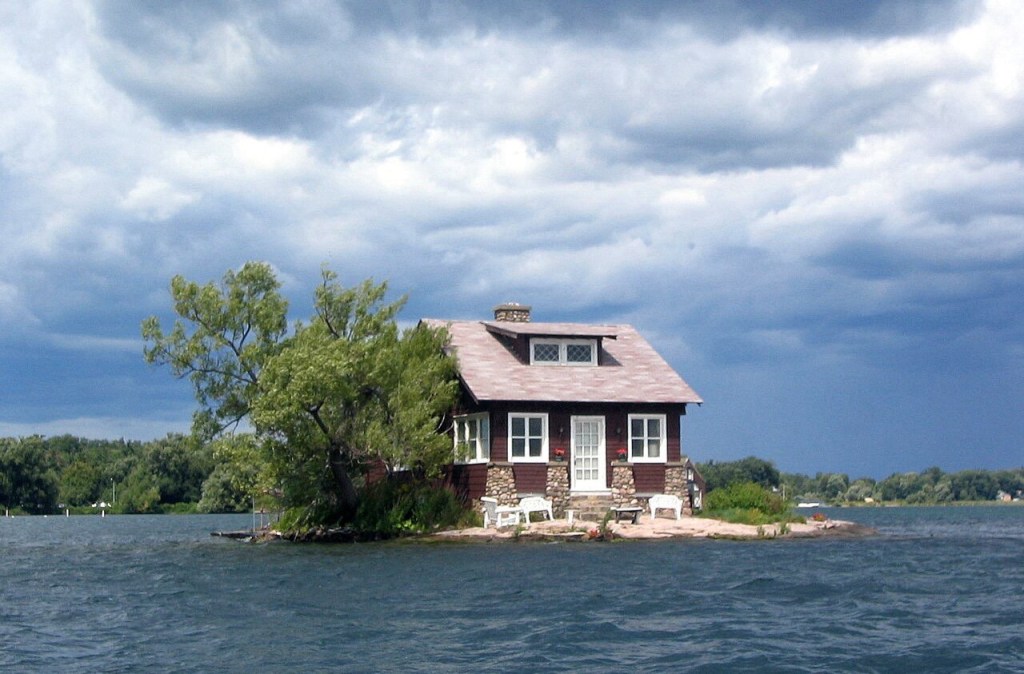
    Question two. Just Room Enough Island, Thousand Islands archipelago.
    Image Wikimedia Commons

    Today’s first question concerns the date 2nd June. The other questions are random and unrelated.


    One

    In 1953, ‘Inquiring Camera Girl’ covered the coronation of Queen Elizabeth II at London’s Westminster Abbey for the Washington Times-Herald. Shortly to become very famous herself, who was ‘Inquiring Camera Girl’?

    Answer: Jackie Bouvier (Kennedy).

    Jackie Bouvier, a reporter for the Washington Times-Herald and writer of the paper’s Inquiring Camera Girl column, was in the crowd outside the Abbey for the coronation. Three months later, she would marry John F. Kennedy, and in under eight years, she would be First Lady. 


    Two

    In what body of water are North America’s Thousand Islands found, and to the nearest fifty, approximately how many islands are in the archipelago?

    Answer: Saint Lawrence River; 1,850.

    The Thousand Islands, an archipelago of 1,864 islands, straddles the Canada-US border in the Saint Lawrence River. The islands range in size and must have at least one square foot of land above water year-round, and have one or two living trees* to be considered part of the Thousand Islands. (*Number of trees varies depending on source.)


    Three

    The Olympic Rings are a symbol consisting of five interlocking coloured rings. What colours are the rings on top?

    Answer: Blue, black and red.

    The rings are interlaced from the left and are blue, yellow, black, green, and red. The founder of the modern Olympics stated the following in 1913:

    … the six colours (including the flag’s white background) combined in this way reproduce the colours of every country without exception. The blue and yellow of Sweden, the blue and white of Greece, the tricolour flags of France, the United Kingdom, the United States, Germany, Belgium, Italy, and Hungary, and the yellow and red of Spain are included, as are the innovative flags of Brazil and Australia, and those of ancient Japan and modern China. This, truly, is an international emblem. —Baron Pierre Coubertin, Olympique, August 1913.


    Four

    The forum currently known as the Group of Seven (G7) has, since its founding, been variously the G6, G7, and the G8. Angela Merkel was the second woman to chair this forum; who was the first?

    Answer: Margaret Thatcher.

    The Group of Seven (G7) is an intergovernmental forum of Canada, France, Germany, Italy, Japan, the UK, the US, and the EU, focusing on pluralism and liberal democracy. Established in 1973, it addresses global issues like trade and climate change. Despite criticism for limited representation, the G7 has influenced initiatives like the Paris Agreement. Members, with a population of 780 million, contribute over 44% to the world’s nominal GDP and 30% by purchasing power parity.


    Five

    What colour are white rhinoceros?

    Answer: Grey.

    White rhinos, the second-largest land mammals, are named for their wide mouths, not their colour and there is no difference in the skin colour of white and black rhinos. There are two subspecies of white rhino: northern and southern. As of March 2018, only two female northern white rhinos remain, critically endangered due to poaching. Southern white rhinos, once thought extinct, now number around 18,000, classified as Near Threatened. They inhabit South Africa, Namibia, Zimbabwe, and Kenya. White rhinos have complex social structures, with females forming groups and males defending territories.
  • Gallimaufry XI

    Question two. Just Room Enough Island, Thousand Islands archipelago.
    Image Wikimedia Commons

    Today’s first question concerns the date 2nd June. The other questions are random and unrelated.


    One

    In 1953, ‘Inquiring Camera Girl’ covered the coronation of Queen Elizabeth II at London’s Westminster Abbey for the Washington Times-Herald. Shortly to become very famous herself, who was ‘Inquiring Camera Girl’?


    Two

    In what body of water are North America’s Thousand Islands found, and to the nearest fifty, approximately how many islands are in the archipelago?


    Three

    The Olympic Rings are a symbol consisting of five interlocking coloured rings. What colours are the rings on top?


    Four

    The forum currently known as the Group of Seven (G7) has, since its founding, been variously the G6, G7, and the G8. Angela Merkel was the second woman to chair this forum; who was the first?


    Five

    What colour are white rhinoceros?


    Good luck! I’ll post the answers later.


  • Opening Gambit — Answers

    Here are the answers to today’s questions.

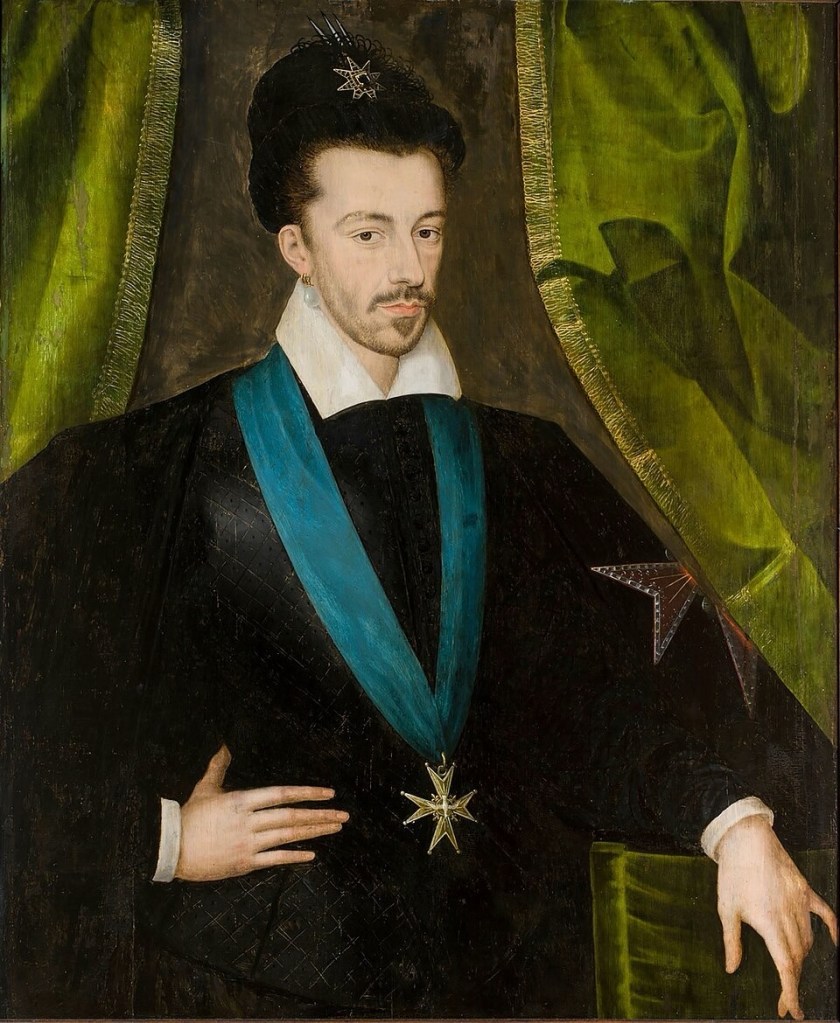
    Henry III of France, c.1580-1586.
    Image Wikimedia Commons

    The first question relates to an event on this day, and the remainder follow a theme created by the first?


    One

    In 1578, King Henry III of France (pictured) laid the first stone of a bridge on the River Seine, which is now the oldest of all the bridges in Paris. The bridge is in two separate spans with an island between them. What is the name of the bridge, and what is the island? 

    Answer: Pont Neuf; Île de la Cité.

    The Pont Neuf (New Bridge), Paris’s oldest bridge across the Seine, connects the left bank, Île de la Cité, and the right bank. Despite its name it is actually the oldest in the city. The Île de la Cité (Island of the City), a natural island in the Seine, is a historic centre in Paris. It boasts significant landmarks like Notre-Dame cathedral, Sainte-Chapelle and the Hôtel-Dieu hospital, as well as important government buildings.


    Two

    In what capital city did the world’s first underground passenger railway open in 1863? 

    Answer: London.

    The London Underground, also called the Underground or Tube, is a rapid transit system in Greater London and parts of several surrounding counties. The Underground began with the steam locomotives and gas-lit wooden carriages of the Metropolitan Railway in 1863, the first underground passenger railway. The first electrified underground line was opened in London in 1890, making it the first metro system in the world. The system has expanded to 11 lines with 250 miles of track which serves up to 5 million daily journeys, with 1.216 billion in 2024/25. 


    Three

    The Brooklyn Bridge, New York, opened in May 1883. What body of water does it cross, and what two islands does it join?

    Answers: East River; Manhattan and Long Island.

    The Brooklyn Bridge, a cable-stayed suspension bridge in New York City, connects boroughs of Manhattan (on Mahattan Island) and Brooklyn (Long Island), opening on May 24, 1883. Initially called the New York and Brooklyn Bridge, it was the world’s longest suspension bridge at its opening. Designed by John A. Roebling and completed by his son Washington and wife Emily, construction took thirteen years. Now a National Historic Landmark, it serves only passenger vehicles, pedestrians, and cyclists, remaining a major tourist attraction and New York City icon.


    Four

    Paris’s largest public park was opened to the public by Louis XV. What park is it?

    Bois de Vincennes.

    The Bois de Vincennes, Paris’s largest public park, spans 995 hectares, slightly larger than Bois de Boulogne and three times larger than New York’s Central Park. Created by Napoleon III (1855–1866), it features an English garden, lakes, a zoo, arboretum, botanical garden, hippodrome, velodrome, and a sports institute. Known for nighttime prostitution, it occupies 10% of Paris, nearly the size of the first six arrondissements.


    Five

    In what decade was London’s Royal Albert Hall opened, and who opened it?

    Answers: 1860s.

    The Royal Albert Hall in London, opened by Queen Victoria in 1871 and named in memory of her consort, Prince Albert, seats 5,272. It hosts over 390 main auditorium shows annually, including BBC Proms, concerts, and events. Amongst its diverse range of events, it hosts the Royal British Legion Festival of Remembrance annually on the evening before Remembrance Sunday, has featured speeches by Winston Churchill, and exhibition fights by Muhammad Ali. Eric Clapton has appeared there over 200 times, starting with Cream’s farewell concerts in 1968.


  • Opening Gambit

    Henry III of France, c.1580-1586.
    Image Wikimedia Commons

    The first question relates to an event on this day, and the remainder follow a theme created by the first?


    One

    In 1578, King Henry III of France (pictured) laid the first stone of a bridge on the River Seine, which is now the oldest of all the bridges in Paris. The bridge is in two separate spans with an island between them. What is the name of the bridge, and what is the island? 


    Two

    In what capital city did the world’s first underground passenger railway open in 1863? 


    Three

    The Brooklyn Bridge, New York, opened in May 1883. What body of water does it cross, and what two islands does it join?


    Four

    Paris’s largest public park was opened to the public by Louis XV. What park is it?


    Five

    In what decade was London’s Royal Albert Hall opened, and who opened it?


    Good luck! I’ll post the answers later.


  • Gallimaufry X — Answers

    Here are the answers to today’s questions.

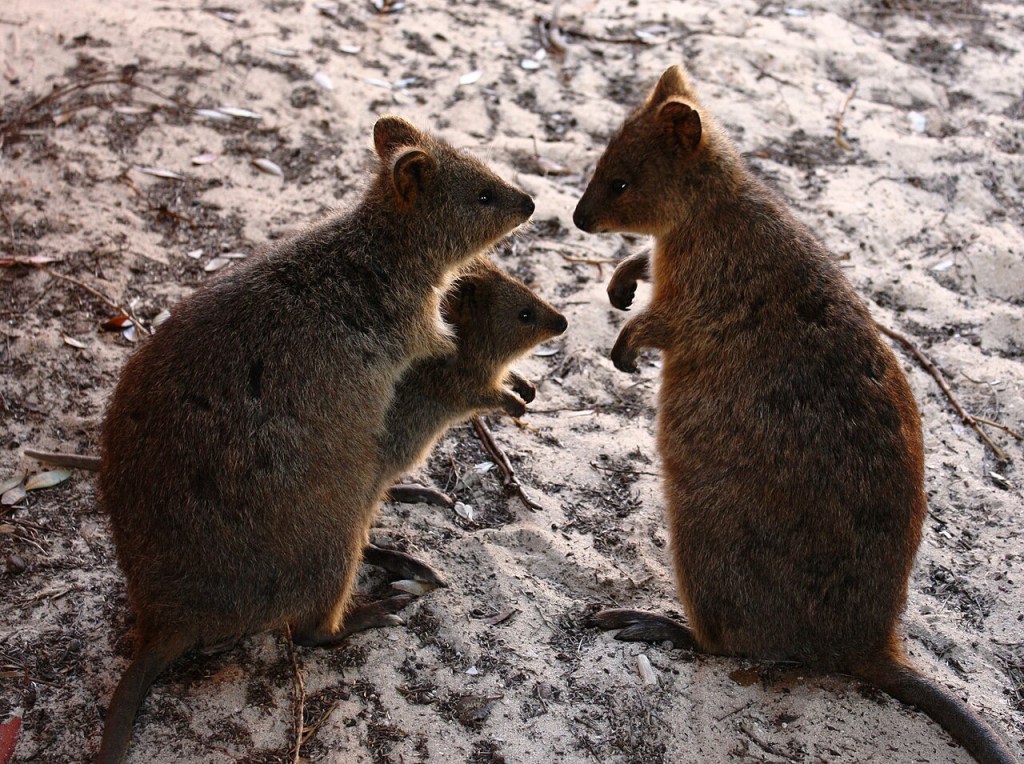
    Quokkas—two adults and a juvenile at Rottnest Island, Western Australia.
    Image Wikimedia Commons

    No theme, just a mixed bag of questions today.


    One

    A family of what cat-sized macropod with the Latin name Setonix brachyurus is pictured?

    Answer: Quokka.

    The quokka, a small herbivorous marsupial, is found in southwestern Australia, including Rottnest Island and Bald Island.


    Two

    What colour and make of car features in the title of a 1964 film starring Rex Harrison and Jeanne Moreau?

    Answer: The Yellow Rolls-Royce.

    The Yellow Rolls-Royce (1964) is a British film about three owners of a yellow Rolls-Royce Phantom II, set before and during WWII. The film features an all-star cast and won a Golden Globe for Best Original Song.


    Three

    What was the first single released from 50 Cent’s album Get Rich or Die Tryin’?

    Answer: In Da Club.

    In da Club by 50 Cent, from his debut album Get Rich or Die Tryin’, was released in 2003 and peaked at number one on the US Billboard Hot 100. The song, which was 50 Cent’s first number one, received critical acclaim and was nominated for several awards.


    Four

    Cambria is the Latinised form of what country’s name?

    Answer: Wales.

    Cambria is the Latinised form of Cymru — the Welsh name for Wales. It was not used during the period when the Romans were in Britain but emerged in the 12th century as an alternative to Britannia and Wallia, gaining popularity in the late Middle Ages.


    Five

    Janmashtami, a Hindu festival, celebrates the birth of which avatar of Vishnu?

    Answer: Krishna.

    Krishna Janmashtami celebrates the birth of Krishna, the eighth avatar of Vishnu, on the eighth day of the dark fortnight in the Hindu month of Bhadrapada. An important festival in Vaishnavism, it is observed with recitations, devotional singing, dance, dramatic reenactments, fasting, and midnight celebrations, ending with a feast. Celebrated worldwide, it usually falls in August or September.


  • Gallimaufry X

    See question one.
    Image Wikimedia Commons

    No theme, just a mixed bag of questions today.


    One

    A family of what cat-sized macropod with the Latin name Setonix brachyurus is pictured?


    Two

    What colour and make of car features in the title of a 1964 film starring Rex Harrison and Jeanne Moreau?


    Three

    What was the first single released from 50 Cent’s album Get Rich or Die Tryin’?


    Four

    Cambria is the Latinised form of what country’s name?


    Five

    Janmashtami, a Hindu festival, celebrates the birth of which avatar of Vishnu?


    Good luck! I’ll post the answers later.


  • Come Hell or High Water — Answers

    Here are the answers to today’s questions.

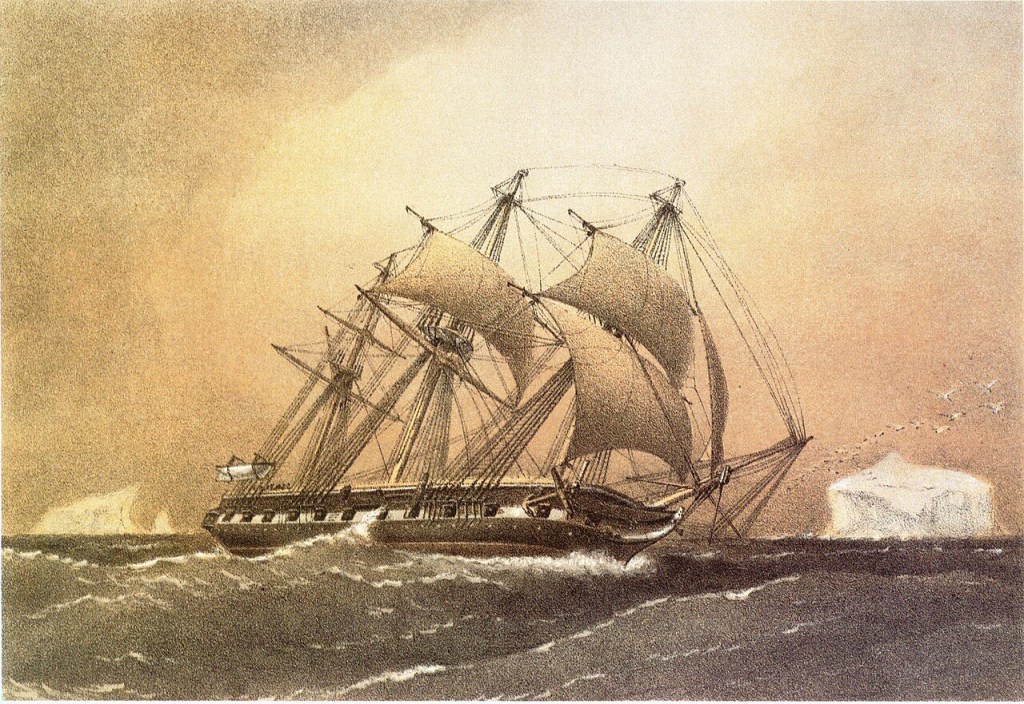
    HMS Challenger, 1858 by William Frederick Mitchell.
    Orginaly published in the Royal Navy in a series of illustrations.
    Image Wikimedia Commons

    Today’s first question concerns the date May 26th. The subsequent questions share a theme established in the first one.


    One

    On 26 May 1876, HMS Challenger returned to Great Britain from a three-and-a-half-year, groundbreaking oceanographic expedition which circumnavigated the Earth. How many miles or kilometres, to the nearest 1,000, did the ship sail on its voyage?

    Answer: 79,000 miles or 128,000 kilometres.

    The Challenger expedition (1872–1876), led by Captain George Nares and supervised by Sir Charles Wyville Thomson, was a groundbreaking scientific programme that established oceanography. HMS Challenger, a joint effort by the British Admiralty and the Royal Society, travelled 68,890 nautical miles (79,278 miles or 127,584 kilometres), cataloguing over 4,000 unknown species, collecting ocean floor samples, measuring depths, and recording currents. It was the first to photograph icebergs and approached Antarctica, significantly advancing planetary knowledge.


    Two

    These three points all relate to the same person, there are three answers.

    • What is the name of the explorer and navigator after whom the Americas are named?
    • In what modern country is his birthplace?
    • What two countries sponsored his voyages?

    Answers.

    • Amerigo Vespucci
    • Italy
    • Spain and Portugal

    America is named after Amerigo Vespucci (1454–1512), an Italian explorer from the Republic of Florence. He participated in voyages for Spain (1499–1500) and Portugal (1501–1502) during the Age of Discovery. Two booklets published under his name in 1503 and 1505 described these explorations, although their authorship is disputed. Vespucci argued that Brazil was part of a previously unknown continent—the ‘New World’—which inspired the German cartographer Martin Waldseemüller to use the name ‘America’, the Latinised feminine form of Amerigo, on his 1507 world map.


    Three

    These three points all relate to the same person, there is only one answer.

    • Edgar Allan Poe dedicated his final major work Eureka: A Prose Poem to this scientist and explorer
    • The same explorer authored the five-volume treatise Kosmos (1845-62)
    • Charles Darwin read and referenced Helen Maria Williams’s English translation of this explorer’s Relation historique du voyage aux régions équinoxiales du nouveau continent during his voyage on the HMS Beagle.

    Which explorer do the above all refer to?

    Answer: Alexander von Humboldt.

    Alexander von Humboldt (1769–1859) was a German naturalist and explorer renowned for advancing geography, biogeography, and Earth sciences. Initially a restless student, he became passionate about botany, mineralogy, and geology, later joining the Prussian Mining Department. Driven by scientific ambition, he financed and undertook a five-year expedition (1799–1804) across Central and South America with Aimé Bonpland, studying flora, fauna, rivers, mountains, and the Humboldt Current. His discoveries, measurements, and writings, notably Kosmos, profoundly popularised science worldwide.


    Four

    How many years did Marco Polo spend travelling across Asia?

    Answer: 24 years.

    Marco Polo was a Venetian merchant and adventurer who travelled across Asia from 1271 to 1295, spending 17 years in China under the rule of Kublai Khan. Accompanying his father and uncle along the Silk Road, he journeyed through Persia, Central Asia, and the Gobi Desert before reaching the Mongol court. His experiences were recorded in Il milione(The Travels of Marco Polo), one of history’s most influential travel books, introducing Europeans to the cultures, cities, and wealth of Asia.


    Five

    In what century did a Greek explorer first visit the British Isles?

    Answer: 4th century BCE.

    Pytheas was a Greek navigator, geographer, and astronomer from Massalia (Marseille) who explored northern Europe around 325 BC. Sailing beyond the Mediterranean into the Atlantic, he visited Spain, Brittany, Cornwall, and much of Britain, accurately estimating distances and Britain’s circumference. Although his book On the Ocean is lost, later writers preserved his observations on tides, polar ice, the midnight sun, and northern peoples. His voyages greatly expanded Greek knowledge of Europe and the far north.


  • Come Hell or High Water

    HMS Challenger, 1858 by William Frederick Mitchell.
    Orginaly published in the Royal Navy in a series of illustrations.
    Image Wikimedia Commons

    Today’s first question concerns the date May 26th. The subsequent questions share a theme established in the first one.


    One

    On 26 May 1876, HMS Challenger returned to Great Britain from a three-and-a-half-year, groundbreaking oceanographic expedition which circumnavigated the Earth. How many miles or kilometres, to the nearest 1,000, did the ship sail on its voyage?


    Two

    These three points all relate to the same person, and there are three answers.

    • What is the name of the explorer and navigator after whom the Americas are named?
    • In what modern country is his birthplace?
    • What two countries sponsored his voyages?

    Three

    These three points all relate to the same person, there is only one answer..

    • Edgar Allan Poe dedicated his final major work Eureka: A Prose Poem to this scientist and explorer
    • The same explorer authored the five-volume treatise Kosmos (1845-62)
    • Charles Darwin read and referenced Helen Maria Williams’s English translation of this explorer’s Relation historique du voyage aux régions équinoxiales du nouveau continent during his voyage on the HMS Beagle.

    Which explorer do the above all refer to?


    Four

    How many years did Marco Polo spend travelling across Asia?


    Five

    In what century did a Greek explorer first visit the British Isles?


    Good luck! I’ll post the answers later.


  • Initial Answers II — Answers

    Here are the answers to today’s questions.

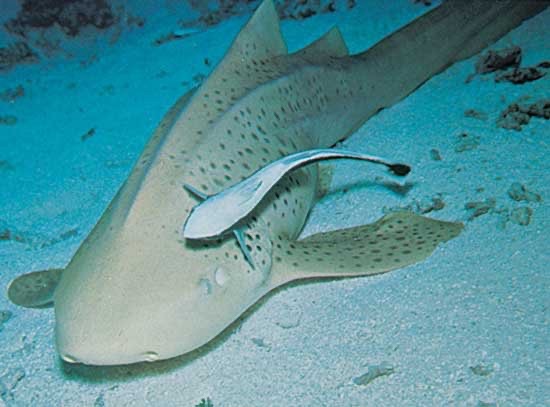
    Nurse shark and Remora.
    Image Encyclopædia Britannica

    Today the first question relates to today’s date, May 24th. The following questions follow a theme which is explained here but is basically the same as yesterday. 

    Theme

    • The gist of today’s quiz is that the first question results in you having three five-letter words in the answer.
    • One of those words supplies the initial letters for the remaining questions. 
    • After discounting the initial letter which has already been used the remaining four letters supply the initial letters to the answers to the remaining questions but they will not necessarily be in the correct order. 
    • Once you have answered all the questions you should be able to take the initial letters of the five questions, rearrange and have one of the words from the answer to question one.

    One

    Mike … was …; while Cameron was …; and Eddie was a bit of an ass.
    Three five-letter names are missing from the above statement. What are they?

    Answers: Myers; Shrek and Fiona.

    Shrek (2001), an animated fantasy comedy film, follows an ogre’s quest to reclaim his swamp from banished fairy tale creatures. Mike Myers voices Shrek and Cameron Diaz is Princess Fiona. Eddie Murphy was the voice of Donkey. 


    Two

    The nurse shark pictured above is accompanied by a fish of the family Echeneidae. What is the common six-letter name of the smaller fish?

    Answer: Remora.

    Remoras, or suckerfish, are eight species of marine fish known for attaching to larger marine animals and ships using a specialised sucking disk. They typically range from 30 to 90 cm in length and feed on leftovers or parasites.


    Three

    This UNESCO World Heritage Site, which is 15 miles (25 km) long by 7 miles (12 km) wide, is one of the world’s remotest places. It is 1,200 miles (1,900 km) from the nearest inhabited island and almost 2,200 miles (3,500 km) from the nearest continent. Where is it?

    Answer: Easter Island.

    Easter Island, a special territory of Chile in the eastern Pacific Ocean, is renowned for its nearly 1,000 moai statues created by the early Rapa Nui people. Originally called Rapa Nui, the island has a mixed population predominantly of Polynesian descent. In 1995, UNESCO named Easter Island a World Heritage Site, with much of the island protected within Rapa Nui National Park.


    Four

    What is the most abundant element in the known universe?

    Answer: Hydrogen.

    Hydrogen is the simplest chemical element, a colourless, odourless, flammable gas. It is the most abundant element in the universe and is used industrially to make ammonia and hydrogenate compounds.


    Five

    The name of which unicameral national legislature means ‘gathering’ or ‘assembly’ in Hebrew?

    Answer: Knesset.

    The Knesset, Israel’s unicarmel parliament, is responsible for passing laws, electing the president and prime minister, approving the cabinet, supervising the government, and electing the state comptroller. It has the authority to waive member immunity, remove officials, dissolve the government or itself, and call elections. Members are elected through proportional representation in Jerusalem. The term Knesset originates from the ancient Knesset HaGdola, or Great Assembly, a group of 120 scribes, sages, and prophets from the end of Biblical prophets to Rabbinic Judaism’s development, around 200 BCE. Despite the name, there is no organisational continuity; the ancient Knesset was unelected and religious.


    Explanation

    Answers

    In full, the first part of question one read ‘Mike Myers was Shrek; while Cameron was Fiona; and Eddie was a bit of an ass.’

    1. Myers; Shrek and Fiona = S
    2. Remora = R
    3. Easter Island = E
    4. Hydrogen = H
    5. Knesset = K
      S R E H K 🔄 SHREK

  • Initial Answers II

    Image Encyclopædia Britannica

    Today the first question relates to today’s date, May 24th. The following questions follow a theme which is explained here but is basically the same as yesterday. 

    Theme

    • The gist of today’s quiz is that the first question results in you having three five-letter words in the answer.
    • One of those words supplies the initial letters for the remaining questions. 
    • After discounting the initial letter which has already been used the remaining four letters supply the initial letters to the answers to the remaining questions but they will not necessarily be in the correct order. 
    • Once you have answered all the questions you should be able to take the initial letters of the five questions, rearrange and have one of the words from the answer to question one.

    One

    Mike … was …; while Cameron was …; and Eddie was a bit of an ass.
    Three five-letter names are missing from the above statement. What are they?


    Two

    The nurse shark pictured above is accompanied by a fish of the family Echeneidae. What is the common six-letter name of the smaller fish?


    Three

    This UNESCO World Heritage Site, which is 15 miles (25 km) long by 7 miles (12 km) wide, is one of the world’s remotest places. It is 1,200 miles (1,900 km) from the nearest inhabited island and almost 2,200 miles (3,500 km) from the nearest continent. Where is it?


    Four

    What is the most abundant element in the known universe?


    Five

    The name of which unicameral national legislature means ‘gathering’ or ‘assembly’ in Hebrew?


    Good luck! I’ll post the answers later.