Three women were brought before local magistrates on 1 march 1692 beginning what would become the Salem Witch Trials. In what colony was Salem?
Connecticut
Massachusetts
Rhode Island
An English actor, soldier and author born this day in 1910 who links Phileas Fogg, The Pink Panther and James Bond. As an officer in the British Army he took part in the World War II Normandy invasion. He also wrote the memoir The Moon’s a Balloon. Who is he?
Johnny Cash’s music explored sorrow, moral dilemmas, and redemption, featuring a deep bass-baritone voice and the Tennessee Three’s distinctive sound. His free prison concerts and all-black stage attire solidified his iconic status.
What
US Army in Hawaii
From Here to Eternity, US theatrical release poster for the 1951 film. [Image Wikipedia]
James Jones’s debut novel, From Here to Eternity, is set in Hawaii in 1941 and follows the lives of US Army infantry company members. The novel, loosely based on Jones’s experiences, won the National Book Award and was adapted into a successful film.
When
1919
Grand Canyon National Park poster (1938). [Image Wikipedia]
Grand Canyon National Park in Arizona features the Grand Canyon, a natural wonder of the Colorado River. The park, spanning over 1.2 million acres, welcomes millions of visitors annually.
Elba is a Mediterranean island in Tuscany, Italy, known for its natural beauty and historical significance as Napoleon’s first exile site. It is the largest island in the Tuscan Archipelago and part of the Arcipelago Toscano National Park.
Elba, shown here in the Tyrrhenian Sea part of the Mediterranean Sea. [Image Wikipedia]
Why
Portugal wished to control the Congo Basin
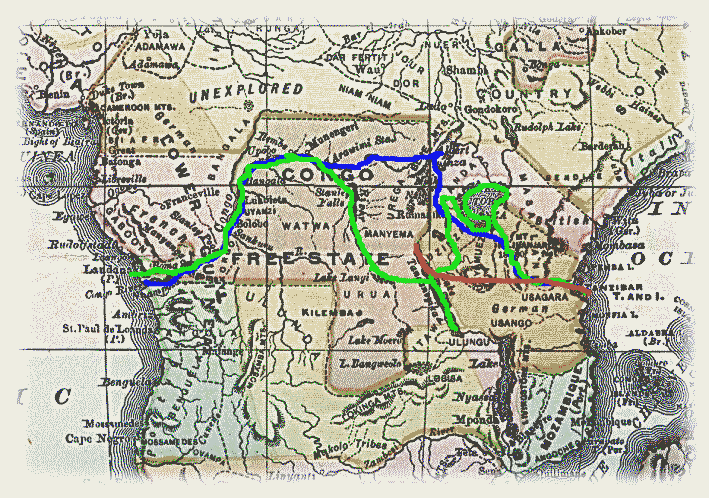
Map showing the Congo River drainage basin. [Image Wikipedia]
The Berlin Conference of 1884–1885, organised by Otto von Bismarck, regulated European colonisation and trade in Africa. The conference concluded with the signing of the General Act of Berlin. The Berlin Conference, initiated by Portugal and supported by Britain, brought together 14 nations to establish a joint policy for Africa.
Western Lowland Gorilla, an endangered species, in the the Congo River basin. [Image Wikipedia]
How
Novelist
Victor Hugo in 1829, lithograph by Achille Devéria in the collection of the National Gallery of Art, Washington D.C. [Image Wikipedia]
Victor Hugo was a French Romantic author, poet, essayist, playwright, and politician. His most famous works include novels like The Hunchback of Notre-Dame and Les Misérables, as well as poetry collections like Les Contemplations and La Légende des siècles.
Portrait of Victor Hugo, deputy of the Second Republic in 1848, gallery of the representatives of the people of the French National Assembly, Paris. [Image Wikipedia]
The following Who, What, When, Where, Why and How all relate to this date: 26 February.
Who
A singer-songwriter born this day in 1932 in Kingsland, Arkansas, US. recorded songs such as Hey, Porter; Cry, Cry, Cry and I Walk the Line and in the 1950s became the top country and western recording artist. He later became a champion for social justice and penal reform.
Who is being described?
Johnny Cash
Jim Reeves
Hank Williams
What
From Here to Eternity by James Jones was published today in 1951 and later was adapted into an Academy Award-winning film of the same name.
Napoleon escaped exile from an island on this day in 1815 and made his way to Paris where, on his arrival on 20 March, a period now known as the Hundred Days began.
Where was the island situated?
South Atlantic Ocean
English Channel
Mediterranean Sea
Why
The Berlin West Africa Conference concluded on the 26 February 1885.
Why had it been convened some 3 months previously?
German Empire sought all territory between the Niger and Zambezi Rivers
Portugal wished to control the Congo Basin
Great Britain desired sole control of West Africa south of the Sahara
How
Victor Hugo, born today in 1802, is, according to Encyclopædia Britannica, renowned in France as one of the country’s greatest poets but that is not the case abroad.
The motto Pula, which means rain and also blessing, is the name of Botswana’s currency.
On the 21 February 1966 the Earl of Longford, the British Colonial Secretary, announced that Bechuanaland, a British protectorate, would gain independence on 30th September 1966, subsequently being renamed Botswana.
This landlocked country in Southern Africa is bordered by Namibia (including the Caprivi Strip) to the west and north, Zambia and Zimbabwe to the northeast, and South Africa to the southeast and south. Botswana’s borders feature a minor section along the Zambezi River with Zambia, while its boundary along the Chobe River with Namibia was settled in a 1999 International Court of Justice ruling favoring Botswana. Despite remaining one of the least densely populated nations globally, with over 2.4 million people inhabiting an area similar in size to France, Botswana, named after its dominant Tswana ethnic group, has transitioned from being one of the world’s poorest and least-developed states to a peaceful and increasingly prosperous democratic state. Approximately 70 percent of its flat, topographically consistent territory forms part of the Kalahari Desert.
The British Colonial Secretary, announced on 21 February 1966 that a British protectorate would gain independence later in the year and be renamed Botswana.
What was the name of the British protectorate?
Barotseland
Bechuanaland
Nyasaland
Botswana has a one word motto Pula, what does it mean in English?
President Francisco Madero. 37th President of Mexico. [Image from Wikipedia]
Pedro Lascuráin’s 45-minute presidency, unlike other brief period in office, was entirely intentional. Lascuráin played a crucial role in the Mexican Revolution, which involved the transfer of power from President Francisco Madero to dictator Victoriano Huerta. Here’s how it unfolded.
Pedro Lascuráin. 38th President of Mexico. [Image from Wikipedia]
As the minister of foreign affairs, Lascuráin held the third position—after the president and vice president—in the line of succession to the presidency. However, Huerta exploited this position to his advantage. He orchestrated a fake battle to create unrest and persuade Madero and his vice president to resign. Tragically, they were later murdered while attempting to flee Mexico. Lascuráin ascended to the presidency, but his tenure was marked by only one significant act: appointing Huerta as a member of his cabinet. Subsequently, he promptly resigned, paving the way for the next in line, his new cabinet minister, Victoriano Huerta.
Victoriano Huerta. 39th President of Mexico. [Image from Wikipedia]
Q1. A.60 days and 21 hours Q2. B. USS Triton Q3. A. Captain Edward L. Beach Jr. Q4. B. Jules Verne
Map of the 1960 circumnavigation of the world by the U.S. nuclear-powered submarine USS Triton (SSRN-586). [Image from Wikipedia]
Operation Sandblast, as this first-ever submerged circumnavigation of the globe was named, was accomplished by the United States Navy’s nuclear-powered submarine, USS Triton (SSRN-586), in 1960.
Captain Edward L Beach announcing Operation Sandblast to crew onboard USS Triton, 17 February 1960. [Image from Wikipedia]
First Submerged Circumnavigation
Led by Captain Edward L. Beach Jr., the Triton departed New London, Connecticut on 16 February 1960 to head to the start /finish line for the journey—the St. Peter and Paul Rocks in the middle of the Atlantic Ocean, near the Equator.
The Triton crossed the equator four times and notably, Triton’s overall navigational track during Operation Sandblast was similar to that of the historic Spanish expedition that successfully completed the first circumnavigation of the world.
Historic First Circumnavigation
In 1519, Portuguese explorer Ferdinand Magellan started an epic journey that took his expedition all the way around the world; Spanish explorer Juan Sebastián Elcano finished it in 1522. Of the 270 men and five ships that set sail, only about 40 men and one ship made it back. Magellan died in battle in the Philippines in April 1521.
Nao Victoria, the only ship in the fleet to complete the circumnavigation. Detail from a map by Abraham Ortelius, 1590. [Image from Wikipedia]
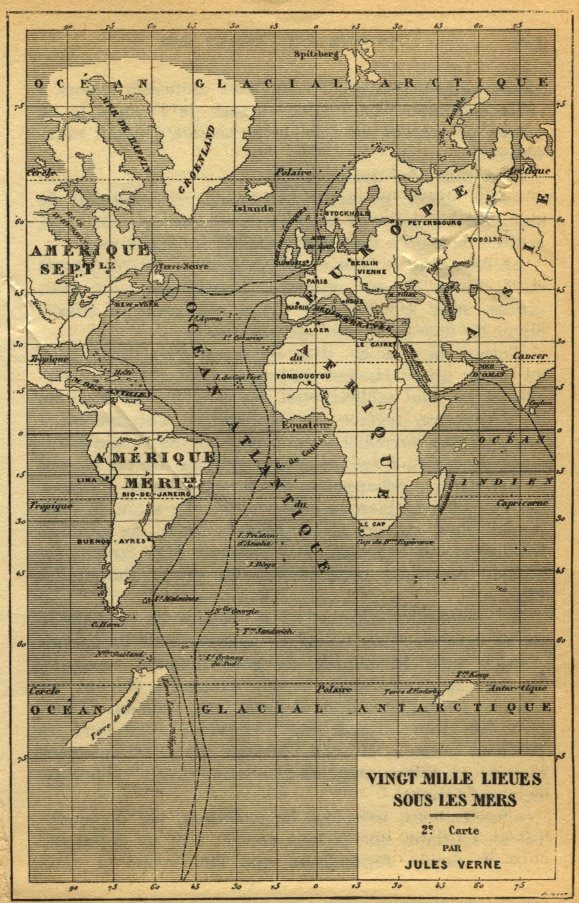
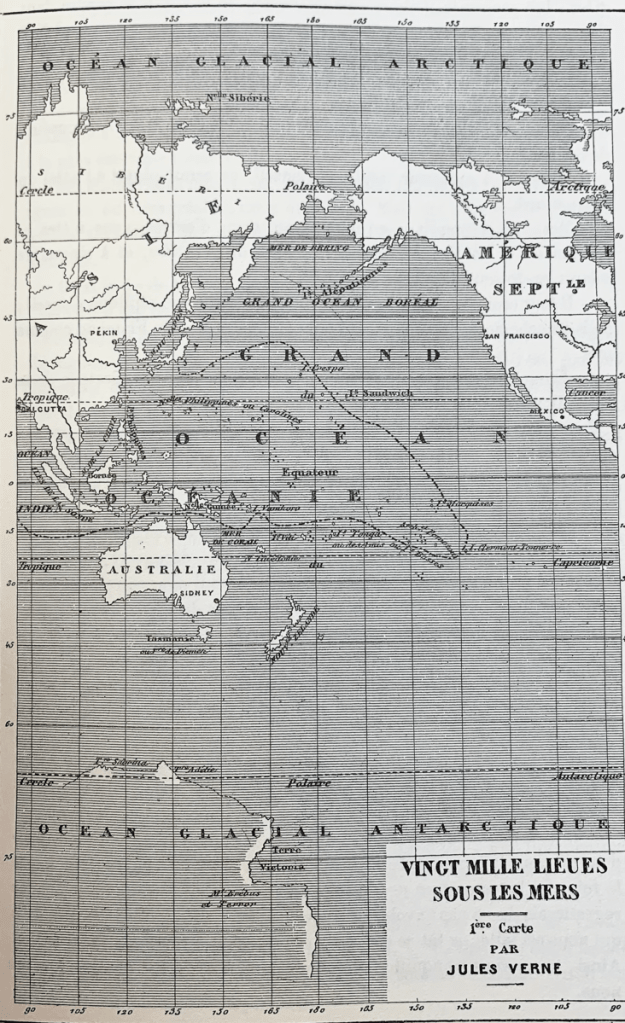
*Ten Thousand Leagues Under the Sea
The title is a poetic licence as the actual distance travelled converts to 10,251 leagues. This conversion from 26,723 nautical miles to leagues was carried out at metric-conversions.org.
USS ___ (SSRN-586) heading out for the beginning of the circumnavigation 16 February 1960. [Image from Wikipedia]
On 16 February 1960 a United States nuclear-powered submarine departed New London, Connecticut to circumnavigate the world whilst submerged. The submarine would follow the route of the first circumnavigation of the world, started under the command of Ferdinand Magellan and completed by Juan Sebastián Elcanofrom between 1519 and 1522.
Q1. How long did this submerged circumnavigation take? A. 60 days and 21 hours B. 87 days and 9 hours C. 115 days and 17 hours
Q2. What submarine carried out this voyage? A. USS Thresher B. USS Triton C. USS Tullibee
Q3. The commanding officer of this submarine also wrote several books, both fiction and non-fiction, including Run Silent, Run Deep: who was he? A. Captain Edward L. Beach Jr. B. Captain William D. Sand C. Captain Thomas J. Shore II
Q4. The title of this piece is a take on the title of the 19th century novel Twenty Thousand Leagues Under the Seas. Who wrote that novel? A. Victor Hugo B. Jules Verne C. H.G. Wells
The Execution of Lady Jane Grey (1833). National Gallery, London [Image from Wikipedia]
Lady Jane Grey, also known as Lady Jane Dudley, was proclaimed queen of England and reigned from 10 to 19 July 1553. Known for her beauty and intelligence, she reluctantly allowed herself to be crowned at the age of 15 due to the machinations of unscrupulous politicians. Her subsequent execution at the age of 16 by Mary Tudor evoked widespread sympathy and compassion.