See if you can KO these five questions with the answers beginning with the letters from K to O, with each letter being used only once, but they are not in alphabetical order.
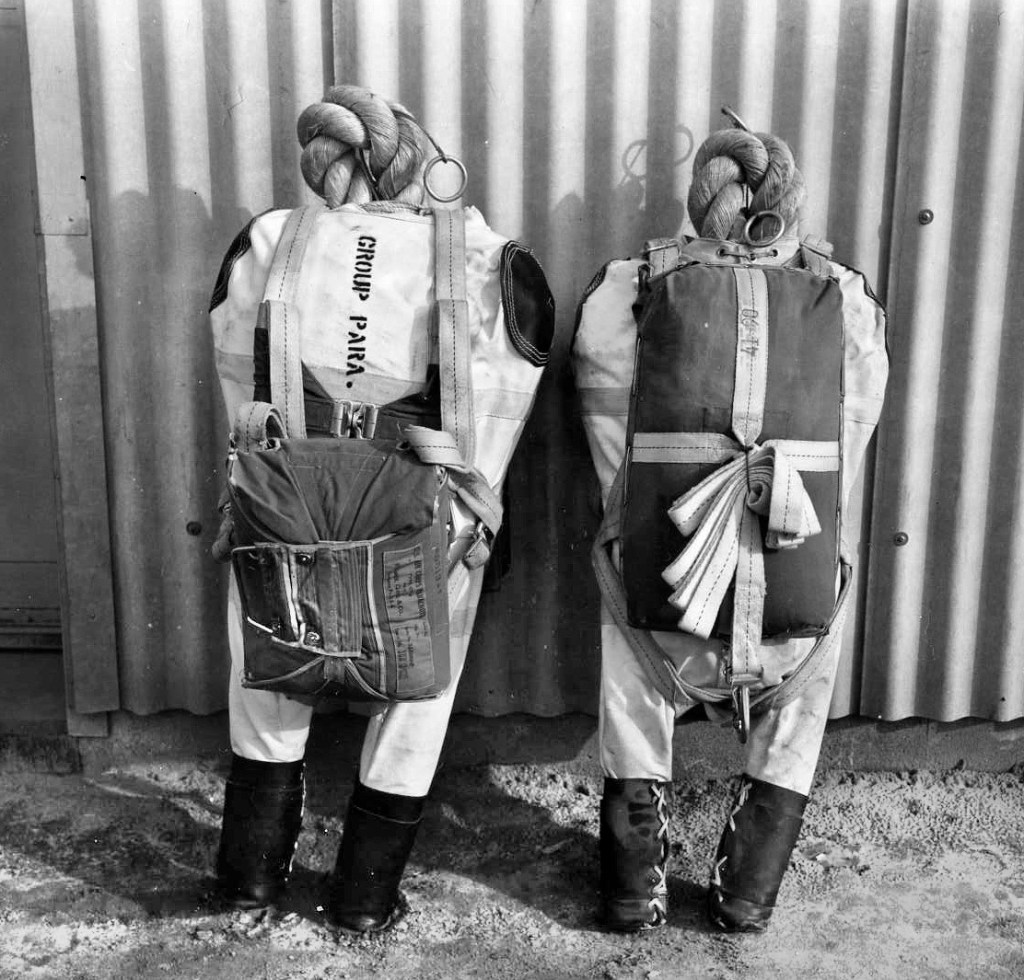
Para-dummies, pictured above, were a deception device used in World War II. British troops nicknamed them Rupert; what name did the Americans give them?
Two
In 2023, what is the official currency of Denmark, Greenland and the Faroe Islands?
Three
What interplanetary space probe launched in 2006 became, in 2015, the first to perform a flyby study of Pluto?
Four
The Galaxy referred to in The Hitchhiker’s Guide to the Galaxy is which one?
Five
Known as the Pineapple Island, what is the sixth-largest island in the U.S. state of Hawaii?
Here are the answers to my earlier posted questions.
Mario Andretti in the lead with Ronnie Petterson behind, 1978 Dutch GP. Image Wikimedia Commons
Five questions with the answers beginning with the letters from F to J —Foxtrot to Juliett — with each letter being used only once, but they are not in alphabetical order.
One
What one word can be all of these: a mythical creature which pulled Poseidon’s sea-chariot; an area of the human brain; and a genus of small marine bony fish?
Answer: Hippocampus.
The hippocampus, located in the temporal lobe and part of the limbic system, is essential for memory and spatial navigation and is one of the first areas affected in Alzheimer’s disease, causing memory loss and disorientation. In mythology, the hippocampus is a creature with a horse’s upper body and a fish’s lower body, often depicted with Poseidon, the god of the sea, driving a chariot drawn by hippocampi and accompanied by dolphins. The Romans associated it with Neptune, the sea god. Additionally, Hippocampus refers to a genus of 46 species of small marine bony fish, known as seahorses, which have a horse-like head, segmented bony armour, and a curled prehensile tail. Found in shallow coastal waters worldwide, seahorses belong to the family Syngnathidae, along with pipefishes and seadragons, and vary in size from 2 to 35 cm.
Two
Who was the next North American to win Formula 1’s World Championship, and be crowned World Drivers’ Champion, after Mario Andretti?
Answer: Jacques Villeneuve.
Mario Andretti, an American racing driver, competed in Formula One and IndyCar, winning numerous races and championships, including the 1978 F1 championship. Jacques Villeneuve, a Canadian racing driver, competed in IndyCar and Formula One. He won the 1997 Formula One World Drivers’ Championship and the 1995 IndyCar World Series and Indianapolis 500.
Three
In what television sitcom did characters have surnames beginning with the these letters: 3 x G plus 2 x B and 1 x T?
‘When I saw Finn waiting for me at the corner of the street, I knew at once that something had gone wrong.’ This is the opening line of a work by what author, and what was the work?
Answers: Iris Murdoch; Under the Net.
Irish-British novelist and philosopher Dame Jean Iris Murdoch, known for her works exploring good and evil, sexual relationships, morality, and the unconscious, won the Booker Prize for The Sea, The Sea and was made a Dame in 1987. Her first published novel, Under the Net, is a philosophical story about a struggling writer in London. The novel, dedicated to Raymond Queneau, was named one of the best English-language novels since 1923 by Time magazine.
Five
Which double-Oscar-winning actress became a UK Member of Parliament in 1992, and for what two films did she win Best Actress Oscars?
Answer: Glenda Jackson; Women in Love and A Touch of Class
Glenda Jackson (1936–2023) was a British actress and Labour Party politician. She was a member of the House of Commons from 1992 to 2015. Jackson won two Academy Awards for best actress, the first in 1970 for Women in Love and the second in 1973 for A Touch of Class. Other notable roles include her portrayals of Queen Elizabeth I in both the BBC television miniseries Elizabeth R (1971) and the film Mary, Queen of Scots (1971). After retiring from politics, Jackson returned to acting, earning a Tony Award in 2018 for her performance in Three Tall Women.
Post Title
Dancing a Foxtrot with Juliett
Juliett is spelled as it is in radio communications, as Wikipedia explains…
The spelling Juliett is used rather than Juliet for the benefit of French speakers, because they may otherwise treat a single final t as silent.
Mario Andretti in the lead with Ronnie Petterson behind, 1978 Dutch GP. Image Wikimedia Commons
Five questions with the answers beginning with the letters from F to J —Foxtrot to Juliett — with each letter being used only once, but they are not in alphabetical order.
One
What one word can be all of these: a mythical creature which pulled Poseidon’s sea-chariot; an area of the human brain; and a genus of small marine bony fish?
Two
Who was the next North American to win Formula 1’s World Championship, and be crowned World Drivers’ Champion, after Mario Andretti?
Three
In what television sitcom did characters have surnames beginning with the these letters: 3 x G plus 2 x B and 1 x T?
Four
‘When I saw Finn waiting for me at the corner of the street, I knew at once that something had gone wrong.’ This is the opening line of a work by what author, and what was the work?
Five
Which double-Oscar-winning actress became a UK Member of Parliament in 1992, and for what two films did she win Best Actress Oscars?
Five questions with the answers beginning with the letters from A to E, with each letter being used only once, but they are not in alphabetical order.
See question two. Death in the Afternoon. Image A Couple Cooks
One
Who wrote, produced, and directed Moulin Rouge (2001) and Australia (2008)?
Answers: Baz Luhrman.
Baz Luhrmann is an Australian film director, producer, writer, and actor known for his Red Curtain Trilogy and other films like Australia, The Great Gatsby, and Elvis. He is also involved in opera, theatre, music, and the recording industries, with Grammy-nominated soundtracks and his own record label.
Two
An absinthe-Champagne cocktail was invented by an author and shares its name with his 1932 non-fiction book about a sport in a southern European nation. Who is the author, and what is the book and cocktail’s shared name?
Answers: Ernest Hemingway; Death in the Afternoon.
Death in the Afternoon, a 1932 non-fiction book by Ernest Hemingway, explores Spanish bullfighting, fear, and courage. Its namesake, a cocktail invented by Hemingway, is made with absinthe and Champagne. The drink, known for its decadence and high strength, can be made with absinthe alternatives like Absente or Pernod.
Three
Which chemical element derives its name from the Latin for ‘coal’?
Answer: Carbon.
Carbon, symbol C and atomic number 6, a non-metal which has two main forms, diamond and graphite, and which also occurs in impure form in charcoal, soot and coal. It is the 15th most abundant element in Earth’s crust and the fourth most abundant in the universe.
Four
Which small dog breed, which is not a terrier, is sometimes known as the monkey terrier?
Answer: Affenpinscher.
The Affenpinscher, a German toy dog breed, originated as a ratter and is now a popular companion worldwide. The breed, whose name is sometimes translated from German as ‘Monkey Terrier’, is believed to be ancestral to the Griffon Bruxellois and Miniature Schnauzer.
Five
The Malawian city of Blantyre was named after the Scottish birthplace of which missionary and explorer (1813-73)?
Answer: David Livingstone
Blantyre, Malawi’s second-largest city and commercial centre, was founded in 1876 by the Church of Scotland. It grew rapidly due to its role in colonial trade and became a major manufacturing centre. The city’s development was influenced by various factors, including commerce, industry, and administration, and it was merged with Limbe in 1956.
Five questions with the answers beginning with the letters from A to E, with each letter being used only once, but they are not in alphabetical order.
See question two. Image A Couple Cooks
One
Who wrote, produced, and directed Moulin Rouge (2001) and Australia (2008)?
Two
An absinthe-Champagne cocktail was invented by an author and shares its name with his 1932 non-fiction book about a sport in a southern European nation. Who is the author, and what is the book and cocktail’s shared name?
Three
Which chemical element derives its name from the Latin for ‘coal’?
Four
Which small dog breed, which is not a terrier, is sometimes known as the monkey terrier?
Five
The Malawian city of Blantyre was named after the Scottish birthplace of which missionary and explorer (1813-73)?
In 1721, a collection of six instrumental works—the composer’s own title was Six Concerts Avec plusieurs Instruments (Six Concertos With several Instruments)—were presented by Johann Sebastian Bach to Christian Ludwig, a marquess and younger brother of King Frederick I of Prussia. Using the above picture as a clue, by what name is this collection commonly known today?
Answer: Brandenburg Concertos
Johann Sebastian Bach’s Brandenburg Concertos, now his most popular work, were likely never performed during his lifetime. Bach sent the original manuscript to the Margrave (Marquess) of Brandenburg in 1721, possibly as a job application, but the Margrave never acknowledged the gift. The concertos were forgotten for over a century until they were rediscovered and published in the 19th century.
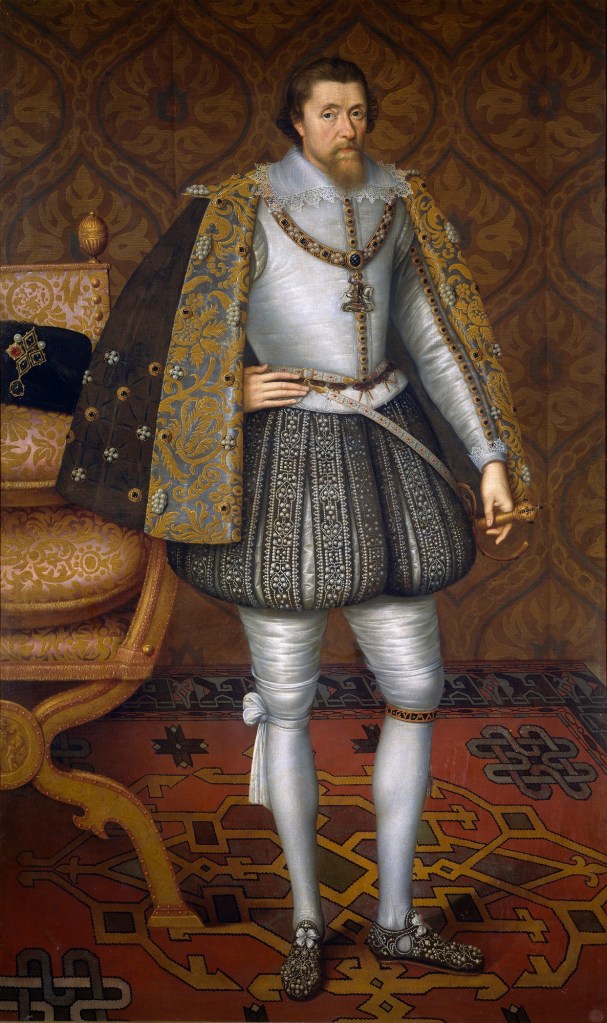
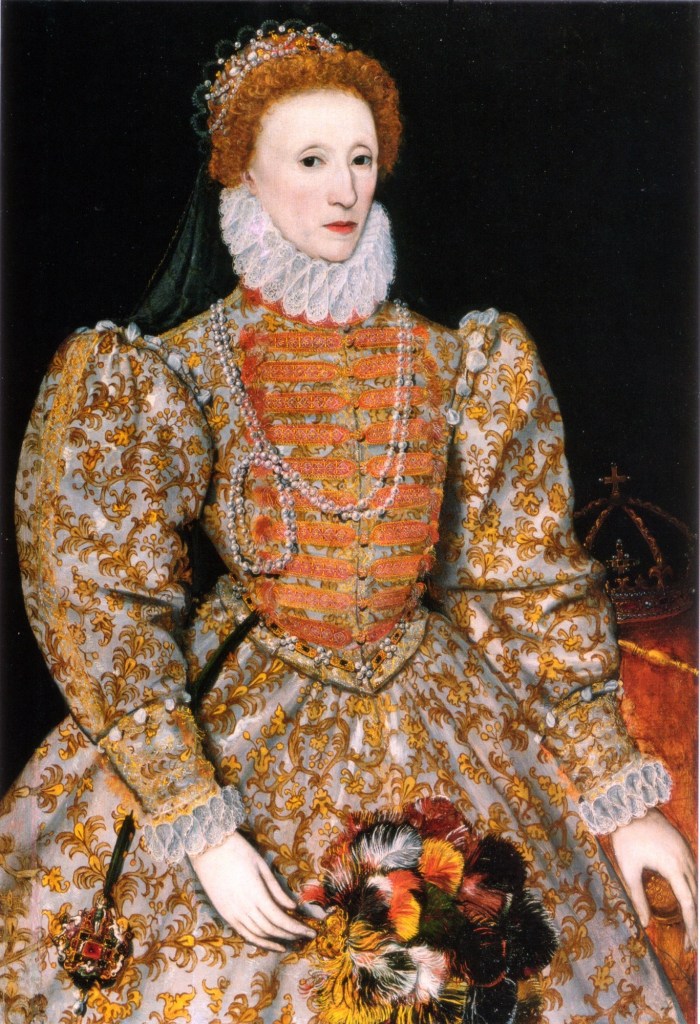
The male monarch pictured above succeeded the female one on her death in 1603.
Who is the queen?
Who was the king?
What was the familial relationship between them?
Answers
Queen Elizabeth I
King James VI and I
Cousins.
Queen Elizabeth I’s death in 1603 ended her reign of England and Ireland, leading to her cousin King James VI of Scotland’s succession as King of England and Ireland. Now both James VI and I, his reign saw the beginning of the Plantation of Ulster and English colonisation of the Americas.
Three
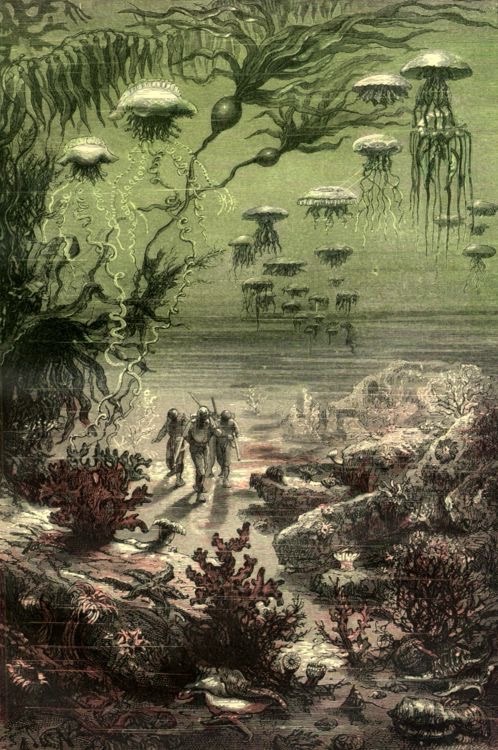
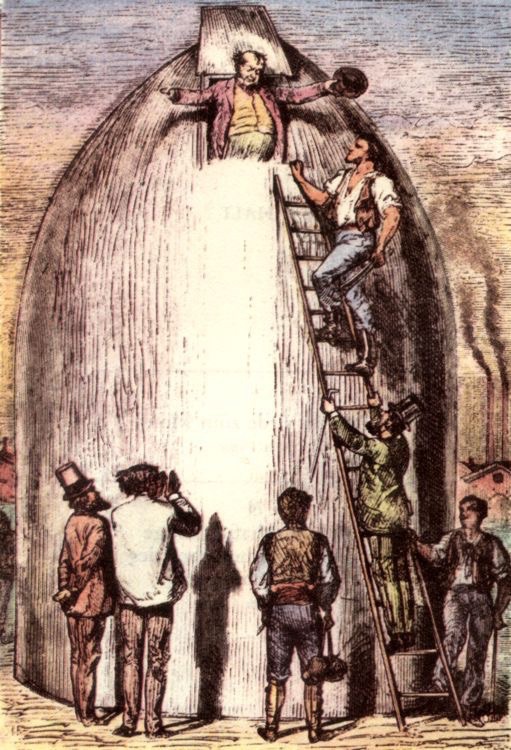
From Jules Verne’s novel Twenty Thousand Leagues Under the Sea. Image Wikimedia CommonsFrom the Earth to the Moon by Jules Verne Image Wikimedia Commons
The two illustrations above are from novels by an author, ‘the father of science fiction’, who died in 1905, aged 77. Since 1979, he has been the second most translated author.
Who was the author?
From what novel is the first illustration?
From what novel is the second illustration?
Answers
Jules Verne
Twenty Thousand Leagues Under the Sea
From the Earth to the Moon
Jules Verne was a French novelist, poet, and playwright, best known for his adventure novels like Journey to the Centre of the Earth and Around the World in Eighty Days His work, often set in the 19th century, incorporated contemporary scientific knowledge and technological advances. Verne is considered an important author in Europe and has been the second most-translated author in the world since 1979.
Four
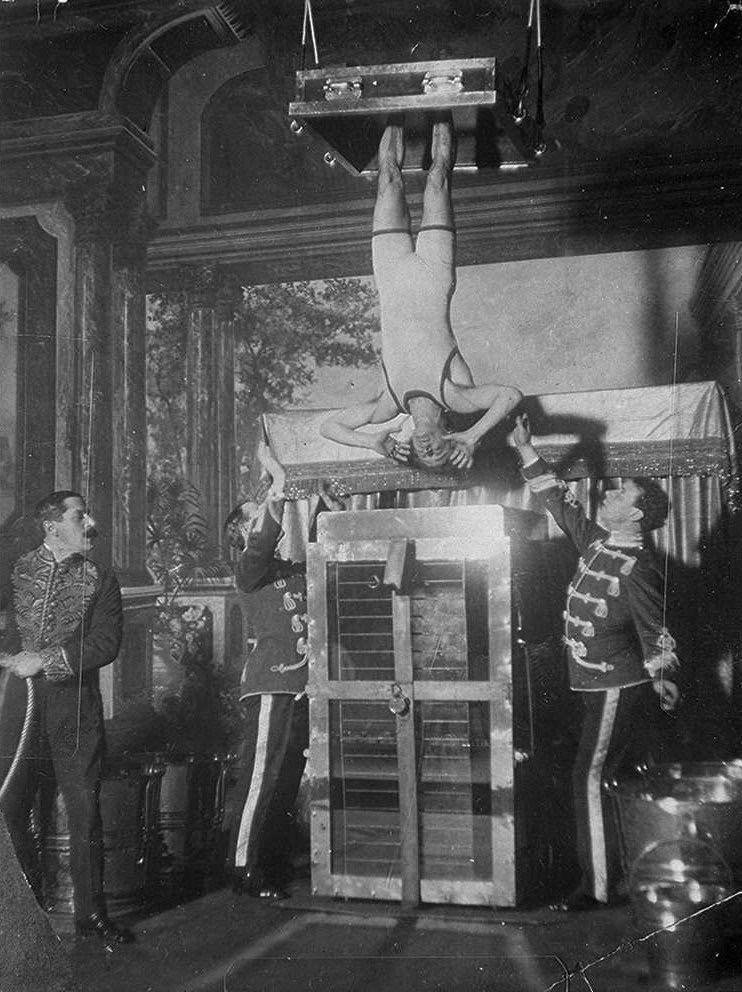
Harry Houdini, performing The Chinese Water Torture Cell. Image Wikimedia Commons
Erik Weisz, who was born in 1874, is pictured above during one of his acts, although he’s better known by his stage name.
In what European city was he born?
Who is he better known as?
Answers
Budapest
Harry Houdini.
Harry Houdini, a Hungarian-American escapologist, gained fame for his daring escape acts, including freeing himself from handcuffs, chains, and straitjackets. He also pursued a crusade against fraudulent spiritualists and was a pioneer aviator.
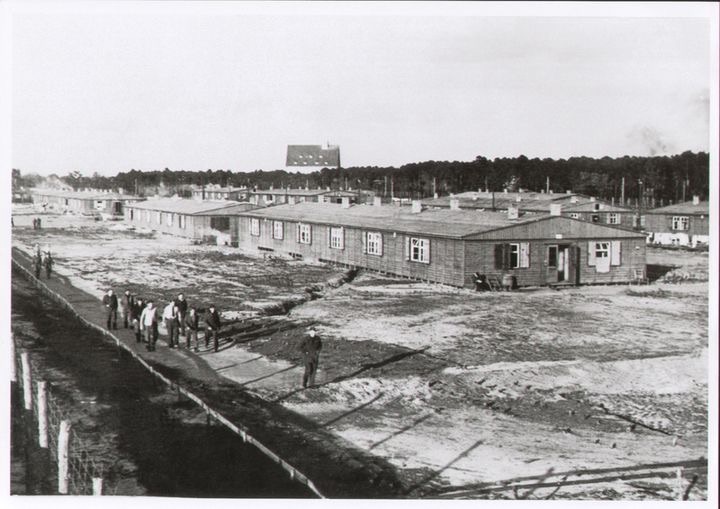
The prisoner of war camp above was made famous by a 1963 film which features the inmates attempts to leave it on the night of 24 March 1944.
By what name is this POW camp commonly known?
What was the 1963 film?
In what modern country is the site of the camp today?
Answers
Stalag Luft III
The Great Escape
Poland
Stalag Luft III (in full Stammlager Luft III; literally meaning Main Camp, Air, III) was a World War II POW camp for Allied airmen, known for escape plots including the Great Escape. Of the 76 men who escaped that night, 73 were recaptured, and fifty of those were executed. The camp, which was liberated in 1945 and is now a museum, was the subject of two feature films about the escape attempts that were made: The Wooden Horse (1950) and The Great Escape (1963).
Five pictures and some questions all of which are related to today’s date, March 24th.
One
Image Wikimedia Commons
In 1721, a collection of six instrumental works—the composer’s own title was Six Concerts Avec plusieurs Instruments (Six Concertos With several Instruments)—were presented by Johann Sebastian Bach to Christian Ludwig, a marquess and younger brother of King Frederick I of Prussia. Using the above picture as a clue, by what name is this collection commonly known today?
Two
Image Wikimedia CommonsImage Wikimedia Commons
The male monarch pictured above succeeded the female one on her death in 1603.
Who is the queen?
Who was the king?
What was the familial relationship between them?
Three
First illustration. Image Wikimedia Commons Second illustration. Image Wikimedia Commons
The two illustrations above are from novels by an author, ‘the father of science fiction’, who died in 1905, aged 77. Since 1979, he has been the second most translated author.
Who was the author?
From what novel is the first illustration?
From what novel is the second illustration?
Four
Eric Weisz. Image Wikimedia Commons
Erik Weisz, who was born in 1874, is pictured above during one of his acts, although he’s better known by his stage name.
In what European city was he born?
Who is he better known as?
Five
Image Wikimedia Commons
The prisoner of war camp above was made famous by a 1963 film which features the inmates attempts to leave it on the night of 24 March 1944.
By what name is this POW camp commonly known?
What was the 1963 film?
In what modern country is the site of the camp today?
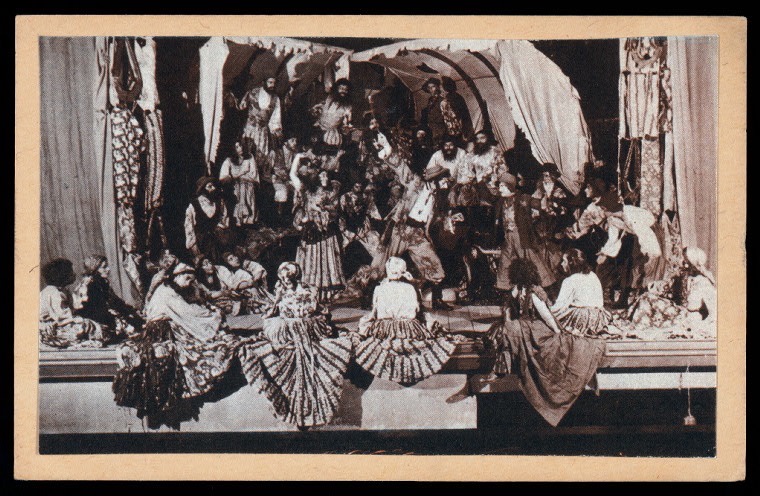
The first Romani language operetta, Children of the Forests, premiered on 20 March 1888. Where was it staged?
Bucharest, Romania
Kyiv, Ukraine
Moscow, Russia
Answer: 3. Moscow, Russia.
The premiere of the very first Romani language operetta Children of the Forests was staged in the Maly Theatre, Moscow, Russia on 20 March 1888. It was performed solely by the Romani troupe. The production ran for 18 years and was a great success. The first Romani theatre troupe, founded by Nikolai Shishkin, performed in Moscow and Saint Petersburg in the late 19th century. The troupe’s success led to the establishment of the Romen Theatre in Moscow in 1931.
Two
In 1923, the Arts Club of Chicago hosted the United States’ first showing of Original Drawings by… This event signalled the club’s early embrace of modern art in America. There is an artist’s name missing from the show’s title: who is the artist?
Salvador Dali
Pablo Picasso
Jackson Pollock
Answer: 2. Pablo Picasso
The Arts Club of Chicago, founded in 1916, is a private club and public exhibition space dedicated to showcasing international contemporary art. The club, known for its pro-Modernist stance, has presented groundbreaking exhibitions by artists like Pablo Picasso and Jean Dubuffet. It curates its own exhibits, emphasising cutting-edge and avant-garde art.
Three
Harriet Beecher Stowe’s Uncle Tom’s Cabin was first published on this date in 1852. Between 1832 and 1850 she lived in a city where her personal observations and research informed the basis of her story. Where was this city?
Alexandria, Virginia
Baltimore, Maryland
Cincinnati, Ohio
Answers: 3. Cincinatti, Ohio.
On this day in 1852, Harriet Beecher Stowe published Uncle Tom’s Cabin as a novel. The book, which had previously been serialised, played a crucial role in shifting public opinion towards abolitionism and contributed to the outbreak of the Civil War.
Four
Who became the first woman to win the Iditarod Trail Sled Dog Race, and when did she achieve this?
Kelly Quinault in 1973
Libby Riddles in 1985
Molly Semyonova in 1997
Answers: 2. Libby Riddles in 1985
The Iditarod Trail Sled Dog Race is an annual long-distance sled dog race in Alaska, covering the distance from Anchorage to Nome in eight to fifteen days. The race, which began in 1973, is a symbolic link to Alaska’s history and a popular sporting event, attracting competitors from around the world. The race is known for its challenging conditions, including blizzards, gale-force winds, and sub-zero temperatures, which with wind chill can reach −100 °F (−73 °C).
Five
Albert Einstein submitted his paper The Foundation of the General Theory of Relativity in 1916. Where was he working at that time?
Federal Institute of Technology, Zurich
Prussian Academy of Sciences, Berlin
Charles University, Prague
Answer: Prussian Academy of Sciences, Berlin.
Albert Einstein was working at the Prussian Academy of Sciences in Berlin when he published The Foundation of the General Theory of Relativity in 1916. He had accepted a position at the Prussian Academy in 1914, specifically to work on his new theory of gravity. The paper was submitted on March 20, 1916, and published later that year in the journal Annalen der Physik. This period marked a significant time in Einstein’s career, as he was developing groundbreaking theories that would change our understanding of gravity and the universe.
All of today’s questions are connected to the date, March 20th. There are three places, two people and a year to find in these multiple-choice questions.
The first Romani language operetta, Children of the Forests, premiered on 20 March 1888. Where was it staged?
Bucharest, Romania
Kyiv, Ukraine
Moscow, Russia
Two
In 1923, the Arts Club of Chicago hosted the United States’ first showing of Original Drawings by… This event signalled the club’s early embrace of modern art in America. There is an artist’s name missing from the show’s title: who is the artist?
Salvador Dali
Pablo Picasso
Jackson Pollock
Three
Harriet Beecher Stowe’s Uncle Tom’s Cabin was first published on this date in 1852. Between 1832 and 1850 she lived in a city where her personal observations and research informed the basis of her story. Where was this city?
Alexandria, Virginia
Baltimore, Maryland
Cincinnati, Ohio
Four
Who became the first woman to win the Iditarod Trail Sled Dog Race, and when did she achieve this?
Kelly Quinault in 1973
Libby Riddles in 1985
Molly Semyonova in 1997
Five
Albert Einstein submitted his paper The Foundation of the General Theory of Relativity in 1916. Where was he working at that time?
People, places, and events from today’s date, March 19th, feature in these questions.
One
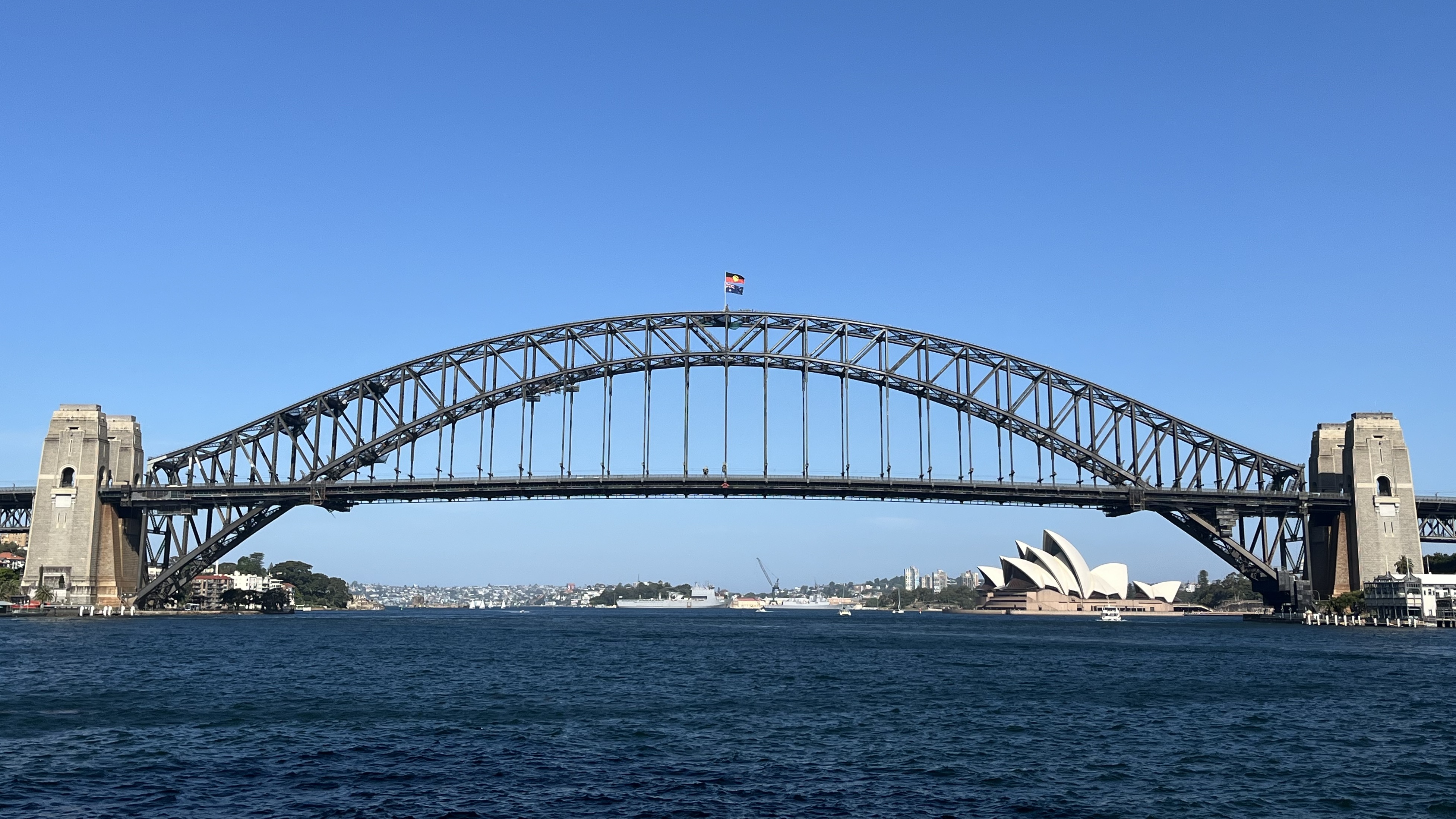
On this date, the Sydney Harbour Bridge was opened. In what decade did this occur?
Answer: 1930s
Opened in 1932, the Sydney Harbour Bridge, a steel through arch bridge, connects Sydney’s CBD to the North Shore. An iconic image of Sydney, nicknamed the ‘Coathanger’, it carries rail, vehicular, bicycle and pedestrian traffic.
Two
A writer who had been born in 1917 died in Colombo, Sri Lanka, on 19 March 2008. His best-known works include the script he wrote with director Stanley Kubrick for 2001: A Space Odyssey and his novel of that film. Who is this writer?
Answer: Arthur C. Clarke.
Arthur C. Clarke was an English writer known for his science fiction and non-fiction works. He co-wrote the script for the film 2001: A Space Odyssey and its novelisation. Clarke’s notable works include Childhood’s End, Rendezvous with Rama, and The Fountains of Paradise. He was knighted in 2000.
Three
This American actor, who was born in West Germany in 1955, earned a Best Supporting Actor Golden Globe nomination in 1990 for his role as Emmett Smith in the film In Country. Who is he?
Answer: Bruce Willis
In Country (1989) follows Samantha Hughes, a recent high school graduate, as she becomes fixated on learning about her deceased father a Vietnam veteran. Staying with her Uncle Emmett (Bruce Willis) another veteran she embarks on a journey to the Vietnam Veterans Memorial in Washington D.C. seeking closure. Bruce Willis, a retired American actor, is renowned for his action roles, particularly his portrayal of John McClane in the Die Hard franchise. He starred in over 100 films including Pulp Fiction and The Sixth Sense, earning numerous accolades throughout his career. Willis retired in 2022 due to aphasia and was diagnosed with frontotemporal dementia in 2023.
Four
This 20th-century national leader issued his ‘Nero Decree’, ordering that all of the nation’s ‘industries, military installations, shops, transportation facilities, and communications facilities be destroyed’? Who was he, and what was the country?
Answers: Adolf Hitler; Germany.
The Nero Decree, issued by Hitler in March 1945, ordered the destruction of German infrastructure to prevent its use by the Allies. It was disobeyed by Albert Speer, Minister of Armaments and War Production, before the Nazi regime’s fall.
Five
American actress Glenn Close, born on 19 March 1947 in Greenwich, Connecticut, received her first Academy Award nomination for her debut film. This was for her role as Jenny Fields in a 1982 film with a five-word title: The World ——. What film?
Answer: The World According to Garp.
Glenn Close is an American actress with a career spanning five decades. She has won numerous awards, including three Emmys, three Tonys, and three Golden Globes, as well as having been nominated for eight Academy Awards. Her debut film role earned her a Best Actress in a Supporting Role nomination for The World According to Garp. Close, who is known for her work in film, television, and theatre, is a vocal advocate for women’s rights, same-sex marriage, and mental health.