Today the first question relates to today’s date, May 23rd. The following questions follow a theme which is explained here.
Theme
The gist of today’s quiz is that the first question results in you having three five-letter words in the answer.
One of those words supplies the initial letters for the remaining questions.
Firstly, discount the initial letter as it has already been used. The remaining four letters supply the initial letters to the answers to the remaining questions but they will not necessarily be in the correct order.
Once you have answered all the questions you should be able to take the initial letters of the five answers, rearrange and have one of the words from the answer to question one.
Image Encyclopædia Britannica
One
The country that is home to the building in the image above was annexed by a neighbour on this day in 1951. In what city is the building, and what two neighbouring countries are referred to?
Two
In what film from the 1990s is El Toro air base destroyed?
Three
What explorer, in c.986 CE, was the founder of the first European settlement on Greenland?
Four
Who in The Lord of the Rings is described by Gandalf as ‘the oldest living thing that still walks beneath the Sun upon this Middle-earth’?
Five
The … …, the Straits of Magellan to the north, and the open-ocean Drake Passage to the south are the three navigable passages around South America between the Pacific and Atlantic Oceans. — Wikipedia
The first of today’s questions relates to the date, May 22nd. The remainder follow on a theme.
One
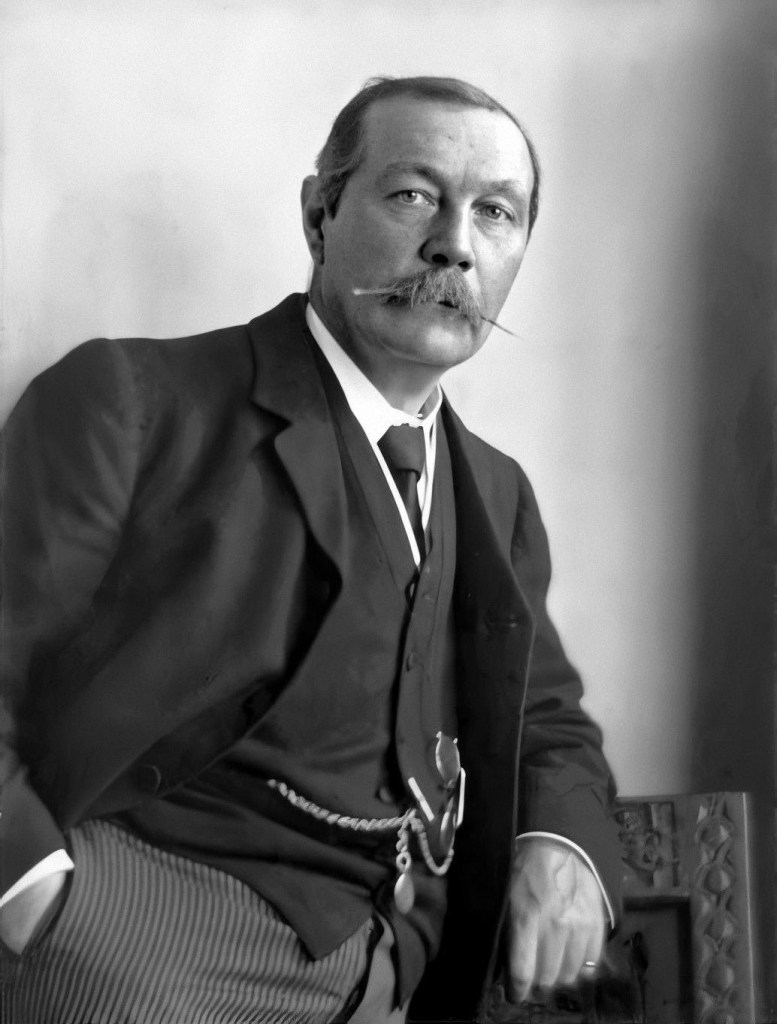
The writer who created Sherlock Holmes was born on this day in 1859. Who was he, and in what city was he born?
Answers: Arthur Conan Doyle; Edinburgh, Scotland.
Arthur Conan Doyle, a Scottish writer, is best known for creating the detective Sherlock Holmes, inspired by his medical professor, Dr. Joseph Bell. Conan Doyle’s medical background influenced his writing, evident in both his Sherlock Holmes stories and his semi-autobiographical novels. Despite the popularity of Holmes, Conan Doyle believed his other works, particularly historical fiction, deserved more recognition.
Two
In the 2009 film Sherlock Holmes, who played the role of Dr. Watson, and who directed the film?
Answers: Jude Law; Guy Ritchie.
Sherlock Holmes (2009), directed by Guy Ritchie, stars Robert Downey Jr. as Holmes and Jude Law as Watson. Set in 1890, they investigate Lord Blackwood, played by Mark Strong, who seems resurrected. The screenplay, by Michael Robert Johnson, Anthony Peckham, and Simon Kinberg, is based on a story by Wigram and Johnson. Released by Warner Bros. on 25—26 December 2009, it grossed $525 million, earning Downey a Golden Globe and two Academy Award nominations.
Three
Who was Sherlock Holmes’ elder brother, and by how many years is he older? (FYI, the answer to the age gap part of the question is one of the first five prime numbers.)
Answers: Mycroft Holmes; Seven years.
Mycroft Holmes, Sherlock’s older brother, is a government official with a unique role, described as a ‘central exchange’ for information across departments. He appears in several stories, including The Greek Interpreter and The Bruce-Partington Plans, where his superior deductive abilities are noted. Mycroft’s exact position is not named, but it is implied to be highly influential and essential to the British government.
Four
The day that Sherlockians celebrate as Sherlock Holmes’s ‘birthday’ has both a Shakespearean and religious festival connection. What is that date?
Answer: 6 January.
Sherlock Holmes’s birth date is celebrated on 6 January, a date chosen by readers and scholars, known as Sherlockians, as it aligns with the character’s symbolic nature of revealing hidden truths. Although Arthur Conan Doyle never explicitly stated Holmes’s birth date, clues in the canon suggest he was born around 1854. The connection is that Twelfth Night is the only Shakespeare play Holmes quotes twice, and Twelfth Night, the religious feast of the Epiphany, is on 6 January.
Five
In the world of Sherlock Holmes, which street urchin gang is led by a boy named Wiggins?
Answer: Baker Street Irregulars.
The Baker Street Irregulars are a group of street boys employed by Sherlock Holmes as intelligence agents. Led by Wiggins, they run errands and gather information for Holmes, who values their sharp minds and ability to gather information. The group appears in three Sherlock Holmes stories, including the novels A Study in Scarlet and The Sign of the Four, and the short story The Adventure of the Crooked Man.
The Game is Afoot
The post title is a quote by Sherlock Holmes from the short story Adventure of the Abbey Grange by Arthur Conan Doyle. It was originally used in Shakespeare’s Henry IV, Part 1.
The writer who created Sherlock Holmes was born on this day in 1859. Who was he, and in what city was he born?
Two
In the 2009 film Sherlock Holmes, who played the role of Dr. Watson, and who directed the film?
Three
Who was Sherlock Holmes’ elder brother, and by how many years is he older? (FYI, the answer to the age gap part of the question is one of the first five prime numbers.)
Four
The day that Sherlockians celebrate as Sherlock Holmes’s ‘birthday’ has both a Shakespearean and religious festival connection. What is that date?
Five
In the world of Sherlock Holmes, which street urchin gang is led by a boy named Wiggins?
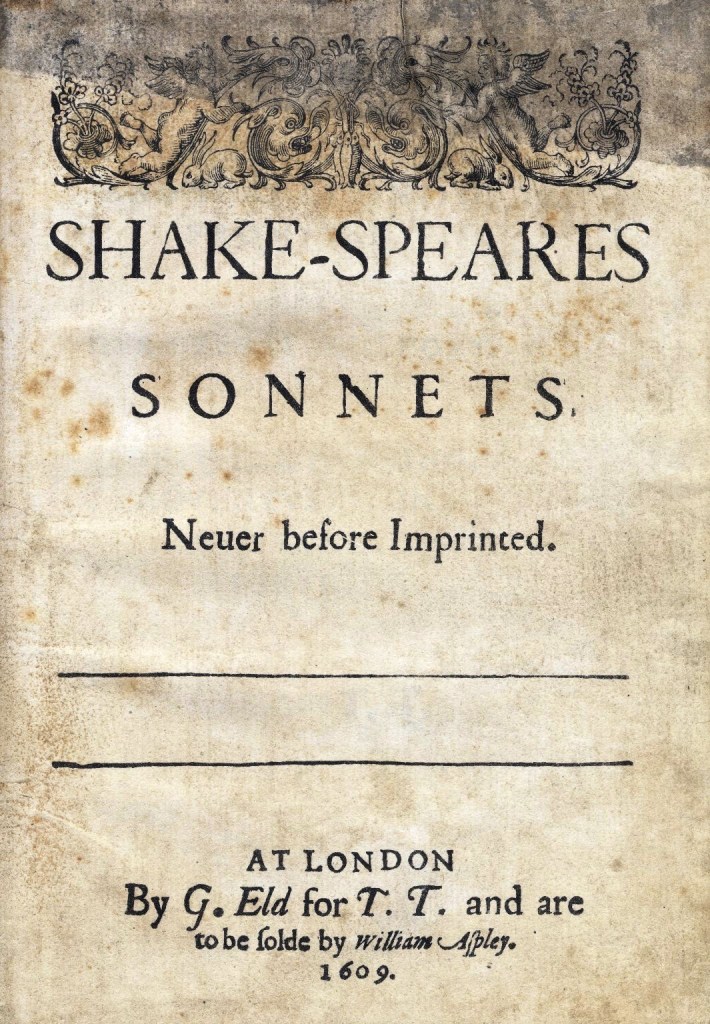
The unaltered title page from 1609 edition of Shake-Speares Sonnets. Image Wikimedia Commons
The first question concerns an event that happened on May 20th and, like the others, is connected to ‘Shakespeare’.
One
On this day, Shakespeare’s sonnets were first published. In what town or city, and in which century, was this?
Answer: London; 17th century.
In London on 20 May 1609, Thomas Thorpe produced the first publication of Shakespeare’s Sonnets — with the hyphen in the name. It’s unclear whether Thorpe used an authorised manuscript of Shakespeare as his source or an unauthorised copy. This publication is the primary source of the sonnets and contains 154 sonnets and the poem A Lover’s Complaint. The sonnets explore themes like time, love, and mortality, with the first 126 addressed to a young man and the last 28 to a woman.
Two
Who portrayed Elizabeth I in the 1998 film Shakespeare in Love?
Answer: Judi Dench.
Shakespeare in Love is a 1998 romantic comedy film about a fictional love affair between William Shakespeare and Viola de Lesseps during the writing of Romeo and Juliet. The film received critical acclaim, grossed $289 million, and won seven Oscars, including Best Picture.
Three
Falstaff is a comic opera in three acts by the Italian composer Giuseppe Verdi. The Italian-language libretto was adapted by Arrigo Boito from the play … and scenes from Henry IV, Part 1 and Part 2, by William Shakespeare.
This quote from the text of the Wikipedia article about Verdi’s Falstaff has had a Shakespeare play removed from it. What play?
Answer: The Merry Wives of Windsor.
Falstaff is a comic opera by Giuseppe Verdi, based on Shakespeare’s works. Though not as popular as his earlier operas, it is now part of the standard repertory, championed by conductors like Toscanini, Karajan, Solti, and Bernstein.
Four
In Julie Taymor’s 2010 film adaptation of which Shakespeare play did Helen Mirren play Prospera, Duchess of Milan?
Answer: The Tempest.
The Tempest (2010) is a fantasy comedy-drama film based on Shakespeare’s 1611 play. Written and directed by Julie Taymor, who deviates from the original by changing the main character, Prospero, into a female, Prospera, played by Helen Mirren.
Five
The port-city of Messina is the setting for a Shakespeare comedy. What comedy, and on what island is the port-city of Messina?
Answers: Much Ado About Nothing; Sicily.
Much Ado About Nothing, a Shakespearean comedy, centres on two Messina romances. Claudio and Hero’s love faces challenges from Don John, while Benedick and Beatrice’s witty banter drives the humour.
It Puzzles the Will
It Puzzles the Will. — Hamlet
The title seemed fitting as it’s a Shakespearean quote for a Will-themed puzzle.
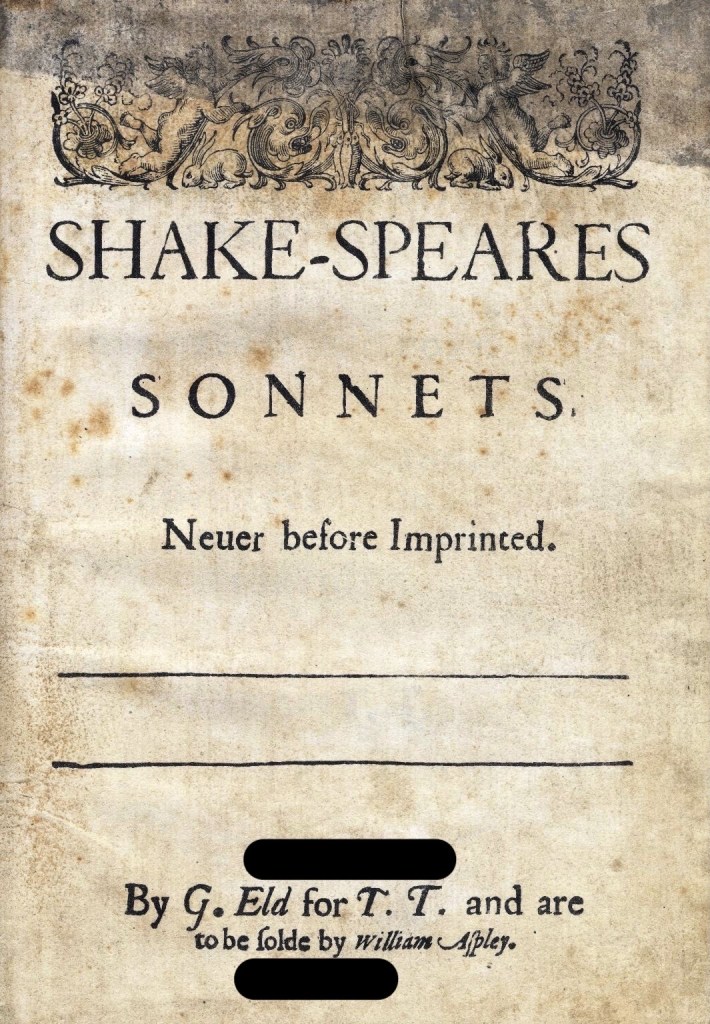
The amended title page from first edition of Shake-Speares Sonnets. Image Wikimedia Commons
The first question concerns an event that happened on May 20th and, like the others, is connected to ‘Shakespeare’.
One
On this day, Shakespeare’s sonnets were first published. In what town or city, and in which century, was this?
Two
Who portrayed Elizabeth I in the 1998 film Shakespeare in Love?
Three
Falstaff is a comic opera in three acts by the Italian composer Giuseppe Verdi. The Italian-language libretto was adapted by Arrigo Boito from the play … and scenes from Henry IV, Part 1 and Part 2, by William Shakespeare.
This quote from the text of the Wikipedia article about Verdi’s Falstaff has had a Shakespeare play removed from it. What play?
Four
In Julie Taymor’s 2010 film adaptation of which Shakespeare play did Helen Mirren play Prospera, Duchess of Milan?
Five
The port-city of Messina is the setting for a Shakespeare comedy. What comedy, and on what island is the port-city of Messina?
Each question refers to a quote from the beginning of a novel and has some questions about the quote.
One
Stately, plump Buck Mulligan came from the stairhead, bearing a bowl of … on which a … and a … lay crossed.
The opening words of Ulysses by James Joyce are quoted above. What three words have been omitted?
Answers: Lather; mirror; razor.
Ulysses, set in Dublin on 16 June 1904, parallels Homer’s Odyssey and Shakespeare’s Hamlet. It explores themes like antisemitism, sexuality, and Irish nationalism through its allusive and stylised narrative.
Two
Once there were four children whose names were Peter, …, Edmund, and ….
What are the two girls’ names missing from these opening lines?
Answer: Susan; Lucy.
The Lion, the Witch and the Wardrobe, published in 1950, is the first part of the seven part The Chronicles of Narnia. It tells the story of four children who discover Narnia through a wardrobe. They help Aslan defeat the White Witch and establish the Golden Age of Narnia.
Three
It is a truth universally acknowledged, that a … man in possession of a good …, must be in want of a ….
What three words are omitted from the opening words of an 1813 English novel, and what is that novel?
Answers: Single; fortune (and) wife. Pride and Prejudice.
Pride and Prejudice, a novel of manners by Jane Austen, follows Elizabeth Bennet’s character development as she learns about hasty judgements and the difference between superficial and actual goodness. The novel explores the societal pressures faced by the Bennet family, particularly the need for their daughters to marry well to secure their future.
Four
The morning had dawned clear and cold, with a crispness that hinted at the end of summer. They set forth at daybreak to see a man beheaded, twenty in all, and … rode among them, nervous with excitement. This was the first time he had been deemed old enough to go with his lord father and his brothers to see the king’s justice done. It was the ninth year of summer, and the seventh of …’s life.
The same name has been omitted twice from the above opening quote. What is that name, and what 1996 novel is the quote from?
Answers: Bran; A Game of Thrones.
A Game of Thrones, the first novel in George R. R. Martin’s A Song of Ice and Fire series, is an epic fantasy set in the Seven Kingdoms of Westeros. The novel, praised for its political intrigue and historical influences, won the 1997 Locus Award for Best Fantasy Novel and was later adapted into the HBO television series Game of Thrones.
Five
Physicist Leonardo Vetra smelled burning flesh, and he knew it was his own.
What novel, published in 2000, opens with the above quote? Who wrote it, and what recurring protagonist is introduced in it?
Answers: Angels & Demons; Dan Brown (and) Robert Langdon.
Angels & Demons, a 2000 mystery-thriller novel by Dan Brown, introduces Robert Langdon and features conspiracies, secret societies, and the Catholic Church.
Each question refers to a quote from the beginning of a novel and has some questions about the quote.
One
Stately, plump Buck Mulligan came from the stairhead, bearing a bowl of … on which a … and a … lay crossed.
The opening words of Ulysses by James Joyce are quoted above. What three words have been omitted?
Two
Once there were four children whose names were Peter, …, Edmund, and ….
What are the two girls’ names missing from these opening lines?
Three
It is a truth universally acknowledged, that a … man in possession of a good …, must be in want of a ….
What three words are omitted from the opening words of an 1813 English novel, and what is that novel?
Four
The morning had dawned clear and cold, with a crispness that hinted at the end of summer. They set forth at daybreak to see a man beheaded, twenty in all, and … rode among them, nervous with excitement. This was the first time he had been deemed old enough to go with his lord father and his brothers to see the king’s justice done. It was the ninth year of summer, and the seventh of …’s life.
The same name has been omitted twice from the above opening quote. What is that name, and what 1996 novel is the quote from?
Five
Physicist Leonardo Vetra smelled burning flesh, and he knew it was his own.
What novel, published in 2000, opens with the above quote? Who wrote it, and what recurring protagonist is introduced in it?
Each question refers to a quote from the beginning of a novel.
One
A name appears in the first short sentence of chapter 1 (‘Loomings’) of a book by Herman Melville, which was originally published in London in October 1851 and in New York one month later. Three questions.
What is the name from the first sentence?
What was the two word title of the book as published in London in October 1851?
What was the longer title of the book as published in New York in November 1851?
Answers
Ishmael
The Whale
Moby-Dick; or, The Whale.
The opening sentence of the book commonly known as Moby-Dick (or Moby Dick) is ‘Call me Ishmael.’ Moby Dick is a novel by Herman Melville, published in London in October 1851 as The Whale and a month later in New York City as Moby-Dick; or, The Whale. It is dedicated to Nathaniel Hawthorne. Moby Dick is generally regarded as Melville’s magnum opus and one of the greatest American novels. — Encyclopædia Britannica
Two
It was a bright cold day in April, and the clocks were striking thirteen. … …, his chin nuzzled into his breast in an effort to escape the vile wind, slipped quickly through the glass doors of … …, though not quickly enough to prevent a swirl of gritty dust from entering along with him.
This quote is from Part 1, Chapter 1 of a novel originally published in 1949. In the second sentence, a person’s name has been omitted from the start, and the two-word name of the building that person is entering is also missing.
Who is the person named in the first two words of the second sentence?
What building is that person entering?
Answers
Winston Smith
Victory Mansions
The quote is from George Orwell’s Nineteen Eighty-four. In a totalitarian future, Winston Smith rebels against the Party and its omnipresent leader Big Brother. He starts a furtive love affair and seeks truth, but is arrested, tortured, and brainwashed until he betrays his lover and accepts the Party’s reality—losing his independence and capacity for dissent.
Three
It was a pleasure to burn.
This quote opens a 1953 novel by Ray Bradbury.
What novel is the quote from?
What does the title refer to?
Who is the protagonist in the novel?
Answers
Fahrenheit 451
The temperature at which book paper catches fire and burns
Guy Montag
Fahrenheit 451, a 1953 dystopian novel by Ray Bradbury, depicts a future American society where books are outlawed and ‘firemen’ burn them. The novel explores themes of censorship, the impact of mass media, and the preservation of knowledge. It was inspired by the Second Red Scare, book burnings in Nazi Germany, and Bradbury’s concerns about censorship in the United States.
Four
We slept in what had once been the ….
The opening line from a 1985 dystopian novel with a title which is reminiscent of the constituent parts of a work by Geoffrey Chaucer.
What type of room, often found in a school, which ‘We slept in‘?
Who was the author of the book?
Answers
Gymnasium
Margaret Atwood.
The Handmaid’s Tale, a dystopian novel by Margaret Atwood, explores themes of female oppression and resistance in a patriarchal society. The title is similar to the names of stories, ie The Knight’s Tale in Chaucer’s The Canterbury Tales. The novel, set in the Republic of Gilead, won the Governor General’s Award and the Arthur C. Clarke Award.
Five
Far out in the uncharted backwaters of the unfashionable end of the western spiral arm of the Galaxy lies a small unregarded … …. Orbiting this at a distance of roughly ninety-two million miles is an utterly insignificant little blue-green planet whose ape-descended life forms are so amazingly primitive that they still think … … are a pretty neat idea.
This quote is missing four words:
What two words follow ‘a small unregarded …’ and complete the first sentence?
What two words near the end of the quote ‘… are a pretty neat idea.’?
Answers
Yellow sun
Digital watches
The Hitchhiker’s Guide to the Galaxy, a comedy science fiction franchise created by Douglas Adams, follows Arthur Dent’s adventures after Earth’s destruction. The franchise includes radio, novels, comics, TV, games, stage shows, and a film.
Each question refers to a quote from the beginning of a novel.
One
A name appears in the first short sentence of chapter 1 (‘Loomings’) of a book by Herman Melville, which was originally published in London in October 1851 and in New York one month later. Three questions.
What is the name from the first sentence?
What was the two word title of the book as published in London in October 1851?
What was the longer title of the book as published in New York in November 1851?
Two
It was a bright cold day in April, and the clocks were striking thirteen. … …, his chin nuzzled into his breast in an effort to escape the vile wind, slipped quickly through the glass doors of … …, though not quickly enough to prevent a swirl of gritty dust from entering along with him.
This quote is from Part 1, Chapter 1 of a novel originally published in 1949. In the second sentence, a person’s name has been omitted from the start, and the two-word name of the building that person is entering is also missing.
Who is the person named in the first two words of the second sentence?
What building is that person entering?
Three
It was a pleasure to burn.
This quote opens a 1953 novel by Ray Bradbury.
What novel is the quote from?
What does the title refer to?
Who is the protagonist in the novel?
Four
We slept in what had once been the ….
The opening line from a 1985 dystopian novel with a title which is reminiscent of the constituent parts of a work by Geoffrey Chaucer.
What type of room, often found in a school, which ‘We slept in‘?
Who was the author of the book?
Five
Far out in the uncharted backwaters of the unfashionable end of the western spiral arm of the Galaxy lies a small unregarded … …. Orbiting this at a distance of roughly ninety-two million miles is an utterly insignificant little blue-green planet whose ape-descended life forms are so amazingly primitive that they still think … … are a pretty neat idea.
This quote is missing four words:
What two words follow ‘a small unregarded …’ and complete the first sentence?
What two words near the end of the quote ‘… are a pretty neat idea.’?