Continuing the recent trend, today’s first question is connected to today’s date, 9 June. The remainder of the questions are not date-related but follow on a theme begun in question one.
One
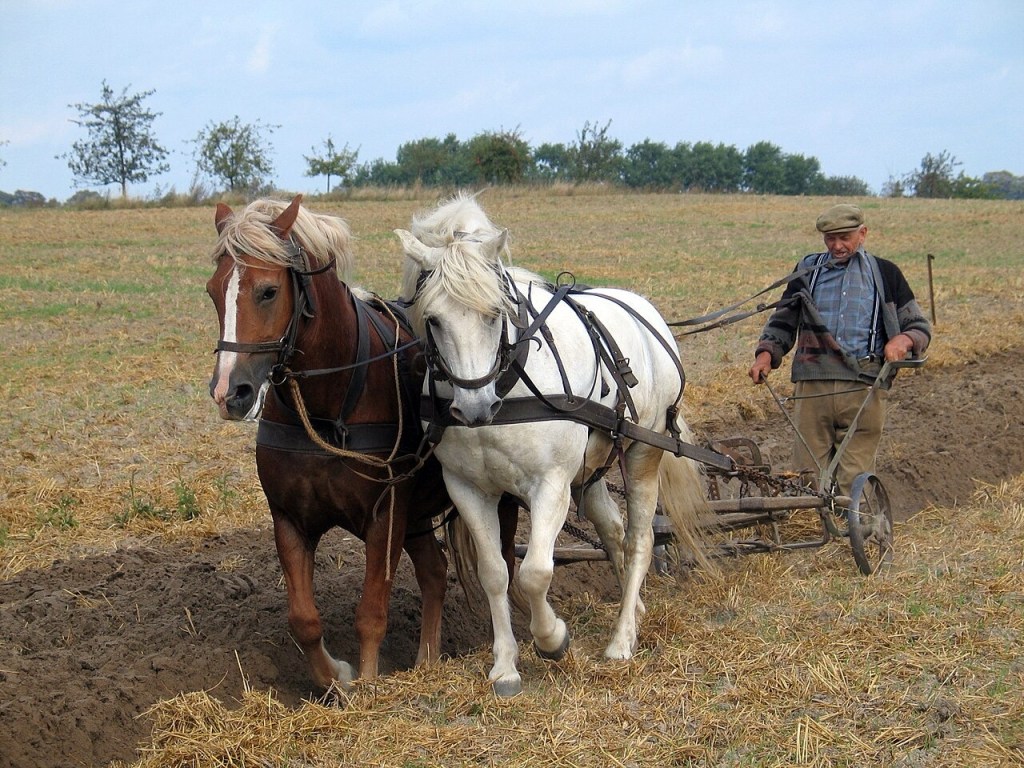
In 1781, an English engineer who Encyclopædia Britannica describes as ‘the principal inventor of the railroad locomotive’ was born. Who is he, and which of his locomotives inaugurated public rail travel in September 1828?
Two
Tea bags were reportedly invented by accident. Modern tea bags are made from paper but what material were the early ones made from?
Three
(Note, in this question, the word ‘houghing’ is an obsolete form of ‘hoeing’ as done with a horse-drawn hoe (hough)).
What name links the book The New Horse Houghing Husbandry: Or an Essay on the Principles of Tillage and Vegetation, which was published in 1731, with the 1978 album Heavy Horses?
Four
Adolphe Sax, best known for inventing the saxophone, was born in which present-day country, and in what decade did he patent the saxophone?
Five
What are the ‘Four Great Inventions’ traditionally attributed to ancient China?
The post title might sound a bit obvious but it is simply a follow-on to yesterday’s, Islands Surrounded by Land. The first question relates to today’s date, 8 June, and also to an island. The other questions are not date related but all are about islands.
One
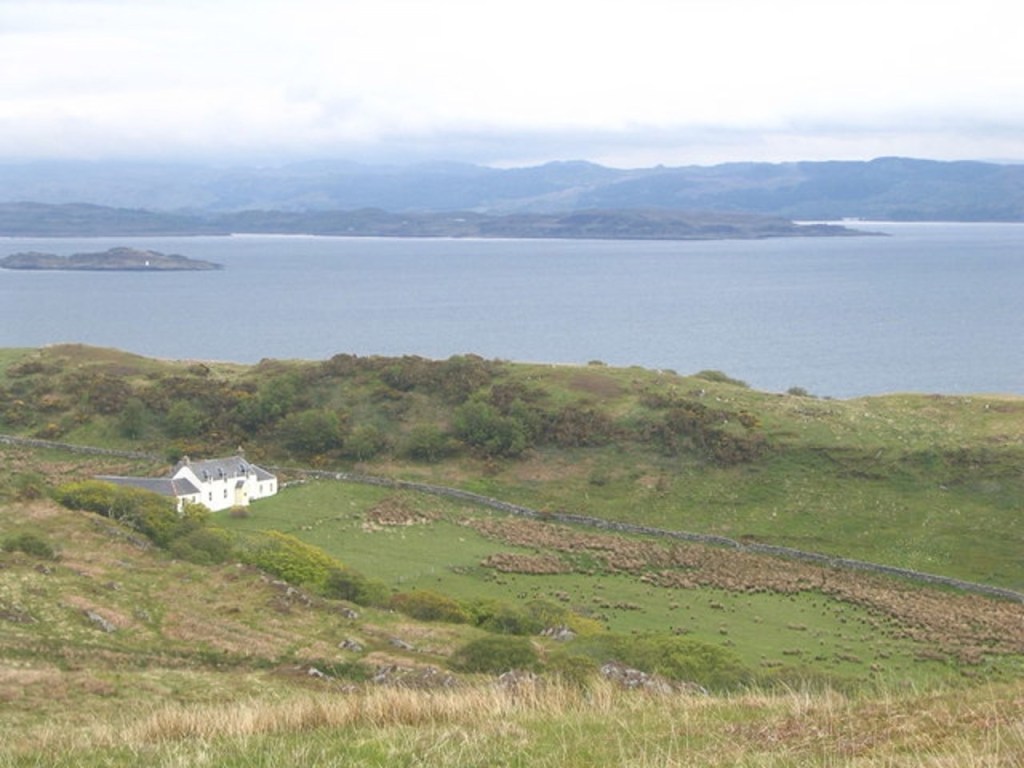
In 1946, George Orwell left London and moved to Scotland, where he stayed at a remote house called Barnhill on a Hebridean island to finish his novel, Nineteen Eighty-Four. What island was Barnhill on, and what chronic illness was Orwell suffering as he wrote the novel?
Answer: Isle of Jura; Tuberculosis.
In May 1946, Orwell retreated to Jura to draft Nineteen Eighty-Four at Barnhill. Despite slow progress and health issues, including lung inflammation and tuberculosis, he completed the first draft on 7 November 1947. Miranda Christen typed a clean version, and Orwell sought medical treatment at Hairmyres Hospital, East Kilbride. Orwell was discharged in summer 1948, returned to Jura, and completed a second draft of Nineteen Eighty-Four by November. Unable to find a typist, he retyped it himself despite illness. He left Barnhill in January 1949, and recovered in a sanatorium in the Cotswolds. On June 8, 1949, Nineteen Eighty-four was published.
Two
In what ocean is the Chagos Archipelago located?
Answer: Indian Ocean.
The Chagos Archipelago, over 60 islands in the Indian Ocean, was under French and then British control. In 1965, the UK expelled its Chagossian population for a US military base. Mauritius claimed the islands, with the ICJ and ITLOS ruling in 2019 and 2021 that the UK must return them. A 2025 treaty transferring sovereignty to Mauritius is on hold due to US, UK, and public opposition, citing UNCLOS Article 298 (b).
Three
What island extending from approximately 76° N to 83° N is world’s largest island entirely within the Arctic Circle?
Answer: Ellesmere Island.
Ellesmere Island, Canada’s northernmost and third largest island, spans 196,236 square kilometres, slightly smaller than Great Britain. Part of the Queen Elizabeth Islands, it features Cape Columbia, Canada’s northernmost point, and the north geomagnetic pole. The Arctic Cordillera dominates its landscape, with over one-fifth designated as Quttinirpaaq National Park. In 2021, its population was 144, residing in Alert, Eureka, and Grise Fiord, within Nunavut’s Qikiqtaaluk Region. Canada’s other northern islands, which are larger than Ellesmere, such as Baffin Island, extend south of the Arctic Circle and therefore do not answer the question.
Four
After the British Imperial Trans-Antarctic Expedition ship was trapped by pack ice, a small group in an open boat, the James Caird, attempted an 810-mile winter crossing of the South Atlantic Ocean to organise a rescue. What two islands were the starting and ending points of this epic journey?
Answer: Elephant Island and South Georgia Island.
In August 1914, Shackleton led the British Imperial Trans-Antarctic Expedition. The Endurance was trapped in pack ice, drifting for ten months before being crushed. The crew survived on ice floes for five months, reaching Elephant Island. Shackleton and five others sailed 810 miles (700 nautical miles; 1,300 km) to South Georgia in 17 days aboard the open boat, James Caird. The journey saw Atlantic winter storms, including ‘one of the worst hurricanes any of us had ever experienced‘. After four months and four relief expeditions, Shackleton rescued his crew, with none perishing, showcasing his exceptional leadership and resilience. The James Caird is on display at Dulwich College, London, UK, which is Shackleton’s alms mater.
Five
What is the largest island in the geographic entity of Europe?
Answer: Great Britain.
The designation ‘Great Britain‘ ultimately reflects classical Greek geographic terminology. In the 2nd century CE, Ptolemy referred to the larger island in the British Isles as Megálē Brettanía (‘Great Britain‘), using a descriptive term meaning ‘great‘ or ‘large’. The modern English name developed later from this classical tradition of distinguishing the larger island within the archipelago.
Islands Surrounded by Water
The post title might sound a bit obvious but it is simply a follow-on to yesterday’s, Islands Surrounded by Land. The first question relates to today’s date, 8 June, and also to an island. The other questions are not date related but all are about islands.
The post title might sound a bit obvious but it is simply a follow-on to yesterday’s, Islands Surrounded by Land. The first question relates to today’s date, 8 June, and also to an island. The other questions are not date related but all are about islands.
One
In 1946, George Orwell left London and moved to Scotland, where he stayed at a remote house called Barnhill on a Hebridean island to finish his novel, Nineteen Eighty-Four. What island was Barnhill on, and what chronic illness was Orwell suffering as he wrote the novel?
Two
In what ocean is the Chagos Archipelago located?
Three
What island extending from approximately 76° N to 83° N is world’s largest island entirely within the Arctic Circle?
Four
After the British Imperial Trans-Antarctic Expedition ship was trapped by pack ice, a small group in an open boat, the James Caird, attempted an 810-mile winter crossing of the South Atlantic Ocean to organise a rescue. What two islands were the starting and ending points of this epic journey?
Five
What is the largest island in the geographic entity of Europe?
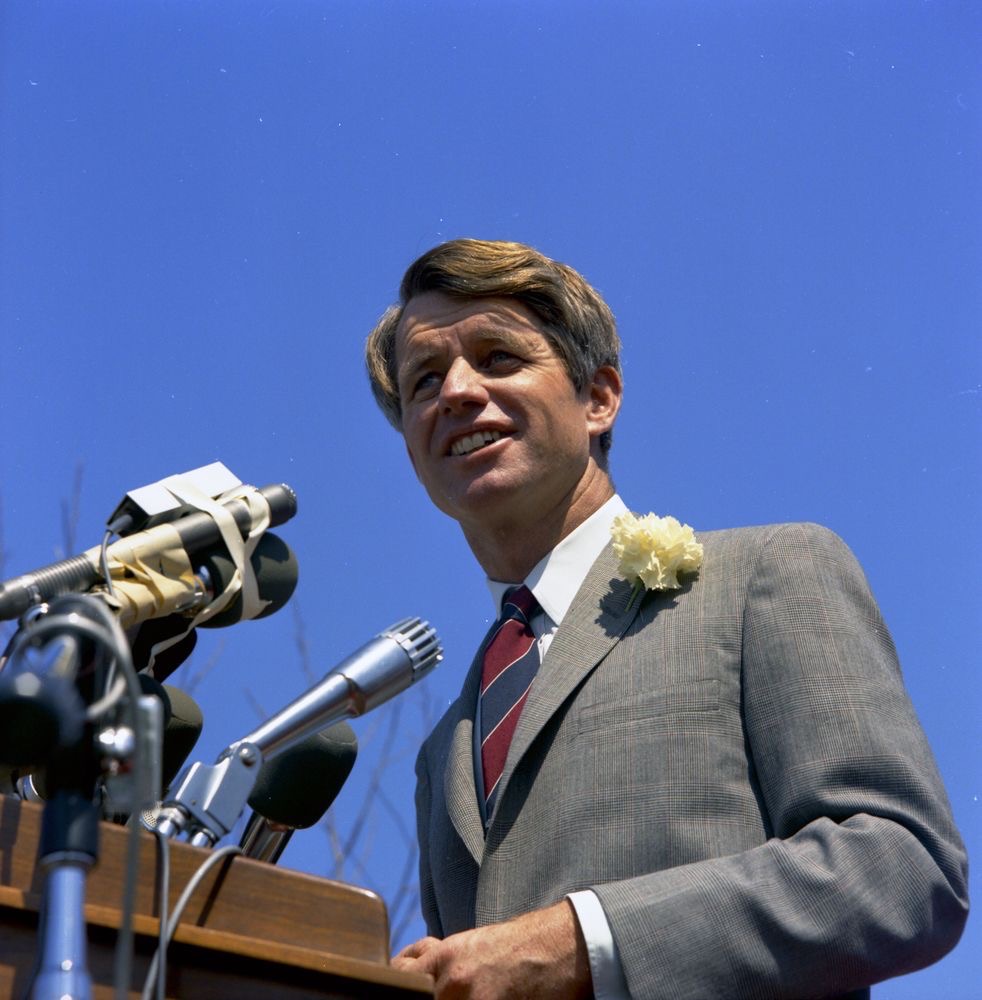
On 5 June 1968, U.S. presidential candidate Robert F. Kennedy was fatally shot? Who shot him, and in what building and in what city was he shot?
Answer: Sirhan Sirhan; Ambassador Hotel, Los Angeles.
In March 1968, Robert F Kennedy announced his presidential candidacy. By June 4th he had secured five out of six primaries including a victory in California that day. Shortly after midnight on June 5th he addressed his supporters at the Ambassador Hotel in Los Angeles. As he exited through a kitchen corridor he was fatally shot by Sirhan Sirhan, a Palestinian immigrant. Kennedy was interred near his brother John at Arlington National Cemetery.
Two
AIDS was reported for the first time after a rare form of pneumonia was found in five homosexual men. In what year was this, and in what city was the pneumonia detected?
Answer: 1981; Los Angeles, U.S.A.
HIV is a retrovirus attacking the immune system, potentially leading to AIDS without treatment. It is preventable and manageable with antiretroviral therapy, extending life expectancy to nearly normal levels. Early testing and treatment prevent progression and transmission. HIV spreads through unprotected sex, contaminated needles, and mother-to-child transmission. Recognised in the 1980s, HIV/AIDS has significant societal, economic, and political impacts. Originating from primates in west-central Africa, AIDS was first identified in 1981. By 2024, AIDS caused at least 42.3 million deaths globally, with 630,000 deaths in 2023 and 39.9 million living with HIV, 65% in the WHO African Region.
Three
Born this day in 1939, this man would become Canada’s 16th and youngest prime minister 40 years later. Who is he?
Answer: Joe Clark.
Joe Clark, Canada’s youngest Prime Minister, led the Progressive Conservative Party from 1976 to 1983 and again from 1998 to 2003. His brief tenure as Prime Minister saw the introduction of freedom of information legislation and the ‘Canadian Caper’ rescue. After losing the 1980 election, he served in Brian Mulroney’s cabinet and later as a UN Special Representative for Cyprus.
Four
This author was born in Wales in 1949, and had a breakthrough with his 1978 novel Eye of the Needle. His successful Kingsbridge series began with The Pillars of the Earth (1989). Who is this author?
Answer: Ken Follett.
Welsh author Ken Follett, born in 1949, is known for his thrillers and historical novels, selling nearly 200 million copies. His breakthrough came with Eye of the Needle (1978), and he later achieved success with The Pillars of the Earth (1989).
Five
This actor turned politician had his first screen credit in a starring role in 1937 as Andy McCaine in Love Is on the Air and 20 years later he was Cdr. Casey Abbott in Hellcats of the Navy. Who is he?
Answer: Ronald Reagan.
Ronald Reagan, the 40th president of the United States, was a former movie actor known for his conservative Republicanism and anticommunism. He served as president from 1981 to 1989 and was nicknamed ‘the Great Communicator’ for his oratory skills. Reagan’s policies are credited with contributing to the downfall of Soviet communism. Ronald Reagan died on 5 June 2004.
On 5 June 1968, U.S. presidential candidate Robert F. Kennedy was fatally shot? Who shot him, and in what building and in what city was he shot?
Two
AIDS was reported for the first time after a rare form of pneumonia was found in five homosexual men. In what year was this, and in what city was the pneumonia detected?
Three
Born this day in 1939, this man would become Canada’s 16th and youngest prime minister 40 years later. Who is he?
Four
This author was born in Wales in 1949, and had a breakthrough with his 1978 novel Eye of the Needle. His successful Kingsbridge series began with The Pillars of the Earth (1989). Who is this author?
Five
This actor turned politician had his first screen credit in a starring role in 1937 as Andy McCaine in Love Is on the Air and 20 years later he was Cdr. Casey Abbott in Hellcats of the Navy. Who is he?
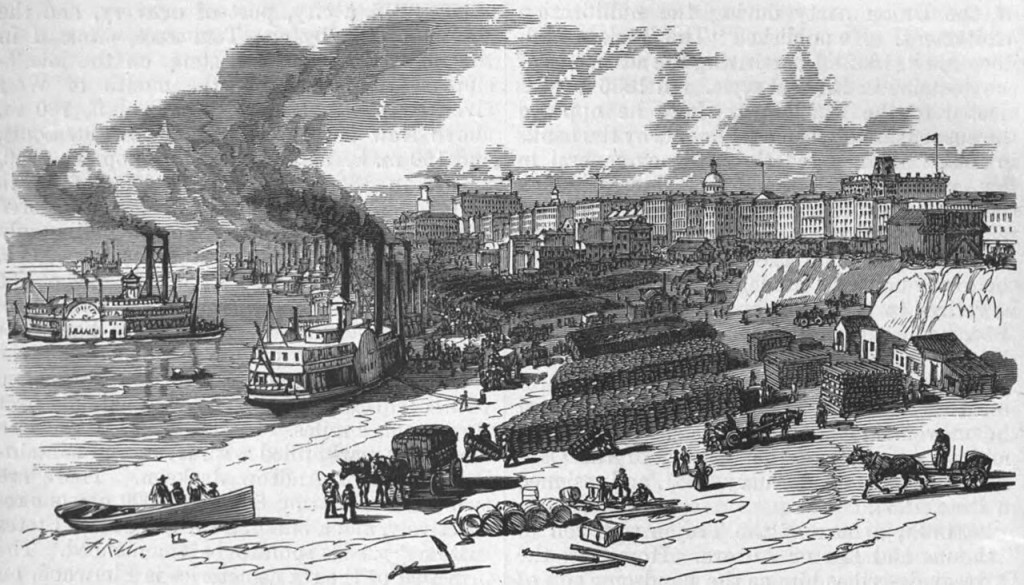
Woodcut representing the waterfront of Memphis, Tennessee, published 1879. Image Wikimedia Commons
Today’s five questions form a theme, and that is all I am alluding to.
One
The Perry Index sorts fables attributed to which ancient Greek writer?
Answer: Aesop.
The Perry Index is a comprehensive index of Aesop’s Fables, attributed to the ancient Greek storyteller Aesop (620-560 BC). Created by Ben Edwin Perry, a University of Illinois classics professor, it categorises and references the fables. Modern scholarship suggests Aesop didn’t compose all of the fables attributed to him; some predate him, others appear over a millennium after him.
Two
What singer’s debut album was Age Ain’t Nothing but a Number?
Answer: Aaliyah.
Age Ain’t Nothing but a Number is Aaliyah’s debut album, released on 24 May 1994. Produced by R. Kelly, it blends R&B with new jack swing, peaking at number 18 on the US Billboard 200. It sold over three million copies in the US and six million worldwide, featuring two gold-certified singles.
Three
In 1938, which national leader was named Time magazine’s Man of the Year?
Answer: Adolf Hitler.
TIME explained what was perhaps the most controversial of its choices thus: “Hitler became in 1938 the greatest threatening force that the democratic, freedom-loving world faces today” (1/2/39).
Hitler’s rise began in 1919, when he joined the German Workers Party, which was renamed the Nazi party. Within two years he was the party’s leader. In 1933, Hitler became chancellor of Germany and soon consolidated his power, banning other parties and establishing totalitarian rule. He put the unemployed to work in public programs, rebuilt the army and sent Jews, communists and others to concentration camps. On September 1, 1939, Hitler began World War II by invading Poland. By 1941, German troops had become bogged down in Russia, and in 1944 the Allies began their advance on Germany. Hitler lived his final months in a Berlin bunker, committing suicide on April 29, 1945.
Big River, a 1984 musical, is based on which Mark Twain novel?
Answer: Adventures of Huckleberry Finn.
Roger Miller’s Big River: The Adventures of Huckleberry Finn is a musical based on Mark Twain’s novel, featuring bluegrass and country music. The 1985 Broadway production ran for over 1,000 performances and won seven Tony Awards, including Best Musical.
Five
What word describes the repetition of the same sound at the start of each word?
Answer: Alliteration.
alliteration | əˌlɪtəˈreɪʃn | noun [mass noun] the occurrence of the same letter or sound at the beginning of adjacent or closely connected words: the alliteration of ‘sweet birds sang’ | [count noun] : alliterations are clustered in the last few lines. – ORIGIN early 17th century: from medieval Latin alliteratio(n-), from Latin ad– (expressing addition) + littera ‘letter’. Oxford English Dictionary
In the Beginning
The post title refers to all the answers beginning with ‘A’.
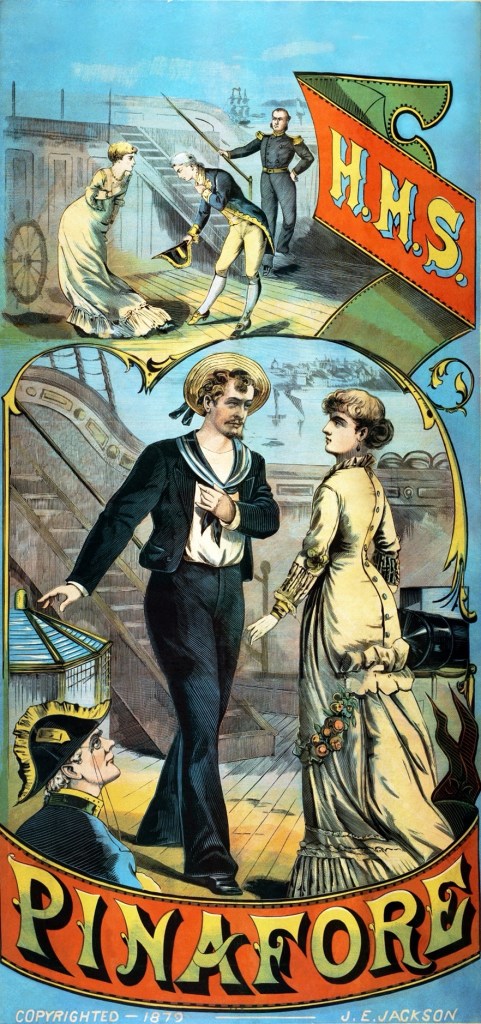
H.M.S. Pinafore; or, The Lass That Loved a Sailor, theatrical poster. Image Wikimedia Commons
All of these questions are related to today’s date, May 25th.
One
What was the first X-rated film to win the Academy Award for best picture?
Midnight Cowboy.
Released on this day in 1969, Midnight Cowboy, directed by John Schlesinger, stars Dustin Hoffman and Jon Voight as New York hustlers. It won three Academy Awards, including Best Picture, and is the only X-rated film to do so. Ranked 36th and 43rd on AFI’s lists, it was preserved in the U.S. National Film Registry in 1994. X-certification has been renamed in some domains; for example, in the U.K., it is now an 18 certificate, which is suitable only for persons aged 18 years and over, and in the U.S., NC-17, No one 17 and under admitted.
Two
He did not wear his scarlet coat, For blood and wine are red, And blood and wine were on his hands When they found him with the dead, The poor dead woman whom he loved, And murdered in her bed.
The above lines are the opening verse of an 1897 poem which was published under the pseudonym C.3.3. What is the poem, and who wrote it?
Answer: The Ballad of Reading Gaol by Oscar Wilde.
On 25 May 1895, Wilde had been convicted of ‘committing acts of gross indecency with certain male persons’, sentenced to two years’ hard labour; he served the majority of his sentence in Reading Gaol. His poem, The Ballad of Reading Gaol, which was written after his release from prison, narrates the execution of Charles Thomas Wooldridge. It highlights the brutalisation of punishment and Wilde’s identification with prisoners. Published in 1898, under the pseudonym C.3.3. — his prison identification by which he was addressed — it remained anonymous until Wilde’s identity as author was revealed in 1899. The poem, which sold well, provided Wilde with an income for life.
Three
The author who created the character Jason Bourne in a 1980 novel was born in 1927. Who was this author?
Answer: Robert Ludlum.
Robert Ludlum, an American author known for his spy thrillers, wrote best-sellers like The Bourne Identity and The Scarlatti Inheritance. Despite criticism of his plots and prose, his fast-paced espionage novels were immensely popular. He authored 27 thriller novels, including the Jason Bourne series, which have been published in 33 languages and sold an estimated 300-500 million copies.
Four
An actor, born in 1939, links the roles of John Profumo in 1989, Mithrandir (2001), and Leigh Teabing (2006). What actor?
Answer: Ian McKellen.
Ian McKellen, who was born in England on this day in 1939, played John Profumo in Scandal (1989). In 2001, he took on the role of Gandalf the Grey in The Lord of the Rings: The Fellowship of the Ring — Mithrandir is how Gandalf is known by the Elves in their Sindarin language. He portrayed Sir Leigh Teabing in The Da Vinci Code (2006).
Five
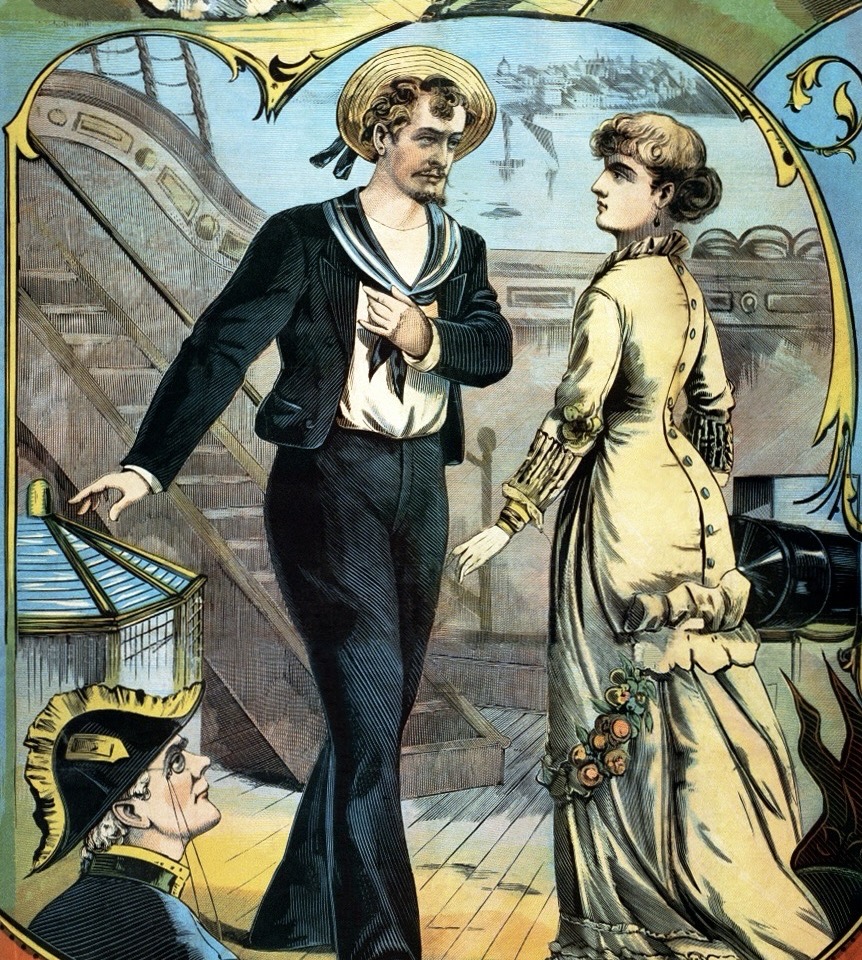
…; or, The Lass That Loved a Sailor, a comic opera, debuted in London in 1878. What has been omitted from the beginning of the opera’s title?
Answer: H.M.S. Pinafore.
H.M.S. Pinafore; or, The Lass That Loved a Sailor, a comic opera by Gilbert and Sullivan, premiered in 1878, running for 571 performances. Set on a Royal Navy ship, it humorously critiques the British class system and authority. Its success led to other popular works, influencing modern musical theatre.
…; or, The Lass That Loved a Sailor, theatrical poster (cropped). See question five. Image Wikimedia Commons
All of these questions are related to today’s date, May 25th.
One
What was the first X-rated film to win the Academy Award for best picture?
Two
He did not wear his scarlet coat, For blood and wine are red, And blood and wine were on his hands When they found him with the dead, The poor dead woman whom he loved, And murdered in her bed.
The above lines are the opening verse of an 1897 poem which was published under the pseudonym C.3.3. What is the poem, and who wrote it?
Three
The author who created the character Jason Bourne in a 1980 novel was born in 1927. Who was this author?
Four
An actor, born in 1939, links the roles of John Profumo in 1989, Mithrandir (2001), and Leigh Teabing (2006). What actor?
Five
…; or, The Lass That Loved a Sailor, a comic opera, debuted in London in 1878. What has been omitted from the beginning of the opera’s title?
Today the first question relates to today’s date, May 23rd. The following questions follow a theme which is explained here.
Theme
The gist of today’s quiz is that the first question results in you having three five-letter words in the answer.
One of those words supplies the initial letters for the remaining questions.
Firstly, discount the initial letter as it has already been used. The remaining four letters supply the initial letters to the answers to the remaining questions but they will not necessarily be in the correct order.
Once you have answered all the questions you should be able to take the initial letters of the five answers, rearrange and have one of the words from the answer to question one.
The country that is home to the building in the image above was annexed by a neighbour on this day in 1951. In what city is the building, and what two neighbouring countries are referred to?
Answers: Lhasa; Tibet and China.
The Potala Palace, pictured, in Lhasa, Tibet, served as the winter residence of the Dalai Lamas from 1649 to 1959. Built in the dzong style, it’s named after Mount Potalaka, the mythical dwelling of Avalokiteśvara. Lhasa, Tibet’s capital, stands at 11,995 feet (3,656 m), making it one of the world’s highest cities. The incorporation of Tibet into China in 1950 remains a contentious issue. While China considers it a rightful part of its territory, many Tibetans and the international community view it as an occupation.
Two
In what film from the 1990s is El Toro air base destroyed?
Independence Day.
Independence Day is a 1996 American science fiction action film directed by Roland Emmerich. The film, which focuses on a worldwide attack by extraterrestrials, was a significant turning point in the history of the Hollywood blockbuster and grossed over $817.4 million worldwide.
Three
What explorer, in c.986 CE, was the founder of the first European settlement on Greenland?
Answer: Erik the Red.
While exiled, Erik the Red explored a land later known as Greenland, which he named to attract settlers. He returned to Iceland, successfully recruiting colonists, and in c.986 CE, established two settlements on Greenland’s southwest coast, the Eastern and Western Settlements.
Four
Who in The Lord of the Rings is described by Gandalf as ‘the oldest living thing that still walks beneath the Sun upon this Middle-earth’?
Answer: Treebeard.
Treebeard, an Ent, recounts to Merry and Pippin how the Ents were created to protect trees and how he remembers the vast forests of Middle-earth. He learns of Saruman’s treachery and, realising the danger he poses, rallies the Ents to attack Isengard, destroying it and trapping Saruman in his tower. After the war, Treebeard remains at Isengard, now called the Treegarth of Orthanc, and is entrusted with its care by the king, Elessar (Aragorn).
Five
The Beagle Channel, the Straits of Magellan to the north, and the open-ocean Drake Passage to the south are the three navigable passages around South America between the Pacific and Atlantic Oceans. — Wikipedia
What body of water is missing from this quote?
Answer: Beagle Channel.
The channel was named after HMS Beagle, which surveyed South America’s coasts from 1826 to 1830. During a second voyage, captain FitzRoy took Charles Darwin, who saw glaciers for the first time in the channel, and noted
It is scarcely possible to imagine anything more beautiful than the beryl-like blue of these glaciers, and especially as contrasted with the dead white of the upper expanse of snow. — Charles Darwin, Voyage of the Beagle