Here are the answers to today’s questions.
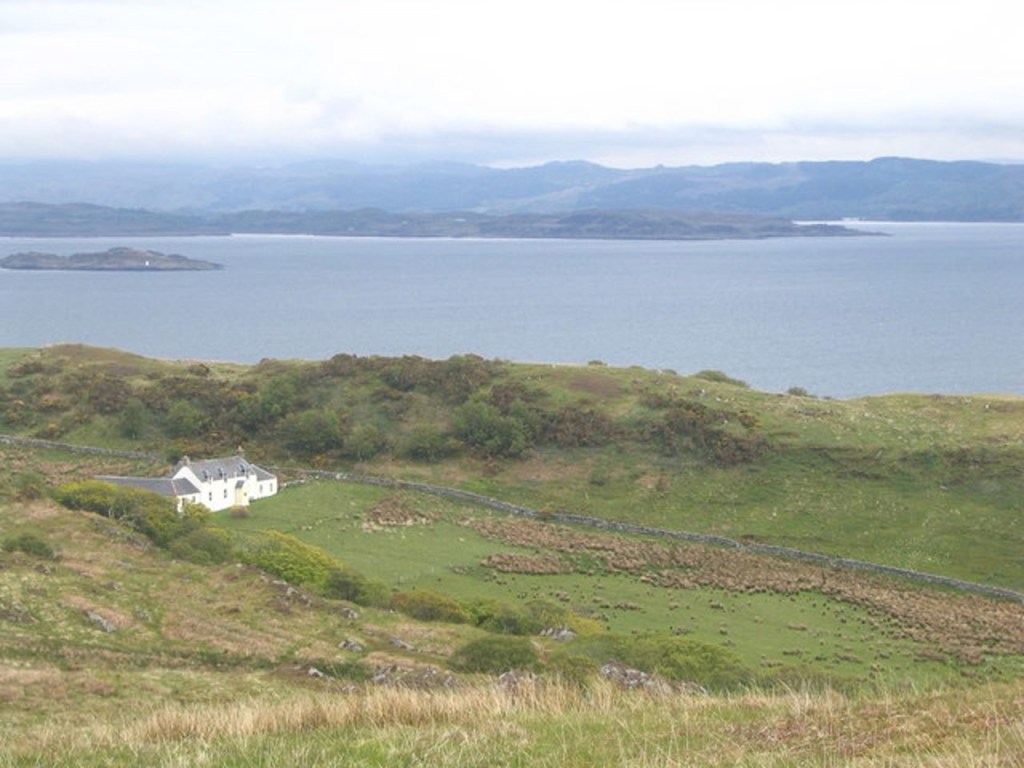
Image Wild About Argyll
The post title might sound a bit obvious but it is simply a follow-on to yesterday’s, Islands Surrounded by Land.
The first question relates to today’s date, 8 June, and also to an island. The other questions are not date related but all are about islands.
One
In 1946, George Orwell left London and moved to Scotland, where he stayed at a remote house called Barnhill on a Hebridean island to finish his novel, Nineteen Eighty-Four. What island was Barnhill on, and what chronic illness was Orwell suffering as he wrote the novel?
Answer: Isle of Jura; Tuberculosis.
In May 1946, Orwell retreated to Jura to draft Nineteen Eighty-Four at Barnhill. Despite slow progress and health issues, including lung inflammation and tuberculosis, he completed the first draft on 7 November 1947. Miranda Christen typed a clean version, and Orwell sought medical treatment at Hairmyres Hospital, East Kilbride. Orwell was discharged in summer 1948, returned to Jura, and completed a second draft of Nineteen Eighty-Four by November. Unable to find a typist, he retyped it himself despite illness. He left Barnhill in January 1949, and recovered in a sanatorium in the Cotswolds. On June 8, 1949, Nineteen Eighty-four was published.
Two
In what ocean is the Chagos Archipelago located?
Answer: Indian Ocean.
The Chagos Archipelago, over 60 islands in the Indian Ocean, was under French and then British control. In 1965, the UK expelled its Chagossian population for a US military base. Mauritius claimed the islands, with the ICJ and ITLOS ruling in 2019 and 2021 that the UK must return them. A 2025 treaty transferring sovereignty to Mauritius is on hold due to US, UK, and public opposition, citing UNCLOS Article 298 (b).
Three
What island extending from approximately 76° N to 83° N is world’s largest island entirely within the Arctic Circle?
Answer: Ellesmere Island.
Ellesmere Island, Canada’s northernmost and third largest island, spans 196,236 square kilometres, slightly smaller than Great Britain. Part of the Queen Elizabeth Islands, it features Cape Columbia, Canada’s northernmost point, and the north geomagnetic pole. The Arctic Cordillera dominates its landscape, with over one-fifth designated as Quttinirpaaq National Park. In 2021, its population was 144, residing in Alert, Eureka, and Grise Fiord, within Nunavut’s Qikiqtaaluk Region. Canada’s other northern islands, which are larger than Ellesmere, such as Baffin Island, extend south of the Arctic Circle and therefore do not answer the question.
Four
After the British Imperial Trans-Antarctic Expedition ship was trapped by pack ice, a small group in an open boat, the James Caird, attempted an 810-mile winter crossing of the South Atlantic Ocean to organise a rescue. What two islands were the starting and ending points of this epic journey?
Answer: Elephant Island and South Georgia Island.
In August 1914, Shackleton led the British Imperial Trans-Antarctic Expedition. The Endurance was trapped in pack ice, drifting for ten months before being crushed. The crew survived on ice floes for five months, reaching Elephant Island. Shackleton and five others sailed 810 miles (700 nautical miles; 1,300 km) to South Georgia in 17 days aboard the open boat, James Caird. The journey saw Atlantic winter storms, including ‘one of the worst hurricanes any of us had ever experienced‘. After four months and four relief expeditions, Shackleton rescued his crew, with none perishing, showcasing his exceptional leadership and resilience. The James Caird is on display at Dulwich College, London, UK, which is Shackleton’s alms mater.
Five
What is the largest island in the geographic entity of Europe?
Answer: Great Britain.
The designation ‘Great Britain‘ ultimately reflects classical Greek geographic terminology. In the 2nd century CE, Ptolemy referred to the larger island in the British Isles as Megálē Brettanía (‘Great Britain‘), using a descriptive term meaning ‘great‘ or ‘large’. The modern English name developed later from this classical tradition of distinguishing the larger island within the archipelago.
Islands Surrounded by Water
The post title might sound a bit obvious but it is simply a follow-on to yesterday’s, Islands Surrounded by Land.
The first question relates to today’s date, 8 June, and also to an island. The other questions are not date related but all are about islands.


Leave a Reply