Today’s questions all relate to this date, 2 October, but have nothing else in common. Although numbered one to five there are seven answers.
One
On this day, Charles Darwin returned to the United Kingdom after his five-year voyage making observations and gathering specimens, which led to his theory of evolution. In what decade did he return to the UK; and what connects this voyage to Charlie Brown’s dog?
Two
Mummy brown, a shade of brown which appeared in the news on this day in 1964 was a colour which was named so because it was:
The mother of all shades of brown
The colour of habit worn by the Superior Mother Superior of the Carmelite Order
A pigment made from the flesh of mummies
Three
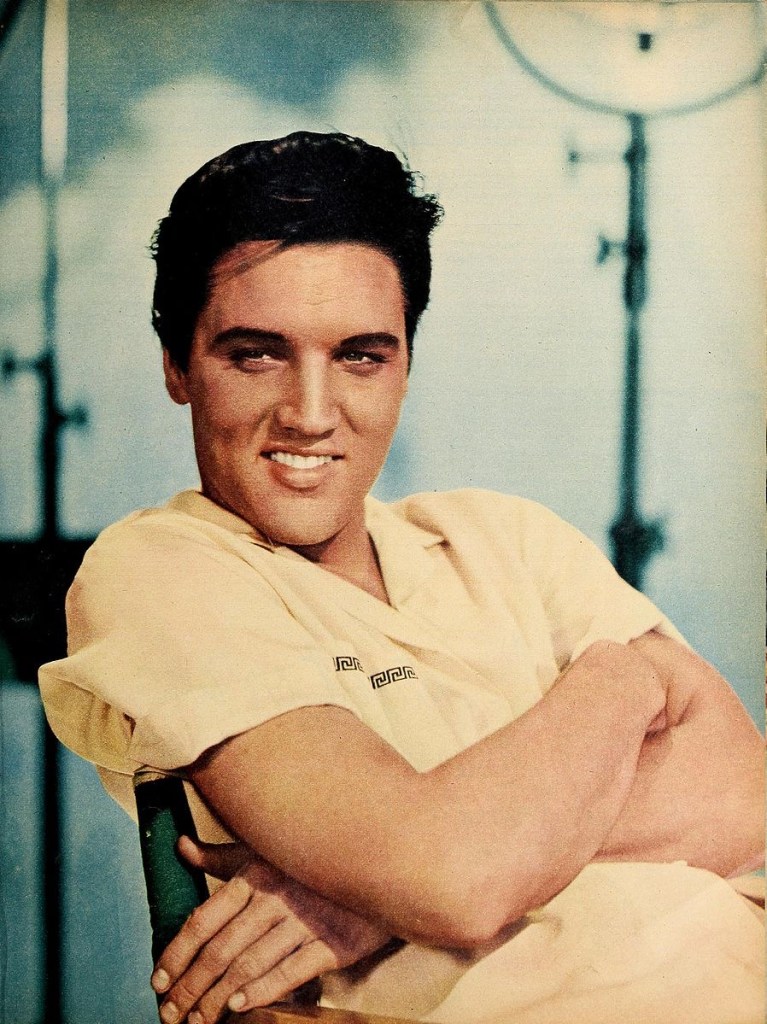
In 1954, Elvis Presley appeared on the radio show the Grand Ole Opry On how many occasions in total did he appear on this show?
Once
Twice
Three Times
Four
In 1937, a speech by the Dominican Republic’s Dictator, Rafael Trujillo, led attacks by Dominican soldiers that resulted in the deaths of thousands of Haitians. By what name is this known?
Parsley Massacre
Poppy Pogrom
Pot Genocide
Five
On this day in 1957, a classic war film had it premiere. The film which featured the River Kwai in its title went on to win the Academy Award for the Best Picture. What was the film’s full title; and who starred as Colonel Nicholson, the senior British officer in the prisoner of war camp?
Bill Gates House, “Xanadu 2.0”. See question two. Image Wikimedia Commons
Today’s Answers
The first question today is related to the date, 29 September. The remainder are not date-related but follow-on from number one.
One
On this day newspapers proclaimed the world’s first billionaire. Who was this billionaire and in what year were these stories published?
Answers: John D. Rockefeller; 1916.
In 1916, John D. Rockefeller was reported as the world’s first billionaire. Yet the claim remained uncertain. A sudden rise in the value of his oil holdings the day before seemed to push his wealth beyond $1 billion. Newspapers tracked his fortune like a baseball box score, though no exact count existed. Reporters had to estimate his assets and their value, making the billion-dollar figure an informed guess.
Two
Tech billionaire Bill Gates had a lakeside mansion built in Medina, Washington. A Wikipedia article about the house refers to it as follows:
Some news articles call the house Xanadu 2.0, a reference to the motion picture …, which was itself a reference to the opening lines of Samuel Taylor Coleridge’s classic poem …
— Wikipedia
What 1941 movie and poem published in 1816 are missing from this quote?
Which is the nearest planet to the Sun whose average orbital distance is more than one billion miles? This planet has only been explored by one spacecraft (in 1986): what spacecraft?
Answer: Uranus; Voyager 2.
Uranus is the third largest planet in our solar system. It’s about four times wider than Earth, and has an equatorial diameter of about 31,763 miles (51,118 kilometres). Uranus is the seventh planet from the Sun, orbiting at an average distance of 1.8 billion miles (2.9 billion kilometres). It’s about 19 times farther from the Sun than Earth. The exploration of Uranus has been limited to telescopes and a single flyby by NASA’s Voyager 2 in 1986. During this mission, the spacecraft discovered 10 new moons and two new rings, studied the planet’s atmosphere, and imaged its five largest moons.
Four
What now deceased billionaire bought the island of Skorpios in the Ionian Sea in 1963; and who did this billionaire marry on the island in 1968?
Answers: Aristotle Onassis; Jacqueline Kennedy.
Skorpios, a private Ionian island bought by Aristotle Onassis in 1963, hosts three residences and hosted his 1968 wedding to Jacqueline Kennedy, former First Lady of the United States. After Onassis’s death, ownership passed to Christina and then Athina Onassis.
Five
In January 2025, an American tech company saw the largest one-day loss in market capitalisation for a U.S. company in history. What company and how much was that loss?
Answers: Nvidia; $600 billion.
By 7 January 2025, Nvidia’s $3.66 trillion market cap exceeded double the combined value of AMD, ARM, Broadcom and Intel. That month, DeepSeek’s V3 model caused Nvidia’s record $600 billion one-day loss; its AI assistant overtook ChatGPT on Apple’s App Store.
Bill Gates House, “Xanadu 2.0”. See question two. Image Wikimedia Commons
The first question today is related to the date, 29 September. The remainder are not date-related but follow-on from number one.
One
On this day newspapers proclaimed the world’s first billionaire. Who was this billionaire and in what year were these stories published?
Two
Tech billionaire Bill Gates had a lakeside mansion built in Medina, Washington. A Wikipedia article about the house refers to it as follows:
Some news articles call the house Xanadu 2.0, a reference to the motion picture …, which was itself a reference to the opening lines of Samuel Taylor Coleridge’s classic poem …
— Wikipedia
What 1941 movie and poem published in 1816 are missing from this quote?
Three
Which is the nearest planet to the Sun whose average orbital distance is more than one billion miles? This planet has only been explored by one spacecraft (in 1986): what spacecraft?
Four
What now deceased billionaire bought the island of Skorpios in the Ionian Sea in 1963; and who did this billionaire marry on the island in 1968?
Five
In January 2025, an American tech company saw the largest one-day loss in market capitalisation for a U.S. company in history. What company and how much was that loss?
Today’s first question relates to the date 26 September, but the remainder are not date-related. They do, though, follow on a theme from the first.
One
On this day in 1939 Old Possum’s Book of Practical Cats was published. Who was this ‘Old Possum’?
Answer: T.S. Eliot.
In 1939, T.S. Eliot released a collection of light verse titled Old Possum’s Book of Practical Cats, with ‘Old Possum’ being Ezra Pound’s affectionate nickname for him. The first edition featured an illustration of the author on the cover. In 1954, composer Alan Rawsthorne arranged six poems for speaker and orchestra in a piece called Practical Cats. Following Eliot’s death, the book became the foundation for Andrew Lloyd Webber’s musical Cats, which premiered in the West End in 1981 and opened on Broadway the following year.
Two
What American singer, born in 1980, has been referred to as the ‘Voice of a Generation’?
Answer: Christina Aguilera
Christina María Aguilera, born 18 December 1980, in New York City, is an American singer, songwriter, actress, and television personality. Known for a four-octave range and reinventions, Rolling Stone ranked her among the greatest singers; her work draws acclaim and controversy.
Three
What high-ranking politician from the first couple of decades of the 21st century was given the nickname ‘Mutti’?
Answer: Angela Merkel.
Angela Merkel served as Germany’s chancellor from 2005 to 2021, making her the first woman and second longest-serving leader in that role. She was a key figure in European politics, advocating for austerity during the euro-zone debt crisis and maintaining open borders during a major refugee crisis. Her steady leadership navigated Germany through significant global challenges.
Four
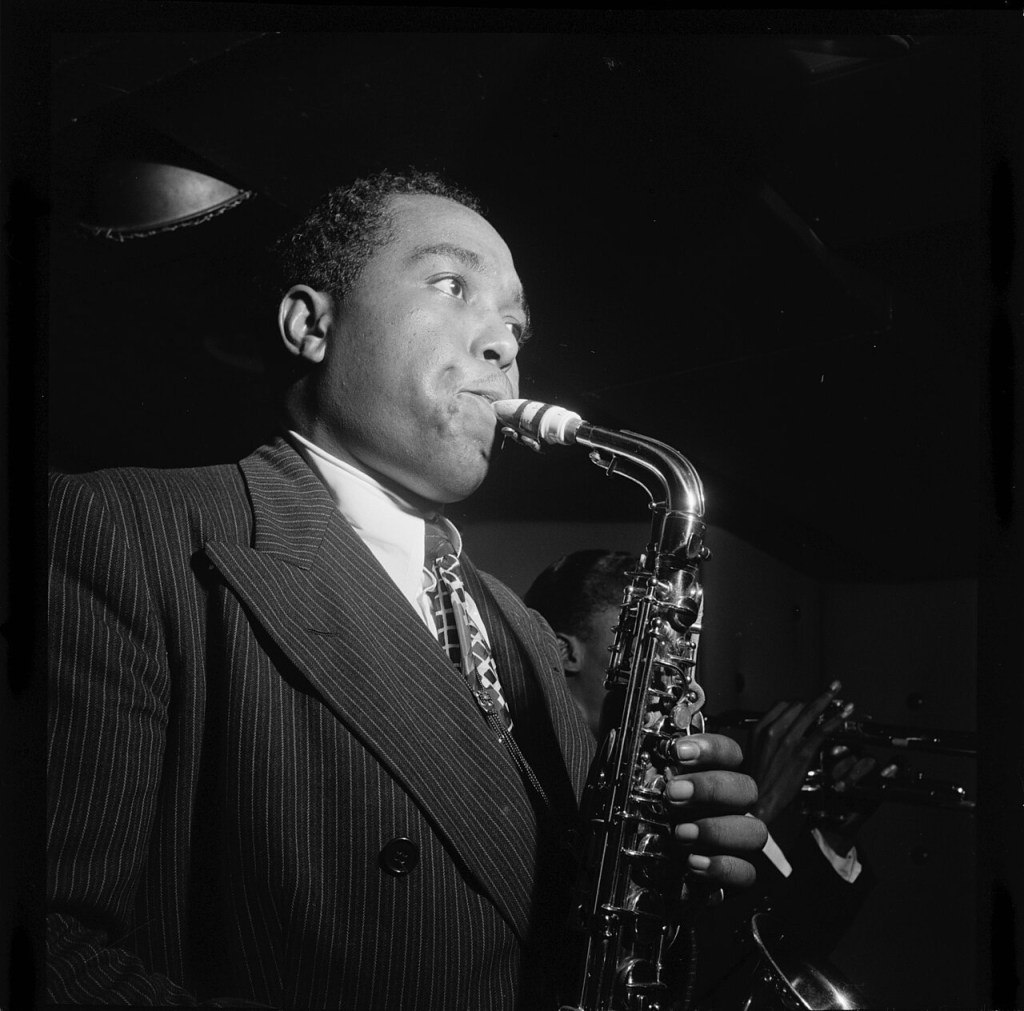
Eric Clapton joined a band in 1963 which had a name which may have come from Jack Kerouac’s novel On the Road. This name was also the nickname of a legendary jazz saxophonist. What was the band’s name; and who was the sax player?
Answer: The Yardbirds; Charlie ‘Yardbird’ Parker.
Formed in London in 1963, the Yardbirds featured Keith Relf, Paul Samwell-Smith, Chris Dreja, Jim McCarty and Anthony Topham. Eric Clapton, Jeff Beck and Jimmy Page played lead guitar before the 1968 split. The band was inducted into the Rock and Roll Hall of Fame in 1992. Charles Parker Jr., nicknamed Bird or Yardbird, was an influential American alto saxophonist, bandleader and composer central to bebop. He introduced revolutionary rhythms and harmonies and became an icon for hipsters and the Beat Generation as an uncompromising artist.
Five
In September 2026, there are seven reigning monarchs in Europe who are all descended from the same person. Who was that person, and what nickname was bestowed on them relating to earlier descendant rulers?
Answers: Queen Victoria of the United Kingdom; Grandmother of Europe.
Seven reigning monarchs descended from Queen Victoria: King Charles III of the United Kingdom; King Frederik X of Denmark; King Willem-Alexander of the Netherlands; King Philippe of Belgium; King Felipe VI of Spain; King Carl XVI Gustaf of Sweden; and King Haakon VIII of Norway.
The Naming Of Cats Is A Difficult Matter
The post title is from Old Possum’s Book of Practical Cats and thought relevant as the questions are about names, not cats’ names but nicknames.
Today’s first question relates to the date 26 September, but the remainder are not date-related. They do, though, follow on a theme from the first.
One
On this day in 1939 Old Possum’s Book of Practical Cats was published. Who was this ‘Old Possum’?
Two
What American singer, born in 1980, has been referred to as the ‘Voice of a Generation’?
Three
What high-ranking politician from the first couple of decades of the 21st century was given the nickname ‘Mutti’?
Four
Eric Clapton joined a band in 1963 which had a name which may have come from Jack Kerouac’s novel On the Road. This name was also the nickname of a legendary jazz saxophonist. What was the band’s name; and who was the sax player?
Five
In September 2026, there are seven reigning monarchs in Europe who are all descended from the same person. Who was that person, and what nickname was bestowed on them relating to earlier descendant rulers?
Today’s questions are not date-related but do all follow a theme, or at least the answers do.
One
In the DC universe, a mutant possessing psychic powers who wore a hooded costume and channeled emotions through a mystical source. Known by many aliases such as Mistress of Magic and Daughter of Darkness but named after a dark, intelligent creature. Who is this?
Answer: Raven.
Created by Marv Wolfman and George Pérez, Raven is an empathic sorceress and daughter of Trigon and Arella. A key figure in Teen Titans, she appears in Justice League and media including Teen Titans Go! and Titans.
Two
What fictional character links Julianne Moore and Rebecca Breeds with author Thomas Harris?
Answer: Clarice Starling.
Clarice Starling, protagonist of Thomas Harris’s novels, was portrayed by Jodie Foster, Julianne Moore, and Rebecca Breeds. Foster’s performance earned an Academy Award and top rankings from the American Film Institute, Rolling Stone, and Entertainment Weekly.
Three
Scout and Jem, siblings, are two children at the centre of a 1960 Pulitzer Prize-winning novel; what is their surname?
Answer: Finch.
Harper Lee’s 1960 novel To Kill a Mockingbird, a Pulitzer Prize winner, explores racial injustice and loss of innocence through Atticus Finch. Based on Monroeville observations, it is widely read but challenged. Adaptations include a film and play.
Four
Who partners Cormoran Strike in the crime novels written by Robert Galbraith?
Answer: Robin Ellacott.
J.K. Rowling, as Robert Galbraith, writes the Cormoran Strike series following Cormoran Strike and Robin Ellacott; eight novels include The Hallmarked Man; Sleep Tight, Evangeline is being published in 2026. Over 20 million copies sold globally, adapted into BBC One’s Strike.
Five
This supervillain is also a clinical psychologist. He first appeared in print in 1941. He has more recently been on the big screen. Both the supervillain name and that of the alias fit with today’s theme. Who are both these names?
Answers: Scarecrow; Jonathan Crane.
Scarecrow, created by Bill Finger and Sheldon Moldoff, is Dr Jonathan Crane, a psychologist turned criminal in Gotham City. Using a fear toxin, this adversary of Batman pursues sadistic fear experiments and wears a burlap mask.
Catch the Worm
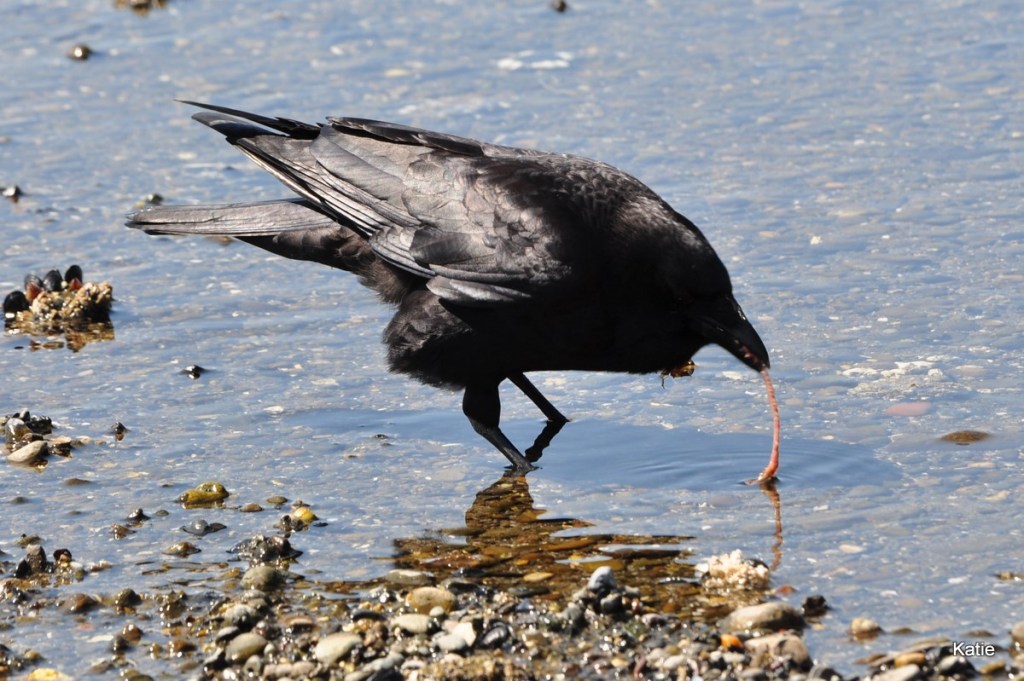
The title draws on the phrase ‘the early bird catches the worm’, intended as a clue to use bird(s) as a theme.
Today’s questions are not date-related but do all follow a theme, or at least the answers do.
One
In the DC universe, a mutant possessing psychic powers who wore a hooded costume and channeled emotions through a mystical source. Known by many aliases such as Mistress of Magic and Daughter of Darkness but named after a dark, intelligent creature. Who is this?
Two
What fictional character links Julianne Moore and Rebecca Breeds with author Thomas Harris?
Three
Scout and Jem, siblings, are two children at the centre of a 1960 Pulitzer Prize-winning novel; what is their surname?
Four
Who partners Cormoran Strike in the crime novels written by Robert Galbraith?
Five
This supervillain is also a clinical psychologist. He first appeared in print in 1941. He has more recently been on the big screen. Both the supervillain name and that of the alias fit with today’s theme. Who are both these names?
Today’s questions are all related to the date, 22nd September. Unusually there are seven questions and the post title should help you find the relevant facts.
One
The SI unit of capacitance is named after an English scientist born today in 1791. What is this unit?
Answer: Farad.
The Farad honours Michael Faraday, a self-taught English scientist whose early work in electromagnetism and electrochemistry laid the groundwork for modern electric motors and the concept of the electromagnetic field. He defined this field and showed that magnetism can affect light, while developing principles of electromagnetic induction, diamagnetism, and the laws of electrolysis. His invention of electromagnetic rotary devices helped make electricity practical for technological use.
Two
This professional boxer was the World Heavyweight Champion from 1959 to 1960, beating Floyd Patterson to win the title. He also appeared in the role of Private Torgil in the film All the Young Men (1960). Who was he?
Answer: Ingemar Johansson.
Ingemar Johansson, a Swedish world heavyweight champion, was disqualified in the 1952 Olympic semifinal against Ed Sanders for not fighting actively. The IOC awarded him the silver medal in 1982.
Three
The events asked about in question seven below took place in what US state?
Answer: New York.
See comments after answer seven below.
Four
Discovered over a period of ten years from the mid-1940s at the Qumran Caves in the West Bank, these became publicly available for the first time on 22 September 1991. What are they?
Answer: Dead Sea Scrolls.
Discovered near the Dead Sea, the Dead Sea Scrolls are mainly Hebrew manuscripts on leather and papyrus dating from the 3rd century BCE to the 2nd century CE. Most scholars link them to a Qumrān sect, possibly the Essenes. They include biblical and sectarian texts, aiding reconstruction of Palestine’s history and insights into Christianity and rabbinic Judaism.
Five
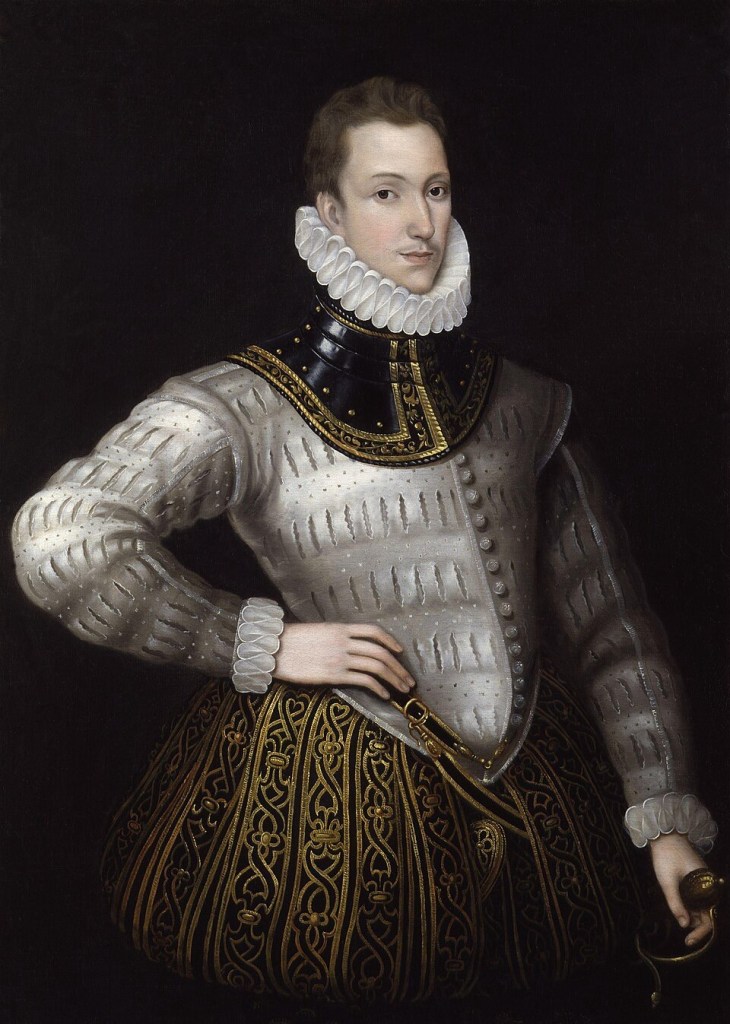
In 1586, at the Battle of Zutphen in an action against the Spanish, the English statesman, soldier and poet Sir Philip Sidney was mortally injured, dying the following month. During what long war was this battle fought?
Answer: Eighty Years War.
Philip Sidney, an Elizabethan courtier and poet, authored Astrophel and Stella and The Defence of Poesie. From an influential family, he travelled Europe and served as ambassador to Rudolf II and Louis VI in 1577. On 22 September 1586 Sidney volunteered to block Spanish supplies to Zutphen, charging three times despite being outnumbered; a bullet shattered his thigh, yet he rode from the field. Taken to Arnhem, his wound became infected leading to his death four weeks later.
Six
In 1976, the US Food and Drug Administration banned … Dye No. 4 after it was discovered that it causes tumours in the bladders of dogs. What word is missing from the previous fact?
Answer: Red.
Red Dye No. 4, also known as Scarlet GN, is a red azo dye previously used as a food colourant. As a food additive, it is identified by the E number E125. It is generally supplied as a disodium salt.
Seven
What is the surname of the person who, on or about, this date in 1823 had a vision of an angel named Moroni?
Answer: Smith.
In 1823, near Manchester, in western New York, Joseph Smith reported a vision from Moroni concerning buried golden plates, which he excavated and translated into the Book of Mormon. Smith founded a religion claiming God restored the true church.
Bonus Question
The answers above should help with a word linked prominently to today’s quiz, although it is not the bonus answer but it might leave you in a muddle. The bonus answer you are looking for is the name of a television programme that debuted on 22nd September 1994. Which TV show?
Answer: Friends.
Your answers should have been Faraday, Ingemar Johansson, New York, Dead Sea Scrolls Eighty Years War, Red, Smith. Remember you were told the title — Fact Finders — would help you and the first words in each answer gives F I N D E R S. Another hint was ‘it might leave you in a muddle’: if you ‘muddle’ F I N D E R S you can end up with F R I E N D S.
Today’s questions are all related to the date, 22nd September. Unusually there are seven questions and the post title should help you find the relevant facts.
One
The SI unit of capacitance is named after an English scientist born today in 1791. What is this unit?
Two
This professional boxer was the World Heavyweight Champion from 1959 to 1960, beating Floyd Patterson to win the title. He also appeared in the role of Private Torgil in the film All the Young Men (1960). Who was he?
Three
The events asked about in question seven below took place in what US state?
Four
Discovered over a period of ten years from the mid-1940s at the Qumran Caves in the West Bank, these became publicly available for the first time on 22 September 1991. What are they?
Five
In 1586, at the Battle of Zutphen in an action against the Spanish, the English statesman, soldier and poet Sir Philip Sidney was mortally injured, dying the following month. During what long war was this battle fought?
Six
In 1976, the US Food and Drug Administration banned … Dye No. 4 after it was discovered that it causes tumours in the bladders of dogs. What word is missing from the previous fact?
Seven
What is the surname of the person who, on or about, this date in 1823 had a vision of an angel named Moroni?
Bonus Question
The answers above should help with a word linked prominently to today’s quiz, although it is not the bonus answer but it might leave you in a muddle. The bonus answer you are looking for is the name of a television programme that debuted on 22nd September 1994. Which TV show?
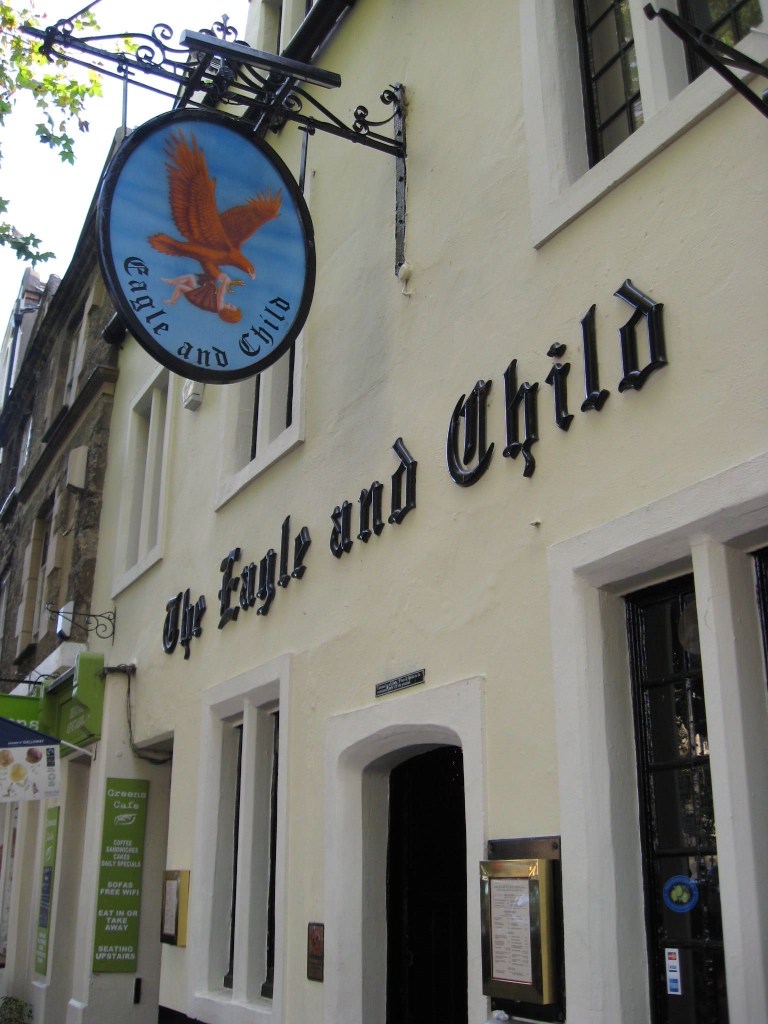
The Inklings met at The Eagle and Child Pub. Image Pinterest
The first of today’s questions relates to the date, 21 September. The remainder are not date related but follow a fantasy theme?
One
An English academic, a member of the Inklings, an informal literary group, published a critically acclaimed, best-selling children’s fantasy novel on this day in 1937? What author and what book?
Answer: J.R.R. Tolkien; The Hobbit.
J.R.R. Tolkien created a detailed ‘legendarium’, which later became The Silmarillion, partly to provide a backdrop for his invented Elvish languages. To entertain his children, he wrote The Hobbit (1937), a lighter story that became so popular his publisher requested a sequel. This led to The Lord of the Rings (1954–55), a modern heroic epic that expanded on the world of The Hobbit and connected deeply with the established history of his earlier tales.
Two
What Star Wars character was from the planet Kashyyyk, and what character originally played the role?
Answer: Chewbacca.
Chewbacca, or ‘Chewie’, is a tall, hairy Wookiee from the planet Kashyyyk and a key character in the Star Wars franchise. Known for carrying a bowcaster and speaking Shyriiwook, he is the loyal friend and co-pilot of Han Solo aboard the Millennium Falcon. The character was originally portrayed by Peter Mayhew and later by Joonas Suotamo.
Three
In a work of fantasy fiction Zem is described as ‘an affable, yet stupid, swamp-dwelling …’. What word completes the previous description, and from what work is it taken?
Answers: Mattress; The Hitchhiker’s Guide to the Galaxy (or Life, the Universe and Everything).
Zem is a friendly but dim-witted, swamp-dwelling mattress from the planet Sqornshellous Zeta. He spends his time trying to cheer up Marvin the Paranoid Android by repeating the same daily conversation. ‘Zem’ is actually the name given to all mattresses on his planet to minimise distress over their eventual fate of being dried and slept on. He appears in the novel Life, the Universe and Everything, the third novel in The Hitchhiker’s Guide to the Galaxy, and is the only witness to Marvin’s abduction by Krikkit war robots.
Four
Which Game of Thrones character is the son of Rhaegar Targaryen and Lyanna Stark; and what was his birth name?
Answers: Jon Snow; Aegon Targaryen.
Born Aegon Targaryen to Lyanna Stark and Rhaegar Targaryen, Jon Snow grows up as Eddard Stark’s illegitimate son at Winterfell. After being chosen Lord Commander of the Night’s Watch, Jon is killed during a mutiny over the wildling settlement and later brought back by Melisandre.
Five
Which American sci-fi writer used the pseudonym Paul French for his Lucky Starr series; and by what name was ‘Lucky’ known as in the first novel?
Answers: Isaac Asimov; David Starr.
Isaac Asimov wrote the Lucky Starr series as Paul French. The first book was David Starr: Space Ranger; after which the character became Lucky Starr. Six books followed the first, but a seventh was abandoned. As the series progressed, Asimov began using his own name.
There and Back Again
The post title There and Back Again is the subtitle of The Hobbit. The Inklings referred to in question one met at The Eagle and Child Pub in Oxford, England. The pub is pictured at the top of the post.