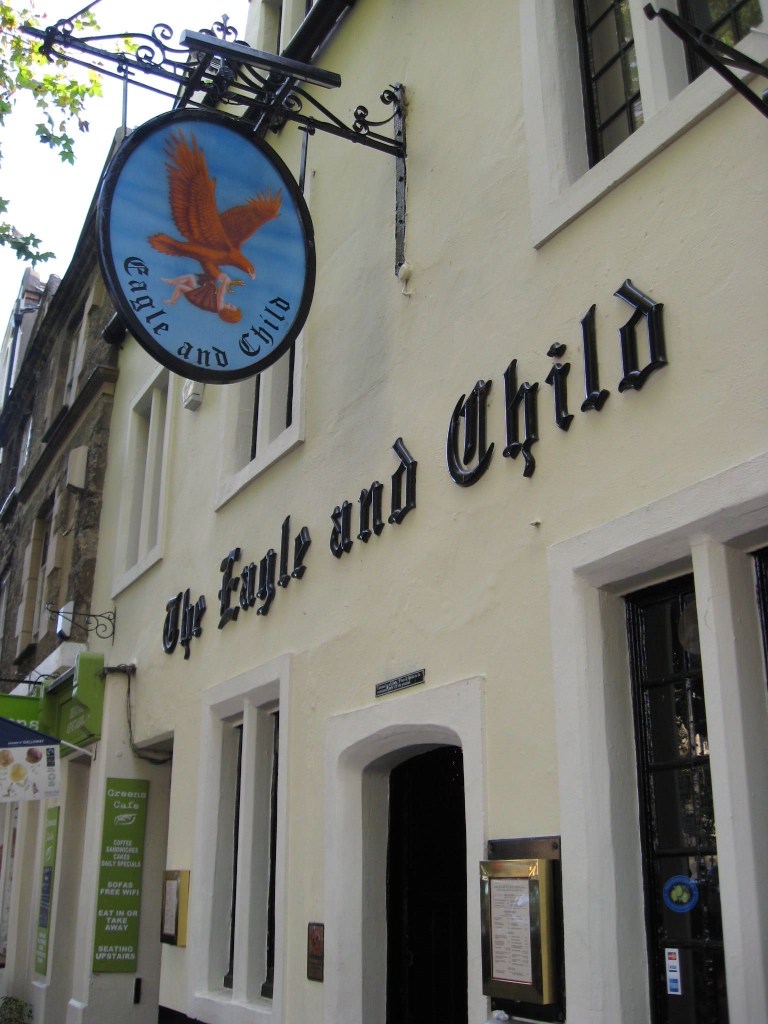
The Inklings met here. See question one. Image Pinterest
The first of today’s questions relates to the date, 21 September. The remainder are not date related but follow a fantasy theme?
One
An English academic, a member of the Inklings, an informal literary group, published a critically acclaimed, best-selling children’s fantasy novel on this day in 1937? What author and what book?
Two
What Star Wars character was from the planet Kashyyyk, and what character originally played the role?
Three
In a work of fantasy fiction Zem is described as ‘an affable, yet stupid, swamp-dwelling …’. What word completes the previous description, and from what work is it taken?
Four
Which Game of Thrones character is the son of Rhaegar Targaryen and Lyanna Stark; and what was his birth name?
Five
Which American sci-fi writer used the pseudonym Paul French for his Lucky Starr series; and by what name was ‘Lucky’ known as in the first novel?
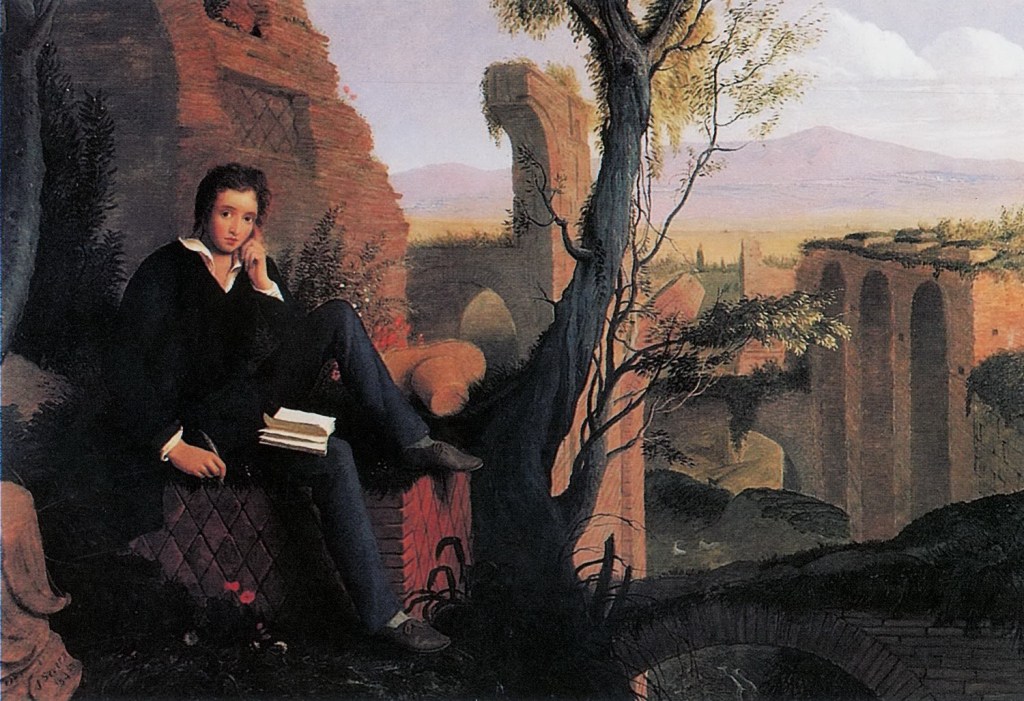
See question thirty-seven. Posthumous Portrait of Shelley Writing Prometheus Unbound, oil on canvas. Keats-Shelley Memorial House, Rome, Italy. Image Wikimedia Commons
Over the next nine days, 46 questions will be posed, one for each letter of the alphabet plus 20 others (There will be six one day). The 20 others appear as duplicate letters, and these duplicates spell out the name of the Roman Fortification which in CE 150 to 160 was the furthest boundary from the city of Rome, and the country that it was situated in. It is a three-word answer with eight letters in the first part of the name and four in the second part; the country has eight letters in its name. BTWFit, as used in the post title, is an archaic term meaning ‘a division of a song, ballad, or story’.
Thirty-six
Nicolas Cage ate a live cockroach for a scene in which 1980s film?
Thirty-seven
The title of which Percy Bysshe Shelley sonnet was the Greek name for Rameses II of Egypt?
Thirty-eight
Which Samuel Beckett play’s characters include Vladimir, Estragon, Pozzo and Lucky?
Thirty-nine
Which Persian king was assassinated in 465BC by Artabanus, the commander of the royal guard?
Forty
What is a tropical cyclone that originates in the Northwestern Pacific Basin known as?
Good luck! I’ll post the answers after all the questions have ben asked..
Over the next nine days, 46 questions will be posed, one for each letter of the alphabet plus 20 others (There will be six one day). The 20 others appear as duplicate letters, and these duplicates spell out the name of the Roman Fortification which in CE 150 to 160 was the furthest boundary from the city of Rome, and the country that it was situated in. It is a three-word answer with eight letters in the first part of the name and four in the second part; the country has eight letters in its name. BTWFit, as used in the post title, is an archaic term meaning ‘a division of a song, ballad, or story’.
Thirty-one
If reading a 32-point compass rose from north in a clockwise direction what point follows S?
Thirty-two
What word is defined as a ‘facility on a watch for measuring speed’?
Thirty-three
What is the Chinese province whose capital city is Chengdu?
Thirty-four
The Troy Dam and Lock, on the Hudson River at Troy, New York, are operated by (the) …
Thirty-five
During what war is the 1854 poem The Charge of the Light Brigade set?
Over the next nine days, 46 questions will be posed, one for each letter of the alphabet plus 20 others (There will be six one day). The 20 others appear as duplicate letters, and these duplicates spell out the name of the Roman Fortification which in CE 150 to 160 was the furthest boundary from the city of Rome, and the country that it was situated in. It is a three-word answer with eight letters in the first part of the name and four in the second part; the country has eight letters in its name. BTWFit, as used in the post title, is an archaic term meaning ‘a division of a song, ballad, or story’.
Twenty-six
What word is defined as ‘a field where rice is grown’?
Twenty-seven
Q is a frequently recurring character who is either mentioned or appears in various of the James Bond series of novels and films. What does the designation ‘Q’ stand for?
Twenty-eight
… one of the least-populated countries in Europe, albeit with the highest population growth rate…
— Wikipedia
The country described above has a name which originated from a word meaning ‘Little Fortress’. What country?
Twenty-nine
Name the production company which made Raiders of the Lost Ark?
Thirty
A federal organisation, often known by a nickname or four initials, gifted Burmese to Queen Elizabeth II in 1969. The same organisation, to mark its 150th anniversary in 2023, gifted Noble to King Charles III. What is the full name of this organisation, and what word best describes Burmese and Noble?
Good luck! I’ll post the answers once all the questions have been asked.
Over the next nine days, 46 questions will be posed, one for each letter of the alphabet plus 20 others (There will be six one day). The 20 others appear as duplicate letters, and these duplicates spell out the name of the Roman Fortification which in CE 150 to 160 was the furthest boundary from the city of Rome, and the country that it was situated in. It is a three-word answer with eight letters in the first part of the name and four in the second part; the country has eight letters in its name. BTWFit, as used in the post title, is an archaic term meaning ‘a division of a song, ballad, or story’.
Sixteen
The Petronas Towers are in what city?
Seventeen
In 1915, the RMS Lusitania was torpedoed 11 miles off the coast of which country?
Eighteen
Complete this: Nyotaimori is the Japanese practice of serving sushi on the …
Nineteen
Which Old Testament book tells the story of the ten plagues of Egypt?
Twenty
The following dogs all have the same five-lettered name: Cuthullin’s hunting dog in Ossian’s Fingal; Robert Burns’ Border Collie in The Twa Dogs; J.M. Barrie’s Newfoundland that inspired Nana in Peter Pan; and the Labrador retriever in both Sheila Burnford’s The Incredible Journey and the 1963 film adaptation. What name?
Good luck! I’ll post the answers once all the questions have been asked.
Roxane expresses her love for the title character at the end of which 1897 Edmond Rostand play?
Answer: Cyrano de Bergerac.
Edmond Rostand’s 1897 French play Cyrano de Bergerac blends the 17th-century Cyrano’s life with invention and myth; his large nose is real but usually exaggerated in performance.
Two
The order Lagomorpha contains the pika and two other animals. What one has a six-lettered name?
Answer: Rabbit.
Derived from Greek and meaning ‘hare-shaped’ Lagomorphs comprise Leporidae and Ochotonidae, with 109 extant species across twelve genera and one recently extinct genus. Found on all continents except Antarctica, they differ from rodents by having four upper incisors and more cheek teeth. They are almost exclusively herbivores with fur-covered feet. Great Britain alone is estimated to have about 36 million wild European rabbits.
Three
The principal activity of which Yokohama-headquartered company is the production, marketing and sale of commercial vehicles and diesel engines?
Answer: Isuzu.
Headquartered in Yokohama, Isuzu Motors Ltd. produces and sells commercial diesel vehicles and engines globally. Operations include subsidiaries such as UD Trucks and Jiangxi Isuzu Motors, with plants in Fujisawa, Tochigi and Hokkaido.
Four
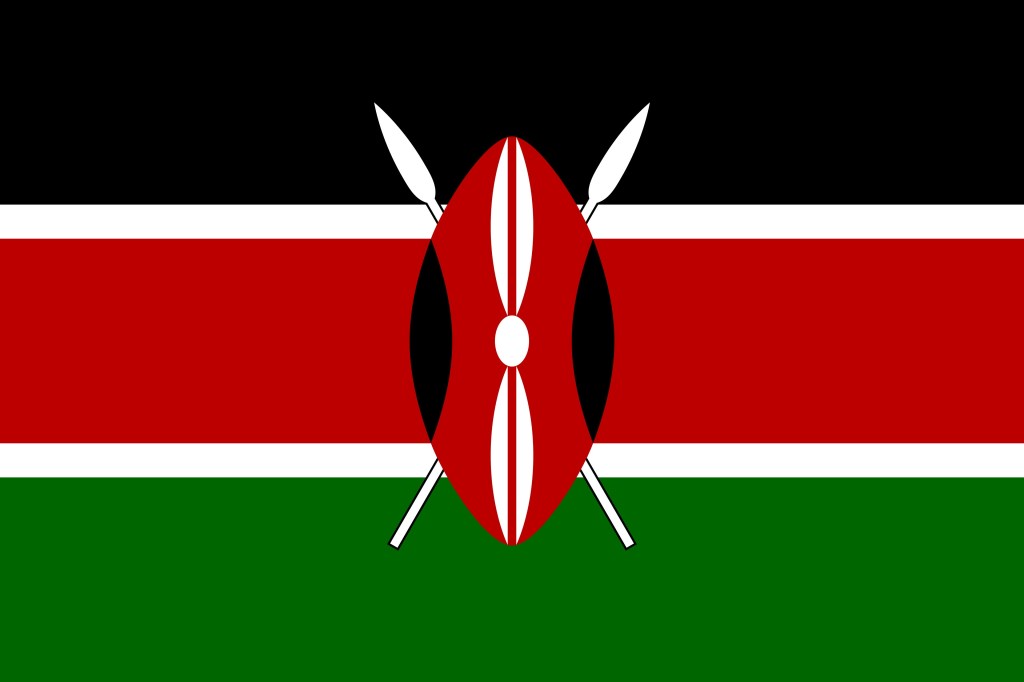
Wikipedia describes the design of the Flag of Kenya as follows: ‘A horizontal tricolour of black, white-edged red, and green with two crossed white spears behind a red, white, and black … shield.’ What word has been omitted from the description?
Answer: Maasai.
The flag’s design draws from the banner of the Kenya African National Union (KANU), the movement that guided independence. KANU’s colours were woven into the national flag alongside the traditional Maasai shield and crossed spears to signal cultural heritage and defence. This adjustment ensured the flag captured both political history and the broader identity of the Kenyan people.
Five
What is the largest subtropical wilderness in the United States?
Answer: Everglades.
The Everglades, a flooded grassland from Lake Okeechobee to Florida Bay, suffered habitat loss through drainage and development. Conservation efforts resulted with Congress approval of the Comprehensive Everglades Restoration Plan in 2000.
Roxane expresses her love for the title character at the end of which 1897 Edmond Rostand play?
Two
The order Lagomorpha contains the pika and two other animals. What one has a six-lettered name?
Three
The principal activity of which Yokohama-headquartered company is the production, marketing and sale of commercial vehicles and diesel engines?
Four
Wikipedia describes the design of the Flag of Kenya as follows: ‘A horizontal tricolour of black, white-edged red, and green with two crossed white spears behind a red, white, and black … shield.’ What word has been omitted from the description?
Five
What is the largest subtropical wilderness in the United States?
No more can be said than ‘sense lapsang souchong meeting Laphroaig’.
One
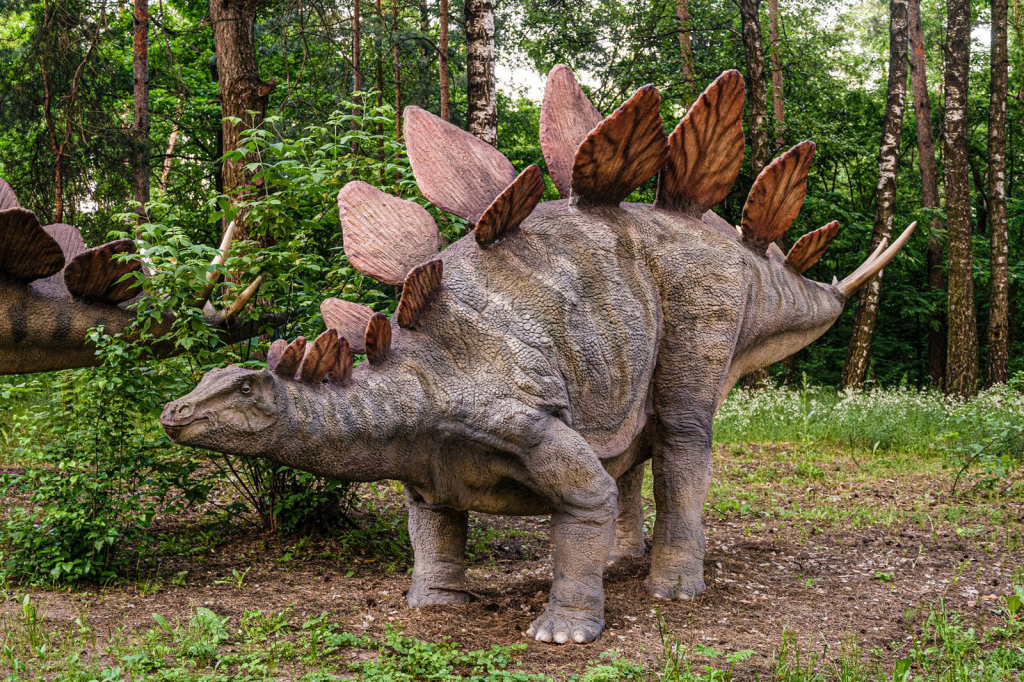
What dinosaur species is pictured?
Answer: Stegosaurus.
Stegosaurus, a Late Jurassic herbivorous quadruped from the western United States and Portugal, had kite-shaped plates and tail spikes likely used for display and defence although the plates may have regulated heat. Three species are recognised and remains exceed 80 individuals.
Two
Buonapart Ignace Gallia is the real name of which villain from an early James Bond novel by Ian Fleming?
Answer: Mr. Big.
Mr. Big serves as the alias for the central antagonist in the novel Live and Let Die and its 1973 film version. In the book, his actual name is Buonapart Ignace Gallia. Within Fleming’s narrative, Mr. Big acts as a SMERSH operative and leads the ‘Black Widow Voodoo Cult’, as it smuggles and launders 17th-century gold coins for the benefit of SMERSH.
Three
A highly poisonous plant of the dogbane family; an Australian wattle tree; and part of the title of a 2002 film featuring Billy Connolly. One eight-lettered word fits all three things above: what word?
Answer: Oleander.
Nerium oleander is native from the Mediterranean to southern Asia and cultivated widely. It is highly poisonous yet rarely ingested due to bitterness; ingestion causes gastrointestinal and cardiac effects, and sap causes irritation. Acacia neriifolia, known as oleander, silver or pechy wattle, is a tree native to north-eastern Australia and common in the Moonbi Ranges. The Billy Connolly film is White Oleander which also stars Michelle Pfeiffer and Renée Zellweger.
Four
What songwriter composed Help Me Make It Through the Night?
Answer: Kris Kristofferson.
Kristofferson claims that his inspiration for the song came from Frank Sinatra’s answer to an interview question asking what he believed in. Sinatra replied, ‘Booze, broads, or a bible…whatever helps me make it through the night.’ As well as Kristofferson’s recordings versions of the song has been released by several artists, including Sammi Smith, Brenda Lee, Gladys Knight, Elvis Presley, Tammy Wynette, Johnny Cash and many more.
Five
What links George Williams in 1844 London with a 1978 song written by Jacques Morali and Victor Willis?
Answer: Y.M.C.A.
Founded in London in 1844 by George Williams, YMCA is a Protestant parachurch federation based in Vernier, Switzerland, promoting Christian values through youth development. With 12,000 branches and 64 million beneficiaries, it follows principles known as the Paris Basis. Jacques Morali and Victor Willis were the songwriters who wrote the chart-topping Y.M.C.A. for the Village People.
Sense Lapsang Souchong Meeting Laphroaig
Lapsang souchong is a well-known black tea which originated from Fujian Province, China and Laphroaig is a malt whisky from the Scottish island of Islay. Both of these drinks share a smoky aroma and taste and that is a small clue to today’s answers which begin with the letters S, M, O, K and Y
No more can be said than ‘sense lapsang souchong meeting Laphroaig’.
One
What dinosaur species is pictured?
Two
Buonapart Ignace Gallia is the real name of which villain from an early James Bond novel by Ian Fleming?
Three
A highly poisonous plant of the dogbane family; an Australian wattle tree; and part of the title of a 2002 film featuring Billy Connolly. One eight-lettered word fits all three things above: what word?
Four
What songwriter composed Help Me Make It Through the Night?
Five
What links George Williams in 1844 London with a 1978 song written by Jacques Morali and Victor Willis?
Today’s title could be the antithesis to the answers.
One
What martyr, who lived circa AD 255 – c. AD 288, is the patron saint of archery?
Answer: Sebastian.
Sebastian, an early Christian martyr, survived arrow wounds after being tied to a post and shot with arrows during the Diocletianic Persecution. He was healed by Irene of Rome but then clubbed to death after warning Diocletian about his sins; he is venerated as the patron of athletics, archery and plagues.
Two
This fisherman is known by his first name; he is known by some the ‘First-called’; and his cross forms part of the Union Flag of the United Kingdom. Who is he?
Answer: Andrew.
Andrew the Apostle, a fisherman and one of the Twelve Apostles, is titled First-Called in Eastern Orthodox tradition for following Jesus and introducing Simon Peter; the Ecumenical Patriarch of Constantinople is his successor. He is the patron saint of Scotland hence his cross being included in the Union Flag.
Three
The third of the Weasley children, Percy, shares his middle name with the first name of a saint who founded the Jesuits (Society of Jesus) in 1534. What is the name they have in common?
Answer: Ignatius.
In Harry Potter Percy Ignatius Weasley was the very serious brother of Fred, George, Ron and Ginny. Ignatius of Loyola, born in 1491, was a Basque Catholic saint and founder of the Society of Jesus. Ignatius founded the Jesuit order through vows in Paris and an organisation approved by Pope Paul III. Innovations included a black robe, centralised authority, long probation, obedience to the pope and flexibility for global ministries.
Four
An early saint from what is now modern Turkey who was known for genorosity and gift giving. He is amongst others the Patron Saint of Children. This line of poetry may help, ‘’Twas the night before Christmas, when all through the house’. Who is he?
Answer: Nicholas.
St Nicholas, a fourth-century figure from Myra, is a widely honoured minor saint linked to Christmas and patron of children and sailors; gifts are given on 6 December in many countries.
Five
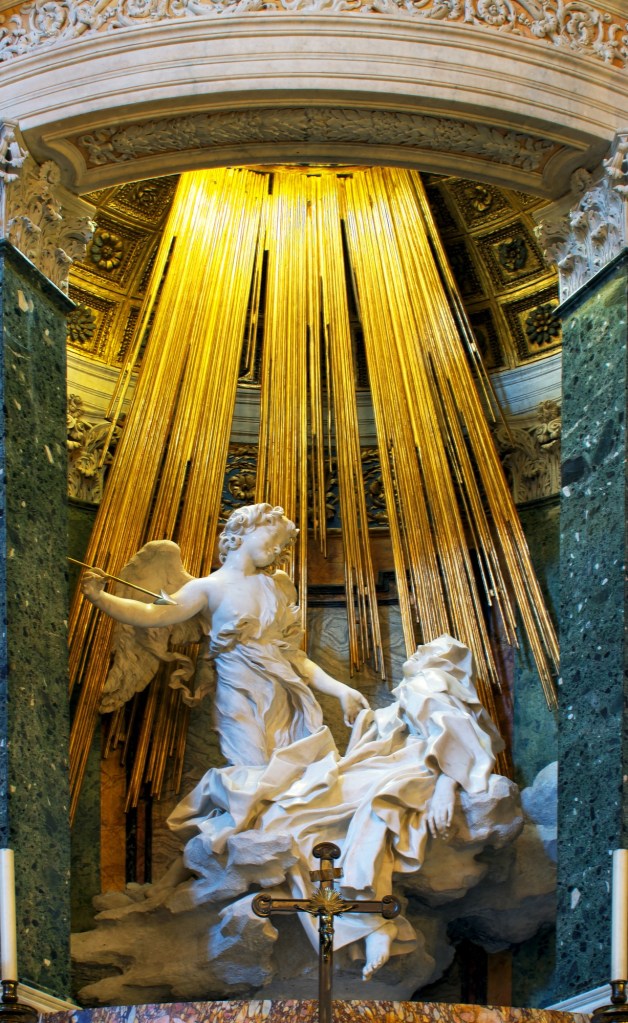
Which saint shown above is portrayed as being in seventh heaven?
Answer: Teresa.
The Ecstasy of Saint Teresa, completed in 1652 by Gian Lorenzo Bernini, the white marble altarpiece in Rome’s Cornaro Chapel, depicts Saint Teresa of Ávila swooning in ecstasy beneath an angel with a spear. Some scholars describe the work as showing Teresa in religious ecstasy; others suggest that the work carries sexual implications.
The Sinners Are Much More Fun
The is from Billy Joel’s Only The Good Die Young, here is the full verse which ends with it:
And they say there’s a heaven for those who will wait
And some say it’s better, but I say it ain’t
I’d rather laugh with the sinners than cry with the saints
The sinners are much more fun
The sinners are, according to Mr Joel, much more fun than the saints, and S A I N T singular is what should have been leading you today as the initial letters of the answers — Sebastian, Andrew, Ignatius, Nicholas and Teresa.