Today, production of the iconic Type 2 Volkswagen began. In which even-numbered year did this occur?
Two
In 2014, Malaysia Airlines Flight 370 vanished from radar an hour and 40 minutes after takeoff and has never been seen again. Its fate remains a mystery. What was the departure city and destination of the flight?
Three
In 1979, the NASA spacecraft Voyager 1 witnessed volcanic eruption on the moon Io. Of what planet is Io a moon of?
Four
The compact disc was first demonstrated in 1979. Its subsequent development was the result of a collaboration between what two companies?
Five
The Battle of Guadalajara commenced in 1937. Which war was it a part of?
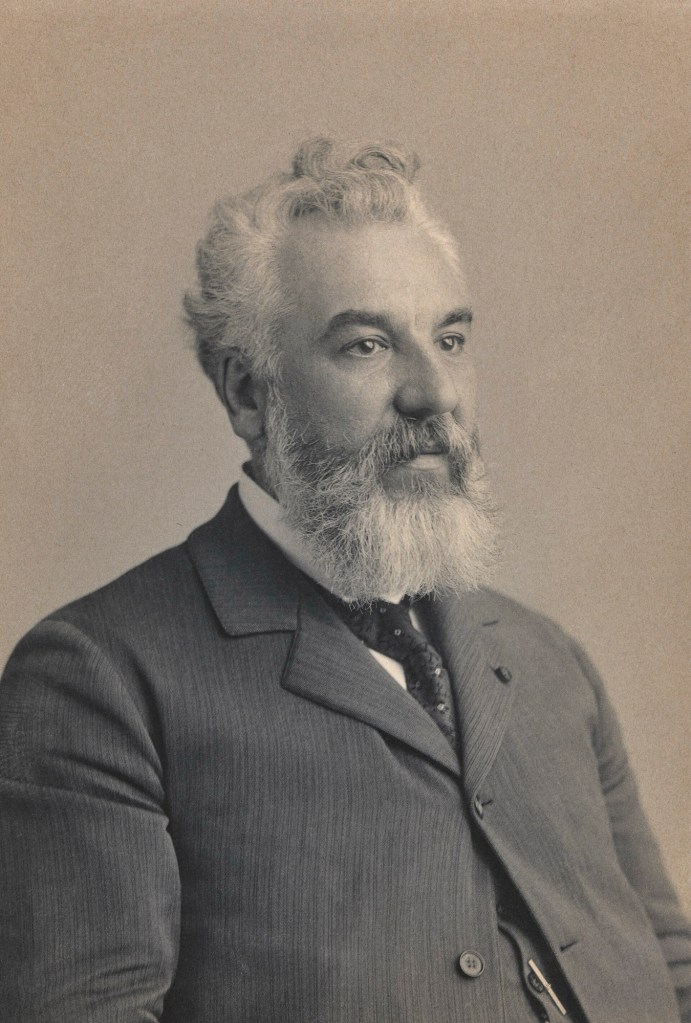
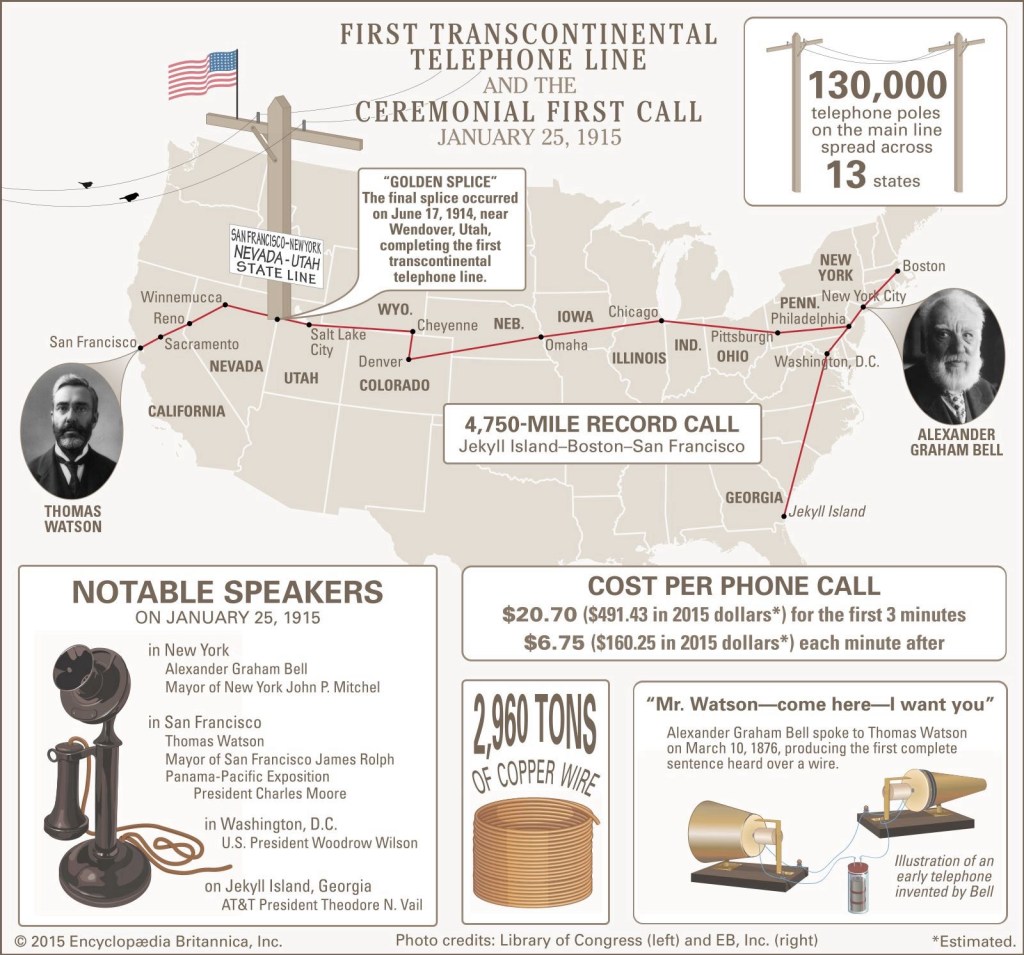
On 7 March 1876, Alexander Graham Bell secured a patent for his invention, the telephone. Once the first transcontinental telephone line was laid across the United States, a ceremonial first transcontinental call was made. Which decade did this happen in?
Answer: 1910s.
On 25 January 1915, Alexander Graham Bell made the ceremonial first transcontinental call. From New York City, he called his assistant, Thomas Watson, in San Francisco using the same words he’d used when he first successfully called Watson in a neighbouring room: ‘Mr Watson—come here—I want you.’ This time, Watson replied, ‘It will take me five days to get there now!’ The call also involved Woodrow Wilson, the US president, in Washington D.C. and Theodore Vail, AT&T president, on Jekyll Island, Georgia.
Rob Roy MacGregor, a Scottish outlaw, was the subject of the 1817 novel Rob Roy. Who was the author of this work?
Answer: Sir Walter Scott.
Rob Roy, a Highland outlaw known for his red hair and exploits against the Duke of Montrose, was often compared to Robin Hood. However, his life was marked by brigandage, debt, and a complex relationship with the Jacobite cause. Born in 1671, Robert Roy MacGregor was a Scottish outlaw and Jacobite hero who initially became a cattleman and later a respected figure. His life took a turn when he defaulted on a loan and was branded an outlaw. Despite this status, he gained fame, and his story was immortalised in literature and film and his letters reveal that he was well educated, suggesting that the view of him as a mere brutish highwayman does not do him justice.
Three
Born in 1875 in Cibourne, France, this composer’s work would be used by skaters Jayne Torvill and Christopher Dean in their gold medal winning performance at the 1984 Sarajevo Winter Olympics. Who was this composer and what was the piece of music?
Answers: Maurice Ravel; Boléro.
Performing their free dance to Boléro, British ice dancers Jayne Torvill and Christopher Dean triumphed at the Sarajevo 1984 Winter Olympics, securing gold and setting a new record for the highest score ever achieved in a single figure skating programme.
Four
On this date in 2024, which Northern European country joined NATO as its 32nd member?
Answer: Sweden.
The 2022 Russian invasion of Ukraine prompted a significant reinforcement of NATO’s eastern flank. Consequently, Sweden, previously neutral, decided to abandon that neutrality and join the alliance.
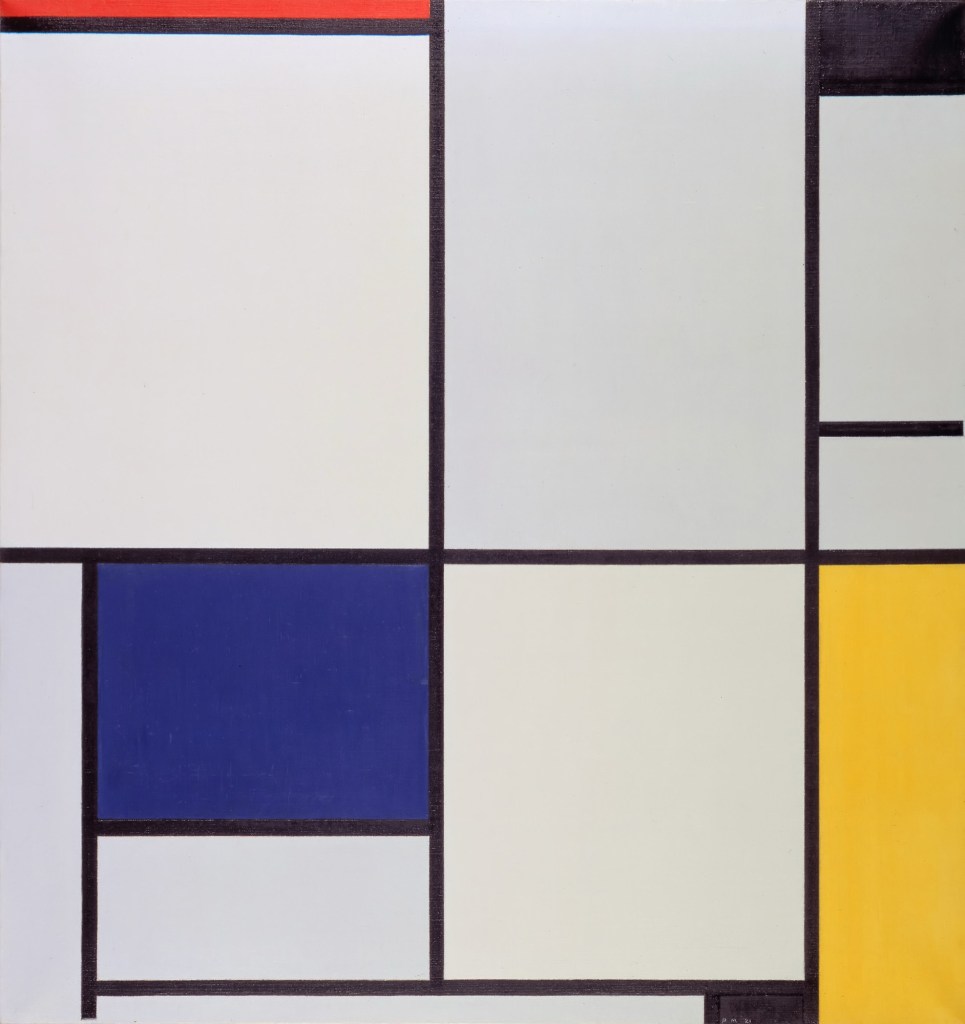
Born in 1872, this Dutch artist became famous for a style featuring black grid lines and blocks of primary colours such as red, blue, and yellow. The style became known as Neoplasticism or De Stijl. Who was the artist?
Answer: Piet Mondrian.
Piet Mondrian, a Dutch painter and art theoretician, was a pioneer of 20th-century abstract art. He co-founded the De Stijl art movement and developed Neoplasticism, a non-representational form using primary colours, values, and directions.
On 7 March 1876, Alexander Graham Bell secured a patent for his invention, the telephone. Once the first transcontinental telephone line was laid across the United States, a ceremonial first transcontinental call was made. Which decade did this happen in?
Two
Rob Roy MacGregor, a Scottish outlaw, was the subject of the 1817 novel Rob Roy. Who was the author of this work?
Three
Born in 1875 in Cibourne, France, this composer’s work would be used by skaters Jayne Torvill and Christopher Dean in their gold medal winning performance at the 1984 Sarajevo Winter Olympics. Who was this composer and what was the piece of music?
Four
On this date in 2024, which Northern European country joined NATO as its 32nd member?
Born in 1872, this Dutch artist became famous for a style featuring black grid lines and blocks of primary colours such as red, blue and yellow. The style became known as Neoplasticism or De Stijl. Who was the artist?
Here are the answers to the questions I posted earlier.
These are five questions which are related to today, February 5th.
Section of the border between East and West Germany. Image Wikimedia Commons
One
The term ‘Iron Curtain’ described the political and physical boundary dividing Europe from the end of World War II until the end of the Cold War. Who popularised its use in a speech at Westminster College, Fulton, Missouri, on 5 March 1946?
Answer: Winston Churchill.
…an iron curtain has descended across the Continent. Behind that line lie all the capitals of the ancient states of Central and Eastern Europe. — Winston Churchill, Former British prime minister, 5 March 1946, Westminster College, Fulton, Missouri
The Iron Curtain was a political and physical boundary dividing Europe from 1945 to 1990/1991, symbolising the ideological divide between the Soviet-controlled Eastern Bloc and the Western nations. Popularised by Winston Churchill in 1946, the term originally described physical barriers but later encompassed broader cultural and ideological differences. The Iron Curtain largely dissolved in 1989-90 with the fall of communism.
Two
A 31-year-old American country singer, who was born Virginia Patterson Hensley in Virginia, died in a 1963 plane crash in Tennessee. She had enjoyed an eight-year recording career, which included two number ones as well as other major chart hits. By what name was she known professionally?
Answer: Patsy Cline.
Patsy Cline, born Virginia Patterson Hensley, was an American singer known for her crossover success from country to pop music. She achieved major hits like Walkin’ After Midnight and I Fall to Pieces, becoming a trailblazer for women in country music. Although, she died in a plane crash in 1963, her legacy endures through her influential music and posthumous recognition.
Three Cigarettes in an Ashtray
The post title, Three Cigarettes in an Ashtray, was the title of a Patsy Cline single from 1957.
Three
In 1616, 73 years after publication, On the Revolutions of the Heavenly Spheres (De revolutionibus orbium coelestium) was added to the Index of Forbidden Books (Index Librorum Prohibitorum) by the Sacred Congregation of the Index. Which astronomer had written On the Revolutions of the Heavenly Spheres?
Answer: Nicolaus Copernicus
Copernicus’s book placed the Sun rather than the Earth at the centre, meaning the Earth and other planets orbited the Sun. The Index Librorum Prohibitorum, active from 1560 to 1966, was a list of publications deemed heretical or immoral by the Catholic Church. It banned thousands of books, including works by theologians, astronomers, philosophers, and unapproved Bible editions, to protect church members from potentially disruptive ideas.
Four
In 1942 Japanese forces captured what is now Jakarta, Indonesia. At that time, what was the city called and of where was it the capital?
Answers: Batavia; Dutch East Indies.
Batavia, now known as Jakarta, was founded in 1619 by the Dutch East India Company (VOC) as a strategic trading post in the Dutch colonial empire. It became the capital of the Dutch East Indies and was pivotal for their trade routes, especially in spices and other commodities. Following Indonesia’s declaration of independence in 1945, Batavia was renamed Jakarta. The city evolved from a colonial outpost to a major urban centre reflecting Indonesia’s diversity and is a bustling metropolis and the capital of Indonesia. It is a hub for culture, economy, and politics in Southeast Asia.
Five
In 1496, England’s Henry VII issued letters patent authorising a navigator and his sons to explore unknown lands. This led to what is the earliest known exploration of the North American Atlantic coast since the Norse visits to Vinland in the eleventh century. Who was Henry VII’s explorer?
Answer: John Cabot.
John Cabot was an Italian navigator and explorer. His 1497 voyage to North America, commissioned by Henry VII, King of England, is the earliest known European exploration of the region’s coast since the Norse visits to Vinland in the eleventh century. To commemorate the 500th anniversary of Cabot’s expedition, both Canadian and British governments declared Cape Bonavista, Newfoundland, as his first landing site. However, alternative locations have also been suggested.
These are five questions which are related to today, February 5th.
Section of the border between East and West Germany. Image Wikimedia Commons
One
The term ‘Iron Curtain’ described the political and physical boundary dividing Europe from the end of World War II until the end of the Cold War. Who popularised its use in a speech at Westminster College, Fulton, Missouri, on 5 March 1946?
Two
A 31-year-old American country singer, who was born Virginia Patterson Hensley in Virginia, died in a 1963 plane crash in Tennessee. She had enjoyed an eight-year recording career, which included two number ones as well as other major chart hits. By what name was she known professionally?
Three
In 1616, 73 years after publication, On the Revolutions of the Heavenly Spheres (De revolutionibus orbium coelestium) was added to the Index of Forbidden Books (Index Librorum Prohibitorum) by the Sacred Congregation of the Index. Which astronomer had written On the Revolutions of the Heavenly Spheres?
Four
In 1942 Japanese forces captured what is now Jakarta, Indonesia. At that time, what was the city called and of where was it the capital?
Five
In 1496, England’s Henry VII issued letters patent authorising a navigator and his sons to explore unknown lands. This led to what is the earliest known exploration of the North American Atlantic coast since the Norse visits to Vinland in the eleventh century. Who was Henry VII’s explorer?
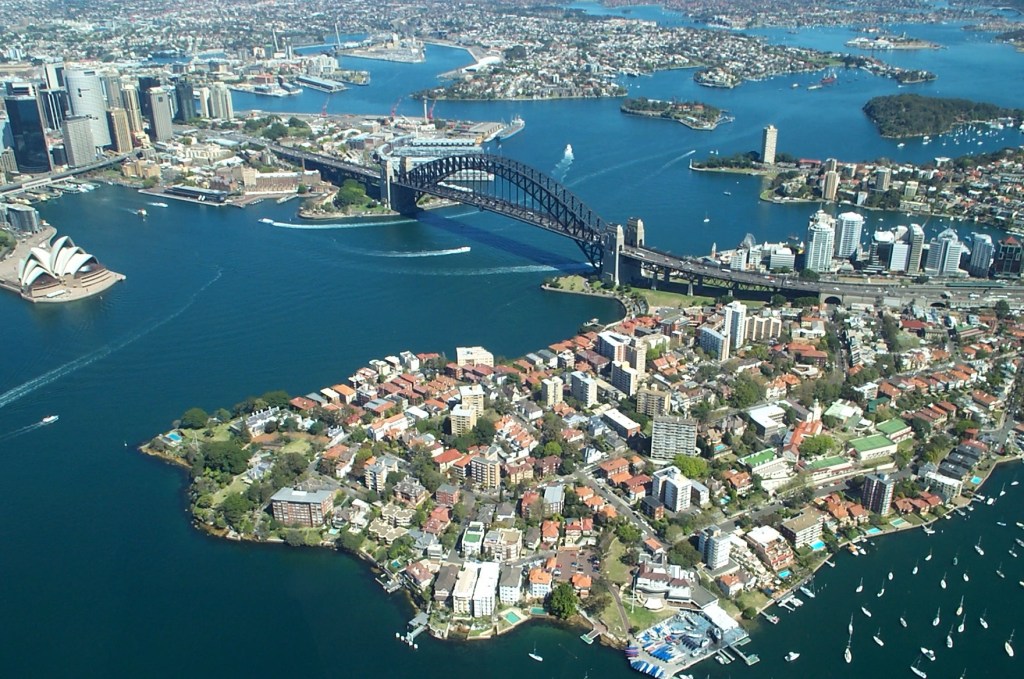
Port Jackson, also known as Sydney Harbour, is a natural harbour in an inlet of the Tasman Sea—a marginal sea of the South Pacific Ocean. It is home to landmarks like the Sydney Opera House and Harbour Bridge and a hub for recreational events and is managed by Transport for NSW, with parts protected by Sydney Harbour National Park.
Two
In December 2000, Madonna and Guy Ritchie were married at Skibo Castle. In what country is Skibo Castle?
Answer: Scotland (or either Great Britain or U.K.)
Rocco, Madonna and Guy Ritchie’s four-month-old son, was christened in December 2000 at Dornoch Cathedral in Scotland. The couple then married the following day at nearby Skibo Castle.
Three
At a restaurant, an Ameglian Major Cow approached a table and introduced itself as the ‘Dish of the Day’. It then proceeded to describe its body parts, suggesting to the diners which parts they might enjoy eating. In which restaurant and in which book series did this take place?
Answers: The Restaurant at the End of the Universe; The Hitchhikers Guide to the Galaxy.
A large dairy animal approached Zaphod Beeblebrox’s table, a large fat meaty quadruped of the bovine type with large watery eyes, small horns and what might almost have been an ingratiating smile on its lips.
‘Good evening,’ it lowed and sat back heavily on its haunches, ‘I am the main Dish of the Day. May I interest you in parts of my body?’ It harrumphed and gurgled a bit, wriggled its hind quarters into a more comfortable position and gazed peacefully at them. — Excerpt from ‘The Restaurant at the End of the Universe’ Chapter 17 Page 273, The Ultimate Hitchhiker’s Guide to the Galaxy, Terry Pratchett
Four
William E. Carter was the owner of a 1912 Renault motor car. In what 1997 film was a replica of his car used as the setting for a love scene?
Answer: Titanic
Carter, an American millionaire, purchased the Renault Type CB Coupé de Ville and arranged to transport it on the RMS Titanic. Carter survived the sinking but no trace of his car has been found. In the 1997 film Titanic a replica of the car was used for Jack and Rose’s love scene in the ship’s hold.
Five
What martial art has a Japanese name literally meaning, ‘way of adapting the spirit’?
Answer: Aikido
Aikido, a Japanese martial art, emphasises mental calm and control to subdue attackers using twisting and throwing techniques. Originating in the 14th century, it was modernised by Ueshiba Morihei in the early 20th century and later adapted for competition by Tomiki Kenji.
In December 2000, Madonna and Guy Ritchie were married at Skibo Castle. In what country is Skibo Castle?
Three
At a restaurant, an Ameglian Major Cow approached a table and introduced itself as the ‘Dish of the Day’. It then proceeded to describe its body parts, suggesting to the diners which parts they might enjoy eating. In which restaurant and in which book series did this take place?
Four
William E. Carter was the owner of a 1912 Renault motor car. In what 1997 film was a replica of his car used as the setting for a love scene?
Five
What martial art has a Japanese name literally meaning, ‘way of adapting the spirit’?
These questions all relate to today’s date, February 26th.
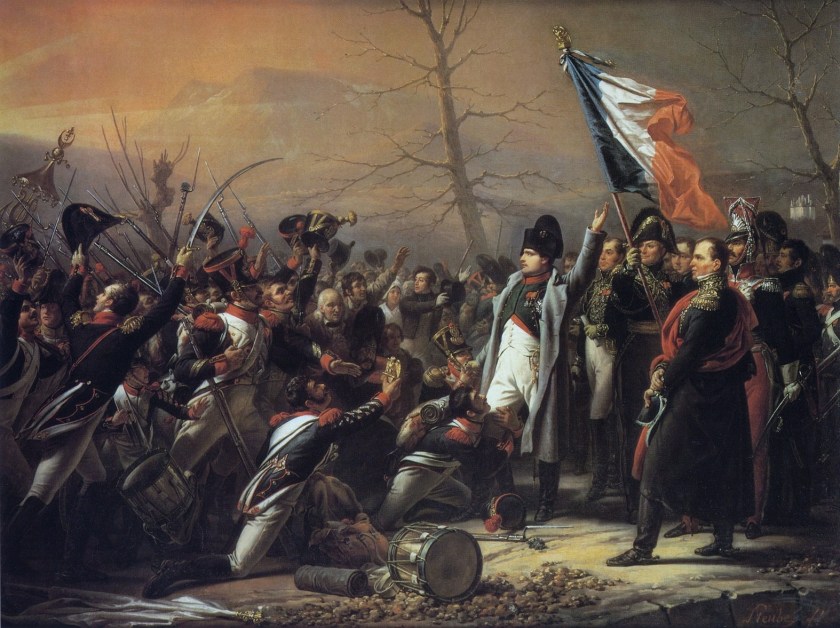
Napoleon’s Return from Elba 1815 by Charles de Steuben. Image Wikimedia Commons
One
On this day in 1815, Napoleon escaping from captivity ushered in the Hundred Days. From where had he escaped?
Answer: Elba.
The Hundred Days in French history refers to the period between Napoleon’s return to Paris on 20 March 1815 and Louis XVIII’s return on 8 July 1815. This period marked Napoleon’s return from exile, his subsequent defeat at Waterloo, and his permanent exile, which led to the restoration of the French monarchy. After escaping from Elba, Napoleon regained power but faced opposition from the Fourth Coalition, resulting in his final defeat at Waterloo and second abdication.
Two
Who, born in Arkansas in 1932, often sang railroad songs such as Orange Blossom Special; Hey, Porter and Rock Island Line?
Answer: Johnny Cash.
Johnny Cash, the ‘Man in Black’, was an American singer-songwriter known for his deep voice, rebellious spirit, and songs about sorrow, redemption and prison life. He sold over 90 million records and was inducted into the Country Music, Rock and Roll and Gospel Music Halls of Fame.
Three
On this day in 1914, less than two years since Titanic sank, her sister ship was launched in Belfast. What was the name of the sister ship?
Answer: Britannic
HMHS (His Majesties Hospital Ship) Britannic, the largest hospital ship of its time, was the third and final vessel of the White Star Line’s Olympic class. Launched just before World War I, it operated between the UK and the Dardanelles until it sank in 1916 after hitting a mine, resulting in 30 fatalities. The wreck, the largest intact passenger ship on the seabed, was located by Jacques Cousteau in 1975.
Four
Born in Besançon, eastern France, in 1802, this novelist, poet and dramatist was one of France’s foremost Romantic writers. His characters include Oliver Cromwell, Archdeacon Claude Frollo and Bishop Muriel. Who is he?
Answer: Victor Hugo.
The characters mentioned in the question are in order from his works Oliver Cromwell, The Hunchback of Notre-Dame and Les Misérables. Victor Hugo (1802–1885) was a French Romantic author, poet, and playwright. He was a prominent political figure, advocating for republicanism and social causes. Hugo’s legacy includes his influence on music and his role as a national hero
Five
The first non-stop circumnavigation of the globe began on this day in what decade?
Answer: 1940s
In 1949, the Lucky Lady II, a Boeing B-50 Superfortress, became the first aircraft to circumnavigate the globe nonstop. The 94-hour and one minute journey, assisted by in-flight refuelling, showcased the potential of aerial refuelling for long-range missions. The crew received the Distinguished Flying Cross and prestigious aviation awards for their achievement.
These questions all relate to today’s date, February 26th.
Napoleon’s Return from … 1815 by Charles de Steuben. Image Wikimedia Commons
One
On this day in 1815, Napoleon escaping from captivity ushered in the Hundred Days. From where had he escaped?
Two
Who, born in Arkansas in 1932, often sang railroad songs such as Orange Blossom Special; Hey, Porter and Rock Island Line?
Three
On this day in 1914, less than two years since Titanic sank, her sister ship was launched in Belfast. What was the name of the sister ship?
Four
Born in Besançon, eastern France, in 1802, this novelist, poet and dramatist was one of France’s foremost Romantic writers. His characters include Oliver Cromwell, Archdeacon Claude Frollo and Bishop Muriel. Who is he?
Five
The first non-stop circumnavigation of the globe began on this day in what decade?
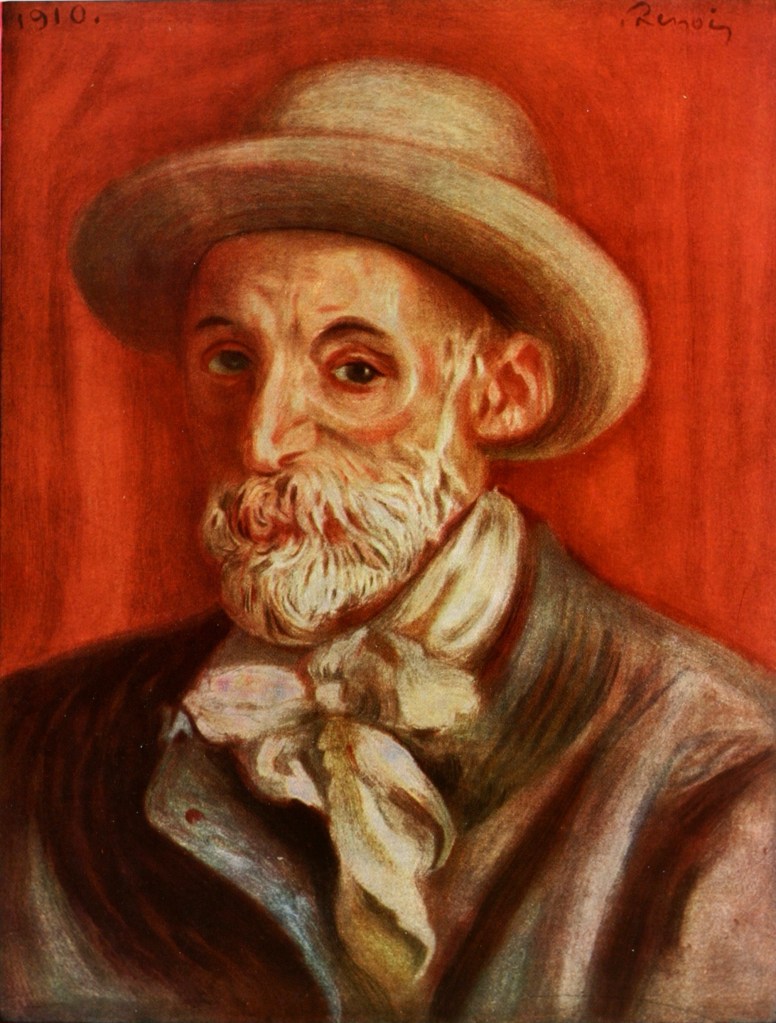
The painter of the above self-portrait was born in Limoges, France, on 25 February 1841. He became an early Impressionist but later adopted a more traditional style. Who is he?
Answer: Pierre-Auguste Renoir.
Pierre-Auguste Renoir (1841-1919) was a French artist and leading Impressionist painter. He later developed a more disciplined technique, focusing on portraits and figure paintings, particularly of women.
Two
This author, best known by a pen name but also using another — Joseph Kell, was born John Burgess Wilson on this day in 1917 in an inner-city suburb of Manchester, England. After wartime service, he left the British army in 1946 with the rank of sergeant-major. His most famous work, a dystopian satire published in 1962, was adapted into a controversial film in 1971. What is his best-known pen name?
Answer: Anthony Burgess.
Anthony Burgess (1917-1993) was an English novelist, critic, and man of letters renowned for his fictional explorations of modern dilemmas. He wrote over 50 books, including novels, literary criticism, biographies, and musical compositions. Burgess’s works often combined linguistic ingenuity, witty erudition, and sharp social satire. He is best known for his dystopian satire A Clockwork Orange and was also a versatile linguist and literary critic, writing numerous novels, librettos and screenplays.
Three
In 1986, after claiming victory in a fraudulent election which led to a military coup and revolution, President Ferdinand Marcos fled his country. Of what country was Marcos president, and which opposition leader replaced him as president?
Answers: Philippines; Corazon Aquino.
Ferdinand Marcos fled the Philippines on 25 February 1986, seeking refuge in Hawaii with his family and a vast fortune, in part consisting of 22 crates of cash valued at $717 million, 300 crates of assorted jewellery, $4 million worth of unset precious gems, 65 Seiko and Cartier watches, a 12 by 4 ft box full of pearls, a 3 ft solid gold statue covered in diamonds and other precious stones, $200,000 in gold bullion, nearly $1 million in Philippine pesos, and deposit slips to banks in the United States, Switzerland, and the Cayman Islands worth $124 million. While enjoying a lavish lifestyle, Filipinos back home grappled with the economic consequences of his rule. Amongst other things, Imelda Marcos, the ousted First Lady, was found to have a collection of 2,700 pairs of shoes. The revolution that ousted Marcos was fuelled by widespread discontent, with protests erupting not only in Manila but also in the provinces and islands. Source: Wikipedia.
Four
Born in 1943, this musician was a prominent figure in the music world during the swinging sixties. He was originally part of a band where he wrote hits like Here Comes the Sun and While My Guitar Gently Weeps. His sitar teacher was singer Norah Jones’ father. He later enjoyed a successful solo career. Who was he and who taught him to play the sitar?
Answers: George Harrison; Ravi Shankar.
George Harrison, lead guitarist of the Beatles, was known for his significant contributions to the band’s musical direction and his successful solo career. He incorporated non-Western musical influences, particularly Indian classical music, into the Beatles’ sound and later established himself as a solo artist with hits like My Sweet Lord. Harrison was also a prolific music and film producer, co-founding HandMade Films and producing acts for Apple Records. He produced the Monty Python’s troupe’s comedy film The Life of Brian (1979).
Five
In 1570, Pope Pius V excommunicated the English monarch from the Roman Catholic Church. Who was this monarch?
Answer: Elizabeth I.
Elizabeth I, the last Tudor monarch, ruled England and Ireland from 1558 to 1603. Her reign, marked by religious tolerance and cautious foreign policy, saw the establishment of the Church of England and the defeat of the Spanish Armada. Despite numerous courtships, Elizabeth remained unmarried, earning her the moniker ‘Virgin Queen’.