Five questions with the answers beginning with the letters from A to E, with each letter being used only once, but they are not in alphabetical order.
See question two. Image A Couple Cooks
One
Who wrote, produced, and directed Moulin Rouge (2001) and Australia (2008)?
Two
An absinthe-Champagne cocktail was invented by an author and shares its name with his 1932 non-fiction book about a sport in a southern European nation. Who is the author, and what is the book and cocktail’s shared name?
Three
Which chemical element derives its name from the Latin for ‘coal’?
Four
Which small dog breed, which is not a terrier, is sometimes known as the monkey terrier?
Five
The Malawian city of Blantyre was named after the Scottish birthplace of which missionary and explorer (1813-73)?
In 1721, a collection of six instrumental works—the composer’s own title was Six Concerts Avec plusieurs Instruments (Six Concertos With several Instruments)—were presented by Johann Sebastian Bach to Christian Ludwig, a marquess and younger brother of King Frederick I of Prussia. Using the above picture as a clue, by what name is this collection commonly known today?
Answer: Brandenburg Concertos
Johann Sebastian Bach’s Brandenburg Concertos, now his most popular work, were likely never performed during his lifetime. Bach sent the original manuscript to the Margrave (Marquess) of Brandenburg in 1721, possibly as a job application, but the Margrave never acknowledged the gift. The concertos were forgotten for over a century until they were rediscovered and published in the 19th century.
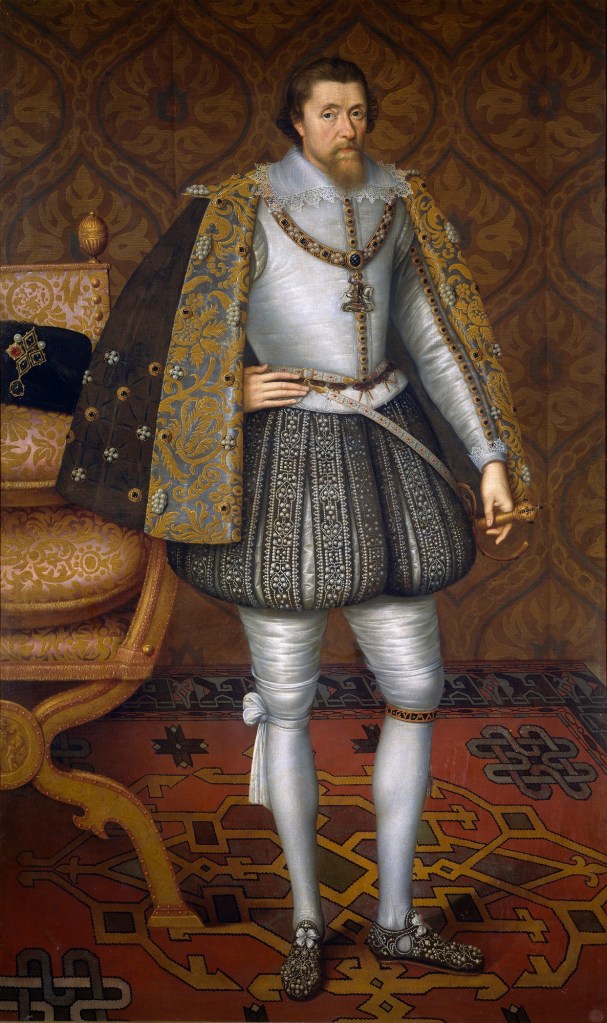
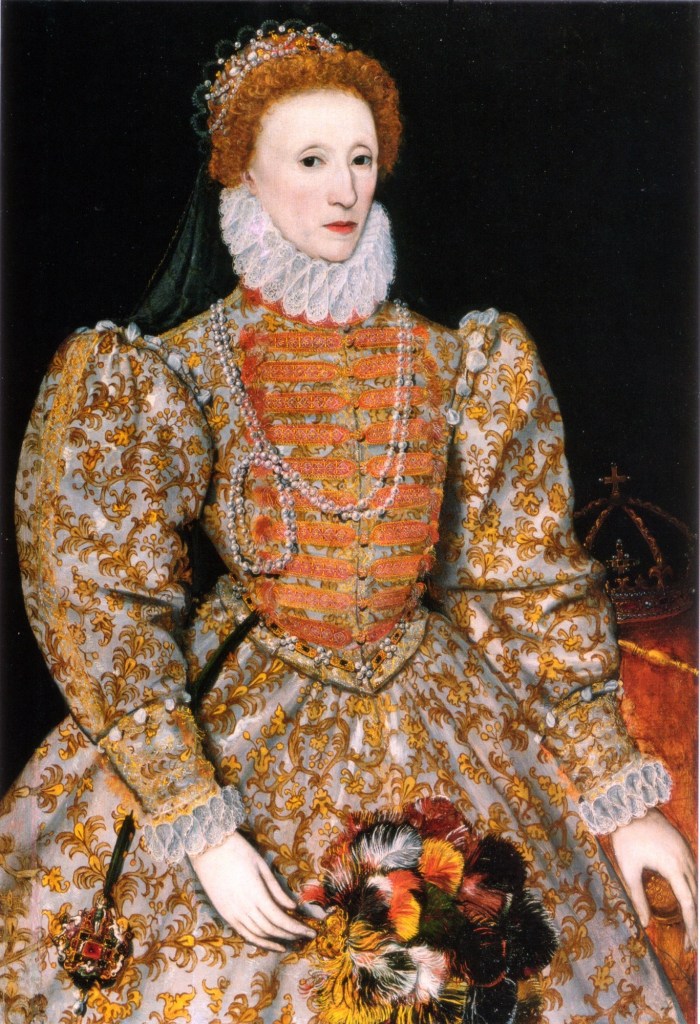
The male monarch pictured above succeeded the female one on her death in 1603.
Who is the queen?
Who was the king?
What was the familial relationship between them?
Answers
Queen Elizabeth I
King James VI and I
Cousins.
Queen Elizabeth I’s death in 1603 ended her reign of England and Ireland, leading to her cousin King James VI of Scotland’s succession as King of England and Ireland. Now both James VI and I, his reign saw the beginning of the Plantation of Ulster and English colonisation of the Americas.
Three
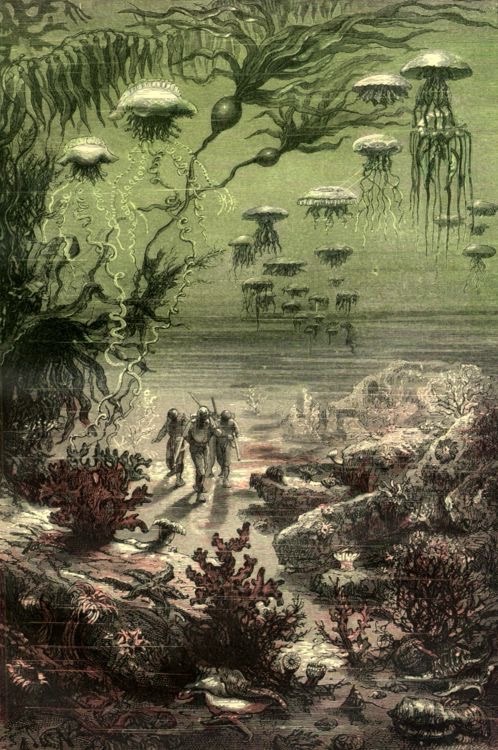
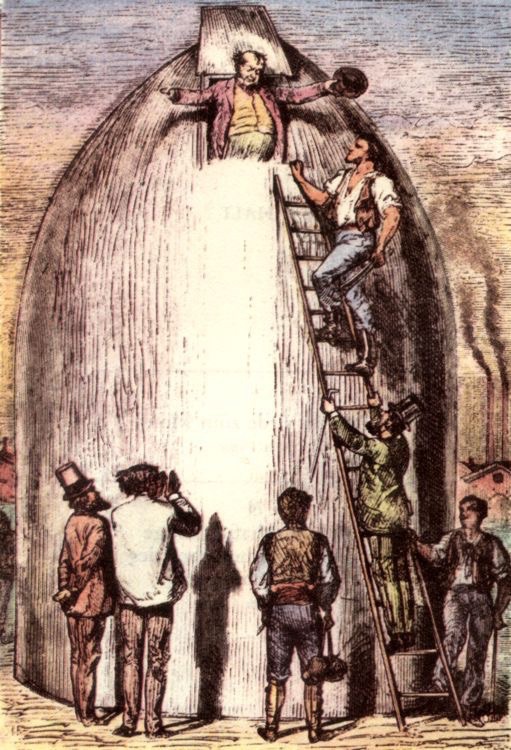
From Jules Verne’s novel Twenty Thousand Leagues Under the Sea. Image Wikimedia CommonsFrom the Earth to the Moon by Jules Verne Image Wikimedia Commons
The two illustrations above are from novels by an author, ‘the father of science fiction’, who died in 1905, aged 77. Since 1979, he has been the second most translated author.
Who was the author?
From what novel is the first illustration?
From what novel is the second illustration?
Answers
Jules Verne
Twenty Thousand Leagues Under the Sea
From the Earth to the Moon
Jules Verne was a French novelist, poet, and playwright, best known for his adventure novels like Journey to the Centre of the Earth and Around the World in Eighty Days His work, often set in the 19th century, incorporated contemporary scientific knowledge and technological advances. Verne is considered an important author in Europe and has been the second most-translated author in the world since 1979.
Four
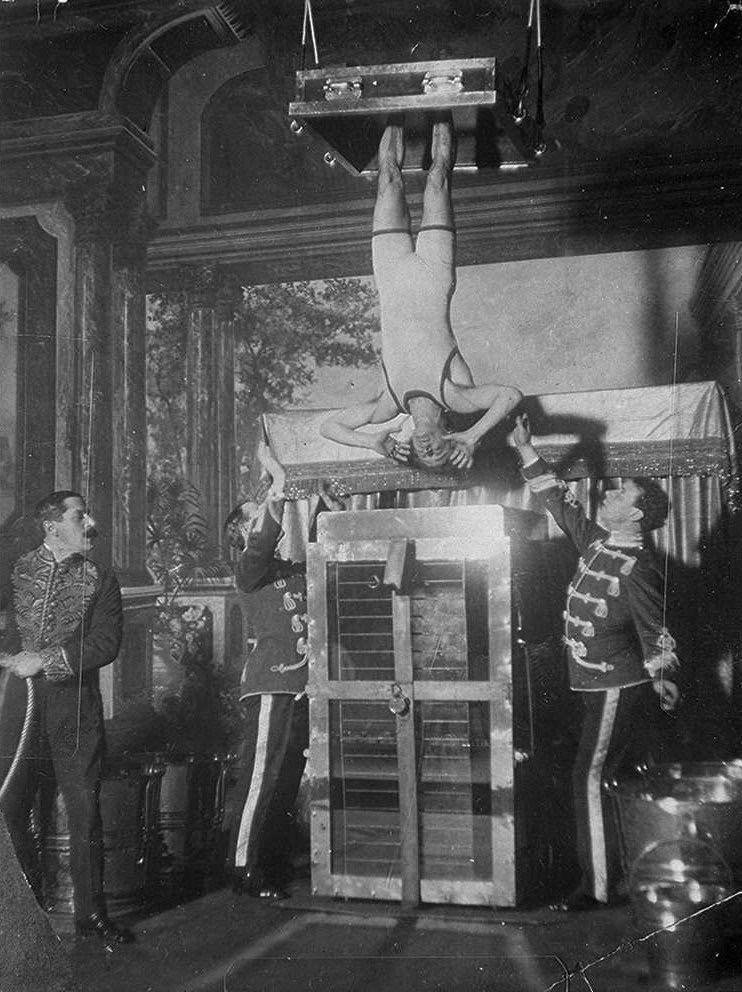
Harry Houdini, performing The Chinese Water Torture Cell. Image Wikimedia Commons
Erik Weisz, who was born in 1874, is pictured above during one of his acts, although he’s better known by his stage name.
In what European city was he born?
Who is he better known as?
Answers
Budapest
Harry Houdini.
Harry Houdini, a Hungarian-American escapologist, gained fame for his daring escape acts, including freeing himself from handcuffs, chains, and straitjackets. He also pursued a crusade against fraudulent spiritualists and was a pioneer aviator.
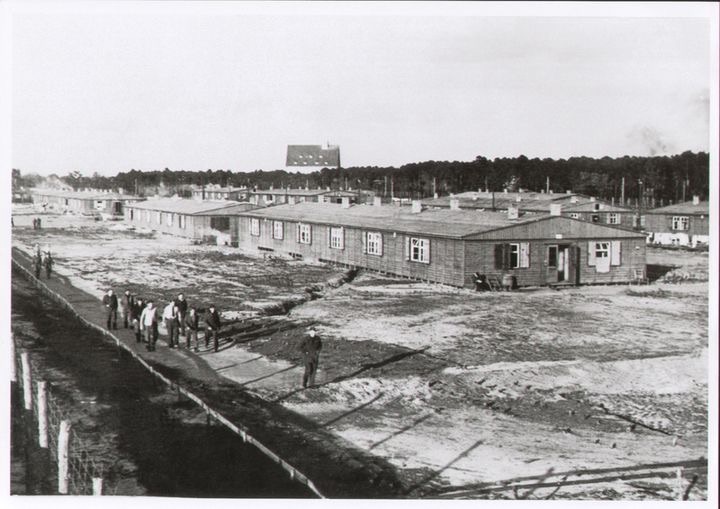
The prisoner of war camp above was made famous by a 1963 film which features the inmates attempts to leave it on the night of 24 March 1944.
By what name is this POW camp commonly known?
What was the 1963 film?
In what modern country is the site of the camp today?
Answers
Stalag Luft III
The Great Escape
Poland
Stalag Luft III (in full Stammlager Luft III; literally meaning Main Camp, Air, III) was a World War II POW camp for Allied airmen, known for escape plots including the Great Escape. Of the 76 men who escaped that night, 73 were recaptured, and fifty of those were executed. The camp, which was liberated in 1945 and is now a museum, was the subject of two feature films about the escape attempts that were made: The Wooden Horse (1950) and The Great Escape (1963).
Five pictures and some questions all of which are related to today’s date, March 24th.
One
Image Wikimedia Commons
In 1721, a collection of six instrumental works—the composer’s own title was Six Concerts Avec plusieurs Instruments (Six Concertos With several Instruments)—were presented by Johann Sebastian Bach to Christian Ludwig, a marquess and younger brother of King Frederick I of Prussia. Using the above picture as a clue, by what name is this collection commonly known today?
Two
Image Wikimedia CommonsImage Wikimedia Commons
The male monarch pictured above succeeded the female one on her death in 1603.
Who is the queen?
Who was the king?
What was the familial relationship between them?
Three
First illustration. Image Wikimedia Commons Second illustration. Image Wikimedia Commons
The two illustrations above are from novels by an author, ‘the father of science fiction’, who died in 1905, aged 77. Since 1979, he has been the second most translated author.
Who was the author?
From what novel is the first illustration?
From what novel is the second illustration?
Four
Eric Weisz. Image Wikimedia Commons
Erik Weisz, who was born in 1874, is pictured above during one of his acts, although he’s better known by his stage name.
In what European city was he born?
Who is he better known as?
Five
Image Wikimedia Commons
The prisoner of war camp above was made famous by a 1963 film which features the inmates attempts to leave it on the night of 24 March 1944.
By what name is this POW camp commonly known?
What was the 1963 film?
In what modern country is the site of the camp today?
These questions are all about today’s date, March 22nd.
One
Born in 1948, this composer wrote the music for a musical based on a 1939 T.S. Eliot poetry collection. Three questions…
Who is the composer?
What is the title of the musical?
What is the name of the poetry collection?
Answers
Andrew Lloyd Webber;
Cats
Old Possum’s Book of Practical Cats
Cats, a sung-through musical by Andrew Lloyd Webber based on T.S. Eliot’s poetry, tells the story of the Jellicle cats and their annual ‘Jellicle choice’. Premiering in 1981, it became a commercial success, running for decades in both the West End and Broadway, and sparking the mega-musical phenomenon.
Two
Canadian actor William Shatner, who was born on 22 March 1931, first appeared in the role of James T. Kirk in series 1 episode 1 of the original television series Star Trek in September 1966. What was the episode title?
Answer: The Man Trap.
William Shatner, born in 1931, is a Canadian actor renowned for his iconic role as Captain Kirk in the Star Trek franchise. He also starred in T.J. Hooker, Rescue 911, and Boston Legal, earning two Emmy Awards for the latter. Beyond acting, Shatner has released several albums and made history in 2021 as the oldest person to fly in space.
Three
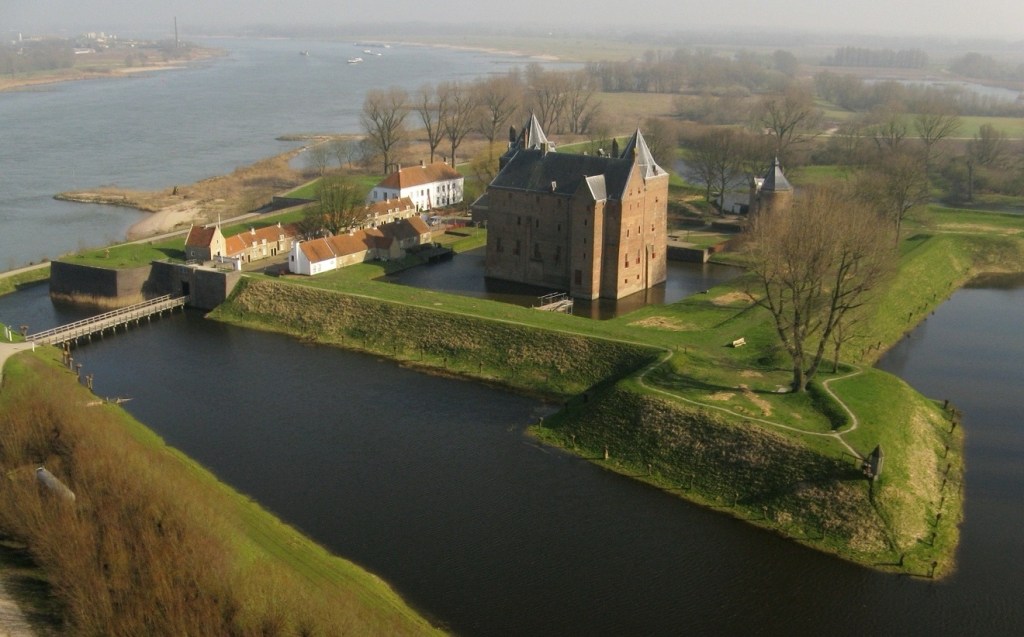
Hugo Grotius, a Dutch jurist, scholar and diplomat, is often called the ‘father of modern international law’. Today, he is best known for escaping imprisonment in Loevestein Castle, Netherlands, on this date in 1621. His wife devised the escape plan; what was it?
Answer: Hidden in a wooden chest.
On this day in 1621, Hugo Grotius was smuggled out of prison in a chest. Religious tensions were high in Holland and Grotius, who favoured tolerance, made many enemies. Arrested and sentenced to life in prison in 1618, his guards grew careless, neglecting to inspect the large book chest he often received. His wife then devised a plan to smuggle him out using the same chest. The plan was successful and the couple later reunited in Paris. Grotius is also remembered for his extensive legal writings which earned him the title ‘father of international law’.
Four
Born in 1976 in New Orleans, Louisiana, this actress won an Academy Award in 2006 for her role in Walk the Line. Who is she?
Answer: Reese Witherspoon.
Reese Witherspoon, born on March 22, 1976, in New Orleans, Louisiana, is an acclaimed American actress and producer renowned for her roles in romantic comedies and films like Legally Blonde and Walk the Line — for which she won an Academy Award for Best Actress for her portrayal of June Carter. Witherspoon founded Hello Sunshine, a production company dedicated to female-led literary adaptations, and is actively involved in advocacy for children and women.
Five
Born in 1641 in Antwerp, Spanish Netherlands (now Belgium), this Flemish Baroque artist became a leading court painter in England. He is also known for having a beard named after him. Who is he?
Answer: Anthony van Dyck.
Sir Anthony van Dyck, a Flemish Baroque artist, revolutionised court portraiture in England, notably painting Charles I. He was a prolific painter of portraits, religious and mythological subjects, and a fine draftsman and etcher. The Van Dyke beard is named after him.
Mungojerrie and Rumpelteazer
Today’s post title is the names of two feline characters from T.S. Eliot’s Old Possum’s Book of Practical Cats and the musical Cats.
These questions are all about today’s date, March 22nd.
One
Born in 1948, this composer wrote the music for a musical based on a 1939 T.S. Eliot poetry collection. Three questions…
Who is the composer?
What is the title of the musical?
What is the name of the poetry collection?
Two
Canadian actor William Shatner, who was born on 22 March 1931, first appeared in the role of James T. Kirk in series 1 episode 1 of the original television series Star Trek in September 1966. What was the episode title?
Three
Hugo Grotius, a Dutch jurist, scholar and diplomat, is often called the ‘father of modern international law’. Today, he is best known for escaping imprisonment in Loevestein Castle, Netherlands, on this date in 1621. His wife devised the escape plan; what was it?
Four
Born in 1976 in New Orleans, Louisiana, this actress won an Academy Award in 2006 for her role in Walk the Line. Who is she?
Five
Born in 1641 in Antwerp, Spanish Netherlands (now Belgium), this Flemish Baroque artist became a leading court painter in England. He is also known for having a beard named after him. Who is he?
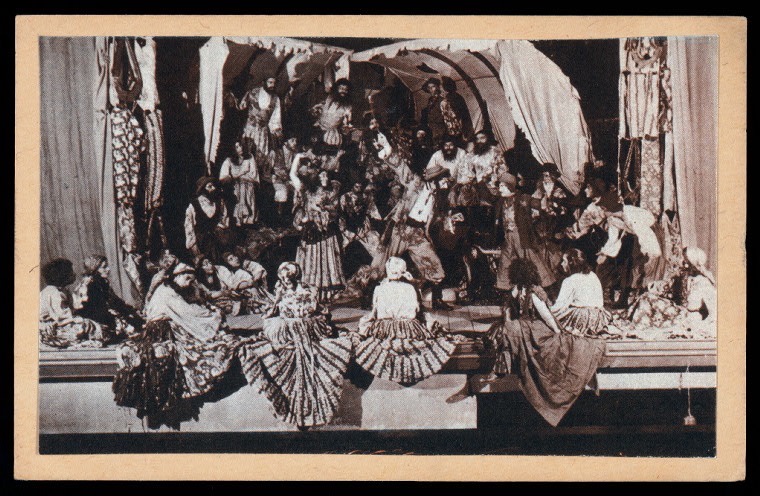
The first Romani language operetta, Children of the Forests, premiered on 20 March 1888. Where was it staged?
Bucharest, Romania
Kyiv, Ukraine
Moscow, Russia
Answer: 3. Moscow, Russia.
The premiere of the very first Romani language operetta Children of the Forests was staged in the Maly Theatre, Moscow, Russia on 20 March 1888. It was performed solely by the Romani troupe. The production ran for 18 years and was a great success. The first Romani theatre troupe, founded by Nikolai Shishkin, performed in Moscow and Saint Petersburg in the late 19th century. The troupe’s success led to the establishment of the Romen Theatre in Moscow in 1931.
Two
In 1923, the Arts Club of Chicago hosted the United States’ first showing of Original Drawings by… This event signalled the club’s early embrace of modern art in America. There is an artist’s name missing from the show’s title: who is the artist?
Salvador Dali
Pablo Picasso
Jackson Pollock
Answer: 2. Pablo Picasso
The Arts Club of Chicago, founded in 1916, is a private club and public exhibition space dedicated to showcasing international contemporary art. The club, known for its pro-Modernist stance, has presented groundbreaking exhibitions by artists like Pablo Picasso and Jean Dubuffet. It curates its own exhibits, emphasising cutting-edge and avant-garde art.
Three
Harriet Beecher Stowe’s Uncle Tom’s Cabin was first published on this date in 1852. Between 1832 and 1850 she lived in a city where her personal observations and research informed the basis of her story. Where was this city?
Alexandria, Virginia
Baltimore, Maryland
Cincinnati, Ohio
Answers: 3. Cincinatti, Ohio.
On this day in 1852, Harriet Beecher Stowe published Uncle Tom’s Cabin as a novel. The book, which had previously been serialised, played a crucial role in shifting public opinion towards abolitionism and contributed to the outbreak of the Civil War.
Four
Who became the first woman to win the Iditarod Trail Sled Dog Race, and when did she achieve this?
Kelly Quinault in 1973
Libby Riddles in 1985
Molly Semyonova in 1997
Answers: 2. Libby Riddles in 1985
The Iditarod Trail Sled Dog Race is an annual long-distance sled dog race in Alaska, covering the distance from Anchorage to Nome in eight to fifteen days. The race, which began in 1973, is a symbolic link to Alaska’s history and a popular sporting event, attracting competitors from around the world. The race is known for its challenging conditions, including blizzards, gale-force winds, and sub-zero temperatures, which with wind chill can reach −100 °F (−73 °C).
Five
Albert Einstein submitted his paper The Foundation of the General Theory of Relativity in 1916. Where was he working at that time?
Federal Institute of Technology, Zurich
Prussian Academy of Sciences, Berlin
Charles University, Prague
Answer: Prussian Academy of Sciences, Berlin.
Albert Einstein was working at the Prussian Academy of Sciences in Berlin when he published The Foundation of the General Theory of Relativity in 1916. He had accepted a position at the Prussian Academy in 1914, specifically to work on his new theory of gravity. The paper was submitted on March 20, 1916, and published later that year in the journal Annalen der Physik. This period marked a significant time in Einstein’s career, as he was developing groundbreaking theories that would change our understanding of gravity and the universe.
All of today’s questions are connected to the date, March 20th. There are three places, two people and a year to find in these multiple-choice questions.
The first Romani language operetta, Children of the Forests, premiered on 20 March 1888. Where was it staged?
Bucharest, Romania
Kyiv, Ukraine
Moscow, Russia
Two
In 1923, the Arts Club of Chicago hosted the United States’ first showing of Original Drawings by… This event signalled the club’s early embrace of modern art in America. There is an artist’s name missing from the show’s title: who is the artist?
Salvador Dali
Pablo Picasso
Jackson Pollock
Three
Harriet Beecher Stowe’s Uncle Tom’s Cabin was first published on this date in 1852. Between 1832 and 1850 she lived in a city where her personal observations and research informed the basis of her story. Where was this city?
Alexandria, Virginia
Baltimore, Maryland
Cincinnati, Ohio
Four
Who became the first woman to win the Iditarod Trail Sled Dog Race, and when did she achieve this?
Kelly Quinault in 1973
Libby Riddles in 1985
Molly Semyonova in 1997
Five
Albert Einstein submitted his paper The Foundation of the General Theory of Relativity in 1916. Where was he working at that time?
Born 1980. Actress who links the following roles: Penelope (in 2004), Isolde (2006), Erika (2003 and 2006), Darcy (2014) and Freya (2008). Who is she?
Rose Keegan
Sophia Myles
Lucy Russell
Answer: 2. Sophia Myles.
Sophia Myles, an English actress, who portrayed the following characters in the associated film. Lady Penelope Creighton-Ward in Thunderbirds(2004), Isolde in Tristan & Isolde(2006), Darcy in Transformers: Age of Extinction (2014), Erika in Underworld(2003) and Underworld: Evolution (2006), and Freya in Outlander (2008)”
Two
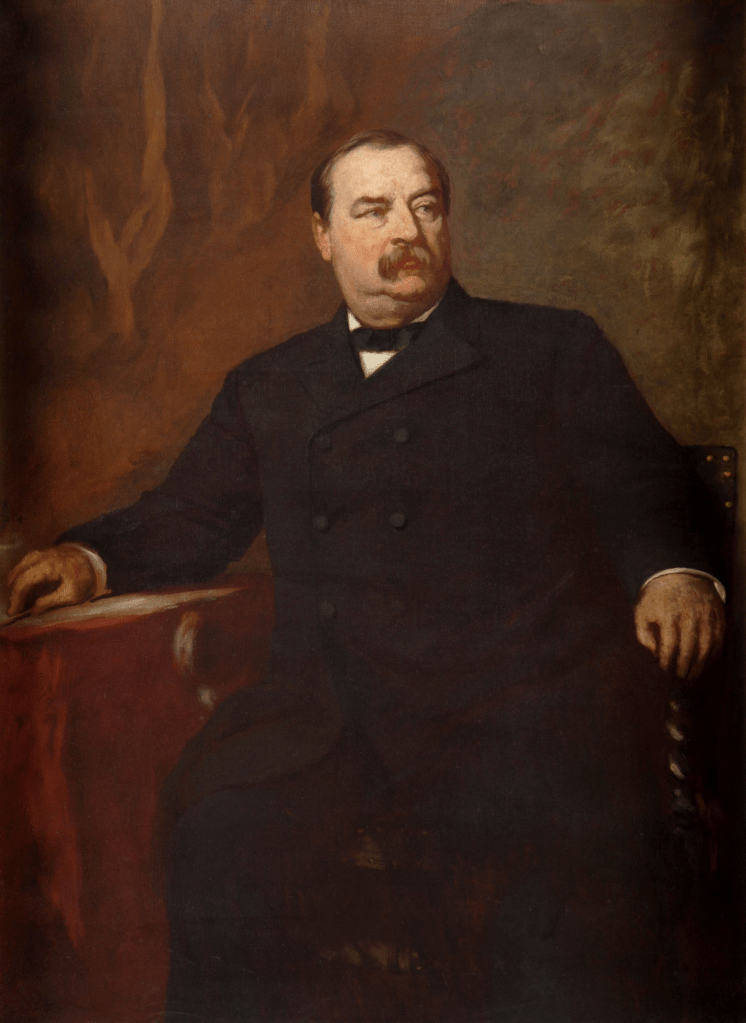
Born 1837, Grover Cleveland, served as the 22nd and 24th president of the United States. Where was he born?
Amherst, New Hampshire
Brighton, New York
Caldwell, New Jersey
Answer: 3. Caldwell, New Jersey.
Stephen Grover Cleveland, the 22nd and 24th President of the United States, was the first Democrat elected after the Civil War and the first president to serve non-consecutive terms. A Bourbon Democrat, he championed political reform, fiscal conservatism and classical liberalism. His presidency was marked by significant legislation like the Interstate Commerce Act and the Dawes Act, as well as challenges like the Panic of 1893 and the Pullman Strike.
Three
Anthem for Doomed Youth was written by a war poet born this day in 1893. Who was he?
Rupert Brook
Wilfred Owen
Siegfried Sassoon
Answer: 2. Wilfred Owen.
Wilfred Owen, an English poet and soldier, expressed anger at war’s cruelty and waste through his poetry. Based on his World War I experiences, his war poetry was about the horrors of trenches and gas warfare. At only 25 years of age, he was killed in action at the Battle of the Sambre on 4 November 1918, exactly a week before the war’s end. His best-known works— most of which were published posthumously— are Anthem for Doomed Youth, Dulce et Decorum est, Futility, and Spring Offensive.
Four
Who is Dana Elaine Owens, born 18 March 1970, a musician and actress, better known as?
Lauryn Hill
Missy Elliott
Queen Latifah
Answer: 3. Queen Latifah.
An American musician and actress, Queen Latifah rose to fame in the late 1980s with her debut album, All Hail the Queen, which blended diverse styles and feminist themes. The name Latifah is Arabic for ‘delicate’ or ‘sensitive’.
Five
Born today in 1869, this British prime minister returned from Germany with a ‘piece of paper’ promising to ‘have brought you back peace — but a peace I hope with honour’. Who was he?
Stanley Baldwin
Neville Chamberlain
Winston Churchill
Answer: 2. Neville Chamberlain.
Prime Minister of the UK from 1937 to 1940 Neville Chamberlain is known for his policy of appeasement towards Hitler’s Germany. He served in various government positions, including Chancellor of the Exchequer, before becoming Prime Minister. Despite signing the Munich Agreement with Hitler in 1938, Chamberlain declared war on Germany less than a year later following the Nazi invasion of Poland.
Born 1980. Actress who links the following roles: Penelope (in 2004), Isolde (2006), Erika (2003 and 2006), Darcy (2014) and Freya (2008). Who is she?
Rose Keegan
Sophia Myles
Lucy Russell
Two
Born 1837, Grover Cleveland, served as the 22nd and 24th president of the United States. Where was he born?
Amherst, New Hampshire
Brighton, New York
Caldwell, New Jersey
Three
Anthem for Doomed Youth was written by a war poet born this day in 1893. Who was he?
Rupert Brook
Wilfred Owen
Siegfried Sassoon
Four
Who is Dana Elaine Owens, born 18 March 1970, a musician and actress, better known as?
Lauryn Hill
Missy Elliott
Queen Latifah
Five
Born today in 1869, this British prime minister returned from Germany with a ‘piece of paper’ promising to ‘have brought you back peace — but a peace I hope with honour’. Who was he?
This is a tale of a meeting of two lonesome, skinny, fairly old white men on a planet which was dying fast…
This quote is the opening of Breakfast of Champions, a 1973 novel by a writer born in Indianapolis in 1922. Who is the writer?
Answer: Kurt Vonnegut.
Kurt Vonnegut’s Breakfast of Champions is a satirical novel critiquing American society through the story of Kilgore Trout and Dwayne Hoover, whose meeting leads to Hoover’s insanity. The novel addresses themes of free will, suicide and race relations.
Two
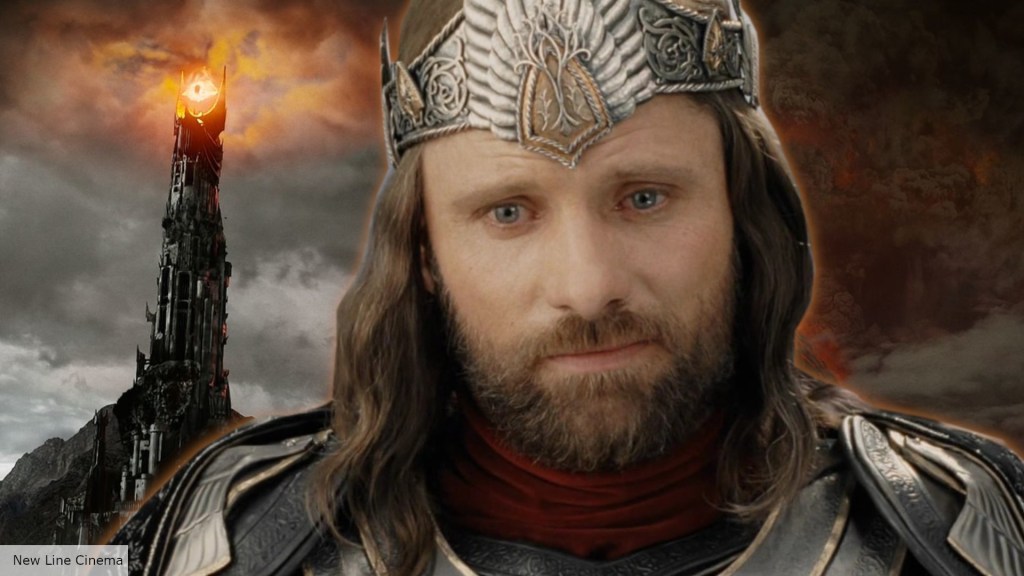
Following Sauron’s defeat in The Lord of the Rings, Aragorn is crowned king. What name does he adopt on his coronation?
Answer: Elessar (aka Elfstone).
After Sauron’s defeat, Aragorn is crowned King Elessar, meaning ‘Elfstone’. This Quenya name was given to him by his grandmother, Galadriel. He marries Arwen at midsummer and becomes the twenty-sixth King of Arnor, the thirty-fifth King of Gondor, and the first High King of the united Kingdom of Gondor and Arnor. His lineage is known as the House of Telcontar, meaning ’Strider’ in Quenya.
Three
Time it was And what a time it was, it was A time of innocence A time of confidences
These are the opening lyrics to a 1968 song that served as the title track for an album. Please name the track/album and the artist?
Bookends by Simon and Garfunkel
The post title Bookends derives from this track and album. Bookends is a concept album exploring a life journey from childhood to old age. Side one marks life stages, while side two includes singles and unused material. Today’s quiz is bookended by questions one and five being about books.
Four
T.E. Lawrence is commonly known by what name?
Answer: Lawrence of Arabia.
T.E. Lawrence, known as Lawrence of Arabia, was a British Army officer, archaeologist, and writer. He gained fame for his role in the Arab Revolt during World War I and his subsequent work with Emir Faisal. Lawrence published his autobiography, Seven Pillars of Wisdom, and later served in the Army and RAF before his death in a motorcycle accident in 1935.
Five
What fish does the fisherman have an epic struggle to catch in Ernest Hemingway’s The Old Man and the Sea?
Answer: Marlin.
Ernest Hemingway’s short, heroic novel The Old Man and the Sea, published in 1952 and winning the 1953 Pulitzer Prize for Fiction, marked his final major work of fiction. The story follows an ageing fisherman’s epic struggle to catch a giant marlin.
Bookends — Post title
See explanation in Three above.
Bookends
Simon and Garfunkel
Time it was And what a time it was, it was A time of innocence A time of confidences
Long ago it must be I have a photograph Preserve your memories They’re all that’s left you — AZ Lyrics