Prime Ministers, Vampires and Assassins—Answers

The answers to the questions from earlier are in bold below.

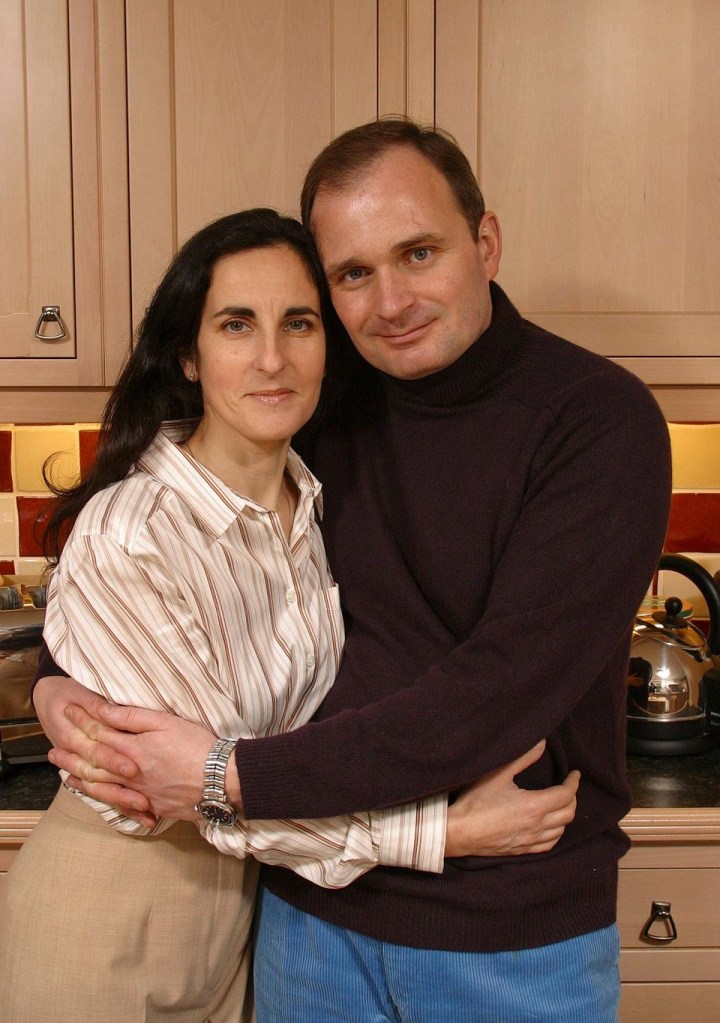
The Right Honourable Kim Campbell, PC, CC, OBC, QC, served as Canada’s 19th and first female Prime Minister in 1993
Wikipedia
  1. Kim Campbell—Kim Campbell, born on 10 March 1947, in Port Alberni, British Columbia, became Canada’s first female prime minister in June 1993, serving until November. Educated at the University of British Columbia and the London School of Economics, she taught political science and practiced law before entering politics. Campbell served on Vancouver’s school board and in the British Columbia provincial legislature before joining federal politics. She held several ministerial roles, including justice minister and defence minister, before becoming prime minister. Her tenure ended with a significant electoral defeat. Post-politics, she was active in academia and international organisations. Jenny Shipley and Helen Clark  were consecutive prime ministers in New Zealand from 1997-1999 and 1999-2008 respectively. 
    Welcome to Sunnydale
    Wikipedia
  2. Sunnydale—Buffy Summers, portrayed by Sarah Michelle Gellar, is the “Slayer” destined to battle evil forces with enhanced powers like strength, agility, and precognition. Initially reluctant, she embraces her role with guidance from her Watcher, Rupert Giles, who provides supernatural insights and training. Buffy’s friends at Sunnydale High, Willow Rosenberg and Xander Harris, support her. Willow, an academic prodigy, evolves into a powerful witch and identifies as a lesbian. Xander, lacking supernatural abilities, offers comic relief. Buffy and Willow appear in all 144 episodes, while Xander is in 143.
    FBI wanted poster fugitive poster of James Earl Ray; the later convicted murderer of civil rights leader and anti-war activist, Dr. Martin Luther King, Jr.
    Wikipedia
  3. James Earl Ray—James Earl Ray, born on March 10, 1928, in Alton, Illinois, was an American criminal who assassinated civil-rights leader Martin Luther King, Jr., on April 4, 1968, in Memphis, Tennessee. Ray had a history of petty crimes and prison sentences, including escapes. After the assassination, he fled to Toronto, obtained a Canadian passport, and traveled to London and Lisbon. He was apprehended on June 8, 1968, at Heathrow Airport and extradited to the U.S. Ray pleaded guilty on his 41st birthday to King’s murder, receiving a 99-year sentence, but later recanted his confession, which was not accepted. He died on April 23, 1998, in Nashville, Tennessee. Lee Harvey Oswald, John F. Kennedy’s assassin, was born in New Orleans. Leon F. Czolgosz, who killed William McKinlay in 1901 was born in Detroit, Michigan.
Martin Luther King, Jr.
Wikipedia

Prime Ministers, Vampires and Assassins

Flag of Canada.
Wikipedia

All these relate one way or another to 10 March. 

  1. Born on 10 March 1947 who, in June 1993, became the first woman to serve as Canadian prime minister?
    • Kim Campbell
    • Helen Clark
    • Jenny Shipley
    Buffy the Vampire Slayer logo
    Wikipedia
  2. Buffy the Vampire Slayer debuted on television on the 10 March 1997. What high school do Buffy, Willow and Xander attend
    • Sunnydale
    • Sunnyside
    • Sunnyvale
  3. Which 20th century assassin was born 10 March 1928 in Alton, Illinois?
    • Leon F. Czolgosz
    • Lee Harvey Oswald
    • James Earl Ray

Good luck! The answers will be posted later today.

Fabulous Fantastic Fiascoes—Answers

Answers to the questions in the earlier post are shown in bold below.

US Military Academy, West Point, Coat of Arms
Image Wikipedia
  1. West Point military academy—Edgar Allan Poe attended the United States Military Academy at West Point in 1830. His time there was marked by academic success in subjects like mathematics, but he struggled with the strict military discipline. Poe deliberately sought dismissal by neglecting his duties and violating academy regulations. His tenure at West Point was brief, lasting less than a year, but it significantly influenced his literary career, as he turned his focus entirely to writing after leaving the academy.
    Pietà (1498–1499), by Michaelangelo. St. Peter’s Basilica, Vatican City
    Image Wikipedia
  2. 1475—Michelangelo di Lodovico Buonarroti Simoni (1475–1564), known simply as Michelangelo, was an influential Italian sculptor, painter, architect and poet of the High Renaissance. Born in Florence, his work drew inspiration from classical antiquity, leaving a profound impact on Western art. Renowned for masterpieces like the Sistine Chapel ceiling and the statue of David, Michelangelo epitomised the Renaissance man alongside Leonardo da Vinci. His exceptional talents spanned multiple disciplines, and extensive surviving records highlight his artistic journey. Celebrated by contemporaries, Michelangelo remains one of the most documented and revered artists of the 16th century.
    Penny Black with Queen Victoria profile.
    Image Wikipedia
  3. Victoria, queen of Great Britain —The Penny Black, introduced in the United Kingdom on 1 May 1840 and valid from 6 May, was the world’s first adhesive postage stamp for public postal use. Featuring Queen Victoria’s profile, it revolutionised postal services based on Sir Rowland Hill’s proposal to simplify complex, costly rates. Prior to this, recipients paid postage based on distance and sheet count. The Penny Black marked a shift to sender-paid postage, enabling letters up to ½ ounce (14 grams) to be delivered nationwide for a uniform rate of one penny, streamlining and democratising communication across distances.
    Valentina Tereshkova.
    Image Wikipedia
  4. Valentina Tereshkova—Valentina Tereshkova, a Russian engineer and former Soviet cosmonaut, was the first woman in space, completing a solo mission on Vostok 6 in 1963. It was her only space flight.
    This is a drawing of the Alamo Mission in San Antonio. It was first printed in 1854 in Gleason’s Pictorial Drawing Room Companion and was reprinted in Frank Thompson’s 2005 “The Alamo”, p 106.
    Image Wikipedia
  5. 13 days—The Siege of the Alamo took place from 23 February to 6 March 1836 during the Texas Revolution. Mexican forces led by General Antonio López de Santa Anna besieged the Alamo Mission in San Antonio, defended by Texian rebels including James Bowie, William B. Travis and Davy Crockett. Despite fierce resistance, the Texians were vastly outnumbered. After 13 days of relentless bombardment and attacks, the Mexican army overran the mission, killing nearly all defenders. The defeat became a rallying cry, “Remember the Alamo!”, inspiring Texian forces to eventual victory in the revolution.
    Old Package of Aspirin, 20 tabs 0.5 g
    Image Wikipedia
  6. Aspirin—Aspirin, a genericized trademark for acetylsalicylic acid (ASA), is a nonsteroidal anti-inflammatory drug (NSAID) used to alleviate pain, fever, and inflammation and as an antithrombotic. It treats specific inflammatory conditions like Kawasaki disease, pericarditis, and rheumatic fever. Long-term use helps prevent heart attacks, ischaemic strokes and blood clots in high-risk individuals. Effects for pain or fever usually start within 30 minutes. Aspirin functions like other NSAIDs but uniquely suppresses platelet function.
    Muhammad Ali.
    Image Wikipedia
  7. Cassius Clay—In 1964, Cassius Clay stunned the world by defeating Sonny Liston to win the heavyweight championship, defying the odds as an underdog. Just two days after his historic victory, Clay made headlines again by announcing his conversion to the Nation of Islam. This pivotal decision marked a profound personal transformation, as he embraced the teachings of Elijah Muhammad. On 6 March 1964, he adopted the name Muhammad Ali, symbolising his new identity and faith. Ali’s name change reflected not just a religious shift but a declaration of self-determination, which resonated throughout his illustrious boxing career and beyond.
    World Premiere Poster, 1853
    Image Wikipedia
  8. FiascoLa traviata premiered at La Fenice, Venice, in March 1853, amidst Verdi’s lingering apprehensions. The production faced hurdles from the start: Verdi disagreed with the casting of 38-year-old Fanny Salvini-Donatelli as Violetta, feeling she was ill-suited for the role of a youthful, consumptive heroine. Despite Verdi’s protests, no changes were made. The opening act received applause, but enthusiasm waned in the second act, where performances by baritone Felice Varesi and tenor Lodovico Graziani met with disapproval. Verdi later lamented in a letter, “La traviata last night a failure. Was the fault mine or the singers’? Time will tell.” He further said, “It was a fiasco!”
    Eleanor Roosevelt with female reporters at her first White House press conference on March 6, 1933.
    Credit: FDR Presidential Library & Museum
    Image via National Woman’s History Museum
  9. Eleanor Roosevelt—Eleanor Roosevelt recounted to journalist Lorena Hickok that the first White House press conference for women reporters, held on 6 March 1933—two days after FDR’s inauguration—was held in the Red Room. Thirty-five women attended, but there weren’t enough chairs, so some sat on the floor. These weekly conferences, open only to women, helped preserve their jobs and ensured news access. As Mrs Roosevelt noted without fresh stories, women reporters risked losing their jobs. The conferences focused on topics of interest to women, avoiding politics. Over twelve years, 348 conferences provided the First Lady with a national audience and significant publicity.
    Dmitri Mendeleev.
    Image Wikipedia
  10. 1869—On 6 March 1869, a scientist presented to the Russian Chemical Society about how elements’ properties relate to their atomic weights. He found that elements arranged by atomic weight show a pattern in their properties. Similar elements often have similar atomic weights or a regular increase in weight. Elements in groups based on atomic weight also match their valencies and chemical properties. He noted that widely spread elements have small atomic weights and that atomic weight influences an element’s nature. He predicted the discovery of new elements and suggested that atomic weights could help predict element properties.
Coloured periodic table showing the most common sets of elements (2023)
Image Wikipedia
Pietà (1498–1499), by Michaelangelo. St. Peter’s Basilica, Vatican City
Image Wikipedia

Fabulous Fantastic Fiascoes

Michelangelo.
Image Wikipedia
  1. On this day in 1831, American writer Edgar Allan Poe was court-martialled for disobedience and expelled from…
    • Annapolis naval academy
    • Marine Corps Base Quantico
    • West Point military academy
  2. Italian Renaissance artist Michelangelo was born on 6 March in…
    • 1375
    • 1475
    • 1575
  3. On 6 March 1840, the world’s first adhesive postage stamp, the Penny Black, went into use featuring an image of…
    • Jonas Furrer, president of Switzerland
    • Victoria, queen of Great Britain
    • Martin Van Buren, president of the US
  4. The first female to travel in space was born on this day in 1937, she was…
    • Valentina Ponomaryova
    • Svetlana Savitskaya
    • Valentina Tereshkova 
  5. The Alamo, San Antonio fell and was captured today in 1836 following a siege which had lasted…
    • 3 days
    • 13 days
    • 31 days
  6. On 6 March 1899, acetylsalicylic acid is patented by Felix Hoffmann at the German company Bayer under the genericized trademark…
    • Aspirin
    • Ibuprofen
    • Paracetamol 
  7. This day in 1964 a boxer changed his name to Muhammad Ali. He had had changed his name from…
    • Augustus Amber
    • Balbinus Beryl
    • Cassius Clay
  8. Today in 1853, La traviata, by Giuseppe Verdi, was premiered at La Fenice opera house in Venice. The composer later described it as…
    • Fabulous
    • Fantastic
    • Fiasco
  9. The first First Lady to hold an official press conference in the White House did so on 6 March. She was…
    • Eleanor Roosevelt
    • Jackie Kennedy
    • Pat Nixon
  10. At a meeting of the Russian Chemical Society, Russian chemist Dmitri Mendeleev presented the first periodic table on this day in …
    • 1869
    • 1895
    • 1921

Good luck! The answers will be posted later today.

Fiddler’s Bridge Rings—Answers

Here are the answers to the questions posed earlier today plus some additional information.

A portrait in oils in the Museo Internazionale e Biblioteca della Musica di Bologna is generally believed to be of Vivaldi.
Image Wikipedia
  1. Venice, Republic of Venice (now Italy)—Antonio Lucio Vivaldi (1678–1741) was a pivotal Italian composer and violinist of the Baroque era, known for his innovative contributions to orchestration, violin technique and the concerto form. Born in Venice, he was ordained a priest in 1703, earning the nickname Il Prete Rosso—the red priest. Vivaldi worked at the Ospedale della Pietà, composing numerous concertos, sacred works, and over fifty operas, including the famous The Four Seasons. Despite initial success, his popularity declined in the 1730s. He moved to Vienna in 1740, seeking royal support, but died in poverty. His works were rediscovered in the 1920s, reviving interest in his music.
    Forth Bridge pier off Inchgarvie Island. The Forth Road Bridge can be seen in the background.
    Image Wikipedia
  2. Edinburgh—The Forth Bridge, a cantilever railway bridge over the Firth of Forth (Estuary of the River Forth) in Scotland, was designed by Sir John Fowler and Sir Benjamin Baker in the late 1880s and opened on 4 March 1890. Initially criticised for its aesthetics, it is now a symbol of Scotland and a UNESCO World Heritage Site. Located 9 miles west of Edinburgh, it carries the Edinburgh–Aberdeen line, is 8,094 feet (2467 m) long and features three 1,348 ft (411 m) cantilevers and two 351 ft (107 m) suspended spans, with a total clear span of 1,699 ft (518 m). Constructed with 58,000 tons of steel at a cost of £3,000,000 (£493,000,000 in 2025). Recent research by the Queensferry Historian Group has discovered that 78 men died during the construction of the bridge.
    A plaque honoring Perkins at Boston’s Logan Airport.
    Image Wikipedia
  3. Franklin D. Roosevelt—Frances Perkins was appointed Secretary of Labor on 4 March 1933. Born on 10 April 1880, in Boston she was a pioneering American workers-rights advocate and the first woman in the U.S. cabinet, serving as Secretary of Labour from 1933 to 1945 under President Franklin D. Roosevelt. A key figure in the New Deal coalition, she focused on labour issues and social security policy, developing the Social Security Act in 1935. Perkins championed reforms like the minimum wage, maximum workweek, and child labour restrictions. Educated at Mount Holyoke College, Wharton School, and Columbia University, she passed away on 14 May 1965, in New York.
    Paul McCartney, George Harrison and John Lennon during a Beatles performance for Dutch television, 1964.
    Image Wikipedia
  4. John Lennon, Beatles—In 1966, during a controversial interview, John Lennon of the Beatles made a bold statement that would spark widespread debate and backlash around the world. Lennon asserted that the band had become “more popular than Jesus”. This comment was part of a larger discussion about the changing role of religion and the cultural influence of rock music, particularly among the youth of the 1960s. The remark was initially unnoticed in the UK but gained significant attention in the United States, leading to protests and record burnings by those who viewed the statement as blasphemous. Despite the uproar, the Beatles continued to dominate the music scene and influence the cultural landscape, solidifying their legacy as one of the most iconic bands in history.
  5. Voyager 1—Voyager 1, launched by NASA on September 5, 1977, is a pioneering interplanetary probe that visited Jupiter and Saturn, becoming the first spacecraft to reach interstellar space. Part of a twin mission with Voyager 2, it utilised a rare planetary alignment for a multiplanet tour. Voyager 1 discovered Jupiter’s ring and volcanic activity on Io, and revealed Saturn’s ring structures. It carries a gold-plated phonograph record with Earth’s images and sounds. By 2012, it entered interstellar space and is now the most distant human-made object. It is expected to operate until 2030.
Distance from Earth screenshot, 12:42 4 March 2025*
Image JPL NASA Voyager

*Voyager Live information can be viewed at JPL NASA Voyager.

Fiddler’s Bridge Rings

Image Wikipedia

Here are some questions based on this day in history.

  1. Antonio Vivaldi, composer and virtuoso violinist was born on 4 March 1678. Where was he born?
    • Vigo, Kingdom of Galicia (now Spain)
    • Vienna, Austria
    • Venice, Republic of Venice (now Italy) 
  2. What Scottish city is located about nine miles east of the bridge, which opened this day in 1890, pictured above? 
    • Aberdeen
    • Dundee
    • Edinburgh
    Frances Perkins
    Image Wikipedia
  3. Frances Perkins was the first woman ever to serve in a presidential cabinet in the United States. Which president appointed her as the fourth US Secretary of Labor?
    • Calvin Coolidge
    • Herbert Hoover
    • Franklin D. Roosevelt 
  4. On 4 March 1966, it was claimed during an interview that we are ‘more popular than Jesus’. Who made this claim?
    • John Lennon of the Beatles
    • Cass Elliot of the Mamas & the Papas
    • Mick Jagger of the Rolling Stones
  5. On this day in 1979 the first photograph of the rings of Jupiter (below) was sent back to Earth by what spacecraft?
    • Voyager 1
    • Galileo
    • Pioneer 11
Jupiter.
Image Wikipedia

Good luck! The answers will be posted later today.

Who, What, When, Where, Why and How: 26 February—Answers

Who

Johnny Cash

Johnny Cash. [Image Wikipedia]

Johnny Cash’s music explored sorrow, moral dilemmas, and redemption, featuring a deep bass-baritone voice and the Tennessee Three’s distinctive sound.  His free prison concerts and all-black stage attire solidified his iconic status.


What

US Army in Hawaii

From Here to Eternity, US theatrical release poster for the 1951 film. [Image Wikipedia]

James Jones’s debut novel, From Here to Eternity, is set in Hawaii in 1941 and follows the lives of US Army infantry company members. The novel, loosely based on Jones’s experiences, won the National Book Award and was adapted into a successful film.


When

1919

Grand Canyon National Park poster (1938).
[Image Wikipedia]

Grand Canyon National Park in Arizona features the Grand Canyon, a natural wonder of the Colorado River.  The park, spanning over 1.2 million acres, welcomes millions of visitors annually.


Where

Mediterranean Sea

Elba. [Image Wikipedia]

Elba is a Mediterranean island in Tuscany, Italy, known for its natural beauty and historical significance as Napoleon’s first exile site. It is the largest island in the Tuscan Archipelago and part of the Arcipelago Toscano National Park.

Elba, shown here in the Tyrrhenian Sea part of the Mediterranean Sea. [Image Wikipedia]

Why 

Portugal wished to control the Congo Basin

Map showing the Congo River drainage basin.
[Image Wikipedia]

The Berlin Conference of 1884–1885, organised by Otto von Bismarck, regulated European colonisation and trade in Africa. The conference concluded with the signing of the General Act of Berlin. The Berlin Conference, initiated by Portugal and supported by Britain, brought together 14 nations to establish a joint policy for Africa.

Western Lowland Gorilla, an endangered species, in the the Congo River basin. [Image Wikipedia]

How

Novelist


Victor Hugo in 1829, lithograph by Achille Devéria in the collection of the National Gallery of Art, Washington D.C. [Image Wikipedia]

Victor Hugo was a French Romantic author, poet, essayist, playwright, and politician. His most famous works include novels like The Hunchback of Notre-Dame and Les Misérables, as well as poetry collections like Les Contemplations and La Légende des siècles.

Portrait of Victor Hugo, deputy of the Second Republic in 1848, gallery of the representatives of the people of the French National Assembly, Paris. [Image Wikipedia]

Blessed Be This Noble Land—Answer

  1. Bechuanaland
  2. Rain

The title of this post Blessed Be This Noble Land is the national anthem of Botswana.

Coat of Arms of Botswana.
[Image from Wikipedia]

The motto Pula, which means rain and also blessing, is the name of Botswana’s currency.

On the 21 February 1966 the Earl of Longford, the British Colonial Secretary, announced that Bechuanaland, a British protectorate, would gain independence on 30th September 1966, subsequently being renamed Botswana.

This landlocked country in Southern Africa is bordered by Namibia (including the Caprivi Strip) to the west and north, Zambia and Zimbabwe to the northeast, and South Africa to the southeast and south. Botswana’s borders feature a minor section along the Zambezi River with Zambia, while its boundary along the Chobe River with Namibia was settled in a 1999 International Court of Justice ruling favoring Botswana. Despite remaining one of the least densely populated nations globally, with over 2.4 million people inhabiting an area similar in size to France, Botswana, named after its dominant Tswana ethnic group, has transitioned from being one of the world’s poorest and least-developed states to a peaceful and increasingly prosperous democratic state. Approximately 70 percent of its flat, topographically consistent territory forms part of the Kalahari Desert.

Blessed Be This Noble Land

Coat of Arms of Botswana.
[Image from Wikipedia]

The British Colonial Secretary, announced on 21 February 1966 that a British protectorate would gain independence later in the year and be renamed Botswana.

  1. What was the name of the British protectorate?
    • Barotseland
    • Bechuanaland
    • Nyasaland
  2. Botswana has a one word motto Pula, what does it mean in English?
    • Lion
    • Rain
    • Self

The answers will be posted later today.

Brief Encounter—Answer

45 minutes

President Francisco Madero. 37th President of Mexico.
[Image from Wikipedia]

Pedro Lascuráin’s 45-minute presidency, unlike other brief period in office, was entirely intentional. Lascuráin played a crucial role in the Mexican Revolution, which involved the transfer of power from President Francisco Madero to dictator Victoriano Huerta. Here’s how it unfolded.

Pedro Lascuráin. 38th President of Mexico.
[Image from Wikipedia]

As the minister of foreign affairs, Lascuráin held the third position—after the president and vice president—in the line of succession to the presidency. However, Huerta exploited this position to his advantage. He orchestrated a fake battle to create unrest and persuade Madero and his vice president to resign. Tragically, they were later murdered while attempting to flee Mexico. Lascuráin ascended to the presidency, but his tenure was marked by only one significant act: appointing Huerta as a member of his cabinet. Subsequently, he promptly resigned, paving the way for the next in line, his new cabinet minister, Victoriano Huerta.

Victoriano Huerta. 39th President of Mexico.
[Image from Wikipedia]