Quizology.Online

“There is much pleasure to be gained from useless knowledge.”

— Bertrand Russell

Tag: Second World War

  • Who, What, When, Where, Why and How IX — Answers

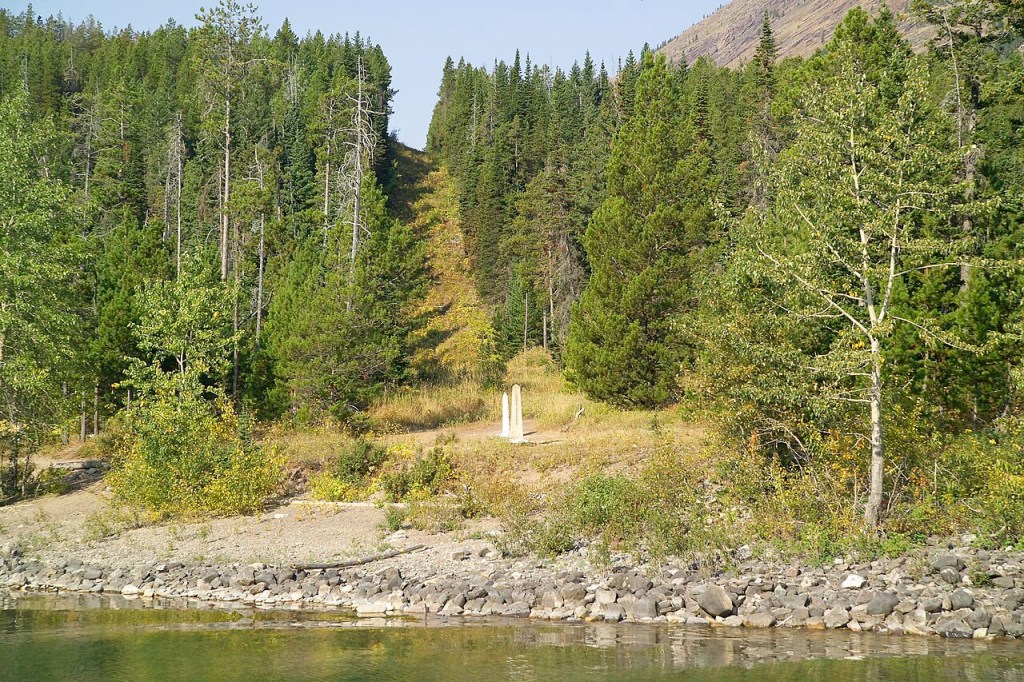
    Canada–US Border: Boundary markers and a 25 foot (7.6 m) swath cut into the forest marking the Alberta–Montana border.
    Image Wikimedia Commons

    Today’s Answers

    Six questions today, each starting with one of these words: Who, What, When, Where, Why, and How.

    One

    Who led the expedition which became the first undisputed to walk to the North Pole, and in what decade was this achieved?

    Answers: Wally Herbert; 1960s.

    In 1969, Wally Herbert led the British Trans-Arctic Expedition, completing a 3,800-mile (6,115 km) overland crossing of the Arctic Ocean from Alaska to Spitsbergen. Accompanied by Allan Gill, Roy Koerner and Kenneth Hedges, he reached the North Pole on 6 April after spending the winter drifting with the ice. His achievement coincided with the 60th anniversary of Robert Peary’s disputed expedition, and Herbert became the first man widely recognised as having reached the pole on foot. Sir Ranulph Fiennes later described him as “the greatest polar explorer of our time.”


    Two

    What Baltic capital, once labelled the ‘Jerusalem of the North’ by Napoleon, launched a campaign calling itself the ‘G-spot of Europe’, and which country does it serve as the capital of?

    Answers: Vilnius, Lithuania.

    The Vilnius tourist commission has launched a new campaign branding the city as ‘the G-spot of Europe’ to attract young British tourists, using the tagline “Nobody knows where it is, but when you find it – it’s amazing.” The campaign, which has gained international attention, plays on the idea that while few people know where Vilnius is, visitors quickly fall in love with it once they arrive.


    Three

    When did Nils Bohlin’s three-point seat belt first appear (year) as standard equipment in production cars, and which Swedish manufacturer employed him to develop and build them?

    Answers: 1959; Volvo.

    The three-point seat belt was invented by Nils Bohlin a mechanical engineer. Bohlin drew on his experience designing ejection seats for SAAB and spent roughly a year developing the seat belt. The seat belt was first fitted to the Volvo PV544 in 1959. The US National Highway Traffic Safety Administration reports that the seat belt saves approximately 15,000 lives annually in the US. Additionally a study of 28,000 accidents in Sweden, which showed that no belted occupants were fatally injured at speeds below 60 mph or as long as the passenger compartment remained intact.


    Four

    Where does ‘Mr. Smith’ go in the title of an early James Stewart movie?

    Answers: Washington

    Mr. Smith Goes to Washington was initially controversial in the U.S. for its portrayal of Washington politics but became a major box office success and made James Stewart a star. The film received eleven Academy Award nominations, winning Best Original Story, and was among the first 25 films selected for the U.S. National Film Registry in 1989 for its cultural and historical significance.


    Five

    Why was the Australian city of Darwin rebuilt twice in the 20th century (two answers one for each rebuilding)?

    Answers: Air raids; Cyclone

    On February 19, 1942, Japanese warplanes attacked Darwin, Australia, in two waves, using the same fleet that bombed Pearl Harbor. The attack caused extensive damage and killed at least 243 people, making it the most serious wartime attack on Australia. On December 25, 1974, Cyclone Tracy struck Darwin, killing 71 people and destroying over 70% of the city’s buildings. This led to the evacuation of 30,000 residents in Australia’s largest airlift. The city was rebuilt in the late 1970s using newer materials, and the satellite city of Palmerston was established nearby in the early 1980s.


    Six

    How many Canadian Provinces share an international border with the U.S.A., and how many U.S. states have such a border with Canada?

    Answers: Eight; Thirteen.

    The length of the terrestrial boundary is 8,891 km (5,525 mi), of which 6,416 km (3,987 mi) is between Canada and the contiguous 48 US states, and 2,475 km (1,538 mi) is between Canada and Alaska. Eight out of thirteen provinces and territories of Canada and thirteen out of fifty U.S. states share this international boundary.
    — Wikipedia


  • Who, What, When, Where, Why and How IX

    Canada–US Border: Boundary markers and a 25 foot (7.6 m) swath cut into the forest marking the border.
    Image Wikimedia Commons

    Six questions today, each starting with one of these words: Who, What, When, Where, Why, and How.

    One

    Who led the expedition which became the first undisputed to walk to the North Pole, and in what decade was this achieved?


    Two

    What Baltic capital, once labelled the ‘Jerusalem of the North’ by Napoleon, launched a campaign calling itself the ‘G-spot of Europe’, and which country does it serve as the capital of?


    Three

    When did Nils Bohlin’s three-point seat belt first appear (year) as standard equipment in production cars, and which Swedish manufacturer employed him to develop and build them?


    Four

    Where does ‘Mr. Smith’ go in the title of an early James Stewart movie?


    Five

    Why was the Australian city of Darwin rebuilt twice in the 20th century (two answers one for each rebuilding)?


    Six

    How many Canadian Provinces share an international border with the U.S.A., and how many U.S. states have such a border with Canada?


    Good luck! I’ll post the answers later.


  • Yet More What ‘*’ — Answers

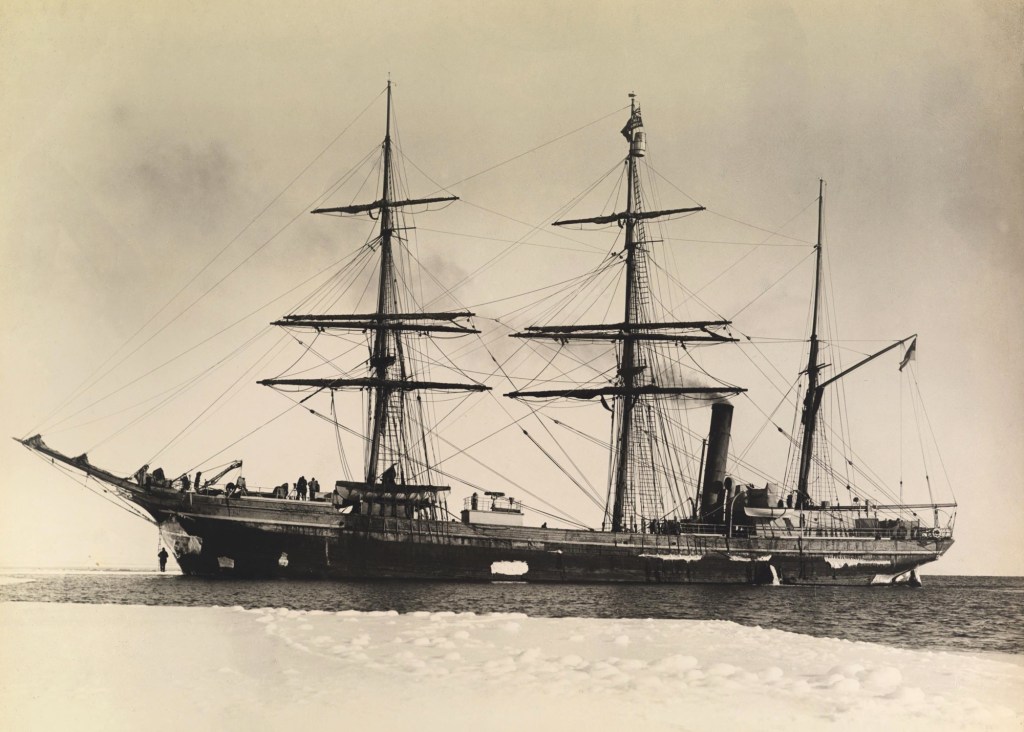
    Expedition ship Terra Nova during the British Antarctic Expedition, c.1911.
    Image Wikimedia Commons

    Today’s Answers

    Day 4 of our continuing theme.

    One

    What ‘P’ links a creature from Greek myth and Bénouville Bridge, Normandy?

    Answer: Pegasus.

    Pegasus is a winged white stallion in Greek mythology, sired by Poseidon and born from Medusa after she was decapitated by Perseus. He later ascended to heaven to serve Zeus by bringing lightning and thunder from Olympus.

    Pegasus Bridge, originally the Bénouville Bridge, is a historic road crossing over the Caen Canal in Normandy. Built in 1934, it became famous during the Second World War when a British glider-borne force captured it intact on 6 June 1944 to limit German counter-attacks after the Normandy invasion. Renamed in honour of the operation and the shoulder emblem worn by British airborne forces, the original bridge is now a war memorial at the Memorial Pegasus museum, having been replaced by a modern bascule bridge in 1994.


    Two

    What ‘Q’ is a capital city; sits on the equator; and is amongst the highest capitals by elevation? Of what country is this city the capital, and what other country’s two capitals vie with this one as highest capitals?

    Answers: Quito, Ecuador; Bolivia.

    Quito, formally known as San Francisco de Quito, serves as the capital and second-largest city of Ecuador. Its population is estimated at 1.7 million within the city and 2.8 million across the metropolitan area. Situated in a valley on the eastern slopes of the active stratovolcano Pichincha in the Andes at 2,850 metres (9,350 ft), Quito ranks as either the highest or second-highest national capital globally, depending on whether La Paz or Sucre is regarded as Bolivia’s capital.


    Three

    Which ‘R’ was somewhat of a maverick before becoming a saint, then adopted a licence to kill on seven occasions? Who is the actor, and in which television production did Tony Curtis appear as a co-star?

    Answers: Roger Moore; The Persuaders!.

    Sir Roger George Moore was an English actor best known as the third actor to portray James Bond, starring in seven feature films between 1973 and 1985. On television, he played the lead role of Simon Templar in The Saint, starred in the American Western Maverick, and appeared alongside Tony Curtis in The Persuaders!.


    Four

    What ‘S’, in 1991, superseded SALT, which dated from the sixties? The answers are both an acronym and its meaning.

    Answers: START; Strategic Arms Reduction Treaty.

    The START I treaty, proposed by U.S. President Ronald Reagan, led to the removal of about 80% of strategic nuclear weapons by late 2001. Following the Soviet Union’s collapse, Russia, Belarus, Ukraine, and Kazakhstan agreed to its terms. After START I there were START II, III and then the New START Treaty in 2010, which extended nuclear weapon reductions until its expiration in February 2026, despite Russia suspending its participation in 2023.


    Five

    What ‘T’ was Captain Robert F. Scott’s ship on his ill-fated trip to Antarctica? Which explorer beat him to the South Pole by a few weeks?

    Answers: Terra Nova; Roald Amundsen.

    Captain Robert Falcon Scott and his party of five reached the South Pole on January 17, 1912, only to find Roald Amundsen had arrived first. On their return journey, a planned meeting with supporting dog teams failed, and the entire party died from exhaustion, starvation, and extreme cold just miles from their next supply depot. When their bodies were discovered, they were found with the first Antarctic fossils, which later proved the continent was once forested and connected to other landmasses.


  • Yet More What ‘*’

    See question five. Expedition ship … during the British Antarctic Expedition, c.1911.
    Image Wikimedia Commons

    Day 4 of our continuing theme.

    One

    What ‘P’ links a creature from Greek myth and Bénouville Bridge, Normandy?


    Two

    What ‘Q’ is a capital city; sits on the equator; and is amongst the highest capitals by elevation? Of what country is this city the capital, and what other country’s two capitals vie with this one as highest capitals?


    Three

    Which ‘R’ was somewhat of a maverick before becoming a saint, then adopted a licence to kill on seven occasions? Who is the actor, and in which television production did Tony Curtis appear as a co-star?


    Four

    What ‘S’, in 1991, superseded SALT, which dated from the sixties? The answers are both an acronym and its meaning.


    Five

    What ‘T’ was Captain Robert F. Scott’s ship on his ill-fated trip to Antarctica? Which explorer beat him to the South Pole by a few weeks?


    Good luck! I’ll post the answers later.


  • Even More What ‘*’ — Answers

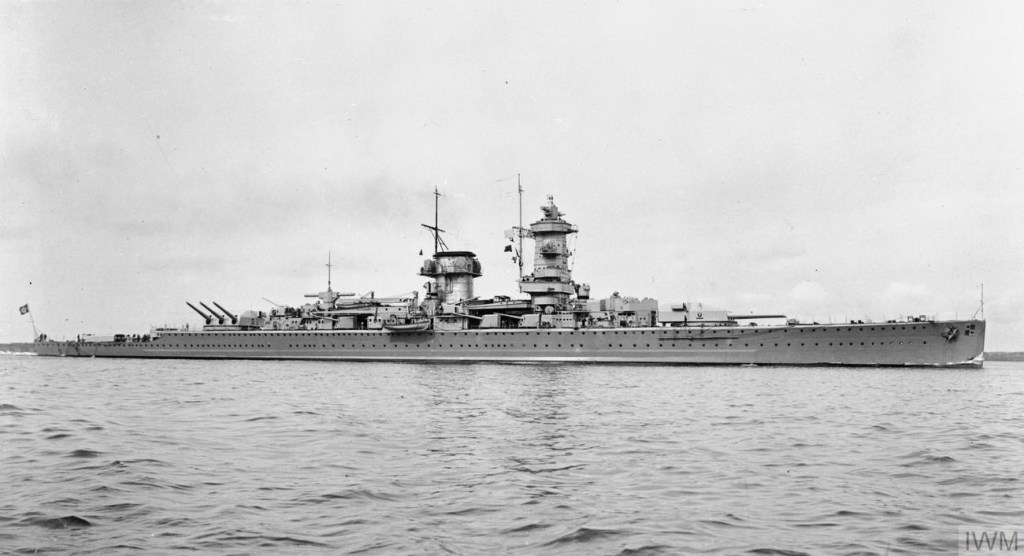
    Admiral Graf Spee, 1936.
    Image Wikimedia Commons

    Today’s Answers

    Continuing the theme of the last few days.

    One

    What ‘K’ was the given name of Pope John Paul II who was elected pope at the October 1978 conclave? In what month and year had the previous conclave taken place?

    Answers: Karol; August 1978.

    Pope John Paul I was elected on 26 August 1978 and died 33 days later. John Paul II, who died in 2005 and was canonised in 2014, was born Karol Józef Wojtyła and was the first non-Italian pope for 455 years. He is credited with helping to end communist rule in Europe and expanding the Catholic Church’s influence globally.


    Two

    What ‘L’ was one of the Seven Wonders of the Ancient World depicted, with the Colosseum, in the Octo Mundi Miracula? Name any of these Ancient Seven which still remain?

    Answers: Lighthouse of Alexandria; One: Pyramid of Giza.

    The Octo Mundi Miracula (1572) lists seven classical structures plus the Colosseum: the Great Pyramid of Giza, Colossus of Rhodes, Lighthouse of Alexandria, Mausoleum at Halicarnassus, Temple of Artemis at Ephesus, Statue of Zeus at Olympia and Hanging Gardens of Babylon. Only the Pyramid remains; other lists differ.


    Three

    What ‘M’ is a port in which the German warship Admiral Graf Spee had taken refuge prior to being scuttled in 1939? In what country is the port located?

    Answers: Montevideo, Uruguay.

    Admiral Graf Spee, a German Panzerschiff, sank nine vessels before the Battle of the River Plate. Damaged, it was scuttled at Montevideo by Hans Langsdorff.


    Four

    What ’N’ is a demonym which best refers to William the Conqueror, and who did he defeat at the Battle of Hastings in 1066?

    Answers: Norman; Harold Godwinson aka Harold II.

    William the Conqueror was Norman. While the Normans were descendants of Vikings who had settled in Normandy (now a region in modern-day France), they had adopted the French language and customs by the time of William’s reign.


    Five

    In the film Indiana Jones and the Kingdom of the Crystal Skull, Indiana Jones is shown lecturing students about Skara Brae, a stone-built Neolithic settlement located in an archipelago. What ‘O’ is the name of this archipelago, and in what country is it located?

    Answers: Orkney Islands; Scotland, UK.

    Skara Brae, a Neolithic settlement on Orkney’s west coast, was revealed by a storm and occupied from 3180 BC to 2500 BC. Ten structures remain within this UNESCO site, managed by Historic Environment Scotland and partners; visitors are welcome year-round.


  • Even More What ‘*’

    Admiral Graf Spee, 1936.
    Image Wikimedia Commons

    Continuing the theme of the last few days.

    One

    What ‘K’ was the given name of Pope John Paul II who was elected pope at the October 1978 conclave? In what month and year had the previous conclave taken place?


    Two

    What ‘L’ was one of the Seven Wonders of the Ancient World depicted, with the Colosseum, in the Octo Mundi Miracula? Name any of these Ancient Seven which still remain?


    Three

    What ‘M’ is a port in which the German warship Admiral Graf Spee had taken refuge prior to being scuttled in 1939? In what country is the port located?


    Four

    What ’N’ is a demonym which best refers to William the Conqueror, and who did he defeat at the Battle of Hastings in 1066?


    Five

    In the film Indiana Jones and the Kingdom of the Crystal Skull, Indiana Jones is shown lecturing students about Skara Brae, a stone-built Neolithic settlement located in an archipelago. What ‘O’ is the name of this archipelago, and in what country is it located?


    Good luck! I’ll post the answers later.


  • History Lesson — Answers

    Today’s Answers

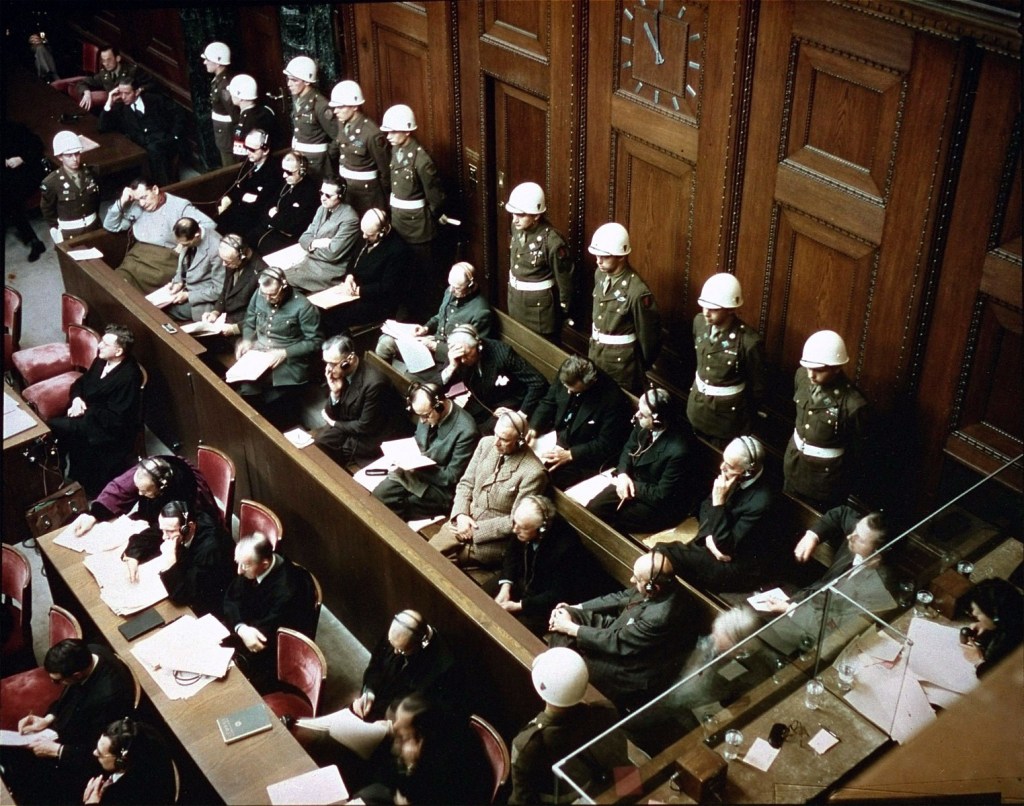
    Defendants in Dock at Nuremberg.
    Image Wikimedia Commons

    Today’s questions all relate to 1 October.

    One

    On this day in 1936, who took charge of Spain’s new Nationalist government during the civil war and thereafter remained head of state until what year?

    Answers: Francisco Franco; 1975.

    Francisco Franco led Spain from 1939 to 1975 after commanding Nationalist forces in the Spanish Civil War. His rule involved repression and economic growth, shifting from totalitarianism to authoritarianism. He died aged 82, succeeded by King Juan Carlos.


    Two

    On this day, who became the first queen to rule England in her own right; and in what century did this occur?

    Answers: Mary I; 16th century.

    Mary I, the first queen to rule England in her own right, reigned from 1553 to 1558. The daughter of Henry VIII and Catherine of Aragon, she overcame early challenges after being declared illegitimate to ascend the throne. Mary is best known for her efforts to restore Roman Catholicism in England, which included the execution of around 300 Protestants, earning her the nickname ‘Bloody Mary’. Her reign also saw an unpopular marriage to Philip II of Spain and the loss of England’s last European foothold, Calais. She died childless in 1558 without permanently re-establishing Catholicism and was succeeded by her Protestant half-sister, Elizabeth.


    Three

    In 331 BCE, Alexander the Great of … defeated Darius III of … at the Battle of Gaugamela, spelling the end of the … empire.

    What two places are missing from the first two spaces; and the name of what empire is referred to at the end of the above sentence?

    Answers: Macedonia; Persia; Persian (or Achaemenid or Achaemenian).

    On 1 October 331 BCE, Alexander the Great of Macedonia confronted Darius III of Persia at the Battle of Gaugamela. This decisive clash ultimately sealed the fate of the Persian Achaemenian Empire. The quote above actually uses the term ‘Persian’, but Achaemenid or Achaemenian both refer to the same empire.


    Four

    Today in 1800, Napoleon Bonaparte persuaded the king of Spain to give a territory back to France which France sold on a few years later?. Who was the king of Spain and what was the territory?

    Answers: Charles IV; Louisiana.

    The secret Third Treaty of San Ildefonso, signed on October 1, 1800, between Spain and the French Republic, established an agreement in principle for Spain to trade its North American colony of Louisiana for territories in Tuscany. These terms were subsequently confirmed in March 1801 by the Treaty of Aranjuez. The area referred to was extensive and extended from the Gulf of Mexico and the Mississippi Delta north to the Canadian border, and from the Mississippi River basin west to the Rocky Mountains in Colorado.


    Five

    On this day in 1946, an International Military Tribunal delivered verdicts in trials concerning atrocities by Nazi leaders during World War II. In which city were these proceedings held, and which nations formed the tribunal?

    Answers: Nuremberg; France, the Soviet Union, the United Kingdom and the United States.

    The Nuremberg trials (1945–46) saw former Nazi leaders indicted by the International Military Tribunal on four counts: crimes against peace, crimes against humanity, war crimes and conspiracy to commit them. On 1 October 1946, after 216 sessions, 22 defendants received verdicts: three acquitted, four imprisoned, three given life terms, and twelve sentenced to death; ten were hanged on 16 October, Martin Bormann condemned in absentia, and Hermann Göring committed suicide. The tribunal rejected claims that only states are liable and that proceedings were ex post facto (having retrospective effect or force).


  • History Lesson

    Defendants in Dock. See question five.
    Image Wikimedia Commons

    Today’s questions all relate to 1 October.

    One

    On this day in 1936, who took charge of Spain’s new Nationalist government during the civil war and thereafter remained head of state until what year?


    Two

    On this day, who became the first queen to rule England in her own right; and in what century did this occur?


    Three

    In 331 BCE, Alexander the Great of … defeated Darius III of … at the Battle of Gaugamela, spelling the end of the … empire.

    What two places are missing from the first two spaces; and the name of what empire is referred to at the end of the above sentence?


    Four

    Today in 1800, Napoleon Bonaparte persuaded the king of Spain to give a territory back to France which France sold on a few years later?. Who was the king of Spain and what was the territory?


    Five

    On this day in 1946, an International Military Tribunal delivered verdicts in trials concerning atrocities by Nazi leaders during World War II. In which city were these proceedings held, and which nations formed the tribunal?


    Good luck! I’ll post the answers later.


  • Far Flung Fortifications Fit I

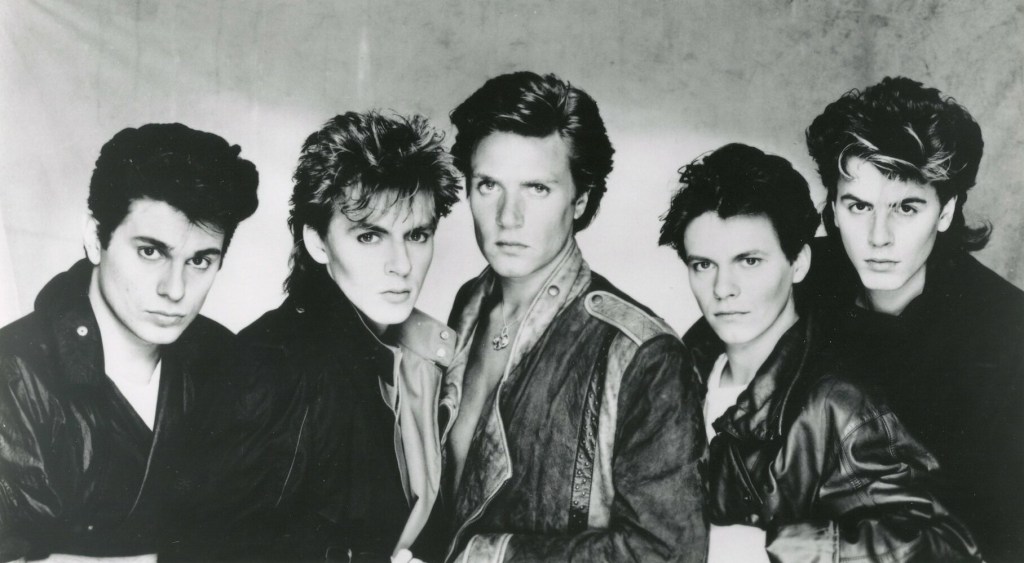
    Duran Duran, 1983. See question 2.
    Image Wikimedia Commons

    Over the next nine days, 46 questions will be posed, one for each letter of the alphabet plus 20 others (There will be six one day). The 20 others appear as duplicate letters, and these duplicates spell out the name of the Roman Fortification which in CE 150 to 160 was the furthest boundary from the city of Rome, and the country that it was situated in. It is a three-word answer with eight letters in the first part of the name and four in the second part; the country has eight letters in its name.
    BTW Fit, as used in the post title, is an archaic term meaning ‘a division of a song, ballad, or story’.

    One

    To whom was R. Kelly married from 1994 to 1995?


    Two

    What 1968 film influenced the band Duran Duran’s choice of name?


    Three

    The Chinese Exclusion Act was signed into law by the 21st president of the US in 1882 who incidentally gave his name to an elementary school in a 1995 film. Who was this president?


    Four

    In what month and year was the world’s first atomic bomb dropped on the Japanese city of Hiroshima?


    Five

    What word can be defined as: the number below the line in a vulgar fraction; a divisor?


    Good luck! I’ll post all of the answers after the questions have all been asked.


  • In olden days a glimpse of stocking / Was looked on as something shocking — Answers

    Here are the answers to today’s questions.

    Flag of Côte d’Ivoire/Ivory Coast.
    See question three.
    Image Wikimedia Commons

    All of these questions relate to today’s date, 7 August.

    One

    In what sport could a ‘Salchow’ be performed?

    Answer: Ice skating.

    Swedish skater Ulrich Salchow, born 7 August 1877. The salchow, named the Salchow, an edge jump, after him. It is the easiest figure skating jump. It involves taking off from the back inside edge of one skate, completing one or more full turns, and landing on the back outside edge of the opposite skate. American skater Theresa Weld was reprimanded at the 1920 Olympics for performing a single Salchow jump because her skirt would fly up to her knees, creating an image deemed too risqué.


    Two

    The six-month-long Battle of Guadalcanal, which began on 7 August 1942, unfolded in which country?

    Answer: Solomon Islands.

    Guadalcanal Island, the largest island in the Solomon Islands, is situated in the southwestern Pacific Ocean. The Battle of Guadalcanal, occurring from August 1942 to February 1943, involved a series of World War II land and sea engagements between Allied and Japanese forces on and around Guadalcanal, one of the southern Solomon Islands in the South Pacific. Alongside the naval Battle of Midway, the combat on Guadalcanal signified a turning point in favour of the Allies in the Pacific War.


    Three

    In 1960, the country represented by the flag shown above gained independence from France. What country is it?

    Answer: Côte d’Ivoire/Ivory Coast.

    Côte d’Ivoire, located on the western coast of Africa, was previously a French colony. Abidjan functions as the de facto capital, while Yamoussoukro has been the administrative capital since 1983. Known as Ivory Coast, this West African nation is the leading cocoa exporter globally and has seen substantial economic growth since 2011. Nonetheless, 46.1% of its population remains in poverty. The economy is predominantly dependent on agriculture, especially smallholder cash-crop production.


    Four

    How many persons were onboard Thor Heyerdahl’s balsa wood raft, Kon-Tiki when it reached Raroia in the Tuamotu Islands after sailing 4,300 mile (7,000 km) in 101-days?

    Answer: Six.

    The Kon-Tiki expedition in 1947, led by Thor Heyerdahl, was a raft journey from South America to Polynesia. Named after the Inca god Viracocha, it inspired Heyerdahl’s book and a 1950 Oscar-winning documentary. A 2012 dramatised film was nominated for Best Foreign Language Film.


    Five

    In 1926, in motor racing the first British Grand Prix was held. Where was the race held? 

    Answer: Brooklands.

    Built in 1907 near Weybridge, Surrey, Brooklands was the first purpose-built motor racing venue and one of the UK’s first airfields. The British Grand Prix debuted there on 7 August 1926, won by Robert Sénéchal and Louis Wagner. The second race, on 1 October 1927, was also held there.


    Bonus Question

    The post title is two lines taken from a popular song, what song?

    In olden days a glimpse of stocking 
    Was looked on as something shocking

    It is part of the lyrics from Anything Goes from the Cole Porter musical of the same name. It is used here only as an oblique remark about Ms Weld’s risqué performance; see answer one.

    Anything Goes

    By Cole Porter

    [RENO]
    Times have changed,
    And we’ve often rewound the clock,
    Since the Puritans got a shock,
    When they landed on Plymouth Rock.
    If today,
    Any shock they should try to stem,
    ‘Stead of landing on Plymouth Rock,
    Plymouth Rock would land on them. 

    In olden days a glimpse of stocking
    Was looked on as something shocking,
    But now, God knows,
    Anything Goes. 

    Good authors too who once knew better words,
    Now only use four letter words
    Writing prose, Anything Goes. 

    The world has gone mad today
    And good’s bad today,
    And black’s white today,
    And day’s night today,
    When most guys today
    That women prize today
    Are just silly gigolos
    And though I’m not a great romancer
    I know that you’re bound to answer
    When I propose,
    Anything goes 

    When grandmama whose age is eighty
    In night clubs is getting matey with gigolo’s,
    Anything Goes. 

    When mothers pack and leave poor father
    Because they decide they’d rather be tennis pros,
    Anything Goes. 

    If driving fast cars you like,
    If low bars you like,
    If old hymns you like,
    If bare limbs you like,
    If Mae West you like
    Or me undressed you like,
    Why, nobody will oppose!
    When every night,
    The set that’s smart
    Is intruding in nudist parties in studios,
    Anything Goes. 

    [RENO, PASSENGERS & CREW]
    The world has gone mad today
    And good’s bad today,
    And black’s white today,
    And day’s night today,
    When most guys today
    That women prize today
    Are just silly gigolos
    And though I’m not a great romancer
    I know that you’re bound to answer
    When I propose,
    Anything goes 

    [RENO]
    If saying your prayers you like,
    If green pears you like
    If old chairs you like,
    If back stairs you like,
    If love affairs you like
    With young bears you like,
    Why nobody will oppose! 

    [ALL]
    And though I’m not a great romancer
    And though I’m not a great romancer
    I know that you’re bound to answer
    When I propose,
    Anything goes…
    Anything goes!
    — All Musicals