This twelve-letter noun means ‘a political candidate who seeks election in an area where they have no local connections’. What is this word?
Answer: Carpetbagger.
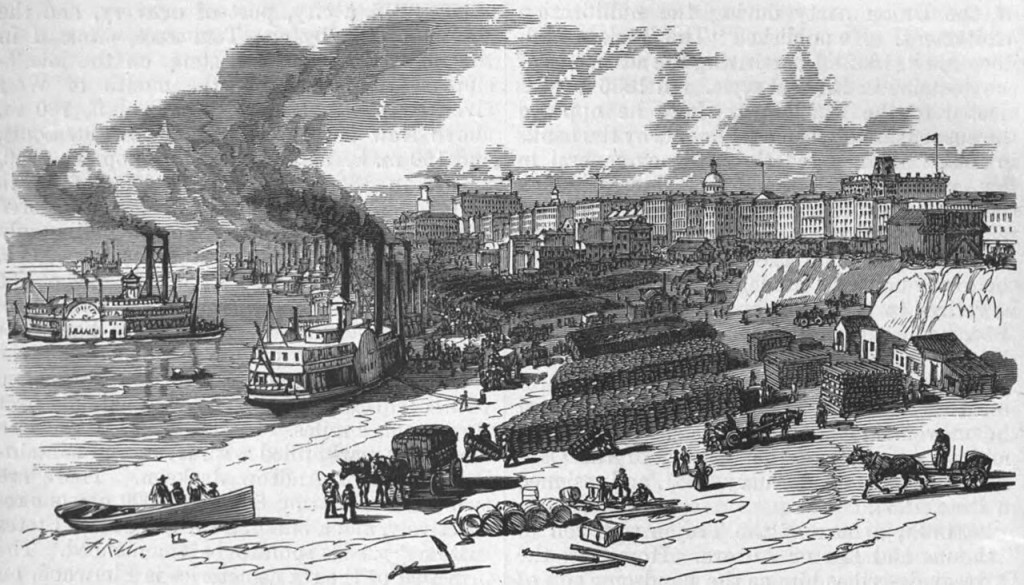
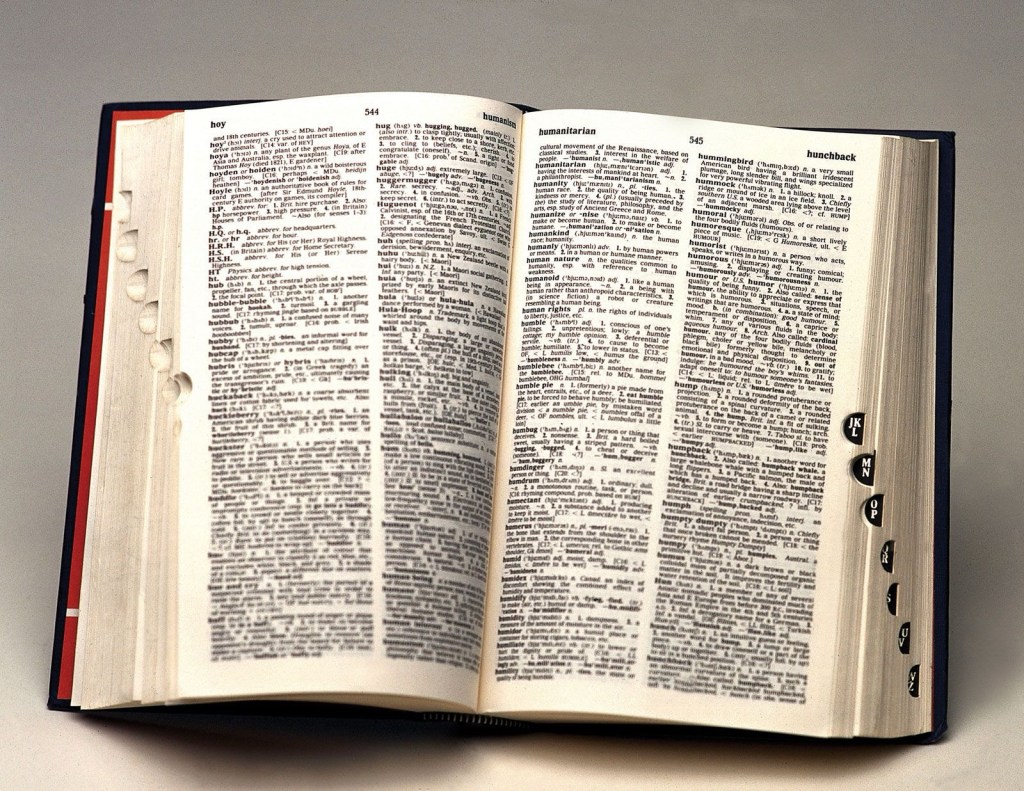
carpetbagger ▸ noun informal, derogatory a political candidate who seeks election in an area where they have no local connections. — ORIGIN mid 19th century: originally applied to people from the northern states of the US who went to the South after the Civil War to profit from the Reconstruction. Oxford English Dictionary
Two
This six-letter noun means ‘the period of a person’s or thing’s greatest success, popularity, activity, or vigour’. What is this noun?
Answer: Heyday.
heyday /ˈheɪdeɪ / ▸ (one’s heyday) noun the period of a person’s or thing’s greatest success, popularity, activity, or vigour: the paper has lost millions of readers since its heyday in 1964.
– ORIGIN late 16th century (denoting good spirits or passion): from archaic heyday!, an exclamation of joy, surprise, etc. Oxford English Dictionary
Three
This four-letter verb means ‘move along slowly and carefully’. What is it?
Answer: Inch.
inch verb [no object, with adverbial of direction] move along slowly and carefully. — ORIGIN late Old English ynce, from Latin uncia ‘twelfth part’, from unus ‘one’ (probably denoting a unit). Compare with ounce. Oxford English Dictionary
Four
This seven-letter verb means ‘criticise (someone or something) harshly’. What is this verb?
Answer: Lambast.
lambast /lamˈbast / (lambaste /lamˈbeɪst /) ▸ verb [with object] criticize (someone or something) harshly: they lambasted the report as a gross distortion of the truth.
– ORIGIN mid 17th century (in the sense ‘beat, thrash’): from lam1 + baste3. The current sense dates from the late 19th century. Oxford English Dictionary
Five
This five-letter verb means ‘inspire or permeate with (a feeling or quality)‘. What is the word?
Answer: Imbue.
imbue /ɪmˈbjuː / ▸ (be imbued with) verb ( imbues, imbuing, imbued) [with object] inspire or permeate with (a feeling or quality): his works are invariably imbued with a sense of calm and serenity.
– ORIGIN late Middle English (in the sense ‘saturate’): from French imbu ‘moistened’, from Latin imbutus, past participle of imbuere ‘moisten’. Oxford English Dictionary
Word Spice
The post title was a bit of a clue But not as straightforward as yesterday. The first letter of each answer spells ‘chili’ when taken in order — chili being a spice.
This nine-letter noun means ‘a tiny trace or spark of a specified quality or feeling’. What is the word?
Answer: Scintilla.
scintilla | sɪnˈtɪlə | noun [in singular] a tiny trace or spark of a specified quality or feeling: a scintilla of doubt. — ORIGIN late 17th century: from Latin. Oxford English Dictionary
Two
A twelve-letter noun used in law, mainly in Scotland, meaning ‘the preliminary examination of witnesses, especially to decide whether there is ground for a trial’. What is the word?
Answer: Precognition.
See usage 2 below.
precognition | ˌpriːkɒɡˈnɪʃn | noun 1 [mass noun] foreknowledge of an event, especially as a form of extrasensory perception. 2 Law, mainly Scottish English the preliminary examination of witnesses, especially to decide whether there is ground for a trial. — ORIGIN late Middle English: from late Latin praecognitio(n-), based on Latin cognoscere ‘know’. Oxford English Dictionary
Three
This four-letter noun, the ninth letter of the Greek alphabet, means ‘an extremely small amount’. Can you guess what it is?
Answer: Iota.
iota | ʌɪˈəʊtə | noun 1 the ninth letter of the Greek alphabet (Ι, ι), transliterated as ‘i’. •[followed by Latin genitive] Astronomy (Iota) the ninth star in a constellation: Iota Piscium. 2 [in singular, usually with negative] an extremely small amount: nothing she said seemed to make an iota of difference. — ORIGIN from Greek iōta. iota (sense 2 of the noun) arose because iota is the smallest letter of the Greek alphabet: compare with jot. Oxford English Dictionary
Four
This is a fourteen-letter noun meaning ‘a person who enjoys or is skilled at solving crosswords’. Can you identify the word?
Answer: Cruciverbalist.
cruciverbalist | ˌkruːsɪˈvəːbəlɪst | noun a person who enjoys or is skilled at solving crosswords. — ORIGIN 1970s: from Latin crux, cruci– ‘cross’ and verbalist. Oxford English Dictionary
Five
This ten-letter noun means ‘the formal art and practice of horsemanship and horse riding’. What is the word?
Answer: Equitation.
equitation | ˌɛkwɪˈteɪʃn | noun [mass noun] formal the art and practice of horsemanship and horse riding. — ORIGIN mid 16th century: from French équitation or Latin equitatio(n-), from equitare ‘ride a horse’, from eques, equit– ‘horseman’ (from equus ‘horse’). Oxford English Dictionary
Word Spice
The post title was a bit of a clue. The first letter of each answer spells ‘spice’ when taken in order.
This nine-letter noun means ‘a tiny trace or spark of a specified quality or feeling’. What is the word?
Two
A twelve-letter noun used in law, mainly in Scotland, meaning ‘the preliminary examination of witnesses, especially to decide whether there is ground for a trial’. What is this noun?
Three
This four-letter noun, the ninth letter of the Greek alphabet, means ‘an extremely small amount’. Can you guess what it is?
Four
This is a fourteen-letter noun meaning ‘a person who enjoys or is skilled at solving crosswords’. Can you identify the word?
Five
This ten-letter noun means ‘the formal art and practice of horsemanship and horse riding’. What is the word?
What were the first names of Mason and Dixon, after whom the Mason-Dixon Line is named?
Three
What eight letter word means ‘the study of Chinese language, history, customs, and politics’, and from what does the first three letters of the word ultimately derive?
Four
In the northern hemisphere, what astronomical season ends at the vernal equinox and what three months form the equivalent meteorological season?
Five
Ours is essentially a tragic age, so we refuse to take it tragically.
The opening words of which English novel, first published in Florence Italy in 1928, are quoted above. What is the novel’s title and who is the author?
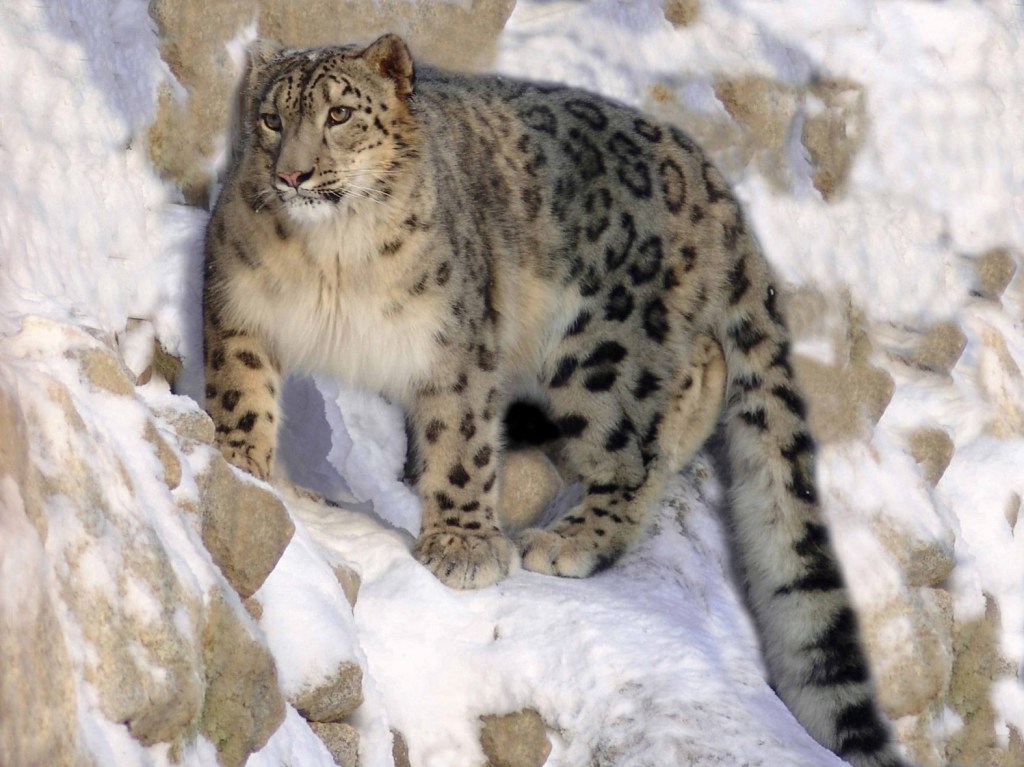
Panthera uncia, native to Central and South Asia, inhabits mountain ranges like the Altai, Hindu Kush, and Himalayas. What is its name in English and by what other name, which could be confused with a measure, was it known?
Answer: Snow leopard; ounce.
The snow leopard (Panthera uncia) is a large cat native to Central and South Asia’s mountain ranges. It is listed as Vulnerable due to poaching and habitat destruction, with fewer than 10,000 mature individuals remaining. The snow leopard is legally protected in most of its range and is culturally significant in Kyrgyzstan.
Two
The acronym SONAR means what?
Answer: Sound navigation and ranging. (SO(und) NA(vigation and) R(anging).
The name of a 2003 Grammy Award winner and the title of a short story by Edgar Allan Poe published in 1839 are linked by a single word. Can you supply the word and the full title of Poe’s short story?
Answer: Usher; The Fall of the House of Usher.
Edgar Allan Poe’s Gothic fiction short story, The Fall of the House of Usher, delves into themes of madness, family and isolation. In 2003, Usher won his second consecutive Grammy Award for Best Male R&B Vocal Performance for U Don’t Have to Call.
Four
What was the name of Captain Robert Falcon Scott’s ship during his ill-fated Antarctic expedition?
Answer: Terra Nova.
The Terra Nova Expedition, led by Captain Robert Falcon Scott, aimed to reach the South Pole and conduct scientific research. Although they achieved this goal on January 17, 1912, they arrived second—a month after Amundsen. Scott and his team tragically died on the Ross Ice Shelf during their return journey, leading to debate about the expedition’s organisation and management.
Five
In December 1969, on a television programme, a Norwegian Blue was purchased, and then an attempt was made to return it. What was the name that this sketch is known by, and in what TV programme was it featured?
The ‘Dead Parrot sketch’ from Monty Python’s Flying Circus satirises poor customer service. It features a customer, Mr Praline, arguing with a shopkeeper about a dead parrot. Mr Praline complains about a deceased parrot he bought. The shopkeeper, using euphemisms for death, sends him to his brother’s shop in Bolton for a refund, but Praline discovers it’s the same shop. The shopkeeper, claiming it’s a prank, is interrupted by a Colonel who orders the sketch to stop.
Panthera uncia, native to Central and South Asia, inhabits mountain ranges like the Altai, Hindu Kush, and Himalayas. What is its name in English and by what other name, which could be confused with a measure, was it known?
Two
The acronym SONAR means what?
Three
The name of a 2003 Grammy Award winner and the title of a short story by Edgar Allan Poe published in 1839 are linked by a single word. Can you supply the word and the full title of Poe’s short story?
Four
What was the name of Captain Robert Falcon Scott’s ship during his ill-fated Antarctic expedition?
Five
In December 1969, on a television programme, a Norwegian Blue was purchased, and then an attempt was made to return it. What was the name that this sketch is known by, and in what TV programme was it featured?
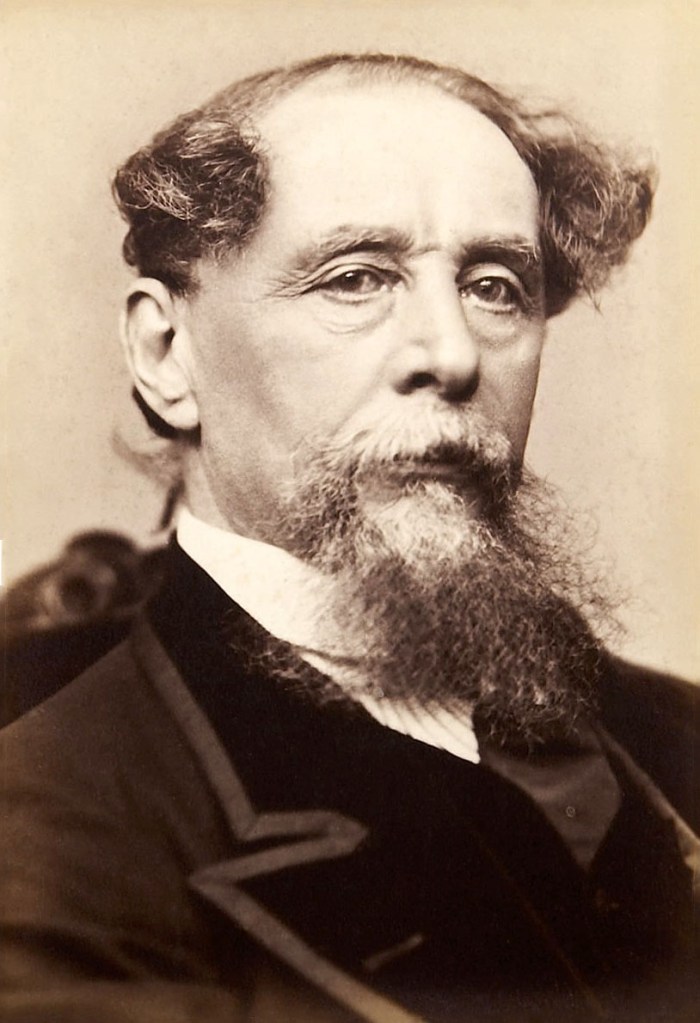
British novelist Charles Dickens was born on this day in 1812. But what does the word ‘Dickens’ refer to in the phrase ‘What the dickens’?
Answer: Devil.
dickens /ˈdɪkɪnz / noun [in singular] informal, dated used for emphasis, or to express annoyance or surprise when asking questions: what the dickens is going on? they work like the dickens. – ORIGIN late 16th century: a euphemism for ‘devil’, probably a use of the surname Dickens. — Oxford English Dictionary
Two
After the death of King Hussein in 1999, his son Abdullah II became king in what country, and what countries border it?
Answer: Jordan; (bordering countries are) Iraq, Israel, Saudi Arabia, Syria, West Bank.
Syria is to the north; Iraq to the east; Saudi Arabia to the southeast and south; Israel to the west; and the West Bank to the west. There is also a maritime border with Egypt on the Gulf of Aqaba to the south.
Three
On this day, Michael Romanov became Tsar of Russia as Michael I and founded the Romanov dynasty. In what century was it founded? In what year did it end, and who was the last Tsar?
Answer: 17th century. 1917 and Nicholas II
Michael Romanov, elected Tsar of Russia in 1613 at age 16, initially relied on his mother’s relatives to restore order. His father, Philaret, returned from Polish captivity in 1619, becoming co-ruler and patriarch, and significantly influencing the government until his death in 1633. Michael’s reign (1613-1645) saw increased European contact, financial reforms, and the strengthening of serfdom. The dynasty ended with the Russian Revolution of 1917 when Nicholas II abdicated and, with his family, was later executed.
Four
The Beatles arrived in the United States for the first time on this day in 1964 in what the press named the ‘British Invasion’. What single gave the Beatles their first Billboard Hot 100 number one?
Answer: I Want to Hold Your Hand.
It became the Beatles’ first US number-one single when it topped the Billboard Hot 100 in February 1964, kicking off full-blown Beatlemania in America. They held the number one spot for a then-record fourteen straight weeks, from February 1st through May 2nd, and on April 4th, the Beatles held the top five positions in the Hot 100 simultaneously.
Five
Walt Disney’s Pinocchio premiered in 1940. Who wrote the novel it was based on?
Answer: Carlo Collodi.
Pinocchio, a 1940 Disney animated film, follows the adventures of a wooden puppet who becomes a real boy. The film is renowned for its animation, storytelling, and music. The film won two Academy Awards: Best Original Score and Best Original Song for When You Wish Upon a Star. This made it the first Disney film to win either category.
British novelist Charles Dickens was born on this day in 1812. But what does the word ‘Dickens’ refer to in the phrase ‘What the dickens’?
Two
After the death of King Hussein in 1999, his son Abdullah II became king in what country, and what countries border it?
Three
On this day, Michael Romanov became Tsar of Russia as Michael I and founded the Romanov dynasty. In what century was it founded? In what year did it end, and who was the last Tsar?
Four
The Beatles arrived in the United States for the first time on this day in 1964 in what the press named the ‘British Invasion’. What single gave the Beatles their first Billboard Hot 100 number one?
Five
Walt Disney’s Pinocchio premiered in 1940. Who wrote the novel it was based on?