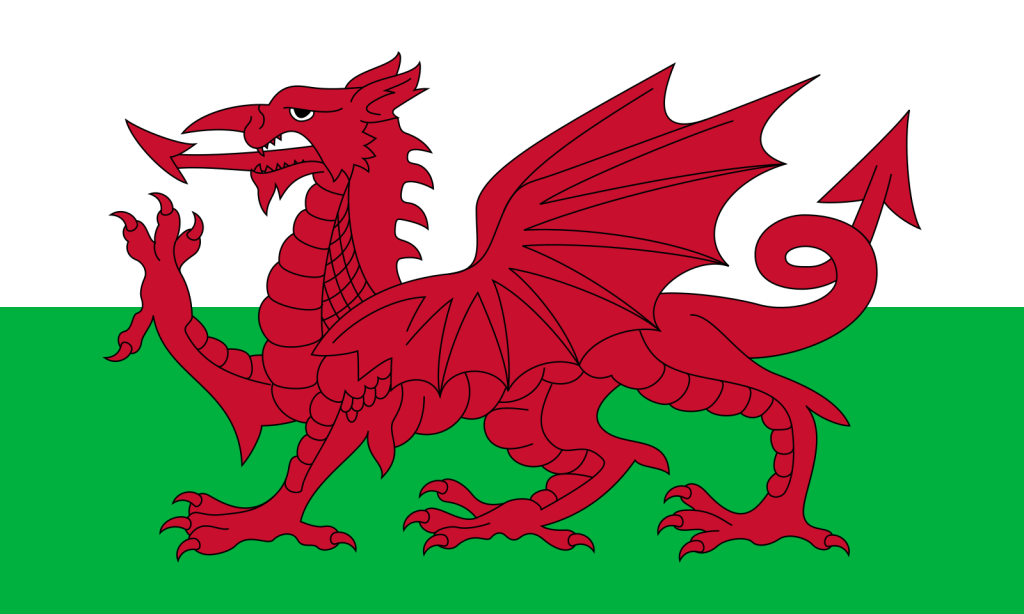
- The image shown above is the flag of…
- Wales—The flag of Wales features a red dragon on a green and white field, with the colours representing the Tudor family. The Red Dragon, a vexilloid—a flag or standard—possibly invented in Persia, was introduced to Britain during Roman rule and became a symbol for local rulers, including King Arthur and kings of the Wessex Saxons. It was traditionally associated with King Arthur and was officially recognised as the badge of Wales in 1801; the flag was officially recognised in 1959.
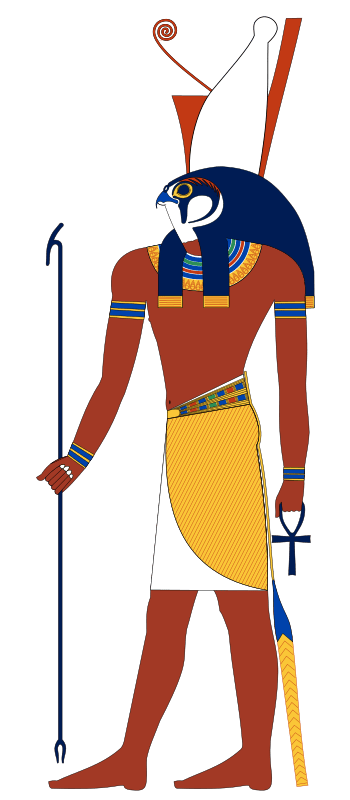
Horus. Image Wikipedia
- Wales—The flag of Wales features a red dragon on a green and white field, with the colours representing the Tudor family. The Red Dragon, a vexilloid—a flag or standard—possibly invented in Persia, was introduced to Britain during Roman rule and became a symbol for local rulers, including King Arthur and kings of the Wessex Saxons. It was traditionally associated with King Arthur and was officially recognised as the badge of Wales in 1801; the flag was officially recognised in 1959.
- The ancient Egyptian deity, normally depicted as a falcon or a man with a falcon’s head, is…
- Horus—an ancient Egyptian deity, was worshipped as the god of kingship, healing, protection, the sun, and the sky. He was depicted as a falcon or a man with a falcon head and was associated with the ruling pharaoh
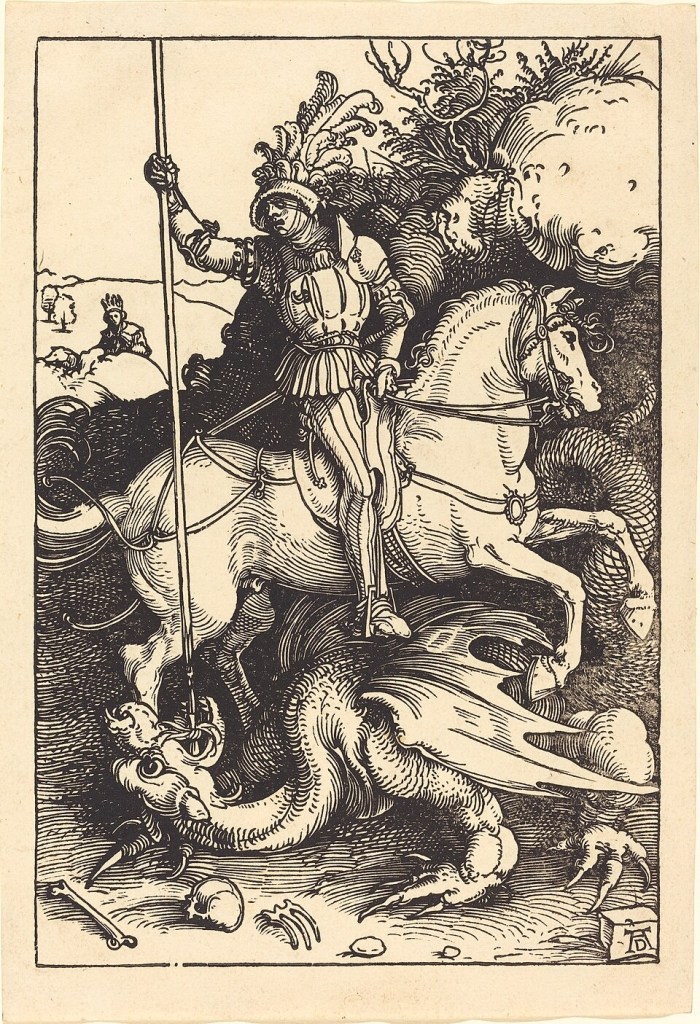
Albrecht Dürer, Saint George Killing the Dragon. Image Wikipedia
- Horus—an ancient Egyptian deity, was worshipped as the god of kingship, healing, protection, the sun, and the sky. He was depicted as a falcon or a man with a falcon head and was associated with the ruling pharaoh
- What links the royal arms of Aragon, the coat of arms of Moscow, Russia, and the coat of arms of Reggio Calabria, Italy?
- Saint George and the dragon—The legend of Saint George slaying a dragon, originating in Cappadocia, was attributed to him in the 11th century and quickly spread through the Byzantine cultural sphere, reaching Western Christian tradition during the Crusades. This story became a popular subject in literature and art. Saint George, an early Christian martyr, is the patron saint of England and Georgia, depicted as a warrior-saint who famously saved a princess by slaying a dragon.
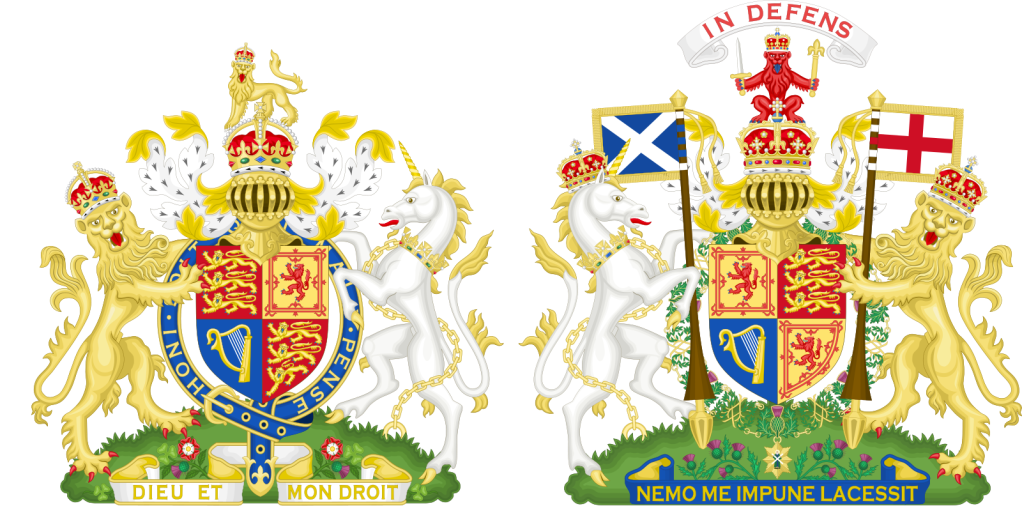
The Royal coat of arms of the United Kingdom features two versions. The Scottish version, on the right, has the lion and unicorn swapped, with both crowned. Image Wikipedia
- Saint George and the dragon—The legend of Saint George slaying a dragon, originating in Cappadocia, was attributed to him in the 11th century and quickly spread through the Byzantine cultural sphere, reaching Western Christian tradition during the Crusades. This story became a popular subject in literature and art. Saint George, an early Christian martyr, is the patron saint of England and Georgia, depicted as a warrior-saint who famously saved a princess by slaying a dragon.
- The unicorn is the national symbol of…
- Scotland—The unicorn, a symbol of purity and power in Celtic mythology, has been Scotland’s national animal since the mid-1500s and is depicted as the natural enemy of the lion, representing England. The royal arms of the United Kingdom feature both a unicorn and a lion, with variations highlighting Scottish or English elements. Initially, the Scottish royal coat of arms was supported by two unicorns, but after the Union of the Crowns, one was replaced by a lion. Scottish unicorns in heraldry are shown with gold chains, symbolising the power of Scottish kings.
- Finally, from Australia, a drop bear is a…
- Carnivorous marsupial—In a hoax, drop bears are a ravenous species of koala attracted to foreign accents. They drop from trees to pounce on tourists, stunning them with the initial impact.

 Quizology.Online

Leave a comment