Here are the answers to the questions I asked earlier.
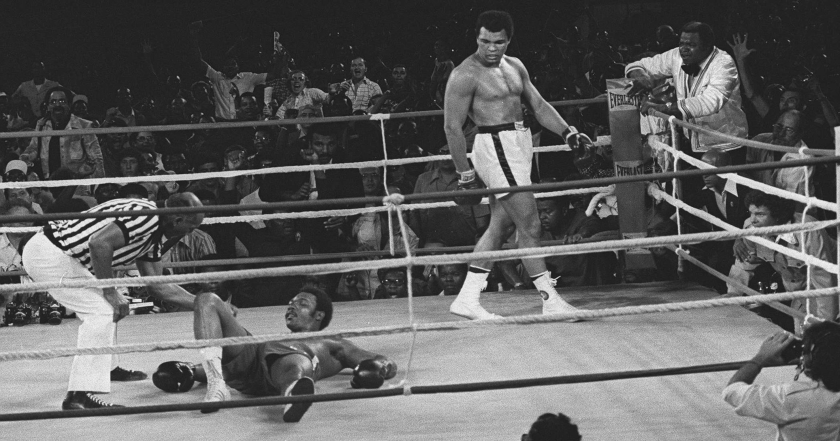
Muhammad Ali (standing) and George Foreman (on canvas).
Image USA Today
One
On October 30, 1974, the legendary boxing event The Rumble in the Jungle took place. In which city and country did this event take place? Who were the two boxers involved? And which fighter emerged victorious, reclaiming the world heavyweight title that day?
Answer: Kinshasa, Zaire (now Democratic Republic of the Congo); Muhammad Ali and George Foreman; and Muhammad Ali (recovered title)
This fight took place in Kinshasa, Zaire (now the Democratic Republic of the Congo). It drew a massive crowd of 60,000 and was one of the most-watched televised events at the time. Ali emerged victorious by knockout in the eighth round.
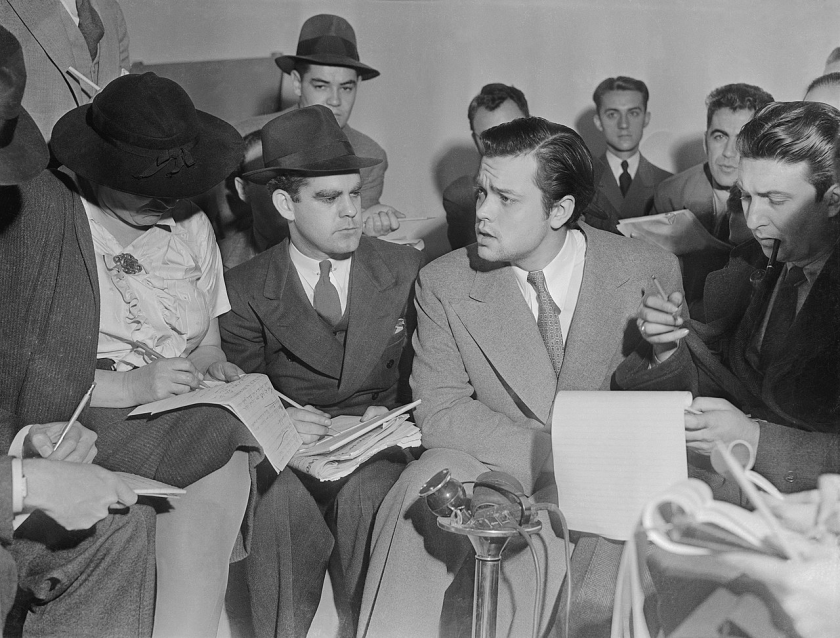
Image Wikipedia
Two
The 1938 broadcast of a radio drama adaptation caused panic among listeners who thought it was real. What was the title of this drama and who wrote the original novel?
Answer: The War of the Worlds; (written by) H.G. Wells
The broadcast presented H.G. Wells’s story in a live news style format and reportedly caused panic by convincing some listeners that Martians were invading.
Three
In 1817, who became president of the newly formed Third Republic of Venezuela?
Answer: Simón Bolívar
Bolívar played a crucial role in Latin American independence, significantly shaping Venezuela’s early republican era.
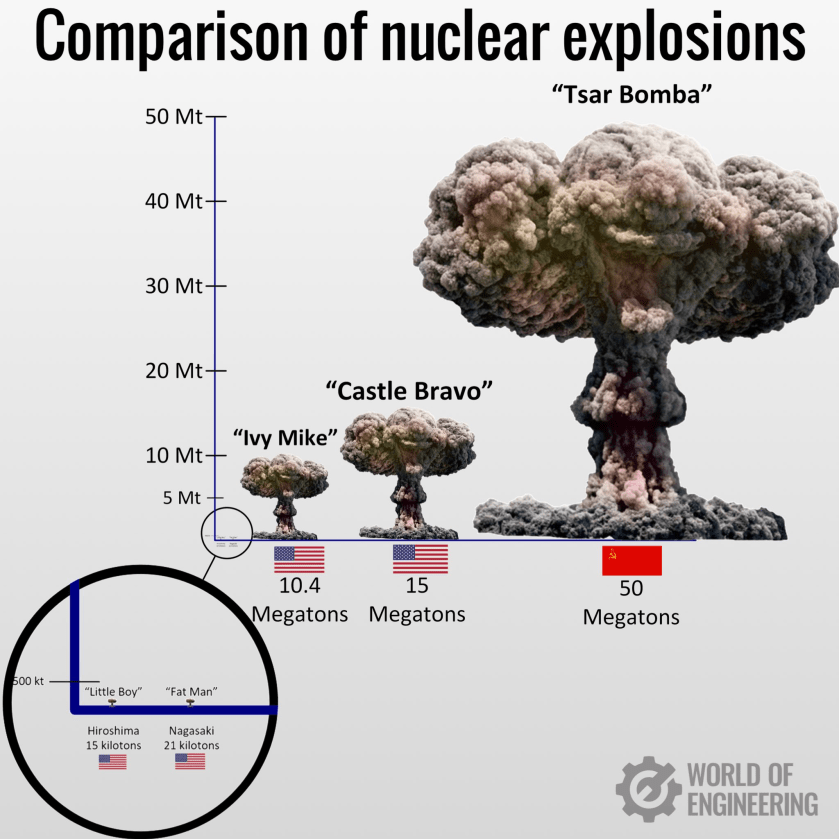
Image World of Engineering via Reddit
Four
In 1961, the Tsar Bomba test — the largest nuclear weapon ever detonated — was detonated in what archipelago and by which country?
Answer: Novaya Zemlya (archipelago); Soviet Union (USSR)
The Tsar Bomba, or AN602, was the most powerful nuclear weapon ever created and tested, designed by Soviet physicists under Andrei Sakharov’s oversight. The bomb’s yield was around 50 megatonnes, and the test took place over the Novaya Zemlya archipelago.
Five
In 1905, to quell revolutionary pressure in Russia, a significant concession was made: the establishment of an elected parliament, the Duma, and the guarantee of civil liberties. Who made this concession?
Answer: Tsar Nicholas II
This was part of the aftermath of the 1905 Russian Revolution and marked the beginning of attempts at constitutional government in Russia, with Tsar Nicholas II issuing the October Manifesto in 1905, promising civil rights and an elected parliament, the Duma, after being pressured by Sergei Witte and Grand Duke Nicholas.
 Quizology.Online
Leave a comment