Today’s questions all relate to this date, 2 October, but have nothing else in common. Although numbered one to five there are seven answers.
One
On this day, Charles Darwin returned to the United Kingdom after his five-year voyage making observations and gathering specimens, which led to his theory of evolution. In what decade did he return to the UK; and what connects this voyage to Charlie Brown’s dog?
Two
Mummy brown, a shade of brown which appeared in the news on this day in 1964 was a colour which was named so because it was:
The mother of all shades of brown
The colour of habit worn by the Superior Mother Superior of the Carmelite Order
A pigment made from the flesh of mummies
Three
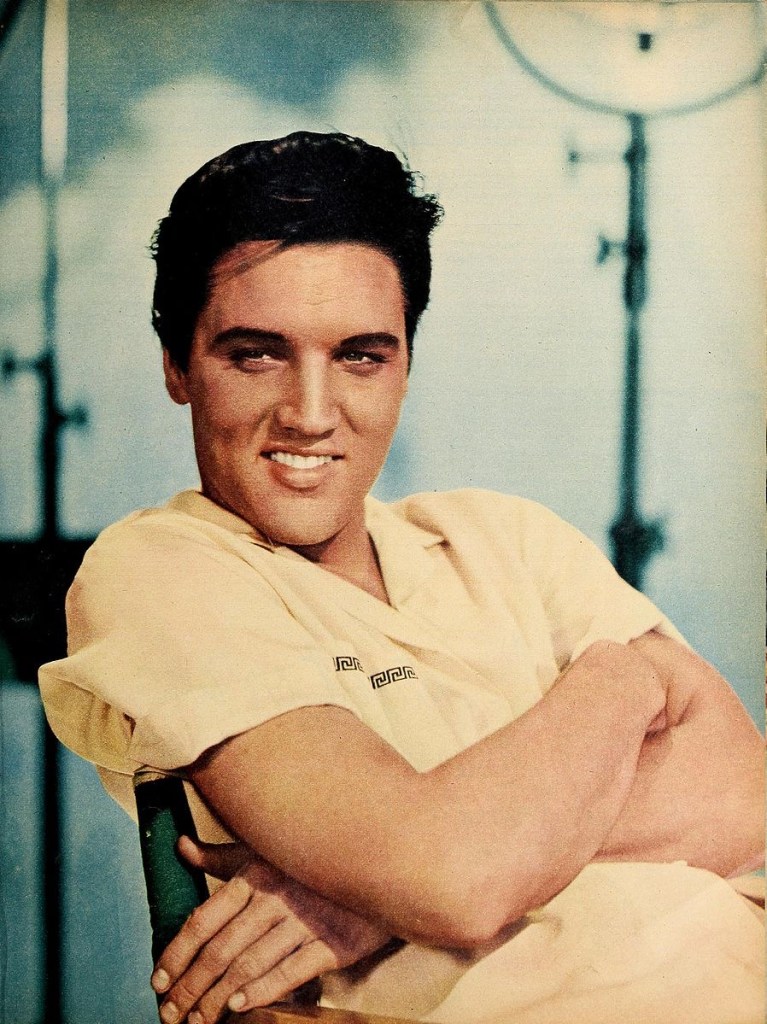
In 1954, Elvis Presley appeared on the radio show the Grand Ole Opry On how many occasions in total did he appear on this show?
Once
Twice
Three Times
Four
In 1937, a speech by the Dominican Republic’s Dictator, Rafael Trujillo, led attacks by Dominican soldiers that resulted in the deaths of thousands of Haitians. By what name is this known?
Parsley Massacre
Poppy Pogrom
Pot Genocide
Five
On this day in 1957, a classic war film had it premiere. The film which featured the River Kwai in its title went on to win the Academy Award for the Best Picture. What was the film’s full title; and who starred as Colonel Nicholson, the senior British officer in the prisoner of war camp?
On this day in 1936, who took charge of Spain’s new Nationalist government during the civil war and thereafter remained head of state until what year?
Answers: Francisco Franco; 1975.
Francisco Franco led Spain from 1939 to 1975 after commanding Nationalist forces in the Spanish Civil War. His rule involved repression and economic growth, shifting from totalitarianism to authoritarianism. He died aged 82, succeeded by King Juan Carlos.
Two
On this day, who became the first queen to rule England in her own right; and in what century did this occur?
Answers: Mary I; 16th century.
Mary I, the first queen to rule England in her own right, reigned from 1553 to 1558. The daughter of Henry VIII and Catherine of Aragon, she overcame early challenges after being declared illegitimate to ascend the throne. Mary is best known for her efforts to restore Roman Catholicism in England, which included the execution of around 300 Protestants, earning her the nickname ‘Bloody Mary’. Her reign also saw an unpopular marriage to Philip II of Spain and the loss of England’s last European foothold, Calais. She died childless in 1558 without permanently re-establishing Catholicism and was succeeded by her Protestant half-sister, Elizabeth.
Three
In 331 BCE, Alexander the Great of … defeated Darius III of … at the Battle of Gaugamela, spelling the end of the … empire.
What two places are missing from the first two spaces; and the name of what empire is referred to at the end of the above sentence?
Answers: Macedonia; Persia; Persian (or Achaemenid or Achaemenian).
On 1 October 331 BCE, Alexander the Great of Macedonia confronted Darius III of Persia at the Battle of Gaugamela. This decisive clash ultimately sealed the fate of the Persian Achaemenian Empire. The quote above actually uses the term ‘Persian’, but Achaemenid or Achaemenian both refer to the same empire.
Four
Today in 1800, Napoleon Bonaparte persuaded the king of Spain to give a territory back to France which France sold on a few years later?. Who was the king of Spain and what was the territory?
Answers: Charles IV; Louisiana.
The secret Third Treaty of San Ildefonso, signed on October 1, 1800, between Spain and the French Republic, established an agreement in principle for Spain to trade its North American colony of Louisiana for territories in Tuscany. These terms were subsequently confirmed in March 1801 by the Treaty of Aranjuez. The area referred to was extensive and extended from the Gulf of Mexico and the Mississippi Delta north to the Canadian border, and from the Mississippi River basin west to the Rocky Mountains in Colorado.
Five
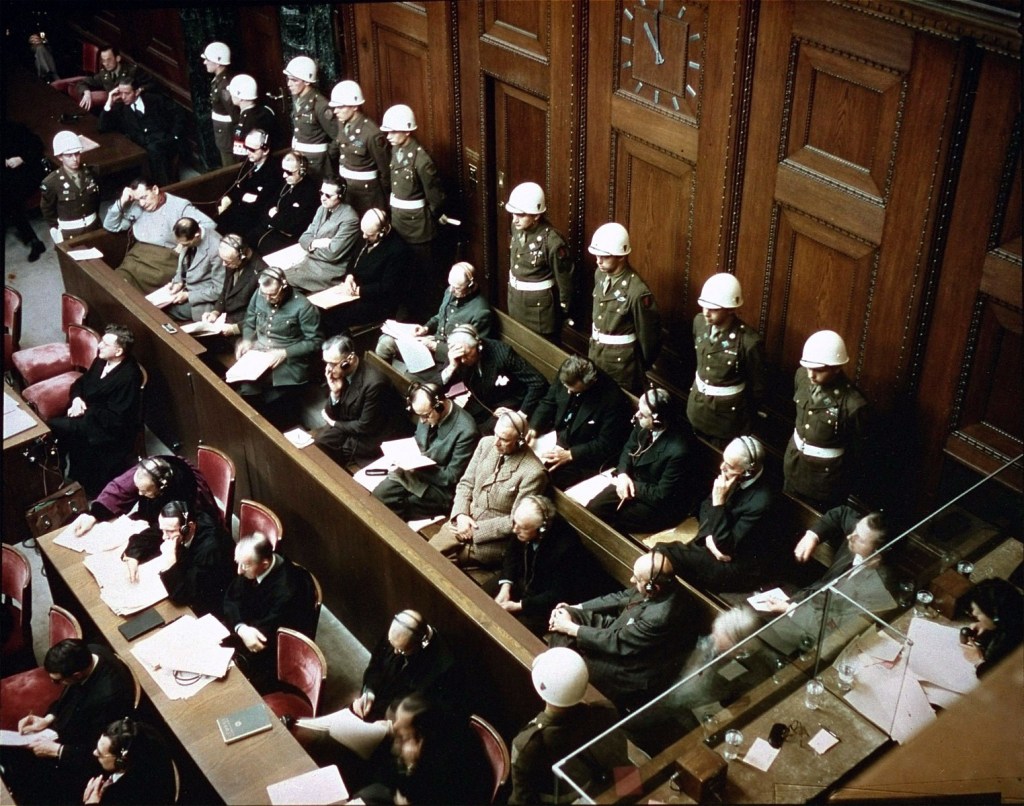
On this day in 1946, an International Military Tribunal delivered verdicts in trials concerning atrocities by Nazi leaders during World War II. In which city were these proceedings held, and which nations formed the tribunal?
Answers: Nuremberg; France, the Soviet Union, the United Kingdom and the United States.
The Nuremberg trials (1945–46) saw former Nazi leaders indicted by the International Military Tribunal on four counts: crimes against peace, crimes against humanity, war crimes and conspiracy to commit them. On 1 October 1946, after 216 sessions, 22 defendants received verdicts: three acquitted, four imprisoned, three given life terms, and twelve sentenced to death; ten were hanged on 16 October, Martin Bormann condemned in absentia, and Hermann Göring committed suicide. The tribunal rejected claims that only states are liable and that proceedings were ex post facto (having retrospective effect or force).
On this day in 1936, who took charge of Spain’s new Nationalist government during the civil war and thereafter remained head of state until what year?
Two
On this day, who became the first queen to rule England in her own right; and in what century did this occur?
Three
In 331 BCE, Alexander the Great of … defeated Darius III of … at the Battle of Gaugamela, spelling the end of the … empire.
What two places are missing from the first two spaces; and the name of what empire is referred to at the end of the above sentence?
Four
Today in 1800, Napoleon Bonaparte persuaded the king of Spain to give a territory back to France which France sold on a few years later?. Who was the king of Spain and what was the territory?
Five
On this day in 1946, an International Military Tribunal delivered verdicts in trials concerning atrocities by Nazi leaders during World War II. In which city were these proceedings held, and which nations formed the tribunal?
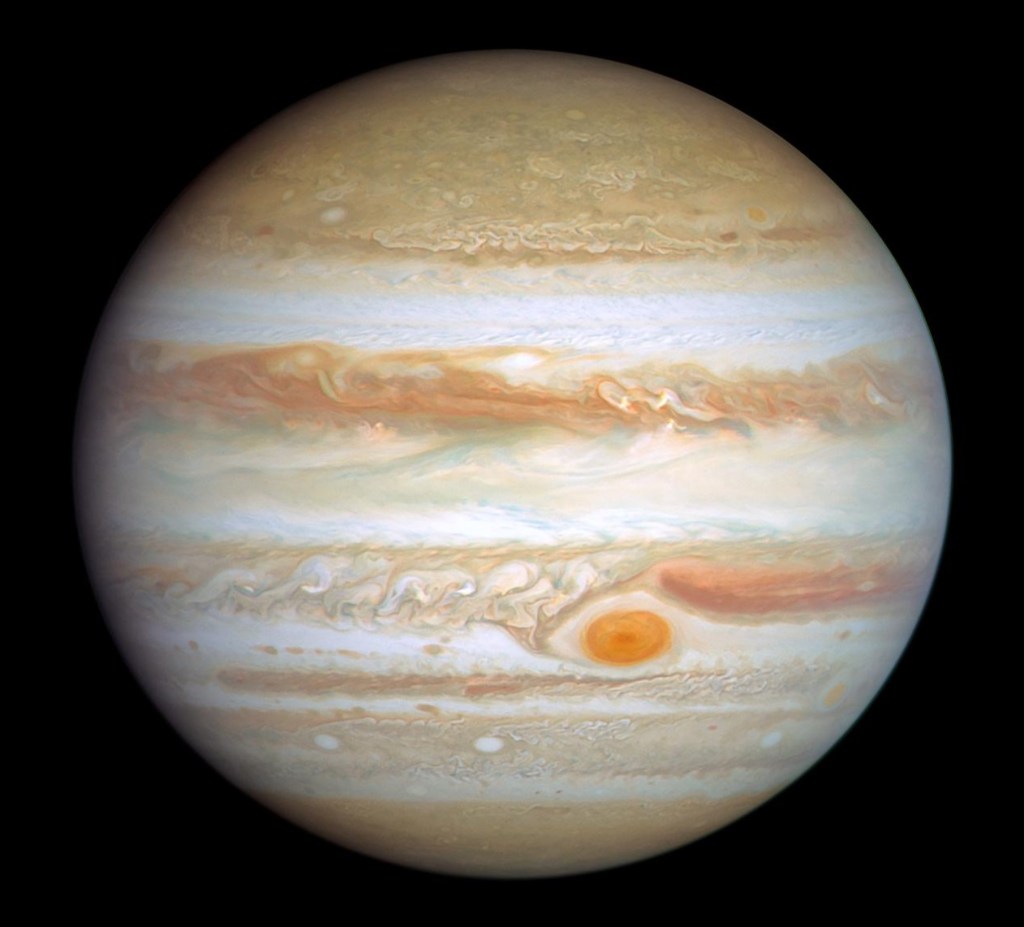
Jupiter in true colour, taken by the Hubble Space Telescope in January 2024. Image Wikimedia Commons
Today is obviously is a disconnected collection of questions but don’t count on it.
One
In 2026, the EU, the European Union, has 27 members, butt is the successor organisation to what was originally the European Coal and Steel Community (ECSC). The ECSC was founded in 1952 by the six signatories of the Treaty of Paris: what were these six nations?
Answers
Belgium
France
Italy
Luxembourg
the Netherlands
West Germany
Two
What are the first names of the von Trapp Children from the 1965 film The Sound of Music? (Including von Trapp is not necessary.)
Answers
Liesl
Friedrich
Louisa
Kurt
Brigitta
Marta
Gretl
Three
What are the names of the US states which begin with ‘M’?
Answers
Maine
Maryland
Massachusetts
Michigan
Minnesota
Mississippi
Missouri
Montana
Four
List the Star Wars films in release order with episode number, whether or not it was shown as part of the title; and subtitle, including the later added subtitle for the original film. (Including Star Wars is not necessary.)
Answers
*Episode IV – A New Hope (1977)
Episode V – The Empire Strikes Back (1980)
Episode VI – Return of the Jedi (1983)
Episode I – The Phantom Menace (1999)
Episode II – Attack of the Clones (2002)
Episode III – Revenge of the Sith (2005)
†(E(EpisodeII) The Force Awakens (2015)
†(Episode VIII) The Last Jedi (2017)
†(Episode IX) The Rise of Skywalker (2019)
Note
Subtitle was added at a later date. † The sequel trilogy used the subtitle without the episode numbers.
Five
Starting with the largest, list in order of size (based on the equatorial diameter) each planet plus the two largest dwarf planets in the Solar System.
Answers
According to NASA Planets (1 to 8) and Dwarf Planets (9 & 10)
Jupiter
Saturn
Uranus
Neptune
Earth
Venus
Mars
Mercury
Pluto
Eris
Gallimaufry IX
The ninth edition of Gallimaufry — a confused jumble, a hodgepodge, or a heterogeneous mixture of things — so, simply an unconnected assortment of questions
Today is obviously is a disconnected collection of questions but don’t count on it.
One
In 2026, the EU, the European Union, has 27 members, butt is the successor organisation to what was originally the European Coal and Steel Community (ECSC). The ECSC was founded in 1952 by the six signatories of the Treaty of Paris: what were these six nations?
Two
What are the first names of the von Trapp Children from the 1965 film The Sound of Music? (Including von Trapp is not necessary.)
Three
What are the names of the US states which begin with ‘M’?
Four
List the Star Wars films in release order with episode number, whether or not it was shown as part of the title; and subtitle, including the later added subtitle for the original film. (Including Star Wars is not necessary.)
Five
Starting with the largest, list in order of size (based on the equatorial diameter) each planet plus the two largest dwarf planets in the Solar System.
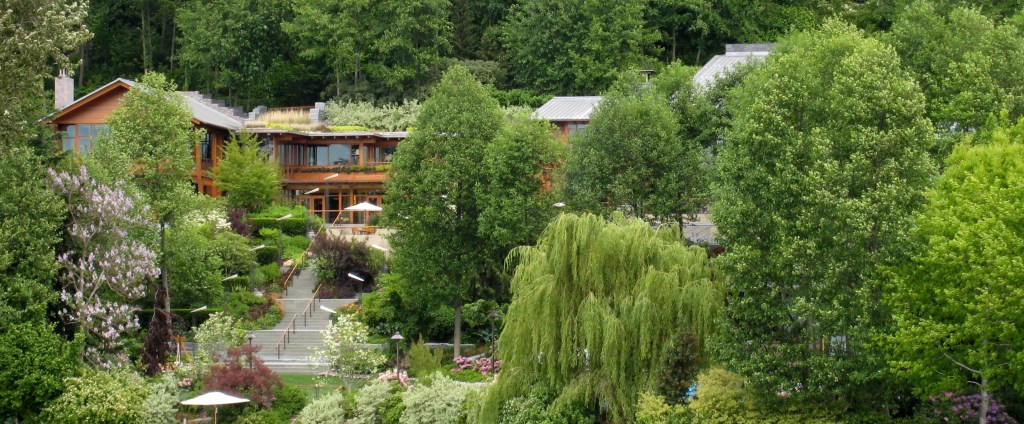
Bill Gates House, “Xanadu 2.0”. See question two. Image Wikimedia Commons
Today’s Answers
The first question today is related to the date, 29 September. The remainder are not date-related but follow-on from number one.
One
On this day newspapers proclaimed the world’s first billionaire. Who was this billionaire and in what year were these stories published?
Answers: John D. Rockefeller; 1916.
In 1916, John D. Rockefeller was reported as the world’s first billionaire. Yet the claim remained uncertain. A sudden rise in the value of his oil holdings the day before seemed to push his wealth beyond $1 billion. Newspapers tracked his fortune like a baseball box score, though no exact count existed. Reporters had to estimate his assets and their value, making the billion-dollar figure an informed guess.
Two
Tech billionaire Bill Gates had a lakeside mansion built in Medina, Washington. A Wikipedia article about the house refers to it as follows:
Some news articles call the house Xanadu 2.0, a reference to the motion picture …, which was itself a reference to the opening lines of Samuel Taylor Coleridge’s classic poem …
— Wikipedia
What 1941 movie and poem published in 1816 are missing from this quote?
Which is the nearest planet to the Sun whose average orbital distance is more than one billion miles? This planet has only been explored by one spacecraft (in 1986): what spacecraft?
Answer: Uranus; Voyager 2.
Uranus is the third largest planet in our solar system. It’s about four times wider than Earth, and has an equatorial diameter of about 31,763 miles (51,118 kilometres). Uranus is the seventh planet from the Sun, orbiting at an average distance of 1.8 billion miles (2.9 billion kilometres). It’s about 19 times farther from the Sun than Earth. The exploration of Uranus has been limited to telescopes and a single flyby by NASA’s Voyager 2 in 1986. During this mission, the spacecraft discovered 10 new moons and two new rings, studied the planet’s atmosphere, and imaged its five largest moons.
Four
What now deceased billionaire bought the island of Skorpios in the Ionian Sea in 1963; and who did this billionaire marry on the island in 1968?
Answers: Aristotle Onassis; Jacqueline Kennedy.
Skorpios, a private Ionian island bought by Aristotle Onassis in 1963, hosts three residences and hosted his 1968 wedding to Jacqueline Kennedy, former First Lady of the United States. After Onassis’s death, ownership passed to Christina and then Athina Onassis.
Five
In January 2025, an American tech company saw the largest one-day loss in market capitalisation for a U.S. company in history. What company and how much was that loss?
Answers: Nvidia; $600 billion.
By 7 January 2025, Nvidia’s $3.66 trillion market cap exceeded double the combined value of AMD, ARM, Broadcom and Intel. That month, DeepSeek’s V3 model caused Nvidia’s record $600 billion one-day loss; its AI assistant overtook ChatGPT on Apple’s App Store.
Bill Gates House, “Xanadu 2.0”. See question two. Image Wikimedia Commons
The first question today is related to the date, 29 September. The remainder are not date-related but follow-on from number one.
One
On this day newspapers proclaimed the world’s first billionaire. Who was this billionaire and in what year were these stories published?
Two
Tech billionaire Bill Gates had a lakeside mansion built in Medina, Washington. A Wikipedia article about the house refers to it as follows:
Some news articles call the house Xanadu 2.0, a reference to the motion picture …, which was itself a reference to the opening lines of Samuel Taylor Coleridge’s classic poem …
— Wikipedia
What 1941 movie and poem published in 1816 are missing from this quote?
Three
Which is the nearest planet to the Sun whose average orbital distance is more than one billion miles? This planet has only been explored by one spacecraft (in 1986): what spacecraft?
Four
What now deceased billionaire bought the island of Skorpios in the Ionian Sea in 1963; and who did this billionaire marry on the island in 1968?
Five
In January 2025, an American tech company saw the largest one-day loss in market capitalisation for a U.S. company in history. What company and how much was that loss?
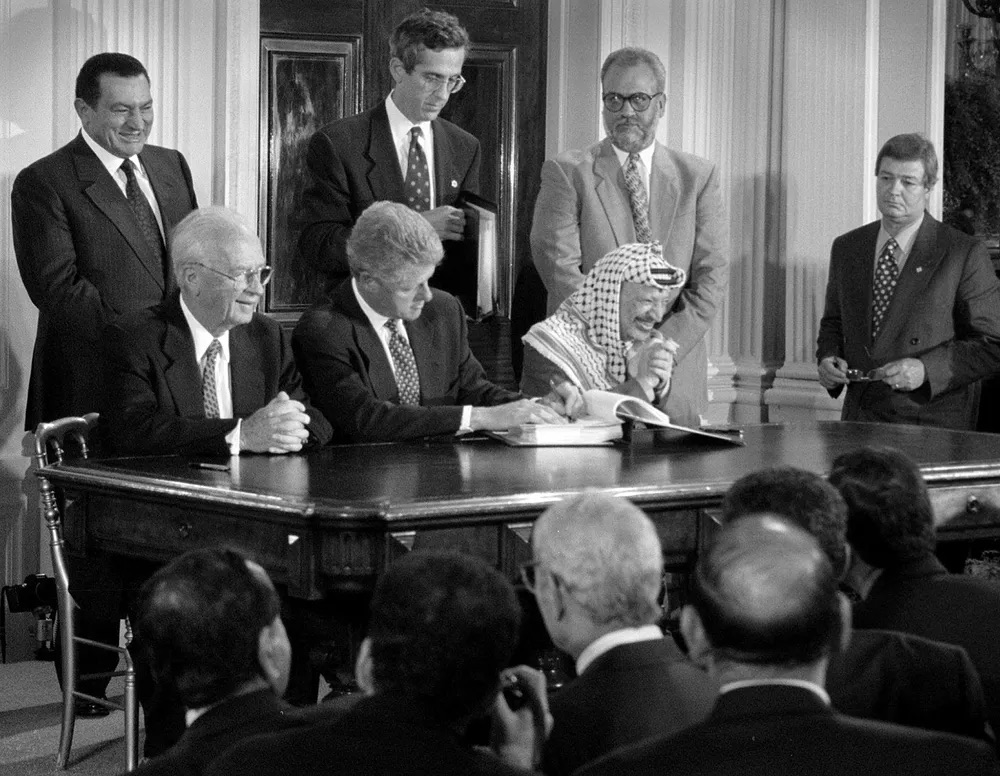
Signing the Oslo II Accords. U.S. Pres. Bill Clinton signing the Oslo II Accords flanked by Israeli Prime Minister Yitzhak Rabin (left) and PLO Chairman Yasser Arafat (right) at the White House. September 28, 1995. Image Encyclopædia Britannica
Today’s theme centres on the date alone: five unrelated questions linked only by 28 September.
One
On this day, The Oslo II Accords, formally known as the Israeli–Palestinian Interim Agreement on the West Bank and the Gaza Strip, which outlined the extension of Palestinian self-rule to additional population centres beyond Gaza and Jericho were signed at the White House. Who are the three people seated at the table in the above photograph?
Answers: Israeli Prime Minister Yitzhak Rabin (left), US President Bill Clinton and PLO Chairman Yasser Arafat (right).
This image captures the signing of the Oslo II Accord in September 1995. The accords, which represented a major step in the peace process, were first signed in Taba, Sinai, Egypt, on September 24, 1995, between Israel and the PLO. The highly visible signing on September 28, 1995, in Washington D.C., saw Israeli Prime Minister Yitzhak Rabin and PLO Chairman Yasser Arafat formally execute the agreement, witnessed by US President Bill Clinton, along with representatives from key international guarantors including Russia, Egypt, Jordan, Norway, and the European Union.
Two
In tennis, Althea Gibson was the first African American to win a Grand Slam championship in the 1950s. Who became the next non-white woman to do so, and in what decade did she do so?
Answers: Evonne Goolagong; 1970s.
Althea Gibson, who was born on this day, won the French Open (1956), Wimbledon (1957 and 1958), and US National (1957 and 1958) (now the U.S. Open). Evonne Goolagong Cawley, an Australian Aboriginal, won the French Open in 1971, the Australian Open (1974, ‘75, ‘76 and ‘77) and Wimbledon (1971 and 1980).
Three
The actress Brigitte Bardot, who was born on this day, starred in a 1956 film which…
… is widely recognised as the vehicle that launched Bardot into the public spotlight and immediately created her “sex kitten” persona.
— Wikipedia
What film, and who was the film’s director?
Answer: And God Created Woman; Roger Vadim.
After retiring from acting in 1973, Brigitte Bardot dedicated herself to animal rights, establishing her own foundation and receiving accolades from the UN and PETA. However, she has also been a controversial figure due to her far-right political views and has faced multiple fines for inciting racial hatred and making public insults against Muslims in France and residents of Réunion.
Four
On what day in 1066 was the Norman ruler William crowned king of England, following his conquest of the country after landing on the south coast on this day in 1066; and what English king was defeated at Hastings?
Answer: Christmas Day (or 25 December); Harold Godwinson (or Harold II).
After securing his hold on England by 1075, William I spent much of his remaining years moving between England and Normandy. His final years were marked by family disputes, threats of invasion and the great Domesday survey of 1085–86. When he died in 1087, Normandy passed to his eldest son Robert, while England went to his second son, William Rufus.
Five
On this day California was ‘discovered’ by a European who became the first such to stand on the west coast of America. Who was he, and in what decade did he first stand on this coast?
Francisco de Orozco
Juan Rodríguez Cabrillo
Hernán Cortés
Answer: Juan Rodríguez Cabrillo. 1540s.
Juan Rodríguez Cabrillo was a Portuguese maritime explorer who investigated the west coast of North America for the Spanish Empire. He is best known as the first European to explore present-day Alta California, navigating its coast between 1542 and 1543.
Signing the Oslo II Accords at the White House. September 28, 1995. Image Encyclopædia Britannica
Today’s theme centres on the date alone: five unrelated questions linked only by 28 September.
One
On this day, The Oslo II Accords, formally known as the Israeli–Palestinian Interim Agreement on the West Bank and the Gaza Strip, which outlined the extension of Palestinian self-rule to additional population centres beyond Gaza and Jericho were signed at the White House. Who are the three people seated at the table in the above photograph?
Two
In tennis, Althea Gibson was the first African American to win a Grand Slam championship in the 1950s. Who became the next non-white woman to do so, and in what decade did she do so?
Three
The actress Brigitte Bardot, who was born on this day, starred in a 1956 film which…
… is widely recognised as the vehicle that launched Bardot into the public spotlight and immediately created her “sex kitten” persona.
— Wikipedia
What film, and who was the film’s director?
Four
On what day in 1066 was the Norman ruler William crowned king of England, following his conquest of the country after landing on the south coast on this day in 1066; and what English king was defeated at Hastings?
Five
On this day California was ‘discovered’ by a European who became the first such to stand on the west coast of America. Who was he, and in what decade did he first stand on this coast?
The first question relates to today, 27 September, while the remainder are not date-related but follow on from the first.
One
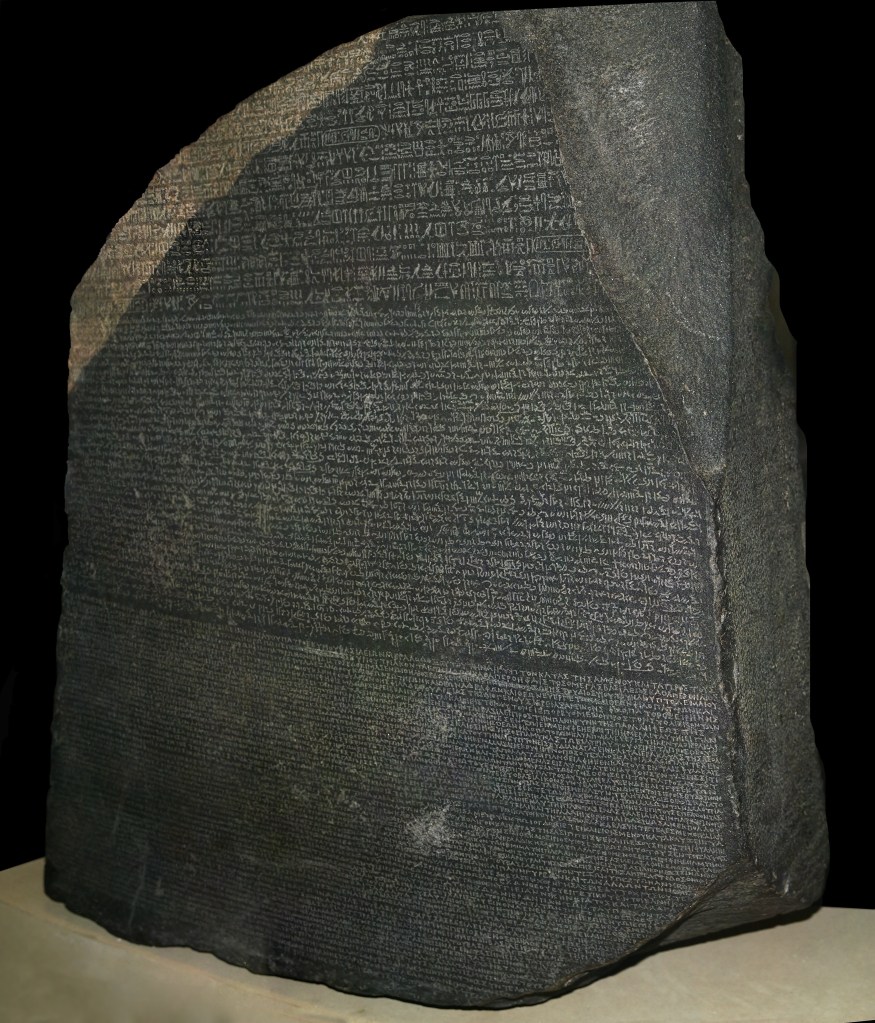
On 27 September 1822, the Rosetta Stone was decoded 23 years after its discovery in a river delta by an army officer. In what river delta was it found; and in what country’s army was the finder an officer?
Two
In 2026, in a new major archaeological project woolly rhinoceros bones were found in a cave under a castle. Is that castle in …
Coastal South Wales, United Kingdom
Inland river valley, central Italy
Alpine foothills, eastern Austria
Three
In 2023, archaeologists uncovered the submerged remnants of a Nabataean temple during an underwater survey of the ancient port of Puteoli. In what modern country is the ancient port of Puteoli, and what four-letter word describes the ethnic group of the Nabataean people?
Four
A Maya tomb discovered in 2025 may be 1,700 years old. It was found at the ancient city of Carocal. In what modern country is the site of this tomb?
Five
In 2026, archaeologists found a papyrus fragment from Homer’s Iliad inside …