The first question concerns today’s date, 15 July. The others are unrelated to the date but share a nautical theme.
One
On 15 July 1815, almost a month after his defeat at Waterloo, Napoleon surrendered to the captain of a British warship. Named after a son of Poseidon and Eurynome from Greek mythology, what was the warship’s name?
Two
Which warship was scuttled in Montevideo harbour on the 17th December 1939 after the Battle of the River Plate?
Three
Cher’s use of a ship for the 1989 music video caused offence. Which song was it for and which ship was it filmed on?
Four
The third published novel in C.S. Lewis’s The Chronicles of Narnia features a ship’s name in its title. What is that ship’s name?
Five
After being appointed in 1768 to lead a joint Royal Society and Admiralty expedition, Captain James Cook circumnavigated the world aboard HMS Endeavour. What size was the ship Endeavour approximately:
Here’s the answers to the questions posted earlier.
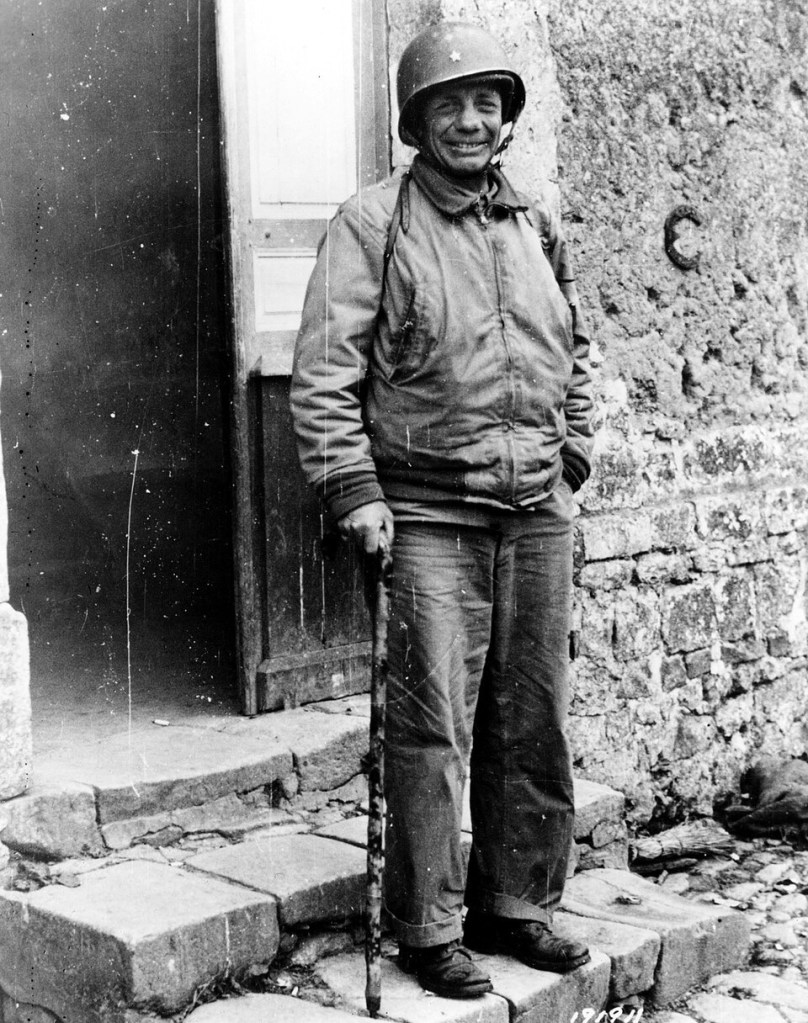
Despite a heart condition and arthritis that forced him to use a cane, Brigadier General Roosevelt led the assault on Utah Beach. Image Wikimedia Commons
Today’s questions are a mixed bag and are not date-related. There is a bit of an alphabetical theme going on, though..
One
New York International Airport, which opened in 1948, was also commonly known by what other name?
Answer: Idlewild.
Now known as John F. Kennedy International Airport (JFK), it is a major international airport serving the New York metropolitan area. Located in Queens, New York City, it is the busiest airport in the New York airport system and the busiest international commercial airport in North America. JFK features five passenger terminals and four runways, and serves as a hub for American Airlines and Delta Air Lines.
Two
Supported by a walking stick, Brigadier General Theodore Roosevelt Jr led the assault on which D-Day beach?
Answer: Utah Beach.
At 56, Roosevelt was the oldest general to land by sea with the first wave on D-Day, alongside his son, Captain Quentin Roosevelt II, who also landed with the first wave at Omaha Beach, making them the only father-son pair to participate in the invasion that day. Brigadier General Roosevelt, with Captain Leonard T. Schroeder Jr., led the 8th Infantry Regiment and 70th Tank Battalion at Utah Beach. Despite drifting off course, Roosevelt personally reconnoitred the area, coordinated with battalion commanders, and decided to attack from their landing point, famously declaring, ‘We’ll start the war from right here!’.
Three
What two word term is commonly used in the west to refer to the mythical humanoid creature which is said to inhabit parts of the Himalayas?
Answer: Abominable Snowman.
The Yeti, or Abominable Snowman, is a mythical humanoid creature believed to inhabit the Himalayas. Its existence is debated, with evidence such as sightings, videos, photos, and footprints, many of which are hoaxes or disputed. Despite numerous claims, the Yeti remains a subject of folklore and speculation. Folklorists trace the Yeti’s origin to Sherpa folklore and misidentified animals like bears or yaks, and it is often compared to North America’s Bigfoot due to similar physical descriptions.
Four
What flower with an eight-letter common name is the official flower of the Japanese city of Hiroshima, being the first to bloom there after the city was destroyed by an atomic bomb in 1945?
Answer: Oleander.
As the very first flower to bloom on the scorched earth of Hiroshima, where it was said that nothing would grow for 75 years, the oleander flower was a source of strength and hope for the residents of the city as they worked hard on recovery efforts. Blooming in the summertime, the oleander flowers reach their peak around the August 6 Peace Memorial Day, their beautiful blossoms reminding our citizens of a great many and profound feelings. — The City of Hiroshima
Five
In Douglas Adams’ The Hitchhiker’s Guide to the Galaxy, Zaphod Beeblebrox steals the spaceship Heart of Gold. What’s the name of the ship’s computer?
Answer: Eddie.
Eddie, the Heart of Gold’s shipboard computer, is annoyingly cheerful with a Genuine People Personality, irritating the crew, especially Zaphod. He has a backup motherly personality but remains disliked. Eddie controls all ship systems and records conversations. In And Another Thing…, Zaphod’s Left Brain replaces him, being more competent
Theme
The answers started with one of English’s five vowels, although not in the correct order.
Despite a heart condition and arthritis that forced him to use a cane, Brigadier General Roosevelt led the assault on Utah Beach. Image Wikimedia Commons
Today’s questions are a mixed bag and are not date-related. There is a bit of an alphabetical theme going on, though..
One
New York International Airport, which opened in 1948, was also commonly known by what other name?
Two
Supported by a walking stick, Brigadier General Theodore Roosevelt Jr led the assault on which D-Day beach?
Three
What two word term is commonly used in the west to refer to the mythical humanoid creature which is said to inhabit parts of the Himalayas?
Four
What flower with an eight-letter common name is the official flower of the Japanese city of Hiroshima, being the first to bloom there after the city was destroyed by an atomic bomb in 1945?
Five
In Douglas Adams’ The Hitchhiker’s Guide to the Galaxy, Zaphod Beeblebrox steals the spaceship Heart of Gold. What’s the name of the ship’s computer?
All of these questions are related to today’s date, 13 July.
One
American actor Harrison Ford was born on this day in 1942. In a 1989 film, he played an archaeologist whose father was also an archaeologist. Both were held captive in a castle.
Who played his father?
Which castle and country was it located in?
Answers
Sean Connery
Castle Brunwald (or Brunwald Castle), Austria.
Indiana Jones and the Last Crusade (1989), directed by Steven Spielberg, stars Harrison Ford and Sean Connery. Set in 1938, Indiana searches for his kidnapped father, a Holy Grail scholar. The film, praised for its lighthearted tone, grossed $474.2 million, won an Academy Award, and led to sequels in 2008 and 2023.
Two
In 1985, what song featured with an emotional film of starving Ethiopian children during the Live Aid concert, and what group sang it?
Answer: Drive, Cars.
“One afternoon before the concert, Bowie was up in the office and we started looking through some videos of news footage, and we watched the CBC piece [footage from the Ethiopian famine, cut to the Cars’ song “Drive”]. Everyone just stopped. Bowie said: ‘You’ve got to put that in the show; it’s the most dramatic thing I’ve ever seen.’ That was probably one of the most evocative things in the whole show and really got the money rolling in.” —Live Aid promoter Harvey Goldsmith on Bowie picking out the CBC news piece for the concert, a video Bowie introduced on the big screen at Wembley after his set. davidbowie.com
Three
One artist performed live at the 1985 Live Aid concert in London and then appeared on stage at the same day’s concert in Philadelphia, USA. He performed solo at both venues but also supported other artists by playing live piano and drums.
Who is this artist?
Who did he play piano for in London?
What band did he play drums for in Philadelphia?
Answers
Phil Collins
Sting
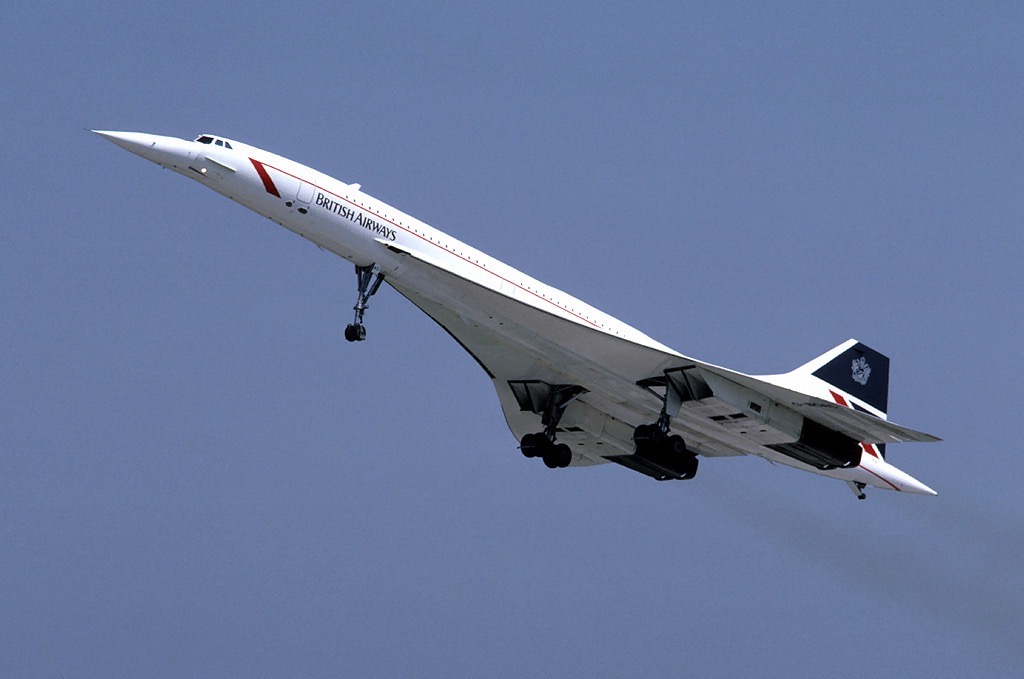
Led Zeppelin At the Live Aid concerts on July 13, 1985, Phil Collins performed solo at both venues, played piano for Sting at Wembley Stadium and drums for Led Zeppelin at JFK Stadium. This was made possible by him travelling between the two locations on a Concorde flight.
Four
Who became the second woman Prime Minister of the United Kingdom on 13 July 2016, and how long did she hold the office?
Theresa May; three years (3 years, 11 days to be exact).
Theresa May, born in 1956, served as UK Prime Minister and Conservative Party Leader from 2016 to 2019, and Home Secretary from 2010 to 2016. She was MP for Maidenhead (1997-2024) and joined the House of Lords in 2024. May led Brexit negotiations and survived two no-confidence votes.
Five
In 1939, what singer, backed by trumpeter Harry James, recorded his first single, From the Bottom of My Heart?
Answer: Frank Sinatra.
Francis Albert Sinatra, born in 1915, was a renowned American singer and actor, nicknamed ‘Chairman of the Board’ and ‘Ol’ Blue Eyes’. He sold 150 million records, won 13 Grammys, and starred in films like From Here to Eternity. Sinatra received numerous accolades, including the Presidential Medal of Freedom.
Who’s gonna plug their ears / When you scream?
Is a line from Cars’ song Drive which featured with an emotional video during the Live Aid concerts and immediately led to an upsurge in donations. The lyrics are shown below.
Drive Cars
Who’s gonna tell you when It’s too late? Who’s gonna tell you things Aren’t so great?
You can’t go on thinking Nothing’s wrong, oh oh Who’s gonna drive you home Tonight?
Who’s gonna pick you up When you fall? Who’s gonna hang it up When you call? Who’s gonna pay attention To your dreams? Yeah, who’s gonna plug their ears When you scream?
You can’t go on thinking Nothing’s wrong, oh oh Who’s gonna drive you home Tonight?
Who’s gonna hold you down When you shake? Who’s gonna come around When you break?
You can’t go on thinking Nothing’s wrong, oh oh Who’s gonna drive you home Tonight?
You know you can’t go on thinking Nothing’s wrong Who’s gonna drive you home Tonight? — AZ Lyrics
All of these questions are related to today’s date, 13 July.
One
American actor Harrison Ford was born on this day in 1942. In a 1989 film, he played an archaeologist whose father was also an archaeologist. Both were held captive in a castle.
Who played his father?
Which castle and country was it located in?
Two
In 1985, what song featured with an emotional film of starving Ethiopian children during the Live Aid concert, and what group sang it?
Three
One artist performed live at the 1985 Live Aid concert in London and then appeared on stage at the same day’s concert in Philadelphia, USA. He performed solo at both venues but also supported other artists by playing live piano and drums.
Who is this artist?
Who did he play piano for in London?
What band did he play drums for in Philadelphia?
Four
Who became the second woman Prime Minister of the United Kingdom on 13 July 2016, and how long did she hold the office?
Five
In 1939, what singer, backed by trumpeter Harry James, recorded his first single, From the Bottom of My Heart?
Today’s first question centres around the date 12th July and a Wild West legend. The subsequent questions aren’t date-related but continue the legend theme.
One
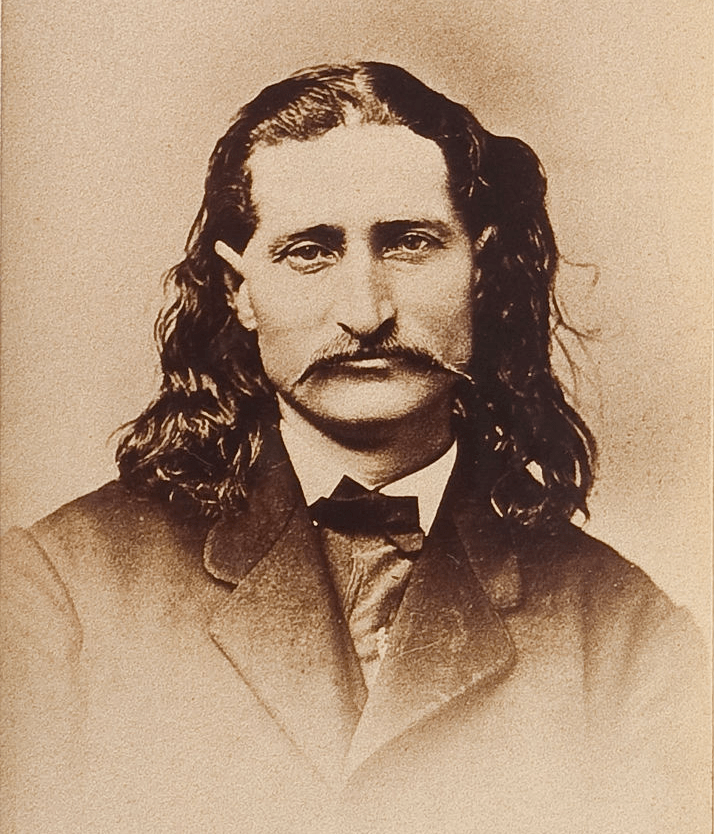
On 12 July 1861, Wild Bill Hickok supposedly fought his first gunfight in which three men died. Hickok was acquitted in court after claiming self-defence. The court papers referred to Hickok by which of these names: Dollar Bill; Double Bill or Duck Bill?
Answer: Duck Bill.
In 1861, in Rock Creek, Nebraska, a legend began as Wild Bill Hickok reportedly engaged in his first gunfight at a postal station. This event marked the start of his storied reputation in the Wild West. James Butler Hickok, known for his adventurous life, survived a bear attack and worked at a Pony Express station. A confrontation with David McCanles over rent turned violent, resulting in McCanles and two men’s deaths. Hickok, called ’Duck Bill’ in the court records, was acquitted, claiming self-defence.
Two
In which Rossini opera is Gesler, the Austrian governor of Uri and Schwyz, the villain?
Answer: William Tell (or Italian: Guglielmo Tell; French: Guillaume Tell).
William Tell, a legendary Swiss folk hero, is renowned for shooting an apple off his son’s head and assassinating tyrant Albrecht Gessler. His defiance inspired Swiss rebellion, leading to the Confederacy’s formation. Emerging in 1307, Tell symbolises Swiss identity and resistance, influencing the 19th-century Restoration and 1848 Revolutions. There is no definitive evidence of Tell’s existence. Guillaume Tell is a French-language opera by Gioachino Rossini, based on the William Tell legend. It was Rossini’s last opera, featuring a famous overture with a storm and the March of the Swiss Soldiers.
Three
Born Robert MacGregor, this Scottish Jacobite outlaw and folk hero inspired a novel, a play, an operetta and several films. What was he better known as?
Answer: Rob Roy.
Robert Roy MacGregor was a Jacobite Scottish outlaw born on 7 March 1671 and died on 28 December 1734. He later became a folk hero in Scotland and among Jacobites. An 1817 novel by Walter Scott based on MacGregor’s life was the basis for a play and an overture.
Four
Gjergj Kastrioti, known as Skanderbeg, is a national hero from the 15th century. In what modern-day country is he a hero for uniting principalities and influencing national awakening?
Answer: Albania.
Skanderbeg (Gjergj Kastrioti) was an Albanian nobleman and military leader who led the League of Lezhë against the Ottomans. A national hero, he deserted the Ottomans in 1443, unified Albanian principalities, and allied with Naples. Skanderbeg is celebrated for his persistent resistance and influence on the Albanian National Awakening.
Five
Which of these is a film that is the 1993 retelling of the Robin Hood story?
Robin Hood: Men in Sherwood
Robin Hood: Men in Tights
Robin Hood: Men in Uttoxeter
Answer: Robin Hood: Men in Tights
Robin Hood, a legendary 14th-century English outlaw, rebelled against authority by robbing officials and aiding the poor, primarily in South Yorkshire. His main adversary was the Sheriff of Nottingham. Despite numerous attempts, his historical existence remains unproven, with claims likely originating from an 18th-century fabrication. Robin Hood: Men in Tights is a 1993 Mel Brooks comedy film parodying the Robin Hood story, starring Cary Elwes and Richard Lewis.
Today’s first question centres around the date 12th July and a Wild West legend. The subsequent questions aren’t date-related but continue the legend theme.
One
On 12 July 1861, Wild Bill Hickok supposedly fought his first gunfight in which three men died. Hickok was acquitted in court after claiming self-defence. The court papers referred to Hickok by which of these names: Dollar Bill; Double Bill or Duck Bill?
Two
In which Rossini opera is Gesler, the Austrian governor of Uri and Schwyz, the villain?
Three
Born Robert MacGregor, this Scottish Jacobite outlaw and folk hero inspired a novel, a play, an operetta and several films. What was he better known as?
Four
Gjergj Kastrioti, known as Skanderbeg, is a national hero from the 15th century. In what modern-day country is he a hero for uniting principalities and influencing national awakening?
Five
Which of these is a film that is the 1993 retelling of the Robin Hood story?
Today’s first question is about the date 11 July. The other questions aren’t date-related but share a theme beginning with the first question.
One
At dawn on 11 July 1804, the U.S. vice president took part in a duel which resulted in Alexander Hamilton being fatally wounded.
Who was the vice president involved in this duel
What was Hamilton’s senior role in the U.S. government of George Washington between September 1789 and January 1795?
Answers
Aaron Burr
1st United States Secretary of the Treasury The Burr–Hamilton duel occurred on July 11, 1804, in Weehawken, New Jersey, between U.S. Vice President Aaron Burr and former Secretary of the Treasury Alexander Hamilton. Burr fatally shot Hamilton, weakening the Federalist Party and ending Burr’s career. The duel followed a long-standing political rivalry and was near Hamilton’s son’s duel site. Lin-Manuel Miranda’s Broadway musical Hamilton, based on Ron Chernow’s biography, debuted in 2015 and received critical acclaim, winning numerous awards including the Pulitzer Prize for Drama and 11 Tony Awards. The musical’s popularity even influenced the decision to keep Alexander Hamilton on the ten-dollar bill.
Two
The US vice-president referred to in question one was in that role during which president’s first term?
Answer: Thomas Jefferson
Aaron Burr Jr. (1756-1836) was the third US vice president (1801-1805) and a Democratic-Republican. He is remembered for the above duel and his conspiracy to form an independent country.
Three
Who was Richard Nixon’s first Vice President?
Answer: Spiro Agnew.
Spiro Agnew, the 39th U.S. vice president, served from 1969 to 1973 under Nixon. A Republican, he was Maryland’s governor and Baltimore County executive. Agnew resigned amid a tax evasion investigation, unrelated to Watergate. He later wrote a memoir and novel, blaming Zionists for his downfall, and died in 1996.
Four
Which TV crime drama’s theme tune was a Billboard Hot 100 number one for Jan Hammer in 1985?
Answer: Miami Vice, aka Miami Vice Theme.
Miami Vice Theme by Jan Hammer, the theme song for the TV series, topped the Billboard Hot 100 in 1985 and won Grammy Awards in 1986. The music video features Hammer as a fugitive, performing the theme while being chased by the show’s main characters.
Five
What former U.K. Deputy Prime Minister became Facebook’s vice-president of global affairs and communications in 2018?
Answer: Nick Clegg.
Sir Nicholas Clegg, born in 1967, was UK Deputy Prime Minister (2010-2015) and Liberal Democrat leader (2007-2015). Educated at Cambridge, he served as an MEP and MP. Clegg’s coalition with Conservatives led to controversy over tuition fees. Post-politics, he joined Facebook, becoming vice-president for global affairs and communications, a post he left in 2025. In 2026, Clegg joined the board of British AI startup NScale.
Vice Versa
The title originates from Latin and translates to ‘in-turned position’. It doesn’t have any direct relevance to today’s question aside from the word “vice” which appears in each question and answer groupings.
The first question concerns today’s date, 10th July. The others aren’t date-related but connect to the first.
One
On 10 July 1985, the flagship of a campaigning organisation sank after explosions caused by two bombs planted by agents of the Directorate General for External Security. Four questions:
What was the name of the ship?
For what campaigning organisation was it the flagship?
At a harbour in what city did the sinking occur?
What nationality was the organisation which planted the bombs?
Answers
Rainbow Warrior
Greenpeace
Auckland, New Zealand
French
The sinking of Rainbow Warrior on 10 July 1985, codenamed Opération Satanique, was a French state-terrorism act. The Rainbow Warrior was docked in Auckland prior to sailing to lead planned protests against French nuclear testing at Mururoa Atoll in French Polynesia in the South Pacific. Two French operatives sank the Greenpeace ship in Auckland, killing photographer Fernando Pereira. France initially denied involvement but later apologised, paid reparations, and the agents served two years in French Polynesia.
Two
This 1947 musical is set in ‘Missitucky’, U.S. and features a newly arrived Irishman, his daughter and a leprechaun named Og. What is this musical?
Answer: Finian’s Rainbow.
Finian’s Rainbow follows Irishman Finian and daughter Sharon in Missitucky (a concoction of Missi-ssippi and Ken-tucky), where he buries a stolen leprechaun’s gold, believing wealth will follow. Leprechaun Og pursues the gold, turning increasingly human. A wish leads to chaos: transforming a bigoted senator, while love blossoms, and moral lessons unfold about dreams, humanity, prejudice, and the folly of greed.
Three
Which metallic element derives its name from the Greek goddess of the rainbow?
Answer: Iridium
iridium /ɪˈrɪdiəm, ʌɪˈrɪdiəm/ ♫ ▶ noun [mass noun] (Symbol: Ir) the chemical element of atomic number 77, a hard, dense silvery-white metal. Iridium is a member of the transition series and is one of the densest metals. Iridium–platinum alloys are hard and corrosion-resistant and are used in jewellery and for electrical contacts – ORIGIN early 19th century: modern Latin, from Latin iris, irid– ‘rainbow’ (so named because it forms compounds of various colours). — Oxford English Dictionary
Four
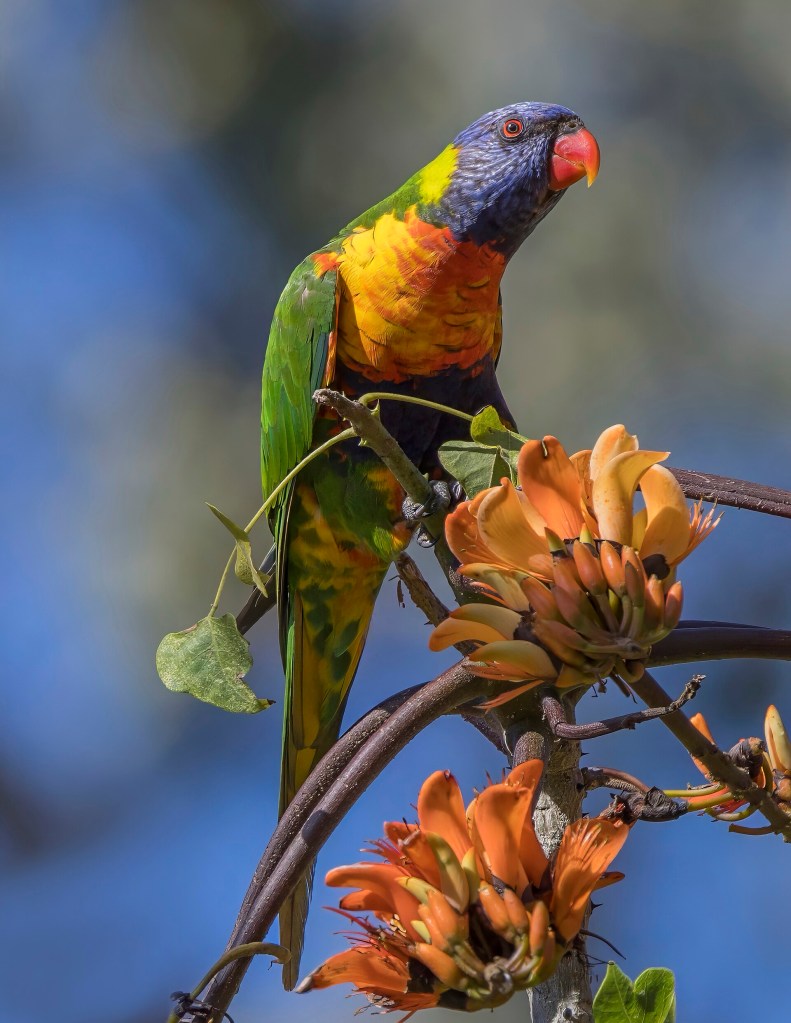
What is the common name for the bird pictured at the top of this post?
Answer: Rainbow lorikeet.
Rainbow lorikeets (Trichoglossus moluccanus), a parrot species native to Australia, inhabit rainforests, coastal bush, and woodlands along the eastern seaboard. Rainbow lorikeets are medium-sized parrots with bright, colourful plumage. Males and females are visually indistinguishable, requiring surgical sexing or DNA analysis to determine sex.
Five
A ballad by Harold Arlen with lyrics by Yip Harburg was written for a 1939 film where it would be sung by a character whose name in part is ‘Gale’. The song contains a reference to bluebirds.
What is the song?
What is the full name of ‘Gale’?
What is the film?
Answers
Over the Rainbow
Dorothy Gale
The Wizard of Oz
Over the Rainbow, a ballad by Harold Arlen and Yip Harburg, was sung by Judy Garland in The Wizard of Oz (1939). It won an Academy Award, became Garland’s signature song, and was inducted into the National Recording Registry in 2017 for its cultural significance.
Over the Rainbow
Somewhere over the rainbow way up high There’s a land that I heard of once in a lullaby Somewhere over the rainbow skies are blue And the dreams that you dare to dream really do come true
Someday I’ll wish upon a star And wake up where the clouds are far Behind me Where troubles melt like lemon drops Away above the chimney tops That’s where you’ll find me
Somewhere over the rainbow bluebirds fly Birds fly over the rainbow Why then, oh, why can’t I?
If happy little bluebirds fly Beyond the rainbow Why, oh, why can’t I? — AZ Lyrics
ROYGBIV
The mnemonic ROYGBIV helps remember the colours of the rainbow: Richard of York gave battle in vain.
(mnemonic) A mnemonic phrase to help remember the order of the seven colours of the rainbow: red, orange, yellow, green, blue, indigo, violet. Wiktionary

 Quizology.Online