Tag: culture

  • Brace for Impact—Answers

    Here are the answers to my earlier questions.

    Today’s questions all relate to January 15th.

    Happy Days.
    Image IMDb

    One

    In what decade did the television comedy Happy Days premiere in the United States?

    Answer: 1970s

    Happy Days, a popular American sitcom that aired from 1974 to 1984, depicted an idealised view of 1950s and 60s America. The show’s most memorable character, Fonzie, became a pop culture icon, leading to several spin-off shows and launching the careers of its stars.


    Two

    The first national public museum in the world, opened in 1759, boasts a collection of over eight million artefacts. What museum?

    Answer: British Museum

    The British Museum was founded in 1753 and opened its doors in 1759. It was the first national museum to cover all fields of human knowledge, open to visitors from across the world.

    Enlightenment ideals and values – critical scrutiny of all assumptions, open debate, scientific research, progress and tolerance – have marked the Museum since its foundation.

    The Museum is driven by an insatiable curiosity for the world, a deep belief in objects as reliable witnesses and documents of human history, sound research, as well as the desire to expand and share knowledge.
    British Museum


    Three

    The 2016 film Sully, starring Tom Hanks as Captain Chesley ‘Sully’ Sullenberger III, depicts his remarkable landing of a crippled aircraft in a river. Which river did the aircraft land in, and who directed the film?

    Answer: Hudson River; Clint Eastwood

    On 15 January 2009, US Airways flight 1549, an Airbus A320, made an emergency landing in the Hudson River after both engines were damaged by a flock of geese shortly after takeoff from LaGuardia Airport. Captain Chesley Sullenberger successfully ditched the plane, resulting in no fatalities but five serious injuries. The National Transportation Safety Board concluded Sullenberger’s decision to land in the river was appropriate.


    Four

    Born in Atlanta, Georgia, on this date in 1929 and dying at the age of 39 in 1968 in Memphis, Tennessee, this American religious leader became the youngest person to win the Nobel Peace Prize in 1964. Who was this?

    Answer: Martin Luther King Jr.

    Martin Luther King Jr. was a prominent American civil rights activist and Baptist minister who led the civil rights movement from 1955 until his assassination in 1968. He advocated for civil rights for people of colour through nonviolent resistance, achieving significant legislative gains like the Civil Rights Act of 1964 and the Voting Rights Act of 1965. King was awarded the Nobel Peace Prize in 1964 and posthumously received the Presidential Medal of Freedom and Congressional Gold Medal. Martin Luther King Day is observed on the third Monday in January and a memorial dedicated to him stands in the National Mall, Washington, DC.


    Five

    In 2001, Wikipedia saw its debut. The free Internet-based encyclopaedia was initially launched as a feature of Nupedia prior to being relaunched as an independent entity a few days later. Who were the two founders?

    Answer: Jimmy Wales; Larry Sanger

    Wikipedia, launched in 2001 as a complement to the expert-written Nupedia, quickly grew into the largest encyclopedia ever assembled. While initially experiencing rapid growth, the English Wikipedia’s growth rate in terms of new articles and editors peaked around 2007 and has since stabilised after a period of decline. Despite concerns about a decline in active editors and page views, Wikipedia remains a widely used and influential resource.


    Brace for Impact

    The title refers to Captain Sullenberger’s announcement to his passengers in the final approach of flight 1549 to the Hudson River, ‘This is the captain. Brace for impact.’
  • Brace for Impact

    Today’s questions all relate to January 15th.

    Happy Days.
    Image IMDb

    One

    In what decade did the television comedy Happy Days premiere in the United States?


    Two

    The first national public museum in the world, opened in 1759, boasts a collection of over eight million artefacts. What museum?


    Three

    The 2016 film Sully, starring Tom Hanks as Captain Chesley ‘Sully’ Sullenberger III, depicts his remarkable landing of a crippled aircraft in a river. Which river did the aircraft land in, and who directed the film?


    Four

    Born in Atlanta, Georgia, on this date in 1929 and dying at the age of 39 in 1968 in Memphis, Tennessee, this American religious leader became the youngest person to win the Nobel Peace Prize in 1964. Who was this?


    Five

    In 2001, Wikipedia saw its debut. The free Internet-based encyclopaedia was initially launched as a feature of Nupedia prior to being relaunched as an independent entity a few days later. Who were the two founders?

    Good luck! I’ll post the answers later.


  • Sic semper tyrannisc

    Five questions which are all related to today, October 28th.

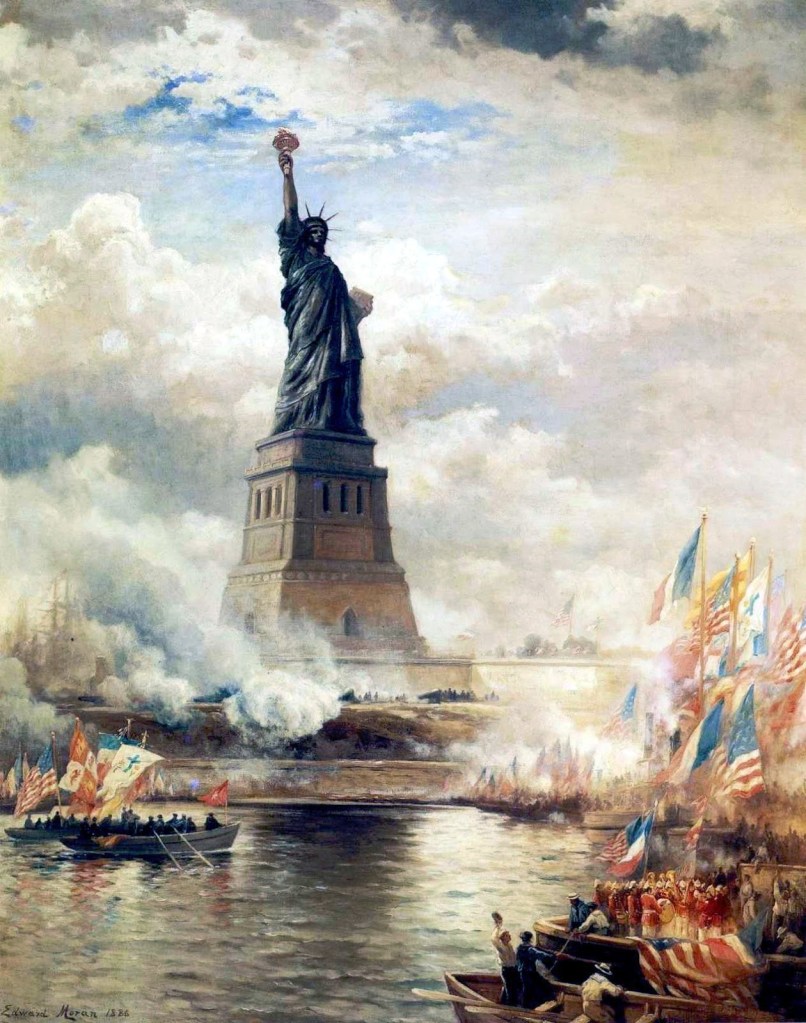
    Unveiling of the Statue of Liberty Enlightening the World by Edward Moran. Oil on canvas.
    The J. Clarence Davies Collection, Museum of the City of New York via Wikipedia

    One

    On October 28, 1922, a march on Rome resulted in the rise to power of whom?

    Two

    On October 28, the Statue of Liberty was officially dedicated in New York Harbor. In what decade did this occur, and which US President dedicated the statue?

    Three

    A vote in the British House of Commons on this day in 1971 approved plans for the UK’s membership of what regional organisation had been created by the Treaty of Rome in 1957?

    Four

    At the 2023 Rugby World Cup final held at the Stade de France, South Africa defeated … (team), and became the first nation to win the Webb Ellis Cup … times. What team fills the first blank space, and what number is missing from the second blank?

    Five

    On October 28, 1919, legislation was passed in the United States that enforced the 18th Amendment and ushered in the era of Prohibition. What was the name of that act?

    Good luck! I’ll post the answers later

  • Let There Be Light—Answers

    Here are the answers to the questions I posted earlier.

    Edison incandescent light bulb enclosed in cage.
    Image Wikipedia

    One

    On October 21, Thomas Edison applied for a patent for his design for an incandescent light bulb. In which decade did he make this application?

    Answer: 1870s

    Thomas Edison, an American inventor and businessman, developed influential devices like the phonograph and electric light bulb. He pioneered organised scientific invention and established the first industrial research laboratory.


    Two

    In 1984, Niki Lauda clinched Formula One’s World Drivers’ Championship for the final time. How many times had he won the title in total?

    Answer: Three

    Austrian racing driver Niki Lauda competed in Formula One from 1971 to 1979 and 1982 to 1985, winning three World Drivers’ Championships—1975, 1977 and 1984—with Ferrari and McLaren. He survived a horrific crash in 1976 and made a remarkable comeback to win his second and third titles. Beyond racing, Lauda founded three airlines and held advisory and team principal roles in Formula One.


    Three

    In 1940, the first edition of Ernest Hemingway’s For Whom the Bell Tolls was published. In what war was the story set?

    Answer: Spanish Civil War

    Ernest Hemingway’s 1940 novel, For Whom the Bell Tolls, follows Robert Jordan, an American volunteer in the Spanish Civil War, tasked with destroying a bridge. The book assumes knowledge of the war between the Republican government and the Nationalist faction, supported by Nazi Germany and Fascist Italy.


    Four

    The Guggenheim Museum opened in New York on this date in 1959. Which architect designed its iconic spiral building?

    Answer: Frank Lloyd Wright

    Wright’s radical design broke from traditional gallery layouts, using a continuous ramp to display art in a flowing, organic space. The museum is now a UNESCO World Heritage Site, recognized for its innovation.


    Five

    The Battle of Trafalgar, fought on 21 October 1805, took place in the …. It was named after a prominent geographic feature: …. Firstly, what body of water and secondly, what geographic feature fill the two gaps in the previous sentence?

    Answer: Atlantic Ocean; Cape Trafalgar

    The Battle of Trafalgar was a decisive victory for the British Royal Navy against the combined French and Spanish fleets during the Napoleonic Wars. Admiral Lord Nelson’s tactics ensured Britain’s naval supremacy but cost him his life. Trafalgar Square in London was named to commemorate this victory.

  • Let There Be Light

    Five questions which are all related to today, October 21st.

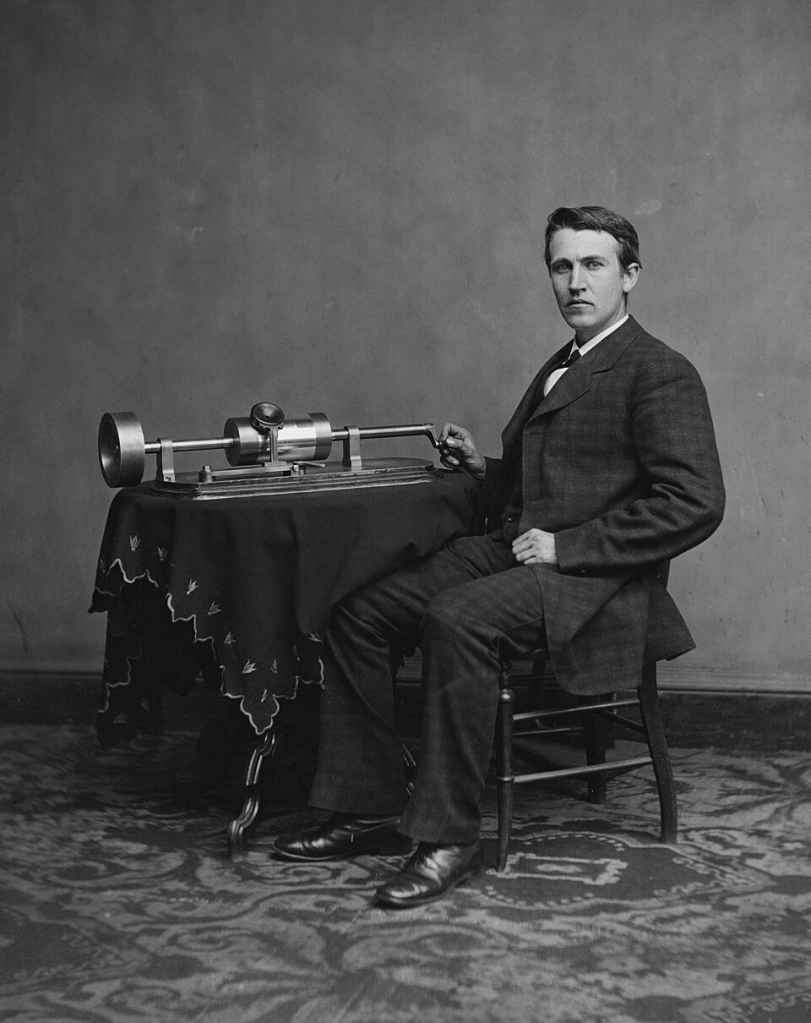
    Thomas Edison, c. 1878.
    Image Wikipedia

    One

    On 21 October Thomas Edison applied for a patent for his design for an incandescent light bulb. In which decade did he make this application?

    Two

    In 1984, Niki Lauda clinched Formula One’s World Drivers’ Championship for the final time. How many times had he won the title in total?

    Three

    In 1940, the first edition of Ernest Hemingway’s For Whom the Bell Tolls was published. In what war was the story set?

    Four

    The Guggenheim Museum opened in New York on this date in 1959. Which architect designed its iconic spiral building?

    Five

    The Battle of Trafalgar, fought on 21 October 1805, took place in the …. It was named after a prominent geographic feature: the …. Firstly, what body of water and secondly, what geographic feature fill the two gaps in the previous sentence?

    Good luck! I’ll post the answers later?

  • Silence is Golden | Answers

    The answers to my earlier post are shown in bold below.

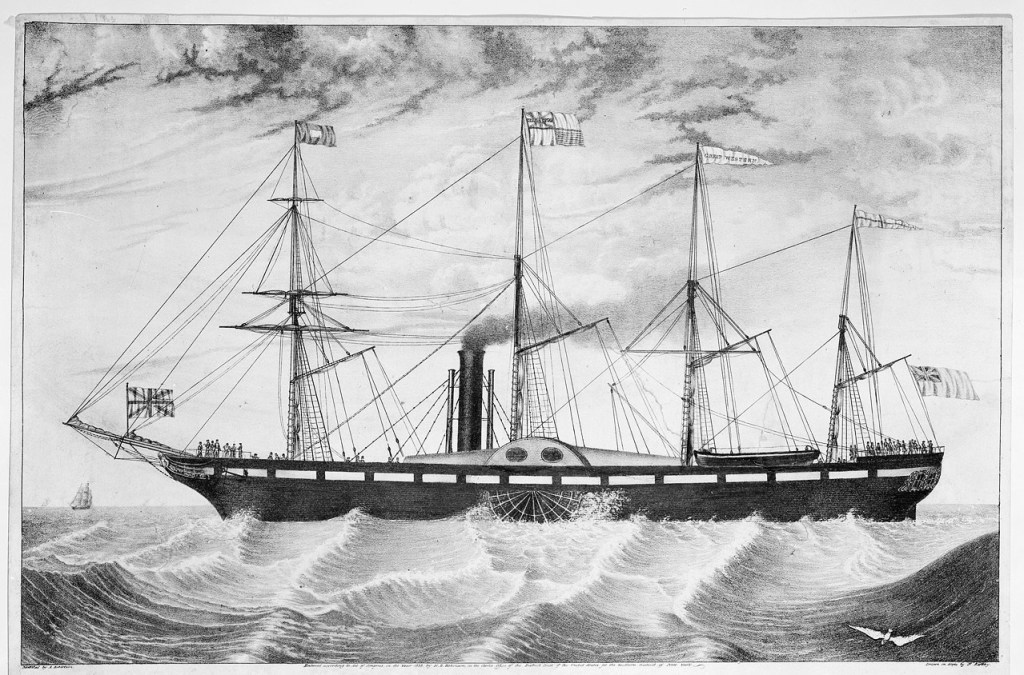
    SS Great Western. Wikipedia
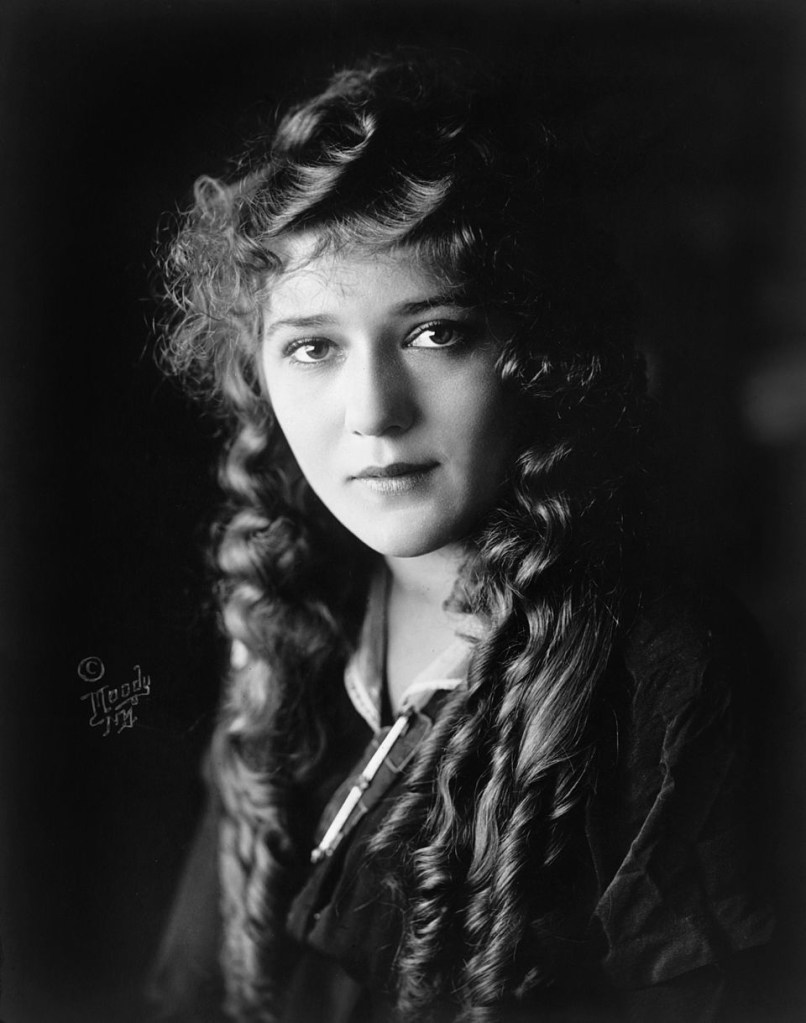
    1. Mary Pickford—Mary Pickford, born Gladys Louise Smith, was a Canadian-American actress and producer who became a pioneer in the American film industry. Known as “America’s Sweetheart” and “The Queen of the Movies,” she gained fame through silent films such as The Poor Little Rich Girl and Rebecca of Sunnybrook Farm. Pickford co-founded United Artists alongside D.W. Griffith, Charlie Chaplin and Douglas Fairbanks. After retiring from acting in 1933, she focused on her work with United Artists and engaged in various charitable activities.
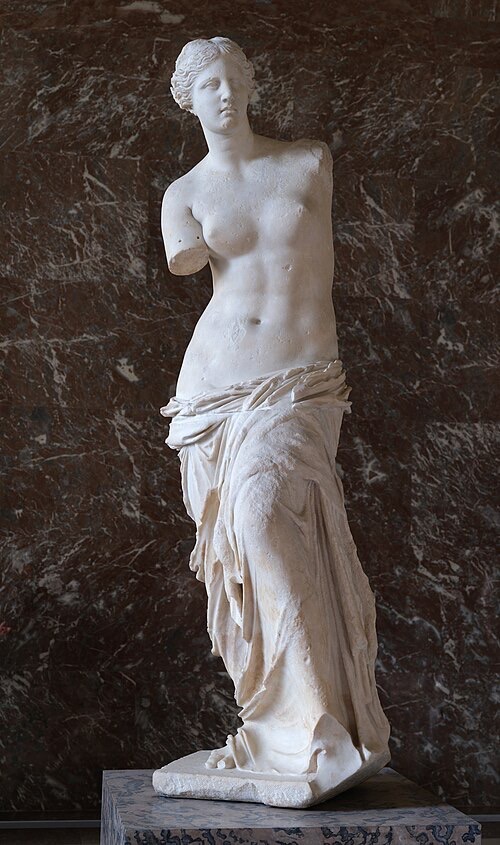
      Venus de Milo. Wikipedia
    2. Aphrodite—The Venus de Milo, a larger-than-life marble statue of Aphrodite carved by Alexandros around 150 BCE, was discovered on Melos in 1820. Inspired by a 4th-century Corinthian statue, it exemplifies Hellenistic sculptural tradition. Missing both arms and with an uncertain original position, the Parian marble sculpture has been displayed at the Louvre since 1821 and has inspired many artistic works and cultural references.
    3. Between the 6th and 4th centuries BCE— Siddhartha Gautama, known as the Buddha, established Buddhism in South Asia during the 6th or 4th century BCE. He advocated for a Middle Way between excessive indulgence and strict asceticism to achieve liberation from suffering. Buddhism developed into Theravada, Mahayana and Vajrayana traditions, expanding from India to Southeast and East Asia. Born in Lumbini, Nepal, and passing away in Kusinara, India, the Buddha’s teachings were spread by his followers, who commemorate significant events in his life, such as his birth, enlightenment and nirvana.
      Isambard Kingdom Brunel, who designed the SS Great Western, pictured with launching chains of the SS Great Eastern. Wikipedia
    4. SS Great Western—The SS Great Western, designed by Isambard Kingdom Brunel, was the first steamship built for transatlantic crossings. Wooden-hulled, it was the largest passenger ship from 1837 to 1839 and served as a model for future paddle-steamers.
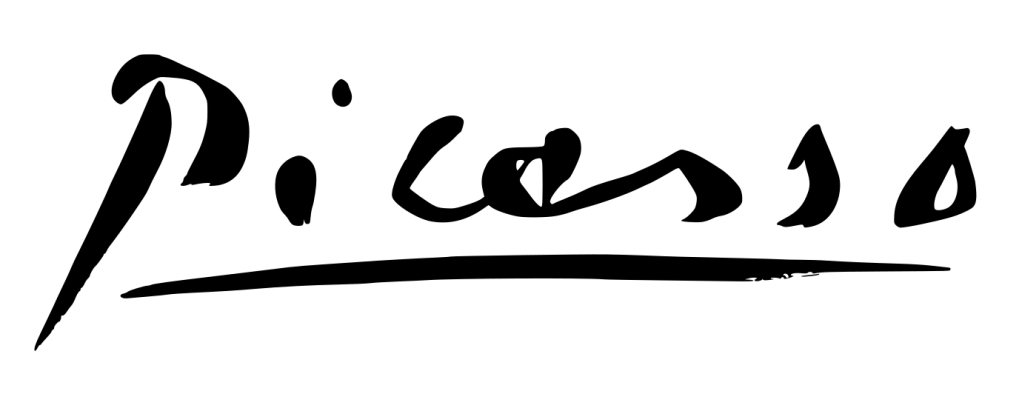
    5. P. RuizEncyclopædia Britannica states that Picasso’s baptismal names are “Pablo Diego José Francisco de Paula Juan Nepomuceno Crispín Crispiniano María de los Remedios de la Santísima Trinidad Ruiz Picasso”; Ruiz and Picasso being respectively his father’s and mother’s surnames. It further states in regard to his signing his works, “As a youth, Picasso was known as Pablo Ruiz, and he signed his earliest paintings P. Ruiz. By the turn of the 20th century he was using P.R. Picasso for paintings and drawings, but in late 1901 he finally settled on simply Picasso as his signature.”
    Picasso’s later signature. Wikipedia
  • Silence is Golden

    Gladys Louise Smith, aka ? (See question 1)
    1. Gladys Louise Smith was born on 8 April 1892 in Toronto, Canada, and later, as an actress in the silent era, became known as “Queen of the Movies” and “America’s Sweetheart“. What name did she use professionally?
      • Marion Davies
      • Lillian Gish
      • Mary Pickford
    2. Fragments of the ancient statue Venus de Milo were found in pieces on the island of Melos in the Aegean Sea on 8 April 1920. Who is the statue believed to represent?
      • Aphrodite
      • Artemis
      • Athena.
    3. A majority of Japanese Buddhists celebrate the birth of Buddha on 8 April, when is he believed to have lived?
      • Between the 6th and 4th centuries BCE
      • Between the 2nd century BCE and 2nd century CE
      • Between the 4th and 6th centuries CE
      SS Great ? (See question 4)
    4. On 8 April 1838, the first purpose-built and regular transatlantic steamer embarked on its maiden voyage. The ship, a wooden-hulled paddle steamer, was named what?
      • SS Great Britain
      • SS Great Eastern
      • SS Great Western
    5. The artist Pablo Picasso died on 8 April 1973. Which of these was how he signed his earliest works?
      • P.R.P.
      • P. Ruiz
      • P. Picasso
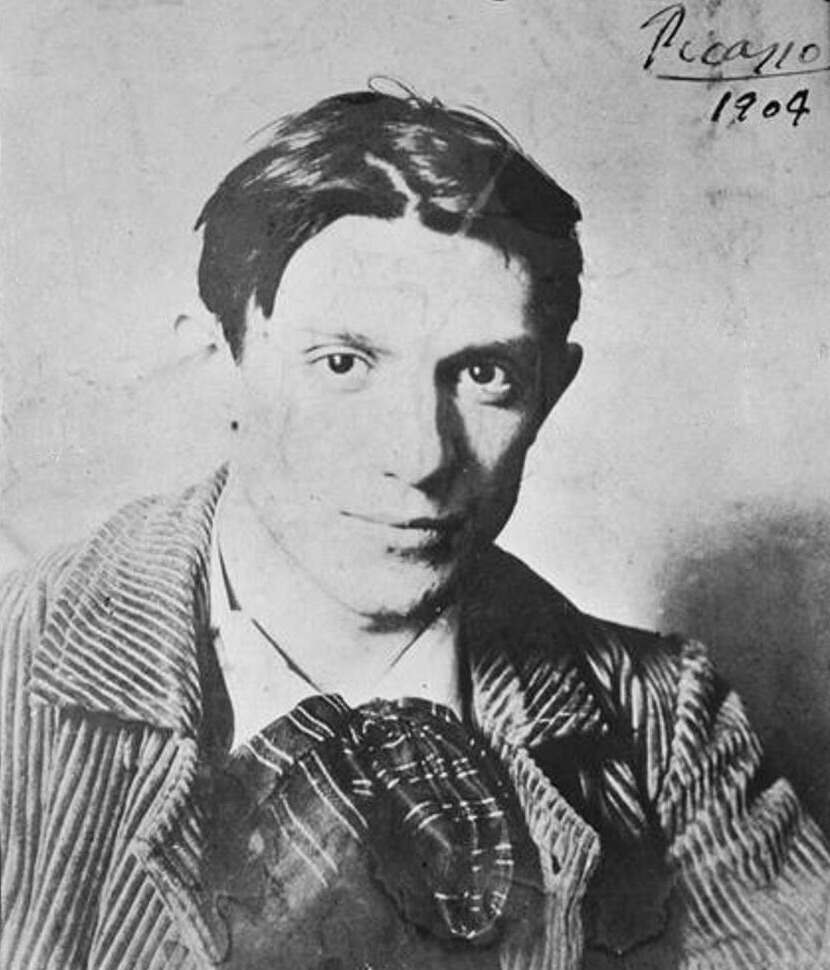
    Pablo Picasso, 1904. Wikipedia

    Good luck! I will post the answers later today.