The Sir Leo Hielscher Bridges — aka Gateway Bridges, 2011. Image Wikimedia Commons
One
The pictured ‘Gateway Bridges’ at Brisbane in Queensland, Australia, cross what 214-mile (344-km) long river?
Two
In 1787, William Herschel discovered two moons which were later named Titania and Oberon. These moons are satellites of which planet?
Three
The Throgs Neck Bridge, which opened in 1961, crosses the East River and links two New York City boroughs. Which two?
Four
In 1935, a renowned aviator achieved the first successful flight from Hawaii to California. Who was this aviator?
Five
In 1972, this country’s name was changed. It’s now the eighth most populous nation globally and shares a border with the Siliguri Corridor. Which country?
Here are the answers to the questions posed in my earlier post.
Today’s questions all relate to December 24th.
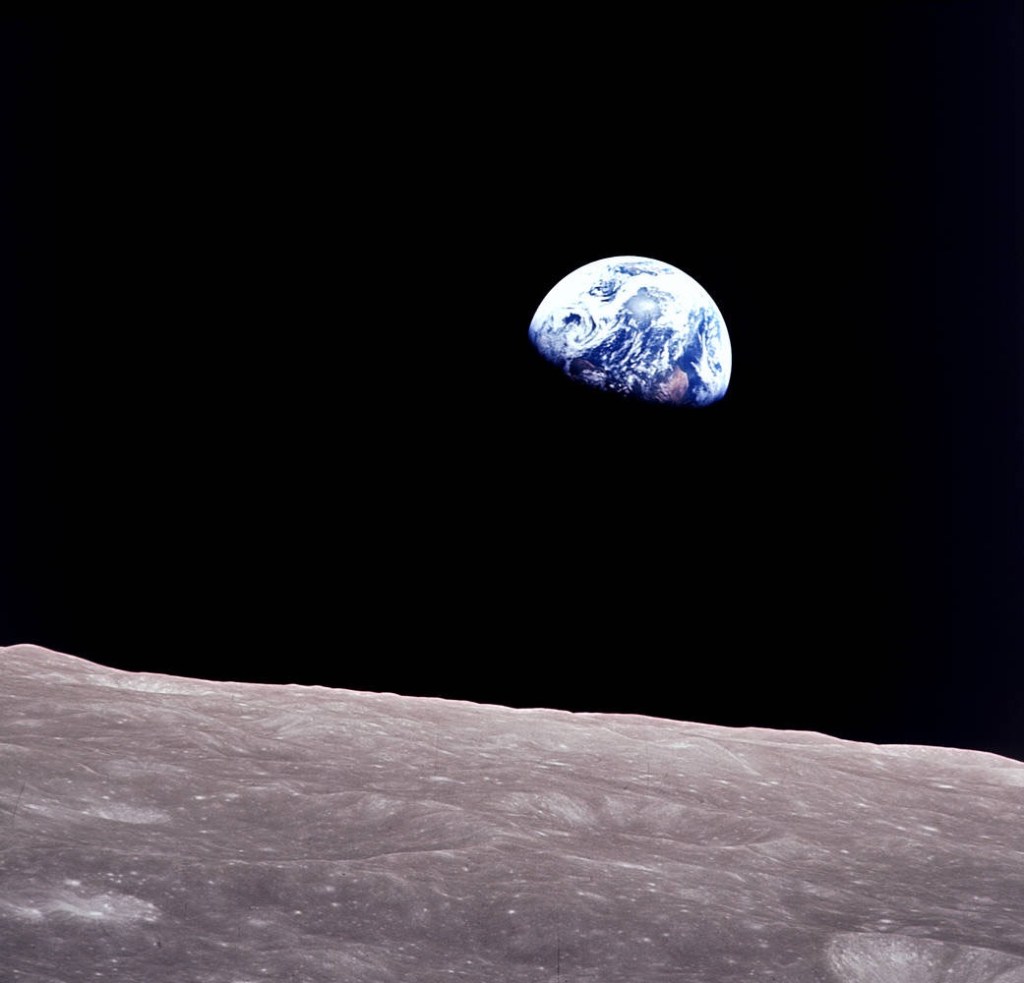
See question 5. Taken aboard Apollo 8 by Bill Anders, this iconic picture shows Earth peeking out from beyond the lunar surface as the first crewed spacecraft circumnavigated the Moon, with astronauts Anders, Frank Borman, and Jim Lovell aboard. Image NASA
One
The Wrong Sort of Bees, published in London’s Evening News on 24 December 1925, introduced a fictional anthropomorphic character to children’s literature and entertainment. Who was this character, and who was the author?
Answer: Winnie-the-Pooh; AA Milne
Winnie-the-Pooh, a fictional teddy bear created by AA Milne and EH Shepard, first appeared in a 1925 children’s story. The character, inspired by Milne’s son’s toy and a bear at London Zoo, became the subject of several books and was later adapted into a successful Disney franchise.
Two
Kiritimati (pronounced Kir-is-Maas) part of the Republic of Kiribati was named by a British naval officer and explorer who visited in 1777. In what ocean is Kiritimati, and who named it?
Answer: Pacific Ocean; Captain James Cook
The name given to it by Captain Cook as he visited on Christmas Eve was Christmas Island. In Gilbertese, ‘Christmas’ is ‘Kiritimati’, the combination ‘ti’ is pronounced as ‘s’.
Three
In which year did the first Christmas truce of World War I occur?
Answer: 1914
The Christmas truce was a series of unofficial ceasefires along the Western Front during World War I.
Four
What armed forces invaded Afghanistan on this day in 1979?
Answer: Soviet Union
Soviet troops invaded Afghanistan in December 1979, supporting the communist government against anti-communist Muslim guerrillas until February 1989.
Five
In 1968, in a television broadcast from space the crew of Apollo 8 read the first ten verses of the Genesis creation narrative from the King James Bible. What specific feat did the Apollo 8 mission achieve?
Answer: The answer is any, or all, of the points listed below
Apollo 8 was the first crewed spacecraft to leave Earth’s gravitational sphere of influence.
It was also the first human spaceflight to reach the Moon.
The crew orbited the Moon ten times without landing.
The three astronauts, Frank Borman, Jim Lovell, and William Anders, were the first humans to see and photograph the far side of the Moon.
They also witnessed and photographed an Earthrise (see image).
On Christmas Eve 1968, the Apollo 8 crew, the first humans to orbit the Moon, read from the Book of Genesis during a live television broadcast from lunar orbit. The reading, which was heard by an estimated one billion people worldwide, was a suggestion from Christine Laitin, the wife of one of those working on the project. Mrs Laitin had been a member of the French Resistance during World War II.
See question 5. Taken aboard Apollo 8 by Bill Anders, this iconic picture shows Earth peeking out from beyond the lunar surface as the first crewed spacecraft circumnavigated the Moon, with astronauts Anders, Frank Borman, and Jim Lovell aboard. Image NASA
One
The Wrong Sort of Bees, published in London’s Evening News on 24 December 1925, introduced a fictional anthropomorphic character to children’s literature and entertainment. Who was this character, and who was the author?
Two
Kiritimati (pronounced Kir-is-Maas) part of the Republic of Kiribati was named by a British naval officer and explorer who visited in 1777. In what ocean is Kiritimati, and who named it?
Three
In which year did the first Christmas truce of World War I occur?
Four
What armed forces invaded Afghanistan on this day in 1979?
Five
In 1968, in a television broadcast from space the crew of Apollo 8 read the first ten verses of the Genesis creation narrative from the King James Bible. What specific feat did the Apollo 8 mission achieve?
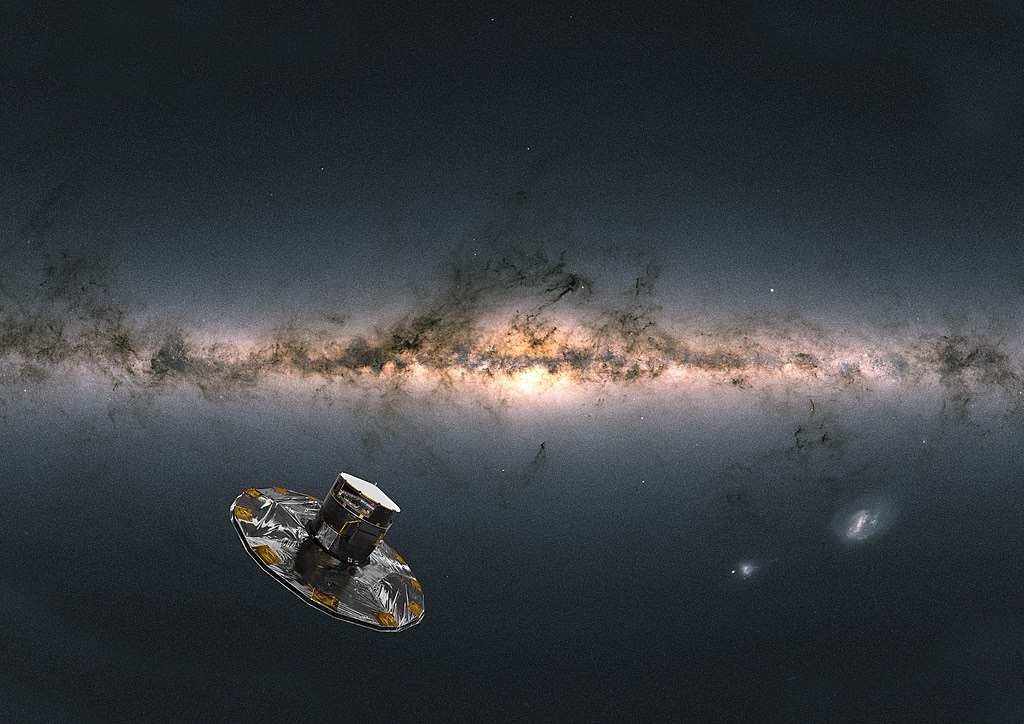
See question 5. Artist pression of ESA’s Gaia satellite observing the Milky Way, with a background image of the sky compiled from data from more than 1.8 billion stars. Image ESA via Wikipedia
One
… was dead: to begin with. There is no doubt whatever about that.
Published for the first time on this date in 1843, what begins with the quote above and whose surname is missing from the start?
Answer: A Christmas Carol; Marley
A Christmas Carol, a novella by Charles Dickens, recounts the story of Ebenezer Scrooge’s transformation after visits from the ghosts of Christmas Past, Present, and Yet to Come. The novella, published in 1843, was inspired by Dickens’s experiences and the Victorian revival of Christmas traditions. It has never been out of print and has been widely adapted.
Two
Born on this day in 1906, what Soviet leader, along with US President Jimmy Carter, signed the unsuccessful SALT II treaty in Vienna in 1979?
Answer: Leonid Brezhnev
Leonid Brezhnev, a Soviet statesman, led the Soviet Union for 18 years. He prioritised foreign and military affairs, implementing the Brezhnev Doctrine to justify Soviet intervention in Czechoslovakia and expanding the Soviet military-industrial complex. While achieving parity with the US in nuclear weapons and space programmes, Brezhnev’s focus on defence led to economic decline, impacting agriculture, consumer goods and healthcare.
Three
A singer born in Paris, France, on 19 December 1915, came to be known as ‘little sparrow’. Who was she?
Answer: Edith Piaf
Edith Piaf, a French singer and actress, gained international fame for her interpretation of the chanson. Her life, marked by tragedy and hardship, deeply influenced her music, which often reflected themes of loss and love. Despite her struggles with health and addiction, Piaf’s powerful voice and dramatic style captivated audiences, leaving a lasting legacy.
Four
On this day in 1606, Christopher Newport, in command of the Discovery, the Godspeed, and the Susan Constant, sailed from London, England. The following April, they entered a bay—the largest estuary in the United States—and went on to set up the first permanent English settlement in North America. What was the name of the bay and the colony?
Answer: Chesapeake Bay; Jamestown
Newport, a member of the colony’s governing body, led a total five voyages between Virginia and England, bringing supplies and settlers to the Jamestown colony between 1606 and 1611.
Five
In 2013, the European Space Agency launched a spacecraft that could be described as a space telescope or astronomical observatory. Named after the personification of Earth in Greek mythology, what was its name?
Answer: Gaia
Gaia, the Greek personification of Earth, is the mother of Uranus, Pontus, the Titans, Cyclopes and Giants.
From 27 July 2014 to 15 January 2025, Gaia has made more than three trillion observations of two billion stars and other objects throughout our Milky Way galaxy and beyond, mapping their motions, luminosity, temperature and composition. Gaia’s extraordinarily precise three-dimensional map will provide the data needed to tackle an enormous range of important questions related to the origin, structure and evolutionary history of our galaxy.
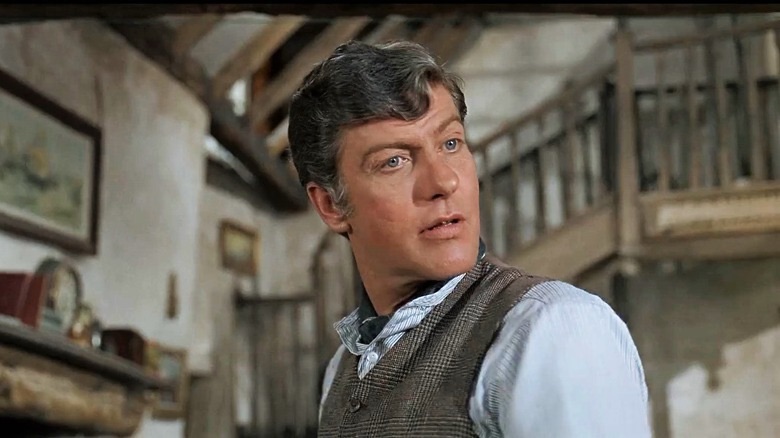
Caractacus Potts (Dick Van Dyke) Chitty Chitty Bang Bang (1968).
One
Born on this day in 1925, an actor portrayed Caractacus Potts in a 1968 film adaptation of an Ian Fleming story. Who is he and what was the film?
Answer: Dick Van Dyke; Chitty Chitty Bang Bang
Happy Birthday! The post title refers to Dick Van Dyke being 100 today.
Dick Van Dyke, born in 1925, is an American actor and comedian renowned for his charm and physical comedy. He began his show business career after a failed advertising venture, performing in nightclubs and on television before making his Broadway debut in 1959. Van Dyke starred in the hit musical Bye Bye Birdie, winning a Tony Award, which led to his iconic role in The Dick Van Dyke Show, earning him three Emmys. He also starred in films like Mary Poppins and Chitty Chitty Bang Bang and returned to television with various shows and TV movies. His career highlights include roles in Dick Tracy, Diagnosis Murder, and Night at the Museum. Van Dyke received a Television Academy Hall of Fame induction in 1995 and a Kennedy Centre Honour in 2021.
Two
The first European to sight the South Island of New Zealand did so on this day. Who was he, and in what century did this sighting occur?
Answer: Abel Tasman; 17th century (1642)
Abel Janszoon Tasman, a Dutch explorer, was the first European to reach New Zealand and Tasmania. His 1642 expedition, commissioned by the Dutch East India Company, aimed to discover new trade routes and establish trade relations with native inhabitants. Despite a violent encounter with the Māori people, Tasman’s voyage paved the way for future colonisation.
Three
In 1956, the film Anastasia was released in America. This drama marked the Hollywood comeback of an actress following a scandal involving an extramarital affair. Her performance earned her the Best Actress Oscar. Who was she?
Answer: Ingrid Bergman
After years working exclusively in Europe following her highly publicised affair with Roberto Rossellini, this film marked a Hollywood comeback for Ingrid Bergman. Her performance earned her, among others, the Academy Award for Best Actress, the Golden Globe for Best Actress in a Motion Picture.
Four
The final moonwalk or EVA of the Apollo programme occurred on this day in 1972. Which Apollo mission was this and who were the two astronauts on the Moon?
Answer: Apollo 17; Eugene Cernan and Harrison Schmitt
Apollo 17, the final Apollo mission, launched on 7 December 1972 and concluded on 19 December 1972. Commander Eugene Cernan and Lunar Module Pilot Harrison Schmitt were the last humans to walk on the Moon, landing in the Taurus-Littrow Valley. They conducted experiments, collected samples, and travelled 19 miles in their lunar rover before returning to Earth. Cernan, the last person to date to stand on the Moon, said before returning to the lunar module, ‘We shall return, with peace and hope for all mankind. Godspeed the crew of Apollo 17’.
What singer-songwriter was born in West Reading, Pennsylvania on this day in 1989?
Answer: Taylor Swift
Taylor Swift, a renowned American singer-songwriter known for her autobiographical songwriting and artistic reinventions, made history in 2024 by becoming the first artist to win the Grammy Award for Album of the Year four times and breaking the record for the highest-grossing concert tour. She is the highest-grossing live music artist and one of the best-selling music artists of all time, having won numerous awards, including 14 Grammys, and is the first individual from the arts to be named Time Person of the Year.
Born on this day in 1925, an actor portrayed Caractacus Potts in a 1968 film adaptation of an Ian Fleming story. Who is he and what was the film?
Two
The first European to sight the South Island of New Zealand did so on this day. Who was he, and in what century did this sighting occur?
Three
In 1956, the film Anastasia was released in America. This drama marked the Hollywood comeback of an actress following a scandal involving an extramarital affair. Her performance earned her the Best Actress Oscar. Who was she?
Four
The final moonwalk or EVA of the Apollo programme occurred on this day in 1972. Which Apollo mission was this and who were the two astronauts on the Moon?
Five
What singer-songwriter was born in West Reading, Pennsylvania on this day in 1989?
Here are the answers to the questions I posted earlier.
These questions cover 321 years from the earliest to the most recent, but all are connected to today’s date, November 24th.
One
On this day in 1642, Dutch navigator Abel Tasman sailed along the southern coast of the island now known as Tasmania. His voyage, an expedition from the Dutch East Indies capital eastwards towards southern South America, marked the first recorded European contact with the island. Four questions: (i) What did Tasman name the island that is now called Tasmania? (ii) What was the Dutch East Indies capital at that time; (iii) what is it called today? And (iv) which country is it now the capital of?
Answer: (i) Anthony van Diemen’s Land; (ii) Batavia; (iii) Jakarta and (iv) Indonesia
Tasman named the island Anthony van Diemen’s Land after his sponsor Anthony van Diemen, the Governor of the Dutch East Indies. This became shortened to Van Diemen’s Land.
Batavia was the capital city of the Dutch East Indies; this city is now Jakarta, which is the capital of Indonesia. Batavia, founded by the Dutch in 1619 on the site of Jayakarta, became the capital of the Dutch East Indies and the centre of the Dutch East India Company’s trading network. The city, located on the north coast of Java, remained a European colonial city until World War II.
Two
On this day in 1700, which European monarch accepted the will of the late Charles II of Spain and proclaimed his grandson Philip as King of Spain — a decision that helped trigger the War of the Spanish Succession?
Answer: Louis XIV of France
The War of the Spanish Succession (1701-1714) was a European conflict over the succession of the Spanish throne. The war ended with the Peace of Utrecht, confirming Philip as King of Spain but preventing a union with France.
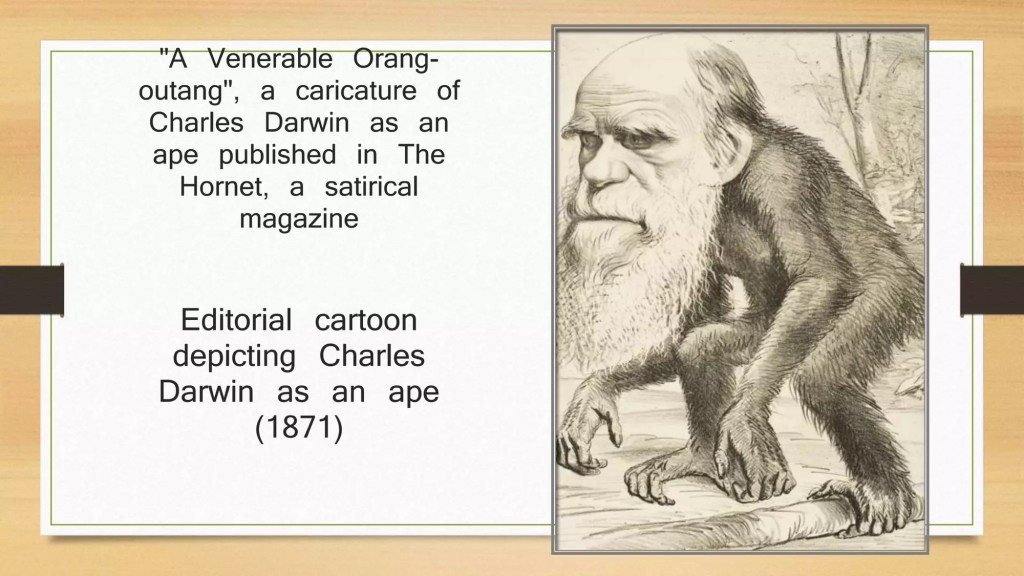
Cartoon depicting Charles Darwin as an ape, 1871. Image Slideshare.net
Three
Charles Darwin’s On the Origin of Species by Means of Natural Selection was published today in which decade?
Answer: 1850s
Charles Darwin’s On the Origin of Species, published in 1859, introduced the theory of evolution by natural selection. The book, supported by evidence from Darwin’s Beagle expedition and subsequent research, sparked scientific, philosophical, and religious debate. While initially controversial, Darwin’s ideas gained widespread acceptance within the scientific community by the 1940s.
Four
On this day in 1877, the book Black Beauty was published. Who was the author?
Answer: Anna Sewell
British author Anna Sewell wrote the beloved children’s classic Black Beauty to champion kindness and understanding towards horses. Confinement to her home due to illness saw Sewell spend her final years penning the book. It’s believed this work played a significant role in abolishing the cruel practice of using the checkrein.
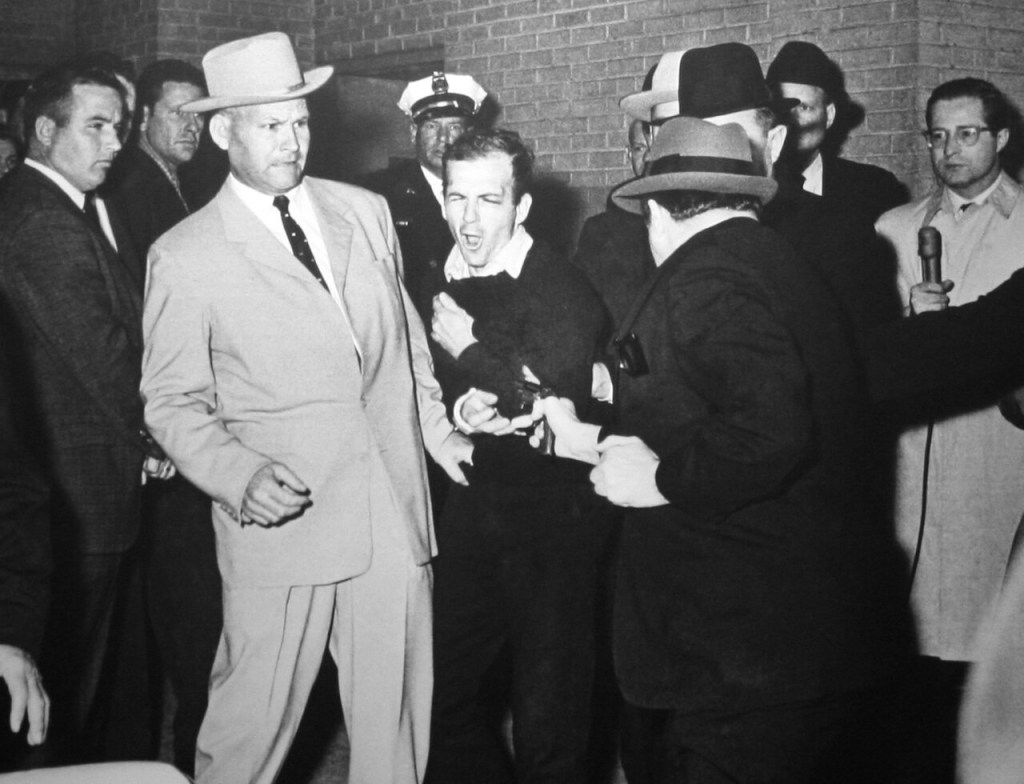
Pulitzer Prize winning photo of Jack Ruby shooting Lee Harvey Oswald, 24 November 1963. Originally published in the Dallas Times Herald, November 25, 1963. Image Wikipedia
Five
Who, in the above picture, is the man facing away from the camera shooting Lee Harvey Oswald in Dallas today, 1963?
Answer: Jack Ruby
Jack Ruby, a nightclub owner, murdered Lee Harvey Oswald in Dallas Police Headquarters. Ruby was convicted of Oswald’s murder and sentenced to death, but this conviction was overturned on appeal, leading to a new trial. However, Ruby fell ill, was diagnosed with cancer, and died on January 3, 1967, before the new trial could take place. While the Warren Commission concluded Ruby acted alone, his death fuelled conspiracy theories.
These questions cover 321 years from the earliest to the most recent, but all are connected to today’s date, November 24th.
One
On this day in 1642, Dutch navigator Abel Tasman sailed along the southern coast of the island now known as Tasmania. His voyage, an expedition from the Dutch East Indies capital eastwards towards southern South America, marked the first recorded European contact with the island. Four questions: (i) What did Tasman name the island that is now called Tasmania? (ii) What was the Dutch East Indies capital at that time; (iii) what is it called today? And (iv) which country is it now the capital of?
Two
On this day in 1700, which European monarch accepted the will of the late Charles II of Spain and proclaimed his grandson Philip as King of Spain — a decision that helped trigger the War of the Spanish Succession?
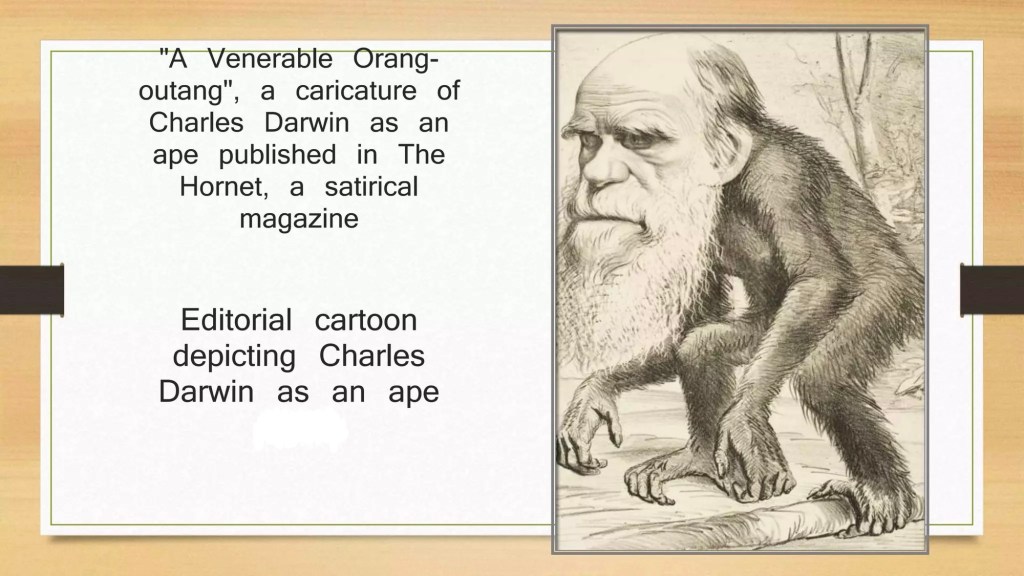
Charles Darwin as an ape. Image details and attribution will be in answer post
Three
Charles Darwin’s On the Origin of Species by Means of Natural Selection was published today in which decade?
Four
On this day in 1877, the book Black Beauty was published. Who was the author?
Pulitzer Prize winning photo of ______ shooting Lee Harvey Oswald, 24 November 1963. Originally published in the Dallas Times Herald, November 25, 1963. Image Wikipedia
Five
Who, in the above picture, is the man facing away from the camera shooting Lee Harvey Oswald in Dallas today, 1963?
Here are the answers to the questions I posed in my earlier post.
All of the questions relate to today’s date, November 23rd.
One
At Coal Hill School, teachers Ian Chesterton and Barbara Wright have concerns about pupil Susan Foreman, who has an alien outlook on England.
The above quote from the Wikipedia article’s ‘Plot’ section describes the opening episode of which contemporary television series first aired on 23 November 1963?
Answer: Doctor Who
The very first episode was An Unearthly Child—Susan Foreman, played by Carole Ann Ford, being the title character. Doctor Who, a British science fiction television series, follows the adventures of the Doctor, a time-travelling Time Lord from Gallifrey who regenerates into different forms. The Doctor travels through time and space in the TARDIS, battling various evils including the Daleks. Originally airing from 1963 to 1989, the show was revived in 2005 and has featured multiple actors in the title role, with the most recent being Ncuti Gatwa. Doctor Who is a significant part of British popular culture and has influenced generations of television professionals.
The post title 76 Totters Lane is spoken by Barbara Wright in this episode, and is the address of the junkyard where they find Susan and her grandfather in the TARDIS.
Two
What 2009 hit single by Miley Cyrus includes the lyric ‘And a Jay-Z song was on’?
Answer: Party in the U.S.A.
Despite the famous lyric, Miley later revealed she wasn’t actually listening to Jay-Z at the time—the line was written by the songwriters Jessie J, Dr. Luke, and Claude Kelly before she recorded it.
Three
In 1935, an American explorer landed at about 79° S, 102° W. He raised the U.S. flag and ‘claimed’ the land between roughly 80° W and 120° W for the United States. On what continent did this occur, and what is this area of land known as today?
Answer: Antarctica and Ellsworth Land
In 1935, explorer Lincoln Ellsworth landed in Antarctica during his transcontinental flight, raised the U.S. flag, and claimed the territory between about 80°W and 120°W, naming it Ellsworth Land. The U.S. government never formalised this claim, and later overlapping national claims were suspended under the Antarctic Treaty.
Four
Which 1982 novel features characters called The Maidmasher, The Manhugger and The Meatdripper? Secondly, who wrote it?
Answer: The BFG; Roald Dahl
The BFG, a 1982 children’s novel by Roald Dahl, has sold 37 million copies and inspired adaptations including a 1989 animated film and a 2016 Disney live-action film.
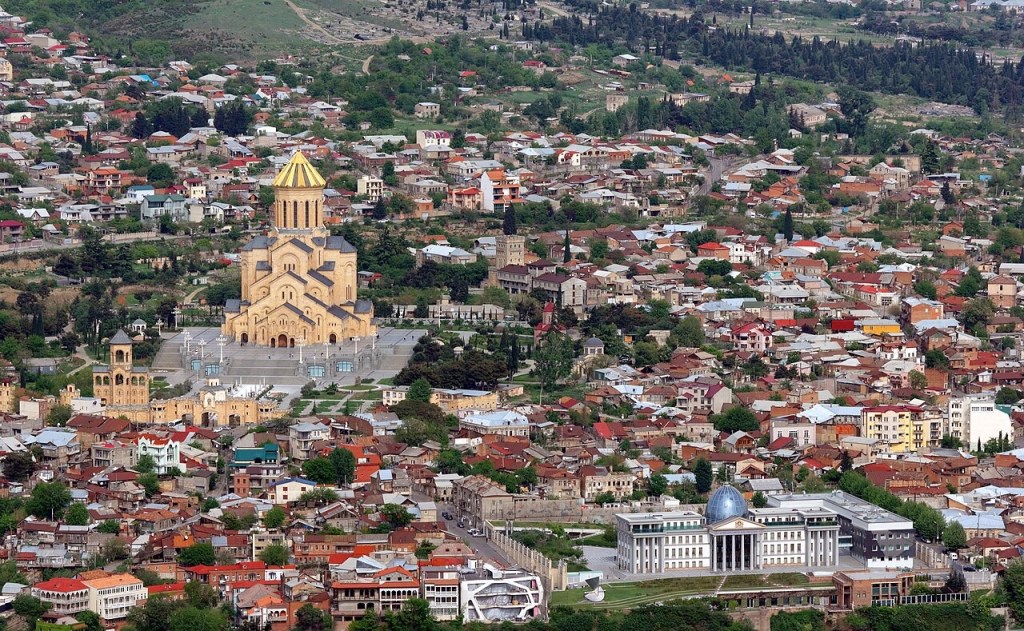
Holy Trinity Cathedral of Tbilisi. Image Wikipedia
Five
The Holy Trinity Cathedral of Tbilisi, the largest religious building in its country, was consecrated in 2004. It is the main cathedral of which autonomous church?
Answer: Georgian Orthodox Church
Georgia’s dominant religious institution is the Georgian Orthodox Church, an autocephalous Eastern Orthodox church. Its roots stretch back to the 1st and 4th centuries AD, and it is currently led by Patriarch Ilia II. The main cathedral of the Georgian Orthodox Church is the Holy Trinity Cathedral of Tbilisi, also known as Sameba, which was built between 1995 and 2004.
All of the questions relate to today’s date, November 23rd.
One
At Coal Hill School, teachers Ian Chesterton and Barbara Wright have concerns about pupil Susan Foreman, who has an alien outlook on England.
The above quote from the Wikipedia article’s ‘Plot’ section describes the opening episode of which contemporary television series first aired on 23 November 1963?
Two
What 2009 hit single by Miley Cyrus includes the lyric ‘And a Jay-Z song was on’?
Three
In 1935, an American explorer landed at about 79° S, 102° W. He raised the U.S. flag and ‘claimed’ the land between roughly 80° W and 120° W for the United States. On what continent did this occur, and what is this area of land known as today?
Four
Which 1982 novel features characters called The Maidmasher, The Manhugger and The Meatdripper? Secondly, who wrote it?
Holy Trinity Cathedral of Tbilisi. Image Wikipedia
Five
The Holy Trinity Cathedral of Tbilisi, the largest religious building in its country, was consecrated in 2004. It is the main cathedral of which autonomous church?
Good luck! As usual the answers will be posted later.